
There are films that entertain, films that provoke, and then there are films that sear themselves into your very soul. László Nemes’s “Son of Saul” is unequivocally the latter. It is not a film you simply watch; it is an experience you endure, a harrowing, claustrophobic journey that plunges you headfirst into the inferno of Auschwitz-Birkenau in 1944. Through the relentlessly tight focus on its protagonist, Saul Ausländer, a member of the Sonderkommando, we are forced to witness the unimaginable not as a sweeping historical tableau, but as a frantic, breathless, and deeply personal ordeal. The film’s power lies in its refusal to look away, and in doing so, it compels us to bear witness. But where does one go to connect with the spirit of such a monumental piece of cinema? This is not a typical film pilgrimage. The hallowed ground the film depicts is too sacred for cinematic recreation. Instead, the journey to understand “Son of Saul” is a dual pilgrimage, a path that winds through two distinct, yet profoundly connected, European landscapes. Our journey begins in the vibrant, resilient heart of Budapest, the city that birthed the film’s creative vision, a place where history’s ghosts walk alongside the living. Then, it leads us to the solemn, silent fields of Oświęcim, Poland, the actual site of the Auschwitz-Birkenau Memorial and Museum, the very earth that holds the memory the film so fiercely honors. This is a journey from the crucible of creation to the core of remembrance, a path tracing the echoes of Saul’s footsteps from the filmmaker’s imagination to the soil of history itself.
For a different perspective on how a city’s spirit can be captured on film, consider exploring the real-life canvases of Rio de Janeiro in “City of God”.
Budapest: The Cradle of a Cinematic Conscience
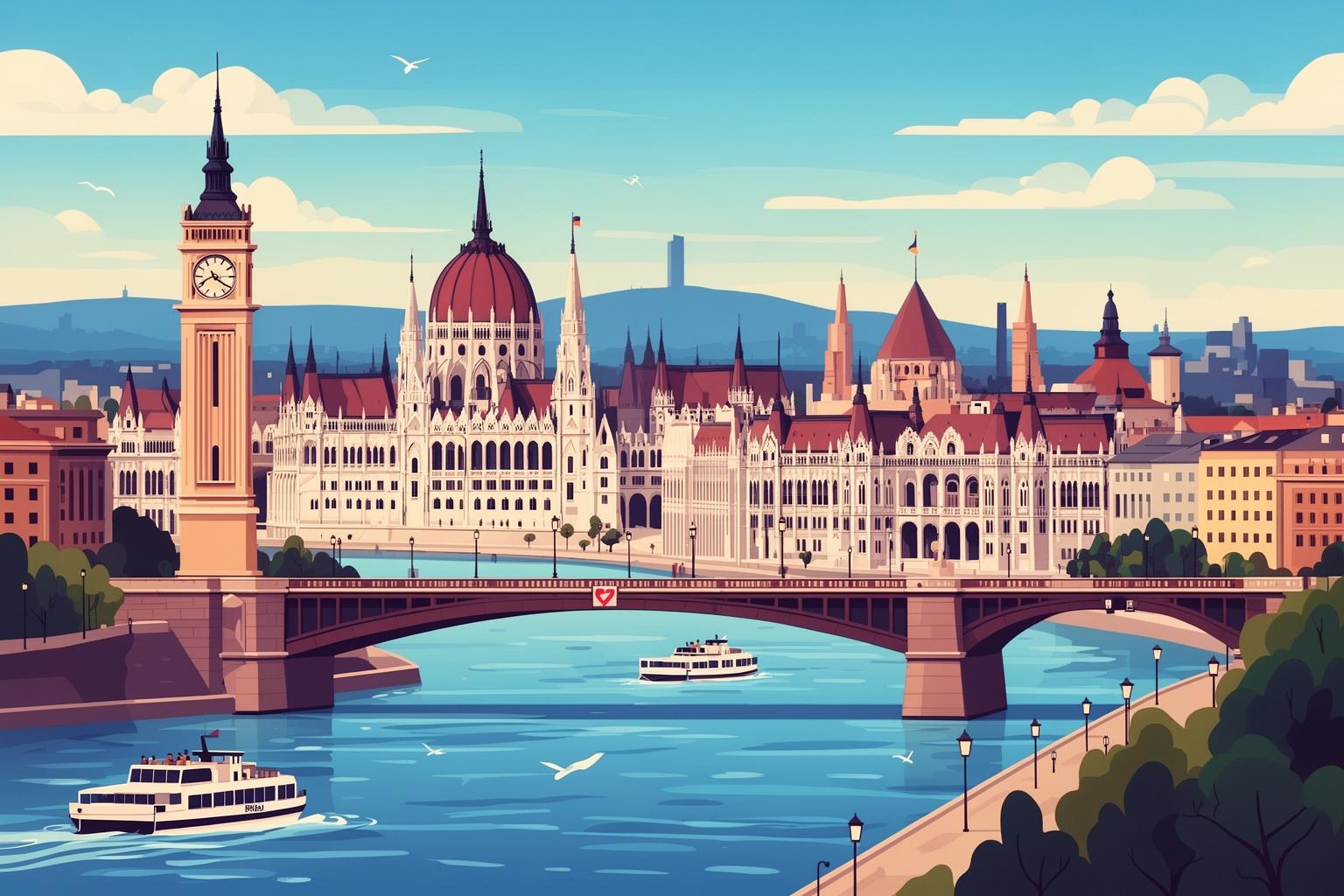
To grasp the essence of “Son of Saul,” one must first stroll through the streets of Budapest. Known as the Pearl of the Danube, this city embodies a striking duality, where the opulence of the Austro-Hungarian Empire stands in ornate contrast to the somber, bullet-ridden facades of buildings that have borne witness to unimaginable hardship. There’s a rhythm here—a vibrant pulse that courses through ruin bars and bustling market halls—yet beneath it lies a profound, resonant echo of memory. This is the city that molded director László Nemes, and its complex history is intricately woven into the very fabric of his film. A pilgrimage to Budapest isn’t about finding a specific film location but about immersing oneself in the cultural and historical atmosphere that made such a powerful work of art both possible and necessary.
A City of Ghosts and Resilience
Walking through Budapest feels like moving through layers of time. You can sense the city’s golden era in the soaring dome of St. Stephen’s Basilica and the grand sweep of the Parliament Building by the river. Yet as you wander, the 20th century asserts itself. Plaques on buildings commemorate residents who were forcibly removed during the Holocaust, subtle yet poignant reminders of the darkness that once cloaked these beautiful streets. The very air feels laden with stories. On a crisp autumn afternoon, with sunlight glinting off the Danube, the city exudes an almost romantic aura. But turn into a quiet courtyard, and you sense the weight of history, a silent testimony of a place that has endured profound suffering and refused to be forgotten. This tension—between vibrant life and the heavy presence of the past—lies at the heart of the Hungarian experience and forms the emotional backdrop for the film’s creation.
The Jewish Quarter’s Enduring Spirit
At the core of this historical journey lies Erzsébetváros, Budapest’s historic Jewish Quarter. Far from a museum district, it is a living, breathing neighborhood. Today, it’s renowned for its eclectic design shops, vibrant food scene, and iconic ruin bars housed within crumbling pre-war buildings. Yet beneath this bohemian charm is a story of immense tragedy and remarkable survival. It was here, in the last brutal months of World War II, that the Budapest Ghetto was established. Exploring its streets, you’ll find remaining sections of the ghetto wall—a stark, physical reminder of the confinement and persecution endured here. The district’s centerpiece is the Dohány Street Synagogue, Europe’s largest. Its Moorish Revival architecture is breathtaking, symbolizing the prosperity and cultural importance of Budapest’s Jewish community before the war. Stepping inside is a deeply moving experience. Nearby, the Hungarian Jewish Museum provides rich context, but it is the Weeping Willow Memorial in the courtyard that truly arrests your attention. The metal leaves inscribed with victims’ names form a shimmering, delicate tribute to thousands of lost lives. Spending a day here—from the synagogue to a trendy café—is to witness the full spectrum of the neighborhood’s identity: a space of profound memory blossoming into a vibrant hub of creative, modern life.
Filming in the Shadow of History
It’s important to note that “Son of Saul” was not filmed at the actual Auschwitz site. Director László Nemes, whose own family fell victim to the horrors there, regarded the location as a cemetery, a sacred place of mourning too hallowed to be turned into a film set. This choice alone is a profound act of respect. Instead, his team undertook the monumental effort of reconstructing a crematorium complex with painstaking historical accuracy inside an abandoned timber factory and warehouse on Budapest’s outskirts. This reconstruction is central to the film’s philosophy. It wasn’t intended as spectacle but as a functional, terrifyingly real environment where actors could embody the psychological reality of the Sonderkommando. The set was designed as a labyrinth—disorienting and oppressive—mirroring Saul’s internal turmoil. Although not a tourist site, knowing the film was physically born from Hungarian soil, within a repurposed space dedicated to telling this story, deepens the connection to Budapest as the film’s creative wellspring.
Memorials that Whisper: The Shoes on the Danube Bank
Perhaps no place in Budapest more poignantly bridges the city’s serene beauty with its violent past than the Shoes on the Danube Bank. Situated on the Pest side of the river, just south of the Parliament, this memorial is simple, elegant, and utterly heartbreaking. Sixty pairs of 1940s-style shoes, cast in iron and weathered by time, lie scattered along the embankment. Men’s work boots, women’s pumps, and even tiny children’s shoes sit empty, as if their owners just stepped out and vanished into the cold river waters. This powerful installation honors the thousands, mostly Hungarian Jews, brought here by the fascist Arrow Cross militia during the winter of 1944-45. They were ordered to remove their shoes—a valuable wartime commodity—before being shot and their bodies thrown into the Danube. Visiting this site is an intensely moving experience. The best times to go are early morning or late afternoon when crowds thin and the light softens. The city’s sounds—the trams, traffic—seem to recede, leaving only the silence of the shoes and the river’s endless flow. Visitors often leave flowers, stones, and candles inside the shoes, small acts of remembrance that turn the memorial into a vibrant site of mourning. Standing there, you feel the hauntingly personal nature of the Holocaust, a theme “Son of Saul” masterfully explores. It’s a moment of quiet reflection that directly connects you to the history fueling the film’s urgent narrative.
Oświęcim: The Sacred Ground of Memory
A journey that starts in the creative heart of Budapest must inevitably lead to the historical core of the story: Oświęcim, the small Polish town where the German Nazi regime constructed its largest and deadliest concentration and extermination camp, Auschwitz-Birkenau. Traveling from the vibrant streets of Kraków, the nearest major city, the landscape begins to transform. The terrain flattens, the towns grow smaller, and a tangible sense of gravity settles in. This is not a journey to a place of leisure; it is a pilgrimage to a site of profound silence and significance. It is the ground that “Son of Saul” respectfully acknowledges from afar, the place where the reality beneath the fiction is etched into the very soil.
A Journey into the Heart of Silence
Upon arrival at the Auschwitz-Birkenau Memorial and Museum, the first thing that impresses is the quiet. It’s a heavy, deep silence, broken only by the crunch of gravel underfoot, the whispering wind through the birch trees, and the subdued voices of visitors from across the globe. The atmosphere here feels different. This is a place that demands reverence, a space where the immense scale of the tragedy that occurred is immediately and overwhelmingly palpable. This sacred ground is what László Nemes chose not to disturb with cameras and crews. His choice becomes instantly and profoundly clear the moment you pass through the gates. This is not merely a backdrop. It is a vast cemetery, an archive of suffering, and a testament to the depths of human cruelty and the resilience of memory.
The Unfilmable Space: Why ‘Son of Saul’ Stayed Away
To understand the film is to understand the director’s reverence for this place. By recreating the crematorium world within a studio, Nemes shielded the real memorial from the artifice of filmmaking. He created a fictional space to explore a historical truth, thus preserving the authenticity and sanctity of the actual site. His film serves as a powerful companion to a visit, not a replacement for it. The film’s tight, subjective viewpoint, confining you to Saul’s limited perspective, prepares you for the emotional reality of the location. It compels you to focus on the human scale of the tragedy—the individual lives lost—preventing the incomprehensible numbers from becoming mere abstraction. The film is the keyhole; visiting the memorial is opening the door and stepping into the vast, silent room of history itself.
Walking Through Auschwitz I and Birkenau
A visit to the memorial is divided into two main sections: Auschwitz I, the original concentration camp and administrative center, and Auschwitz II-Birkenau, the vast extermination camp built later. Experiencing both is essential to grasp the full scope of the operation.
Auschwitz I: The Architecture of Oppression
You enter Auschwitz I beneath the notorious, cynical archway that reads “Arbeit Macht Frei” (“Work Sets You Free”). The orderly rows of brick barracks, lined with poplar trees, present a deceptively neat facade that conceals the horror they contained. Many of these blocks now serve as museum exhibits. Walking through them is a harrowing and necessary experience. Block 11, the “Death Block,” with its standing cells and the execution wall in the outdoor courtyard, evokes a palpable dread. Other blocks contain vast, silent displays that bring the human cost of genocide into sharp focus. A large room filled with human hair, cut from victims before they were gassed; a towering pile of empty Zyklon B canisters; mountains of suitcases, carefully labeled with names and addresses of people who believed they were being relocated to a new life; and perhaps most heart-rendingly, a room brimming with thousands of shoes—worn leather boots, elegant women’s heels, and tiny scuffed children’s shoes. Each pair serves as a mute testament to a life abruptly ended. This is where the claustrophobic atmosphere of “Son of Saul” finds its physical counterpart. The narrow hallways, dark cellars, and oppressive sense of confinement all echo the world Saul desperately navigated.
Birkenau: The Landscape of Annihilation
A short shuttle ride takes you to Auschwitz II-Birkenau. Whereas Auschwitz I embodies oppressive confinement, Birkenau represents unfathomable scale. As you pass through the iconic brick entrance—the “Gate of Death”—the vastness of the site is overwhelming. It stretches seemingly endlessly in every direction. The infamous railway tracks run directly to the selection ramp, where families were separated with a mere gesture. Rows of stark wooden barracks, many long since reduced to ruins, extend to the horizon. You can walk for what feels like an eternity and still not reach the far end. There lie the ruins of Crematoria II and III, destroyed by retreating Nazis in an effort to conceal their crimes. Standing before these twisted heaps of concrete and steel—knowing this is the kind of facility the film painstakingly recreated—is a chilling experience. Here, the film’s frantic energy gives way to a profound, sorrowful stillness. The wind rustles through the grass-grown fields that blanketed so much pain. In this vast, open, silent space, the true scale of the Final Solution becomes terrifyingly clear. This is the landscape of Saul’s world, expanded to its full, horrific dimensions.
Practical and Emotional Preparation for Your Visit
A visit to Auschwitz-Birkenau requires preparation on both logistical and emotional levels. It is not a casual tourist stop; it is a profoundly moving experience that will stay with you forever.
Logistics and Guidance
It is highly advised—and often necessary—to book your visit well in advance, especially during peak seasons. Choosing a guided tour is recommended. The guides are exceptionally knowledgeable and sensitive, offering crucial historical context that might otherwise be missed. Their stories and insights transform the silent buildings and grounds into places of powerful testimony. Tours generally last three to four hours, though you should allow a full day for the entire experience, including travel from Kraków. Dress comfortably with sturdy walking shoes, as much ground will be covered. Prepare for the weather; Poland’s climate can be harsh, with biting cold in winter and intense sun in summer. The starkness of the landscape under winter snow is particularly haunting and evocative.
Emotional Guidance
Even more important than logistical planning is emotional preparation. Recognize that you are visiting a site of immense suffering. This is not a place for selfies or loud conversations, but for quiet reflection, respect, and remembrance. Permit yourself to feel the weight of this place. It is natural to be overwhelmed, saddened, or angry. Find a moment to stand silently, apart from the group, and bear witness. Many visitors find themselves speechless after the tour. Allow yourself the time and space to process what you have seen and experienced. Visiting Auschwitz is emotionally taxing, yet it is also a profound act of remembrance and an essential educational journey. It is a responsibility we bear toward the victims and the future, to ensure such atrocities are never forgotten and never repeated.
The Pilgrim’s Reflection: Bridging Cinema and Reality

Completing this dual pilgrimage—from the vibrant creativity of Budapest to the solemn grounds of Auschwitz—imparts a profound sense of connection between art and history. “Son of Saul” is more than a Holocaust film; it serves as a key that unlocks a deeper, more personal understanding of that history. The journey reshapes your perception of both the film and the historical sites, creating a bond between the cinematic experience and tangible reality.
How the Film Shapes the Visit
Visiting Auschwitz-Birkenau after watching “Son of Saul” is an entirely different experience. The film’s intense focus on one man’s desperate struggle amid chaos offers a powerful human perspective through which to view the memorial. As you pass the ruins of the crematoria at Birkenau, you don’t simply see rubble; you almost sense the frantic, hidden world that Saul inhabited. When you observe the piles of belongings in the museum at Auschwitz I, you recall Saul’s task of sorting the possessions of the dead, transforming the abstract tragedy into a series of concrete, heart-wrenching realities. The film fills the silent, empty spaces of the memorial with the ghostly sounds and urgent energy of its story. It closes the distance of time, pulling you from passive observer to something closer to an active witness. It compels you to seek the individual story amid overwhelming statistics, which may be the film’s greatest accomplishment and its most lasting gift to its audience.
Finding Meaning in the Journey
This pilgrimage is ultimately not about locating filming sites. It is about tracing a story back to its source. It is a journey that affirms the immense power of art to illuminate history, compel us to confront uncomfortable truths, and cultivate deeper empathy. Budapest reveals the resilience of culture and the complex historical forces that can lead to both extraordinary creativity and unspeakable tragedy. Auschwitz reveals the consequences of hatred and the sacred importance of memory. Together, they deliver a powerful lesson. The echoes of Saul’s story are not found in a reconstructed film set, but in the quiet strength of the Dohány Street Synagogue, in the cold iron of the shoes by the Danube, and in the profound, unbreakable silence that lingers over the fields of Birkenau. This journey is a commitment to remember, an act of bearing witness that honors victims, respects survivors, and carries the essential lessons of the past into the light of the present.