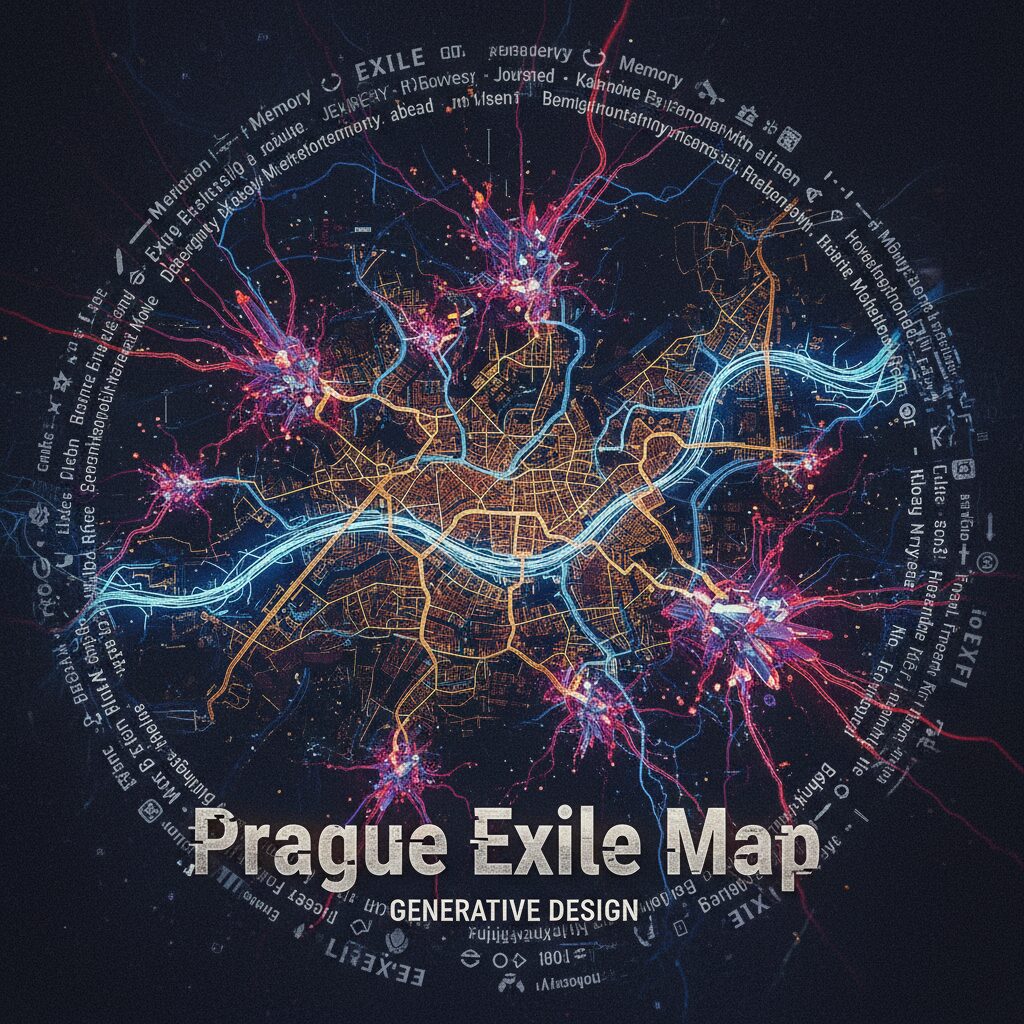
To trace the life of Milan Kundera is to wander through a landscape of memory, a map drawn not with ink but with ideas, with the haunting music of exile, and the profound weight of history. His novels are not just stories; they are philosophical inquiries set against the backdrop of a Central Europe that was constantly being redefined, torn apart, and reimagined. To walk the streets he walked, from his birthplace in Moravia to the intellectual heart of Prague and finally to the quiet refuge of Paris, is to engage in a dialogue with his work. It is a pilgrimage for those who believe that literature is inextricably linked to place, that the cobblestones and courtyards of a city can hold the echoes of its most perceptive chronicler. This journey is not about finding plaques or monuments; Kundera, a fiercely private man, left few such markers. Instead, it is about feeling the atmosphere that shaped his Gnosticism, his skepticism of grand narratives, and his deep understanding of the human comedy. It’s about seeing the world through his eyes—a world of heavy history and unbearable lightness, of kitsch and authentic being, of laughter and forgetting. We begin in Brno, the seed of his identity; move to Prague, the stage for his greatest drama; and conclude in Paris, the city where he found a new voice in a new language, forever shaping our understanding of the modern condition.
This literary pilgrimage through Central Europe echoes the experience of tracing Franz Kafka’s footsteps through Prague.
Brno: The Roots of Dissonance
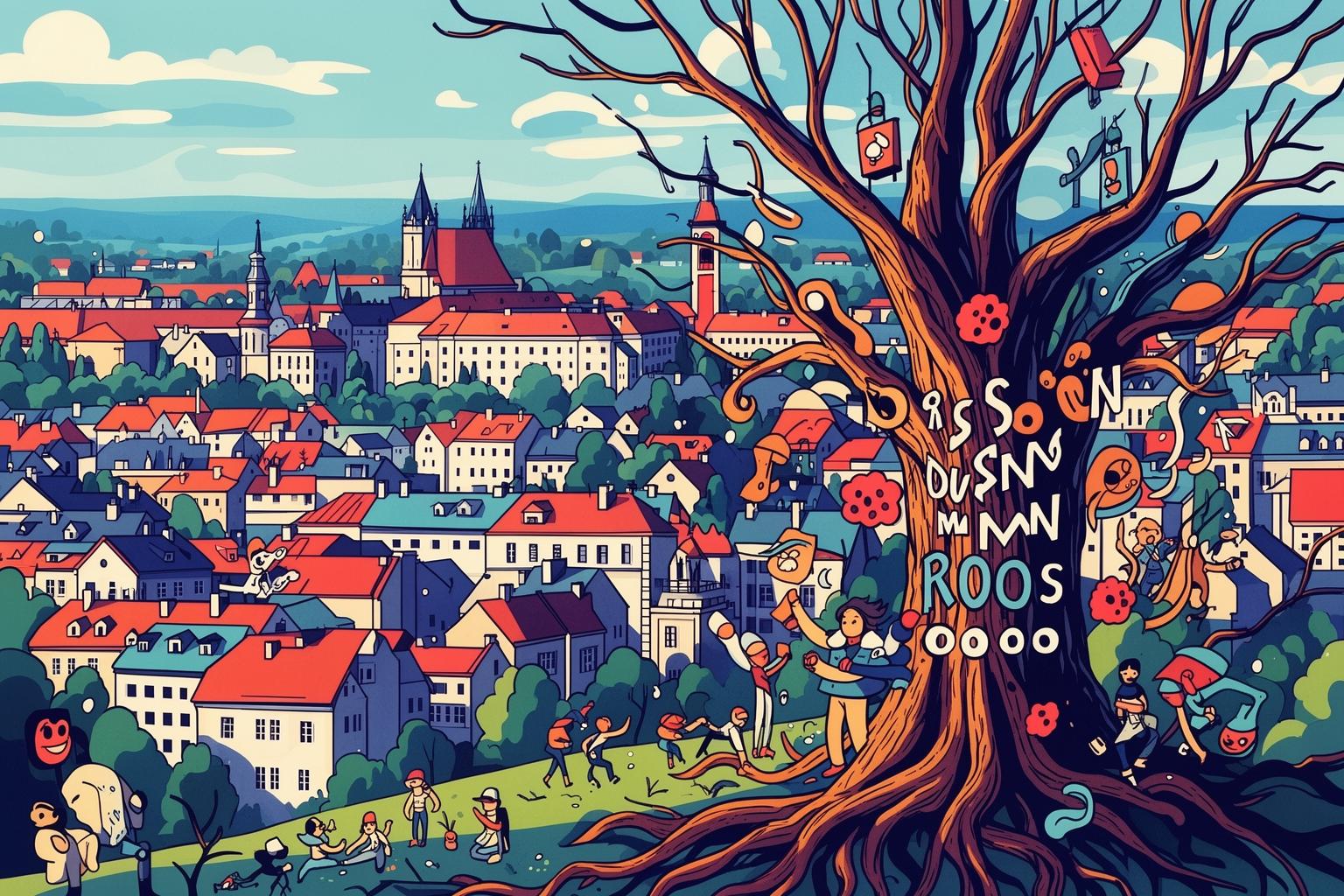
Every story begins somewhere, a source code. For Milan Kundera, that origin is Brno. Less renowned than Prague and less fairy-tale-like, Brno possesses a different kind of soul. It is a city of industry and intellect, of functionalist architecture and a profound, enduring musical heritage. It feels more grounded, more tangible, perhaps, than the gilded capital. This is Moravia, a region with its own unique culture, rhythms, and folklore—a world pulsing beneath the surface of Kundera’s first major novel, The Joke. To understand Kundera, one must first grasp the particular weight and melody of Brno, the city that shaped his early years.
A City of Echoes and Music
Strolling through Brno, you sense a city at ease with itself, unburdened by the tourist crowds that flood Prague. The atmosphere here carries a different resonance. This is the city where Kundera was born on April 1, 1929, into a culturally rich environment. His father, Ludvík Kundera, was a distinguished pianist, musicologist, and head of the Janáček Academy of Music and Performing Arts. Music is not merely a backdrop in Kundera’s life; it is the structural and thematic essence of his work. His novels often unfold like sonatas, with recurring motifs, shifting tempos, and contrapuntal character arcs. This sensibility was forged here, in Brno’s drawing rooms and concert halls. The city’s energy is less about spires and more about substance. You feel it in the confident lines of its modernist buildings, a testament to an optimistic spirit between the wars, a spirit soon to be crushed. The best way to absorb this is to wander aimlessly. Begin near Špilberk Castle, which towers above the city—a former prison standing as a stark reminder of the region’s turbulent history of occupations and rebellions. From its ramparts, you can survey a tapestry of red roofs and green parks below and reflect on the layers of history Kundera would later excavate with surgical precision.
Literary Landmarks of a Youth
Kundera’s Brno is not a theme park of literary attractions. He was intensely private, and the city honors that. Yet, for devoted readers, certain places resonate quietly but profoundly. An important stop is Purkyňova Street, number 6—the apartment building where Kundera’s family lived. There is no blue plaque or museum inside. It is just an ordinary building on an ordinary street. And that is its power. Standing across from it, you must summon your imagination to picture a young Milan gazing out the window, absorbing the sights and sounds of his neighborhood, perhaps already sensing the stirrings of alienation and intellectual curiosity that would define him. This is a deeply internal experience, much like his novels. Nearby stands the Klasické gymnázium, the grammar school he attended. Again, it is simply a school, but here his formidable intellect was honed and where he grappled with ideas that would shape his life’s work. To connect with this past, visit the Moravian Library, a center of knowledge and a place where a young, aspiring writer might have spent countless hours. Sit quietly in its reading rooms and feel the continuity of intellectual tradition flowing through this city. It is in these unassuming places, off the tourist trail, that you come closest to the spirit of the young Kundera.
The Landscape of The Joke
To truly grasp Kundera’s Moravian roots, one must understand the setting of his debut novel, The Joke. The work is a scathing critique of the absurdity and cruelty of totalitarianism, but it is also deeply Moravian. The protagonist, Ludvík Jahn, is expelled from the Communist Party for sending an ironic postcard, and his story is intertwined with regional folk traditions, especially the Ride of the Kings ceremony. This connection to folklore is more than decorative; Kundera uses it to explore themes of identity, authenticity, and cultural erosion under a monolithic ideology. When visiting Brno, consider a day trip into the surrounding Moravian countryside. This is a land of rolling hills, vineyards, and small villages where time seems to move more slowly. In spring and summer, the fields are vibrant green; in autumn, the vineyards are heavy with grapes. This is the world that Ludvík yearns for and feels alienated from. Visiting a local winery or attending a folk festival allows you to feel the deep cultural roots the novel’s characters desperately strive to preserve. This experience lends a visceral dimension to the book, transforming it from a political critique to a personal tragedy grounded in a specific, cherished place.
Practical Tips for Brno
Brno is easily reachable, positioned at a crossroads of Central Europe. High-speed trains connect it to Prague (about 2.5 hours), Vienna (around 1.5 hours), and Bratislava. The ideal time to visit is late spring or early autumn, when the weather is pleasant and the city hums with cultural events without the summer crowds. Brno is highly walkable, but its tram and bus public transport system is efficient and user-friendly. To fully appreciate the city’s architectural heritage, tour the Villa Tugendhat, a modernist masterpiece and UNESCO World Heritage site, offering a glimpse into the sophisticated, cosmopolitan world that existed before the Iron Curtain fell. For evening entertainment, try to get tickets to a performance at the Mahen Theatre, one of Europe’s first theaters lit by electric lights, or check the Janáček Academy’s schedule—his father’s institution—to connect with the city’s living musical spirit. Don’t hesitate to explore the smaller pubs and restaurants away from the main square, Zelný trh (the Cabbage Market), to discover authentic Moravian cuisine. Here lies the true Brno, a city of quiet confidence and rich cultural resonance.
Prague: The Unbearable Lightness of a Stage
If Brno served as the rehearsal, Prague was the grand, tragic opera of Milan Kundera’s Czech life. This city haunts the pages of his most renowned work, The Unbearable Lightness of Being. It is a place of stunning beauty, a theatrical stage of cobblestone streets, Gothic spires, and the peaceful flow of the Vltava River. Yet, for Kundera, this beauty was always a veneer, a mask concealing a darker truth. His Prague is a city of whispered talks in smoky cafés, political betrayals, and love and life unfolding under the crushing weight of history. Walking through Prague with Kundera as your guide reveals a perspective beyond the charming postcards, offering a glimpse into the soul of a city caught between heaven and hell, between the lightness of freedom and the heaviness of occupation.
A Fairytale Facade, A Brutal Reality
Prague’s initial impression is one of overwhelming beauty. Crossing Charles Bridge at dawn, with saint statues silhouetted against a pink sky and Prague Castle glowing on the hill, feels like stepping into a dream. This is the city’s seductive power, its “kitsch” in Kundera’s words—an idealized and beautiful image masking complex realities. Kundera witnessed the city during both its most hopeful and most tragic periods. He was a professor at the prestigious film school FAMU in the 1960s, a time of intense artistic and political ferment culminating in the Prague Spring of 1968. This era was filled with lightness and possibility, when “socialism with a human face” seemed attainable. You can sense a ghost of that optimism in the vibrant student districts near the National Theatre or the intellectual hum still present in cafés like Slavia, where artists and dissidents once gathered. But the dream was shattered in August 1968 when Soviet tanks entered Wenceslas Square, a long, sloping boulevard that became the stage for both defiance and defeat. Today, it is a bustling commercial center, yet standing at its summit, looking down toward the Old Town, it’s impossible to escape the historical weight of that moment—the moment when lightness became unbearable.
Tracing Tomas and Tereza
The Unbearable Lightness of Being is so intertwined with Prague that the city itself becomes a vital character. Though Kundera seldom gives exact addresses, his characters move through a vivid, atmospheric version of the city. Following their footsteps is about seeking a feeling rather than ticking off landmarks. Begin at Petřín Hill, a large park overlooking Malá Strana (Lesser Town). Climb the winding paths past rose gardens and apple orchards—this is a place of romance and escape, where lovers wander and where one can imagine Tomas and Tereza stealing a moment of peace, gazing down on the city that is both their home and their prison. From there, wander down to Kampa Island, a peaceful pocket of Prague beside Charles Bridge. With its charming houses and the Čertovka canal, known as the Devil’s Stream, it’s easy to picture Tereza walking her dog, Karenin, by the water’s edge, reflecting on the weight of her love for Tomas. Key moments in the novel are tied to the sensation of being watched, where public life intersects with private tragedy. To experience this, spend time in Old Town Square. See the spectacle of the Astronomical Clock, then retreat to a corner and watch the crowds. Imagine the spies and informers of the Normalization era that followed the invasion, the constant sense that every act and word was under surveillance. This is the Prague Kundera captures: a city where beauty and paranoia coexist.
FAMU and the Creative Spark
For a more concrete link to Kundera’s life, visit the Film and TV School of the Academy of Performing Arts (FAMU), located near the Smetana Embankment in the city’s heart. Kundera was a respected professor here, teaching world literature and mentoring filmmakers who became leading figures of the Czech New Wave, such as Miloš Forman and Jiří Menzel. The school occupies an elegant building, and while access may be limited, standing outside lets you tap into the creative energy of that time. FAMU was a hub of intellectual rebellion, where art was a tool for challenging authority and exploring the human condition with unflinching honesty. It was here that Kundera developed many of his ideas about the novel and its societal role. The creative spirit of the Czech New Wave—with its dark humor, social critique, and poetic realism—parallels Kundera’s literary style perfectly. After visiting FAMU, consider watching a classic film from the era, such as Loves of a Blonde or Closely Watched Trains, to see the city and its people through the eyes of those he inspired.
Navigating the Golden City
Prague can feel overwhelming, especially during the busy summer tourist season. To discover the quieter, more reflective city that Kundera’s novels evoke, a strategic approach is essential. Visit popular sites like Charles Bridge and Prague Castle early in the morning or late in the evening to avoid heavy crowds. Utilize the excellent public transport system; trams are not only practical but also a wonderful way to see the city unfold from new angles. Most importantly, allow yourself to get lost. Wander beyond the Royal Route through neighborhoods like Vinohrady, with its stunning Art Nouveau buildings and leafy squares, or the more bohemian, slightly rougher Žižkov, known for its numerous pubs and the towering television structure. These areas offer a more authentic glimpse of Prague life, far from souvenir shops and street performers. Here, you can find a quiet café, order a coffee, and open a book, letting the city’s rhythm seep in. This is how you uncover the Prague beneath the kitsch—the city Kundera both loved and was ultimately compelled to leave.
Paris: The Art of Exile
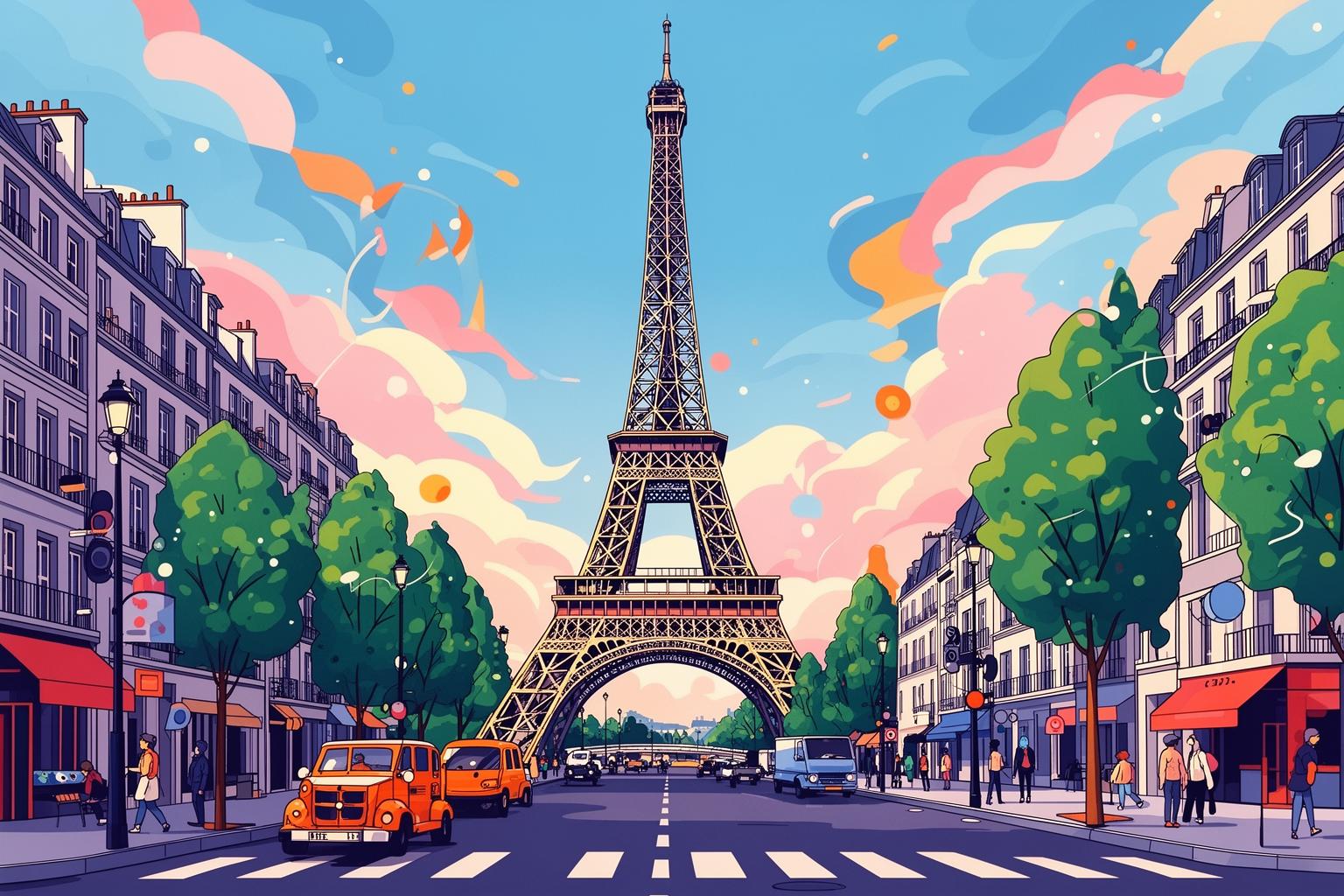
In 1975, Milan Kundera arrived in Paris stripped of his citizenship and banned from publishing in his homeland. This was not the romantic quest of an artist seeking inspiration but the painful displacement of an exile. For Kundera, Paris was not a fresh start but a continuation—a place where he could preserve his writerly identity while grieving the loss of his language and his world. The final chapter of Kundera’s journey is thus defined by contrasts: the grandeur of Paris versus the intimacy of Prague, the freedom of the West against the suffocating memories of the East. It is a passage into a more abstract realm, the landscape of a mind rebuilding itself on foreign ground. Kundera’s Paris is less a city of landmarks and more a city of ideas—a refuge where he transformed exile’s tragedy into a profound meditation on the human experience.
A New Language, A Heavy Past
Imagine arriving in Paris, a city renowned for artistic freedom, yet burdened with the weight of a silenced past. Kundera and his wife, Věra, began a new life—first in Rennes, where he taught, then later in Paris itself. The city must have felt both liberating and alien. The grand Haussmannian boulevards, so confident and orderly, stand in stark contrast to the crooked, mystical streets of Prague’s Malá Strana. This physical divergence reflects the internal shift Kundera faced: leaving behind the Czech language, the vessel of his literary voice, to embrace French. This monumental choice, examined in his essays and evident in novels like Slowness and Identity, gave his later work a different texture—more distilled and philosophical, less rooted in his homeland’s soil but broader in scope. To walk through Paris is to witness this transition. Stroll along the Seine, absorbing the city’s monumental self-assurance, and imagine seeing it not as a tourist but as someone for whom the past has become a foreign country with no return.
The Latin Quarter and a Life of the Mind
Though Kundera was famously reclusive and did not frequent literary cafés as Sartre or de Beauvoir did, the intellectual heart of his Paris was undoubtedly the Latin Quarter—the 5th and 6th arrondissements. This historic domain of the Sorbonne, numerous publishers, and iconic bookstores became the new context for his ideas. A walk through this neighborhood is essential. Begin in the Jardin du Luxembourg, an ideal spot to sit and read. The formal gardens, adorned with statues and fountains, exude a controlled, rational beauty distinctly French, contrasting with the wilder, more romantic parks of Prague. It is a place for contemplation, where one might imagine Kundera working through the intricate structures of his novels. From there, wander towards the Seine, browsing the bouquinistes’ second-hand bookshelves lining the riverbank. Visit the legendary Shakespeare and Company bookstore, a sanctuary for English-speaking writers and readers. While not frequented by Kundera, it captures the literary spirit of Paris—the city as a refuge for the written word. In these surroundings—the quiet intensity of a university library, the scent of old paper in a bookstore, the hum of intellectual debate in a café—you encounter the Paris that nurtured Kundera’s second act as a writer.
Finding an Invisible Man’s City
There is no “Kundera’s café” or “Kundera’s favorite bench.” He fiercely guarded his privacy, believing the author’s life should remain separate from his work. This makes a physical pilgrimage challenging but also more rewarding, compelling you to seek the essence of his experience rather than a series of photo opportunities. Kundera’s Paris is found in everyday moments of quiet observation. He lived many years in the 14th arrondissement, a largely residential area far from tourist hubs. Exploring this neighborhood offers a glimpse into the authentic, lived-in Paris—a place of local markets, quiet parks, and cozy brasseries. One of the most poignant sites, however, is his final resting place in Montparnasse Cemetery. This peaceful cemetery is home to many great artists and thinkers, including Jean-Paul Sartre, Simone de Beauvoir, Charles Baudelaire, and Man Ray. Visiting Kundera’s grave is a powerful experience: a simple, modest marker reflecting his character. Standing there in the quiet heart of his adopted city invites reflection on the fullness of his journey—from the hopeful artist in Brno, to the celebrated then condemned intellectual in Prague, to the world-renowned yet intensely private master of the novel in Paris. It is a place to contemplate his legacy and his wrestling with memory, forgetting, and the ultimate lightness of being.
Parisian Practicalities
Paris is best explored on foot, though its Métro system is a masterpiece of efficiency for longer distances. Purchase a carnet of ten tickets for better value. To capture the spirit of Kundera’s intellectual exile, focus on experiences rather than popular sights. Instead of queuing for the Eiffel Tower, visit a smaller, more intimate museum like the Musée de la Vie Romantique or the Musée Zadkine. Find an independent cinema in the Latin Quarter and watch a film. The key is to slow down. The title of Kundera’s first French novel, Slowness, offers a clue. Despite its bustling energy, Paris provides endless opportunities for slow, deliberate observation. Sit for an hour at a café with nothing but a coffee and a notebook. Spend an afternoon in the Luxembourg Gardens. Walk along a canal. In these unhurried moments, away from the pressure to “see everything,” you connect with the contemplative, philosophical spirit that defines Kundera’s years in Paris.
The Journey’s End: Reflections on an Invisible Map
A journey tracing the footsteps of Milan Kundera ultimately becomes a voyage across an invisible map, linking the tangible streets of Brno, Prague, and Paris with the internal landscapes of his novels. These three cities are more than mere settings; they embody the three principal movements of his life’s symphony: the Moravian prelude of his youth, the dramatic crescendo and collapse of the Prague Spring, and the quiet, contemplative Parisian coda of his later years. Traveling between them is to witness the evolution of his thought, to sense the seismic shifts in his perspective as he transitioned from citizen to dissident to exile. This pilgrimage demands more than mere presence; it invites you to think, to question, and to view the world through the same ironic, compassionate, and fiercely intelligent gaze that he cast upon it.
Connecting the Dots of a Life
Brno lays the foundation with themes of music, folklore, and the initial bitter taste of ideological absurdity. It is the city of The Joke, where individual lives are irreversibly broken by the grand, impersonal forces of history. Its functionalist architecture reflects a lost optimism, a future stolen away. Prague stands at the heart of the drama, the beautiful yet cruel stage for The Unbearable Lightness of Being. It is a city of contrasts: beauty and terror, love and betrayal, lightness and weight. Its golden spires and shadowed alleys perfectly echo the philosophical tensions driving his work. It is the city of his profound trauma, the loss of his homeland, first metaphorically and then literally. Lastly, Paris is the city of reflection—a sterile laboratory where, distanced from his origins, Kundera could dissect the human condition with the cool precision of a surgeon. Here he explored nostalgia, the illusion of return, and the nature of identity when detached from one’s past. Journeying through these three cities allows the traveler to understand how a writer’s geography shapes their soul. The Moravian soil, the Prague cobblestones, and the Parisian pavement are the very surfaces on which Kundera’s worldview was built.
The Elusive Idea of Home
In the end, this journey offers a profound meditation on the concept of home. What defines it? Is it the place of one’s birth? The language one speaks? Or is it a state of being, an internal sense of belonging that can be lost and perhaps never fully recovered? Kundera’s life and work propose that for the exile, home becomes a phantom, a memory at once cherished and suspect. His characters grapple endlessly with this question. They flee their homeland only to discover they cannot escape themselves. They seek lightness but remain bound to the weight of their past. By visiting the physical places that shaped his exile, you confront these same dilemmas. You stand on the streets of Prague, a city he was barred from returning to for decades, and then on the streets of Paris, the city that offered refuge but could never truly replace what was lost. This pilgrimage offers no easy answers. Instead, it deepens the questions, urging you to consider your own relationship with place, memory, and identity. It highlights the unsettling truth at the heart of Kundera’s work: that the most significant landscapes are those we carry within.
A Final Thought for the Traveler
To fully complete this journey, your most vital guidebook should be Kundera’s own words. Carry his books with you. Read a chapter of The Joke in a Brno café. Sit on Petřín Hill and revisit a passage from The Unbearable Lightness of Being. Find a bench in the Luxembourg Gardens and immerse yourself in The Book of Laughter and Forgetting. Let fiction and reality blend together. Allow the atmosphere of the cities to influence your reading, and let your reading illuminate the hidden meanings of the streets you traverse. This is more than a literary tour; it is an act of engaged reading, a dialogue between place, text, and your own consciousness. It is the most fitting way to honor a writer who believed the novel was the ultimate art form for exploring life’s complexities, laughing at its absurdities, and discovering a fragile, fleeting beauty in its unbearable lightness.