
Clint Eastwood’s 2006 masterpiece, Flags of Our Fathers, isn’t just a film; it’s a phantom limb of history, a haunting exploration of heroism, memory, and the crushing machinery of propaganda. It tells the story of the six men who raised the second American flag on Mount Suribachi during the Battle of Iwo Jima, and the subsequent, soul-shattering war bond tour that turned them into national symbols while their brothers in arms were still fighting and dying on that volcanic rock. To embark on a pilgrimage for this film is to chase ghosts across continents. It’s a journey that doesn’t lead to a single, sacred spot, but rather a constellation of disparate places that, together, recreate the film’s profound dichotomy: the stark, brutal reality of war and the manufactured gloss of the home front. This isn’t a simple location hunt. It’s a path that takes you from the alien, volcanic shores of Iceland to the grand, echoing avenues of Chicago, forcing you to confront the very nature of the story being told. Unlike many cinematic journeys, the actual hallowed ground of Iwo Jima remains largely inaccessible, a solemn memorial guarded by time and military protocol. Instead, the film’s creators sought out landscapes that could echo its soul, places that held the same raw, untamed energy. Our journey, then, is one of cinematic alchemy, tracing the steps of filmmakers as they forged a piece of history anew, using the world as their canvas. It’s an odyssey into the heart of a story that asks what it means to be a hero, and what happens when the image of heroism becomes more important than the person carrying its weight.
This cinematic alchemy of using landscapes to echo a story’s soul is a powerful technique, as seen in other profound journeys like the haunting pilgrimage to the filming locations of Memories of Murder.
The Black Sands of Iceland: Forging Iwo Jima
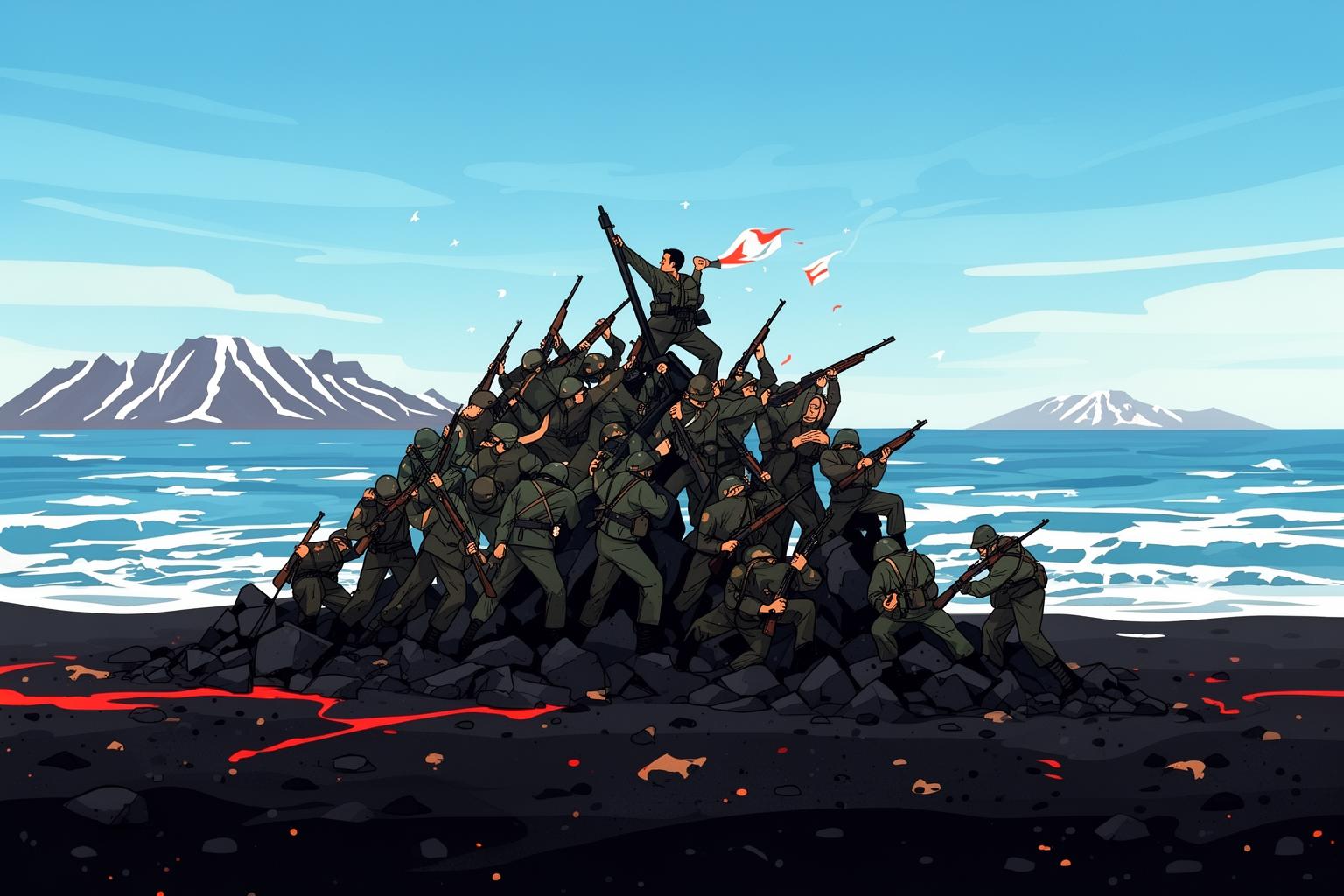
To grasp the visual essence of Flags of Our Fathers, you must journey to the edge of the world—or at least to a place that feels like it. The Reykjanes Peninsula in southwest Iceland is a landscape forged by fire and ice, a young and fierce geological canvas of black volcanic rock, steaming fumaroles, and endless windswept shores. It was here, on the black sand beach of Sandvík, that Clint Eastwood discovered his Iwo Jima. This choice was born out of necessity—the actual island is a sacred war grave—but it was also a stroke of cinematic brilliance. Iceland’s primordial terrain not only resembles the volcanic soil of Iwo Jima but also shares its spirit. It feels ancient and barren, a place stripped down to the barest essentials: earth, sea, and sky. Standing on Sandvík beach is a visceral experience. The sand is not soft or golden; it is a coarse, jet-black grit that swallows the light, creating a stark, high-contrast environment beneath the often-overcast Icelandic sky. The wind is ever-present, whipping off the North Atlantic with a biting chill that penetrates to your bones. It’s easy to understand why this location was chosen. A profound sense of isolation pervades here, a feeling of standing on civilization’s edge. You can almost imagine the landing craft reaching this shore, the air thick with smoke and men’s cries. The waves crash relentlessly in a rhythmic pounding that could be mistaken for distant artillery fire. The vast emptiness of the landscape invites the imagination to fill in the gaps, picturing the chaos and terror of the battle reenacted on this very ground.
The Aura of Sandvík
Visiting Sandvík is less about seeing specific props or set pieces—they are long gone—and more about absorbing the atmosphere. To reach it, you travel through the Reykjanes Geopark, a vast expanse of moss-covered lava fields that seem otherworldly. The journey itself sets the mood, peeling away the familiar comforts of the modern world. Upon arrival at the beach, its immense scale is breathtaking. It stretches for miles, bordered by jagged black cliffs and the churning gray-blue sea. This is where Eastwood staged the colossal amphibious landing scenes, a logistical marvel involving hundreds of extras, period-accurate landing craft, and explosive effects. Standing here, facing the ocean, you can almost sense the lingering vibrations of those movie explosions. The air seems weighted with memory, carrying the story etched into it. Look inland, and you see the rugged terrain that stood in for the island’s interior, a harsh, unforgiving landscape where Japanese forces were entrenched. The film’s masterful cinematography, with its desaturated, nearly monochromatic color scheme, feels drawn directly from the natural light of this place. There is very little green here—mostly the deep blacks of sand and rock, the gray sky, and the white foam of the waves. This setting invites deep introspection. The profound silence, broken only by wind and sea, encourages reflection on the intense violence both historically and cinematically captured here. It perfectly embodies the film’s grim tone.
A Practical Approach to a Primal Land
To fully experience the Icelandic locations of Flags of Our Fathers, renting a car is essential. The Reykjanes Peninsula lies just a short drive from Keflavík International Airport, making it an accessible first or last stop on your Iceland journey. You can visit year-round, but the experience shifts dramatically with the seasons. Summer offers the famous midnight sun, providing long daylight hours to explore the stark coastline beauty. The weather is milder, though still unpredictable. Visiting in late autumn or early spring might bring you closer to the film’s aesthetic. Shorter days, dramatic and often stormy skies, and a heightened sense of isolation intensify the desolate atmosphere Eastwood captured so well. Regardless of when you go, dress in layers. Icelandic weather is notoriously changeable. A waterproof and windproof outer shell, thermal underwear, a warm hat, gloves, and sturdy waterproof hiking boots are crucial. The coastal wind can be brutal, and being cold and wet will quickly spoil the meditative experience. While in the area, explore more of the Reykjanes Peninsula. Visit the Bridge Between Continents near Sandvík, symbolizing the tectonic plates of North America and Eurasia drifting apart. Explore geothermal regions like Gunnuhver or Krýsuvík, where the earth hisses and steams, a reminder of the volcanic forces simmering beneath the surface. These nearby sights deepen the otherworldly feeling of the region and provide a fuller understanding of why this part of Iceland was the only place on Earth that could convincingly represent the hellscape of Iwo Jima.
The Home Front: America’s Wartime Heartbeat
Following the raw, elemental power of Iceland, the pilgrimage takes a dramatic turn, moving into the core of the American wartime experience: its cities and landscapes. Eastwood skillfully contrasts the grim reality of battle with the polished, almost surreal spectacle of the Seventh War Loan drive. The flag raisers, pulled from the battlefield, are thrust into a world of ticker-tape parades, lavish dinners, and adoring crowds—a world as alien to them as the volcanic sands of Iwo Jima. Tracing these steps reveals the architecture of propaganda and the deep, complex emotions of a nation at war. It is a journey through grand halls and bustling streets of a country desperate for heroes.
Chicago, Illinois: A City of Parades and Echoes
Chicago serves as the primary setting for the war bond tour in the film. Its grand, muscular architecture creates the perfect backdrop for the orchestrated pageantry. The city, with its cavernous streets and towering skyscrapers, becomes a character itself—a symbol of America’s industrial and patriotic strength. Walking through downtown Chicago, especially around the Loop, feels like stepping back in time. Much of the 1940s streetscape remains intact, making it easy to imagine soldiers paraded through cheering crowds. Key filming locations, such as the historic Uptown Theatre, were used to recreate the grand venues where the flag raisers were displayed. Though currently undergoing restoration and not always accessible, its magnificent facade still evokes a bygone era of spectacle. Another important location is Union Station. Its Great Hall, with a soaring barrel-vaulted ceiling and classical columns, radiates a sense of monumental importance. It’s the kind of space where momentous arrivals and departures occur, and one can easily picture soldiers arriving, bewildered and overwhelmed, to begin their strange new roles as national icons. To truly connect with the film’s spirit in Chicago, take an architectural boat tour on the Chicago River. As you glide past iconic buildings, commentary often highlights the city’s history, including its role in World War II. You begin to understand how the city’s architecture—its confidence, scale, and grandeur—fed into the national narrative of strength and victory. The atmosphere here is one of profound contrast. Standing amidst celebration, you reflect on the quiet, internal suffering of the film’s protagonists. The echoes of fictional parades blend with the city’s real-life hustle, creating a dizzying, poignant sensation—a reminder of the vast gap between public perception and private pain at the heart of the film’s message.
Los Angeles, California: The Dream Factory Meets Reality
The pilgrimage next moves to Los Angeles, the city where dreams are manufactured. Although fewer specific public locations were used here compared to Chicago, LA’s role is thematically vital. Much of the film’s interior and studio-based shooting took place here, in the heart of Hollywood. Eastwood and his team worked at the Warner Bros. studio lot in Burbank, a place synonymous with classic American cinema. Visiting here is stepping into the mechanics of filmmaking itself. The Warner Bros. Studio Tour offers a fascinating behind-the-scenes look. While you may not see specific Flags of Our Fathers sets, you immerse yourself in the environment where the film was created—soundstages, backlots, prop departments—all parts of a massive apparatus crafting cinematic realities. This experience parallels the film’s theme: the construction of a narrative. Just as the studio carefully builds a world on a soundstage, the government in the film carefully constructed the heroic story of the flag raisers. The very air in Los Angeles, especially around Hollywood, pulses with this sense of artifice and storytelling. It’s a city that understands the power of image more than any other. This part of the journey invites a more abstract reflection—seeing the film not just as a story but as a constructed object. Visiting classic Hollywood landmarks like the TCL Chinese Theatre or the Hollywood Walk of Fame prompts contemplation of how these temples of celebrity relate to the reluctant fame forced upon Ira Hayes, Rene Gagnon, and John Bradley. Los Angeles represents the final product of the propaganda machine: the polished, palatable version of a horrific war, packaged and sold to the American public much like a Hollywood movie.
Rural Landscapes and Training Grounds
Beyond major urban centers, the production used other American landscapes to enrich the story’s visual tapestry. Specific locations are harder to identify, but some stateside training sequences and other exteriors reportedly were filmed in parts of Texas. These settings add another layer of contrast. The vast, open Texas plains symbolize a different kind of America—wide-open spaces, a sharp departure from Iwo Jima’s claustrophobic battlefield and Chicago’s dense urban canyons. Though brief, these scenes are crucial, showing soldiers before they became symbols: young men shaped into a fighting force. Visiting these rural areas, even without pinpointing exact filming spots, offers a chance to connect with the soldiers’ origins, many from small towns and rural communities across the country. It’s a reminder that the sweeping national narrative of war was built on the backs of individuals from every corner of the nation. This stage of the pilgrimage is less about finding exact locations and more about capturing a feeling—the great American heartland that sent its sons off to a distant, unimaginable war.
The Real Iwo Jima: A Sacred Ground
No pilgrimage related to Flags of Our Fathers would be complete without recognizing the real Iwo Jima, now officially called by its pre-war name, Iōtō. However, this part of the journey must be undertaken in spirit rather than in person. It is important to realize that Iōtō is not a tourist attraction. It is a place of deep and solemn remembrance, an active military base for the Japan Self-Defense Forces, and, above all, a graveyard. The island still holds the remains of thousands of Japanese and American soldiers who were never recovered. Access is strictly controlled and nearly exclusively reserved for official memorial tours organized for veterans, their families, and military personnel. For the average civilian or film enthusiast, setting foot on the island is simply not possible. This inaccessibility, in a way, is the most powerful aspect of the story. It preserves the island’s sanctity. The black sands of Iōtō are not meant to be wandered by tourists with cameras. They are consecrated ground, holding the memory of one of the most brutal battles in human history. To understand Iōtō is to honor its status as a place of peace and reconciliation. Each year, Japanese and American families come together for a joint Reunion of Honor ceremony, a testament to the healing that has taken place since 1945. The iconic Mount Suribachi still stands as a silent witness to the history that unfolded on its slopes. The summit, where the flag was raised, is now home to memorials from both sides of the conflict. This knowledge adds a profound reverence to the film. When watching the scenes recreated in Iceland, you are acutely aware of the real place they symbolize—a place too sacred to serve as a film set. This part of the pilgrimage is an inward one. It involves reading battle accounts, viewing historical photographs, and visiting memorials and museums far from the island itself. It is about understanding that certain hallowed grounds are meant to be respected from afar, their power residing not in their accessibility, but in their solemn, untouchable memory.
The Spirit of the Journey: More Than Just Locations
A true pilgrimage goes beyond merely ticking off a list of locations. It’s about immersing yourself in the essence of the story. The physical journey to Iceland and Chicago forms the framework, but the heart of the experience lies in connecting with the deeper historical and emotional context of Flags of Our Fathers. This involves engaging with the material that inspired and surrounds the film. Chief among these is the book of the same name by James Bradley, with Ron Powers. Bradley, the son of flag raiser John “Doc” Bradley, offers a deeply personal and thoroughly researched account of his father’s experience. Reading the book before or during your travels transforms what you see. The black sands of Iceland cease to be just a breathtaking landscape; they become the shore where you can almost hear the voices of the men Bradley brings to life. The streets of Chicago grow heavy with the weight of the performative heroism his father and others were compelled to endure. The book serves as the internal monologue for your external journey. The pilgrimage can also include visits to institutions preserving the history of the Pacific War. The National Museum of the Pacific War in Fredericksburg, Texas, provides a comprehensive and immersive overview of the conflict, offering the broader narrative within which the Battle of Iwo Jima occurred. Likewise, the National Museum of the Marine Corps in Triangle, Virginia, is a crucial stop. Its striking architecture, inspired by the image of the flag-raisers at Iwo Jima, houses compelling exhibits dedicated to the Corps’ history. Walking through these galleries, seeing artifacts, uniforms, and personal letters, creates a tangible connection to the real people behind the cinematic portrayals. These museum visits are not mere detours; they are essential elements of the pilgrimage. They close the gap between cinematic reenactment and historical reality, anchoring your experience in a profound sense of authenticity. They serve as a reminder that Flags of Our Fathers is not only a remarkable film—it is a sacred chapter in human history, marked by immense sacrifice and complex truths.
Planning Your Pilgrimage: A Practical Guide
Embarking on a journey across continents demands careful planning. This pilgrimage essentially involves two separate trips—a rugged, nature-focused adventure in Iceland and a historical, urban exploration in the United States—each requiring a unique approach.
An Icelandic Itinerary
For the Icelandic segment, your trip begins at Keflavík International Airport (KEF). Renting a car is absolutely necessary, as public transportation is not a practical option for exploring the remote coastal areas of the Reykjanes Peninsula. Plan to dedicate at least two or three days to this region. You can stay at a hotel near the airport, in the nearby town of Grindavík (home to the famous Blue Lagoon), or in Reykjavík, the capital, about a 45-minute drive away. A recommended itinerary would be to spend one full day visiting film locations. Start by driving along the southern coast of the peninsula toward Sandvík. Give yourself plenty of time to stop, step out of the car, and simply be present in the landscape. Feel the wind, walk the black sand, and climb the small volcanic hills. After Sandvík, explore the surrounding Reykjanes Geopark. On following days, you can easily venture to Iceland’s more renowned sights, such as the Golden Circle (Þingvellir National Park, Gullfoss waterfall, and the Geysir geothermal area) or the breathtaking waterfalls and glaciers along the South Coast. Combining the film pilgrimage with a broader tour of Iceland’s natural wonders will make for an unforgettable trip. Remember to book your rental car and accommodations well ahead, especially if traveling during the peak summer season.
A US Home Front Tour
The American segment of the trip can be adjusted based on your time and interests. You might focus solely on Chicago for a long weekend or combine it with Los Angeles and other destinations for a more extensive road trip. In Chicago, public transportation is excellent. You can easily explore the downtown Loop area on foot or via the ‘L’ train system. A hotel in or near the Loop puts you within walking distance of many key locations reminiscent of the film’s atmosphere, as well as the city’s world-class museums and architectural highlights. Plan for at least three days to fully experience the city. In Los Angeles, a rental car is essential, as the city is vast and sprawling. Concentrate your time on Hollywood and Burbank if your primary focus is the film industry connection. The Warner Bros. Studio Tour is a must and should be booked in advance. For a deeper historical exploration, consider visiting the National Museum of the Marine Corps in Virginia or the National Museum of the Pacific War in Texas. These destinations require additional flights and travel arrangements but would create the most comprehensive pilgrimage experience imaginable.
What to Pack and What to Expect
Your packing list will differ greatly between the two destinations. For Iceland, prepare for all types of weather at any time. Bring thermal layers, fleece, a high-quality waterproof and windproof jacket and pants, along with a warm hat, scarf, and gloves. Waterproof hiking boots with a good grip are essential. Even in summer, the weather can quickly turn cold, wet, and windy. For the US cities, pack for a typical urban trip. Comfortable walking shoes are the most important item. Check the seasonal weather forecast for Chicago, which can range from hot and humid in summer to bitterly cold and snowy in winter. Most importantly, bring a sense of reverence and an open mind. This journey is emotionally complex. Iceland’s landscapes are beautiful but stark. The history you will confront is sobering. Be ready for moments of quiet reflection and a journey that will stay with you long after you return home. This is an exploration of the shadows behind a famous photograph, requiring a willingness to look beyond the surface.
A Final Reflection
To pursue the legacy of Flags of Our Fathers is to realize that some stories are too vast to be confined to a single location. This is a pilgrimage of echoes, stand-ins, and spiritual journeys to places you may never physically visit. It is a path leading to the raw, volcanic heart of creation in Iceland, where a piece of cinematic history was shaped by black sand and relentless wind. It guides you through the proud stone canyons of Chicago, where the hollow echo of manufactured glory still lingers. And finally, it calls you to stand still, gaze across the expanse of the Pacific, and honor a sacred island from a distance. Standing on the shores of Sandvík, you don’t just see a film location; you feel the weight of the story Eastwood sought to tell. Walking the streets of Chicago, you don’t just observe historic buildings; you sense the heavy burden borne by young men told they were heroes. This journey stands as a testament to cinema’s power to transport us and the lasting significance of separating myth from the man. It is a profound, moving, and unforgettable way to connect with a film that dared to look beyond the flag, to see the faces of the boys who raised it, and to honor the silent truth they carried home.