There are journeys that move you from one place to another, and then there are journeys that move you through time, through stories, through the very fabric of your own perceptions. The Trans-Siberian Railway is emphatically the latter. It is not merely a train ride; it is a rolling epic, a steel-and-steam pilgrimage across the largest country on Earth. Spanning eight time zones, over 9,000 kilometers of track, and a dizzying breadth of human and natural landscapes, this is the grand dame of all rail adventures. The name itself conjures images of snow-dusted birch forests, the romantic intrigue of Tsarist Russia, the vast, soulful emptiness of the Siberian taiga, and the rhythmic clatter of wheels on steel, a sound that becomes the very heartbeat of your existence for a week or more. It’s a journey that has been etched into the global consciousness by writers, spies, adventurers, and dreamers, a moving artery that connects the gilded domes of Moscow with the foggy, Pacific-kissed hills of Vladivostok or the ancient hutongs of Beijing. To board this train is to willingly disconnect from the frenetic pace of modern life and surrender to the slow, deliberate unfolding of a continent. It is to find community in a shared compartment, to taste the history in a piece of black bread sold by a babushka on a remote platform, and to watch the world transform through a smudged window, one kilometer at a time. This is more than travel; it is a meditation in motion, an invitation to understand a scale of distance and culture that is almost impossible to grasp until you are living it, breathing it, and letting its profound rhythm carry you eastward into the dawn.
Much like the journey itself, this epic train route has inspired countless other literary and cultural pilgrimages, such as tracing the footsteps of Umberto Eco across Italy.
The Soul of the Rails: More Than Just a Journey
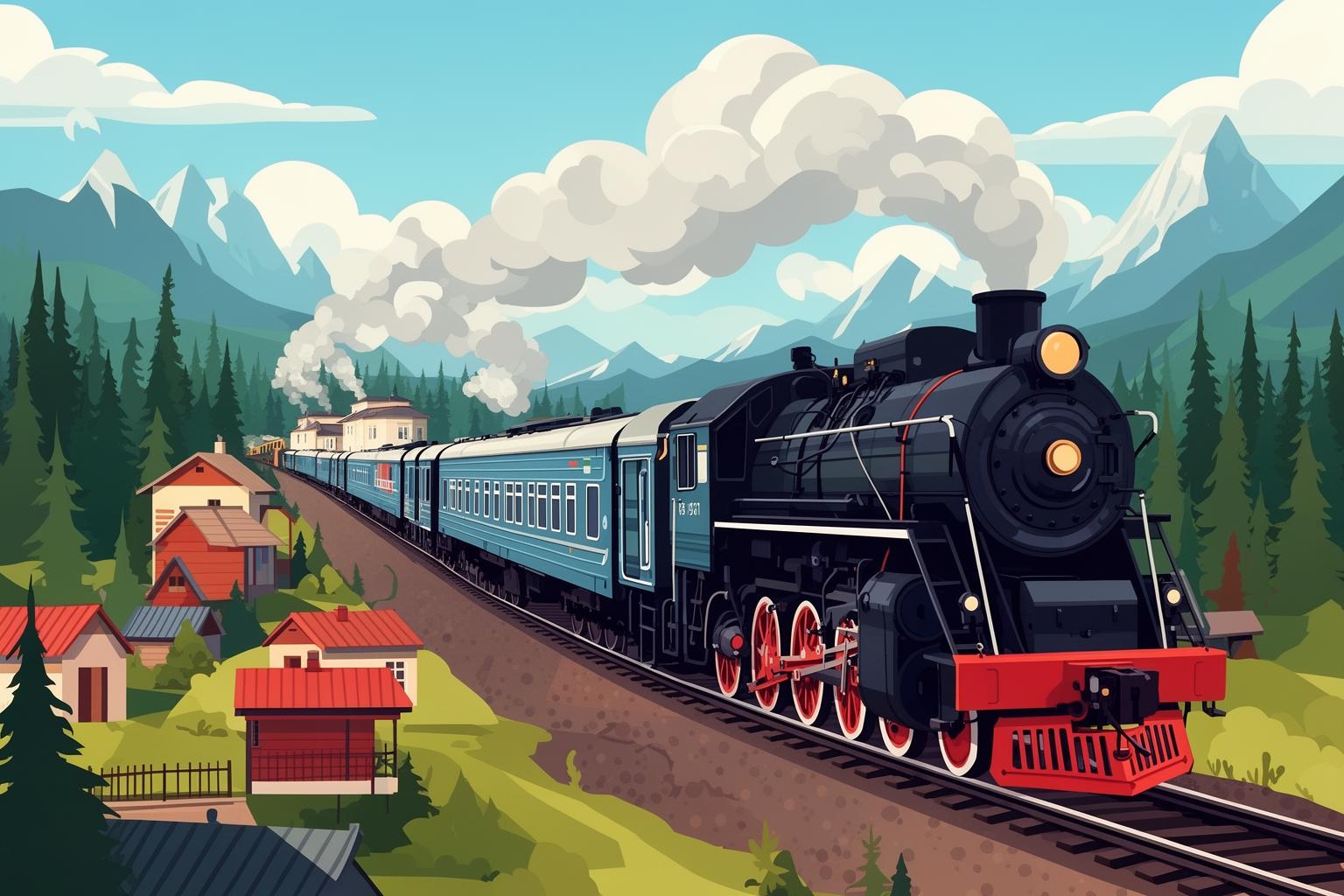
Why do we pursue journeys like this one? In an era of instant gratification and rapid travel, the deliberate, unhurried rhythm of the Trans-Siberian feels like an act of defiance. It’s a conscious decision to embrace the in-between, to find significance not only in the destination but also in the vast, sprawling spaces that lie between the points on a map. The essence of this experience rests in its unique power to transform your sense of time. Days stop being dictated by appointments and deadlines and instead are marked by the shifting light across the steppe, the brief, bustling energy of a twenty-minute station stop, and the comforting ritual of brewing tea from the carriage’s ever-present samovar. The train becomes a microcosm of the world, a moving village where lives intersect for a brief, intense spell. You might share a four-berth compartment with a Russian soldier returning home on leave, a Mongolian student headed to university, and a fellow traveler from another corner of the globe. Conversations, often fragmented and pieced together with gestures and translation apps, flow as freely as the cheap vodka sometimes offered as a gesture of friendship. These moments define the journey—the shared laughter over a card game, the quiet communion of watching a fiery sunset over an endless forest, the unexpected bond formed with a stranger who, for a few days, becomes your neighbor, your confidant, your family. This is the human geography of the railway, as rich and varied as the physical landscape itself. The train also serves as a vessel for introspection. With the distractions of the digital world fading amid patchy connectivity, your mind is free to wander. It’s a journey that has inspired countless artists and writers, and it’s easy to see why. The sheer, magnificent monotony of the landscape—the endless stretches of birch and pine, the occasional glimpse of a rustic dacha with smoke curling from its chimney—induces a meditative state. It is a canvas onto which you can project your thoughts, dreams, and reflections. The rhythmic sway and clatter of the train is a constant, soothing soundtrack, a pulse that lulls you to sleep at night and greets you in the morning. This is not a passive sightseeing trip; it is an active experience of being, slowing down enough to truly see, feel, and connect with a world that is vast, wild, and profoundly beautiful.
Charting Your Course: The Three Great Routes
The term “Trans-Siberian Railway” is often used broadly, but it actually denotes a network of railways with three main routes that captivate travelers’ imaginations. Each route offers its own story, a unique cultural experience, and a distinct conclusion to your transcontinental adventure. Choosing your route is the first crucial step in shaping your journey, influencing its entire character. Are you seeking the authentic, unfiltered Russian experience from coast to coast? Or are you enticed by the allure of the East, where your trip ends amidst the imperial grandeur of China or the vast expanses of the Mongolian steppe? Your choice marks the beginning of your story.
The Classic: The Trans-Siberian (Moscow to Vladivostok)
This is the original and longest continuous rail line globally, embodying the quintessential Trans-Siberian experience. Spanning 9,289 kilometers, it offers complete immersion into the core of Russia. Starting at Moscow’s Yaroslavsky Station and ending in the port city of Vladivostok, the journey gradually unveils the nation’s vastness and complexity. Departing the political and cultural hub of European Russia, you travel eastward as the landscape shifts subtly at first, then dramatically. The train crosses the Ural Mountains—the traditional, though invisible, divide between Europe and Asia—before entering the Siberian wilderness. This route traverses dense forests, mighty rivers like the Ob and Yenisei, and cities shaped by resilience and isolation. Stops in Yekaterinburg, Novosibirsk, and Irkutsk offer glimpses into Siberian life, each with its distinct history and character. The final stretch skirts the borders of China and North Korea before arriving in Vladivostok, which means “Ruler of the East.” Reaching this Pacific coast city feels like arriving at the world’s edge, a dramatic end to the journey. This route suits purists who want to grasp Russia’s overwhelming vastness, feel its history woven into the rails, and see its soul in the endless birch forests.
The Eastern Intrigue: The Trans-Manchurian (Moscow to Beijing via Manchuria)
For those drawn to the vibrancy of China, the Trans-Manchurian route offers an intriguing alternative. It follows the classic Trans-Siberian track for most of the way, crossing the Urals and Siberia. The divergence occurs near Chita, close to the Mongolian border, where the train turns southeast instead of continuing east to the Pacific. Crossing into northeastern China—historically called Manchuria—the atmosphere changes noticeably. Cyrillic signs give way to Chinese characters, birch forests transform into farmland, and the cultural vibe shifts instantly. This route offers a compelling contrast, revealing both the deep differences and subtle parallels between these two neighboring giants. You’ll pass through Chinese industrial centers like Harbin, renowned for its Russian-style architecture and spectacular winter ice festival. The journey ends in Beijing, a bustling metropolis where imperial palaces, ancient alleyways, and futuristic skyscrapers collide. This route tells the story of two empires, linking the Tsars’ legacy with modern China’s dynamism.
The Steppes of Legend: The Trans-Mongolian (Moscow to Beijing via Mongolia)
Often regarded as the most popular and visually stunning of the three, the Trans-Mongolian route delivers a breathtakingly diverse adventure. Like the Trans-Manchurian, it follows the main Siberian line until reaching Buryatia near Lake Baikal. From Ulan-Ude, it veers south into Mongolia. Here, the landscape transforms profoundly. The dense Siberian taiga gives way to the expansive, mesmerizing Mongolian steppe and Gobi Desert, where the sky broadens and horizons expand. A stop in Ulaanbaatar, Mongolia’s capital, offers insight into the nation’s rich nomadic heritage and the chance to spend a night in a traditional ger under a star-studded sky. One of the route’s most unique moments occurs at the Mongolian-Chinese border, where a difference in rail gauge requires the entire train to be lifted in a massive shed as its wheelsets are changed—a fascinating engineering spectacle that takes several hours. Crossing into China, the train traverses mountains and terraces before reaching its grand finale in Beijing. This route appeals to travelers seeking variety, who want to experience not two but three distinct worlds—the forests of Russia, Mongolia’s steppes, and the ancient heart of China—all woven into one unforgettable journey.
Life Aboard the Steel Caravan
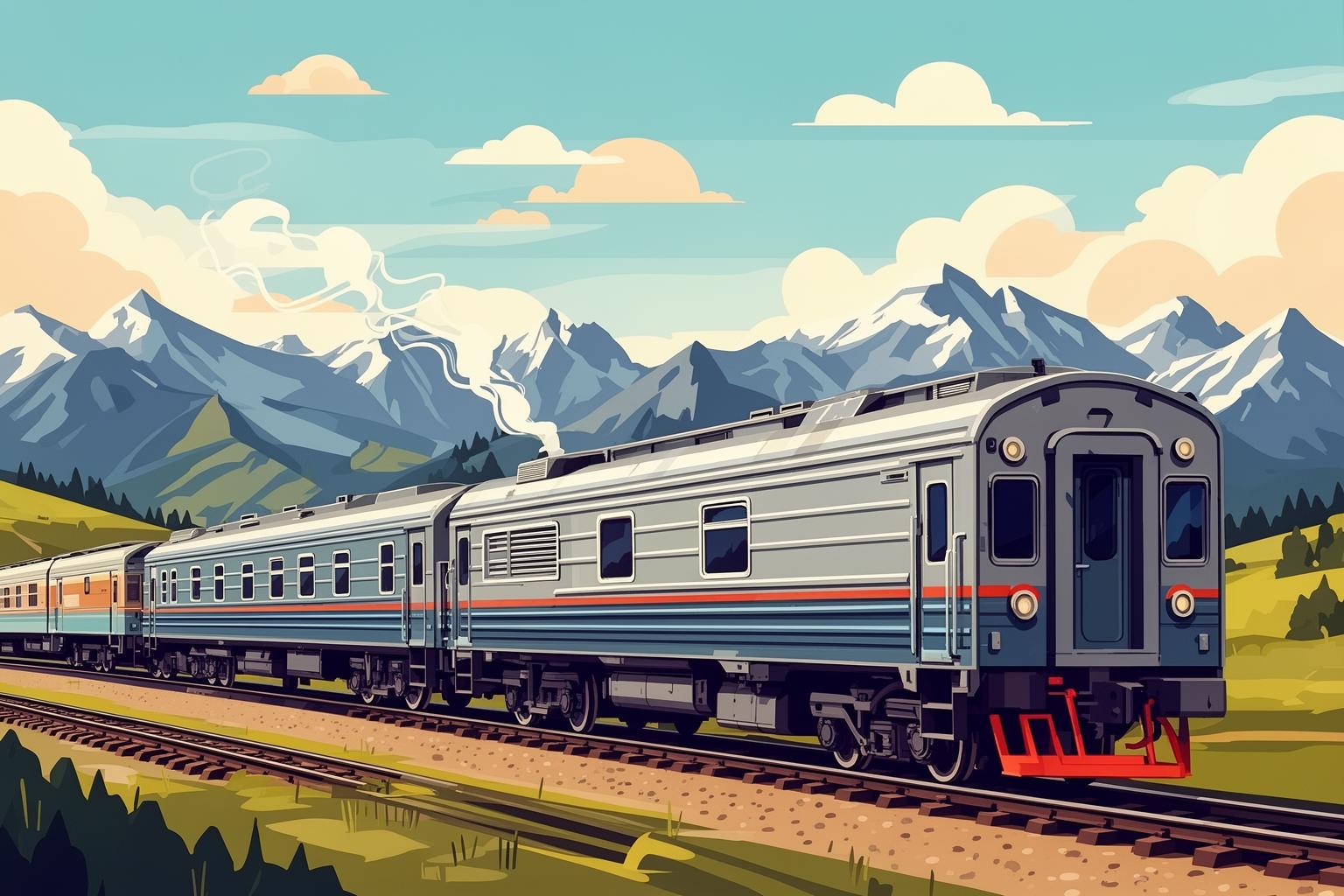
Life on the Trans-Siberian train settles into a soothing, almost hypnotic rhythm. Your small compartment becomes your whole world—a moving sanctuary from which you watch an entire continent glide past. The train serves not only as your transport but also as your hotel, restaurant, and social hub. To truly savor the experience, it’s important to understand the subtleties of life aboard. From selecting your travel class to mastering the art of platform shopping, the daily rituals of the railway are an essential part of the journey.
Choosing Your Sanctuary: Classes of Travel
The class you choose will greatly influence your social interactions, comfort level, and budget. Each class offers a unique perspective on Russian rail travel, complete with its own benefits and personality.
First Class (Spalny Vagon/SV)
Known as SV, this is the most private and comfortable way to travel. First-class compartments contain only two berths, one on each side of a small table. By day, these convert into cozy sofas; by night, they transform into beds. The door locks securely from the inside, providing a peaceful and private retreat. This option is perfect for couples, solo travelers who value solitude, or anyone needing a quiet space to work or reflect. These compartments often feature modern amenities, sometimes including a small television or armchair, and the ticket price usually covers meals from the dining car. Though you may miss some of the spontaneous socializing found in other classes, you gain a sense of personal space and tranquility. The provodnitsa (carriage attendant) in first class is typically very attentive, keeping your cabin clean and meeting your needs. It’s a serene way to watch the world pass by, cocooned in your own private bubble.
Second Class (Kupe)
Kupe offers the classic Trans-Siberian experience and is the most popular choice for tourists and middle-class Russians alike. These four-berth compartments feature two upper and two lower bunks. During the day, the lower bunks serve as seating for all four passengers around a shared table; at night, the space converts into a cozy shared bedroom. This is often where the magic happens. Sharing this intimate space with strangers can seem intimidating but frequently leads to incredible cross-cultural connections. Sharing food, stories, and photos is common. As a solo female traveler, I’ve learned that caution is wise—always lock the door from the inside at night (there’s a secondary latch) and keep your valuables in your pillowcase or a money belt while you sleep. Choosing a lower bunk gives you priority access to the storage space beneath, ideal for securing your main luggage. Kupe strikes a perfect balance between comfort, privacy (when the door is closed), and social interaction.
Third Class (Platskartny)
For budget travelers or cultural purists, Platskartny offers the raw, authentic Russian train experience. The carriage is open-plan, housing 54 bunks arranged in groups of four on one side of the aisle and pairs running lengthwise along the other. There are no doors, no compartments, and very little privacy. You live, sleep, and eat in plain sight of your fellow passengers. While this might feel overwhelming, it is also the most immersive and, in some ways, the safest way to travel. The open layout fosters a strong sense of community and mutual care. Passengers watch out for each other and their belongings. You’ll be surrounded by the sounds and smells of Russian life: families chatting, the aroma of instant noodles and smoked sausage, babies crying, and passengers snoring. It’s an intense sensory experience not for everyone, but those who embrace it gain an unparalleled glimpse into the everyday life of the country.
The Rhythm of the Day: Food, Drink, and Daily Rituals
Days on the train follow simple, comforting routines centered around the samovar, a large metal urn at the end of each carriage dispensing boiling water around the clock. It serves as the heart of the carriage, providing endless cups of tea, coffee, and bowls of instant noodles. Bringing your own mug is essential. The dining car offers a more formal option—a place to leave your compartment, meet other travelers, and enjoy a proper meal as the scenery unfolds outside. The menu typically includes Russian staples like borscht (beet soup), pelmeni (dumplings), and beef stroganoff, with quality ranging from surprisingly good to just adequate. Though a bit pricey, it’s worth visiting at least once for the experience. The true culinary adventure, however, takes place on the station platforms. During longer stops (20 minutes or more), local vendors—often elderly women called babushkas—set up impromptu markets, offering a wonderful selection of homemade and regional foods: pirozhki (stuffed pastries), smoked omul fish (near Lake Baikal), fresh berries, boiled potatoes, and ice cream. This is your chance to sample authentic regional cuisine. Keep small-denomination rubles handy, and always heed the provodnitsa’s call to re-board. Most travelers adopt a mixed approach, bringing non-perishable supplies while supplementing with treats from the dining car and platform vendors.
Stepping Off the Train: Key Stops on the Siberian Stage
The Trans-Siberian is not a continuous, non-stop trip. The true richness of the experience lies in breaking the journey into segments, spending several days exploring the captivating cities and natural wonders along the way. Each stop represents a chapter in the vast saga of Siberia—a land of exile and industry, rich history, and enduring spirit. Planning a few essential stopovers transforms the voyage from a lengthy train ride into a genuine exploration of a hidden world.
Moscow: The Grand Overture
Your adventure starts in Russia’s magnificent, imposing capital. Moscow is more than just a departure point; it’s a destination in itself—a city steeped in a thousand years of history, power, and artistic ambition. Before settling into the gentle sway of the train, allow yourself three or four days to absorb its grandeur. Stand in the vast, cobbled expanse of Red Square, overshadowed by St. Basil’s Cathedral’s vibrant onion domes and the formidable red Kremlin walls. Discover the Kremlin’s Armory treasures, including Fabergé eggs and diamond-studded royal carriages. Descend into the Moscow Metro, where each station resembles an underground palace adorned with marble, mosaics, and chandeliers, showcasing Soviet artistic grandeur. For a literary pilgrimage, stroll around Patriarch’s Ponds, where Mikhail Bulgakov’s “The Master and Margarita” famously begins. Moscow is a city of extremes—a dazzling, sometimes overwhelming introduction to the scale and complexity of the land you’re about to journey through. It is here, at Yaroslavsky Station, beneath Lenin’s statue, where you board your train and officially embark on your eastward quest.
Yekaterinburg: Where Europe Meets Asia
About a day and a half into the trip, the train stops in Yekaterinburg, a city forever marked by one of the 20th century’s most poignant events. It was here, in the basement of a merchant’s house in 1918, that Tsar Nicholas II, Russia’s last emperor, and his family were executed by Bolshevik revolutionaries. Today, the solemn Church on the Blood stands on this site, serving as a deeply moving memorial and a must-see for history enthusiasts. Yekaterinburg also holds unique geographical importance: nestled in the Ural Mountains, it lies on the conventional border between Europe and Asia. A short trip outside the city lets you visit the official obelisk marking the continental divide, where you can stand with one foot in Europe and the other in Asia—a symbolic photo opportunity for any Trans-Siberian traveler. Beyond its history, Yekaterinburg is a lively industrial city boasting a vibrant cultural scene, including contemporary art galleries and thriving theaters. It is the ideal first stop to stretch your legs and reflect on the immense historical forces shaping this land.
Irkutsk and Lake Baikal: The Pearl of Siberia
If you make only one stop on the Trans-Siberian, make it here. Irkutsk, often called the “Paris of Siberia,” is one of the region’s most beautiful and historic cities. Its charm comes from the exquisite traditional wooden houses, decorated with intricate, lace-like carvings, lining many of its streets. The city’s refined atmosphere is a legacy of the Decembrists—aristocratic revolutionaries exiled here in the 19th century who fostered a rich intellectual and cultural life. Yet the true highlight lies just an hour away: Lake Baikal, a natural wonder of almost mythical proportions. As the world’s oldest and deepest freshwater lake, it holds about 20% of the planet’s unfrozen fresh water. Its waters are so pure and clear that you can see stones sparkling some forty meters below the surface. In winter, Lake Baikal freezes over in a vast sheet of turquoise, transparent ice, thick enough to drive across. Spend several days exploring its shores. The lakeside village of Listvyanka is the easiest access point, offering visits to the Baikal Limnological Museum, nearby hikes, and opportunities to sample the local smoked omul fish. For a deeper experience, take a ferry or hydrofoil to Olkhon Island, a place imbued with shamanistic power and breathtaking scenery. A visit to a traditional Russian banya (sauna), followed by a daring plunge into Baikal’s icy waters, is an exhilarating ritual you won’t forget. Lake Baikal is the spiritual heart of Siberia—its serene and majestic presence will linger long after you’ve re-boarded the train.
Ulan-Ude: A Splash of Buddhist Culture
As the train progresses eastward from Lake Baikal, both the landscape and cultural atmosphere change. Ulan-Ude is the capital of the Buryat Republic, a region with strong ethnic and cultural ties to neighboring Mongolia. The city itself is an intriguing blend of Soviet architecture and Asian influences. Its most famous and surreal landmark is a massive bronze head of Vladimir Lenin in the central square—the largest in the world. Yet the main reason to stop here is to immerse yourself in distinct Buryat culture. A short bus ride from the city leads to the Ivolginsky Datsan, Russia’s most important Buddhist monastery. Walking through this vibrant, peaceful complex—with colorful temples, spinning prayer wheels, and saffron-robed monks—feels like entering another country. It’s a powerful reminder of the incredible cultural diversity within Russia’s borders and an ideal cultural introduction for those continuing south along the Trans-Mongolian route.
Ulaanbaatar: Gateway to the Nomadic Heart
For those traveling the Trans-Mongolian line, arriving in Ulaanbaatar brings an exhilarating change of pace. Mongolia’s capital is a city of stark contrasts—a sprawling, somewhat chaotic hub where modern glass towers stand alongside Soviet-era apartments and traditional gers (yurts). While the city itself holds a rugged charm, its true draw is as a base for exploring the vast Mongolian steppe. Arrange a tour into the countryside to Gorkhi-Terelj National Park. Here, you can experience the timeless lifestyle of nomadic people who have roamed these lands for centuries. Sleep in a ger, ride sturdy Mongolian horses across rolling green hills, and gaze at a night sky so immense and filled with stars it feels within reach. This is the land of Genghis Khan—a landscape raw, primal, and deeply liberating. The vast silence and space of the steppe offer a perfect contrast to the confined social world of the train.
Vladivostok: Russia’s Pacific Finale
For those following the classic route, the journey ends in Vladivostok. Far from anticlimactic, the city is a stunning final destination. Built around the Golden Horn Bay, this hilly, foggy port exudes a rugged, maritime atmosphere often likened to San Francisco. Closed to foreigners for decades as a military city, Vladivostok retains a unique character. Today, it’s a forward-looking city and a dynamic gateway to Asia. Its most striking features are two enormous modern cable-stayed bridges dominating the skyline. Explore its naval history by touring a real C-56 submarine, stroll the waterfront promenades, and savor some of Russia’s freshest, most affordable seafood. Reaching the milestone marker at Vladivostok’s beautiful art nouveau train station offers an incredible sense of accomplishment. You have crossed a continent, journeyed from the Atlantic to the Pacific, and standing here, gazing out over the sea, you can feel the pull of the East and the fulfillment of completing one of the world’s great overland adventures.
The Practical Conductor: Planning Your Epic Journey
Embarking on the Trans-Siberian Railway requires more than just a sense of adventure; it calls for thorough planning and preparation. Managing the logistics of visas, tickets, and packing can be overwhelming, but addressing these details well ahead of time will guarantee a smooth and stress-free trip, enabling you to fully enjoy the experience.
Ticketing and Visas: The Paper Chase
This is the most crucial and time-intensive aspect of your preparation. Begin early—several months before your planned departure. For most nationalities, a Russian visa is mandatory, and the application process can be quite detailed. You’ll need an official letter of invitation, which can be supplied by a hotel, a tour agency, or a visa service. If you are traveling via the Trans-Mongolian or Trans-Manchurian routes, visas for Mongolia and China are also required. Be precise with your application forms and make sure your passport is valid for at least six months after your intended exit date. Regarding tickets, you have two main choices. The simpler, albeit pricier, option is booking through a trusted international travel agency that can handle your visas, tickets, and any planned stopovers, bundling everything into a convenient package. Alternatively, for a more adventurous and budget-conscious approach, you can book tickets independently via the official Russian Railways website (RZD). Although it has an English version, it can sometimes be challenging to use. Booking this way offers maximum flexibility in selecting your trains, dates, and berths, but you will be responsible for managing all the logistics yourself.
When to Go: A Tale of Four Seasons
The Trans-Siberian journey is possible year-round, with each season offering a distinctly different experience.
- Winter (December to February): This is the iconic, romantic vision of Siberia. The landscape is a pristine expanse of deep snow and frosted forests. Trains are warm and cozy, providing a sharp contrast to the frigid outdoors. The main advantage is fewer tourists, and you’ll witness Lake Baikal frozen into a vast, crystal-clear ice highway. The downside is the bitter cold, which can make exploring cities challenging. Bring serious thermal clothing.
- Summer (June to August): This is peak travel time. The weather is warm, days are long (featuring the famous “White Nights” in western Russia), and Siberia’s scenery is lush and green. Platform life is lively, with vendors selling fresh produce and locals enjoying the sunshine. The downside is that trains and accommodations are more crowded and expensive, so booking well in advance is essential.
- Spring (April to May) and Autumn (September to October): These shoulder seasons offer an excellent balance. In autumn, you’ll see the “Golden Autumn,” when birch and larch forests turn brilliant shades of yellow and orange. Spring reveals the landscape coming back to life after winter. The weather is generally mild, and there are fewer crowds than in summer, making these arguably the best times to travel.
Packing for a Continent: The Art of the Essential
Packing for a week-long train journey requires a careful balance between comfort and minimalism. Since space is limited, pack light but wisely.
- Clothing: Comfort is key. Think layers. Bring sweatpants, leggings, t-shirts, and a cozy hoodie or sweater for train life. Pack slippers or flip-flops for use inside the carriage. For city stops, include practical walking shoes and weather-appropriate outerwear.
- The Train Kit: This is your survival set. Include a thermal mug for tea or coffee, a set of cutlery (a spork works well), a small bowl, a penknife, and a water bottle. Bringing your own tea bags, instant coffee, sugar, and powdered soup or instant noodles is highly recommended.
- Electronics: A high-capacity portable power bank is essential. Outlets in second and third class are scarce and often heavily used. A universal plug adapter is also handy. Load your phone or tablet with books, music, podcasts, and movies in advance, as Wi-Fi is unreliable.
- Toiletries: Wet wipes are invaluable for quick freshening up. Also pack hand sanitizer, dry shampoo, a small towel, and your usual essentials. Train toilets are basic but generally clean.
- Entertainment and Comfort: A good, lengthy book, a deck of cards, and a journal with a pen are classic companions. An eye mask and earplugs can be lifesavers for light sleepers.
- Documents and Money: Keep your passport, visas, and tickets in a secure and accessible spot. A money belt worn under your clothes is wise. Bring a mix of cash (especially small bills for platform purchases) and cards.
Staying Safe and Sound: A Woman’s Guide to the Rails
Russia and the railways are generally safe, but, as with any travel, being prepared and vigilant is vital, especially for solo women. The train itself feels secure. The provodnitsa in each carriage acts as a caretaker, keeping a watchful eye on things. In a kupe compartment, once the door is closed and locked from the inside, it is very secure. Always use the secondary safety latch at night. When traveling with strangers, trust your instincts. If you ever feel uneasy, you can speak to the provodnitsa. During long stops at stations, stay aware of your surroundings, don’t stray too far from your carriage, and keep track of time—the train won’t wait. Socializing is a big part of the journey, and vodka may be offered as a warm gesture of hospitality, but always know your limits. Your best safety tool is common sense. Keep valuables out of sight, be friendly but cautious, and carry yourself confidently. You’ll discover that most people are warm, welcoming, and simply curious about your trip.
The Journey’s End and Its New Beginning
Stepping off the train for the last time, whether in the Pacific mist of Vladivostok or the bustling center of Beijing, is a strange and profound experience. The ground feels unnervingly still after days of continuous motion. The rhythmic clatter that had become the soundtrack of your life suddenly disappears, replaced by the sounds of a city. There is a deep sense of accomplishment, a quiet pride in having completed one of the world’s truly epic journeys. But the Trans-Siberian experience is about much more than simply reaching the end of the line. It’s about the endless forests that taught you the meaning of scale, the shared tea that taught you the language of kindness, and the long, quiet hours that gave you space to reconnect with yourself. The journey recalibrates your internal compass. It alters your perception of distance, time, and the connections that tie us across vast cultural and geographical divides. You leave the train with a collection of memories: the face of a kind babushka on a remote platform, the taste of smoked fish by a frozen lake, the laughter of new friends in a cramped compartment. This is not a journey that ends when the train stops. It is a journey that stays with you, a new rhythm that continues to beat softly within, a reminder of the vast and beautiful world always waiting, just a train ride away.