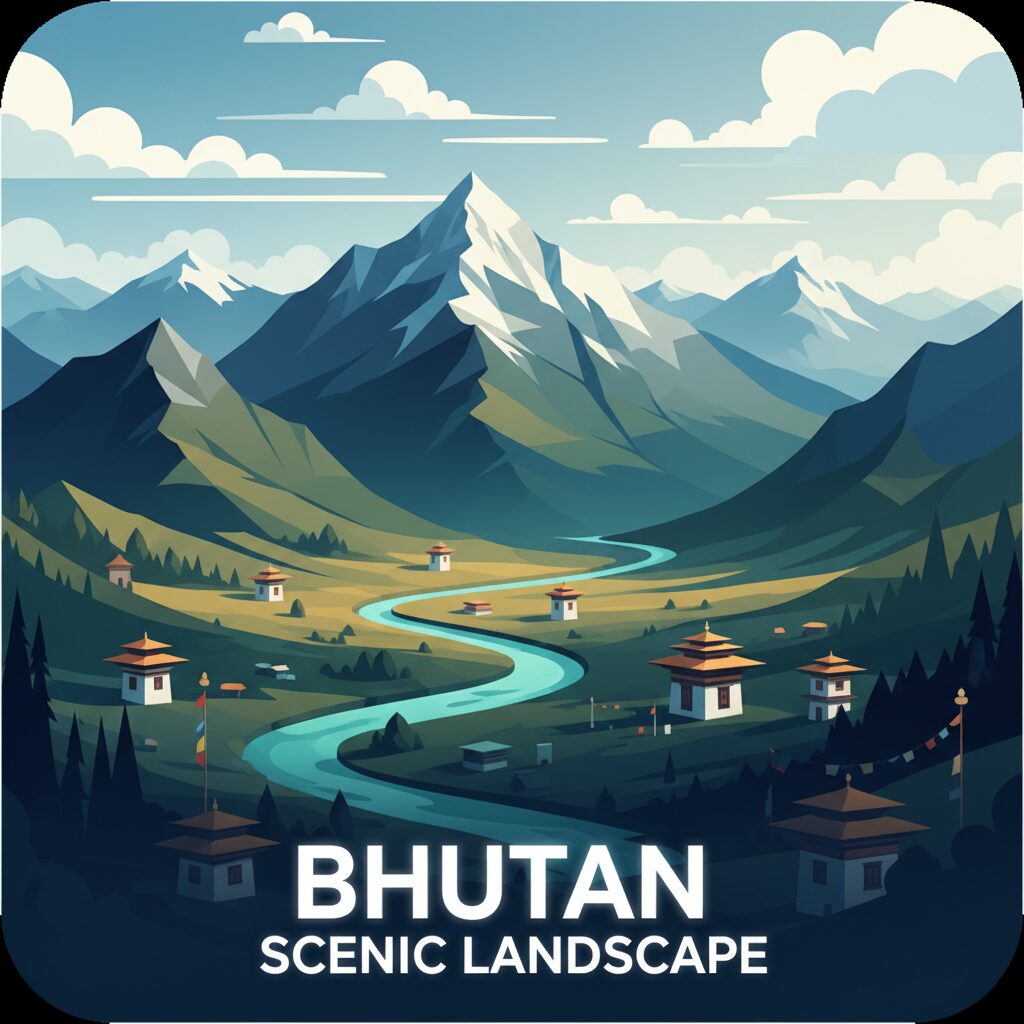
In a world relentlessly chasing numbers, graphs, and the ever-ascending line of economic growth, there exists a sanctuary nestled high in the Himalayas, a kingdom that dared to ask a different question. What if a nation’s success was measured not by its Gross Domestic Product, but by the collective well-being and contentment of its people? This is Bhutan, the Land of the Thunder Dragon, and its revolutionary guiding philosophy is known as Gross National Happiness (GNH). To travel here is not merely to see stunning landscapes and ancient fortresses; it is to witness a living, breathing alternative to the modern world’s frenetic pace. It’s an immersion into a culture that has deliberately chosen preservation over proliferation, mindfulness over mass production, and community over consumerism. This journey is a pilgrimage for the soul, a chance to understand how sustainability, spirituality, and governance can weave together to create a national tapestry of profound richness. It is a place that challenges your perspective and lingers in your heart long after the scent of pine and incense has faded from your clothes. This handbook is your first step, your guide to understanding the profound heart of Bhutan and navigating the path of its unique, deeply intentional approach to travel.
While this journey is a pilgrimage for the soul, you might also find spiritual fulfillment on another epic journey, such as experiencing the Trans-Siberian Railway.
The Soul of a Nation: Unpacking Gross National Happiness
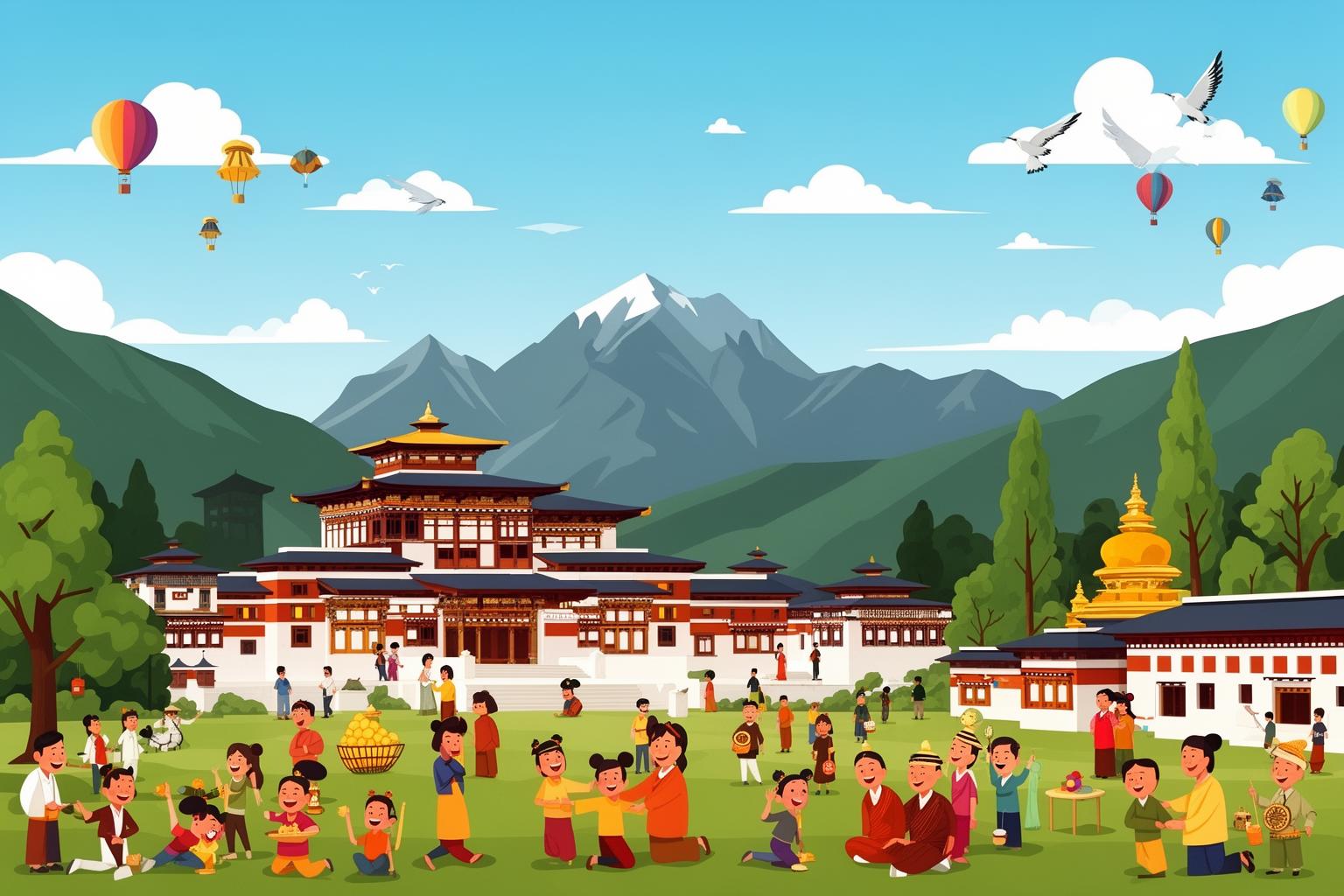
Gross National Happiness is much more than just a catchy phrase; it forms the very foundation of Bhutanese policy, culture, and identity. Enshrined in the constitution, GNH was first introduced in the 1970s by the fourth King, Jigme Singye Wangchuck, who emphasized that it mattered more than Gross Domestic Product. This was not a rejection of economic growth but a redefinition of its purpose. In Bhutan, development must be balanced, holistic, and aimed at the ultimate goal of human well-being. This philosophy rests on four foundational pillars, each representing a thread in the nation’s intricate fabric. To understand them is to begin to grasp the quiet sense of contentment that fills the mountain air.
The first pillar is Sustainable and Equitable Socio-Economic Development, likely the most tangible pillar for visitors. It explains why Thimphu remains one of the world’s few capital cities without a single traffic light, instead relying on the elegant, white-gloved coordination of its traffic police. It is also why sprawling billboards are absent, leaving the pristine hillsides unspoiled. Development here is intentional and cautious, involving investments in free education and healthcare for all citizens to ensure a baseline of well-being. It also means empowering rural communities through access to clean energy and sustainable farming practices, encouraging self-sufficiency rather than dependence on urban centers. When you visit a local farm and enjoy a meal of organic red rice and freshly picked vegetables, you are tasting the fruits of this pillar. It represents quiet prosperity, valuing security and community strength over individual wealth accumulation.
The second pillar, Preservation and Promotion of Culture, is Bhutan’s vibrant, colorful soul. This culture is not preserved as a relic in a museum; it thrives in the streets, homes, and monasteries. It can be seen in the elegant national dress—the knee-length, robed gho for men and the ankle-length, intricately patterned kira for women—worn with pride not only for festivals but also as everyday work and school attire. It is reflected in the stunning traditional architecture that all new buildings must follow, featuring ornate woodwork, vibrant frescoes, and sloping roofs. This pillar ensures that ancient legends, the sacred masked dances of the Tshechus, the intricate art of thangka painting, and deep-rooted Buddhist values are actively practiced and handed down through generations. This deliberate effort cultivates a strong sense of shared identity and belonging, sharply contrasting with the cultural homogenization seen in many parts of the world.
The third pillar, Conservation of the Environment, commits Bhutan to being a global ecological leader. The constitution mandates that at least sixty percent of the country’s land remain forested permanently; currently, this coverage exceeds seventy percent. As a result, Bhutan is one of the few carbon-negative countries globally, absorbing more carbon dioxide than it emits. For travelers, especially hikers, this translates into an experience of unmatched natural purity. The air is crisp and clean, rivers run clear, and trekking trails meander through some of the most pristine and biodiverse forests in the Himalayas. This pillar safeguards the habitats of endangered species such as the snow leopard, Bengal tiger, and the beloved black-necked crane. It embodies a profound understanding that human happiness is intimately connected to the health of the natural world, a lesson the rest of the world is only beginning to grasp.
Lastly, the fourth pillar is Good Governance, which serves as the framework supporting the other three pillars. It stresses accountability, transparency, and the rule of law, fostering a political environment where the principles of GNH can thrive. Bhutan’s shift from an absolute monarchy to a democratic constitutional monarchy in 2008 marked a monumental step in this direction, a transition initiated by the King himself to empower his people. Good governance ensures that development benefits are distributed fairly, that cultural and environmental policies are upheld, and that the nation proceeds on its unique path with stability and foresight. For visitors, this translates into a sense of safety, order, and genuine hospitality. The system is designed to protect its people and values, thereby preserving the very essence of the experience you have come to seek.
A Journey with Purpose: Bhutan’s Sustainable Tourism Framework
Bhutan’s approach to tourism directly reflects its GNH philosophy. The kingdom has never been interested in mass tourism. Instead, it has championed a policy of “High-Value, Low-Volume” tourism. This is not about elitism but about sustainability. It is a carefully designed system aimed at maximizing the traveler’s experience while minimizing the impact on the nation’s culture and environment. It ensures that every visit to Bhutan is meaningful, immersive, and contributes directly to the country’s well-being.
The foundation of this policy is the Sustainable Development Fee (SDF). For many years, this fee was included in an all-inclusive daily package. However, the system has recently been updated. Now, travelers pay the nightly SDF directly to the government. This fee represents a vital investment in the kingdom’s future. It is not merely a tourist tax; it is a contribution that supports the core pillars of Gross National Happiness. The funds are used to maintain the country’s free healthcare and education systems, upgrade infrastructure, support conservation efforts, and finance cultural preservation programs. By paying the SDF, you are more than just a tourist; you become a partner in Bhutan’s unique development journey. You help plant trees, fund rural schools, and protect the habitat of the black-necked cranes. This turns your trip from a simple vacation into an act of conscious, regenerative travel.
Another essential part of this framework is the requirement to travel with a licensed Bhutanese tour operator and a certified local guide. While some may initially view this as a limitation, it is actually the key to unlocking the deepest layers of the country. Your guide is not just a navigator; they are your cultural interpreter, storyteller, and bridge to the Bhutanese way of life. They can explain the intricate symbolism in a monastery fresco, share the folklore behind a mountain peak, and facilitate genuine interactions with locals that would be impossible on your own. They ensure your journey is smooth, safe, and respectful of local customs. This curated approach prevents the type of over-tourism that has eroded the cultural essence of many other stunning destinations. It guarantees you are always in knowledgeable hands, allowing you to fully immerse yourself in the experience without the logistical concerns of traveling independently. It’s a quality-driven system, ensuring your time in the kingdom is as enriching as possible.
The Tapestry of Bhutan: Where to Witness GNH in Action
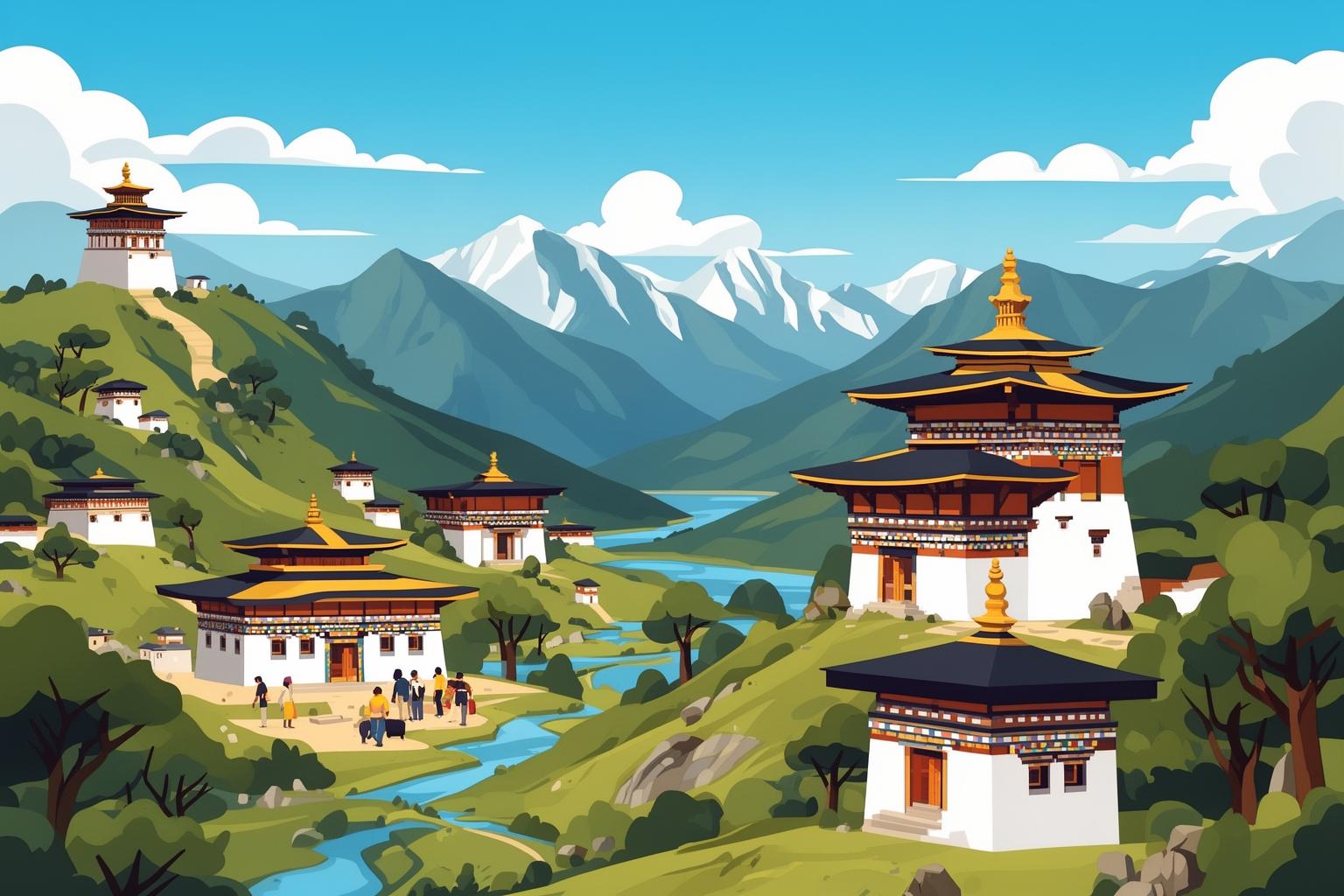
Every valley and fortress in Bhutan tells a tale of Gross National Happiness. While this philosophy pervades the entire country, certain locations provide an especially vivid insight into its practical implementation. From the gentle buzz of the capital city to the spiritual stillness of remote valleys, the very landscape stands as a testament to this distinctive vision.
Thimphu: The Pulse of Modern Bhutan
Thimphu is a capital unlike any other. Situated in a deep valley, it is a growing city that maintains a small-town feel. The absence of traffic lights is the first delightful quirk you’ll notice, but the city’s character runs far deeper. It serves as the center of governance, with the magnificent Tashichho Dzong as its crowning jewel. This fortress-monastery, with towering white walls and golden roofs, houses the King’s throne room and the central monastic body. Its grand yet elegant structure perfectly embodies the balance between secular and spiritual authority—a cornerstone of good governance. Witnessing the evening flag-lowering ceremony in its vast courtyard is a powerful experience, connecting you to the nation’s administrative and religious core.
A short drive up the valley brings you to the immense, serene Buddha Dordenma statue overlooking the city. This colossal bronze figure, gilded in gold, goes beyond being a tourist attraction; it was built to fulfill an ancient prophecy to bestow blessings, peace, and happiness upon the world. It represents the spiritual dimension integral to all aspects of Bhutanese life. Another spiritual focal point is the National Memorial Chorten, a white stupa with a golden spire, constantly alive with activity. Here, Bhutanese of all ages—from elders to children—circumambulate the structure, spin prayer wheels, and softly chant mantras. This public display of devotion is woven deeply into daily life, beautifully reflecting the pillar of cultural preservation.
Paro Valley: The Gateway to the Dragon Kingdom
The Paro Valley often forms a visitor’s first and last impression of Bhutan, and it is truly unforgettable. The flight into Paro Airport itself is an exhilarating adventure, as the plane skillfully navigates between 18,000-foot peaks before descending onto the runway. The valley is a mosaic of emerald rice paddies and traditional farmhouses, with the sparkling Paro Chhu river winding through its heart. Dominating the scenery is the Rinpung Dzong, the “Fortress on a Heap of Jewels.” Like all dzongs, it functions both as a district administrative center and a residence for the monastic community, exemplifying the harmonious blend of temporal and sacred powers.
However, the undeniable spiritual centerpiece of Paro—and perhaps all Bhutan—is Paro Taktsang, the Tiger’s Nest Monastery. This sacred site clings almost impossibly to a sheer cliff face, 3,000 feet above the valley floor. Pilgrimage to Taktsang is a rite of passage for every visitor. The hike is a meditative journey through a fragrant pine forest adorned with fluttering prayer flags. As you ascend, the distant roar of a waterfall grows louder and the views become increasingly breathtaking. The final approach—crossing a bridge over a deep chasm and climbing a steep stone staircase—is awe-inspiring. Inside the temple complex, the air is thick with the scent of butter lamps and incense. Hearing the story of Guru Rinpoche, who is said to have flown here on the back of a tigress to meditate in a cave, you sense the profound weight of centuries of faith. Tiger’s Nest stands as the ultimate symbol of Bhutan’s spiritual devotion and commitment to preserving its most sacred cultural sites.
Punakha: The Lush Valley of History
A scenic drive from Thimphu over the Dochu La pass (3,100 meters), with its 108 memorial chortens and panoramic Himalayan views on a clear day, leads down to the subtropical, fertile Punakha Valley. As the former capital of Bhutan for over 300 years, Punakha holds deep historical significance. Its crown jewel is the Punakha Dzong, the “Palace of Great Happiness.” Strategically positioned at the confluence of the Pho Chhu (male) and Mo Chhu (female) rivers, it is arguably the most beautiful dzong in the country. Its whitewashed walls, intricate woodwork, and central tower create a scene of majestic grandeur, especially in spring when jacaranda trees surrounding it bloom in vibrant lilac. The dzong is a living museum of Bhutanese craftsmanship and a testament to the nation’s heritage.
Punakha also hosts one of Bhutan’s most beloved and quirky holy sites: Chimi Lhakhang, the temple of the “Divine Madman,” Drukpa Kunley. This 15th-century lama taught Buddhism through unconventional methods, using humor, song, and eccentric behavior to challenge the religious establishment. Today, the temple is a shrine dedicated to fertility, and phallic symbols painted on houses throughout the valley pay tribute to the saint, believed to ward off evil and foster harmony. A gentle walk through rice paddies to reach the temple reveals a wonderful glimpse of rural Bhutanese life, where faith, folklore, and farming are tightly interwoven.
Beyond the Core: Exploring Phobjikha and Bumthang
For those with extra time, venturing east reveals even deeper layers of Bhutan. The Phobjikha Valley is a vast, U-shaped glacial valley of stunning beauty and ecological significance. This protected area serves as the winter refuge for hundreds of rare and sacred black-necked cranes, which migrate over the Himalayas from Tibet. Watching these graceful birds forage in the marshy wetlands is a moving experience and a powerful symbol of Bhutan’s dedication to conservation. The ancient Gangtey Goemba monastery reigns over the valley, imparting a sense of profound peace and timelessness.
Further east lies the Bumthang Valley, regarded as the spiritual heartland of Bhutan. Comprising four smaller valleys, Bumthang is scattered with some of Bhutan’s oldest and most important temples and monasteries, including Jambay Lhakhang and Kurjey Lhakhang. This region is less frequented than the western valleys, offering a more rustic and intimate experience. It is a land steeped in myths and legends, where stories of saints and demons seem vividly close. A gentle trek here, moving from temple to temple through buckwheat fields and quiet villages, is a journey back in time and an immersion into the spiritual essence of Gross National Happiness.
Living the Philosophy: Activities that Embrace GNH
Experiencing Bhutan is far from a passive endeavor. The most effective way to grasp Gross National Happiness is by actively participating in the activities that embody its principles. Whether you’re testing your endurance on a high-altitude trail or soothing your mind by the flicker of a butter lamp, these moments offer an intimate connection to the kingdom’s spirit.
Trekking the Untouched Himalayas
As an outdoor expert, I can confidently say that trekking in Bhutan is unlike any other place in the world. This uniqueness stems directly from the environmental conservation aspect of GNH. The trails remain pristine, campsites spotless, and the wilderness remarkably untouched. Unlike other Himalayan destinations, commercialization and crowds are absent. Instead, you’ll find solitude, tranquility, and a profound bond with nature. Popular routes such as the Druk Path Trek, linking Paro and Thimphu, provide an excellent introduction, guiding you over high passes with breathtaking views of snow-capped peaks and through secluded rhododendron forests. For the more daring, the Jomolhari Trek leads to the base of the sacred Mount Jomolhari, featuring stunning high-altitude landscapes and opportunities to spot rare blue sheep.
The journey is comprehensive. It’s not just about the hike; it’s about the Bhutanese team of guides, cooks, and horsemen who accompany you. It’s about sharing stories around a campfire beneath a sky bejeweled with stars, far from any light pollution. It’s about waking to a cup of hot tea delivered to your tent as the morning sun lights up a distant peak. Every step is a reminder of the value of a healthy environment and the deep happiness found in simplicity and natural beauty.
Immersing Yourself in Culture and Spirituality
One of the most vibrant and joyful ways to experience Bhutanese culture is by attending a Tshechu. These annual religious festivals, held in the courtyards of dzongs and monasteries, showcase spectacular displays of color, music, and devotion. The highlight of any Tshechu is the series of cham, or sacred masked dances, performed by monks. Each dance conveys a moral story, often portraying the victory of good over evil or recounting the life of a revered Buddhist saint. The atmosphere buzzes with communal energy. Local families arrive dressed in their finest hand-woven ghos and kiras, turning the event into both a social gathering and a religious celebration. The playful antics of the Atsaras, or clowns, who joke with the crowd and performers alike, add an element of fun and entertainment. Participating in this living tradition is an unforgettable demonstration of cultural preservation in action.
For a quieter, more intimate spiritual moment, participate in a butter lamp offering at a temple. Lighting a small lamp is a simple yet powerful prayer symbolizing the banishing of darkness and ignorance. Sitting silently in an ancient monastery, watching hundreds of tiny flames flicker, creates a deeply meditative experience. Many travelers also enjoy a traditional hot stone bath—a perfect way to soothe tired muscles after a long trek. River stones are heated in a fire until glowing red, then placed in a wooden tub of water, releasing minerals that create a therapeutic soak. This practice is rooted in traditional medicine and reflects Bhutanese holistic well-being.
Savoring Happiness: Bhutanese Cuisine
Discovering a culture through its cuisine is always rewarding, and Bhutan is no exception. The food is hearty, flavorful, and distinctive. The national dish, which you’ll undoubtedly try, is Ema Datshi. This spicy stew made of chilies and local cheese is a Bhutanese staple and not for the faint-hearted. Chilies here are treated as a main vegetable rather than just a seasoning. But don’t worry—your guide will adjust the spice level to suit your taste. You’ll also sample dishes like Phaksha Paa (pork cooked with spicy red chilies) and Jasha Maru (spicy minced chicken). Red rice, nutty and nutritious, accompanies every meal, grown in high-altitude valleys. Much of the food is organic and locally produced, directly reflecting the sustainable agriculture pillar. A highlight for many visitors is enjoying a meal at a traditional farmhouse. Sharing a home-cooked meal with a local family and perhaps trying your hand at their backyard archery game (datse) provides a heartwarming glimpse of authentic Bhutanese hospitality and a beautiful way to connect with the people who truly embody Gross National Happiness.
Practical Pilgrim’s Guide: Navigating Your Bhutanese Adventure
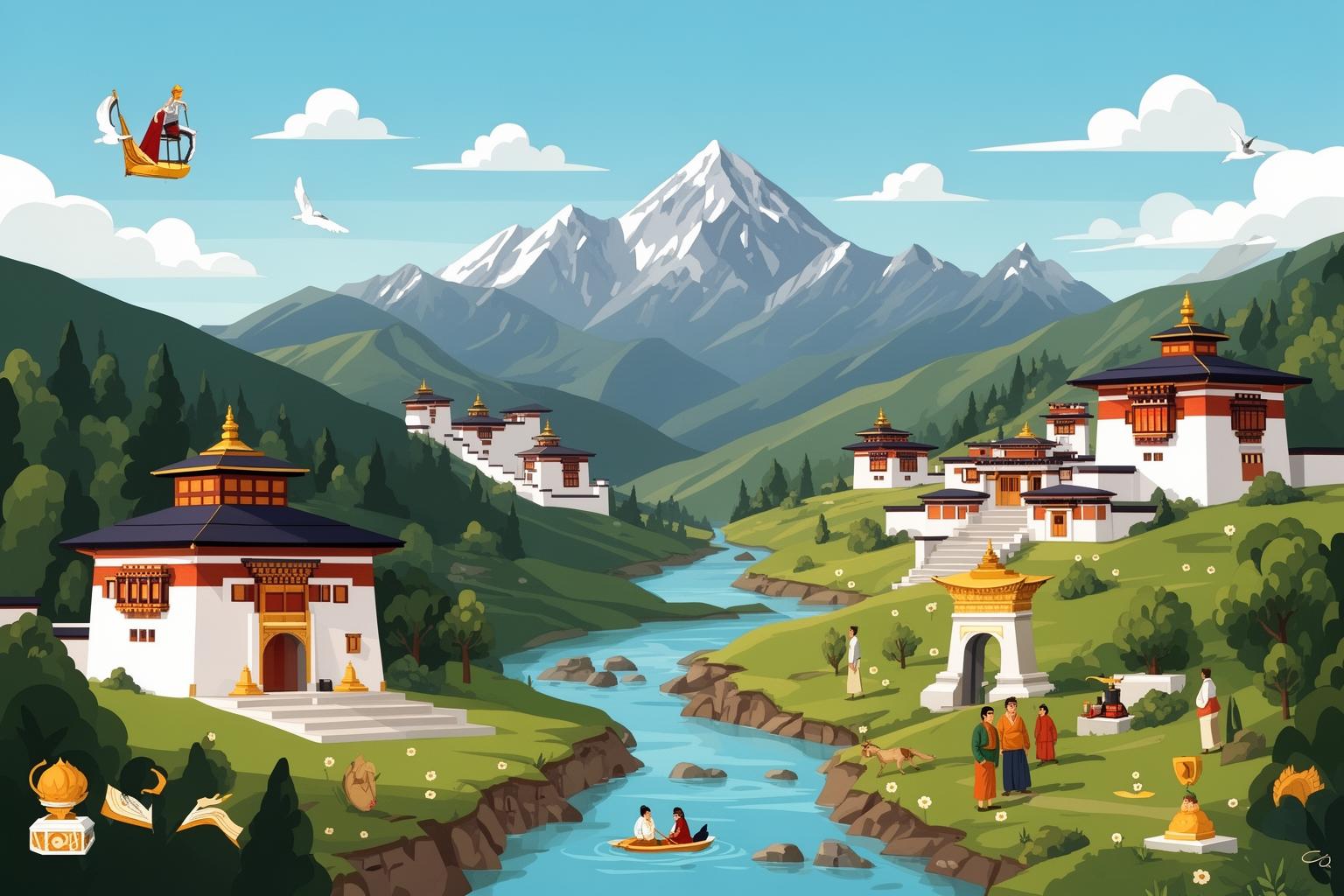
Planning a trip to a distinctive country like Bhutan requires some careful preparation. Understanding the logistics will help ensure a smooth journey, allowing you to fully enjoy the incredible experience that lies ahead.
Getting There and Away
Access to Bhutan is deliberately restricted in accordance with its sustainable tourism policy. The main way to enter is by air, arriving at Paro International Airport (PBH). Only two airlines, the national carrier Drukair and the private Bhutan Airlines, operate flights to Bhutan. These flights link Paro with several regional hubs, including Bangkok (Thailand), Delhi and Kolkata (India), Kathmandu (Nepal), and Singapore. Flight bookings are generally managed by your selected tour operator as part of your overall package. It is also possible to enter Bhutan by land via three official border crossings with India in the south: Phuentsholing, Gelephu, and Samdrup Jongkhar. This route is often favored by travelers already exploring India’s northeastern states.
When to Visit: The Four Seasons of Happiness
Bhutan is a destination for any time of year, with each season presenting its own unique character and charm.
- Spring (March to May): This is a lovely time to visit. The weather is mild, and the valleys burst into color with blooming flowers, especially the stunning rhododendrons. It’s an excellent season for trekking and a popular period for major festivals, including the renowned Paro Tshechu.
- Summer (June to August): This is the monsoon season. Although rain is common, particularly in the afternoons, the landscape is at its greenest and most vibrant. Tourism is quieter during this time, so you’ll often have many sites to yourself. This season is better suited for cultural tours rather than high-altitude trekking.
- Autumn (September to November): This is the peak season for good reason. The monsoon rains have cleared the skies, resulting in crisp, clear air and breathtaking panoramic views of the Himalayan peaks. The weather is perfect for trekking, and several important festivals, including the Thimphu Tshechu, occur during these months.
- Winter (December to February): Days are cool, sunny, and clear, while nights can be quite cold, especially at higher elevations. Snow may cover the high mountain passes. This is a great time for cultural tours in the lower valleys and the season to see the black-necked cranes in the Phobjikha Valley. Tourist numbers are much lower, offering a more peaceful experience.
What to Pack: Essentials for the Kingdom
Packing for Bhutan is all about layering. Due to significant altitude changes, temperatures can vary greatly throughout the day. Mornings in a valley may be cool, afternoons warm during a sunny hike, and evenings chilly.
- Clothing: Pack a combination of long-sleeved and short-sleeved shirts, a warm fleece or mid-layer jacket, and a waterproof, windproof outer jacket. Comfortable trousers are a must; trekking pants are recommended for hikes. When visiting monasteries and dzongs, dress modestly by covering your shoulders and knees—a long-sleeved shirt and long pants or a long skirt are appropriate.
- Footwear: Sturdy, comfortable walking shoes or hiking boots with good traction are essential, as you will be walking a lot, often on uneven terrain.
- Accessories: A wide-brimmed hat, sunglasses, and high-SPF sunscreen are important, since the sun is strong at high altitudes. You may also want gloves and a warm hat, especially if traveling in autumn or winter.
- Health: Carry a small personal first-aid kit with any prescription medications you require, along with basics like pain relievers, blister treatment, and insect repellent.
First-Timer’s Etiquette
The Bhutanese are known for their warmth and hospitality. Showing respect for their culture and customs will be greatly appreciated.
- Photography: Always ask permission before photographing someone. Photography is often prohibited inside temples and monasteries, so check with your guide.
- Religious Sites: When circumambulating a chorten, stupa, or monastery, always move clockwise. Remove your shoes and hat before entering temples or monastic buildings.
- Greetings and Gestures: The traditional greeting is a slight bow. When giving or receiving something, use your right hand or both hands—never just the left hand.
- Your Guide is Your Key: Trust and listen to your guide. They are experts in their culture and there to ensure your journey is safe, respectful, and rewarding. Don’t hesitate to ask questions—they are usually happy to share their knowledge and insights.
The Last Shangri-La: A Final Reflection
To leave Bhutan is to carry a piece of it with you forever. It is more than just a collection of photographs and souvenirs; it is a change in perspective. You arrive seeking majestic mountains and ancient monasteries, and you find them, but you depart with a deeper understanding of what it means to live a balanced and meaningful life. You witness firsthand a country that has successfully prioritized the well-being of its people and the health of its environment over blind ambition and material gain.
The kingdom’s carefully managed approach to tourism is not a limitation but a gift. It is what preserves the magic, keeps the culture authentic, and maintains the landscapes pristine. It asks you to be more than a mere observer; it invites you to be a mindful participant in a remarkable national story. The quiet dignity of the people, the profound silence of the mountain trails, and the vibrant pulse of a living faith all come together to create an experience that is both humbling and inspiring. You return home not just rested from a vacation, but enriched by a philosophy, wondering how you might weave a few threads of Gross National Happiness into the fabric of your own life. Bhutan is not the last Shangri-La because it is a perfect, mythical paradise, but because it is a real place, with real people, bravely and beautifully choosing a happier, more sustainable path forward.