Rome. The name itself is a spell, a three-thousand-year-old incantation that conjures images of gladiators clashing under an unforgiving sun, of emperors sculpting a civilization from marble and ambition, of artists breathing life into stone and canvas. It’s the Eternal City, a place where the traffic of a bustling modern capital flows around monuments that were ancient when Columbus was still dreaming of the new world. This isn’t just a city; it’s a pilgrimage site for lovers of history, art, faith, and film. For a weekend, you aren’t just a tourist; you are a time traveler, walking the same cobblestones as Julius Caesar, Michelangelo, and Audrey Hepburn. The air hums with a chaotic, beautiful energy—the scent of espresso and ancient stone, the sound of church bells dueling with the whine of scooters. It’s a city that has been the heart of epic stories, both real and imagined, from the sprawling sagas of the Roman Empire to the cinematic romance of Roman Holiday and the thrilling conspiracies of Angels & Demons. To visit Rome is to step onto the world’s grandest stage, and a weekend is just enough time to witness its most breathtaking acts. This guide is your script, your map to navigating the layers of history and legend packed into 48 glorious, unforgettable hours. Prepare to walk, to wonder, and to be utterly captivated.
While Rome offers a whirlwind tour of ancient history, those seeking a different kind of pilgrimage might consider a journey to the Kingdom of Gross National Happiness.
Planning Your Roman Conquest: Logistics for a Legendary Weekend
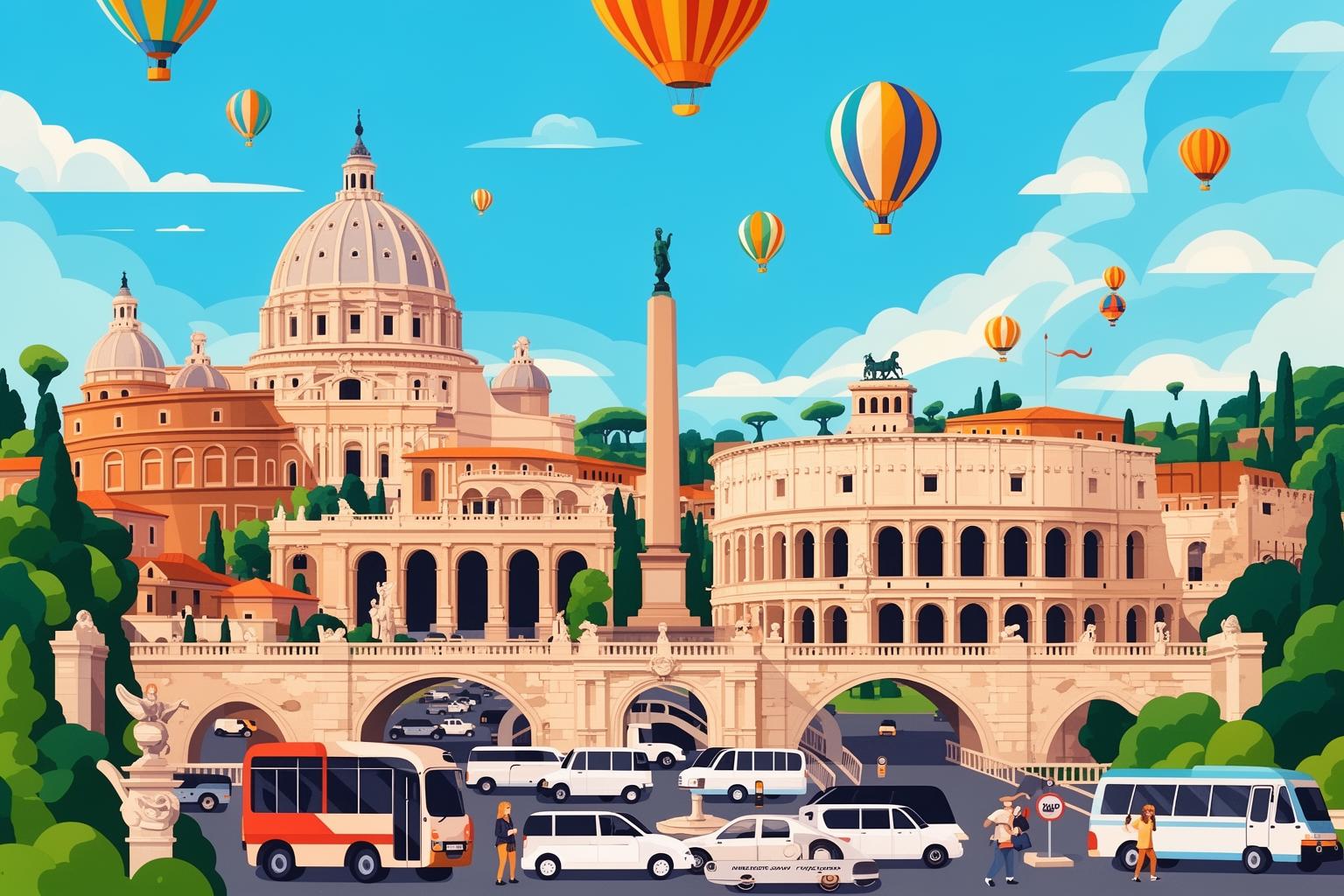
Before you can conquer Rome, you first need to master its logistics. A weekend here is a sprint, not a marathon, and a bit of preparation can turn a frantic dash into an elegant dance with history. The city is vast, the lines can be legendary, and the sun intense. But with the right approach, you can smoothly navigate the essentials, making the most of every precious moment.
Arriving in the Eternal City
Your Roman journey will likely start at one of two airports. Leonardo da Vinci–Fiumicino Airport (FCO) is the main international gateway. The most efficient way to reach the city center is the Leonardo Express, a dedicated train that runs directly to Termini Station—Rome’s central train and metro hub—in about 32 minutes. While it’s a bit pricey, its convenience is unmatched. Alternatively, several shuttle bus services offer a more budget-friendly, though slower, trip to Termini. Ciampino (CIA) airport, served by many budget airlines, is closer to the city. From there, shuttle buses are the best option, also connecting to Termini Station. Taxis operate from both airports; just be sure to take an official, licensed white taxi and confirm the flat rate to avoid any surprises.
Navigating the Ancient Streets
Rome’s historic center is a magnificent, tangled network of cobblestone streets, hidden piazzas, and grand boulevards. Though its size can feel overwhelming, the core cluster of ancient sites is surprisingly walkable. Walking is truly the best way to experience Rome. It’s through wandering that you’ll uncover a hidden fountain, a cozy trattoria, or a sudden, breathtaking view of a two-thousand-year-old ruin. Embrace getting a little lost—it’s part of the charm. For longer distances, Rome’s metro system is handy. With only three lines (A, B, and C), it still connects major sites like the Colosseum (Colosseo station, Line B), the Spanish Steps (Spagna, Line A), and the Vatican (Ottaviano, Line A). The bus network is more extensive but can be confusing for first-timers and is often hampered by Rome’s notorious traffic. For a weekend visit, combining walking with the metro is your most effective strategy. Consider buying a multi-day transit pass at any metro station or tobacconist for convenience.
The Golden Rule: Book Everything in Advance
If you remember only one thing, let it be this: book your tickets for major attractions online and well in advance. This is not optional; it’s essential. Lines for the Colosseum and the Vatican Museums can stretch for hours under the Roman sun. Waiting in them is a huge waste of your limited time. Purchasing timed-entry tickets online lets you skip the queues and proceed straight to security. For the Colosseum, tickets are available on the official Parco Archeologico del Colosseo website. Tickets are released on a rolling basis, so check regularly and book as soon as your dates are set. For the Vatican Museums and Sistine Chapel, use the official Vatican Museums website. These tickets also sell out weeks or even months ahead, especially in peak season. Securing these two reservations before you pack your bags is the single most important step to guarantee a successful weekend in Rome.
Day One: Echoes of an Empire
Your first day is an immersive journey into the very foundation of Western civilization. It’s a day of grand scale, where you can imagine the roar of the crowd and the whispers of senators. This is the Rome of emperors and gladiators, the mighty power that once ruled the known world. Put on your most comfortable shoes; you are about to walk through millennia.
Dawn at the Colosseum: Where Gladiators Once Roamed
No image is more iconic of Rome than the Colosseum. Standing before its colossal, timeworn arches as the early morning light spills over them is a moment that transcends typical tourism. It feels almost sacred. This amphitheater, opened in 80 AD, was a stage for spectacles of incredible brutality and vast scale. It could hold over 50,000 spectators, all gathered to watch gladiatorial contests, animal hunts, and even mock naval battles. To get the most from your visit, book the earliest time slot available. The morning air is cooler, the crowds thinner, and the light gentler, creating a more atmospheric experience. As you step inside, the sheer size is what strikes you first. Walk along the inner corridors, tracing the paths that spectators followed two thousand years ago. Find a vantage point and look down at the arena floor. In your imagination, erase the modern tourists and replace them with the citizens of ancient Rome. Picture the sand darkened with blood, the roar of the crowd echoing off stone walls, a sound so powerful it could be felt miles away. This is where the world of the film Gladiator springs to life—a place of brutal spectacle and political theater. A standard ticket grants access to the first and second tiers. For a richer experience, consider a tour that includes the Underground (the Hypogeum), where gladiators and wild animals awaited their rise onto the arena floor via intricate elevator systems. You can also book access to the Arena Floor itself, offering a gladiator’s-eye view of the towering structure. Whatever you choose, allow at least two hours to absorb the weight of this place. It’s not simply a ruin; it’s a wound in the heart of history, a testament to both Roman engineering genius and savage cruelty.
Walking Through Time: The Roman Forum and Palatine Hill
Your Colosseum ticket is a combined pass, also granting access to the nearby Roman Forum and Palatine Hill. This is not an optional add-on; it is the essential second act of your morning. The Forum was ancient Rome’s heart—a sprawling plaza of temples, basilicas, and government buildings where commerce, politics, law, and religion all converged. Today, it’s a beautiful, chaotic jumble of ruins that calls for a measure of imagination to piece together. Entering from the path near the Arch of Titus, you walk along the Via Sacra, ancient Rome’s main street, where victorious generals once paraded their spoils of war. Seek out the Temple of Saturn’s remains, with its eight towering columns that housed the state treasury. Find the Curia Julia, the remarkably well-preserved brick building that was the Roman Senate’s seat. Stand where Julius Caesar was cremated. The Forum is not a place to rush; it is a landscape to explore. Let yourself wander among fallen columns and shattered pediments. It feels like stepping into a living history book. Overlooking the Forum is Palatine Hill, the most central of Rome’s seven hills. According to legend, this is where Romulus and Remus were discovered by the she-wolf, and where Romulus founded the city. It later became the most prestigious residential area in Rome—the Beverly Hills of the ancient world—home to emperors like Augustus, Tiberius, and Domitian. The ruins here are less distinct than those in the Forum, but the true reward is the atmosphere. This surprisingly peaceful, park-like area, shaded by pine trees, offers breathtaking panoramic views of the Forum on one side and the Circus Maximus on the other. Find a spot at the hill’s edge, feel the breeze, and gaze down upon the empire’s heart you’ve just walked through. It’s the perfect chance to absorb the immense scale of what you’ve experienced and to appreciate the rise and fall of this extraordinary civilization.
Day One Afternoon & Evening: Pantheon, Fountains, and Roman Feasts
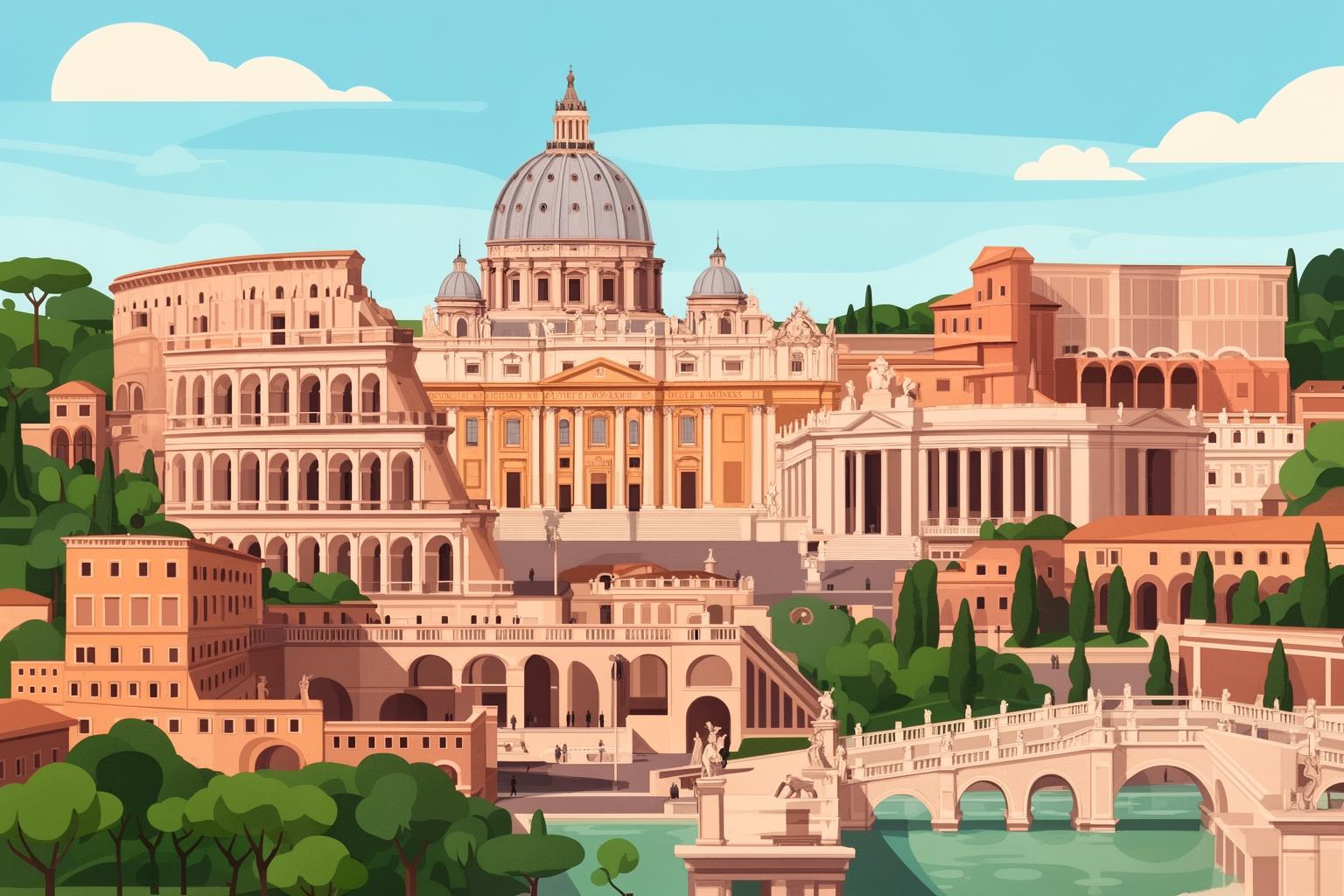
After a morning immersed in the glories of the ancient empire, your afternoon shifts to a different side of Rome. This is the city of Renaissance geniuses and Baroque masters, a place where architectural wonders lurk around every corner and water dances in theatrical fountains. It’s a time to wander, to observe, and to savor the vibrant life of the modern city woven into its historic fabric.
The Pantheon: A Gaze to the Heavens
A short stroll from the Forum area brings you into the heart of the centro storico and to the Pantheon. Among all Rome’s ancient buildings, the Pantheon is the most remarkably well-preserved and arguably the most magnificent. Approaching it through the Piazza della Rotonda, its imposing portico with massive Corinthian columns barely prepares you for what lies inside. Step through the giant bronze doors, and your gaze is immediately drawn upward. The ceiling is a perfect, coffered concrete dome, a masterpiece of Roman engineering that remains the world’s largest unreinforced concrete dome to this day. At its apex is the oculus, a nine-meter opening to the sky, the building’s sole source of light. Standing directly beneath it, you feel a tangible connection to the heavens. On a sunny day, a sharp, moving circle of light illuminates the interior. When it rains, a gentle shower falls onto the center of the marble floor, where it drains away through ancient channels. The effect is mesmerizing, spiritual. Originally built as a temple to all the gods, the Pantheon was converted into a Christian church in the 7th century, which largely explains its incredible state of preservation. It also serves as the final resting place for Italian kings and, most famously, the Renaissance master Raphael. Finding his tomb is a poignant moment, a reminder of the layers of history contained within these walls. The atmosphere is one of profound awe and tranquility. Despite the crowds, there is a hushed reverence. It is a space that demands silence, a perfect blend of architectural genius and spiritual wonder.
Tossing a Coin: The Trevi Fountain and Spanish Steps
From the architectural perfection of the Pantheon, you wander deeper into a maze of charming streets until you hear it: the sound of rushing water. You turn a corner, and a small piazza opens up to unveil the Trevi Fountain, a dramatically theatrical Baroque masterpiece that seems to burst from the side of a building. It is pure spectacle. Neptune, the god of the sea, stands on a shell-shaped chariot, taming the waters in a riot of travertine stone. The fountain overwhelms the senses—the roar of the water, the sparkle of light on its surface, the vibrant energy of the crowd packed into the small square. It is almost always busy, but that is part of its charm. Find a spot on the edge, take a moment to admire the incredible detail, and then perform the customary ritual. Legend says that if you toss a coin with your right hand over your left shoulder, you’re destined to return to Rome. Two coins mean love awaits you. Three, and you will marry. Whether you believe the legends or not, tossing your coin into the turquoise water feels like a promise, a small bond with the millions of travelers who have stood here before. Just a short walk away are the Spanish Steps, another iconic Roman landmark. This elegant flight of 135 steps connects the Piazza di Spagna below with the Trinità dei Monti church above. In the 18th century, it attracted artists and poets, and that creative, romantic spirit remains. Although sitting on the steps is no longer allowed, they offer a lovely place to pause and watch the world go by. At the base of the steps is the Fontana della Barcaccia, a charming fountain shaped like a sinking boat. The area is also known for the Keats-Shelley Memorial House, the apartment where the English Romantic poet John Keats died, now a museum dedicated to his life and work. As dusk falls, the entire area takes on a magical glow, making it an ideal spot for a pre-dinner stroll.
An Evening in Trastevere: The Soul of Rome
To conclude your remarkable day, cross the Tiber River into Trastevere. This neighborhood, whose name means “across the Tevere,” feels like a village within the city. With its narrow, ivy-draped cobblestone streets, faded ochre buildings, and laundry hanging between windows, Trastevere is Rome at its most picturesque and authentic. By day it is quietly charming, but at night it springs to life. The piazzas fill with people, the sounds of conversation and clinking glasses spill out from countless trattorias and bars, and a wonderfully bohemian, lively atmosphere takes hold. This is the place for dinner. Avoid the tourist traps in the main squares and explore the smaller side streets to find a family-run trattoria. Here you’ll taste genuine Roman cuisine. Start with a classic supplì, a fried rice ball with a melted mozzarella center. Then dive into one of the city’s four famous pasta dishes: Cacio e Pepe (cheese and pepper), Gricia (cured pork cheek and pecorino), Amatriciana (pork cheek, pecorino, and tomato), or the world-renowned Carbonara (pork cheek, pecorino, eggs, and black pepper). Each dish is a testament to the beauty of simple, high-quality ingredients. Pair your meal with a carafe of local wine and finish with tiramisu or a digestivo. Dining in Trastevere is more than just eating; it’s an immersion in the Roman way of life—passionate, a little chaotic, and deeply satisfying. It’s the perfect, soulful conclusion to a day spent among emperors and gods.
Day Two: The Sacred and the Sublime – A Pilgrimage to Vatican City
Your second day in Rome leads you across a border into the smallest independent state in the world: Vatican City. This journey is a pilgrimage not only for the devout but also for anyone who values art and architecture on a grand, divine scale. It is the epicenter of the Catholic Church, a repository of some of humanity’s most exquisite artistic masterpieces. Prepare yourself for a day filled with sensory richness, profound beauty, and spiritual magnificence. Remember to dress suitably for entry into Vatican sites: shoulders and knees must be covered for all visitors.
St. Peter’s Basilica and Square: A Monument to Faith
Your adventure begins at St. Peter’s Square. Created by the renowned Baroque artist Gian Lorenzo Bernini, the square serves not just as an entrance but as a welcoming embrace. Two vast semi-circular colonnades extend from the basilica, designed, in Bernini’s words, to greet the faithful with “the motherly arms of the Church.” Standing at the center, surrounded by 284 Doric columns and topped with 140 statues of saints, you cannot help but feel humbled by such monumental grandeur. The scale is almost beyond comprehension. At the center of the square stands an Egyptian obelisk, brought to Rome by Emperor Caligula in 37 AD, a silent pagan witness to centuries of Christian history. Then you face the basilica itself. St. Peter’s Basilica is the largest church in the world, a breathtaking testament of faith and artistic vision built over the traditional site of Saint Peter’s tomb. Entrance to the basilica is free, but the security line can be extensive, so arriving early is highly advisable. Upon entering, the vastness and splendor of the interior are staggering. Sunlight streams through the lofty windows, illuminating the immense, richly decorated space. Your first stop, just to the right of the entrance, is Michelangelo’s Pietà. Sculpted when he was only 24, this statue of Mary holding the body of Christ embodies a tenderness and sorrowful beauty that transcends its religious significance. It is a masterpiece of human emotion frozen in marble. Deeper inside, beneath Michelangelo’s magnificent dome, stands Bernini’s Baldacchino, an enormous bronze canopy towering above the main altar. Everything’s scale is meant to inspire awe. For a memorable experience, and for a small fee, you can climb to the top of the dome. The ascent involves an elevator followed by a narrow, winding staircase that curves along the dome itself. It can be demanding, but the reward is one of the world’s most breathtaking views: a sweeping panorama of Bernini’s square and the entire city of Rome stretching to the horizon. It is a moment of profound perspective, looking down from this monument dedicated to God and humanity.
The Vatican Museums: A Labyrinth of Art and History
After absorbing the basilica’s grandeur, it’s time to explore the Vatican Museums. This is not a single museum but a vast complex of galleries housing one of the world’s most significant art collections, amassed by popes over centuries. With over seven kilometers of corridors, it’s a place where you could spend weeks, so for a weekend visit, focus is essential. Here your pre-booked timed-entry ticket becomes invaluable, allowing you to skip the notorious, hours-long lines. Inside, the sheer abundance of art can be overwhelming. It’s wise to have a few must-see highlights planned. The Gallery of Maps is a stunning hallway, lined with 40 topographical maps of Italy painted in the 16th century, beneath a gilded, vaulted ceiling that is itself a masterpiece. The Raphael Rooms consist of four chambers painted by Raphael, showcasing the High Renaissance at its finest. The School of Athens, portraying the greatest philosophers of antiquity, is a particular highlight—a perfect blend of composition and intellectual depth. You’ll also pass galleries filled with classical sculptures, including Laocoön and His Sons, a Hellenistic masterpiece brimming with raw, agonizing emotion. The museum path is deliberately designed as a one-way route, leading visitors to its crowning jewel: the Sistine Chapel. Pace yourself, take your time, and fully absorb the incredible beauty around you, knowing the best is yet to come.
The Sistine Chapel: A Silent Conversation with Michelangelo
After wandering through gallery after gallery of artistic wonders, you will enter the Sistine Chapel through a small doorway. The transition is sudden and profound. The atmosphere inside is markedly different—it is a place of hushed reverence, where speaking is discouraged and photography is strictly forbidden. All you can do is look upward. And what you witness is one of humanity’s greatest artistic achievements. The entire ceiling, painted by Michelangelo over four arduous years, is a vibrant, dynamic fresco depicting nine stories from the Book of Genesis. At its center is the iconic panel, The Creation of Adam, where the fingers of God and Adam almost touch, a moment charged with electric, life-giving energy. The genius of the composition, the muscular anatomy, and the vivid colors are simply overwhelming. But there is more. Decades later, a much older and somber Michelangelo returned to paint the entire altar wall with The Last Judgment, a turbulent and terrifying vision of the second coming of Christ. It is a work of immense power and emotional intensity. If possible, find a seat on one of the benches along the walls and simply sit. Let your eyes wander. The longer you gaze, the more you discover. You are not merely in a room; you are inside the mind of a genius, within a monument that has shaped Western art and spirituality for five centuries. It is an experience that lingers long after you leave—a silent, potent conversation with art at its most sublime.
Day Two Afternoon: Farewell to the Eternal City
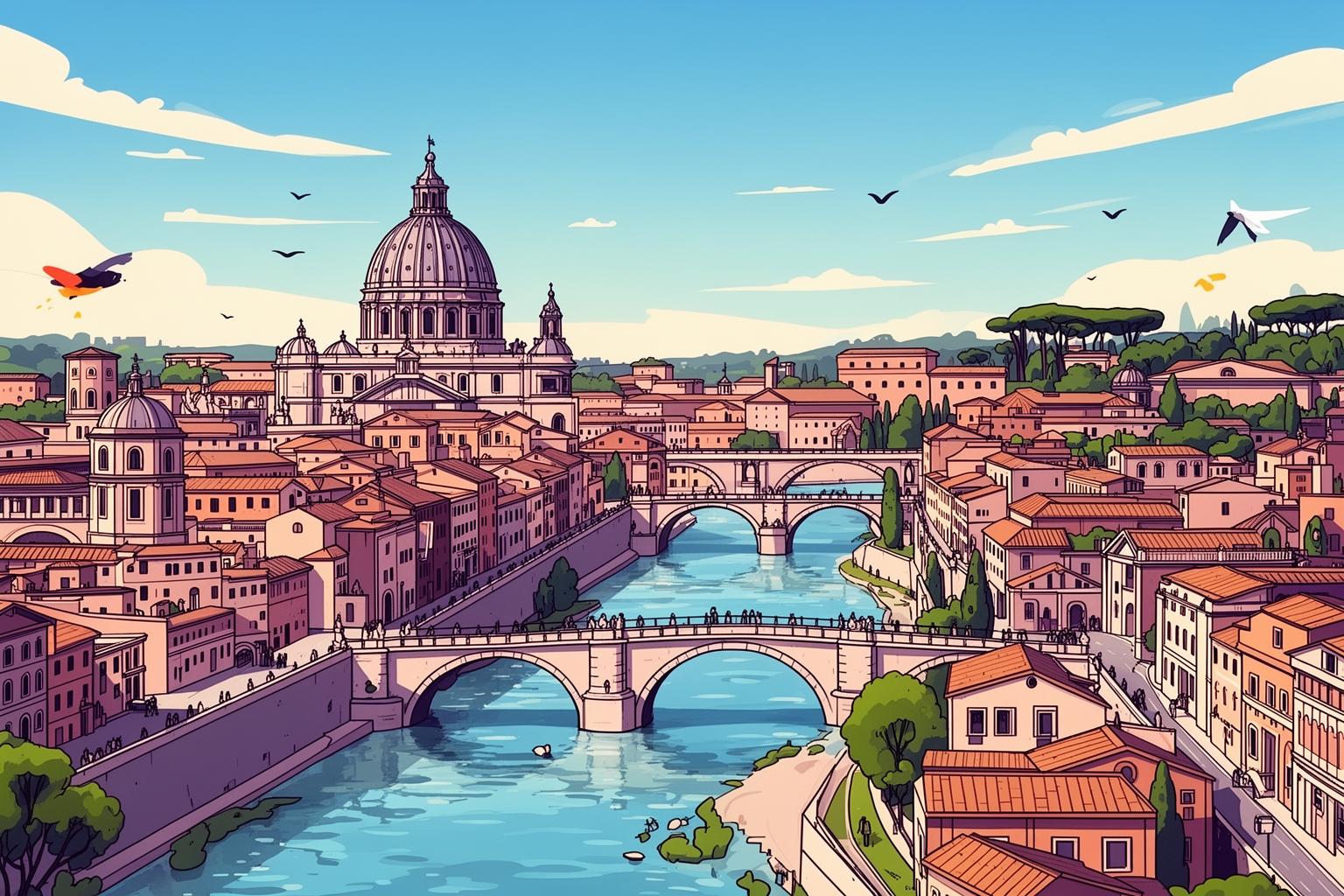
After the artistic and spiritual intensity of Vatican City, the last afternoon of your Roman weekend offers a chance to gradually ease back into the city’s historic streets, linking the sacred realm of the popes with Rome’s military and defensive past before concluding with a moment of pure, leisurely enjoyment.
Castel Sant’Angelo and Ponte Sant’Angelo
Leaving St. Peter’s Square and strolling down the grand Via della Conciliazione, you will encounter the imposing cylindrical fortress of Castel Sant’Angelo. This structure serves as a tangible timeline of Roman history. Originally built in the 2nd century as a mausoleum for Emperor Hadrian and his family, over the centuries it transformed into a fortress incorporated into the city walls, a papal residence, and a prison. Its history is both dark and captivating. A secret fortified passage, the Passetto di Borgo, links it directly to the Vatican, providing an escape route for popes in times of peril—a narrative famously featured in the novel and film Angels & Demons. Exploring the castle is akin to ascending through layers of history; you can roam the ramparts, visit former papal apartments, and see the old prison cells. The highlight is the panoramic view from the rooftop terrace, offering a breathtaking outlook over the Tiber River and a direct, picture-perfect sightline back towards St. Peter’s Basilica. Extending from the castle is the Ponte Sant’Angelo, one of Rome’s most exquisite bridges. Originally constructed by Hadrian, it is now adorned with ten stunning angel statues designed by Bernini, each holding an instrument of Christ’s Passion. Crossing this bridge, guided by the angels back toward the city center with the formidable castle behind you, is a truly cinematic experience—a perfect link between the Vatican’s sacred world and Rome’s secular heart.
A Final Gelato and a Stroll through Piazza Navona
No visit to Rome is complete without savoring one of its greatest delights: gelato. As you wander back into the historic center from the bridge, gelaterias appear on nearly every corner. Be selective—choose places where the gelato is kept in covered metal tins, a sign of quality, and where the colors look natural rather than neon-bright. A scoop each of pistachio and nocciola (hazelnut) is a classic pairing. With your gelato in hand, head to your final stop: Piazza Navona. For many, this is Rome’s most beautiful square. Its distinctive elongated oval shape reflects its origins as the 1st-century Stadium of Domitian, where athletic contests were held. The piazza is a masterpiece of Baroque art and architecture, dominated by its three magnificent fountains. At the center stands Bernini’s Fountain of the Four Rivers, a dramatic sculptural ensemble personifying the four great rivers of the continents known at the time: the Nile, the Ganges, the Danube, and the Río de la Plata. It is a work filled with energy and theatricality. The piazza is surrounded by cafes and restaurants and is always alive with artists, street performers, and visitors appreciating the beauty of the space. Find a bench, enjoy your gelato, and watch life unfold. It’s the ideal spot for a final, reflective moment. Here, in this stunning public square, you can contemplate your whirlwind journey through two and a half millennia of history. You’ve stood where gladiators battled, walked where senators debated, admired divine art, and experienced the vibrant life of the modern city. You’ve witnessed the monumental and the intimate, the sacred and the profane, all coexisting in this chaotic, beautiful, and eternally captivating city.
A Traveler’s Compendium: Final Tips for Rome
As you get ready to leave, or perhaps as you’re finalizing your plans, a few practical tips can help refine your Roman experience, ensuring you depart with only the most cherished memories.
Best Time to Visit
Although Rome is enjoyable year-round, the best times to visit are during the shoulder seasons: April to June and September to October. During these periods, the weather is pleasantly warm and sunny without the stifling heat of July and August. Additionally, the crowds tend to be more manageable compared to the busy summer months. Winter can also be a great time to visit, offering fewer tourists, lower accommodation costs, and a festive holiday atmosphere, though you should be ready for cooler, wetter conditions.
What to Pack
The most crucial item to bring for Rome is a pair of exceptionally comfortable walking shoes. You’ll be covering many miles on uneven cobblestones, and your feet will appreciate it. Beyond that, pack layers. Even in warmer seasons, evenings can get chilly, and many churches require covered shoulders and knees for entry, so a light scarf or cardigan is always handy. A reusable water bottle is essential too. Rome is dotted with public drinking fountains called nasoni (big noses) that provide fresh, cold, delicious water for free, helping you save money and reduce plastic waste. Don’t forget sunscreen, a hat, and sunglasses, as the Roman sun can be strong even outside of summer.
Safety and Awareness
Like any large city, Rome experiences petty crime. Pickpocketing is the main concern, particularly in crowded places such as the metro, around popular tourist attractions like the Trevi Fountain, and on busy bus routes. Stay alert. Keep your valuables in a secure, zipped bag worn in front of you. Avoid leaving your phone or wallet unattended on cafe tables. Be cautious of anyone attempting to distract you. These simple precautions can save you a lot of trouble. Official guides possess licenses; be wary of anyone pushing tours aggressively on the street. With some common sense and awareness, you can explore the city safely and confidently.
The Echo of Eternity
A weekend in Rome is a thrilling, whirlwind experience. It’s a city that simply cannot be “completed” in two days, or even in a lifetime. You will depart with tired feet, a camera full of snapshots, and a mind brimming with images of towering ruins and magnificent art. But beyond that, you will leave with a sensation—a sense of having touched something ancient and lasting, of having walked through the pages of a story that continues to unfold. Rome isn’t a checklist to be ticked off; it’s an experience to be savored. The coin you tossed into the Trevi Fountain was more than just a photo opportunity; it was a promise. A promise that you will return, because the call of the Eternal City will linger long after you’ve left.