
To read Colm Tóibín is to understand the weight of a closed door, the vastness of an ocean between one home and the next, and the profound eloquence of silence. His novels are not maps of grand events, but delicate seismographs of the human heart, registering the tremors of loss, identity, and unspoken history that ripple through seemingly ordinary lives. To journey through the places that shaped him and his work is to leave the main road and wander down the boreens and backstreets of his imagination. It is a pilgrimage not to monuments, but to atmospheres; a search for the quiet, resonant landscapes that gave his prose its soul-stirring power. From the brooding shadow of Vinegar Hill in his hometown of Enniscorthy to the sun-drenched freedom of post-Franco Barcelona, and across the Atlantic to the hopeful, lonely streets of Brooklyn, these are the coordinates of Tóibín’s world. They are places where the past is never truly past, and where the most important conversations are the ones that happen in the spaces between words. This journey is an invitation to listen to those silences, to feel the texture of his world under your feet, and to see how geography becomes destiny, shaping the stories of those who leave, those who stay, and those who are forever caught in between.
To further explore how landscapes shape literary worlds, consider a pilgrimage to the mythic Faroe Islands.
The Heart’s Geography: Enniscorthy, County Wexford

Every writer carries within their soul a landscape imprinted upon them—a foundational geography from which all other worlds emerge. For Colm Tóibín, that place is Enniscorthy. Tucked into a gentle fold of County Wexford and split by the slow, dark waters of the River Slaney, this is more than just a hometown; it serves as a recurring character, a reservoir of memory, and the silent, watchful backdrop for some of his most compelling stories, including Brooklyn, Nora Webster, and The Blackwater Lightship. To arrive here is to sense the air thickening with narrative. The town guards its secrets closely, where history is not confined to museums but lives in the stone of the Norman castle, the slant of afternoon light on the cobbled market square, and the ever-present gaze of Vinegar Hill—a site of historic bloodshed that towers over the town like a memory impossible to shake.
A Town Steeped in Silence and Story
The atmosphere of Enniscorthy mirrors that of a Tóibín novel. There is a tangible sense of restraint, a quiet dignity verging on secrecy. Life unfolds behind pulled curtains and freshly painted front doors. The rhythms are slow, paced by the seasons and market days, while change moves like a deep, unseen current. Walking through the town, one begins to grasp the source of his fascination with inner lives. The steep, narrow streets climbing from the river invite introspection. You notice small details: the faded paint on a shopfront, the brief nod of a neighbor without pause, the church bells tolling the hours with solemn, metallic grace. This is the world Nora Webster inhabits after her husband’s death, a community that both supports her and suffocates her under unspoken rules and expectations. The town itself becomes a map of her grief—each street corner holding a memory, every shop window reflecting a life she must now live alone. Tóibín captures this duality with stunning precision—the comfort of familiarity and the agony of its persistence in the face of devastating change. A visitor can feel this tension, this quiet drama, by simply sitting on a bench along the Slaney and watching the town go about its day, a performance of normalcy that hides a universe of private feeling.
Walking in Eilis Lacey’s Footsteps
For many readers, Enniscorthy is and always will be the home of Eilis Lacey, the quietly brave heroine of Brooklyn. The novel and its film adaptation have etched the town into the global literary imagination. While you won’t find the exact haberdashery where Eilis worked or the precise parish hall where she attended dances, the essence of her world is everywhere. You feel it in the brisk wind sweeping up from the river—the same wind she would have pulled her coat against on her way home. You can picture it in the warm, noisy refuge of a local pub, where news and gossip—the town’s lifeblood—are swapped over pints of stout. The walk from the main street, past St. Aidan’s Cathedral with its striking Gothic spire, up toward the residential neighborhoods, is a journey into Eilis’s realm. This was a world of narrow horizons, where the greatest excitement was a dance and the highest ambition a steady job. Tóibín masterfully conveys the magnetic pull of this place—the deep, tangled roots of family and community that make leaving feel like an act of profound violence, while returning requires a delicate negotiation between who you were and who you have become. The novel’s central conflict—the choice between the comforting familiarity of Enniscorthy and the unknown promise of America—is woven into the very layout of the town, a place both cozy and confining.
The Shadow of Vinegar Hill
To truly understand Enniscorthy’s role in Tóibín’s work, one must confront Vinegar Hill. This gorse-covered rise on the town’s eastern edge is the region’s most significant historical landmark. It was here in 1798 that the final, bloody battle of the Irish Rebellion took place—a catastrophic defeat of the United Irishmen by the British Crown. This event is a deep, foundational trauma in the local psyche, its echoes resonating throughout Tóibín’s writing. It symbolizes a history of loss, silenced voices, and a stubborn, resilient identity forged through defiance. Though rarely addressed directly in his novels, this history looms as a crucial, shadowy backdrop. It underpins the area’s melancholy, wariness of authority, and profound sense of place. Characters in The Blackwater Lightship and Nora Webster carry this legacy within them, whether consciously or not. It shapes their reticence, stoicism, and complex connections to family and land. A recommended pilgrimage for visitors is the walk to the hill’s summit. The climb is gentle, but as you ascend, the town and its surrounding patchwork of green fields unfold below. It is a place for contemplation. From this vantage point, the landscape reveals itself not merely as a scenic view but as a text—scarred and sanctified by memory. Here, you truly grasp the raw material of Tóibín’s art: the interplay between a serene, beautiful surface and the turbulent history swirling just beneath.
Practical Pilgrim’s Notes for Enniscorthy
Reaching Enniscorthy means journeying into the heart of Ireland’s Ancient East. Regular trains from Dublin’s Connolly Station and buses from Busáras offer a scenic two-to-three-hour trip through rolling countryside—an unhurried transition from urban bustle to rural calm. Upon arrival, the town is best explored on foot. Its compact center is a maze of streets inviting aimless wandering. Key sights include the beautifully restored Enniscorthy Castle, which provides historical context and panoramic rooftop views, and the National 1798 Rebellion Centre, presenting an immersive account of the uprising. Yet the true Enniscorthy experience lies beyond official attractions. It’s found in quiet moments: stepping into a traditional pub like P.J. Murphy’s for a pint, browsing shops on Market Square, or taking a long, meditative walk along the River Slaney promenade. For first-time visitors, the key is to embrace the town’s pace. Don’t rush. Sit, watch, and listen. The subtle dramas and deep-rooted history Tóibín writes about aren’t displayed openly; they are woven into the very atmosphere, waiting for those still enough to feel them.
Dublin: A City of Departures and Returns
If Enniscorthy was the enclosed, formative world of Tóibín’s youth, then Dublin served as the gateway to a broader existence. It was the site of his intellectual awakening, his initial forays into journalism and literature, and his escape from the provincial constraints of 1970s Ireland. Unlike James Joyce, whose Dublin is a labyrinth of specific, almost mythic landmarks, Tóibín’s Dublin is a more fluid, psychological realm. It is a city of conversations, political debates in smoky pubs, long walks through Georgian squares, and the formative years spent at University College Dublin (UCD). This city represents a rupture with the past, a place where one could begin the process of self-invention—a theme recurring throughout his work, from the tentative explorations of his early characters to the monumental self-exile of Henry James in The Master.
The University and the Urban Awakening
Tóibín’s arrival at UCD in the early 1970s coincided with a period of intense social and political upheaval in Ireland. The university was a hotbed of debate, where the old certainties of church and state were being questioned. For a young man from a quiet country town, the environment must have been electrifying. This experience of intellectual expansion and personal liberation forms a strong undercurrent in his writing. Although he does not often set his novels on campus, the critical, observant, and often skeptical outlook of his narrators was undoubtedly shaped here. Dublin gave him the critical distance to reconsider Enniscorthy—not just as home, but as a subject. It provided the tools—historical, political, and literary—to analyze the complexities of Irish identity. To glimpse a part of this world, one might visit the modern UCD campus at Belfield. While it may lack the romance of Trinity College’s historic grounds, its sprawling, functional architecture and the vitality of its student body reflect a modern Ireland, a nation constantly renegotiating its ties to the past. It’s a place to reflect on the theme of education in his work—not only formal schooling but the life lessons that come from leaving home and encountering new ideas and new people.
Tracing the Lines of The Master
While The Master is primarily set in London, Paris, and Florence, the sensibility that imbues this magnificent novel about Henry James is deeply connected to Dublin. The book offers a profound meditation on exile, the secret self, the sacrifices demanded by art, and the life of the mind—themes Tóibín explored in his own life, starting with his move to the Irish capital. Dublin is a city that resonates with literary ghosts. A walk through its south side, particularly around elegant Georgian squares like Merrion and Fitzwilliam, conjures a sense of this literary heritage. These are the streets once walked by Wilde, Yeats, and Beckett. By delving into the inner life of an American master, Tóibín was not simply creating historical fiction; he was situating himself within a global literary tradition—a journey that began with his own move from Wexford to Dublin. Visitors can tap into this legacy by visiting the National Library of Ireland on Kildare Street, a sanctuary of scholarship familiar to Tóibín himself. Within its grand, domed reading room, one can sense the quiet, intense focus that drives literary creation. It is a space perfectly attuned to the hushed, meticulous, and deeply psychological world of The Master.
Experiencing Tóibín’s Dublin
To discover Tóibín’s Dublin, one must look beyond the obvious literary landmarks. His city is less about plaques and statues and more about atmosphere. It reveals itself in the quiet residential streets of South Dublin, in neighborhoods like Ranelagh or Ballsbridge, where red-brick Victorian houses suggest a world of bourgeois respectability and hidden passions—a recurring theme in Irish literature. It is found in the conversations overheard in a city-centre pub, where politics, art, and sport are equally debated. An excellent way to connect with this side of the city is to take the DART train along the coast, from the city centre out to suburbs such as Dún Laoghaire or Blackrock. This journey, with its stunning views of Dublin Bay, serves as a recurring motif in Irish fiction, symbolizing both escape and return. It is a liminal space, between city and sea, perfectly reflecting Tóibín’s characters, who often find themselves poised between two worlds, two choices, two lives. For travelers, practical advice is to embrace the city’s walkability. Wander from St. Stephen’s Green down Grafton Street, explore the side streets, and allow the city’s rhythm to guide you. Tóibín’s Dublin is a city of interiors—both architectural and emotional—and its secrets are revealed not to the hurried tourist, but to the patient observer.
Barcelona: A Sunlit Exile and a Found Freedom

The decision to move to Barcelona in 1975 was arguably the most transformative event in Colm Tóibín’s life. He arrived in the city shortly after General Franco’s death, at a moment when Spain was emerging into the light of a new democracy, and Catalonia, in particular, was undergoing a cultural revival. For a young Irishman from a society that remained, in many ways, conservative and inward-looking, Barcelona was a revelation. It was a city bursting with color, noise, anarchic energy, and political possibility. This experience of sunlit exile provided the inspiration for his first novel, The South, and his acclaimed non-fiction work, Homage to Barcelona. It gave him a new language, a fresh perspective, and an essential counterpoint to the gray skies and muted emotions of his native Ireland.
The Escape After Franco
To picture Barcelona in the mid-1970s is to see a city awakening from a long, oppressive slumber. The energy was electric, with a palpable sense that anything could happen. Tóibín captures this vibrant atmosphere in Homage to Barcelona, chronicling the city’s reassertion of its Catalan identity, its lively nightlife, and its radical politics. This world was far removed from the subtle codes and social restraints of Enniscorthy. Here, life unfolded on the streets, in the plazas, and in the tapas bars—a culture of openness and passionate expression. For Tóibín, the writer, this contrast was formative. It enabled him to view his own culture through fresh eyes and provided a recurring theme in his work: the liberating yet sometimes disorienting experience of being an outsider. Even today, visitors can still sense this independent, defiant spirit, especially in the city’s fierce pride in the Catalan language and culture. Barcelona taught Tóibín about the complexities of nationalism and identity, lessons he would later explore with subtlety in his Irish narratives.
The Gothic Quarter and the Weight of History
At the heart of Tóibín’s Barcelona lies the Barri Gòtic, or Gothic Quarter. This maze of narrow medieval streets forms the city’s ancient core, where layers of history are etched into the very stones of its buildings. To wander here is to step into the world of The South. It is a place of deep shadows contrasted with sunlit squares, hidden courtyards, and echoing footsteps. It was in these streets that Tóibín learned to remain anonymous, to observe closely, and to absorb the rhythms of a foreign culture. His writing on Barcelona teems with sensory details from the Gothic Quarter: the aroma of coffee and fried fish, the sound of chatter spilling out of crowded bars, the sight of laundry hung between ornate iron balconies. He writes not as a tourist but as a resident, someone who has discovered its secret passageways and hidden histories. For the literary pilgrim, the best approach is to simply lose oneself—put away the map, follow the winding alleys, discover the hauntingly beautiful Plaça de Sant Felip Neri, scarred by shrapnel from a Civil War bombing, or stumble upon the remnants of the Roman wall. In these moments of unplanned discovery, the soul of Tóibín’s Barcelona reveals itself.
Finding Home in a Foreign City
Homage to Barcelona is more than a travelogue; it is a love letter. It tells how a place can profoundly transform a person. Tóibín delves into the city’s art and architecture, writing especially perceptively about the Catalan modernisme movement and its most famous figure, Antoni Gaudí. He views Gaudí’s fantastical creations, like the Sagrada Família and the buildings along Passeig de Gràcia, not as mere eccentricities but as profound expressions of a unique Catalan identity—a fusion of nature, religion, and fierce originality. The book teaches readers to see the city not as a collection of landmarks but as a unified cultural statement. The contrast between the dark, introspective tone of his Irish novels and the vibrant, expressive character of Barcelona is striking. It’s the difference between rain and sun, confession and carnival. This duality is essential to understanding the breadth of his work. Barcelona gave him a new palette and emotional range that enriched his writing immeasurably. It was where the quiet boy from Enniscorthy discovered a new, more expansive voice.
A Pilgrim’s Guide to Catalan Landscapes
To follow in Tóibín’s footsteps in Barcelona, one must embrace the city’s dual nature. Spend a day admiring the architectural marvels of the Eixample district, taking in Gaudí’s masterpieces along Passeig de Gràcia, then lose yourself in the cool, shadowy alleys of the Gothic Quarter. Visit the Picasso Museum to explore the artist’s formative years in the city—a theme of youthful discovery that resonates with Tóibín’s own experience. Also, make time for the simple local rhythms. Find a café in the bohemian Gràcia district, which Tóibín knew well, and watch life unfold. Take a stroll along the beach at Barceloneta, the bustling seaside neighborhood, to feel the liberating presence of the Mediterranean. For newcomers, a small piece of advice: be mindful of the city’s pace. The day begins late and ends late. Embrace the long lunch and the evening paseo, or leisurely walk. To truly appreciate the city that inspired Tóibín, one must live by its clock and open oneself to its passionate, creative, and resilient spirit.
The Transatlantic Echo: Brooklyn and New York
Colm Tóibín’s connection to Brooklyn stands as one of the most profound acts of literary imagination. Although he did not live the life of a 1950s Irish immigrant, his novel Brooklyn portrays that experience with such empathy and accuracy that the borough has become inseparably linked to his name. This aspect of the journey is different; it is not a trip to a place Tóibín physically inhabited like Enniscorthy or Barcelona, but to a landscape he occupied so fully in his mind that he made it real for millions of readers. New York, especially Brooklyn, symbolizes the ultimate destination in the Irish emigration story: a place of heartbreaking loneliness and thrilling possibility, a new world where life could be completely rebuilt.
A Fictional Shore, A Real Experience
Eilis Lacey’s Brooklyn is a distinct world of boarding houses in neighborhoods such as Crown Heights or Flatbush, of parish dances, night classes at Brooklyn College, and the overwhelming anonymity of a vast, sprawling city. It is a world founded on the networks of the Irish diaspora—the priests who arranged jobs, the landladies who rented rooms, the boys from home who offered a familiar dance. Tóibín’s brilliance lies in his depiction of the profound emotional cost of this journey. He conveys the persistent homesickness, the difficulty of navigating a new social code, and the slow, painful process of assimilation. His own experiences as an expatriate, a teacher at American universities like Stanford and Columbia, and a frequent visitor to New York, undoubtedly shaped his understanding of living between two worlds. He knows what it means to be an observer, to carry an accent that marks you as different, and to feel the complex loyalty to both the old country and the new. He channels this deep reservoir of personal insight into the character of Eilis, crafting a story that feels both historically specific and universally resonant.
Finding Eilis’s Brooklyn Today
Retracing the exact routes of a fictional character from a novel set seventy years ago is impossible, but capturing the essence of Eilis’s Brooklyn is attainable. The borough has changed enormously, yet echoes of her world persist. A stroll through the brownstone-lined streets of neighborhoods like Cobble Hill, Carroll Gardens, or Boerum Hill can evoke that mid-century atmosphere. The scale of the buildings, the stoops where neighbors once gathered, the spires of old Catholic churches that served as immigrant centers—all these elements endure. A key pilgrimage destination is the Brooklyn Bridge. Crossing it from Brooklyn toward the impressive and iconic Manhattan skyline is a powerful experience. This walk, taken by countless immigrants, symbolizes the passage from the quiet, residential life of the outer borough to the commercial heart of a new world. It invites reflection on the mix of fear and hope Eilis must have felt, viewing the skyline as both a promise and a threat. Another way to connect is by visiting Coney Island. Though the amusement park has evolved, the beach and boardwalk retain a timeless, nostalgic allure. It was on this sand that Eilis found a moment of pure, unburdened happiness—a glimpse of the freedom America might offer. It remains a place where New Yorkers from all backgrounds come for respite, a democratic space of sun and sea that resonates with the spirit of the novel.
Navigating the New World
For those seeking the world of Brooklyn, the best approach is to search for the emotional geography rather than the literal one. Use the subway—the great connector and equalizer of New York life—to travel between neighborhoods and witness the borough’s incredible diversity today. For a deeper historical perspective, a visit to the Tenement Museum on Manhattan’s Lower East Side is invaluable. Though not located in Brooklyn, it provides an unmatched insight into the immigrant experience of a slightly earlier period, offering a powerful context for Eilis’s story. Ultimately, Tóibín’s Brooklyn is a tale of community and solitude. You can experience it now by sitting in a local park watching families, by visiting a neighborhood bakery, or simply by observing the quiet, everyday moments of connection and disconnection that shape life in any great city. It serves as a reminder that stories of arrival, adaptation, and leaving one home to build another continue to unfold on these very streets every day.
The Unspoken Spaces: A Final Reflection
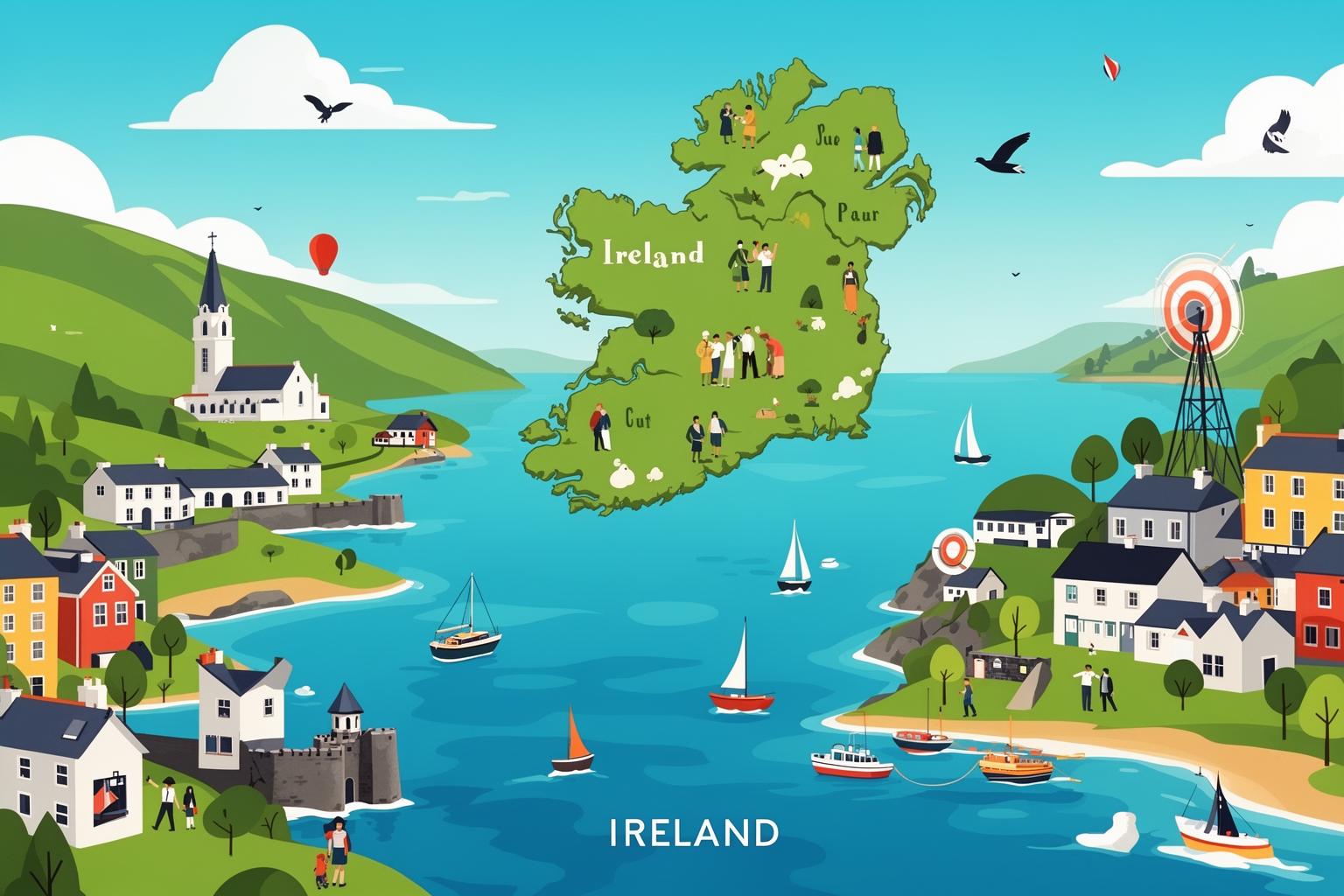
To journey through the landscapes of Colm Tóibín is to navigate a map of the soul. From the misty, memory-laden lanes of Enniscorthy to the vibrant, sun-drenched plazas of Barcelona, from the intellectual core of Dublin to the imagined shores of Brooklyn, each place represents a vital emotional terrain. These are more than mere settings; they act as dynamic forces that shape, confine, and free his characters. They silently witness the subtle dramas of departure, the pain of loss, and the tentative, brave quest for a place to call home. Connecting these varied locations is Tóibín’s deep understanding of the unspoken. His talent lies in illuminating the vast, meaningful spaces existing between people, cultures, and between past and present. A pilgrimage into his world is, therefore, an exercise in perception. It involves learning to read the silence of a small Irish town, to sense the history embedded in the stones of a Catalan street, and to see the sweeping human story in the simple act of crossing an ocean. It teaches us that the most profound journeys are often inward, and that the most resonant landscapes are those that mirror the contours of our own hearts. As you leave these places, you carry not only memories of sights and sounds but also a deeper appreciation for the quiet, powerful currents running beneath the surface of our lives—the very currents Colm Tóibín has so masterfully charted for us all.