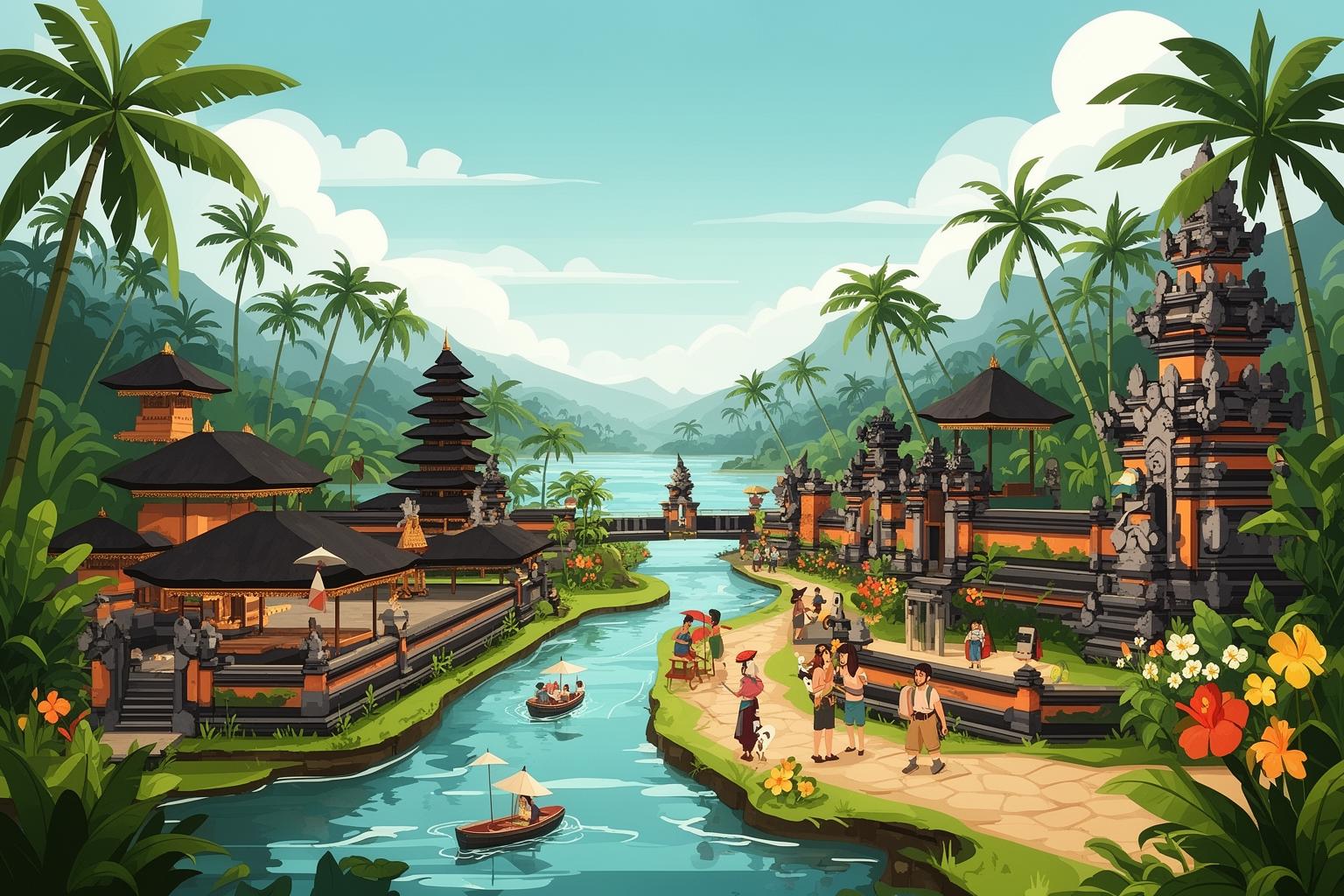
There’s a rhythm in Ubud, a pulse that beats just beneath the surface of the earth. It’s not the frantic thrum of a modern city, but the steady, ancient cadence of ritual, nature, and art flowing together like water over smooth river stones. This isn’t just a destination on a map; it’s a sanctuary for the spirit, a canvas where the soul can paint itself in vibrant hues of green and gold. For decades, seekers, artists, yogis, and dreamers have been drawn to this verdant heart of Bali, not merely to see, but to feel. They come to peel back the layers of the everyday and reconnect with something more profound, something timeless. Ubud is where the veil between worlds feels thin, where the scent of frangipani and clove incense hangs in the humid air like a whispered prayer, and where the chorus of chirping geckos and distant gamelan music becomes the soundtrack to your own personal awakening. This journey isn’t about ticking off landmarks from a list; it’s about surrendering to the flow, allowing the island’s gentle energy to guide you inward. It is a pilgrimage to the self, with the emerald rice paddies and sacred temples of Ubud as your cathedral.
If you are drawn to the idea of a literary pilgrimage, you may find inspiration in the quiet landscapes of a writer’s world.
Awakening the Senses: Your First Morning in Ubud
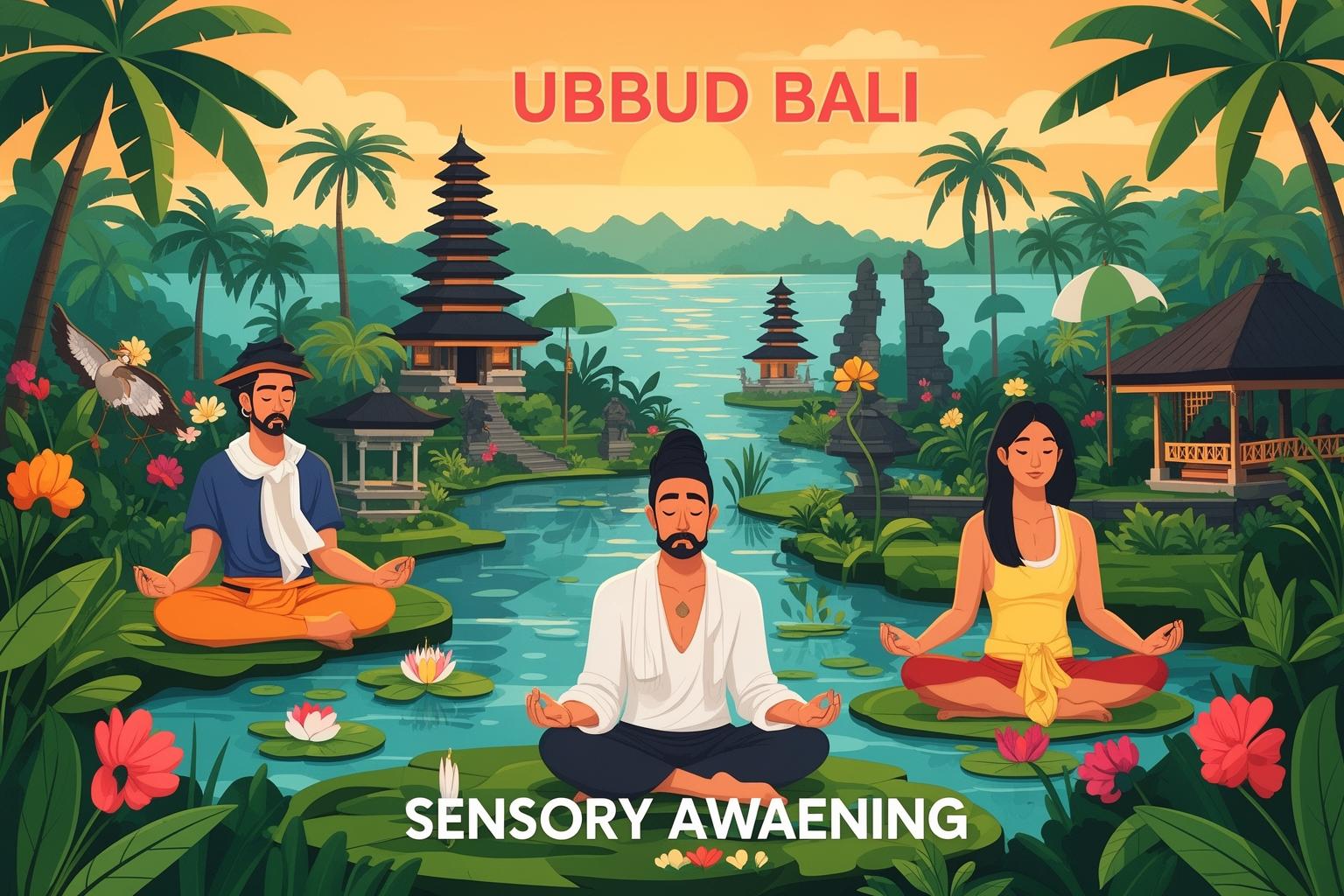
The day in Ubud doesn’t begin with the sharp jolt of an alarm clock. Instead, it starts with a gentler call. The first light spreads over the jungle canopy, casting a soft, ethereal glow that filters through palm leaves and lights up the morning mist rising from the river valley. The world stirs not with a crash, but with a chorus of natural sounds: the distant crow of a rooster, the melodic chirping of hidden birds, the rustle of leaves in the warm breeze. This is a time to simply exist, to lie still and listen as the island slowly awakens around you. It’s a moment of pure presence, a gentle invitation to begin your day with intention rather than duty.
The Sacred Ritual of Sunrise Yoga
Before the day’s heat fully settles in, find your way to a yoga shala. These open-air pavilions are sacred spaces within Ubud’s wellness culture, often constructed from bamboo and wood, with thatched roofs and panoramic views of shimmering rice fields or lush jungle ravines. This practice is not about pushing your body into difficult poses; it’s a moving meditation. A Vinyasa flow class here feels like a dance with the dawn, each breath aligned with the rising sun, each movement a gesture of gratitude. Moving through sun salutations, you feel the warmth on your skin and the solid earth beneath your feet, grounding you firmly in the present moment. The air, still cool and heavy with the scent of damp earth and night-blooming jasmine, fills your lungs, cleansing you from within. It’s a powerful way to set the tone for your day, creating a space of clarity and calm inside before stepping out to explore.
Nourishment for Body and Soul
Breakfast in Ubud is more than just a meal; it’s an extension of the morning’s mindful ritual. Forget greasy foods and processed sugars. Here, you nourish your body with the vibrant, life-giving abundance of the island. Picture a bowl filled with jewel-toned tropical fruits: sunset-orange papaya, creamy yellow mango, and vivid magenta dragon fruit, all freshly picked and bursting with flavor. Or perhaps a smoothie bowl, thick and cool, made from bananas and spinach, topped with crunchy granola, shredded coconut, and chia seeds. To accompany it, sip a warm glass of Jamu, a traditional Indonesian herbal drink. This bright yellow elixir, crafted from turmeric, ginger, tamarind, and honey, acts as a powerful anti-inflammatory and digestive aid—a true taste of Balinese healing wisdom. Eating in this mindful way, slowly and with awareness, you come to understand that food is medicine, and nourishing your body is an act of self-love.
The Path of Purification: Water Temples and Sacred Springs
In Balinese Hinduism, known as Agama Tirta or the “Religion of Holy Water,” water serves as the supreme purifier. It is a source of life and a means of cleansing not only the physical body but also the spirit. It dispels negative energies, sanctifies the soul, and readies one for a divine connection. Visiting a Balinese water temple involves engaging in an ancient spiritual hygiene practice, a ritual that links you to the core of the island’s faith. This experience transcends simple sightseeing, offering a deep sense of renewal and release that lingers long after your skin has dried.
Tirta Empul: The Spring of Immortality
Set within a lush valley, Tirta Empul is among Bali’s most venerated temple complexes, centered around a sacred spring that has flowed for more than a thousand years. According to legend, the god Indra created the spring by piercing the earth to unleash a fountain of immortality to heal his poisoned forces. From the moment you arrive, the weight of this history is palpable. The air is filled with the fragrant smoke of incense and the soft murmur of prayers. After putting on the required sarong and sash, you proceed to the main courtyard, where long, rectangular purification pools are nourished by a series of intricately carved stone spouts.
The Melukat Cleansing Ritual
Taking part in the melukat, the traditional purification ritual, means immersing yourself in the essence of Balinese spirituality. You begin by offering a small canang sari at a shrine to express gratitude and seek permission. Then, you enter the cool, clear water of the first pool, the stones beneath your feet worn smooth over time. Joining the line of devotees, both local and foreign, you await your turn at each of the thirteen main spouts. At each spout, you pause to say a silent prayer or set an intention, then dip your head three times under the flowing water, allowing it to cascade over your face and shoulders. You experience the shock of the cold followed by a profound clarity. Each spout is believed to possess a unique cleansing power, from dispelling nightmares to purifying the mind. Moving from one spout to the next, you feel as though you are shedding layers of stress, worry, and emotional burdens, leaving them behind in the flowing water. It is an intensely personal and deeply transformative experience, a baptism of the soul that leaves you feeling lighter, clearer, and spiritually renewed.
Gunung Kawi Sebatu: A Sanctuary of Serenity
For those desiring a quieter water temple experience, away from the crowds of Tirta Empul, Gunung Kawi Sebatu is a hidden treasure. The journey there is part of the enchantment, as you descend a long stone staircase into a lush, almost primeval ravine. The temple surrounds a series of natural springs that feed crystal-clear pools inhabited by enormous, shimmering carp. The atmosphere here is one of profound tranquility. The only sounds are the gentle flow of water, the rustling leaves, and the soft chime of a temple bell. Unlike the formal ritual at Tirta Empul, this site invites quiet contemplation. You can find a peaceful spot to meditate beside one of the pools, observe the holy water bubbling up from the earth in a secluded shrine, or simply sit and absorb the deep serenity of the surroundings. It is a place that reminds you of nature’s quiet strength and the divinity present in stillness.
The Heartbeat of Ubud: Art, Craft, and Community
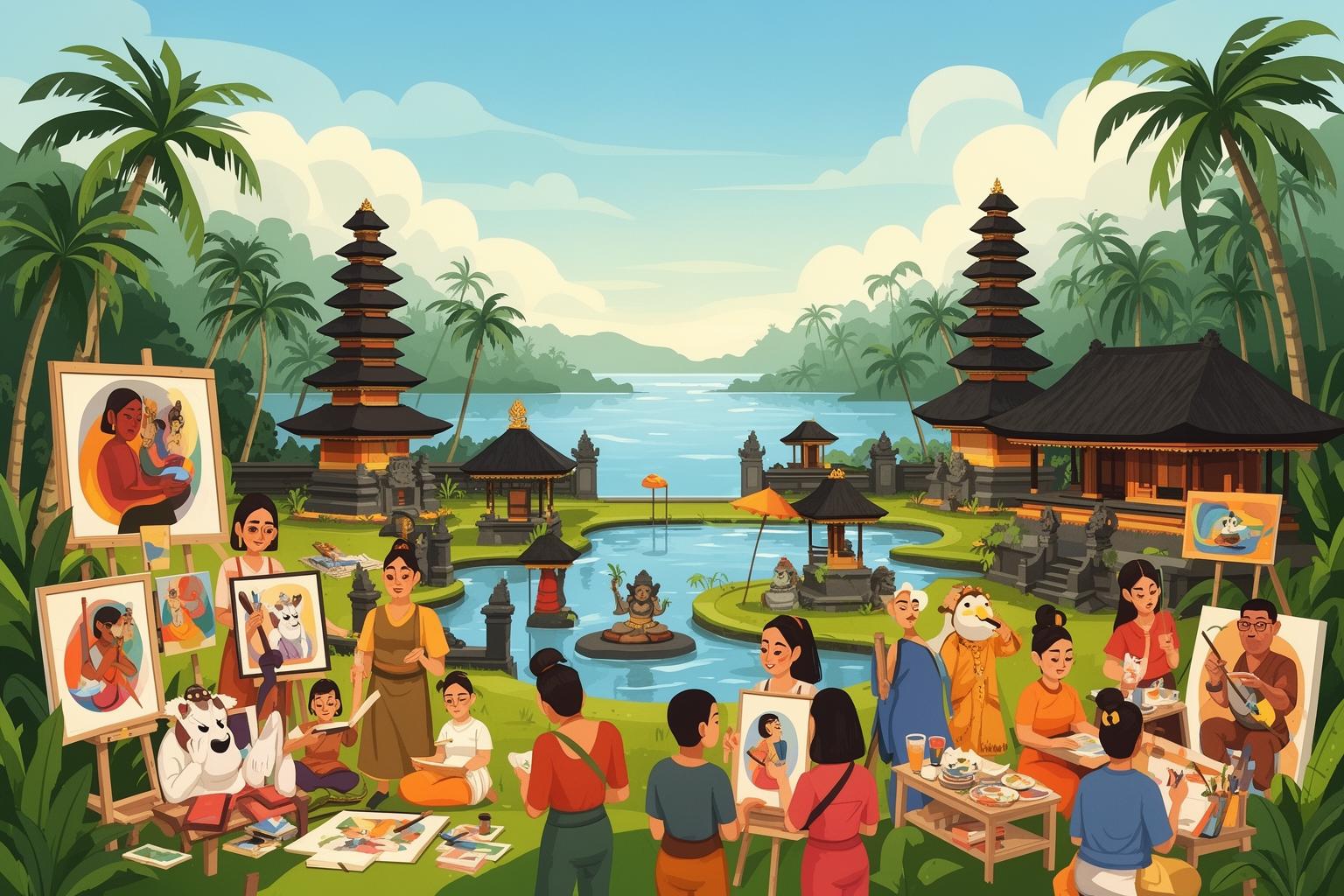
Ubud’s spiritual energy has long attracted creative souls. Since the early 20th century, when European artists such as Walter Spies and Rudolf Bonnet made it their home, it has flourished into a vibrant artists’ colony where traditional Balinese craftsmanship and contemporary artistic expression blend seamlessly. The creative spirit extends beyond galleries, spilling into the streets, workshops, and homes of nearby villages. Exploring this artistic landscape reveals that in Bali, art is not a luxury or pastime; it is a vital part of everyday life, an offering to the gods, and an expression of the community’s soul. It embodies the island’s beauty and devotion in a tangible form.
The Artisan Villages: A Journey into Craft
Heading out from Ubud’s center to the surrounding villages is like opening a series of treasure chests, each unveiling a unique, dazzling form of artistry preserved through generations.
Mas Village: The Soul of Wood
In Mas, the air carries the scent of sandalwood, teak, and hibiscus. This village is famous as the island’s center for woodcarving. Wandering through, you’ll encounter workshops and galleries where master carvers—often with years of apprenticeship—transform simple wood blocks into breathtakingly intricate sculptures. Statues of Hindu deities like Garuda and Ganesha display exquisite detail, alongside flowing, abstract pieces that seem to embody the movement of wind and water. Watching a carver at work is mesmerizing; with just a mallet and chisel, their hands move with practiced, intuitive grace, revealing the spirit within the wood. It’s a testament to the patience, skill, and deep spiritual connection that define Balinese craftsmanship.
Celuk Village: The Gleam of Silver and Gold
A few kilometers south, Celuk shines with the art of its silversmiths and goldsmiths. For centuries, this village has been the center for creating elaborate jewelry and ornaments used in Balinese ceremonies. The workshops resonate with the gentle, rhythmic hammering sounds. You can observe the entire process, from melting small silver granules to the delicate filigree and granulation techniques that produce the signature lacy, ornate designs. The jewelry here is more than adornment; each piece often carries symbolic meanings inspired by nature, mythology, and the cosmos. It’s an excellent place to find a unique handcrafted item that carries the spirit of Bali’s artistry.
The Ubud Art Market: A Kaleidoscope of Creativity
In the heart of town, Pasar Seni Ubud, or Ubud Art Market, is a vibrant, chaotic, and utterly captivating burst of color, texture, and sound. It is a maze of stalls overflowing with handmade goods. Here, you’ll discover everything from flowing silk scarves and batik sarongs to hand-carved masks, woven ata grass bags, colorful paintings, and whimsical wooden sculptures. Navigating the market is an experience itself—a place for friendly interaction and the gentle art of bargaining, viewed less as negotiation and more as a social exchange. The key is to approach with a smile and a spirit of fun. This is where your intuition guides you—where you touch fabrics, admire hand-painted details, and discover that one special piece that seems to call out, a tangible reminder of Ubud’s creative soul.
Journey Through Green: Rice Paddies and Jungle Trails
The landscape surrounding Ubud is a remarkable fusion of nature and human effort. The iconic terraced rice paddies cascading down the hillsides are not only stunning but also a living symbol of a deeply spiritual and communal lifestyle. This is the realm of the Subak, a sophisticated, UNESCO-recognized irrigation system that has supported Bali for over a millennium. It embodies the Balinese philosophical concept of Tri Hita Karana, which highlights the harmonious connection between the human realm, the natural world, and the spiritual domain. Walking through these verdant fields is like moving through a living temple, a landscape shaped by generations of devotion and cooperation.
Tegalalang Rice Terrace: The Iconic Emerald Cascade
For many, the Tegalalang Rice Terrace is the quintessential image of Bali. It is a stunning valley where rice paddies are sculpted into the steep hillsides like massive green steps. While it has become a popular tourist destination, its beauty remains captivating. To fully experience its magic, visit at sunrise. In the early morning light, the terraces are illuminated by a soft golden glow, often surrounded by a mystical mist. This is when local farmers begin their day, tending to the young rice plants. Rather than just taking photos from the top, take the time to descend into the valley. Wander along the narrow earthen paths crisscrossing the terraces. Feel the mud beneath your feet, listen to the gentle trickle of water flowing through bamboo irrigation channels, and sense the soft breeze rustling the rice stalks. It’s a sensory journey that connects you to the land and the labor that sustains it.
Campuhan Ridge Walk: A Meditation in Motion
For a peaceful and easily accessible nature stroll, the Campuhan Ridge Walk is a true treasure. Located just a short walk from Ubud’s main road, this paved trail offers breathtaking views with minimal effort. The path winds along the crest of a grassy ridge, flanked on both sides by lush jungle valleys of the Wos and Cerik Rivers. The ideal times to enjoy this walk are early morning or late afternoon during the golden hours when the light is gentle and the air cool. It’s not a challenging hike but rather a meditative amble. The smooth, rolling path encourages you to slow your pace, breathe deeply, and simply take in the immense beauty surrounding you. Along the way, you’ll pass towering coconut palms and quaint cafes where you can pause for fresh coconut water while admiring the verdant vista. It’s the perfect retreat, a place to clear your mind and reconnect with the simple pleasure of walking in nature.
The Call of the Waterfalls
Beyond the rice terraces, Ubud’s jungle conceals numerous sacred waterfalls, each with its distinct charm. Seeking them out offers an adventure rewarded by Bali’s raw, untamed splendor. Kanto Lampo Waterfall is a broad, terraced cascade that you can climb while feeling the water rushing over you. Tibumana Waterfall is a pristine, picturesque curtain of water plunging into a deep turquoise pool, a secluded paradise ideal for a refreshing swim. Reaching these falls often involves trekking through lush jungle trails, enhancing the sense of discovery. The roar of the water as you near is a primal sound that quiets the mind, and standing in its powerful spray feels like a form of natural cleansing, washing away all thoughts and leaving only the exhilarating awareness of the present moment.
The Inner Landscape: Deepening Your Yoga and Meditation Practice
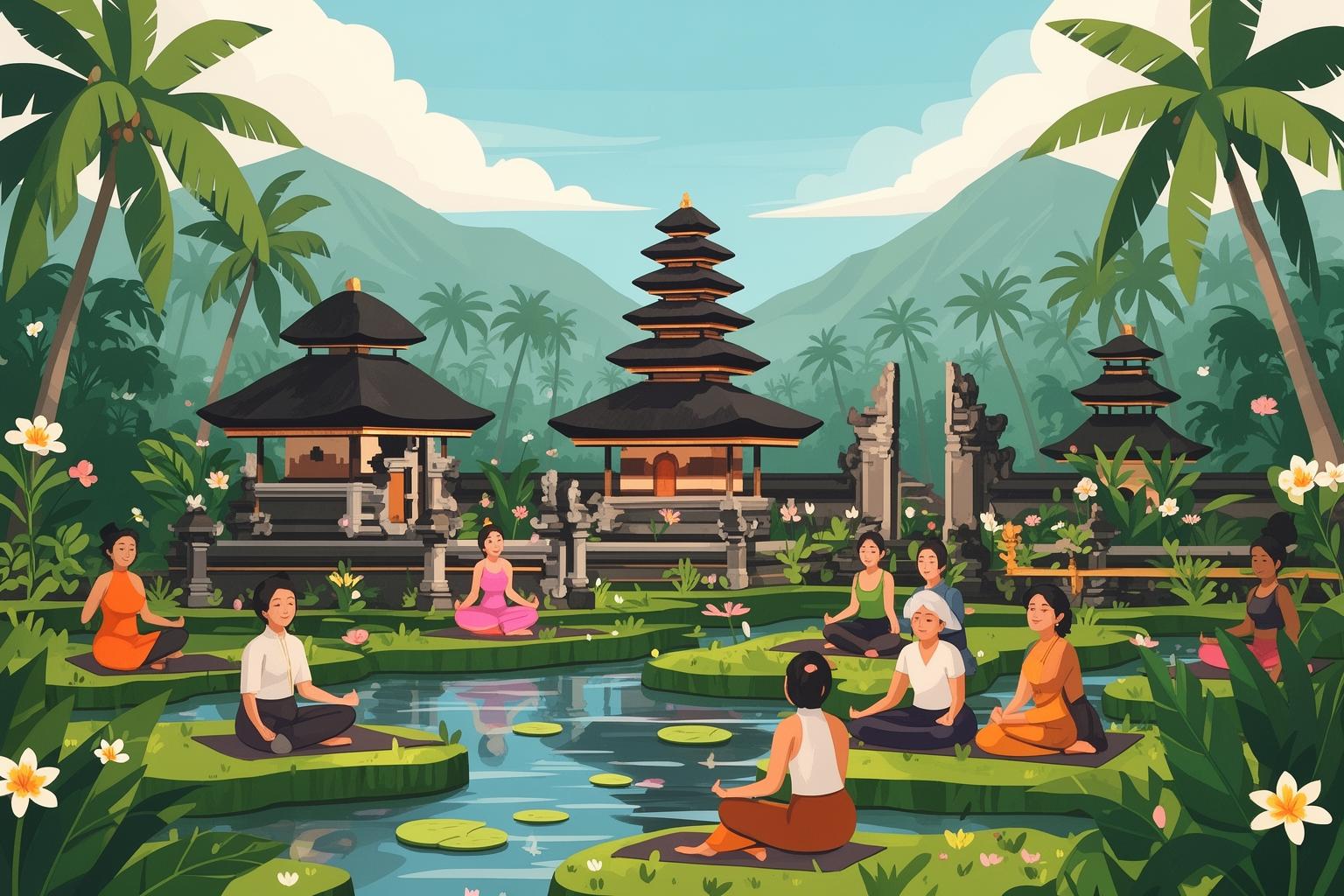
Ubud is undeniably one of the world’s premier destinations for yoga. Yet, the practice here extends far beyond physical postures (asanas). It represents a holistic journey into the self, exploring the inner realms of mind, body, and spirit. The vibrant community of teachers and practitioners attracted to Ubud is remarkably diverse, offering a wide range of styles and traditions. Whether you are a complete beginner or an experienced yogi, you will discover a practice and community that resonate with you. The environment itself—the lush natural surroundings, spiritual atmosphere, and emphasis on healthy living—provides the ideal setting for profound, transformative work.
Finding Your Sacred Space: The Shalas of Ubud
The abundance of yoga studios, or shalas, can feel overwhelming, but each one brings its own unique vibe. Choosing the right space is part of the experience.
The Yoga Barn: The Heart of Community
The Yoga Barn is more than just a studio; it’s an expansive wellness center and the vibrant core of Ubud’s yoga culture. Featuring several shalas, a health-focused café, and a comprehensive schedule with dozens of daily classes—from Power Yoga and Acro Yoga to Restorative Yin and Meditation—it offers something for everyone. The atmosphere is social and lively, making it an excellent place to connect with fellow travelers and seekers worldwide. For newcomers to Ubud, it serves as a fantastic introduction to the incredible diversity on offer.
Radiantly Alive: Energy and Expression
Famous for its high-energy sessions and passionate, world-class instructors, Radiantly Alive nurtures a deeply committed community. It encourages you to challenge yourself, sweat, laugh, and release. Their signature “RA Vinyasa” classes are dynamic and uplifting, often accompanied by energetic playlists. They also host workshops and teacher trainings that draw a dedicated and experienced crowd, fostering an environment of serious practice and joyful self-expression.
Beyond the Mat: Exploring Deeper States of Consciousness
The inward journey in Ubud frequently moves beyond traditional yoga classes into potent healing practices that engage subtle, energetic layers.
The Vibrational Medicine of Sound Healing
A sound bath or sound healing session offers a profoundly immersive, full-body listening experience. You simply lie back on a mat, close your eyes, and allow the resonant frequencies of various instruments to envelop you. Practitioners combine Himalayan singing bowls, massive gongs, chimes, and other instruments to create a rich soundscape. These vibrations reach your body at a cellular level, helping to release energetic blockages, soothe the nervous system, and guide the mind into deep meditation. It’s a form of effortless meditation that can be deeply relaxing and emotionally healing.
Ecstatic Dance: Liberation Through Movement
For a more active form of release, ecstatic dance provides a space for total freedom of expression. In a substance-free setting, a DJ plays a continuous journey of music—ranging from ambient and melodic to tribal and high-energy electronic beats. There are no steps to master and no choreography to follow. The only rule is to move however your body desires. This practice offers a powerful way to shed inhibitions, connect with your body’s innate wisdom, and experience unity and joy with the community around you. It’s a dynamic, sweaty, and utterly liberating celebration of life.
Flavors of Healing: A Culinary Journey
In Ubud, food is deeply intertwined with wellness. The vibrant culinary scene reflects the town’s philosophy, focusing on fresh, organic, plant-based, and locally sourced ingredients. Dining here celebrates nature’s abundance and offers a chance to nourish your body with meals that are both tasty and healing. The Balinese uphold the concept of “sekala niskala,” the seen and unseen worlds, which extends to their cuisine where the physical ingredients carry a life force, or “prana.”
The Heart of Balinese Cuisine
To fully appreciate the local culture, you must delve into its flavors. Participating in a Balinese cooking class is among the most enriching experiences in Ubud. The day often starts with a trip to a lively market, bursting with exotic fruits, vegetables, and spices. Your guide will introduce essential ingredients such as galangal, lemongrass, turmeric root, and kaffir lime leaves. Back in an open-air kitchen, you’ll master the creation of “basa gede,” the foundational spice paste central to many Balinese dishes. Grinding fresh ingredients with a stone mortar and pestle releases their intense aromas. You’ll then prepare classic dishes like Gado-Gado (vegetables with peanut sauce), Nasi Goreng (fried rice), and Pepes Ikan (fish steamed in banana leaves). This hands-on experience connects you intimately with the land, culture, and people.
From Humble Warungs to Plant-Based Havens
Ubud offers a wide range of dining options. For an authentic taste of home-style Balinese food, visit a small, family-run “warung.” These modest eateries serve flavorful and affordable meals. A plate of Nasi Campur provides a perfect introduction, featuring a mound of rice surrounded by small portions of various dishes—perhaps curried vegetables, tempeh, grilled chicken, and a dollop of spicy sambal.
At the other end of the spectrum, Ubud is a global pioneer in innovative plant-based cuisine. Restaurants like Moksa and Alchemy craft culinary masterpieces that are entirely vegan and often raw. Here, you’ll discover dishes that are not only nutritious but also highly creative and flavorful, shattering any stereotypes about vegan food. This fusion of traditional and contemporary, simple and refined, makes Ubud a true haven for any food enthusiast.
Practical Pathfinding: Navigating Your Ubud Retreat
While Ubud fosters a go-with-the-flow mindset, having some practical knowledge can help ensure your spiritual journey is smooth and stress-free. Managing the logistics allows you to immerse yourself more fully in your inner experience.
Getting There and Getting Around
Most visitors arrive at Ngurah Rai International Airport (DPS) near Denpasar. From there, Ubud is approximately a 60- to 90-minute drive, depending on traffic conditions. You can easily arrange a pre-booked airport transfer or take a taxi from the official airport counter. Once in Ubud, the town center is quite walkable. To explore areas further away, renting a scooter is a popular choice that offers great freedom, but it’s recommended only for experienced and confident riders due to chaotic traffic. A less stressful alternative is using ride-hailing apps such as Gojek or Grab, which provide both car and scooter taxi services at affordable rates. For full-day trips to temples or rice terraces, hiring a private driver is an excellent and cost-effective option, often doubling as an informal guide sharing local knowledge and insights.
Finding Your Sanctuary: Where to Stay
Your accommodation in Ubud is more than just a place to rest; it is a key part of your retreat experience. There are many options available to suit every budget and preference.
- Retreat Centers: For a fully immersive wellness experience, consider staying at retreat centers like Fivelements or Bagus Jati. These venues offer all-inclusive packages featuring yoga, meditation, spa treatments, and healthy meals amid stunning natural surroundings.
- Boutique Guesthouses and Homestays: For a more intimate and authentic experience, opt for a family-run guesthouse. You will find yourself welcomed into a traditional Balinese family compound, providing a unique insight into local life.
- Private Villas: For ultimate privacy and tranquility, renting a private villa—often with a pool and views of the jungle or rice fields—can feel like a slice of paradise. This is ideal for those seeking deep rest and solitude.
When to Go and What to Respect
Ubud is a wonderful destination throughout the year. The dry season, from April to October, features sunnier days and less humidity, making it the busiest tourist period. The wet season, from November to March, brings more frequent rain showers, though they are usually brief and refreshing. This season is quieter, with the landscape at its most lush and vibrantly green.
Respect for local culture is essential. When visiting temples, always dress modestly by covering your shoulders and knees. Sarongs and sashes are required and are usually available to rent at the entrance. Be mindful of the small square-leaf baskets called “canang sari” placed on the ground as daily offerings; avoid stepping on them. If you encounter a religious ceremony or procession, watch from a respectful distance, remain quiet, and never use a flash. Always use your right hand when giving or receiving items, as the left hand is considered impure. A smile and a simple “Suksma” (thank you) will be warmly appreciated.
The Echo of Ubud: Carrying the Serenity Home
A journey to Ubud does not simply conclude when you board the plane home. It is a vibration that continues to resonate within you. You may leave the island, but the island’s spirit remains with you. The true pilgrimage is not to the temples or rice fields, but to the quiet, sacred space within yourself. Ubud offers the map and compass to guide you there. The scent of incense may evoke memories of a serene temple courtyard. The taste of fresh ginger might recall a healing Jamu drink. A moment of stillness in your busy day may echo the peace felt while watching a sunrise over the jungle.
The real souvenir from this journey is not an item packed in your suitcase, but a shift in perspective carried in your heart. It’s a renewed connection to nature, an appreciation for simple rituals, and the understanding that peace is not a destination to reach, but a state of being to cultivate. The echo of Ubud gently reminds you to walk with intention, nourish your body and soul, and find the sacred in the beautiful, ordinary moments of your life, wherever you are.