There are artists who paint, and then there are artists who forge entire worlds with ink and gold. Kano Eitoku was the latter. Step into the tumultuous, brilliant heart of sixteenth-century Japan, the Momoyama period, and you’ll find his ghost everywhere. This was an age of seismic change, when feudal lords, men of unimaginable ambition and brutal power, vied to unify a fractured nation. They built colossal castles that scraped the heavens and demanded an art that matched their larger-than-life personas. And Eitoku, with a brush in his hand and a storm in his soul, gave it to them. He was more than a painter; he was the visual architect of an era. His style, known as taiga or “grand style,” was an explosion of energy on a monumental scale—ancient pines twisting with muscular life, creatures of myth soaring across golden clouds, all rendered with a breathtaking confidence that mirrored the spirit of his patrons: Oda Nobunaga and Toyotomi Hideyoshi. To trace his footsteps is to journey not just to temples and castle ruins, but into the very psyche of the men who shaped modern Japan. This is a pilgrimage through Kyoto, Shiga, and Osaka, a quest to stand in the spaces he filled with genius and to feel the powerful, echoing legacy of a man who burned brightly and vanished all too soon.
This journey into the world of Kano Eitoku is part of a broader exploration of artistic pilgrimages, which can also lead you to the gilded world of Gustav Klimt in Vienna.
The Heart of the Kano School: Echoes in the Ancient Capital
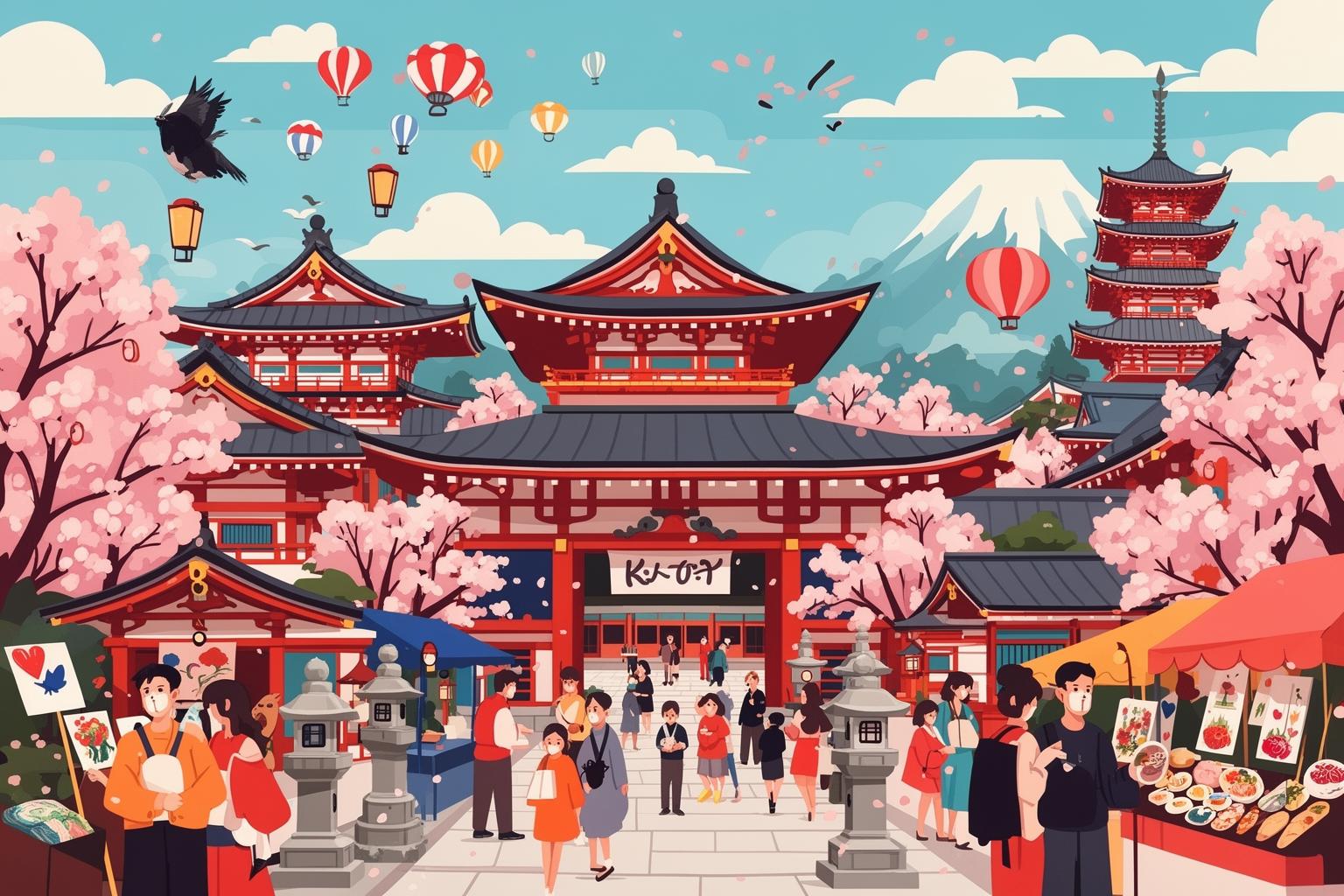
Our journey begins, as it must, in Kyoto. Long before Eitoku adorned the warlords’ palaces with gold, this city was the birthplace of his lineage. Even then, Kyoto was a city steeped in tradition, the imperial heart of Japan for centuries. It was here that the Kano school, the most esteemed and influential academy of painters in the nation’s history, took root. To walk through Kyoto today is to traverse a living museum, where sleek modern structures stand alongside centuries-old wooden temples, and the past hums quietly beneath the surface of the present. Picture the city in Eitoku’s era—a hub of refined courtly culture as well as the center of political intrigue, where the old aristocracy was being replaced by a new, assertive military class.
Kano Eitoku was born into the elite of the art world. His grandfather, Kano Motonobu, was a legendary master who perfected a style that combined the delicate lyricism of Japanese Yamato-e painting with bold ink-wash techniques from China. He established the Kano school as the official painters to the shogunate, the military government. Eitoku’s father, Kano Shōei, upheld this tradition, but it was Eitoku who was destined to ignite it, transforming the school’s refined style into something explosive and entirely new. From an early age, his exceptional talent was undeniable. The Kano workshop in Kyoto would have been a flurry of activity—apprentices grinding pigments from precious minerals, preparing silk and paper, the air heavy with the scent of ink and animal-hide glue. It was here, under the careful guidance of his father and grandfather, that Eitoku mastered the fundamentals. Yet his spirit was too restless, too ambitious, to be confined by tradition. He was a man of his age, and his age was one of upheaval and limitless aspiration.
Whispers on Gold Leaf: The Sacred Stillness of Jukō-in
To truly connect with the spirit of the young Eitoku, you must leave the city center behind and journey to the expansive, tranquil complex of Daitoku-ji in northern Kyoto. This is not a single temple, but a vast ensemble of sub-temples—a Zen city within the city—where stone paths meander through moss-covered gardens and the atmosphere feels steeped in centuries of history. It is a place of deep silence, and tucked within its confines lies a treasure of unmatched significance: Jukō-in. This sub-temple houses the earliest surviving masterpiece by Kano Eitoku, a series of fusuma (sliding door paintings) he completed at the remarkable age of twenty-four. To behold them is to witness the moment a prodigy declared his arrival.
Approaching the Sanctuary
Reaching Daitoku-ji is an experience in itself. Take the Karasuma subway line to Kitaoji Station, and as you walk the remaining fifteen minutes, the city’s noise gradually fades away, replaced by the peaceful residential streets of Murasakino. The main gate of Daitoku-ji is grand, but once inside, the scale feels more intimate. The complex is a maze of earthen walls and dark wood, and locating Jukō-in requires some exploration, adding to the thrill of discovery. Established in memory of the warlord Miyoshi Yoshitsugu, one of Eitoku’s early patrons, Jukō-in exudes a quiet, profound reverence. A practical note for today’s pilgrims: access to the Hōjō, the abbot’s quarters where the paintings reside, is often limited. It’s crucial to check the temple’s official schedule for special openings, which occur infrequently. This exclusivity makes the visit even more precious—you’re not merely a tourist, but a privileged guest entering a sacred space.
The Hōjō and the Fusuma: An Encounter with Eitoku’s Essence
Stepping into the Hōjō of Jukō-in feels like stepping outside of time. The rooms are covered with fragrant tatami mats, and the soft, diffuse light filters through the paper shōji screens. Then you see them. The walls are not just walls but canvases—sixteen panels in total—that envelop you with Eitoku’s breathtaking portrayal of the “Birds and Flowers of the Four Seasons.” Here, his brushwork’s rhythmic language truly comes to life. The paintings are integrated into the architecture itself, creating an immersive environment. You don’t simply observe the art—you inhabit it.
The Room of Birds and Flowers of the Four Seasons
The power of these paintings lies in their raw, untamed vigor, tempered by remarkable delicacy. Eitoku commands the entire space with a confidence that belies his youth. In the central room, your eyes are immediately drawn to the scenes of spring and summer. The spring panels feature a majestic old plum tree—an emblem of resilience and renewal—its twisted trunk stretching across the composition. Blossoms flutter from its branches, each painted with a striking economy of strokes. There’s a sense of life bursting forth after the harshness of winter. Small birds flit among the branches, their chirps almost audible in the temple’s silence.
As your gaze moves onward, spring flows seamlessly into summer. Dominating the scene is a towering pine tree, its thick, muscular trunk grounding the composition while its branches extend across a golden backdrop. The pine symbolizes longevity and steadfast strength, a clear homage to the samurai virtues of Eitoku’s patron. Beneath it, cranes—symbols of good fortune—stand gracefully by a rushing stream. The water is depicted with sweeping, vigorous ink lines, conveying a feeling of cool, flowing energy. What’s most striking is Eitoku’s innovative use of space and scale: the plum and pine are thrust boldly forward, creating a dynamic, almost overwhelming presence. The background shimmers with gold leaf that catches the natural light, bathing the room in an ethereal glow. This represented a bold break from the more restrained styles of his forerunners.
Moving into adjacent rooms, the mood shifts to autumn and winter. Wild geese descend onto a marshy bank, their forms captured with a few deft strokes, evoking a more melancholic tone as nature enters its cyclical decline. The winter scenes showcase a masterful subtlety: snow-laden bamboo and willows bend under winter’s weight, their forms outlined against the golden background. Here, Eitoku’s genius for yohaku, or empty space, is fully evident. The unpainted gold leaf is not emptiness but a tangible presence, evoking crisp, cold air or the muted stillness of a snow-covered landscape. Standing within these rooms, surrounded by Eitoku’s vision, one feels the passage of time, the rhythm of the seasons, and the profound connection to nature at the heart of Japanese aesthetics. It is an intensely personal, meditative experience. You see the world through the eyes of a young master already reshaping the boundaries of his art.
A Pilgrim’s Reflection
Upon leaving Jukō-in, the sensory impressions linger: the scent of aged wood and tatami, the hushed silence, and the overwhelming impact of those golden panels. Because public viewings are rare, the chance to see these works in their original setting is a true pilgrimage. If you are fortunate to visit during an opening, take your time—sit on the tatami, breathe deeply, and allow the artwork to gradually reveal its secrets. While at Daitoku-ji, it’s also worthwhile to explore other sub-temples. Kōtō-in, with its beautiful maple-lined approach, and Ryōgen-in, home to the oldest rock garden in the complex, offer distinct but equally profound experiences of Zen beauty. They provide a broader context for understanding the world in which Eitoku created his first great masterpiece.
Power and Serenity: Eitoku’s Vision at Nanzen-ji
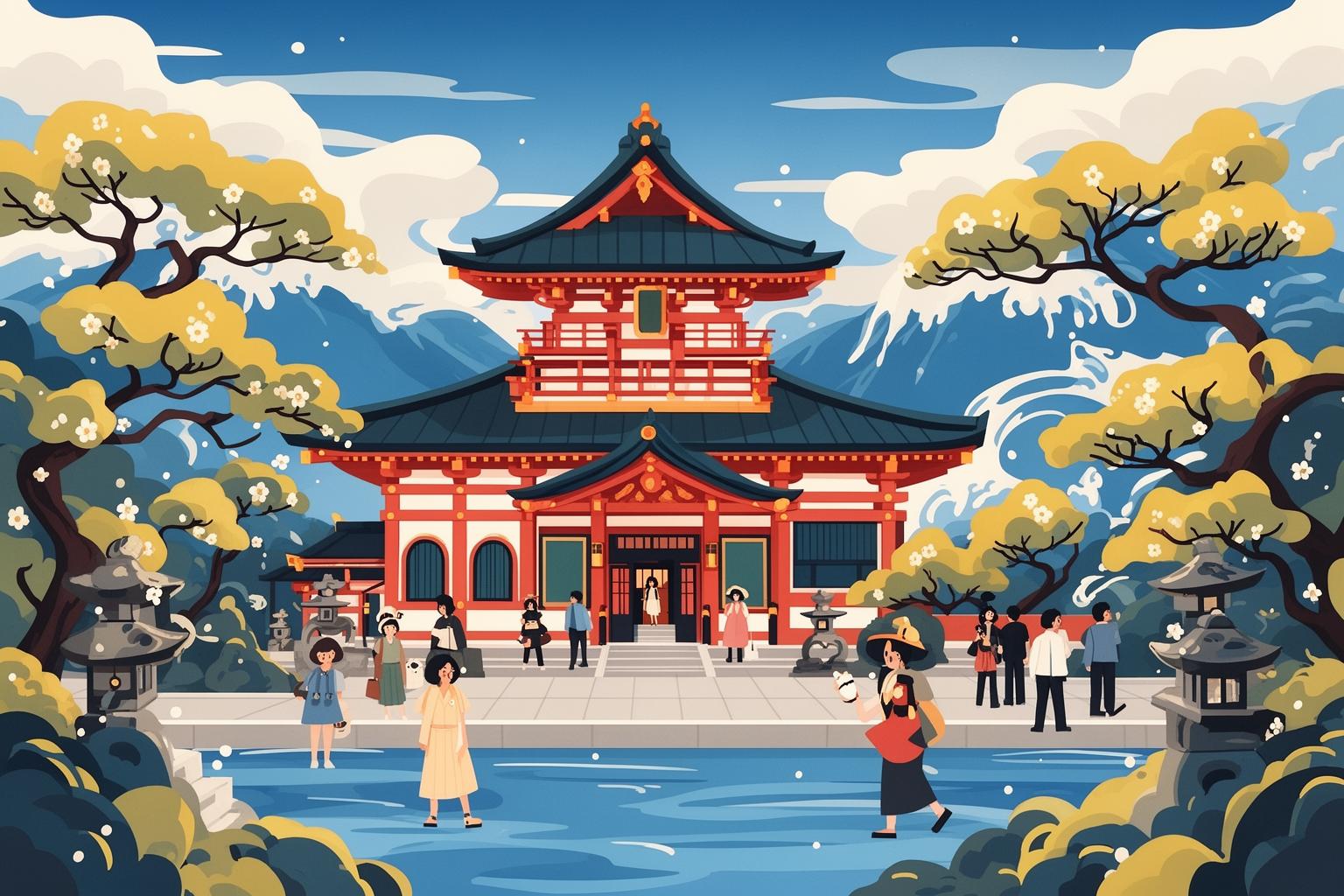
If Jukō-in marks the intimate, explosive debut of a young genius, our next stop, Nanzen-ji Temple, presents Eitoku’s art on a larger, more public stage. Situated at the foot of the lush Higashiyama mountains in eastern Kyoto, Nanzen-ji is one of Japan’s most significant Zen temples. Its expansive grounds, imposing gates, and stately halls exude an aura of immense power and prestige—a fitting setting for an artist increasingly favored by the nation’s ruling elite.
The Gateway to Enlightenment
From the moment you arrive, Nanzen-ji captivates with its grand scale. The path leads to the colossal Sanmon gate, a two-story structure of dark, weathered wood that dominates the landscape. Visitors can climb to the upper balcony for a breathtaking view of Kyoto’s rooftops framed by the surrounding mountains—a vista that immediately underscores the temple’s significance. Nanzen-ji was not merely a place of religious practice; it was a hub of political and cultural power, closely linked to the shoguns and samurai who ruled the country. The atmosphere here contrasts sharply with the secluded quiet of Daitoku-ji. It is more open, more majestic, and deeply entwined with Japan’s history of authority.
The Hōjō Paintings: A Symphony of Nature and Power
Within the Seiryō-den, the main hall of the Hōjō (Abbot’s Quarters), Eitoku’s work can be found. Here, he was commissioned to paint another series of fusuma panels. While some originals are now preserved in a treasure hall, high-quality replicas enable visitors to experience them in their intended environment. The theme differs: the “Twenty-Four Paragons of Filial Piety,” a collection of classic Chinese tales illustrating Confucian virtues. This choice reveals much about the patrons—a message of moral authority and righteous governance, offering ethical lessons to the warrior class. Eitoku’s execution remains spectacular. The figures are dynamic, their robes swirling as they enact legendary acts of devotion. They emerge from swirling golden clouds—a signature Kano school technique—that separate the narrative scenes and add a divine drama to the tales. The brushwork is confident and powerful, each line alive with energy. Though more didactic than the pure nature scenes at Jukō-in, Eitoku’s vigorous style is unmistakable. He breathes raw vitality into these ancient, formal stories, making them feel immediate and compelling.
Encircling the Hōjō is one of Kyoto’s most renowned karesansui, or dry landscape gardens. Known as the “Leaping Tiger Garden,” it features rocks arranged to depict a mother tiger leading her cubs across a river, set against a sea of raked white gravel. The contrast between Eitoku’s powerful interior paintings and the garden’s stark, meditative beauty creates a complete aesthetic experience—a realm where human drama, natural beauty, and profound Zen philosophy coexist in perfect harmony. This fusion of art and environment is a hallmark of great temples from this era, with Nanzen-ji standing as one of the most sublime examples.
Experiencing Nanzen-ji Today
Accessing Nanzen-ji is straightforward. The nearest subway station is Keage on the Tōzai Line, just a short, pleasant walk away. The temple grounds are extensive and free to enter, though separate fees apply for the Sanmon gate, the Hōjō, and other sub-temples. For the best experience of its serene atmosphere, visit on a weekday morning before larger tour groups arrive. A local tip is to explore the striking red-brick aqueduct that runs through part of the temple grounds. Part of the Lake Biwa Canal, built during the Meiji period, its Roman-style arches create a fascinating, picturesque contrast with the traditional Japanese architecture. Walking along its path offers a unique perspective on the temple and surrounding forest, providing a quiet moment for reflection after immersion in the powerful art of the Hōjō.
Phantoms of Gold: Reimagining the Lost Castles of Nobunaga and Hideyoshi
To fully comprehend the magnitude of Kano Eitoku’s genius, we must now leave the tangible world of surviving temple art and enter the realm of imagination. Eitoku’s most famous, spectacular, and revolutionary works were not created for quiet temples but for the symbols of absolute power that defined his era: the new, magnificent castles of the great unifiers. These commissions were on a scale never before seen in Japan, and all have been lost to fire and war. To trace Eitoku’s path here is to become an archaeologist of the mind, piecing together historical accounts to envision unimaginable splendor. This journey leads to two phantom locations: Azuchi Castle and the Jurakudai Palace.
Azuchi Castle: The Gilded Dream of a Unifier
In the 1570s, the warlord Oda Nobunaga was on the verge of uniting all of Japan. To symbolize his power and his vision of a new, unified nation under his rule, he built a castle unlike anything that had come before. Perched on a hill overlooking Lake Biwa in present-day Shiga Prefecture, he erected Azuchi Castle. It was not merely a military fortress; it was a palatial residence, a political statement, and a work of art. To decorate its interiors, Nobunaga summoned the greatest artist of the age: Kano Eitoku.
Ascending the Ruins
Today, only the massive stone foundations remain, climbing the wooded hillside. The journey from Kyoto takes about an hour by train to Azuchi Station, followed by a walk or a short taxi ride. As you begin the ascent up the wide, imposing stone steps, a sense of awe and melancholy takes hold. These are the very stones Nobunaga, his retainers, and Eitoku himself once walked upon. The air is quiet, filled with rustling leaves and birdsong. As you climb higher, passing the former sites of vassals’ residences, the strategic brilliance of the location becomes evident. The panoramic view from the top, where the seven-story tenshu (main keep) once stood, is breathtaking, stretching across the plains and the vast, shimmering expanse of Lake Biwa. It is a conqueror’s vantage point. And it is here, within this poignant emptiness, that you must begin to rebuild the castle in your mind’s eye.
Conjuring Eitoku’s Masterwork
Thanks to detailed accounts by Jesuit missionary Luís Fróis, who toured the castle with Nobunaga himself, we have a vivid picture of what was lost. The Azuchi Castle tenshu was a marvel. Its exterior was adorned with gold and lacquer, and its upper floors were painted in brilliant vermilion and blue. Inside, Eitoku and his workshop had free rein. Each floor was a universe unto itself. Fróis described rooms covered entirely in gold, with paintings so masterful they seemed alive. Eitoku filled the vast spaces with his signature themes on a superhuman scale. Some rooms featured majestic ink paintings of landscapes, flowers, and birds, reflecting Confucian and Daoist themes; higher floors depicted Buddhist sages and sacred stories. The top floor, octagonal and gilded inside and out, was said to represent heaven, a divine space for the ruler who saw himself as a near-deity. Imagine standing in these rooms, surrounded by Eitoku’s dynamic brushwork, the surfaces shimmering in candlelight. The paintings were not mere decoration but visual propaganda, narrating Nobunaga’s power, wisdom, and destiny to rule. This was Eitoku’s taiga style unleashed—a symphony of ink, color, and gold that would have left any visitor speechless. Just three years after its completion, following Nobunaga’s assassination, the castle was burned to the ground, and Eitoku’s masterpiece was lost forever.
Finding the Fragments
For visitors wishing to bridge imagination and reality, a visit to the nearby Nobunaga no Yakata museum is essential. It features a stunning full-scale reconstruction of the tenshu’s top floors, based on historical research. Stepping inside this recreation is dazzling, offering a tangible sense of the vibrant colors and lavish gold Eitoku used. Nearby, the Azuchi Castle Archaeological Museum provides further context with excavated artifacts and models. A short distance away, Sōken-in, a temple built by Hideyoshi in Nobunaga’s memory, is said to contain a main gate and other elements salvaged from the original castle. These fragments are the closest we can come to touching Eitoku’s lost world.
Jurakudai and Osaka Castle: The Golden Ambition of a Successor
After Nobunaga’s death, his most brilliant general, Toyotomi Hideyoshi, completed Japan’s unification. Hideyoshi, a man of even more extravagant tastes, elevated Eitoku’s career to its zenith with commissions for two monumental projects: the Jurakudai Palace in Kyoto and the magnificent Osaka Castle.
The Ephemeral Jurakudai Palace
Completed in 1587, the Jurakudai was Hideyoshi’s residential and administrative palace in Kyoto. Accounts describe it as a place of nearly blinding opulence, with gold leaf covering its roof tiles. Inside, Eitoku and his team, now at their peak fame, adorned every wall, screen, and door with breathtaking paintings. It was here that Hideyoshi received the emperor, a political masterstroke affirming his legitimacy as ruler. Eitoku’s art was the stage for this high drama. Tragically, the Jurakudai was even shorter-lived than Azuchi Castle; after just eight years, Hideyoshi had it dismantled. No trace remains at its original site, now a quiet residential area in Kyoto. Yet legend holds that some buildings were relocated to other temples. The stunning Hiun-kaku (Flying Cloud Pavilion) at Nishi Hongan-ji Temple and the ornate Karamon Gate at Daitoku-ji are rumored survivors. Standing before these architectural marvels, with their intricate carvings and lavish details, one can catch a faint echo of Jurakudai’s lost splendor and envision the golden screens by Eitoku that once graced their interiors.
The Original Osaka Castle
Hideyoshi’s main stronghold, Osaka Castle, was the nation’s largest and most impregnable fortress. Its main keep was even taller than Azuchi’s, and its interiors were reportedly more lavishly decorated by Eitoku and his pupils. Here, Eitoku likely created vast folding screens (byōbu) featuring battle scenes and grand landscapes, celebrating Hideyoshi’s military triumphs and the prosperity of his reign. Like its predecessors, the original castle was destroyed in the wars following Hideyoshi’s death. The present Osaka Castle is a 20th-century concrete reconstruction. Though lacking the original’s authenticity, it remains an impressive and essential landmark. As you explore its museum detailing Hideyoshi’s life and the castle’s history, remember the phantom masterpiece that once adorned its walls. Study the miniature reconstructions and historical drawings, and try to imagine the vast halls filled with Eitoku’s golden tigers, dragons, and eagles—the ultimate expression of a warlord’s power rendered by a master’s brush.
The Imperial Seal of Approval: Eitoku at the Kyoto Gosho
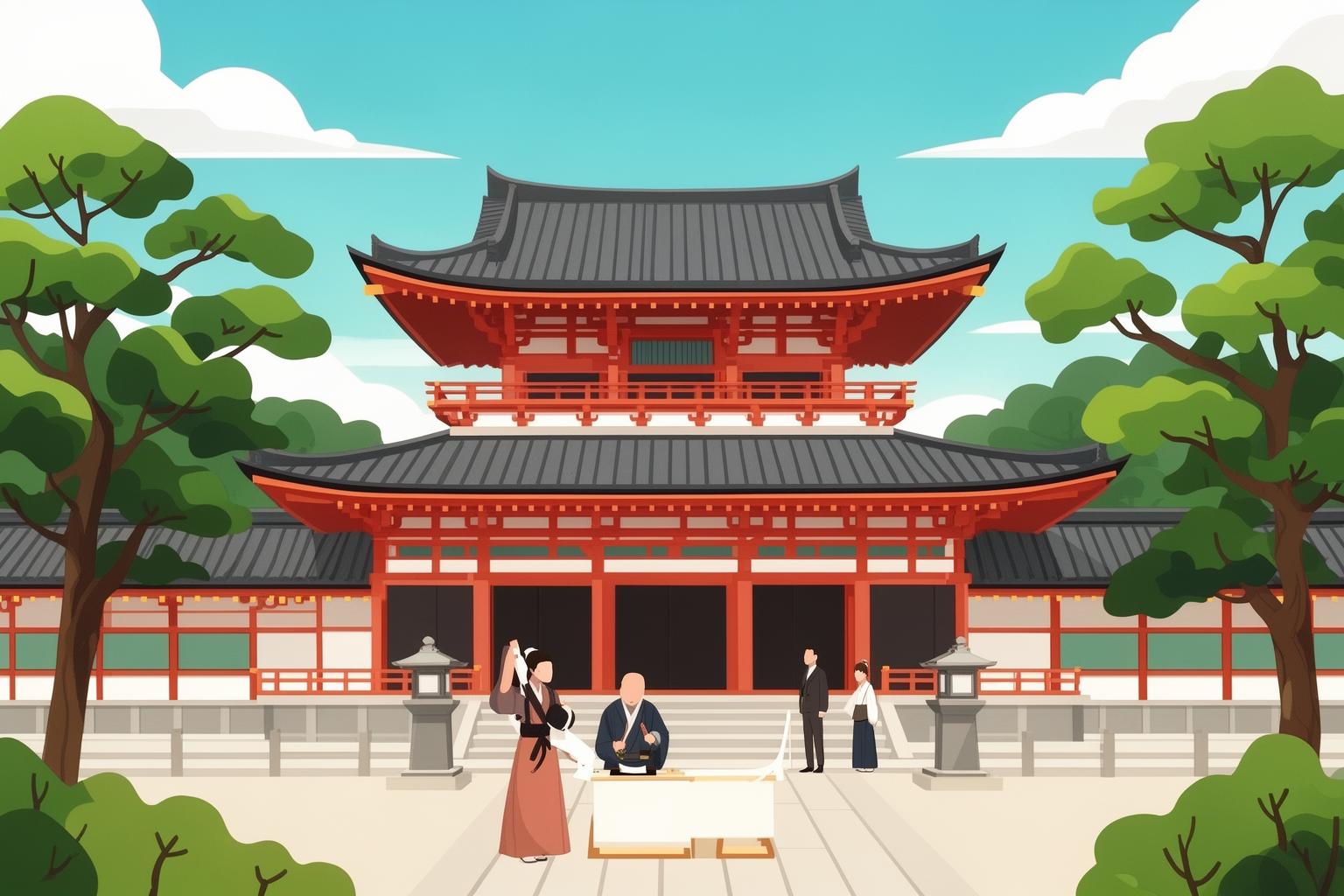
Though Eitoku is best known for his work serving military rulers, his talent was so extraordinary that it also captured the interest of Japan’s oldest and most esteemed institution: the Imperial Court. Receiving a commission from the emperor was the highest honor, and Eitoku’s work at the Kyoto Imperial Palace (Kyoto Gosho) showcases his exceptional versatility.
The atmosphere of the Gosho contrasts sharply with that of castles or even grand Zen temples. Surrounded by long, refined earthen walls, the palace grounds embody a world of subtle tranquility and elegant simplicity. This was the heart of a centuries-old aristocratic culture that prized subtlety, grace, and tradition over the ostentatious displays favored by the newly wealthy samurai. For an artist like Eitoku, renowned for bold and powerful statements, this posed a unique challenge. He had to tailor his dynamic style to the court’s more reserved aesthetic. Records show he painted for the Seiryō-den, the emperor’s living quarters at the time, a building of great historical and ceremonial significance. Although the original structures Eitoku worked on were lost to one of the many fires that repeatedly damaged the palace, the current buildings are faithful reconstructions. Walking through the expansive, gravel-covered courtyards and admiring the serene cypress-bark roofs and elegant wooden architecture, one can feel the profound cultural significance of the site. Eitoku’s success here demonstrates that his genius extended beyond spectacle; he was a masterful artist capable of adapting his style to suit any patron, from the mightiest warlord to the divine emperor himself.
Today, the Kyoto Imperial Palace grounds offer a pleasant park for visitors to stroll through. To visit the palace buildings, however, you must join one of the guided tours organized by the Imperial Household Agency, which should be reserved ahead of time. The tour provides a fascinating insight into the rarefied world of the Japanese court and completes the picture of Kano Eitoku’s extraordinary influence.
The Unfinished Masterpiece: Eitoku’s Enduring Legacy
Kano Eitoku’s life was like a supernova. He blazed brilliantly across the art world of the Momoyama period, forever transforming Japanese painting with his daring vision and endless energy. Then, in 1590, at just forty-seven, he was gone. It is said he died from illness caused by overwork, collapsing during yet another massive commission for Toyotomi Hideyoshi. His life reflected the era he so vividly portrayed: dramatic, dazzling, and tragically brief.
Following the path of his life and art is a journey marked by profound contrasts. It leads from the sacred quiet of Jukō-in, where one can connect with his youthful genius in an intimate setting, to the windswept ruins of Azuchi, where his greatest masterpieces must be summoned from the whispers of history and fragments of stone. The journey winds through the grand temple halls of Nanzen-ji, the imagined golden palaces of warlords, and the refined, hallowed atmosphere of the Imperial Court. Each stop unveils another aspect of his revolutionary talent and the turbulent era that shaped it. Eitoku gave visual form to the ambition of the samurai who unified Japan, creating a new standard of beauty—bold, dynamic, and unapologetically magnificent. His influence flowed through generations of the Kano school, shaping Japanese art for the next three centuries. Though his most monumental works have been lost to ash, the spirit of his genius endures. It lingers in the powerful curve of a pine tree on a temple door, in the gleam of gold leaf under soft light, and in the epic tales of a time when art and power were forged together in the fires of a new Japan. To visit these places is to feel that energy still shining across the centuries—a tribute to a master who painted not just images, but the very soul of his era.