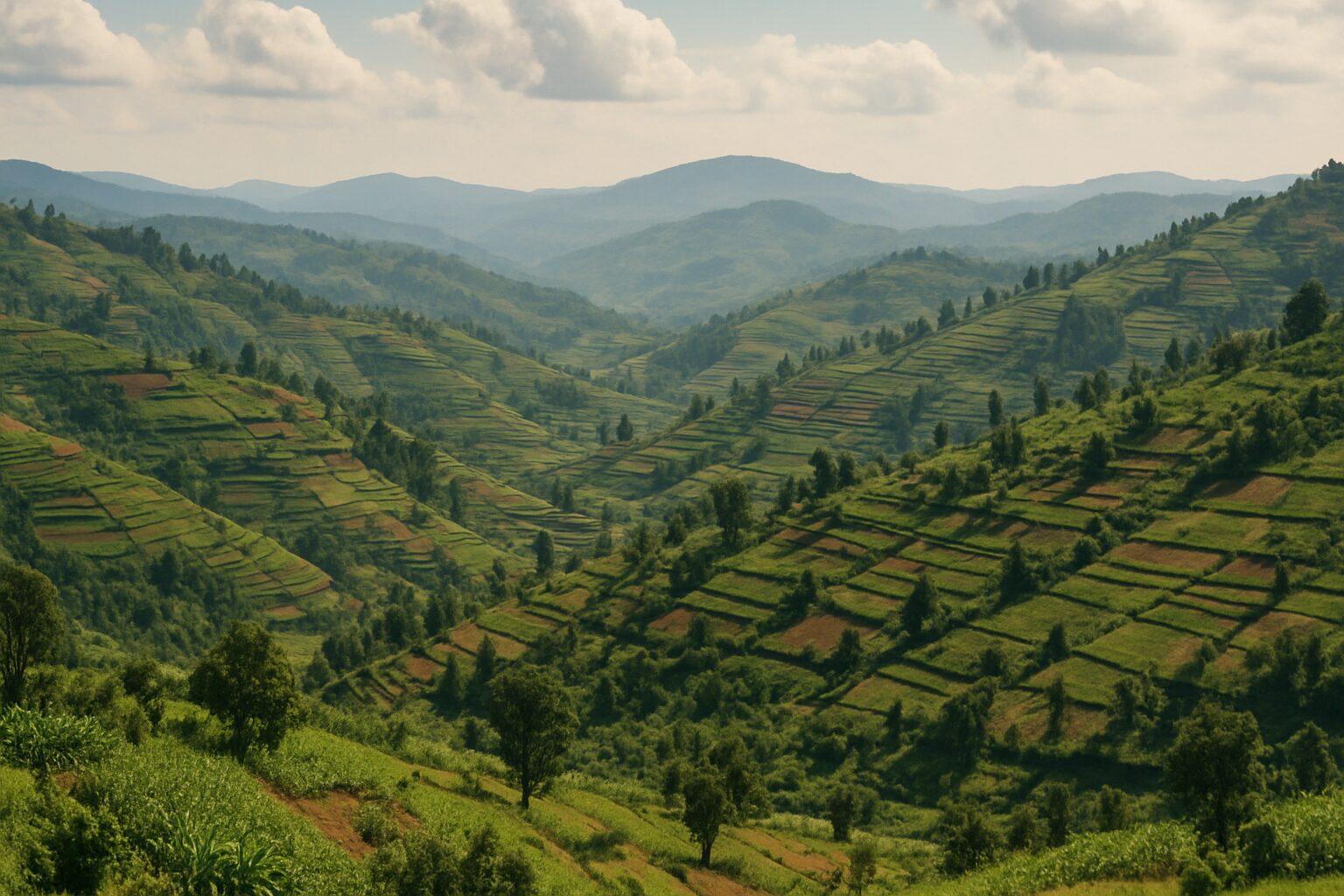
Some stories are not just watched; they are felt. They settle deep within your bones, rearranging your understanding of the world, of humanity’s capacity for both darkness and light. Terry George’s 2004 film, Hotel Rwanda, is one such story. It’s a cinematic gut punch, a harrowing and vital account of the 1994 Rwandan genocide against the Tutsi, told through the eyes of one man, Paul Rusesabagina, the manager of the Belgian-owned Hôtel des Mille Collines in Kigali. He used his position, his wits, and his connections to shelter over 1,200 people inside the hotel walls as the country outside descended into unimaginable chaos and violence. The film is a testament to the power of a single individual’s courage in the face of overwhelming evil. But the film is a lens, a window into a reality that still echoes through the rolling green hills of Rwanda. To visit the places connected to this story, both the actual historical sites in Rwanda and the filming locations in South Africa, is not a typical vacation. It is a pilgrimage. It’s a journey into the heart of a nation’s darkest hour and its incredible, resilient rebirth. It’s about walking on grounds where history was written in blood and tears, and seeing the vibrant, hopeful future that has been built upon it. This journey demands respect, it demands reflection, and it promises a profound, life-altering perspective. It’s a path that takes you beyond the screen, into the very soul of Rwanda.
The Celluloid Heartbeat and the True Ground
Before you consider booking a flight, it’s essential to grasp the geography of this pilgrimage. The story of Hotel Rwanda takes place entirely in Kigali, Rwanda’s capital. The events, the fear, and the courage all unfolded on the streets and within this city’s walls. However, the film was not actually shot there. Due to a mix of logistical, financial, and emotional factors, production was mainly based in Johannesburg, South Africa. Johannesburg’s landscapes, especially the Alexandra township, doubled for the besieged streets of Kigali. The hotel featured in the film, with its grand façade serving as a sanctuary, is not the authentic Hôtel des Mille Collines. This creates an intriguing duality for travelers. One route leads you to the cinematic truth—the sets and locations where Don Cheadle and Sophie Okonedo gave powerful performances, painstakingly recreating 1994 Kigali. The other, deeper path takes you to Rwanda itself, to the actual sites where history occurred: the real hotel, the genuine memorials, and the people who carry the memory of the genocide. Many travelers opt to explore both, witnessing how the story is told and feeling the weight of the truth behind it. Recognizing this distinction is the first step. You are pursuing both a film and a history, a compelling narrative and the overwhelming reality that inspired it.
The Filmic Illusion: Johannesburg’s Transformation
Johannesburg, a city with its own profound history of division and reconciliation, served as the backdrop for Hotel Rwanda. The production team faced the daunting task of recreating a specific time and place marked by intense trauma. Alexandra township, a dense and sprawling urban area, was chosen for its resemblance to mid-90s Kigali. Filming here was a collaborative effort involving many local South African crew and extras, some with personal experiences of political violence and upheaval under apartheid. This shared history, while different in detail, added a tangible layer of authenticity and weight to the set. The main location representing the Hôtel des Mille Collines was a blend of several sites and inventive set design. Exterior shots establishing the hotel as a place of luxury and refuge were filmed at a Johannesburg location featuring similar European-colonial architecture. Interiors—the lobby, the bar where Paul Rusesabagina negotiated, and the rooftop overlooking the city ablaze—were carefully recreated on soundstages or within existing buildings to echo the real hotel’s atmosphere. Visiting these locations in Johannesburg today offers a different experience. Alexandra is a vibrant and bustling community, and the specific streets or buildings used in the film are often unrecognizable, absorbed back into everyday city life. There are no plaques or monuments marking these spots. This part of the pilgrimage is more about imagination—standing in a place and appreciating the craft of filmmaking, the transformation of one city into another to tell a vital story. It’s a recognition of the artifice behind a profound truth.
The Journey into Reality: Touching the Soul of Kigali
Landing at Kigali International Airport is an experience in itself. The air is fresh, the streets spotless, and the rolling hills—giving the city its nickname, Land of a Thousand Hills—are verdant and lush. There is an immediate sense of order, calm, and forward movement that can feel surprising when you arrive with the film’s chaotic imagery still fresh in your mind. This initial impression is essential, as it shapes the entire Rwandan experience: a country defined not only by its tragic past but also by its extraordinary, determined march toward a peaceful future. This is the real ground. This is where the story lives, not as a script, but as a memory etched deep into the soil.
The Hôtel des Mille Collines: A Sanctuary Then and Now
Your first significant stop in Kigali will almost certainly be the actual hotel. The Hôtel des Mille Collines sits gracefully atop one of the city’s many hills, offering sweeping views of the capital. As you approach the driveway, the building feels immediately familiar, yet distinct from its cinematic portrayal. The real hotel seems more intimate, perhaps less imposing than the film suggests. Entering the lobby, you’re met not by an atmosphere of fear and desperation, but by the quiet buzz of a modern, upscale hotel. Guests check in, staff smile warmly, and soft music plays in the background. Reconciling this peaceful present with the hotel’s harrowing past is a profound experience. The best way to connect with its history is to head to the poolside bar. In the film, this area is a central meeting point—a place where foreign journalists gathered, where desperate refugees clustered, and where Paul Rusesabagina carried out his tense negotiations. Today, it’s a serene oasis. People swim in the famous pool, sip cocktails, and gaze out over the city. Take a seat at one of the tables. Order a coffee or a local Mützig beer. And simply be present. Imagine the sounds of 1994 replacing the gentle splash of water—the distant gunshots, the frantic broadcasts from Radio Télévision Libre des Mille Collines (RTLM), the cries of terror. Picture the pool, not as a place of leisure, but as the only source of drinking water for more than a thousand frightened people. It is in this layering of past and present that the hotel’s true significance emerges. The building itself is a survivor. It stands as a testament to having fulfilled its role: a sanctuary. While Paul Rusesabagina’s story has grown more complex in recent years, with political controversies and critiques from other survivors, the hotel remains an undeniable symbol of refuge. Visiting is not about hero worship; it’s about respecting the space and the 1,268 souls who found safety within its walls.
Practical Tips for Visiting the Hotel
Even if you are not staying as a guest, you are welcome to visit the hotel’s restaurants or poolside bar. This is the best way to experience the atmosphere with respect. The staff understand the hotel’s history and the film’s role in drawing visitors. However, it remains a functioning business, not a museum. Be discreet with photography and considerate of other guests. The most powerful experience often comes at dusk. As the sun sets and city lights begin to shimmer across the hills, a sense of peace settles over Kigali—a peace violently shattered in 1994. It is a moment of deep, poignant reflection.
A Pilgrimage of Remembrance: The Kigali Genocide Memorial
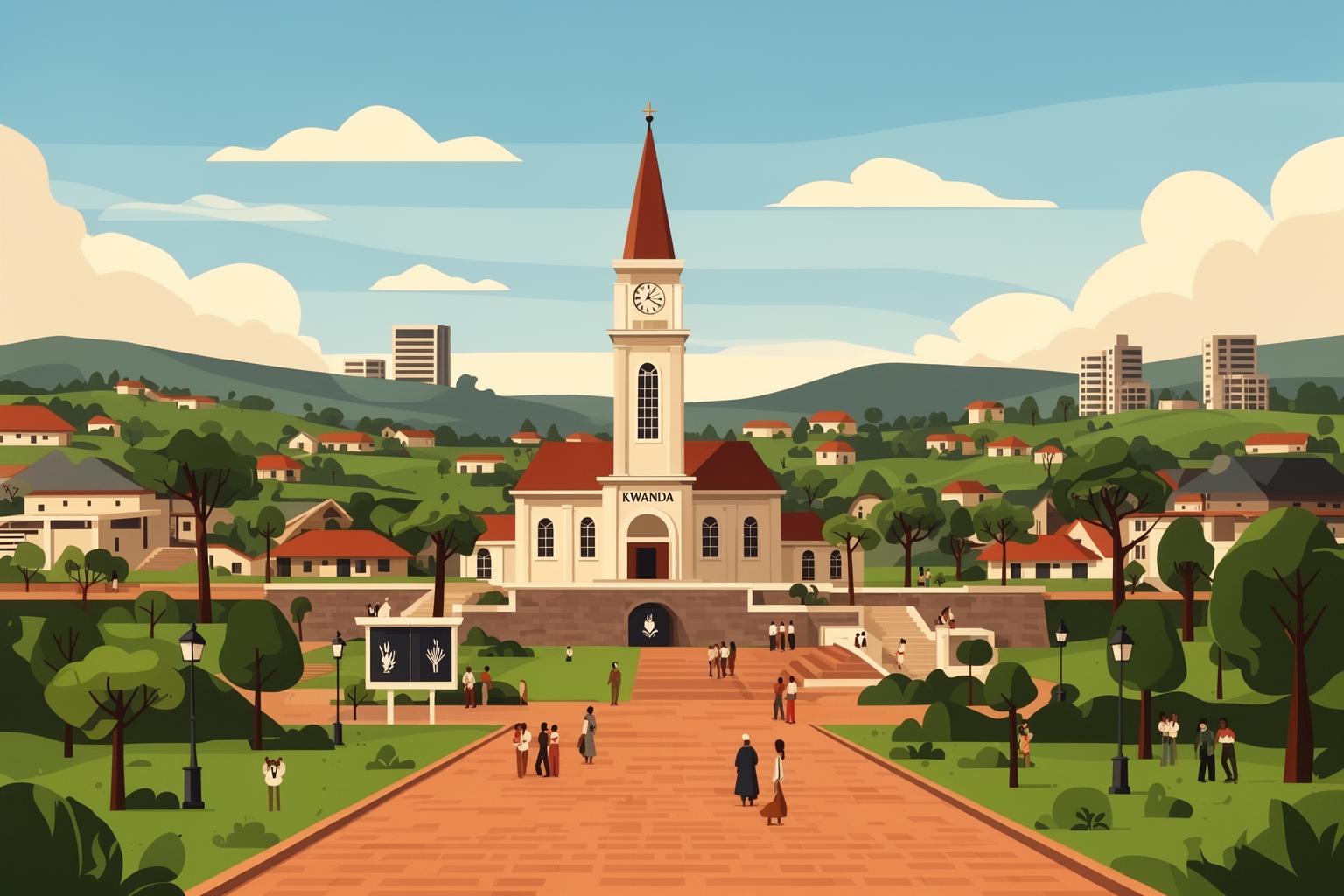
No journey to grasp the events depicted in Hotel Rwanda is complete without a stop at the Kigali Genocide Memorial. Indeed, it should be regarded as an essential, non-negotiable part of your itinerary. This visit is not an easy one. The memorial is a place of profound sorrow, sacred ground serving as the final resting place for over 250,000 genocide victims. Prepare for an emotionally taxing and deeply moving experience. The memorial is thoughtfully and beautifully designed. It does not sensationalize death but honors life and educates with quiet, devastating grace. The visit begins with the outdoor gardens. Walking through the meticulously maintained rose gardens and past the mass graves, a solemn atmosphere takes hold. The graves are vast concrete structures—a stark, powerful visualization of the scale of loss. The main exhibition, housed in a modern building, is divided into three primary sections. The first section provides a thorough history of Rwanda up to 1994. It covers the colonial past, illustrating how Belgian colonizers deepened and codified ethnic divisions between Hutu and Tutsi, laying the groundwork for the genocide. This context is crucial as it dispels the myth that the genocide was a spontaneous eruption of ancient tribal hatred, revealing it instead as a carefully planned political extermination campaign. The second section is the most harrowing, documenting the genocide itself—from the assassination of President Habyarimana, which triggered the violence, to the subsequent 100 days of slaughter. The exhibit uses photographs, video testimonies from survivors, and artifacts to convey the story. You will see the weapons used—the ever-present machetes—and identification cards that marked people for death. It is unflinching and heartbreaking. The final section, perhaps the most emotionally devastating, is the children’s room. Large, beautiful portraits of murdered children are displayed, each accompanied by a small plaque sharing some of their favorite things—their favorite food, their best friend, their last words. This room turns the overwhelming statistics of the genocide into individual, personal tragedies, serving as a gut-wrenching reminder of lost innocence. Allow yourself ample time for this visit—do not rush. Benches are available throughout the exhibition and in the gardens for quiet reflection. The memorial is not only a look back at horror; it is a powerful educational resource and a call to action against genocide globally. It concludes with a section on Rwanda’s recovery and reconciliation, offering a glimmer of hope amid the darkness.
Guidance for Your Visit
Dress modestly and respectfully when visiting the memorial; shoulders and knees should be covered. Maintain silence or speak in hushed tones. Photography is allowed in most areas but always consider your reasons for taking a photo, as this is a place of mourning. An audio guide is available for a small fee and highly recommended, providing detailed explanations and survivor testimonies that add profound depth to the experience. After your visit, spend some time in the Café and Gift Shop—purchasing items supports the memorial and its vital mission. The café also offers a peaceful space to decompress and reflect before returning to the city.
Beyond the City: The Church Memorials of Nyamata and Ntarama
To fully understand the chilling efficiency and brutality of the genocide, you must venture beyond Kigali. A short drive south of the capital are two of Rwanda’s most harrowing memorial sites: the churches of Nyamata and Ntarama. During the genocide, many Tutsi sought refuge in churches, believing they would be safe on sacred ground. Instead, these places of worship became sites of some of the most horrific massacres. At Nyamata Church, an estimated 10,000 people were killed after the Hutu militia blew open the locked doors with grenades. Today, the church remains largely as it was found. The victims’ clothing is piled on the pews, a silent, colorful testament to the thousands of lives lost here. The brick walls remain pockmarked with bullet holes and shrapnel scars. Below the church, open crypts display the skulls and bones of victims, arranged on shelves in a chilling, orderly manner. It is a direct, unfiltered confrontation with the physical reality of mass murder. A few miles away, Ntarama Church tells a similar story. This was one of the first church massacres, where over 5,000 people were killed. The interior is preserved similarly, with bloodstains still visible on the walls and the victims’ personal effects—books, rosaries, identity cards—displayed in glass cases. Visiting these sites is deeply difficult. The atmosphere is heavy with grief. Yet it is a necessary part of the pilgrimage. It brings the story beyond the relative safety of Kigali’s hotels into the countryside, where most of the killing occurred. It’s a reminder that what Paul Rusesabagina resisted was not a localized riot but a nationwide, systematic campaign of extermination. A local guide is essential for visiting these sites, offering historical context, sharing survival stories, and helping navigate the intense emotional landscape. It is also customary to leave a small donation to support the upkeep of these vital memorials.
Rwanda Reborn: A Nation’s Resilience
A pilgrimage centered on Hotel Rwanda is inevitably weighty. It is a journey through trauma and memory. However, to leave with only that impression would overlook the most remarkable part of the story: Rwanda’s resurrection. The country you visit today stands as a testament to the resilience of the human spirit. On the last Saturday of every month, Umuganda is observed—a national day of community service when citizens nationwide come together to clean neighborhoods, build schools, or plant trees. It powerfully symbolizes collective responsibility and national unity. Kigali, the capital, ranks among the safest, cleanest, and most technologically advanced cities in Africa. Its streets buzz with art galleries, vibrant markets like Kimironko Market, and a growing coffee scene producing some of the world’s finest single-origin beans. This progress forms the other side of the story—a hopeful epilogue to the tragedy of 1994. To truly honor the victims, one must also celebrate the nation survivors have built. Take time to explore this modern Rwanda. Hire a moto-taxi and feel the wind as you zip through the city’s clean streets. Visit the Inema Arts Center to admire the vibrant creations of local artists. Hike to the summit of Mount Kigali for a breathtaking view of the city nestled among its thousand hills. This is not about forgetting the past. It’s about recognizing that Rwanda’s story did not end in 1994. The genocide is part of their history, but it does not define their future. The people of Rwanda have worked tirelessly to rebuild, reconcile, and forge a new national identity based on unity rather than division. Witnessing this progress, this life-affirming energy, is as important as bearing witness to the sites of sorrow.
Final Reflections on the Path
Embarking on a journey through the world of Hotel Rwanda means walking a path between two realities: the compelling fiction of cinema and the unyielding truth of history. You will follow the footsteps of actors in Johannesburg and survivors in Kigali. Each experience enriches the other, creating a layered understanding of the story. The film provides the narrative, the characters, and the emotional entry point. The real locations in Rwanda offer the weight, context, and soul of the experience. This journey will not leave you unchanged. It will break your heart, yet also fill you with profound awe at the resilience of a nation and its people. You arrive in Rwanda seeking the echoes of a film, a story about a hotel that became a sanctuary. You depart with the powerful, resonant voice of a country that, against all odds, chose to become a sanctuary of hope for the world. It’s a story of remembrance but ultimately, a story of life.