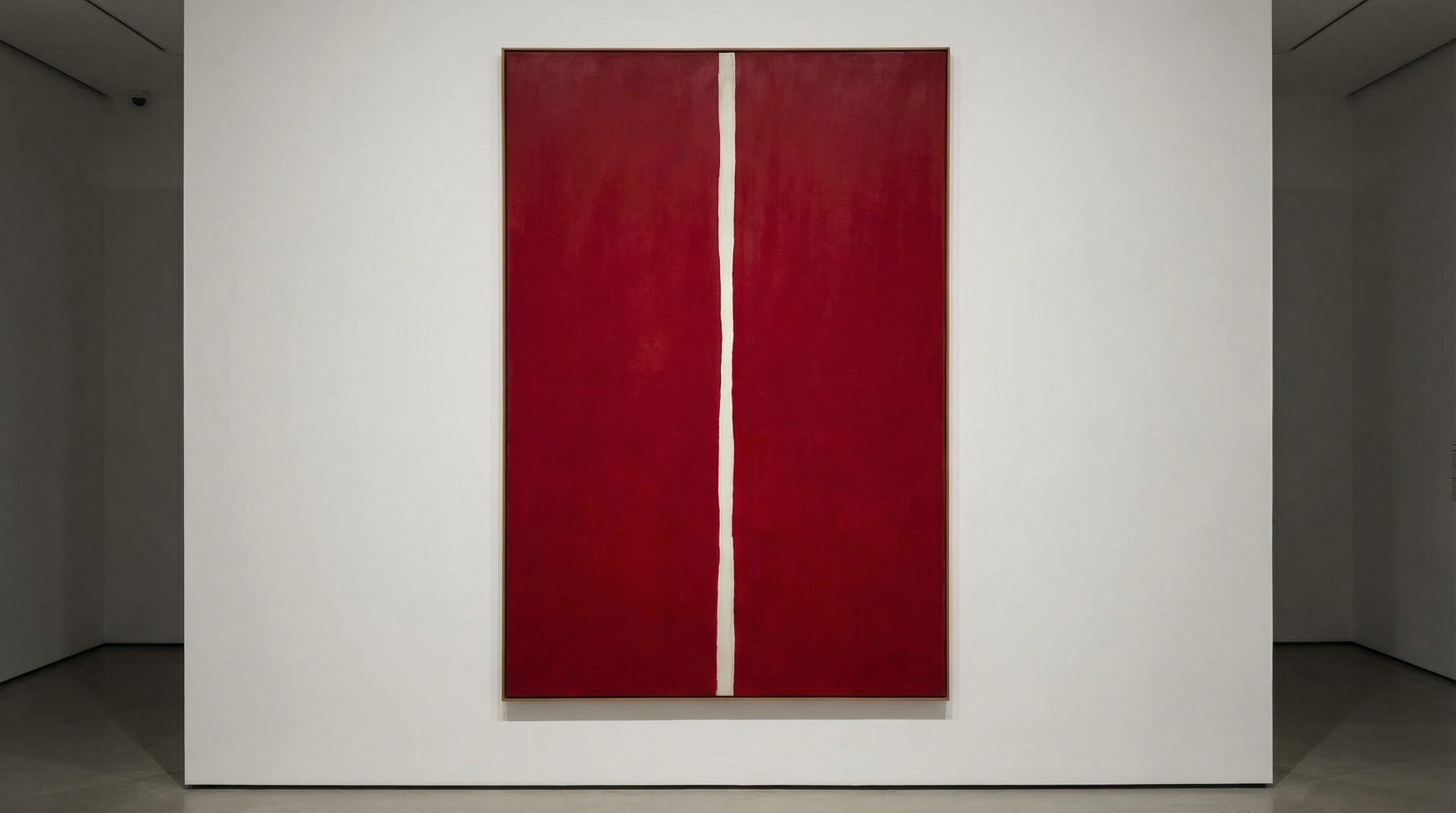
There’s a moment when you first stand before a painting by Barnett Newman that feels like a quiet thunderclap. Your world, for a brief, suspended second, is cleaved in two by a single, vibrant line of color. This line, which he famously called a “zip,” is not a divider but a connection, a conduit of pure feeling that runs from the canvas directly into your soul. It’s an experience that feels both monumental and intensely personal. Newman, a titan of Abstract Expressionism, wasn’t just painting canvases; he was creating spaces for contemplation, for awe, for a direct encounter with the sublime. And to truly understand his work is to embark on a journey, not just through museums, but through the very places that shaped his revolutionary vision. This isn’t just an art history tour; it’s a pilgrimage to the heart of an idea, a walk along the zips that connect New York’s gritty streets to the hallowed halls of Houston and the spiritual centers of our own minds. It’s a journey for anyone who has ever felt that art could be more than just a picture on a wall—that it could be an experience, a place, a moment of profound revelation. So, let’s explore the world through his eyes, tracing the lines of his life from a bustling metropolis to the quiet sanctuaries where his art now lives, breathes, and continues to challenge us to see things differently. Our journey begins, as his did, in the city that never sleeps, the ultimate crucible of twentieth-century art.
The New York Crucible: Forging a Vision in the Five Boroughs
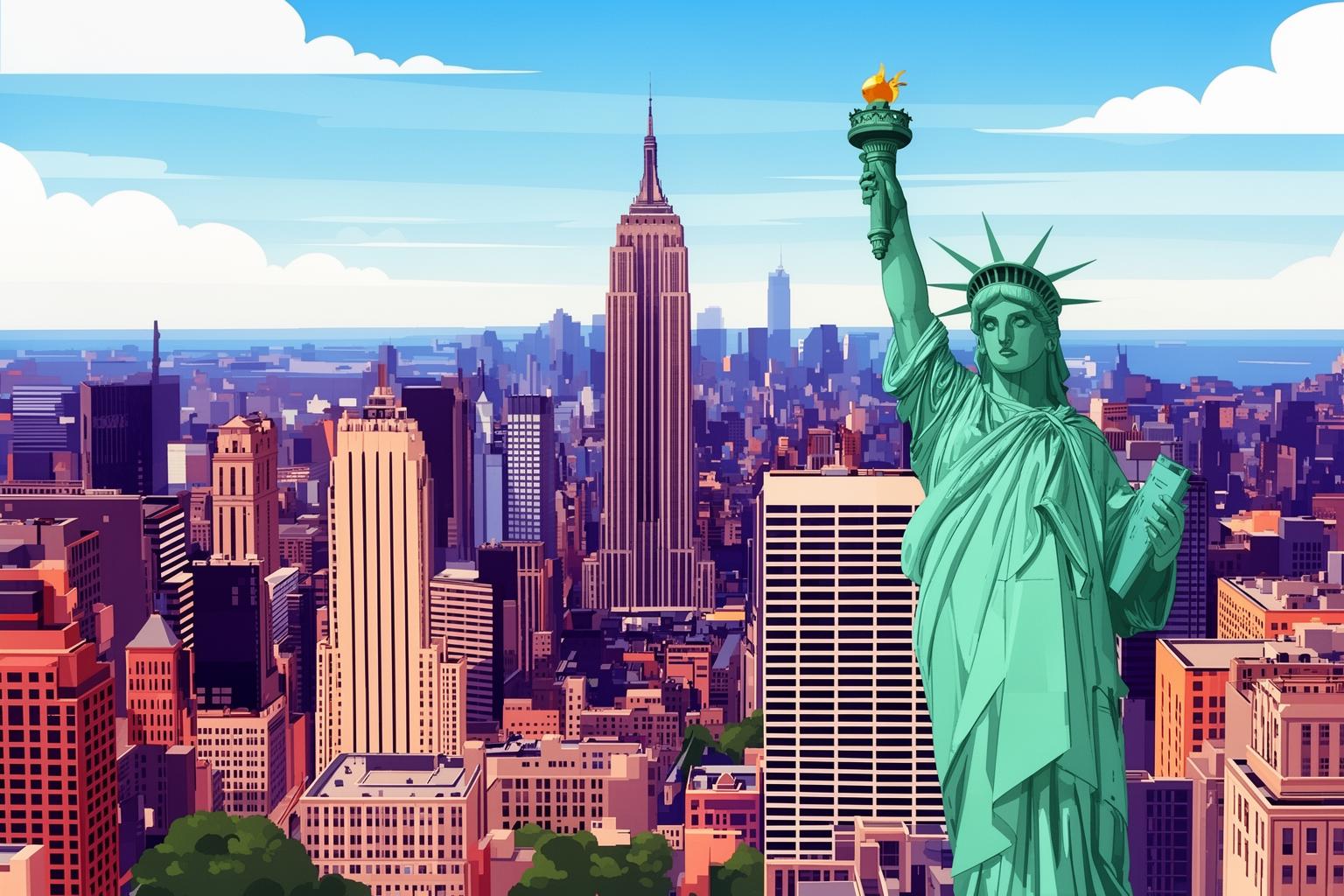
New York City was not merely Barnett Newman’s home; it was his collaborator, adversary, and muse. The city’s relentless energy, its grid-like structure, and its melting pot of ideas are intricately woven into the fabric of his art. To walk through its streets is to traverse the backdrop of his life and intellectual growth. It was here that a young man, born to Polish-Jewish immigrants, grew to redefine the very possibilities of painting.
Echoes of the Lower East Side: A Beginning
Barnett Newman was born in 1905 on Manhattan’s Lower East Side, a neighborhood brimming with the hopes and struggles of immigrant families. Although the specific tenement where he was born on Forsyth Street no longer bears a plaque, the spirit of the area certainly endures. Walking through this neighborhood today, one can still sense the dense energy that surrounded him. The tightly packed streets, the cacophony of languages, and the towering buildings reaching skyward form a landscape of lines and grids, where human presence is compressed into geometric spaces. It’s easy to imagine a young, observant Newman absorbing this environment, perceiving the world in verticals and horizontals long before he ever picked up a brush with artistic intent. This was no romantic, pastoral landscape of European art; it was modern, man-made, and profoundly human. A visit here is less about finding a precise address and more about soaking in the atmosphere. Begin your stroll near the Tenement Museum, then wander the streets, letting the sensory overload wash over you. This immersion provides essential context for an artist who would later strive to create order and transcendence from chaos.
The Cauldron of Creation: Newman’s Studios
An artist’s studio is more than a workplace; it is a laboratory, sanctuary, and stage. Newman occupied several studios throughout his life, each representing a distinct phase in his artistic journey. Although many of these spaces are now private residences or commercial properties, visiting their neighborhoods evokes a connection to the tangible reality of his creative process.
Front Street and the Seaport Vibe
In the 1940s, Newman maintained a studio on Front Street, near the South Street Seaport. At that time, this area was a working waterfront, gritty and redolent of salt and fish, starkly different from today’s polished tourist destination. Imagine him here, surrounded by the massive, elemental shapes of ship hulls, the sharp verticals of masts against the sky, and the broad, open horizon of the East River. This was a place of raw commerce and elemental forces. Standing here now amid restored buildings and bustling crowds, one must peel back the layers of time. Look past the shops to see the architecture, cobblestones, and proximity to the water. This environment, far removed from the intellectual salons uptown, offered a rugged, tangible counterpoint to his philosophical and artistic inquiries. It was here, in 1948, that he painted Onement I, the breakthrough work introducing his signature “zip.” It seems fitting that this artistic genesis occurred in such a raw, unvarnished setting.
White Street in Tribeca: A Final Sanctuary
Later in life, Newman moved to a spacious studio at 121 White Street in what is now the heart of trendy Tribeca. This former factory, with its soaring ceilings and expansive walls, was vital for the creation of his increasingly monumental canvases. It was in this space that he painted works like Who’s Afraid of Red, Yellow and Blue III and the vast Anna’s Light. Today, Tribeca is a stylish, residential neighborhood known for cast-iron architecture and celebrity residents, yet the scale of the buildings remains. As you walk down White Street, look up at the lofts and picture Newman inside—not just painting but wrestling with the physical and philosophical challenges of creating art on such a grand scale. This studio accommodated not only his canvases but his ambition. Visiting the area gives a sense of the industrial past that made such spaces available to artists and highlights the grand scale shared by both the neighborhood and his art.
The Intellectual Battleground: The Art Students League and Beyond
Newman’s art emerged from a fiercely intellectual mind. He was a writer, thinker, and polemicist before gaining renown as a painter. His artistic education was unconventional. He took classes at the Art Students League of New York on West 57th Street, a historic institution that has trained generations of American artists. The building itself is a landmark, and although you can’t simply walk into classes, you can visit the gallery or admire the façade and imagine a young Newman inside, absorbing lessons he would later famously reject in pursuit of a new form of art. He was part of a vibrant community that included Mark Rothko, Jackson Pollock, and Clyfford Still, all grappling with the same question: after the horrors of World War II, what could art possibly express? They sought a universal, elemental, and transcendent art. This quest led to the formation of the Subjects of the Artist School, a brief but influential forum for discussion and ideas. These were not just painters but philosophers armed with brushes, with the streets of Greenwich Village and Midtown serving as their debating halls.
The Museum as Sanctuary: Encountering the Sublime in NYC
While the streets and studios of New York narrate the story of Newman’s life, the city’s museums recount the story of his art. It is here that visitors can have the direct, unfiltered experience Newman intended for his audience. For a Newman enthusiast, a trip to New York is incomplete without visiting these revered institutions.
MoMA: Confronting Heroes and Wilderness
The Museum of Modern Art (MoMA) is arguably the central hub for immersing oneself in Newman’s monumental vision. Entering the gallery that houses his work, one is immediately humbled and inspired. The centerpiece, naturally, is Vir Heroicus Sublimis (Man, Heroic and Sublime). Measuring nearly eighteen feet, its vast cadmium red field is interrupted by five zips. This is not a painting to merely observe; it’s one to experience fully. You are invited to stand close, to let the color engulf your entire field of vision, to become absorbed in its vastness. The effect is intense, almost disorienting. It pushes you beyond passive viewing into an active engagement with the piece. Elsewhere in MoMA’s collection is The Wild, an extraordinarily narrow canvas, just over one and a half inches wide but eight feet tall. Essentially a single zip, it boldly asserts that this simple element can constitute the whole subject of a painting. It’s a daring, uncompromising declaration.
A Practical Guide to Experiencing Newman at MoMA
Visiting MoMA can be overwhelming, but a bit of planning helps in truly appreciating Newman. Aim to visit on a weekday morning to avoid crowds. When you locate the Newman paintings, don’t just glance and move on. Take your time. If possible, find a bench—but more importantly, follow Newman’s own advice: stand close to the canvas. Allow the ambient noise of the museum to fade away. Observe that the zips are not mere lines; their edges are often soft, hand-painted, revealing the tremor of the human hand. This is essential: beneath their austerity, these are deeply human works. If you have children with you, turn it into a game. Ask them how the color makes them feel. Is it loud or quiet? Fast or slow? There are no wrong answers, which is the beauty of abstract art. It’s a wonderful way to teach that art is as much about feeling as it is about seeing.
The Whitney and The Met: Exploring Further into the Collection
While MoMA may showcase the most iconic pieces, other New York institutions hold key works that complete the picture of Newman’s oeuvre. The Whitney Museum of American Art, set in the vibrant Meatpacking District, often exhibits pieces from its collection, including the striking Day One. Its vibrant orange and red fields evoke primal energy and optimism, a celebration of creation. Meanwhile, the Metropolitan Museum of Art, a vast repository of global art, houses the impressive Concord, where a single, sharp zip cuts through raw, unprimed canvas, highlighting the material qualities and structure of the painting. Viewing his work within these varied collections enriches your understanding. At The Met, surrounded by millennia of art history, Newman’s work feels both a radical rupture and part of a long, continuous human quest for meaning.
Beyond the Metropolis: Newman’s Monumental Legacy Across America

While New York was Newman’s home, his most profound public statements, especially in sculpture, can be found elsewhere. These locations have become destinations for art pilgrims, places where his concepts of space, spirit, and monumentality take on three-dimensional form.
Houston’s Sacred Ground: The Rothko Chapel and the Broken Obelisk
Perhaps the most spiritually charged site to experience Newman’s work is in Houston, Texas, on the grounds of the Rothko Chapel. Here stands Broken Obelisk, a striking Cor-ten steel sculpture dedicated to Martin Luther King Jr.’s memory. The sculpture embodies a powerful paradox: the ancient Egyptian form of the obelisk, symbolizing timeless power and aspiration, is broken. Yet, its tip precariously balances on the apex of a pyramid, suggesting not collapse but a new, more delicate form of stability and hope. Positioned in a reflecting pool, its stark, rusted form is mirrored in the water, connecting earth and sky, the material and the spiritual. The entire experience invites profound contemplation.
The Aura of Contemplation: What to Expect
The Rothko Chapel, featuring fourteen monumental near-black canvases by Newman’s friend and contemporary Mark Rothko, offers a space for deep, non-denominational meditation. Placing Broken Obelisk just outside this sacred space was a masterstroke. The transition from the light-filled grounds—with their intellectually and historically resonant sculpture—into the dark, enveloping interior of the Chapel creates a powerful emotional and spiritual progression. One moves from a public statement of human struggle and hope to a realm of deep, internal quiet. It stands as one of the most perfectly realized integrations of art, architecture, and landscape worldwide. Allow yourself ample time here. Sit by the pool. Walk around the sculpture, noting how its appearance shifts with the changing light. Then, spend at least twenty minutes inside the chapel, letting your eyes adjust to the darkness and the subtle variations in Rothko’s canvases. It’s a place that calms the mind and nourishes the soul.
Practicalities for a Houston Pilgrimage
Houston is a sprawling city, so plan your visit accordingly. The Rothko Chapel is situated in the Museum District, making it easy to combine with a trip to the adjacent Menil Collection, a world-class museum renowned for its surrealist collection. The area is pleasant for walking, with green spaces and other significant artworks. Houston’s climate can be hot and humid, so dress appropriately and stay hydrated. Admission to both the Chapel and the Menil is free, reflecting the founders’ commitment to making art accessible to everyone.
A Symbol in the Heartland: The Akron Obelisk
Another cast of Broken Obelisk stands in front of the Akron Art Museum in Akron, Ohio. While it is the same sculpture, the context significantly alters the experience. Here, it is not paired with the intense spirituality of the Rothko Chapel but serves as a bold civic statement within an American industrial city. It engages in a dialogue with the urban environment, its rusted steel evocative of the region’s industrial heritage. Seeing it here highlights the sculpture’s political and social dimensions, with its dedication to MLK resonating especially strongly in this heartland setting. It powerfully reminds us that the struggle for justice and the pursuit of the sublime are universal human concerns—not confined to major art capitals.
A Spiritual Journey in the Capital: The Stations of the Cross in D.C.
For perhaps the most sustained and emotionally intense encounter with Newman’s genius, one must visit the National Gallery of Art in Washington, D.C. Here, in a specially designed gallery, is his series of fourteen paintings, The Stations of the Cross: Lema Sabachthani. Created over eight years, this series stands as Newman’s spiritual masterpiece. The title references Christ’s cry from the cross: “Why have you forsaken me?” Yet Newman insisted it was not a literal religious depiction. For him, the cry was universal—a question every human asks in moments of suffering and abandonment. Painted almost entirely in black and white on raw canvas, each painting is a variation on a theme, with zips appearing as stark black lines, negative space, or fuzzy, cloud-like bands. Walking through the gallery, from the first station to the fourteenth, is an immersive, sequential experience. The rhythm of the paintings—the repetition and variation—creates a powerful emotional arc.
Preparing for the Experience at the National Gallery of Art
This series is not to be rushed. It is housed in the East Building of the National Gallery, dedicated to modern and contemporary art. Seek out the tower gallery where the series is displayed. The space is typically quiet, designed for contemplation. Read the introductory text, then allow yourself to follow the path of the paintings. Resist the urge to analyze each immediately; instead, let the cumulative effect wash over you. Notice the subtle differences: how a zip is painted, the raw canvas’s texture, the interplay of black, white, and ecru. It is a profound meditation on suffering, doubt, and ultimately, the possibility of transcendence. After experiencing the intensity of The Stations, you might find solace in another Newman in the gallery’s collection, Uriel, a vast, calming field of blue that feels like a benediction.
The Global Canvas: Following the Zip Across the Atlantic
Newman’s impact and the presence of his work extend well beyond the United States. For the truly devoted global traveler, the pilgrimage can continue in the great museums of Europe, where his pieces engage in dialogue with various artistic traditions and histories.
London’s Tate Modern: A British Perspective
The Tate Modern, situated in a former power station on the Thames, provides an industrial and monumental setting perfectly suited for Newman’s work. The Tate’s collection features the magnificent Eve, a deep, resonant red canvas that complements the Met’s Adam. More famously, it houses Who’s Afraid of Red, Yellow and Blue IV. Viewing one of this iconic series in a European context is compelling. Here, it stands alongside works by European modernists, emphasizing both Newman’s profound engagement with artists like Mondrian (whose primary colors he clearly references and challenges) and his radical American break from their structured geometry. The vast scale and emotional intensity of Newman’s painting feel distinctly American in their boldness and expansive spirit when seen in London.
Amsterdam’s Stedelijk: Who’s Afraid of Red, Yellow and Blue?
The Stedelijk Museum in Amsterdam holds a particularly significant place in Newman’s history. It is home to his enormous 1967 painting Who’s Afraid of Red, Yellow and Blue III. This piece famously sparked controversy after being vandalized in 1986 and subsequently undergoing a contentious restoration. The story behind this specific canvas adds further depth to the viewing experience. It stands as a testament to art’s power to provoke extreme reactions, from admiration to violence. The Stedelijk also features the powerful Cathedra, a vast field of dark blue intended to evoke a cosmic, all-encompassing space. Seeing this work in the Netherlands—the homeland of Rembrandt and Vermeer, masters of light and shadow, and Mondrian, the master of geometric grids—offers a rich context for appreciating Newman’s own radical approach to color, light, and line.
The Mind of the Artist: Thematic Pilgrimages
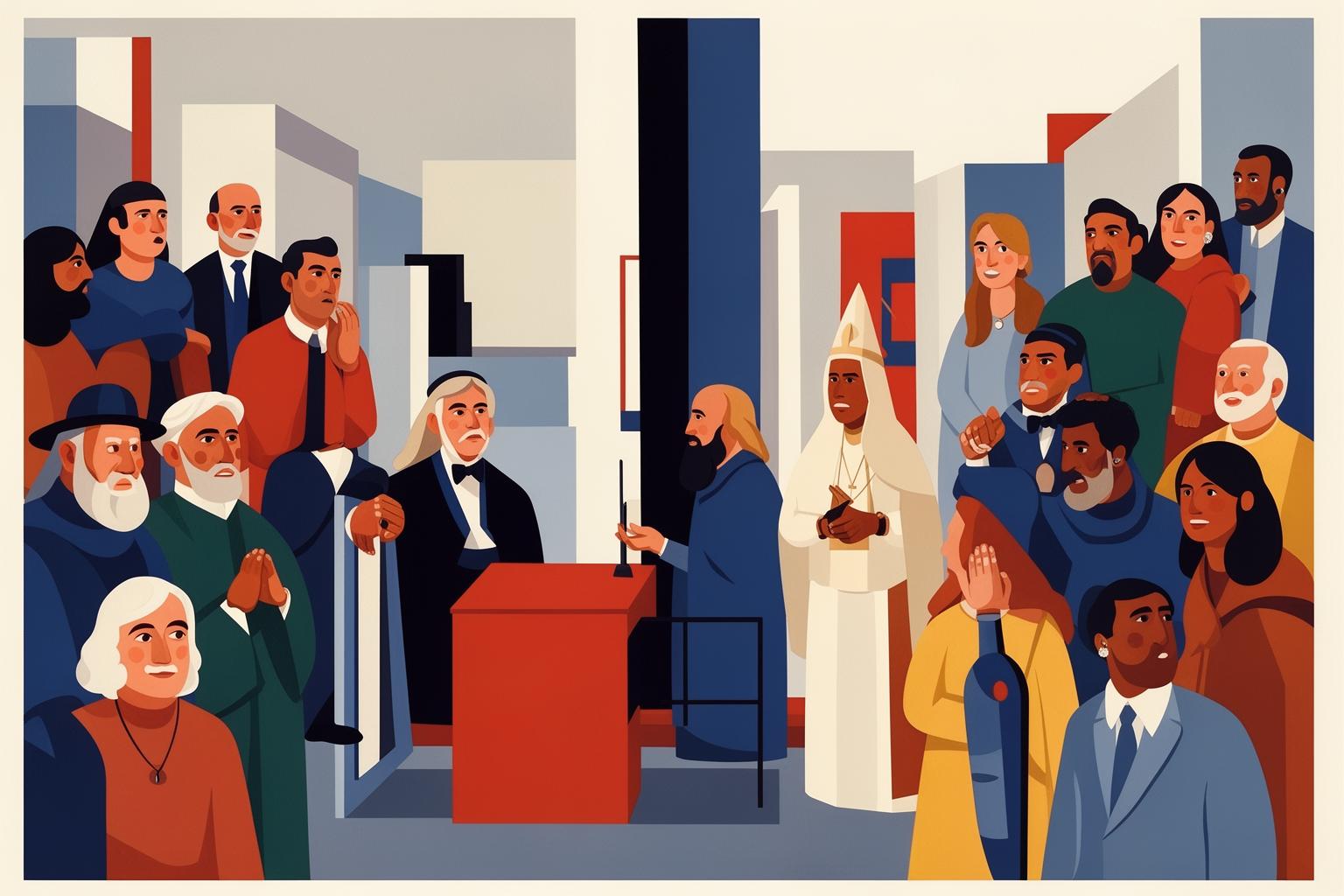
Beyond the specific locations where Newman lived or where his art is exhibited, one can embark on a pilgrimage to the sources of his inspiration. Newman was a man of profound and diverse intellectual curiosity, drawing from geology, ornithology, and, most importantly, the art of ancient and indigenous cultures.
The Allure of the ‘Primitive’: The American Museum of Natural History
Newman was deeply influenced by the art of the Kwakwaka’wakw (formerly Kwakiutl) people of the Pacific Northwest. He was captivated by its spiritual power, its abstract forms, and its intimate connection to the natural world. He even wrote a preface for a 1946 exhibition of this art. A visit to the American Museum of Natural History in New York, particularly the Hall of Northwest Coast Indians, offers a journey into Newman’s mind. Here, you can see the towering totem poles, the masks, and the intricate carvings that so fascinated him. You will notice the bold lines, the symbolic use of color, and the way abstract shapes convey powerful spiritual meanings. The link between the verticality of a totem pole and Newman’s zips is clear—both reach from the earth toward the heavens, connecting different realms. This visit provides crucial insight into his ambition to create a new form of art that is modern yet timeless and primal.
Finding the Sublime in Nature: Landscapes That Echo Newman
Although Newman was not a landscape painter, his work is deeply invested in the sublime—that profound feeling of awe, terror, and wonder inspired by nature’s vastness. To engage with his work more deeply, one can explore landscapes that evoke this sensation. Consider the stark, vertical cliffs of the Grand Canyon, the vast, empty desert horizon at sunset, or the deep, enveloping blue of the ocean. These are not scenes he painted, but places that evoke the feeling he aimed to express. Standing in such a landscape helps to understand his desire to distill that overwhelming experience into a single, pure statement of color and line. This perspective reveals that his abstract art is not an escape from reality but a profound engagement with its most fundamental and powerful forces.
A Gentle Closing: The End of the Line is a New Beginning
A journey through Barnett Newman’s world is a journey of thrilling contrasts. It carries you from the bustling, chaotic streets of the Lower East Side to the quiet, reflective space of the Rothko Chapel. It invites you to gaze at a single, hand-painted line and perceive the entire universe within it. His work challenges our assumptions about what art is meant to be. It requires our time, our presence, and our openness to feel. Following his path, from the places he worked to the locations where his art now lives, is more than an art tour. It’s an invitation to see the world anew, to discover the monumental in the minimal, and to appreciate the profound power of a single, courageous line drawn against emptiness. Each encounter with his work offers a new beginning, a fresh chance to stand close, to breathe, and to experience that quiet, sublime thunderclap for yourself.