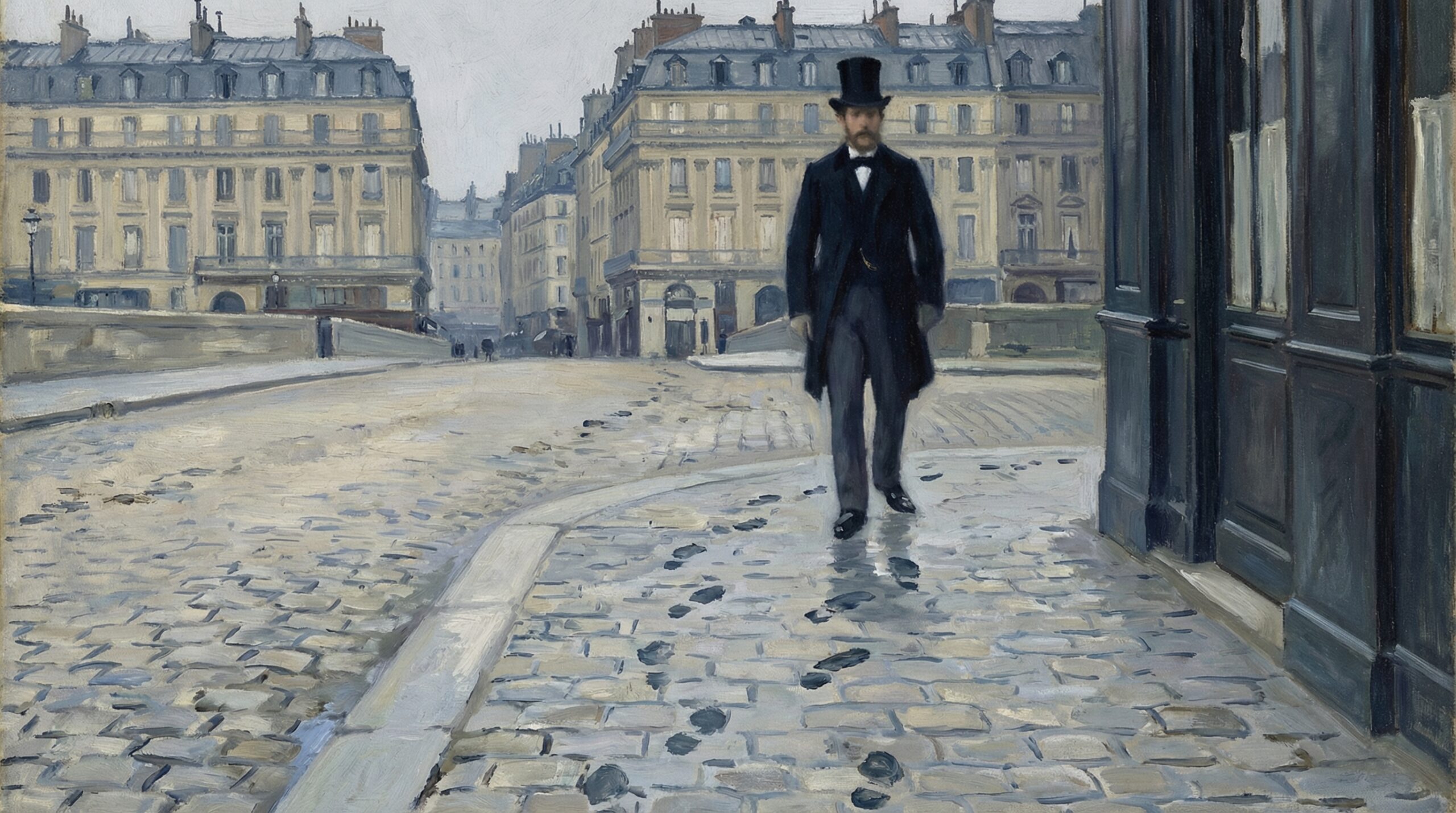
There’s a certain magic in walking the same streets as a ghost, especially when that ghost is a painter who redefined reality. To follow Édouard Manet is to trace the birth of modern art, not through the hushed halls of a museum, but on the sun-dappled paths of a public garden, in the metallic tang of a railway station, and in the shimmering reflections of a riverside town. Manet was not a painter of myths or historical epics; he was a painter of life, of the immediate, thrilling, and sometimes alienating world of 19th-century Paris. His canvases are windows onto a world that was speeding up, a society in flux, and to visit the places he painted is to step through those windows. This isn’t just a tour; it’s a conversation with the past, a pilgrimage to the very heart of modernity. We will wander through the city that was his ultimate muse, feel the pulse of the boulevards he strolled, and seek the light that he so masterfully captured, from the urban glow of a gaslit bar to the soft, silver haze over the Seine. This journey is about seeing the world through the eyes of the man who taught us all to see differently.
For a different kind of artistic pilgrimage, consider tracing the scars of history with Anselm Kiefer.
The Heartbeat of Modern Life: Manet’s Paris
Paris was more than just Manet’s home; it was his creative partner. The city, undergoing a vast transformation under Baron Haussmann, became a grand stage of boulevards, parks, and cafés, with Manet as its keenest observer. He captured its rhythm, characters, and fleeting moments with a revolutionary honesty that shocked the establishment. Walking through Paris with Manet in mind reveals these iconic sites not merely as landmarks but as living canvases.
The Tuileries Garden: A Symphony of Parisian Society
Our first stop is the Jardin des Tuileries, the refined stretch of greenery extending from the Louvre to Place de la Concorde. To grasp Manet’s bond with this place, envision his 1862 masterpiece, Music in the Tuileries Garden. This painting was more than art; it was a declaration. Manet placed himself, his friends, and contemporary cultural figures—including poet Charles Baudelaire and composer Jacques Offenbach—directly into the scene, presenting a vibrant cross-section of the Parisian bourgeoisie at leisure. By departing from traditional historical or allegorical subjects, he proclaimed that modern life itself deserved to be immortalized in great art.
Today, the Tuileries retains much of its original atmosphere. The formal, geometric paths remain lined with statues and manicured trees. Iconic green metal chairs scatter around the grand basins, occupied by Parisians and visitors reading, chatting, or simply observing the world. The air hums with murmured conversations, children’s laughter as they chase pigeons, and distant city sounds. Find a shaded spot beneath a chestnut tree, and you might almost feel it: the rustle of silk dresses, scent of cigar smoke, and the intellectual buzz of the crowd Manet portrayed. Light filters through the leaves, dappling the ground as it did then, creating a mosaic of light and shadow. The garden feels less like a historic site and more like an ongoing performance of Parisian life, a performance that Manet was the first to so brilliantly capture on canvas.
For first-time visitors, the best way to experience the Tuileries is to follow the locals. Grab a coffee from a nearby kiosk, select a chair by the water, and observe. Watch the interactions, the fashions, and the timeless ritual of leisure. This is precisely what Manet immortalized: the public space as a social theater. The garden forms a poetic axis between the Musée du Louvre, a temple of the old masters Manet studied, and the Musée d’Orsay just across the river, now home to his revolutionary works. It’s an ideal pilgrimage route for art lovers.
Gare Saint-Lazare: Steam, Steel, and a Stolen Glance
From the refined leisure of the Tuileries, we move to the city’s industrial core: Gare Saint-Lazare. This iron-and-glass marvel exemplified the new era of steam and speed. It was a place of arrivals and departures, transient encounters, and Manet, captivated by this modern energy, made it the backdrop for one of his most enigmatic works, The Railway (1873).
Interestingly, the painting’s scene is not inside the bustling station, but in the backyard of a nearby house on Rue de Rome, overlooking the tracks. A young woman sits with a book in her lap, her gaze confronting the viewer, while a little girl, her back to us, peers through the iron fence at a steaming train passing by. The image presents quiet contemplation amid industrial power. The painting evokes a psychological disconnect—the woman lost in thought, the child enthralled by modernity.
Today, Gare Saint-Lazare is a vibrant and chaotic hub. Though modernized, the station still retains its impressive 19th-century architecture. To understand Manet’s view, walk to the Pont de l’Europe, a bridge crossing the sprawling railway tracks and a favorite subject of his contemporary Gustave Caillebotte. From there, you can watch trains weaving in and out—an ongoing metallic ballet. The air buzzes with energy, and the ground vibrates as engines pass. Though the garden from the painting no longer exists, its spirit endures. The contrast between tranquil residential buildings and the industrial railway chasm remains striking—a potent reminder of how Manet discovered profound beauty not in grand panoramas, but in everyday contrasts within his rapidly evolving city.
A Bar at the Folies-Bergère: The Spectacle of the Night
Our final stop is the Folies-Bergère, the legendary music hall at Belle Époque nightlife’s heart. Manet’s last major painting, A Bar at the Folies-Bergère (1882), is a dazzling, melancholic masterpiece capturing the glitter and emptiness of modern entertainment. The painting bursts with sensory detail: champagne bottles glinting, rich colors of fruit and flowers, the crowded reflection in the mirror behind the barmaid Suzon. In the mirror’s depths, we see the lively audience, gaslights, and even the green-slippered feet of a trapeze artist swinging overhead.
At the center stands Suzon, her expression weary and detached, her eyes looking beyond us into a private world amidst bustling spectacle. She is simultaneously part of the scene and profoundly apart from it, embodying the alienation that can exist even in the most crowded rooms. Manet’s ingenious use of the mirror creates a disorienting perspective, blurring the boundaries between reality and reflection, observer and observed.
The Folies-Bergère remains on Rue Richer, and its façade, though modernized, hints at its glamorous past. Though the interior has changed, it continues as a working theater—a place of spectacle and music. Passing it in the evening, when lights glow and crowds gather, connects you directly to the world Manet painted. The surrounding Grands Boulevards still buzz with theaters and restaurants, alive with nocturnal energy. Visiting this neighborhood evokes the rich, sometimes overwhelming sensory experience Manet transformed onto canvas—a place that reveals his ability to capture not just scenes but complex emotional states—the loneliness beneath the crowd’s mask, the melancholy behind revelry.
Practical Pilgrim’s Notes for Paris
Exploring Manet’s Paris is best done on foot, allowing you to absorb the shifting character of the arrondissements. The Tuileries, Gare Saint-Lazare, and Folies-Bergère lie within comfortable walking distance on the Right Bank, forming a triangular route. Devote significant time to the Musée d’Orsay, the cornerstone of your visit. Viewing the paintings in person, after wandering the streets that inspired them, offers an immensely powerful experience. Housed in a former railway station, the museum is a fitting home for art celebrating modern life. Visit on a weekday morning to avoid crowds and grant yourself space to engage deeply with Suzon at the bar or strollers in the Tuileries.
The Artist’s Sanctuary: Studios and Cafés
Beyond the public spectacles, Manet’s life was also shaped by more intimate settings: the cafés where artistic revolutions were debated over glasses of absinthe, and the studios where these revolutions were brought to canvas. These spaces were the crucibles of modernism.
The Batignolles Quarter: Where Revolution Brewed
In the 1860s and 1870s, the heart of Manet’s intellectual world was the Batignolles quarter, near what is now the Place de Clichy. This was a neighborhood of artists and writers, centered around the Café Guerbois on the Avenue de Clichy. There, Manet led a group of young, ambitious painters who would become known as the Impressionists: Monet, Renoir, Degas, Pissarro, and Sisley, along with the writer Émile Zola, Manet’s great advocate. They gathered to debate art, challenge the authority of the official Salon, and invent a new way of seeing.
The Café Guerbois is long gone, as is its successor, the Café de la Nouvelle-Athènes on the Place Pigalle. Yet the neighborhood still preserves its artistic, bohemian spirit. Walking through the streets of the 17th and 18th arrondissements, you can sense the history. The Place de Clichy is a whirlwind of traffic and people—a true Parisian crossroads. Step into the side streets, and you’ll find a quieter, more residential area that feels closer to the world Manet and his friends once knew. It takes some imagination, but standing on the Avenue de Clichy, you can almost hear the passionate debates spilling out onto the pavement, glasses clinking as arguments about the nature of light and the importance of painting the present moment unfold. This was not just a place to drink; it was the birthplace of an art movement, with Manet as its reluctant, controversial leader.
The Final Studio: Rue d’Amsterdam
While the cafés served as his public stage, the studio was his private domain. Manet occupied several studios during his career, but his last one, at 77 Rue d’Amsterdam, holds particular poignancy. It was here, while suffering from the illness that would eventually claim his life, that he created some of his most beautiful and intimate works, including vibrant still lifes of flowers given by friends and the masterpiece A Bar at the Folies-Bergère. The studio was his refuge, a place where he could control his environment and keep creating even as his physical world shrank. The building still stands as a silent testament to the final creative surge of a genius. Viewing it from the street, one feels reverence for the private struggle and artistic triumph that unfolded within those walls.
Escapes from the City: Light and Water on the Seine
Just as Manet was a painter of urban life, he was equally captivated by the evolving landscapes just beyond the city borders. The newly accessible suburbs along the Seine emerged as a playground for Parisians and a crucial open-air studio for the rising Impressionist movement.
Argenteuil: A Shared Canvas with Monet
No place is more closely associated with this riverside leisure than Argenteuil. In the summer of 1874, Manet spent time here with Claude Monet and his family, marking a pivotal moment. Influenced by Monet and the brilliant, shimmering light of the Seine, Manet’s palette noticeably brightened. His brushwork grew freer, more fragmented, and more ‘impressionistic.’ Paintings from this period, such as Boating and Argenteuil, capture the dazzling sunlight reflecting on the water, the vibrant blue of the river, and the relaxed posture of people enjoying a day away from the city.
Visiting Argenteuil today reveals a contrast. The town has developed into a busy Parisian suburb, and much of the once-idyllic landscape has been altered by industry and urban growth. Yet the river remains. The light endures. A walk along the Seine’s banks is essential. Starting at the Argenteuil train station—the very line Manet likely took—you can make your way to the waterfront. In some stretches, you can almost glimpse the scenes from his paintings. Watching modern boats drift by, their shapes mirrored in the water, helps you understand the deep appeal this place had. It was a world of leisure and freedom, where Paris’s strict social codes seemed to fade in the summer haze. You can sense the camaraderie between Manet and Monet, two artists challenging each other to see the world anew and to capture the fleeting, sensory impression of a moment. Here, Manet came closest to embracing Impressionism, adopting its techniques while maintaining his own distinctive, powerful style rooted in a love for solid form and structure.
Traveling to Argenteuil
Reaching Argenteuil is an easy and rewarding day trip from Paris. A short train ride from Gare Saint-Lazare—the very station Manet painted—takes you to his riverside world in under 15 minutes. This journey collapses time, linking his urban and suburban artworks. Once there, focus your exploration on the Seine’s promenades. Though the specific sailing clubs and riverside inns he depicted may no longer exist, the fundamental elements—the wide river, the expansive sky, and the unique quality of Île-de-France light—still await discovery.
The Call of the Sea and the Masters of Old
Manet’s artistic vision was influenced not only by his immediate environment but also by profound encounters with the sea and the art of the past. These journeys, both physical and intellectual, enriched his work with greater depth and complexity.
Boulogne-sur-Mer: The Salt-Stung Air of the Channel
Manet maintained a lifelong fascination with the sea. Having trained as a naval cadet in his youth, the ocean’s raw power and vastness became a recurring theme in his art. He often visited the coastal town of Boulogne-sur-Mer on the English Channel. His seascapes, such as `The Kearsarge at Boulogne`, are far from calm, picturesque scenes. They are dynamic, visceral portrayals of the water, painted with a vigorous, almost harsh honesty. He depicted the choppy, slate-gray waves of the Channel, the salty spray, and the bustling life of the port.
Visiting Boulogne-sur-Mer today gives a sense of this maritime world. It remains a major fishing port, with the air scented by salt and sea. You can stroll along the jetties and observe the fishing boats as they come and go, their hulls weathered by the waves. The light on the Opal Coast is dramatic and constantly shifting, moving from bright sun to moody gray in moments. Explore the old fortified town perched on the hill, with its medieval walls, then descend to the lively port below. This juxtaposition of ancient history and a vibrant, working present is something Manet would have valued. Standing on the shore, facing the wind blowing off the Channel, you grasp the raw, untamed energy he poured into his marine paintings.
Madrid and the Ghost of Velázquez
Perhaps Manet’s most significant journey was not to a landscape but to a museum. In 1865, he traveled to Spain and visited the Prado Museum in Madrid. There, he encountered the work of his spiritual mentor, Diego Velázquez. The experience was revelatory. Manet was struck by Velázquez’s realism, psychological depth, and, most notably, his revolutionary use of black and straightforward, unembellished approach to painting.
Following Manet to the Prado is to embark on a pilgrimage of artistic inspiration. The museum remains much the same, a treasure trove of European art. Head straight to the Velázquez galleries. Stand before `Las Meninas`, `The Surrender of Breda`, and the powerful portraits of court jesters and dwarfs. See them as Manet did. Notice how Velázquez employs large areas of black not as a mere absence of color, but as a color itself—a technique Manet adopted. Observe the direct, intense gaze of the figures, a trait Manet brought into his portraits of modern Parisians. In Velázquez, Manet found affirmation for his own artistic instincts. He recognized a painter who, centuries before, had depicted his world with remarkable honesty and technical brilliance. This journey to Madrid cemented Manet’s direction, empowering him to challenge Parisian academic conventions and pursue his unique vision. It reminds us that art is an ongoing dialogue across time.
Venetian Light: A Fleeting Affair
Later in his career, Manet traveled to Venice, a city that has inspired artists for centuries. His painting, `The Grand Canal in Venice`, marks a striking departure from his Parisian subjects. Using a bright palette and fluid brushstrokes, it captures the distinctive, shimmering light of the city, where buildings appear to float between water and sky. Yet, the work remains unmistakably Manet. He avoids the picturesque, postcard-style views favored by earlier painters. Instead, he offers a slice of life—a glimpse of the canal with gondola poles cutting across the frame in a bold, modern way. A visit to Venice, witnessing how the light softens the edges of the magnificent palazzos, provides ideal context for this evocative, atmospheric piece, demonstrating his ability to adapt his vision to a new setting while remaining true to his artistic principles.
A Quiet Finality: Passy Cemetery
Every pilgrimage must reach its conclusion. The final destination on our journey through Manet’s world is a place of quiet contemplation: the Passy Cemetery in Paris. Situated on a hill in the refined 16th arrondissement, it stands as one of the city’s most beautiful and intimate resting places.
A Place of Rest Among Peers
Manet was laid to rest here in 1883. His grave is modest and unadorned, a fitting tribute to a man who removed artifice to reveal truth. Standing before it is a profoundly moving experience. The cemetery is tranquil, a stark contrast to the bustling boulevards he depicted. From certain vantage points, you can even glimpse the Eiffel Tower, a monument erected a few years after his death, symbolizing the modern Paris he helped shape.
He rests in esteemed company. The Impressionist painter Berthe Morisot—his student, friend, and sister-in-law—is interred in the same family tomb. Nearby lies the composer Claude Debussy. Wandering through Passy’s peaceful paths, surrounded by the tombs of artists, writers, and musicians, you sense the immense cultural legacy of Paris. It is a space to reflect not on an end, but on a continuation. Though Manet’s life was cut short by illness, his revolutionary vision resonates in museums of modern art worldwide.
Leaving the cemetery, you return to the vibrant city of Paris. But now, you perceive it differently. You notice the light on the stone façades, the expressions of people in cafés, the fleeting beauty of a passing moment. Perhaps you see it a little more as Manet did. His legacy is not confined to gilded frames in the Musée d’Orsay; it lives on in the streets, the parks, and the very air of the city he cherished. Following his footsteps is a journey without a true end; it merely changes how you view everything that comes after.