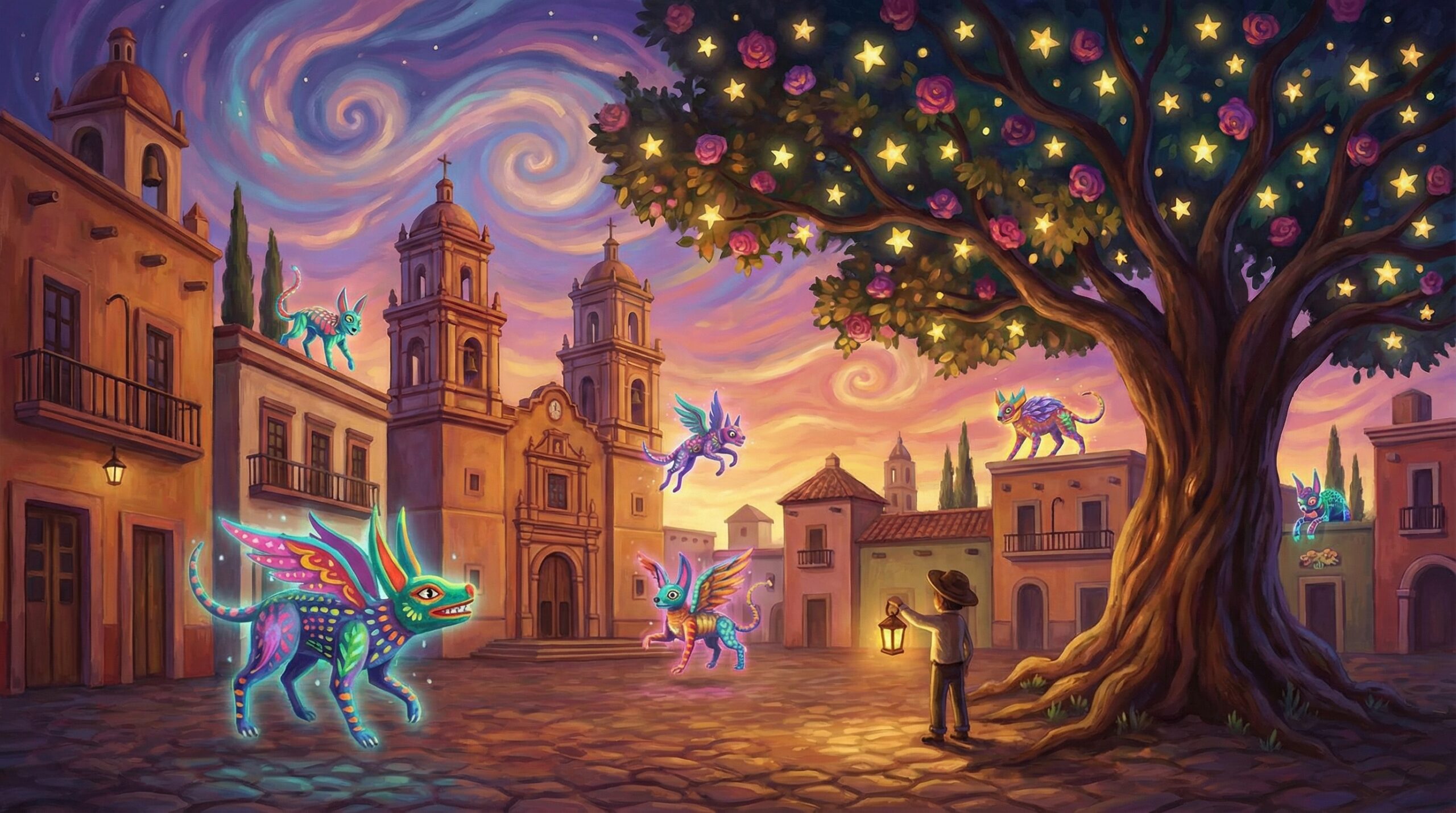
Close your eyes for a moment. Can you smell it? The sharp, smoky perfume of roasting chiles, a scent that clings to the air and promises both fire and comfort. Can you feel it? The pulsing, vibrant rhythm of a place where history isn’t just in books, but breathes in the crumbling paint of colonial walls and whispers from the stones of ancient pyramids. This is Mexico. And it is this very sensory, emotionally charged world that springs to life from the pages of Laura Esquivel’s novels. For anyone who has ever been captivated by her most famous work, Like Water for Chocolate, or any of her other soul-stirring tales, a journey to Mexico is more than a vacation; it’s a pilgrimage. It’s an opportunity to step directly into the world of magical realism, a place where emotions are so powerful they can be cooked into a meal, where love and sorrow have a flavor, and where the line between the mundane and the miraculous is beautifully, deliciously blurred. Esquivel didn’t just write about Mexico; she channeled its very essence—its passion, its history, its deep connection to the earth, and most importantly, its kitchen. The kitchen, in her universe, is not just a room for preparing food. It is an alchemical laboratory, a sacred space where the soul of a family and a nation is nurtured, challenged, and ultimately, expressed. To follow in her footsteps is to embark on a quest to understand this magic, to taste the stories, and to see the landscapes that shaped her incredible vision. This journey will take us from the bustling, creative heart of Mexico City, her birthplace, to the imagined landscapes of the revolutionary north, and deep into the culinary soul of regions like Oaxaca and Puebla. It’s a path seasoned with history, spiced with tradition, and served with a passion that feels as real and tangible as the food on your plate.
This kind of literary and sensory pilgrimage is a profound way to connect with an artist’s world, much like one might embark on a pilgrim’s journey through the Italy of Raphael.
The Heart of the Story: Mexico City, a Crucible of Creativity
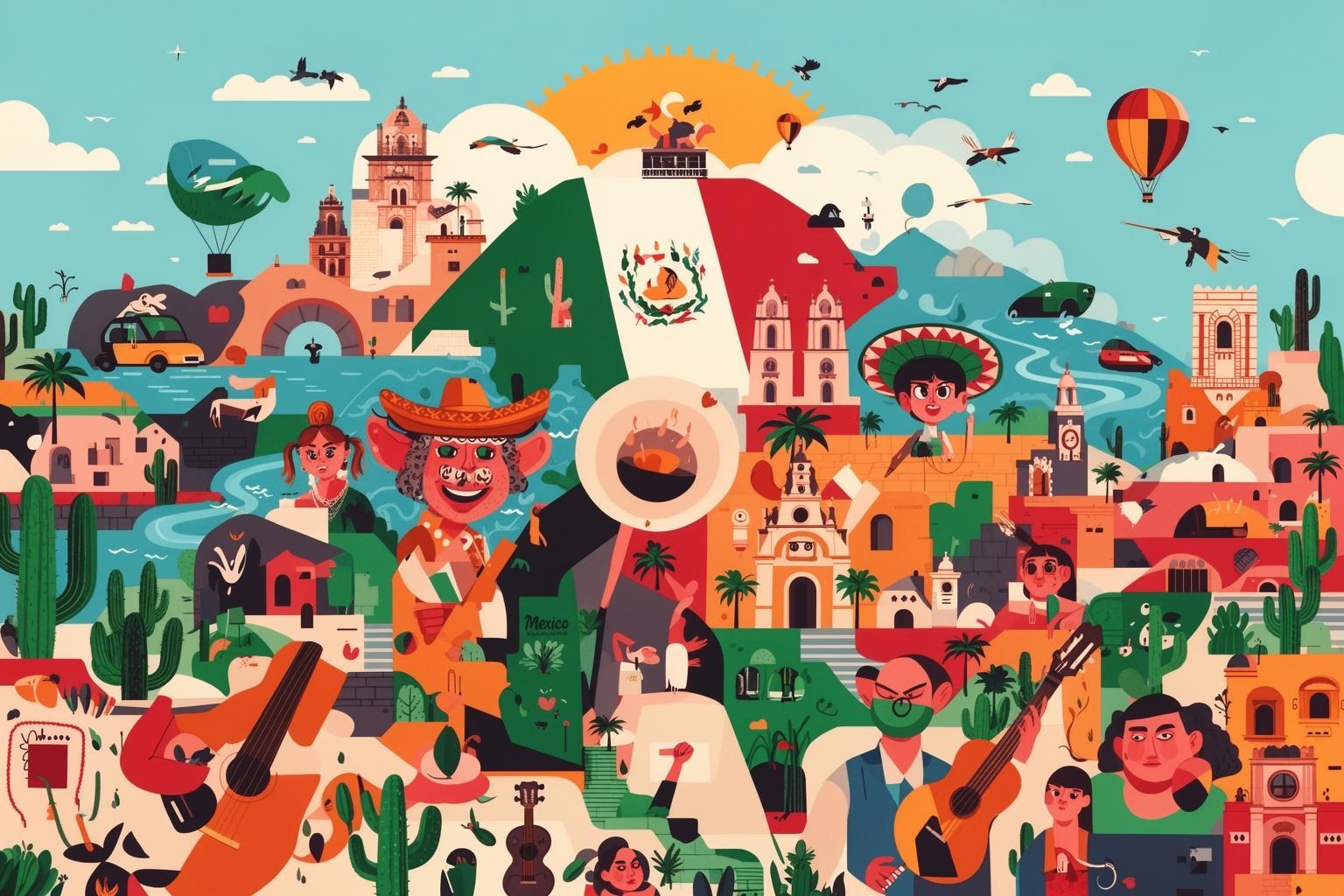
Every story requires a beginning—a place where the seeds of imagination are initially planted. For Laura Esquivel, that place is Mexico City. This vast, chaotic, and endlessly captivating metropolis was more than just her birthplace; it is a living, breathing entity that shapes every facet of her work. To truly understand Esquivel, one must first grasp the city that nurtured her—a place of profound contradictions where Aztec ruins stand in the shadow of Spanish cathedrals, and where a deep-rooted history clashes with relentless modernity. It is a city functioning on a unique frequency, a rhythm driven by millions of interwoven stories, vibrant street life, and an undeniable creative energy. It was within this beautiful chaos that Esquivel’s distinct voice was formed. She studied theater and dramatic arts, mastering how to craft narratives that reflect the intricate fabric of Mexican life. Walking through Mexico City today feels like flipping through the sourcebook of her imagination, with every corner unveiling another layer of the culture she so vividly portrays.
Coyoacán: A Bohemian Soul
If Mexico City is the story’s heart, then the neighborhood of Coyoacán is its soul. Here, the artistic spirit that fueled Esquivel’s creativity is unmistakable. Stepping into Coyoacán is like stepping back in time. The frenetic bustle of the city fades away, replaced by the gentle rustling of jacaranda trees and the quiet dignity of cobblestone streets. The atmosphere feels distinct, thick with the presence of artists, writers, and revolutionaries who once inhabited these colorful, colonial-era homes. This is famously the dwelling place of Frida Kahlo and Diego Rivera, whose legacies powerfully underscore Coyoacán’s role as a refuge for free thinkers and passionate creators. The creative pulse is palpable everywhere—from the vibrant cobalt blue walls of the Casa Azul, Frida’s former home turned breathtaking museum, to the tranquil courtyards blossoming with bougainvillea, where one can easily imagine profound conversations about art, politics, and love. For any traveler seeking the essence of Esquivel’s world, spending a day here is crucial. The central plaza, Jardín Centenario, serves as the neighborhood’s living room. On weekends, it bursts with families, street performers, and artisan markets offering everything from intricate silver jewelry to hand-woven textiles. The atmosphere is intoxicating—a symphony of sounds from balloon vendors’ calls to the gentle strumming of a lone guitarist. It is in places like Mercado de Coyoacán that Esquivel’s culinary inspirations become vividly clear. This market is a feast for the senses: vibrant produce piled like jewels, the earthy scent of corn, the sweet aroma of ripe mangoes, and the pungent fragrance of dried chiles filling the air. Women skillfully press tortillas by hand, the sizzle of meat on a griddle resonates, and one understands that here, food transcends mere sustenance; it is culture, community, and love. This very environment shaped young Esquivel, instilling the vital truth that recipes are stories and ingredients are emotions.
The Political Pulse: Zócalo and the Centro Histórico
While Coyoacán embodies the artistic soul, the Centro Histórico, centered around the vast Plaza de la Constitución, or Zócalo, embodies the nation’s powerful and often turbulent heart. To stand in the midst of this enormous square is to stand at the epicenter of Mexican history. This space has witnessed Aztec ceremonies, colonial conquests, independence declarations, and contemporary protests. It serves as the grand stage upon which Mexican history’s drama has unfolded for centuries, deeply influencing Esquivel’s work, especially her exploration of revolution and national identity. Surrounding the Zócalo are monumental symbols of Mexican power: the magnificent Palacio Nacional adorned with sprawling Diego Rivera murals depicting the country’s epic history; the formidable Catedral Metropolitana, a centuries-old emblem of Spanish colonial dominance built atop Aztec sacred ground; and the unearthed ruins of the Templo Mayor, the principal temple of the Mexica people. The very soil is layered with tales of conflict, resilience, and change. This historical weight permeates Esquivel’s narratives. Like Water for Chocolate unfolds against the backdrop of the Mexican Revolution, a time of intense social and political upheaval that transformed the nation. The de la Garza family’s rigid traditions and Mama Elena’s tyrannical rule mirror the oppressive old order that the revolution aimed to dismantle. Tita’s personal rebellion, expressed through her cooking, reflects the broader struggle for freedom and self-determination beyond the ranch walls. Walking through the Centro Histórico, one can sense the echoes of this struggle—the revolutionary fervor, ideological clashes, and profound yearning for a renewed identity defining that era. In later life, Esquivel engaged directly with this political landscape, serving as a federal deputy. This involvement adds another dimension to our understanding of her work. Her stories are not mere fairy tales; they engage deeply with the social and political realities of her country, infused with a fierce love for its people and a passionate commitment to justice and cultural preservation.
The Culinary Landscape: Where Food is Magic
At the very heart of Laura Esquivel’s world lies a deep, unwavering belief in the power of food. In her universe, the kitchen serves as a sanctuary, and cooking is an act of creation as powerful as composing a poem or painting a masterpiece. Food acts as the primary language of emotion. A wedding cake made with tears of sorrow can evoke a shared wave of melancholy among all who taste it. A dish of quail in rose petal sauce, prepared passionately, can become a potent aphrodisiac. This is the fundamental principle of magical realism as Esquivel practices it: transforming the everyday into the extraordinary. To truly engage with her work, one must journey through the culinary landscapes of Mexico, a country where food is intricately woven into identity, ritual, and everyday life. This journey goes beyond mere tasting; it is about understanding the history contained in a grain of corn, the passion infused in a perfectly crafted sauce, and the love embodied in a shared meal.
The Scent of Mole and Chocolate: A Journey Through Mexican Cuisine
Esquivel’s brilliance lies in her ability to elevate the profound cultural importance of Mexican cuisine into a narrative device. She reveals to readers what Mexicans have long known: recipes are heirlooms passed down through generations, carrying with them the memories, secrets, and emotions of those who made them. The acts of grinding spices and simmering a sauce for hours become meditative practices, ways to infuse one’s own spirit into the food. This culinary philosophy is not fictional; it reflects a living reality found in kitchens throughout the country. A true pilgrimage for an Esquivel enthusiast must lead to the places where these culinary traditions are most alive and cherished. It means venturing beyond the capital to states regarded as the cradles of Mexican gastronomy, where the magic she writes about is part of everyday life.
Oaxaca: The Land of Seven Moles
Perhaps no place in Mexico better embodies the complexity and soul of its cuisine than Oaxaca. Known as the ‘Land of the Seven Moles,’ this region stands as the undeniable heart of one of Mexico’s most iconic and revered dishes. Mole is more than a sauce; it is a culinary epic. A single mole may contain dozens of ingredients—various chiles, nuts, seeds, spices, and often a hint of chocolate—all roasted, ground, and simmered for hours or even days until they fuse into a harmonious whole with an impossibly deep and rich flavor. The process is a labor of love, a testament to patience and tradition. Visiting Oaxaca is like stepping into the world Tita, the protagonist of Like Water for Chocolate, would intimately know. The city’s markets, such as Mercado Benito Juárez or Mercado 20 de Noviembre, offer a sensory feast. The air is thick with competing aromas of roasting coffee, pungent herbs, fresh cheese, and the unmistakable scent of ‘pasillo de humo’ (the smoke aisle), where vendors grill various meats to order. Mountains of dried chiles in every shade of red, brown, and black are everywhere. Vendors sell blocks of Oaxacan chocolate, essential both for mole and the region’s beloved hot chocolate. Here, one can truly appreciate mole’s alchemy. Taking a cooking class reveals the painstaking process of toasting and grinding each ingredient, witnessing the transformation of simple elements into something sublime. Tasting different moles—from the dark and rich Mole Negro to the vibrant and herbal Mole Verde—is like conversing with history. Each mole tells its own story, reflecting the Oaxacan landscape and spirit. This experience makes Esquivel’s writing tangible, turning the abstract idea of food-as-emotion into an unforgettable taste.
Puebla: The Sweet and Savory Cradle
If Oaxaca is the land of mole, then Puebla is the birthplace of another legendary and symbolic Mexican dish: Chiles en Nogada. This dish, featuring poblano chiles stuffed with a mixture of ground meat, fruits, and spices, topped with a creamy walnut sauce (nogada) and sprinkled with pomegranate seeds, represents Mexican baroque cuisine at its finest. It is a dish steeped as much in history and patriotism as in flavor. According to tradition, it was created by nuns in Puebla to honor General Agustín de Iturbide in 1821, after he signed the treaty securing Mexico’s independence. The dish’s colors—the green chile, the white walnut sauce, and the red pomegranate seeds—mirror the Mexican flag’s hues. This deep connection between food and national identity is a powerful theme throughout Esquivel’s work. Visiting Puebla immerses one in this rich historical context. The city itself is a stunning display of colonial architecture, with streets lined by grand churches and buildings adorned with intricate Talavera tiles. The atmosphere exudes elegance and tradition. When you sit down to enjoy Chiles en Nogada in Puebla, traditionally served from August to September when its key ingredients are in season, you take part in a ritual. The dish is a perfect symphony of savory, sweet, and spicy flavors, and its presentation is a work of art. It embodies the complexity of Mexican culture, blending indigenous ingredients with European techniques. For followers of Esquivel, tasting this dish in its place of origin is a profound experience. It connects you to the historical sweep of her novels and reinforces the idea that, in Mexico, a single plate of food can tell the story of an entire nation.
Echoes of the Revolution: Northern Mexico and the Hacienda
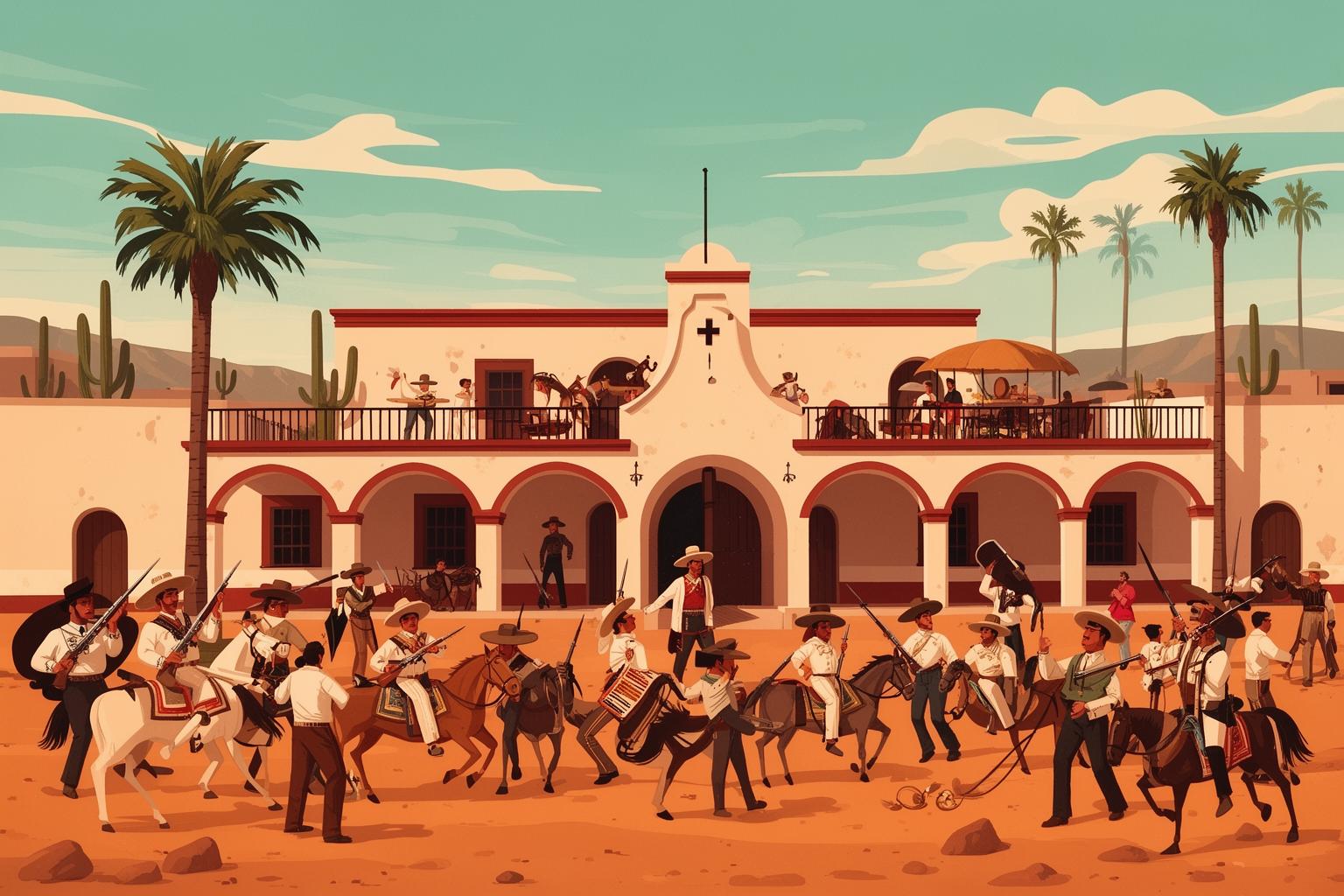
While the culinary essence of Esquivel’s work is rooted in the central and southern regions, the narrative of Like Water for Chocolate transports us to a strikingly different landscape: the arid, vast plains of northern Mexico near the United States border. This is a land of harsh beauty and stark contrasts, where the sky feels boundless and the horizon stretches endlessly. It is here, amidst the backdrop of the Mexican Revolution, that the intense family drama of the de la Garzas unfolds. This setting is more than just a backdrop; it is a vital element of the story, embodying both the isolation and repression experienced by the characters and the simmering potential for explosive change.
The Fictional De la Garza Ranch: A Symbol of Tradition and Repression
Although the De la Garza ranch is fictional, it is deeply embedded in the historical reality of the Mexican hacienda system. These expansive estates were social and economic hubs for centuries and often functioned as self-contained worlds with strict hierarchies and traditions. Esquivel uses this environment to create a pressure cooker of emotions. The ranch is a closed realm, governed by the iron will of Mama Elena, where duty, honor, and tradition rule supreme. The vast, empty landscape surrounding the ranch reflects the emotional desolation of its inhabitants, especially Tita, who is confined by a harsh family tradition that forbids her from marrying. As an outdoor specialist, the power of this landscape resonates strongly with me. The Chihuahuan Desert, which covers much of the region, is far from empty. It is a resilient ecosystem, abundant with life adapted to harsh conditions. It features subtle colors, dramatic rock formations, and a profound silence in which you can hear your own heartbeat. This environment shapes a certain type of character: tough, resourceful, and deeply connected to the land. One can imagine Tita drawing strength from this very earth, with her bond to the ranch’s cultivated ingredients serving as her sole outlet for self-expression. Experiencing this part of Mexico today—perhaps by traveling through Coahuila or Chihuahua—offers insight into the novel’s physical and psychological setting. The isolation felt is genuine, but so too is the sweeping freedom afforded by the open spaces. This understanding makes clear why the arrival of revolutionary soldiers signals such a cataclysmic break—a gust of outside wind blowing through the hacienda’s stagnant air.
Piedras Negras, Coahuila: A Borderland of Possibilities
Esquivel anchors her fictional ranch in a real place by referencing the nearby border city of Piedras Negras, Coahuila, situated just across the river from Eagle Pass, Texas. The border acts as a powerful symbol throughout the novel. It signifies a threshold, a dividing line between different worlds, and the potential for escape and transformation. It is to this border that Tita’s sister Gertrudis flees after a passionate encounter, breaking free from the ranch’s oppressive strictures. She crosses both a literal and metaphorical border, reinventing herself as a revolutionary general. The borderlands harbor a unique culture all their own—zones of transition where languages, cuisines, and traditions blend to create something new. Visiting a city like Piedras Negras offers a glimpse into this vibrant world. It is not a typical tourist destination, which lends the experience greater authenticity. One can feel the continuous flow of people and goods, and the energetic fusion of two cultures. For Esquivel’s characters, the proximity of the United States represents the dream of a different life—a modern world free from the suffocating weight of tradition. Dr. John Brown, arriving from the American side, brings fresh ideas about science and emotion, offering Tita an alternative destiny. Thus, the border is not merely a line on a map; it is the frontier of the heart, where the old hacienda world collides with the new one of personal freedom and scientific reasoning. Standing on the banks of the Rio Grande, looking across to another country, you can sense the pull of that possibility—the same yearning for escape that propelled Gertrudis’s wild journey into a new life.
Beyond the Kitchen: Esquivel’s Spiritual and Political Quests
While Like Water for Chocolate secured Laura Esquivel’s international acclaim, her body of work is much broader and more varied than that single, iconic novel. Her writing continually pushes boundaries, moving from the magical realist kitchen into realms of science fiction, pre-Hispanic cosmology, and contemporary politics. To truly follow her path means exploring these diverse facets of her intellectual and creative journey, which reveal a profound engagement with Mexico’s spiritual heritage and its political present. Her pursuits as both a writer and public figure demonstrate an unwavering desire to understand the human soul and heal societal divisions, whether through futuristic love stories or legislative efforts.
The Law of Love: A Sci-Fi Journey into the Soul
Esquivel’s second major novel, The Law of Love, marked a daring shift from the familiar ground of her debut. The book is an imaginative fusion: part science fiction, part romance, part spiritual treatise, featuring a graphic novel segment and an accompanying soundtrack. Set in a futuristic Mexico City, it follows a “karmic-astral” agent who assists souls in balancing their karmic debts across multiple reincarnations. The narrative blends Aztec cosmology, astrophysics, and a belief in the transformative power of love. Though seemingly distant from Tita’s kitchen, the novel shares a core conviction with Like Water for Chocolate: that powerful, unseen forces—whether emotional energies infused in food or karmic currents flowing through the universe—shape our lives. This spiritual inquiry urges readers to look beyond Mexico’s colonial history and connect with its deeper, pre-Hispanic roots.
Teotihuacán and the Ancient Spirits
A visit to the ancient city of Teotihuacán, just outside Mexico City, is an essential pilgrimage for anyone intrigued by this side of Esquivel’s work. Walking the Avenue of the Dead, flanked by the immense Pyramids of the Sun and the Moon, is a profoundly humbling experience. Once one of the largest cities of the ancient world, it was a center of immense spiritual and cultural significance, its origins still cloaked in mystery. The sheer scale and geometric precision of the site inspire awe. Climbing the Pyramid of the Sun offers a panoramic view of the entire valley and a deep sense of connection to centuries of human history beneath. There is a tangible energy here, a feeling of standing on sacred ground. This is the world that informs the spiritual foundations of novels like The Law of Love. It reflects a worldview where the cosmos is alive, time is cyclical, and humans partake in a grand cosmic drama. Esquivel draws upon this indigenous spirituality to explore themes of reincarnation and destiny, suggesting that the modern Mexican soul remains profoundly linked to these ancient beliefs. Visiting Teotihuacán allows one to feel this connection firsthand, appreciating that the magic in Esquivel’s realism springs not merely from literary invention but from a deep well of authentic Mexican spirituality.
A Voice in the Chamber: Esquivel the Politician
Laura Esquivel’s quest for a better world extended beyond her books. In a fascinating chapter of her life, she entered politics, serving as a federal deputy in the Mexican Congress from 2015 to 2018 representing the Morena party. This shift from storyteller to legislator underscores her profound commitment to the social issues her fiction addresses. She became an outspoken advocate for the arts, culture, and environmental protection, using her platform to defend the very soul of Mexico she so eloquently celebrates in her writing. This stage of her life adds an enriching dimension to any journey following her footsteps. The locus of this work was the Palacio Legislativo de San Lázaro in Mexico City, a modernist complex sharply contrasting with the colonial and pre-Hispanic sites previously explored. Though not a typical tourist destination, grasping its significance offers a fuller understanding of the author. It reveals that her critique of societal structures and passion for justice transcend abstract themes, becoming principles she actively pursued in reality. Her political career shows that she views storytelling and political engagement as two sides of the same coin—both means to envision and create a more just, compassionate, and beautiful world. It reinforces the notion that her magical realism is not an escape from reality but a way of perceiving its hidden potentials—a way of insisting that a world guided by love, empathy, and respect for tradition is not only possible but worth striving for.
A Traveler’s Guide to Esquivel’s Mexico
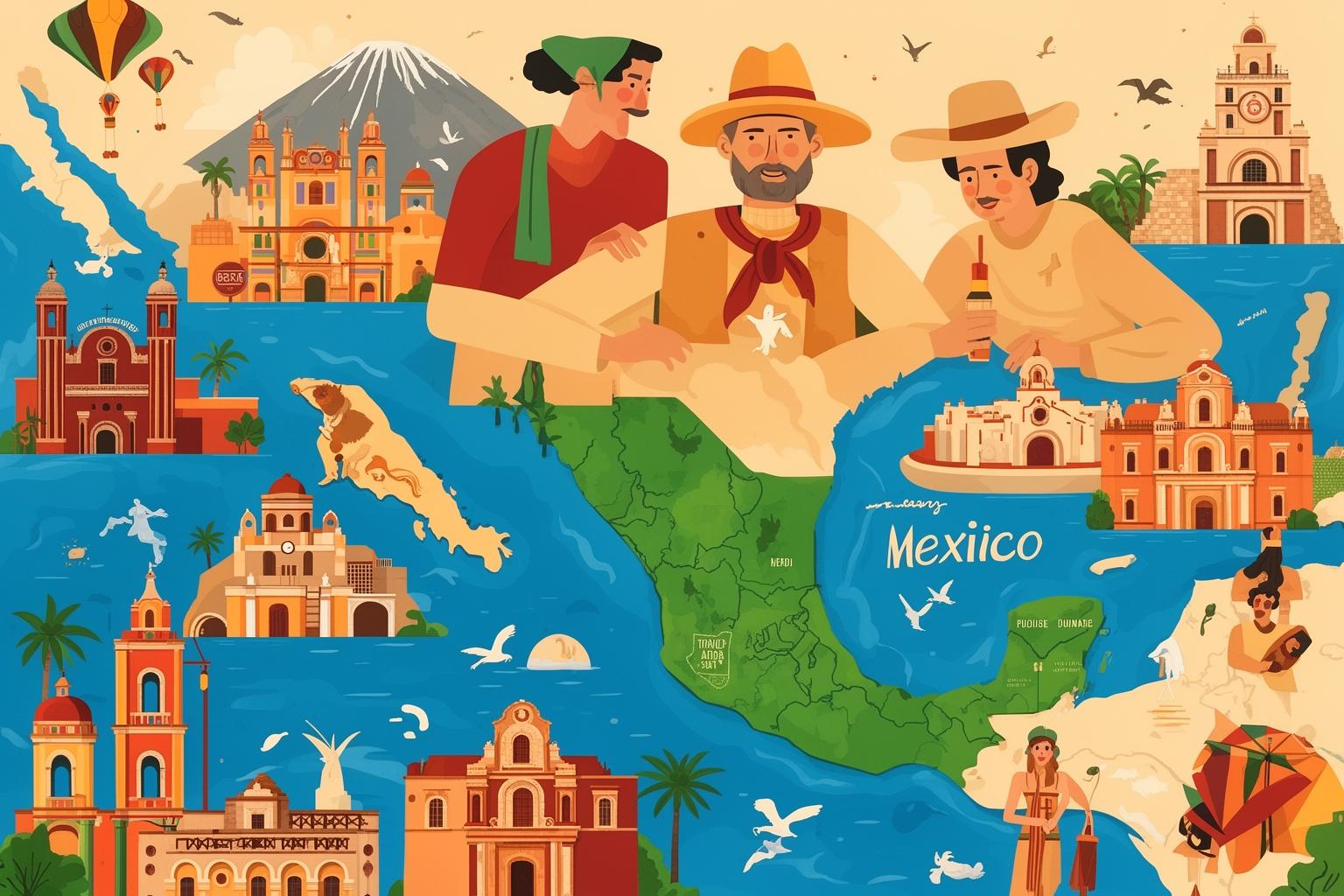
Embarking on a journey through Laura Esquivel’s Mexico means preparing for an adventure that engages all your senses. It’s about more than just sightseeing; it’s about tasting the flavors, hearing the music, and feeling the powerful currents of history and culture that run through this remarkable country. To fully embrace this pilgrimage, it helps to travel with the same curiosity and passion that characterize her novels. Here is some practical advice for creating your own magical realist adventure.
Crafting Your Culinary Pilgrimage
Since food lies at the heart of the experience, planning your trip around culinary exploration is an excellent strategy. Begin in Mexico City, a haven for food lovers. Take time to enjoy both street food and fine dining. Don’t miss the opportunity to savor tacos al pastor sliced straight from the trompo, or to explore the intricate flavors of contemporary Mexican cuisine in neighborhoods like Polanco or Roma. From there, head to the culinary heartlands. A comfortable first-class bus can take you to Puebla. Spend at least two days there to explore the city’s baroque splendor and, if the season is right, indulge in Chiles en Nogada. Your next destination should be Oaxaca. Although the journey is longer, it’s well worth it. Book a cooking class in advance; many excellent schools offer market tours followed by hands-on instruction in preparing mole and other regional specialties. This is more than a cooking lesson; it’s an immersive experience in Oaxacan culture. When visiting markets, be adventurous. Ask vendors for samples, try exotic fruits you’ve never encountered before, and don’t hesitate to eat at busy food stalls—that’s often where you’ll find the most authentic and delicious dishes.
Experiencing the Rhythms of Daily Life
Esquivel’s writing resonates so deeply because it is rooted in the details of everyday life. To truly connect with her world, it’s essential to slow down and simply observe. Don’t rush from one tourist attraction to another. Instead, find a bench in a local plaza, such as Coyoacán’s Jardín Centenario or Oaxaca’s Zócalo, and watch the world unfold around you. Notice how families interact, listen to the street musicians, and absorb the unique rhythm of the place. Visit a traditional panadería (bakery) in the morning and enjoy a sweet pastry accompanied by coffee. In the evening, take a stroll as the locals do. These quiet moments of observation often reveal more than a guided tour. They allow you to feel the community’s pulse and witness the small moments of magic in the everyday—a child chasing pigeons, an elderly couple holding hands, the vibrant colors of a market at sunset. This patient, attentive approach will enable you to see Mexico not merely as a destination, but as a living, breathing world that inspires such powerful stories.
Practical Considerations for the Modern Explorer
To guarantee a smooth and enjoyable trip, some practical planning is invaluable. The best time to visit central and southern Mexico is during the dry season, typically from late October to April, helping you avoid the heavy afternoon rains common in summer. However, visiting during a major cultural celebration, such as the Day of the Dead (Día de los Muertos) in late October and early November, can be a truly unforgettable experience—especially in places like Oaxaca. For transportation, Mexico City has an efficient metro system, though it can be crowded. Ride-sharing apps are also widely available and affordable. For intercity travel, the first-class bus network (such as ADO) is excellent—safe, comfortable, and reliable. While it’s always wise to stay alert, especially in large cities, don’t let safety concerns overwhelm you. Use common sense: keep valuables out of sight, be cautious at night, and stick to well-lit, busy areas. Finally, although you can get by with English in major tourist spots, learning a few basic Spanish phrases will greatly enhance your experience. Simple words like ‘buenos días,’ ‘por favor,’ and ‘gracias’ go a long way. They show respect and foster more genuine connections with the warm and welcoming people of Mexico, who truly are the heart of this magical land.
The Lingering Taste of Magic
A journey through Laura Esquivel’s Mexico lingers long after you have returned home. It lives on in the aftertaste of a perfectly prepared mole, the brilliant splash of cobalt blue paint against a sunlit street, and the awe-inspiring silhouette of an ancient pyramid framed by the dawn sky. To walk these streets, savor these flavors, and feel the profound weight of history is to realize that the ‘magic’ in her magical realism is not mere fantasy. It is a way of seeing the world—a recognition of the deep, often unseen connections that link us to our past, our land, and one another. You begin to grasp how a simple kitchen can serve as the setting for an epic tale, and how a family recipe can hold more history than any textbook. Esquivel offers her readers a key—a key to a Mexico where the boundary between the physical and the spiritual is thin, and where emotion is the most powerful ingredient of all. Traveling there lets you step through that door. You depart not only with photos and souvenirs but with a deeper understanding of how stories arise from a place, and how a place itself can be the most beautiful story of all. You come home inspired to discover the magic in your own world, perhaps even in your own kitchen, ready to believe that a little love, baked into a meal, can truly change everything.