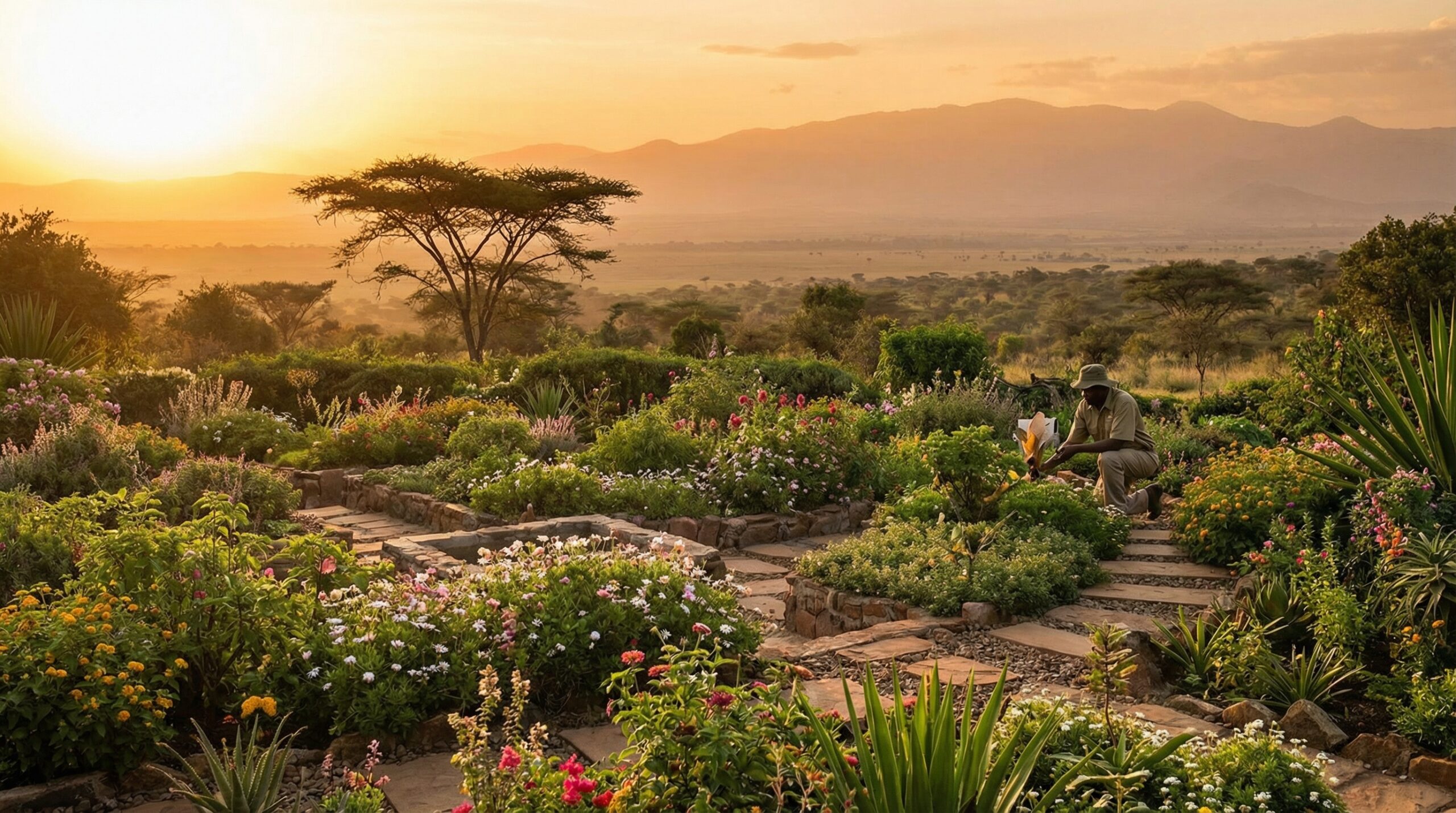
Some films are merely watched; others are experienced, embedding themselves into the very fabric of your consciousness. They haunt you, not with specters, but with questions. Fernando Meirelles’ 2005 masterpiece, The Constant Gardener, is such a film. It is a searing political thriller, a heartbreaking love story, and a visually arresting travelogue that rips the viewer from the manicured gardens of British diplomacy and plunges them headfirst into the vibrant, chaotic, and often brutal landscapes of Kenya. The film’s power lies not just in its performances or its urgent narrative, based on the novel by the legendary John le Carré, but in its profound sense of place. The locations are not backdrops; they are characters in their own right, breathing life and authenticity into every frame. They are the soil from which the story’s bitter truths grow. To trace the footsteps of Justin Quayle on his quest for answers is to embark on a journey that is as much about confronting global injustices as it is about exploring some of the most stunning and challenging environments on Earth. This is not a simple tour of filming locations; it is a pilgrimage to the heart of the story, a journey from the hushed corridors of power in London to the sun-scorched earth of the Kenyan frontier, a path that explores the stark contrasts between worlds and the humanity that connects them. It’s a journey that demands your attention, challenges your perspective, and ultimately, changes you—much like the film itself. The very ground, from the sprawling informal settlement of Kibera to the primeval shores of Lake Turkana, holds the echoes of Tessa Quayle’s passionate fight and Justin’s quiet, relentless grief. To walk these paths is to understand the story on a cellular level, to feel the heat, to smell the dust, and to see the world through the unfiltered lens Meirelles so brilliantly crafted.
For those inspired to undertake their own journey through the landscapes of literature, consider exploring the Alexandre Dumas literary pilgrimage through France.
The Heart of the Matter: Nairobi and its Dichotomies

Nairobi is the vibrant heart of The Constant Gardener. It is a city of stark contrasts, where lush colonial-era suburbs with high walls and security guards stand merely miles away from one of Africa’s largest urban slums. This duality lies at the core of the film’s story, illustrating the divide between the privileged diplomats like Justin Quayle and the people Tessa Quayle was desperately trying to aid. Director Fernando Meirelles and his team didn’t rely on sets; they immersed themselves in the city’s living, breathing essence, resulting in a portrayal of Nairobi that is visceral, authentic, and unforgettable.
Kibera: A City Within a City
No location in The Constant Gardener is more impactful or integral to its spirit than Kibera. Calling it a slum is both accurate and deeply insufficient. Kibera is a vibrant, resilient, and complex city in its own right—a sprawling mosaic of corrugated iron roofs, narrow dirt alleyways, and the relentless energy of its residents. When Meirelles chose to film here, he made a defining decision for the movie. He rejected the safety of soundstages or controlled settings, opting instead for a raw authenticity that bursts from the screen.
The Atmosphere of Filming
Entering Kibera, even today, is an intense sensory experience. The air is thick with the scents of cooking fires, dust, and humanity. The sounds form a continuous symphony of children’s laughter, merchants’ calls, music from small shops, and the murmur of thousands of conversations in Swahili, English, and various tribal languages. This is exactly what the film captures. Meirelles’s signature handheld camera work makes viewers feel as if they are right there with Tessa, navigating muddy, crowded paths, her white dress a sharp contrast to the earthy tones surrounding her. The production didn’t merely use Kibera as a backdrop; they fully engaged with it. Residents became extras, crew members, and consultants. This collaboration is tangible in the final product. There is a palpable sense of life continuing around the main characters—not staged for their benefit, but moving to its own rhythm. Scenes of Tessa and her colleague Arnold Bluhm interacting with the local community, especially the children flocking to them, feel less like acted performances and more like documentary footage. This immersion grants the film undeniable moral authority. You believe in Tessa’s mission because you witness the reality of the world she entered.
The Pilgrim’s Perspective: Visiting Kibera Responsibly
Visiting Kibera is not a typical tourist activity and must be approached with great respect, sensitivity, and careful planning. This is not a place for poverty tourism or casual voyeurism. It is a community where people live their lives, and visitors are guests in their home. The best—and arguably only—ethical way to visit is with a reputable local guide or a community-based organization. Many of these groups are run by residents themselves, offering walking tours that do more than point out filming sites. They provide valuable context about Kibera’s history, the daily struggles and victories of its people, and the inspiring initiatives in art, education, and entrepreneurship thriving within the community. A quality tour ensures that your presence is positive, with fees directly supporting local projects such as schools or youth centers. Walking these paths with a local guide brings the film’s world to life. You may see the exact spot where Tessa confronted corporate thugs or the route she took to the makeshift clinic. More importantly, however, you’ll hear the real stories behind the fiction. You’ll meet the people who inspired the characters and gain insight into the deep-rooted issues the film courageously explores. It is a humbling and profoundly moving experience that goes beyond cinema, revealing the resilience, hope, and dignity celebrated amidst hardship.
The Expatriate Bubble: Karen and the UN Compound
In sharp contrast to the raw reality of Kibera, the film also portrays the insulated world of Nairobi’s expatriate community. These scenes were primarily shot in and around Karen, an affluent suburb named after Karen Blixen, author of Out of Africa. This world features manicured lawns, grand homes, exclusive clubs, and a lingering sense of detached colonial privilege. Justin Quayle’s house, with its beautiful garden and peaceful atmosphere, epitomizes this bubble. It serves as a serene sanctuary but also a gilded cage, separating him from the true reality of the country he inhabits. The film skillfully uses this contrast to underscore Justin’s initial ignorance and his slow, painful awakening. Visiting Karen today, you can still sense this ambiance. It is a leafy, quiet part of the city, home to landmarks like the Karen Blixen Museum and the Giraffe Centre. For the pilgrim, a drive through Karen offers an essential piece of the film’s puzzle, helping to understand the comfort and complacency Justin had to break free from to honor his wife’s memory. The United Nations Office at Nairobi (UNON) complex, with its modern architecture and tight security, also appears as a symbol of bureaucratic inertia and the official channels Tessa vehemently opposed. It represents the sanitized, formal version of Africa preferred by the diplomatic community—a world far removed from the urgent, complex needs of places like Kibera.
The Journey North: To the Cradle of Humankind
After Justin uncovers the full extent of Tessa’s investigation, his own journey leads him away from Nairobi into the vast and unforgiving wilderness of northern Kenya. This part of the film is a visual triumph, presenting a landscape that is both stunningly beautiful and relentlessly harsh. It is here, in the birthplace of humankind, that Justin’s transformation—from a reserved diplomat into a resolute seeker of truth—is cemented. The journey itself becomes a character, challenging his determination and peeling away the last remnants of his previous life.
The Otherworldly Shores of Lake Turkana
The climax of Justin’s quest occurs at Lake Turkana, the largest permanent desert lake in the world. Known as the Jade Sea for its striking color, this remote lake embodies an ancient, primal beauty. Filming on location posed enormous logistical challenges for the crew, requiring chartered planes, long, grueling drives, and enduring extreme heat and rugged conditions. These efforts are rewarded with utterly captivating scenes. The chosen site was near Loiyangalani, a small settlement on the lake’s southeastern shore. This region is home to several distinctive communities, including the Turkana, Samburu, and the El Molo—one of Kenya’s smallest and most endangered tribes. As they did in Kibera, the filmmakers collaborated closely with local residents, who appear in the film, lending it a profound authenticity. The landscape here is raw and elemental—volcanic rocks, barren plains, and the shimmering jade water providing an ancient and deeply moving backdrop. It is at this desolate shore that Justin finally reconstructs the final moments of Tessa’s life and confronts the devastating truth. For travelers wishing to follow in his footsteps, a journey to Lake Turkana is a true adventure. It is not an easy trip, requiring a robust 4×4 vehicle, careful preparation, and a readiness to face tough conditions. The drive from Nairobi takes two to three days, crossing dramatic and ever-shifting scenery. Yet the reward is immense. Standing on the Jade Sea’s edge, feeling the fierce winds and gazing upon the same stark horizon Justin faced, is to connect directly with the film’s emotional heart. It is a place of endings and new beginnings, where Justin releases his grief and discovers a final, tragic sense of purpose. Visitors can explore El Molo villages, learn about their unique culture and struggles, and witness a way of life largely unchanged for centuries. The raw landscape’s power invites reflection, making it the perfect concluding destination for a pilgrimage inspired by this profound film.
The Salt Flats of Lake Magadi
Before embarking on his final leg to Turkana, Justin visits another of Kenya’s remarkable soda lakes: Lake Magadi. Situated in the Great Rift Valley southwest of Nairobi, Magadi features a surreal expanse of white salt flats and shimmering pink waters, tinted by algae that attract thousands of flamingoes. In the film, this is where Justin meets a vital contact who provides key information. The scene is visually stunning—the stark white and pink hues of the lake contrasting with the dark conspiracy Justin is uncovering. The heat is intense, with the air shimmering over the crystalline surface. Unlike the expedition to Turkana, a visit to Lake Magadi is a more accessible day trip from Nairobi. The drive itself is breathtaking, descending into the Rift Valley. Upon arrival, the landscape feels otherworldly. The vast, cracked salt pans stretch endlessly, while countless flamingoes wade through the hot, alkaline waters in an unforgettable sight. This location perfectly captures the film’s aesthetic: beautiful on the surface, yet holding a harsh and perilous reality beneath. It is a terrain both seductive and hostile, mirroring the deceptive pharmaceutical politics Justin must navigate.
The Corridors of Power: London and Berlin
While the soul of The Constant Gardener lies in Kenya, its conspiracy is firmly rooted in the cold, clinical settings of Europe. The film frequently shifts between the warmth and vivid colors of Africa and the subdued, grey tones of London and Berlin. This visual contrast is crucial, emphasizing the disconnect between those making life-or-death decisions and the people whose lives are impacted. These European locations symbolize power, secrecy, and the sterile corporate greed that drives the tragedy.
London: The British Establishment
London is where the story both begins and concludes. It is Justin Quayle’s natural environment, characterized by private clubs, grand government buildings, and quiet, leafy residential streets. The film employs iconic London landmarks to establish this realm of tradition and authority. Scenes were filmed around Whitehall, the center of the British government, and at exclusive gentlemen’s clubs in the St. James’s area. These locations are rich in history and imbued with an air of silent power. They are places where decisions are made behind closed doors, often over glasses of sherry. This is the world Justin originates from, and his journey becomes a rebellion against its polite, unspoken codes. His home, a comfortable house in a traditionally English neighborhood, serves as both his refuge and later the starting point of his investigation. For film pilgrims in London, retracing these sites is a walk through the city’s centers of power. One can stroll past the grand facades of Whitehall and imagine the secret meetings taking place within. Visiting the clubs of Pall Mall evokes the old boys’ network the film critiques so effectively. It’s a world that feels a world apart from Kibera, and by exploring both, one can fully grasp the global reach of the film’s story and the vast divide it aims to bridge.
Berlin: Corporate and Political Intrigue
Berlin represents the film’s emblem of modern, corporate Europe. It is here that Justin follows the trail of the pharmaceutical company ThreeBees and confronts the German figures involved in the conspiracy. The city’s architecture—with its blend of restored historic buildings and sleek contemporary designs—provides an ideal backdrop for this narrative strand. Scenes were shot in locations that convey a sense of cold, efficient power, such as modern office buildings and conference centers. The film captures Berlin’s post-reunification energy, a city both haunted by its past and boldly shaping its future. Key scenes unfold at places like the Tiergarten, the city’s expansive central park, where Justin has a tense encounter. The iconic Brandenburg Gate also appears, symbolizing a divided past and unified present, subtly reflecting the fractured worlds of the film’s characters. Visiting Berlin in the footsteps of Justin Quayle means exploring the city’s modern identity—seeking out glass-and-steel towers representing global capital while contrasting them with historic landmarks that reflect Europe’s complex history. It is a journey into the core of the system that Tessa fought against: a world of spreadsheets and profit margins utterly detached from the human cost borne on another continent. The clean, orderly streets of Berlin provide the film’s most chilling contrast to the vibrant, chaotic humanity of the Kenyan scenes.
The Director’s Eye: A Vision of Authenticity
Comprehending the locations of The Constant Gardener is incomplete without recognizing the philosophy behind their choice and filming. Fernando Meirelles, celebrated for his work on City of God, brought a distinct, immersive style to the project that was vital to its success. His approach was not that of a tourist, but that of an observer.
The Meirelles Method: Immersion and Collaboration
Meirelles insisted on using authentic locations and, whenever possible, real people. Employing a small, mobile crew and handheld cameras allowed for an intimacy and immediacy rarely seen in major motion pictures. Rather than shutting down streets or constructing elaborate sets, the crew often filmed amid the genuine, ongoing life of the locations. In Kibera, this meant maneuvering through the maze-like alleyways with a small camera, capturing residents’ unscripted reactions. This documentary-style method blurs fiction and reality, lending the film a powerful sense of truth. The crew didn’t merely film in these communities; they became part of them for a time. They hired locals, contributed to community projects, and forged relationships that extended well beyond the film’s production needs. The outcome is a film that honors the places it portrays. It avoids clichés commonly linked to filming in Africa, offering a portrait that is respectful, nuanced, and profoundly human. This dedication to authenticity is the film’s greatest asset, ensuring the political message is rooted in a reality the audience cannot ignore. When Tessa Quayle says, “You’ve no idea what we’re seeing,” the camera ensures that we, the viewers, do.
From Page to Screen: Honoring Le Carré’s World
John le Carré’s novels are known for their intricate plots and deep insight into the shadowy realms of espionage and international politics. Yet they are also deeply anchored in a strong sense of place. The Constant Gardener is no exception. Le Carré’s depictions of both the stifling British diplomatic circles and the raw landscapes of Kenya are vivid and precise. The film remarkably succeeds in conveying this sense of place on screen. The chosen locations mirror the novel’s themes perfectly. The green, orderly gardens of England symbolize the carefully constructed lies of the establishment, while Kenya’s dusty, unpredictable landscapes embody the uncontrollable truth Justin pursues. The filmmakers’ willingness to embrace the logistical challenges of shooting in places like Kibera and Lake Turkana directly honors the novel’s spirit. Le Carré did not favor sanitized, studio-bound realities, nor did Meirelles. The film’s locations feel authentic and lived-in because they truly are. This grounding in reality makes the story’s tragic conclusion all the more powerful. It isn’t just a tale about fictional characters; it’s a story unfolding in the real world, in places you can locate on a map and visit yourself. For a pilgrim of the film, this connection between the literary source and the cinematic realization is profound. To stand in these places is to feel as though you have stepped simultaneously into the book’s pages and the film’s frames.
Practical Pilgrim’s Guide: Planning Your Journey

A trip inspired by The Constant Gardener is not just a simple vacation but rather a potential multi-continental journey. It demands careful planning, research, and especially for the Kenyan segment, a spirit of adventure. Here is some practical advice to help you prepare for your pilgrimage.
Navigating Kenya
Kenya is a land of remarkable diversity and beauty, but it also poses certain challenges for travelers.
- Getting There and Around: Jomo Kenyatta International Airport (NBO) in Nairobi serves as the main international hub. Within Nairobi, ride-sharing apps are widely available and generally safe, though it’s advisable to stay alert and aware of your surroundings. For longer trips, such as those to Lake Magadi or Turkana, hiring a reputable driver with a 4×4 vehicle is essential. Roads can be rough, so self-driving is not recommended for those unfamiliar with local conditions.
- Safety and Health: As the film highlights, health is a critical concern. Consult your doctor well in advance about necessary vaccinations and malaria prophylaxis. Regarding security, stay vigilant, avoid flaunting valuables, and heed local guidance. Booking tours and transportation through well-established, highly rated companies is prudent.
- When to Go: Kenya’s climate varies significantly. The dry seasons (approximately June to October and January to February) are generally the best for wildlife viewing and smoother travel, as heavy rains can render some roads impassable.
- Accommodation: Nairobi provides a wide variety of lodging, from luxury hotels to budget guesthouses. In more remote areas like Loiyangalani, options are limited, typically consisting of rustic lodges or campsites. Advance booking is essential, especially for these remote locations.
Exploring London and Berlin
Visiting the European locations is much simpler in comparison.
- Transport: Both London and Berlin boast extensive and efficient public transit systems, including subways (the Tube and U-Bahn), buses, and trams, which are easy for international visitors to navigate.
- Seeing the Sights: Most European filming locations are in public spaces or can be appreciated from outside. A walking tour of Whitehall in London or a stroll through Berlin’s Tiergarten will immerse you in the film’s world. Both cities are rich in history and culture, so allow ample time to explore beyond the specific film sites.
- Cultural Context: To fully grasp the contrast the film presents, absorb the atmosphere of these cities. Experience their sense of order, history, and modernity. Visit a museum, savor a coffee at a street-side café in Berlin, or enjoy a pint in a historic London pub. This will deepen your appreciation of the cultural shift Justin feels each time he travels between his two worlds.
A Final Reflection: The Enduring Garden
To journey through the world of The Constant Gardener is to do more than merely visit a series of film locations. It is to engage deeply with the film’s central themes: the clash of cultures, the burden of global inequality, the relentless quest for truth amid overwhelming power, and the enduring strength of love and conviction. The settings stand as silent witnesses to the story’s tragedy and quiet heroism. The garden that Justin tenderly tends in London symbolizes the safe, controlled world he once knew. His journey pushes him beyond this garden and into the wilderness—a world that is chaotic, dangerous, and painfully real. It is in this wilderness, on the dusty plains of Kenya, that he uncovers not only the truth about his wife’s death but also the truth about himself. A pilgrimage to these places serves as a reminder that some stories are too vital to remain confined to the screen. They demand to be experienced firsthand, felt in the heat of the sun and the chill of a European morning. They invite us to look beyond the frame, to recognize the real people and places behind the fiction, and to reflect on our own roles in this interconnected, often unjust world. The gardener’s work is never finished, and the echoes of Tessa Quayle’s fight still stir in the wind that sweeps across the Jade Sea. For those who choose to listen, the journey is only beginning.