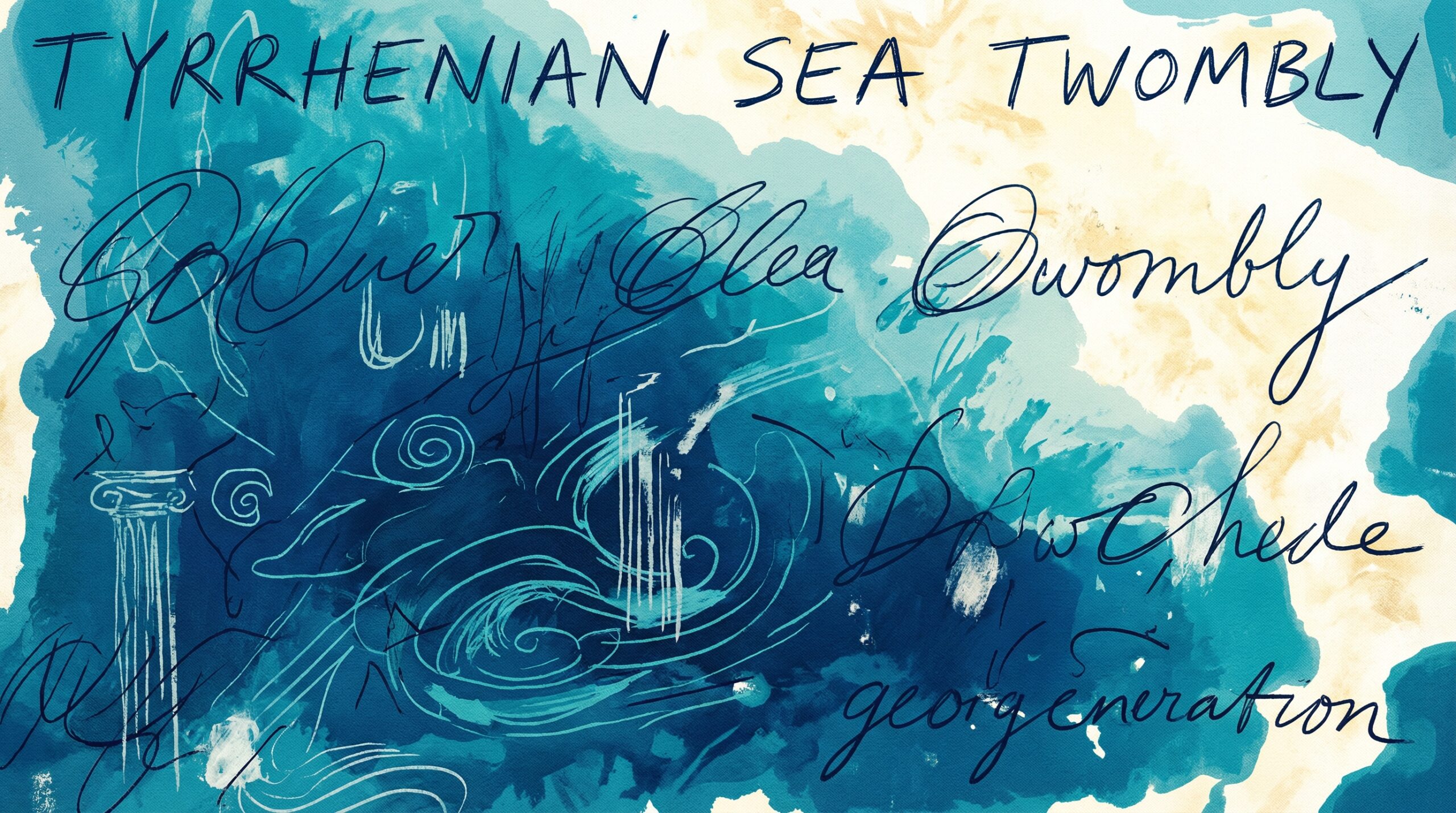
There’s a language spoken in the quiet spaces between words, in the frantic energy of a scribble, in the ghost of a line erased but not forgotten. This is the language of Cy Twombly, an artist who wrote paintings and painted poems. His canvases are not silent objects on a wall; they are battlefields of myth, love letters to antiquity, and diary entries scrawled against the backdrop of history. To understand his work is to understand the places that breathed life into it. It’s a journey that doesn’t just cross oceans but travels through time, from the storied landscapes of the American South to the ancient, sun-drenched heart of the Mediterranean. This isn’t just about seeing where an artist lived; it’s about walking through the very sources of his inspiration, feeling the same sun on your skin, and seeing how the texture of a place can become the texture of a masterpiece. We’ll trace his path from the quiet, historical soil of Virginia, through the revolutionary fervor of the New York art scene, to the eternal, layered city of Rome, and finally to the mythological coastal light of Gaeta. It’s a pilgrimage for the soul that seeks art not just in a gallery, but in the world itself.
This artistic pilgrimage echoes the way one might trace the spiritual landscapes of Caspar David Friedrich, seeking the sublime in the very terrain that shaped a master’s vision.
The Virginian Prelude: Lexington and the Seeds of Classicism
A Southern Gothic Childhood
Every narrative has an origin, a starting point that casts a hue over everything that follows. For Cy Twombly, that place was Lexington, Virginia. Situated in the magnificent Shenandoah Valley and embraced by the ancient Blue Ridge Mountains, Lexington is a town rich with the weight of American history. It is not a neutral backdrop; it is a place alive with deep memory, Southern tradition, and a certain genteel quietness that can feel both comforting and constraining. This was the world that shaped Edwin Parker “Cy” Twombly, Jr. Walking through Lexington today, one can sense the echoes of that past. The very air seems heavy with history. The historic brick buildings of the downtown area, the grand Greek Revival structures of Washington and Lee University, and the dignified presence of the Virginia Military Institute—all speak to a culture fixated on lineage, legacy, and the sweeping narratives of history. This setting, infused with a mix of romanticism and tragedy, unquestionably sowed the seeds for Twombly’s lifelong fascination with the past. It’s easy to imagine a young, perceptive boy absorbing these stories, feeling the presence of ghosts in the meticulously kept lawns and columned porches. The American South has a way of clutching its history tightly, and that sense of a past that never truly fades became a central theme in Twombly’s art, transformed from American history into the grand myths of the classical world.
Visiting Lexington is to enter a different rhythm. The pace of life is slower, more intentional. The mountains encircling the valley create a feeling of enclosure, a world unto itself. This blend of natural beauty and historical significance offers the first key to understanding Twombly. His later works, known for their vast, open spaces, might seem far removed from here, yet his preoccupation with myth, heroes, and the scrawled traces of time beginning is rooted in this small Southern town. The very act of writing, of leaving a mark, was already present in the historical plaques and monuments scattered throughout the landscape. He was born into a world where the past was visibly inscribed everywhere, and he spent his life discovering new ways to inscribe it himself.
First Forays into Art
Twombly’s formal artistic training began far from the avant-garde circles he would later embrace. He took private painting lessons as a child and later attended the School of the Museum of Fine Arts in Boston. Yet it was his studies at Washington and Lee University, right in his hometown, that cemented the intellectual foundation of his art. Immersed in a classical curriculum, he absorbed the stories, poetry, and philosophy of the ancient world. This was not the raw, emotional, purely abstract realm of his New York contemporaries; it was a world of structure, literature, Ovid, and Catullus. This academic grounding provided a rich source of material that he would draw upon throughout his career. While Abstract Expressionists in New York looked inward for a primal, personal gesture, Twombly was already looking outward and backward to the accumulated knowledge and stories of Western civilization.
This early engagement with classical education set him apart and gave him a distinctive vocabulary. When he made frantic, abstract marks on canvas, they often carried the narrative energy of mythological battles or the tender sorrow of ancient poetry. He wasn’t simply creating lines; he was transcribing history. This intellectual base is essential. It explains why his work, which can seem chaotic at first glance, is deeply rooted in literature and history. He learned the rules of classical composition and storytelling in Lexington before breaking, rewriting, and reinventing them in his own unique, calligraphic style.
Visiting Lexington Today
For visitors seeking to connect with Twombly’s roots, Lexington offers a calm, reflective experience. The nearest major airport is in Roanoke, about an hour’s drive away, and the journey through the rolling hills of the Shenandoah Valley is part of the experience. The best way to explore Lexington is on foot. Wander the historic Washington and Lee University campus, with its iconic Colonnade and the peaceful Lee Chapel. The scale is intimate, the atmosphere scholarly and quiet. Stroll down Main Street, browse antique shops, and absorb the town’s profound sense of place. To experience the natural world that surrounded him, drive along the Blue Ridge Parkway, especially in autumn when the foliage bursts into color. The invitation here is not to seek out a specific house or plaque, but to soak in the atmosphere. Find a quiet bench on the university grounds, watch the afternoon light filtering through ancient trees, and imagine a young artist dreaming of worlds far beyond these mountains, yet forever inscribed by their history and grandeur. This is where the epic began.
The Crucible of Abstraction: Black Mountain College and New York
Among the Avant-Garde at Black Mountain
If Lexington represented the traditional foundation, Black Mountain College embodied a radical explosion. Nestled in the mountains of North Carolina, this experimental institution was a legendary hub of mid-century American avant-garde thinking. For a brief yet brilliant moment, it stood as the center of the creative universe—a place where the boundaries between disciplines such as painting, poetry, music, and dance melted into a single, vibrant artistic pursuit. When Twombly arrived in 1951, following the recommendation of the artist Robert Motherwell, he was immersed in an environment of pure, unrestricted artistic freedom. This was the complete opposite of his classical training. Here, the aim was not to master the past but to invent the future.
At Black Mountain, he studied under giants like Franz Kline and Robert Motherwell, and more importantly, worked alongside contemporaries destined to reshape American art, most notably Robert Rauschenberg. The atmosphere was electric, collaborative, and intensely demanding. It was here that Twombly’s distinctive style began to take shape. Inspired by the raw, gestural energy of Abstract Expressionism, he started to shed the more figurative aspects of his early work. He experimented with mark-making and the intuitive, subconscious gesture. He famously worked in the dark, attempting to unlearn the habits of his trained hand to access a more primal, direct form of expression. The spirit of Black Mountain was one of fearless experimentation, and it gave Twombly the freedom he needed to break away and discover his own voice—a voice that was part drawing, part writing, and entirely unique.
The New York Minute
After his transformative experience at Black Mountain, Twombly plunged into the heart of the art world: New York City in the early 1950s. The city was alive with the energy of the Abstract Expressionist movement. Artists like Jackson Pollock, Willem de Kooning, and Franz Kline were the new giants, and their large-scale, powerful paintings dominated the scene. Twombly shared a studio with Robert Rauschenberg on Fulton Street, and for a while, he was part of this world. He absorbed its energy, scale, and ambition. The influence of New York’s grit and chaos is evident in the nervous, energetic lines of his work from this period. The city’s relentless pace, towering buildings, and endless layers of human activity provided a new kind of wall for him to write on—a modern counterpart to the ancient walls he would later seek in Europe.
Yet, Twombly never quite fit comfortably within the New York school. His work was always more lyrical, intimate, and literary than that of his peers. While many Abstract Expressionist painters engaged in a heroic, existential struggle on the canvas, Twombly’s gestures felt more like whispers, notations, or fragments of a forgotten language. There was a delicacy and intellectual curiosity in his art that set him apart. The macho bravado and hard-drinking social scene of the Cedar Tavern were not his natural environment. New York was a crucial catalyst—a place that sharpened his ambition and placed him in dialogue with the most important art of his time—but it was not his spiritual home. His heart was already being drawn across the Atlantic toward an older world.
Echoes of the Avant-Garde Today
Although the original Black Mountain College campus is no longer operational, its spirit endures at the Black Mountain College Museum + Arts Center in downtown Asheville, North Carolina. For anyone following Twombly’s journey, this is an essential destination. The museum offers a profound immersion into the college’s history and the constellation of brilliant minds who passed through it. It frames Twombly not as an isolated genius, but as part of a revolutionary community that reshaped American culture. In New York, the pilgrimage is less about a specific location and more about an era. A visit to the Museum of Modern Art (MoMA) or the Whitney Museum of American Art is indispensable. Standing before a towering Pollock or a Kline, you can sense the artistic currents through which Twombly was navigating. You witness the conversation he took part in and, more importantly, how he chose to diverge from it, expressing himself in a quieter, more poetic syntax.
An American in Rome: The Eternal City as Muse
Finding a New Language in an Ancient Land
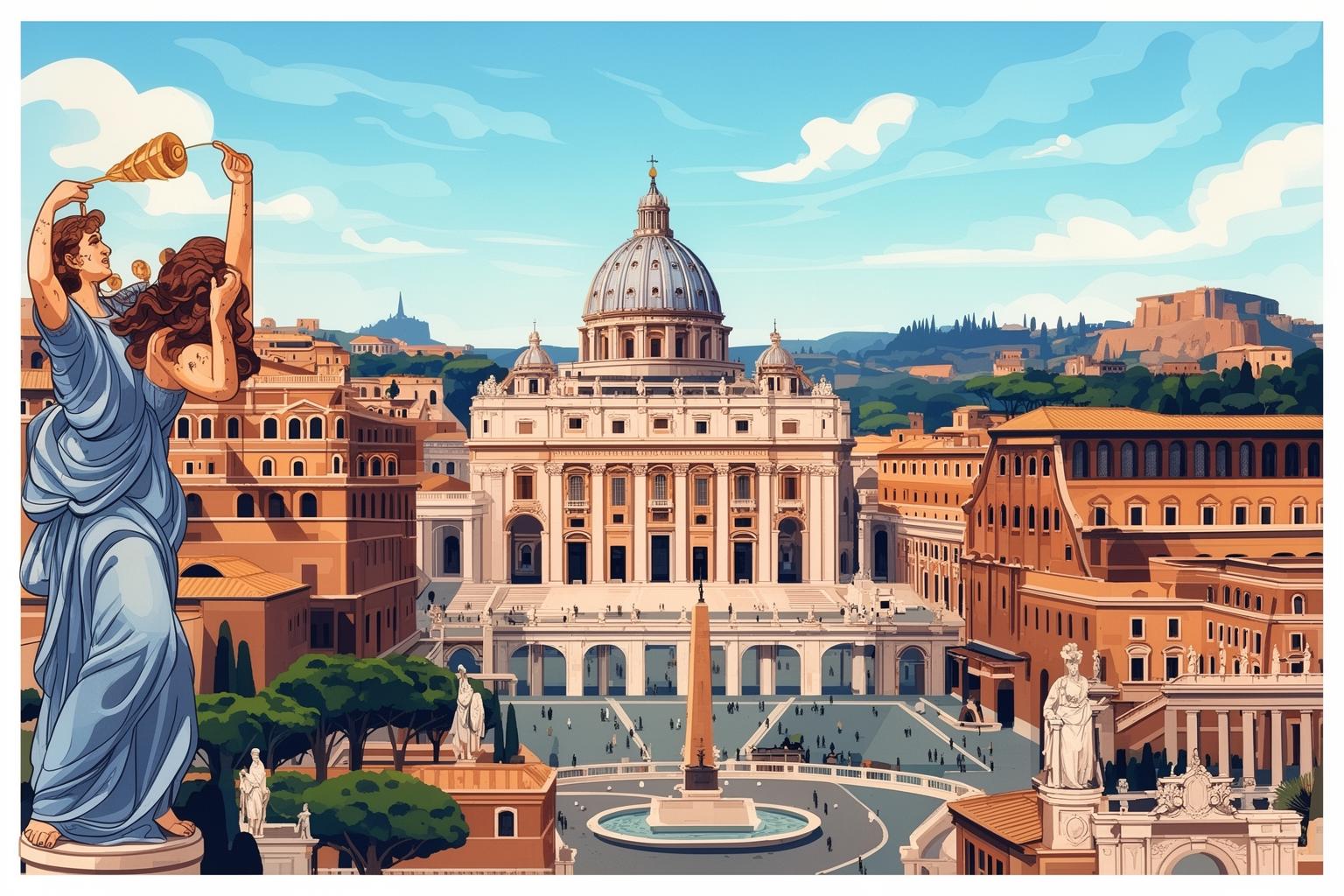
In 1957, Cy Twombly made the pivotal decision that would shape the rest of his life and career: he left America and settled in Rome. This was no casual visit; it was a profound relocation of his very essence. For an artist so deeply connected to history, Rome was more than just a city; it was the foundational code of Western culture. From the moment he arrived, everything shifted. The cool, grey light of New York was replaced by the warm, golden glow of the Mediterranean. The vertical lines of skyscrapers gave way to the horizontal spread of ancient ruins. The relentless forward push of America was replaced by a city where millennia of history coexisted in a chaotic, beautiful, living tapestry.
This sensory and historical immersion became the ultimate catalyst for Twombly. He found his true inspiration woven into the fabric of Rome itself. He would wander the city for hours, absorbing every detail. He was mesmerized by the ancient walls, the sun-baked plaster layered with centuries of graffiti, political slogans, and lovers’ initials. These surfaces were living canvases, bearing the marks and traces of human life. He saw a direct connection between the “sgraffiti” on Roman walls and the gestural marks in his own paintings. His iconic style—the scrawls, drips, erasures, and frantically scribbled names of gods and poets—was born on these streets. He was no longer simply an abstract painter; he had become a historical poet, using paint to evoke the sensation of time itself. Works from this period, such as “Olympia” and “The Age of Alexander,” are infused with the city’s atmosphere, blending the grandeur of classical history with the raw, immediate energy of marks made in the present moment.
Walking in Twombly’s Footsteps through Rome
To experience Twombly’s Rome is to learn to see the city as he did: as a palimpsest, a surface written on, erased, and written on again. The perfect pilgrimage begins in the neighborhood surrounding Via di Monserrato, where he kept a studio—an area of quiet, ivy-covered streets near Campo de’ Fiori. From there, one should roam aimlessly with open eyes. Walk to the Roman Forum and Palatine Hill. Don’t just observe the grand monuments; notice the details. Feel the texture of 2,000-year-old bricks, the fragments of Latin inscriptions, the way weeds push through cracks in marble. This is the visual language Twombly absorbed and transformed. Visit the Pantheon, stand beneath its oculus, and sense the immense weight and flawless engineering of antiquity. The feeling of being humbled by history was something Twombly continually channeled.
Beyond the major landmarks, the spirit of his work emerges in quiet corners. Find a hidden piazza, sit at a café, and watch the world drift by. Notice the play of light on an ochre wall, the layers of faded paint and crumbling plaster. This is the Rome that soaked into his bones and onto his canvases. It is a city that rewards slow, attentive observation. You are seeking poetry in decay, beauty in imperfection, the human imprint left on ancient stone. This is how you walk with Twombly’s spirit through the Eternal City.
A Practical Guide to Twombly’s Rome
Visiting Rome can be overwhelming. To best capture the city’s artistic soul, plan your trip during the shoulder seasons—spring (April-May) or autumn (September-October). The weather is pleasant, the light enchanting, and the crowds more manageable. Comfortable shoes are essential; Rome is a city made for walking. While the major ancient sites are must-sees, be sure to lose yourself in the labyrinthine streets of Trastevere or the Jewish Ghetto. A helpful tip for first-time visitors is to start early. Arriving at the Forum or Colosseum right at opening gives you a few precious moments of quiet reflection before the tour groups arrive. This way, you can experience these powerful places with a sense of personal discovery, much as an artist would.
The Tyrrhenian Solitude: Gaeta, the Sea, and Myth
A Fortress by the Sea
Although Rome served as Twombly’s intellectual and social center, it was the coastal town of Gaeta where he discovered his sanctuary. Perched on a promontory halfway between Rome and Naples, Gaeta boasts a rugged, dramatic beauty. Its medieval old town clings to the hillside, protected by a formidable Aragonese castle overlooking the brilliant turquoise expanse of the Tyrrhenian Sea. It was in a 15th-century villa with views of the water that Twombly spent his summers and, eventually, most of his later years. This transition from Rome’s dense, historical layers to the vast, open horizon of the sea marked a significant shift in his work.
Gaeta offered a different source of inspiration. Whereas Rome was rooted in history, Gaeta was immersed in myth. The sea before him was that of Odysseus and Aeneas—an arena of epic journeys and legendary battles. The blinding Mediterranean light, the rhythmic crashing of waves, and the cycle of the seasons—all these elemental forces infused his art with a new scale and emotional intensity. His canvases grew larger, his colors more vivid, and his gestures more expansive. The tight, nervous energy of his earlier style gave way to a grand, operatic lyricism. Gaeta became his refuge, a place where he could engage directly with timeless themes of nature, mythology, and the vast, poetic emptiness of sea and sky.
The Grand Narratives: From Lepanto to The Four Seasons
Some of Twombly’s most monumental and celebrated works were created in his Gaeta studio. The large, light-filled space enabled him to work on a truly epic scale. Here, he painted the twelve-part “Lepanto” series, a powerful, explosive portrayal of the 16th-century naval battle. Viewing these canvases—with their riot of colors, abstract ships, and drips of red paint resembling blood in the water—you can almost feel the sea spray and hear the clash of history just outside his window. The past was not merely an abstract idea; it was a living force intertwined with the very landscape.
It was also in Gaeta that he produced his two great cycles titled “The Four Seasons.” These paintings offer a profound meditation on time, life, death, and renewal. Each series captures the essence of a season, not through literal depiction but through pure emotion conveyed by color and gesture. The explosive joy of spring, the lush abundance of summer, the melancholy decay of autumn, and the stark finality of winter are all expressed with raw, visceral power. These works are deeply connected to the natural world Twombly observed daily from his villa—the blooming flowers, the changing hues of the sea, the sensations of sun and wind. They represent the masterpieces of a mature artist who transcended history to engage with even greater forces of nature itself.
Experiencing the Spirit of Gaeta
Gaeta is less frequented than Rome, which adds to its charm. The easiest way to reach it is by taking a train from Rome to the nearby town of Formia, followed by a short bus or taxi ride. The town is divided between the modern residential area and the captivating medieval old town, Gaeta Vecchia. This is where your time should be spent. Wander the narrow, winding streets, climb the steps to the Tempio di San Francesco for a breathtaking panoramic view of the gulf, and stroll along the lungomare, the seaside promenade. The aim is not to find Twombly’s private house but to experience the elements that influenced his late work. Find a spot on the rocks, gaze out at the sea, and watch the changing light. Feel the vastness of the water and the sky. Gaeta invites quiet reflection; it encourages you to slow down, observe, and sense the deep, mythic pulse beneath the surface of the modern world— the very pulse that fueled the final, radiant decades of Cy Twombly’s art.
The Final Canvas: Houston and the Legacy
A Purpose-Built Sanctuary: The Cy Twombly Gallery
For the final stop on this pilgrimage, we return to America—not to Twombly’s birthplace, but to the city where his legacy is revered: Houston, Texas. The Cy Twombly Gallery, part of the extraordinary Menil Collection, is more than a museum; it is a custom-built temple devoted to his art. The building itself, an elegant, light-filled pavilion designed by the acclaimed architect Renzo Piano, was developed in close collaboration with Twombly. This is a vital detail. The artist played a direct role in shaping the environment where his work would be experienced—a rare privilege that reflects the profound respect the Menil founders, Dominique and John de Menil, held for his vision.
The gallery’s most striking feature is its innovative roof design, composed of louvers and skylights that filter the intense Texas sun, bathing the galleries in soft, diffuse, and ever-changing natural light. Twombly recognized that light was integral to his work—from the hazy light of Virginia to the golden glow of Rome and the brilliant shine of Gaeta. Here, in Houston, light becomes the final, silent collaborator. The building stands as a quiet, contemplative space, a serene backdrop that allows the paintings to command undivided attention. It serves as the ultimate destination for anyone seeking to grasp the full scope and power of his life’s work.
A Journey Through the Works
Strolling through the Cy Twombly Gallery is a deeply moving experience. The rooms are arranged mostly in chronological order, enabling you to follow his artistic evolution from his early 1950s experiments to the grand, conclusive statements of his later years. You witness the transition from his gritty, grey-and-white New York paintings to the vibrant color and classical references of his Roman period. You can stand before the vast “blackboard” paintings, adorned with looping, calligraphic lines, and sense the rhythmic, meditative energy behind their creation. The gallery holds some of his most significant works, including the profoundly moving “Untitled (Say Goodbye, Catullus, to the Shores of Asia Minor),” a piece embodying his lifelong dialogue with poetry, loss, and time’s passage. Surrounded by these monumental canvases—in a space perfectly attuned to their scale and sensibility—the experience is immersive. The gallery’s silence lets the paintings speak, and their language is powerful, emotional, and unforgettable. It feels less like visiting a museum and more like entering the artist’s mind.
Planning Your Houston Pilgrimage
The Menil Collection campus is situated in a charming residential neighborhood in Houston. A major benefit for visitors is that admission to both the Cy Twombly Gallery and the main Menil Collection building is always free, creating a wonderfully accessible and relaxed atmosphere. Plan to devote at least half a day to the experience. After immersing yourself in Twombly’s world, explore the main collection, which offers a stunning and eclectic range of art from antiquity to the present day. Just a brief walk away is the Rothko Chapel, another 20th-century art icon that provides a distinct but equally powerful contemplative space. This trio of sites—the Twombly Gallery, the Menil, and the Rothko Chapel—makes Houston a world-class destination for art enthusiasts. The ideal times to visit are spring and fall, when the weather is mild and the surrounding green spaces offer a perfect place to sit and reflect on the incredible art you have experienced.
A Journey’s End
Following Cy Twombly’s path is a journey as much intellectual and emotional as it is geographical. It reveals how the quiet history of Virginia’s soil could blossom into the epic myths of ancient Rome, how the energy of a crashing wave off Gaeta’s coast could be transformed into a painted stroke, and how a lifetime of marks and memories could find rest in the perfect light of a Texas gallery. His work reminds us that the past is never truly gone; it is a living, breathing presence we can touch and feel. By visiting these places, we do more than trace an artist’s biography—we learn to see the world as he did: a vast, beautiful, chaotic canvas, inviting us to leave our own mark.