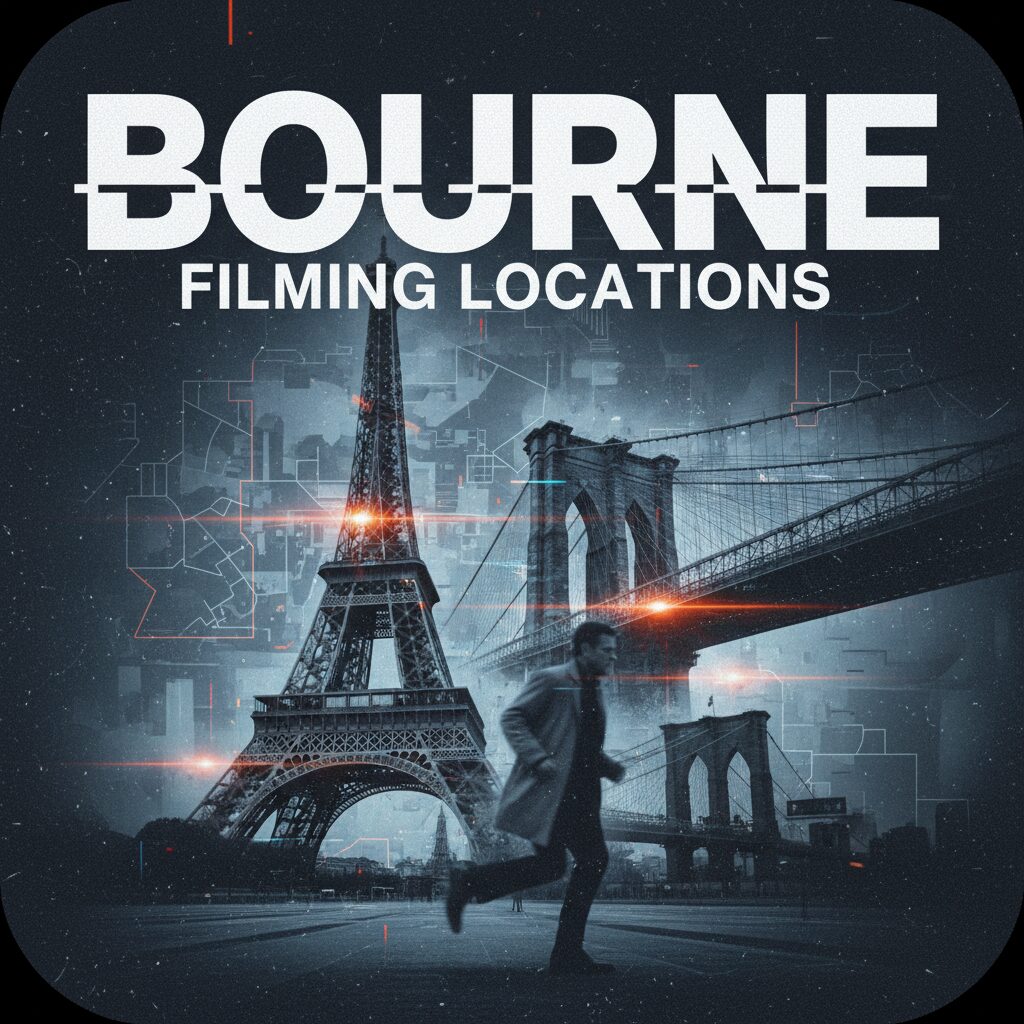
There are films that fade with the closing credits, and then there are films that get under your skin. They leave a residue, a phantom feeling of adrenaline and a whisper of a question. The Bourne Identity is one of those films. It didn’t just reboot the spy genre; it grounded it in a gritty, palpable reality. The secret to its enduring power wasn’t just Matt Damon’s tense, kinetic performance as the amnesiac assassin. It was the world he moved through. A world that felt utterly real, because, for the most part, it was. From the cold waters of the Mediterranean to the sun-bleached shores of the Aegean, Jason Bourne’s frantic search for himself was a dizzying, breathtaking tour of Europe. This isn’t a journey you just watch; it’s one you can walk. The streets are real, the train stations are still bustling, and the apartments still hold secrets behind their windows. This is your guide to stepping out of the audience and into the frame, a pilgrim’s map to the tangible, thrilling world of Jason Bourne. We’ll trace his steps, feel the chill of the cities that served as his hunting grounds, and find the warmth in the place he finally found peace. The chase is on.
For a deeper dive into the cinematic world of Jason Bourne, you can also explore the filming locations from The Bourne Supremacy.
The Awakening: The Italian Coast and a Fisherman’s Mercy
The story begins not with a bang, but with the gentle lapping of waves. A body, riddled with bullets and barely clinging to life, floats in the dark expanse of the Mediterranean Sea. The film situates us off the coast of Marseille, France, but the cinematic fates had other intentions. The actual waters that gave Jason Bourne a second chance are those of the Ligurian Sea, off the coast of Imperia, Italy. This stretch of the Italian Riviera is a world apart from the high-stakes espionage about to unfold. It is a place of rugged beauty, where mountains slope down to meet a brilliant blue sea.
Visiting Imperia, you instantly sense the authenticity director Doug Liman sought. This isn’t a polished tourist spot; it’s a working city with a heartbeat centered on its harbor. The fishing trawler, the Aventura, that pulls Bourne from the water fits perfectly here. You can almost smell the salt and diesel in the air, hear the cries of gulls, and see the weathered faces of fishermen who have spent their lives on these waters. Standing at the port of Oneglia, one of Imperia’s two historic centers, you can watch the boats come and go, imagining the grizzled captain discovering this mysterious man in his nets. The atmosphere is one of timeless, stoic labor—a stark and powerful contrast to the high-tech, clandestine world Bourne has just escaped.
To fully appreciate the setting, you must explore Imperia itself. The city is a fascinating union of two rival towns: Porto Maurizio, a maze of ancient, narrow alleys perched on a seaside promontory, and Oneglia, a busier, more modern hub focused around its port and food production. This region is the heart of Italy’s olive oil country, especially famed for the delicate Taggiasca olive. A walk through the old city of Porto Maurizio feels like stepping back centuries. The cobblestone lanes, called caruggi, are too narrow for cars, compelling you to slow down and absorb the history that seems to seep from the very stones. From the heights of the Parasio, the old town’s summit, the view of the sea is vast and humbling. It’s the very same sea that carried Bourne, a vast, indifferent expanse that held his past and nearly became his grave.
For a first-time visitor, arriving in Imperia is best done by train, which hugs the spectacular coastline, offering tantalizing glimpses of the sea. The best time to visit is spring or fall, when the Mediterranean sun is mild and summer crowds have thinned. A perfect day here isn’t about ticking off sights but about immersion. Start with a cappuccino in a piazza in Oneglia, wander through the morning market, then head to Porto Maurizio to lose yourself in its medieval maze. For lunch, find a small trattoria and sample the local specialty, trenette al pesto, a celebration of the simple, powerful flavors of the Ligurian coast. It’s a peaceful pilgrimage, a moment of calm before we follow Bourne into the cold, tense heart of Europe.
The Bank of Zurich: A Prague Disguise
With the chip from his hip leading him to a Swiss bank, Bourne’s journey genuinely begins. The film takes us to Zurich, a city known for discreet finance, wealth, and order. We see trams gliding through immaculate streets and imposing, solid bank buildings. Yet, one of the film’s greatest cinematic deceptions lies here: the city we see representing Zurich is almost entirely Prague, the capital of the Czech Republic. Prague’s unique blend of well-preserved architecture and its reputation as an affordable filming location made it the ideal stand-in, lending a distinct old-world gravitas and shadowy history to Bourne’s first steps back into his past.
The Gemeinschaft Bank
Bourne’s entrance into the Gemeinschaft Bank is electrifying. He is a ghost, a nameless man stepping into the heart of his own mystery. The setting for this crucial scene is the former Hypobanka building, now a UniCredit Bank branch, situated on Republic Square (Náměstí Republiky) near Prague’s Powder Tower. From the outside, the structure is majestically grand, an early 20th-century architectural gem that radiates wealth and stability. Standing across the street invokes the same sense of intimidation Bourne must have experienced. It’s a fortress of secrets.
Inside, the high ceilings and cold marble floors create an atmosphere of sterile, almost sacred silence. It’s a cathedral of money, with the safe deposit box as its holy relic. Within lies the first explosion of his past: passports, stacks of cash, a gun, and the initial clue—a Parisian address. The scene is a masterclass in tension, with the location acting as its silent accomplice. Although you can’t enter the vault, the bank’s main hall is accessible during business hours. The feeling is uncanny. The air is still, the transactions quiet, and it’s easy to imagine a nervous, desperate man trying to blend in, his heart pounding as he unlocks a life he no longer recalls.
The Consulate Escape
Following the bank’s chaos, Bourne searches for answers at the US Consulate, triggering a lockdown and one of modern cinema’s most memorable escape sequences. Yet again, we are not in Zurich. The intimidating exterior of the consulate is actually Prague’s Petschek Palace, now home to part of the Czech Ministry of Industry and Trade. This building carries a significantly darker history than anything in Bourne’s fictional file. During World War II, Petschek Palace was the Gestapo headquarters, the Nazi secret police’s base, a site of interrogation, torture, and immense suffering for the Czech resistance.
Understanding this history changes one’s visit. Standing outside its imposing neoclassical façade on the corner of Politických vězňů street, an unavoidable chill sets in. The building’s real past as a place of confinement and brutal questioning adds a haunting subtext to Bourne’s desperate escape. He is a man trapped, hunted by an unknown organization, fleeing a building that once imprisoned so many in reality. Whether intentional or not, the film’s location choice is eerily fitting. You cannot tour inside, but a small plaque on the wall honors the Gestapo’s victims, serving as a sobering reminder that the film’s tension and fear echo genuine historical trauma. Bourne’s daring climb down the building’s side is thrilling action, but also a symbolic flight from real-life darkness.
Exploring Prague’s New Town (Nové Město) reveals a city of contrasts. Just a short walk away lies bustling Wenceslas Square, a commercial hub and site of major Czech historical events—from the Prague Spring to the Velvet Revolution. It stands as a place of protest and freedom, starkly opposing the oppressive history embodied by Petschek Palace. For any visitor, the experience is profound—you walk through the pages of both cinematic and world history, feeling the heartbeat of a city that has served as a backdrop for both fictional spies and real-life heroes.
The Parisian Hunt: Heart of the Action
Paris is where The Bourne Identity finds its frantic, exhilarating rhythm. If Prague represents the city of secrets, Paris embodies the city of the chase. It’s not the romantic, postcard version of Paris filled with sweeping cinematic shots and sparkling lights. Bourne’s Paris is a labyrinth—a city of narrow streets, anonymous arrondissements, bustling train stations, and rain-slicked bridges. The city becomes a character itself: complex, beautiful, and a dangerous adversary. Following Bourne through Paris means seeing the city through a different lens, uncovering its hidden arteries, and feeling its relentless energy.
The Belleville Apartment and a Fragile Alliance
After Bourne recruits the hesitant Marie Kreutz, they need a place to hide. His search leads them to his own apartment, the scene of the film’s first brutal, close-quarters fight. The exterior for this hideout is not in a glamorous central district but nestled in the gritty, authentic neighborhood of Belleville. Specifically, the memorable staircase Marie climbs to reach the street above is the Passage Plantin, just off Rue du Transvaal in the 20th arrondissement.
Finding this staircase is a pilgrimage for fans. Belleville is a world apart from the Louvre or Champs-Élysées—a vibrant, multicultural neighborhood with a revolutionary spirit, historically home to working-class Parisians and successive waves of immigrants. It’s a place of street art, busy markets, and incredible panoramic views of the city from Parc de Belleville. The atmosphere is raw and authentic. It feels like the kind of place a man living off the grid, like Jason Bourne, would choose. Climbing the Passage Plantin, you experience a sense of discovery. The iron railing feels cool, the worn steps bear history, and when you reach the top and look back, you can vividly picture Marie’s green jacket as she hurries up, and Bourne watching from the window. This is more than a location; it’s a preserved moment from the film, a tangible piece of the story you can step into. Take some time to wander Belleville’s streets, savor a mint tea in a North African café, explore the street art on Rue Dénoyez, and immerse yourself in the authentic pulse of a Paris often missed by tourists.
The Gare du Nord Confrontation
Every great spy thriller needs a train station scene, and Bourne’s showdown at Gare du Nord is a masterclass in tension. This is where he starts to flip the script, hunting the hunters. Gare du Nord is one of Europe’s busiest railway stations—a chaotic symphony of echoing announcements, rumbling trains, and a swirling tide of humanity. It’s the perfect urban jungle for a spy to operate in.
Visiting Gare du Nord today means stepping directly into this controlled chaos. Its vast iron-and-glass roof, a marvel of 19th-century engineering, arches over the platforms. The air buzzes with a dozen languages. It’s a place of arrivals and departures, anonymity and urgency. Find a vantage point on the upper balcony, where Bourne watched agents moving below, and simply observe. The station’s architecture—its multiple levels, open sightlines, and endless hiding places—makes it a natural theater for espionage. It’s easy to imagine the tense cat-and-mouse game unfolding amid oblivious travelers. For regular passengers, Gare du Nord is a practical hub linking Paris to London, Brussels, and Amsterdam. But for the Bourne enthusiast, it’s a living set piece. Advice: keep a close watch on your belongings, as the station’s chaos makes it a hotspot for pickpockets, adding a realistic layer of caution to your visit.
The Epic Mini Cooper Chase
Perhaps the film’s most iconic sequence is the legendary car chase through the heart of Paris. It redefined the modern movie car chase, trading flashy explosions for raw, visceral, and inventive driving. Bourne, behind the wheel of Marie’s battered red Mini Cooper, uses the city’s geography as a weapon, plunging down staircases, weaving through oncoming traffic, and leaving chaos in his wake. Tracing this chase route offers a thrilling way to experience the city’s topography.
Quays, Bridges, and Waterways
The chase races along the quays of the River Seine, a high-speed dash against a timeless backdrop. A key location is the Pont Neuf, the oldest standing bridge over the Seine in Paris. There’s a beautiful irony here: a frantic, modern chase playing out on a structure that has stood since the early 1600s. Walking across the Pont Neuf, you can look down at the Quai des Grands Augustins and picture the little red Mini tearing along the riverbank. The bridge offers stunning views of Île de la Cité and the Louvre—places where the deep, layered history of Paris forms the stage for Bourne’s intensely modern conflict.
The Labyrinthine Streets and Impossible Stairs
The chase plunges into the city’s dense network of streets, especially around the 1st and 2nd arrondissements. One of the most breathtaking moments is when the Mini careens down a narrow flight of stairs. While the exact location is a bit of cinematic sleight of hand, blending different places, it captures the essence of Paris’s multi-layered landscape, especially areas like Montmartre. Although you can’t drive down these stairs, you can explore them on foot. Wandering through narrow side streets and discovering hidden stairways gives a strong sense of the city’s labyrinthine nature—the very quality that allows Bourne to outwit his pursuers. It’s a reminder that Paris’s charm lies not only in its grand boulevards but also in its secret passages and tucked-away corners.
The Pont des Arts: A Moment of Respite
The final Paris scene offers a quiet, poignant grace note after the chaos of the chase. Bourne, having dealt with his pursuers, stands on a bridge speaking to Marie on the phone—a silhouette against the water, a man still in the shadows but with a glimmer of hope. This scene takes place on the Pont des Arts, the famous pedestrian bridge connecting the Institut de France and the central square of the Louvre Palace.
Standing on the Pont des Arts is a quintessential Parisian experience. For years, it was known as the “love lock” bridge, where couples attached padlocks to its railings. Although the locks have been removed to protect the bridge’s structure, the romantic and hopeful atmosphere remains. The panoramic view is breathtaking, encompassing Île de la Cité, the greenish Seine waters, and the stately Louvre facade. It’s a place of quiet reflection. In the film, it’s where Bourne gives Marie an instruction—a promise of a future. For visitors, it’s the perfect spot to pause your journey, watch boats glide below, and contemplate the beauty of the city that served as the thrilling, chaotic heart of Bourne’s story. It is the calm after the storm—a moment of profound peace won through fire and speed.
The Final Escape: Mykonos, Greece
After the cold, gray, and rain-soaked tension of northern Europe, the final scene of The Bourne Identity feels like a sunlit release. It bursts with vibrant color, serving as a reward for both the characters and the audience. Bourne, having finally reconstructed enough of his past to envision a future, tracks Marie down to a scooter rental shop on a Greek island. The setting is Mykonos, one of the gems of the Cyclades, whose scenery offers a breathtaking visual and emotional finale to Bourne’s journey.
Finding Freedom in Little Venice
The final scene, where Bourne reunites with Marie, was filmed in Little Venice in Mykonos Town (also called Chora). This charming neighborhood is among the most photographed places in all of Greece. It’s a collection of elegant, historic houses with colorful wooden balconies that seem to hover over the Aegean Sea. The effect is enchanting, especially at sunset, when the whitewashed walls glow golden and the waves gently touch the waterfront cafes and bars just below.
While Marie’s scooter rental shop was a constructed set, the location itself is real. Wandering through Mykonos Town’s narrow, stone-paved alleys, you can discover the exact spot. It’s close to the Sea Satin Market, right by the water, with the island’s famous windmills standing watch on the hill above. The atmosphere is one of blissful escape. The air is warm, scented with salt and blossoming bougainvillea. The dazzling white buildings contrast vividly against the deep blue sky and sea. This isn’t a place for secrets and chases; it’s a place to start fresh. It symbolizes the peace Bourne has struggled so hard to attain. The difference from the starkness of Prague and the tense energy of Paris is total. Mykonos embodies pure freedom.
Experiencing Mykonos Like Bourne
To fully complete the Bourne pilgrimage, you must embrace the Mykonos way of life. The first step, naturally, is to rent a scooter. It’s the best way to explore the island and a direct tribute to the film’s final, hopeful image. With the wind in your hair, you can cruise along coastal roads, uncovering hidden coves and famed beaches. Head south to the lively shores of Paradise and Super Paradise, or seek out the quieter, family-friendly sands of Ornos and Platis Gialos.
The ideal time to visit Mykonos is during the shoulder seasons—late spring (May and June) or early autumn (September and October). The weather is lovely, the sea warm enough for swimming, and you’ll avoid the crowds and high prices of July and August. The island is easily reachable by ferry from Athens or by plane, with an airport serving flights from across Europe.
Beyond the beaches and picturesque Chora, Mykonos has other treasures to offer. Take a short boat ride to the nearby island of Delos, a UNESCO World Heritage site and one of Greece’s most important mythological and archaeological locations. According to legend, it is the birthplace of Apollo and Artemis. To walk among its ancient ruins is to step into a deeper layer of history. In the evening, there’s no better experience than securing a table at a taverna in Little Venice, ordering fresh grilled octopus and a glass of crisp white wine, and watching the sun set below the horizon. It’s a moment of perfect tranquility, the ultimate reward after a long, arduous journey.
The Enduring Trace of a Shadow
To follow in the footsteps of Jason Bourne is more than simply visiting a series of filming locations. It means understanding how a place can shape a story, how the raw edge of a real city can infuse a narrative with an authenticity that no soundstage ever could. The creators of The Bourne Identity selected their locations with remarkable care, turning each city into an essential part of the film’s DNA. The oppressive history of Prague deepens Bourne’s feeling of being hunted. The intricate complexity of Paris becomes the ideal stage for his spontaneous, intelligent style of combat. And the brilliant, open beauty of Mykonos offers a final, breathtaking sense of release.
Walking these streets, you sense the echo of the story. You feel the tension standing outside the Petschek Palace, the thrill of imagining a Mini Cooper racing along the Seine, and the profound peace of watching a Greek sunset over the Aegean. The journey shows that these are not mere backdrops; they are living, breathing cities with their own histories, rhythms, and secrets. The film provides us with a new map to explore them, a fresh lens through which to see them. While the chase for Jason Bourne may have ended on screen, for the traveler, for the pilgrim, the journey is only just beginning. Go find your own corner of his world.