There exists a version of Japan that lives not in the neon glow of its sprawling cities but in the quiet shadows of its mountains, along paths worn smooth by the sandals of centuries. This is the Japan of the Nakasendo, the “road through the mountains,” a vital artery of the Edo period that once pulsed with the movement of feudal lords, samurai, merchants, and monks. Stretching from Kyoto to Edo, the shogun’s capital now known as Tokyo, this ancient highway was a testament to human endurance and a lifeline of culture and commerce. While much of the original route has been claimed by modern asphalt, a few precious sections survive, offering a portal into a profoundly different era. The most celebrated of these is the stunningly preserved stretch through the Kiso Valley, a journey from one beautifully restored post town, Magome-juku, to another, Tsumago-juku. To walk this trail is more than a simple hike; it is an act of historical pilgrimage, a conversation with the past where every stone and stream whispers a story. It is a chance to feel the rhythm of old Japan, to breathe the same crisp mountain air as the travelers who came before, and to understand the deep connection between the nation’s people and its dramatic, verdant landscape.
The ancient trail’s immersive atmosphere not only sparks a reverence for history but also mirrors the innovative spirit driving film tourism in contemporary destinations.
The Echoes of Edo: Understanding the Nakasendo’s Legacy
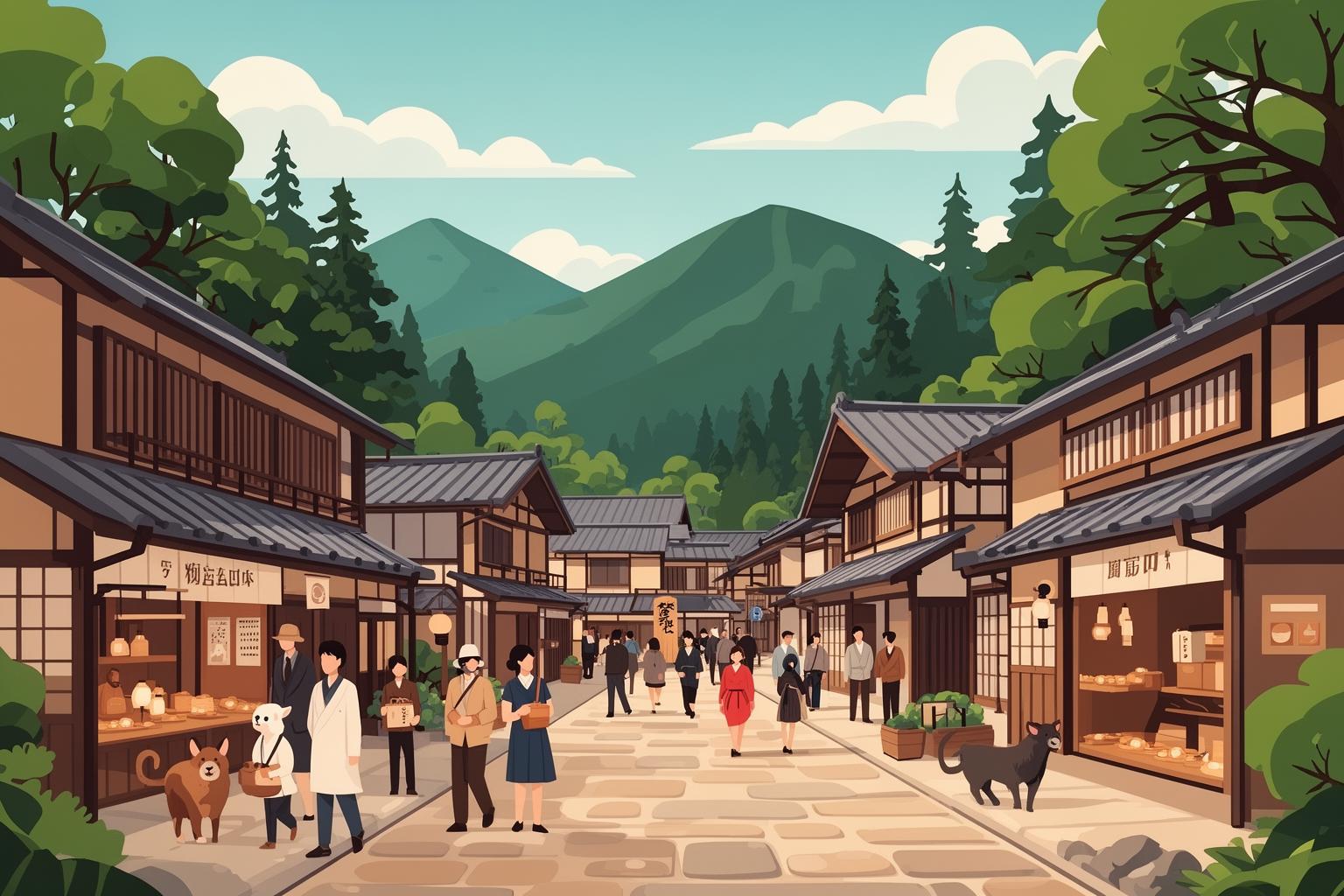
To truly appreciate the moss-covered stones beneath your feet, one must first grasp the world that placed them there. The Nakasendo was one of the five great highways, the Gokaido, established by the Tokugawa shogunate in the early 17th century. These routes served as the circulatory system of a newly unified Japan, designed for control, communication, and commerce. While the coastal Tokaido route was better known and more heavily traveled, the Nakasendo provided a rugged, mountainous alternative. Its inland course meant it was less vulnerable to flooding and the challenges of river crossings, which often required permits or costly ferries. This made it a dependable, if more demanding, choice for many travelers.
A Highway Carved by History
The road’s existence was deeply connected to the sankin-kotai system, a clever policy of political control. This “alternate attendance” system required every feudal lord, or daimyo, to spend every other year in the capital of Edo, while their families stayed there permanently as effective hostages. The biannual processions of these powerful lords, accompanied by their retinues of samurai retainers, were massive undertakings that filled the highways. The Nakasendo witnessed countless such parades, their banners and armor creating a stark contrast to the humble attire of the merchants, pilgrims, and messengers who also traveled the route. Every traveler, regardless of rank, was part of this continuous, flowing array of humanity, each with a destination and a purpose. The road was a microcosm of Edo-period society, a place where different classes and regions of Japan would briefly converge.
The Anatomy of a Post Town (Juku)
Along its 534-kilometer stretch, the Nakasendo was dotted with 69 post towns, known as shukuba-machi or juku. These were more than simple villages; they were highly organized service hubs, strategically positioned to provide rest and replenishment for tired travelers. Their existence was mandated and regulated by the shogunate. The accommodation hierarchy was strict. At the top were the honjin, luxurious inns reserved exclusively for daimyo and the highest-ranking officials. The waki-honjin functioned as overflow lodging for these VIPs or for slightly lesser dignitaries. For common travelers—the merchants, artisans, and wandering monks—there were the simpler hatago, offering a basic meal and a bed for the night. Surrounding these were various essential businesses: teahouses for brief respite, stables for horses, shops selling local crafts, and porters ready to carry heavy loads over the next mountain pass. The towns of Magome and Tsumago remain living examples of this structure, their layouts and architecture directly reflecting their historical roles.
The Journey Begins: Ascending to Magome-juku
Your journey into this historical tapestry likely begins not on horseback, but aboard one of Japan’s impeccably punctual trains. The typical gateway to the Kiso Valley is the city of Nagoya. From there, the JR Chuo Line takes you into the mountains, heading towards Nakatsugawa Station for Magome, or Nagiso Station for Tsumago. The change is unmistakable; the urban sprawl fades into forested hills and lush green valleys. From the station, a short bus ride completes the final stretch, delivering you to the entrance of a world that seems untouched by time. For those planning to hike the trail, an essential modern convenience is the luggage forwarding service available between the towns. For a modest fee, your main bags can be sent ahead, allowing you to walk with just a light daypack, unburdened, much like the messengers of old.
The Sloped Charm of Magome-juku
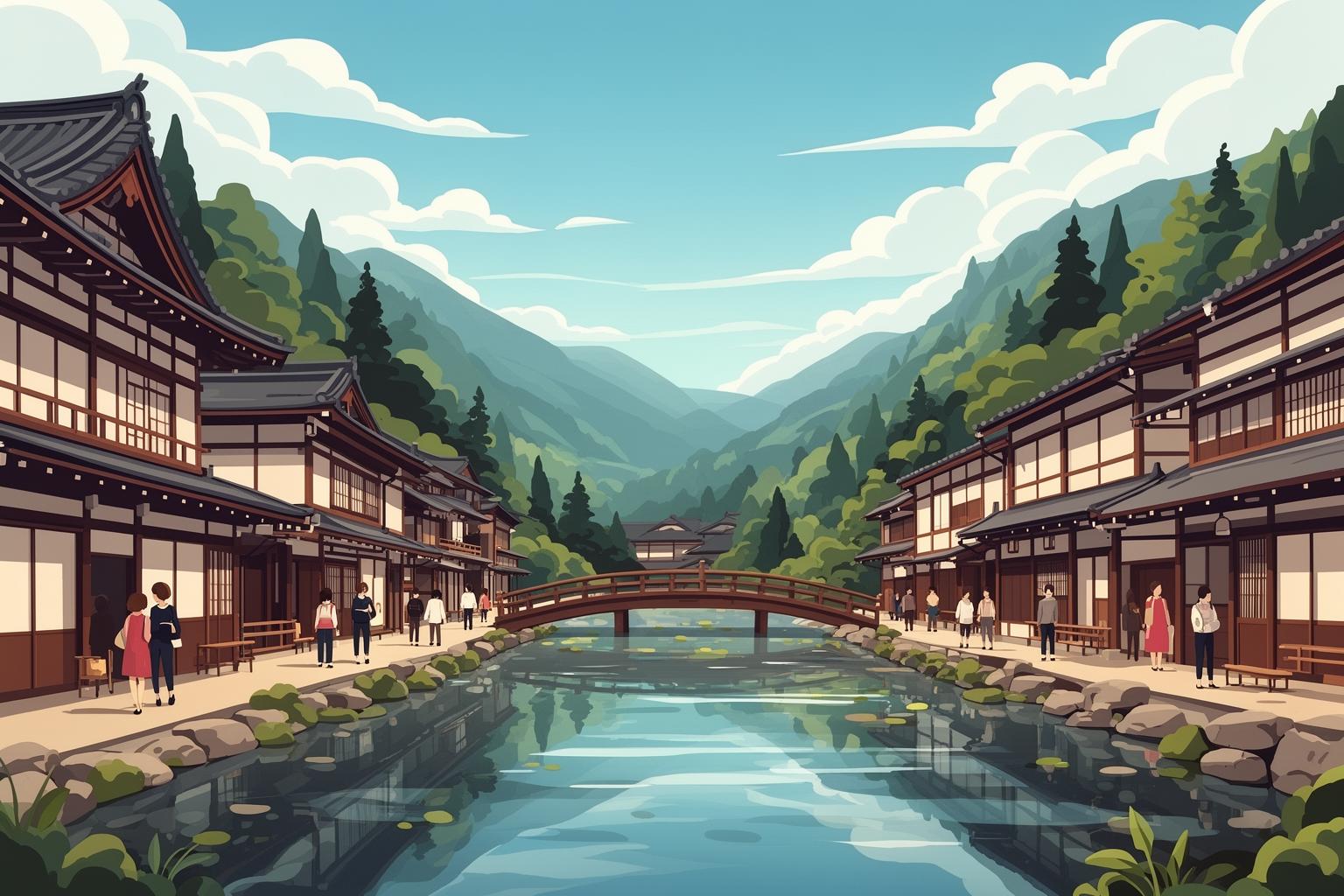
Magome-juku is immediately captivating. Unlike most post towns, which are situated on flat terrain, Magome is built on a steep, winding slope. Its main street is a 600-meter-long stone-paved path that climbs the mountainside, lined on both sides by beautifully restored Edo-period buildings. The dark, oiled wood of the houses, with their intricate lattice windows, contrasts strikingly with the vibrant seasonal flowers spilling from pots and gardens. The sound of water is a constant companion here, flowing through small aqueducts beside the path, turning large wooden waterwheels that once powered mills. The atmosphere exudes meticulously preserved beauty. During the day, the street buzzes with visitors exploring small shops selling local crafts—delicate wooden combs, lacquerware, and indigo-dyed textiles—and savoring local delicacies. The aroma of roasting soy and walnut sauce is unmistakable; it comes from the town’s famous gohei mochi, a flattened rice cake grilled over charcoal and coated with a savory, nutty paste. To fully experience Magome, however, consider staying overnight. As the sun sets and day-trippers depart, a profound tranquility settles in. Lanterns cast a warm, golden glow on the cobblestones, and the town feels less like a tourist spot and more like the authentic, sleeping mountain village it once was.
On the Trail: The Path from Magome to Tsumago
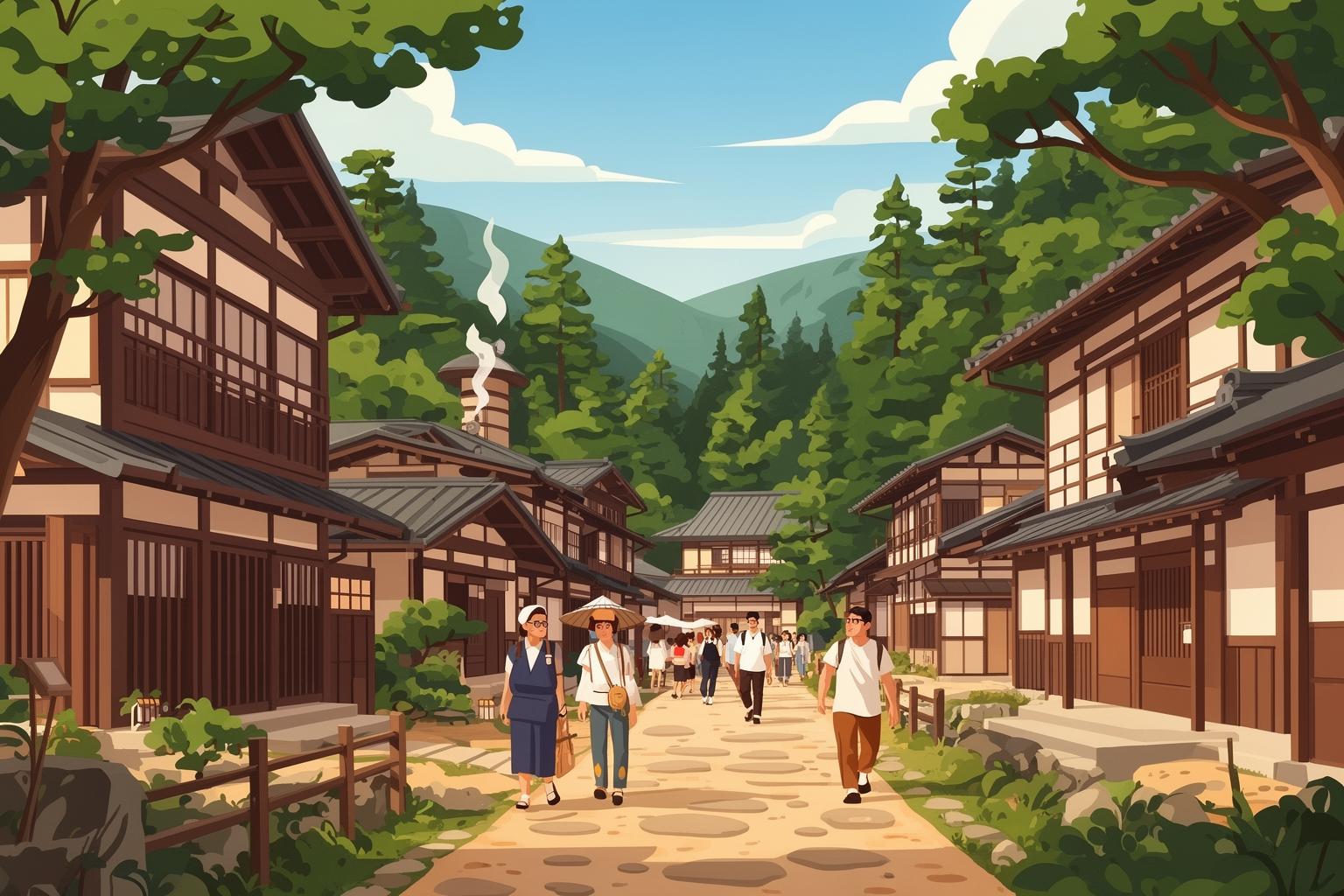
The eight-kilometer hike from Magome to Tsumago forms the core of the Kiso-ji experience. The direction you choose matters; starting from Magome involves a shorter initial climb followed by a longer, gentler descent towards Tsumago, a route preferred by many. The trail begins where the cobblestones of the town end, marked by a large wooden notice board—a replica of the kosatsu where the shogun’s edicts were once publicly displayed. Passing it feels like a true step back into history.
Setting Out from the Cobblestones
The early climb leads you to Magome Pass, the highest point of this section of the trail. The path here blends the original ishidatami—a rugged stone pavement designed to provide grip on steep inclines—with well-maintained dirt trails. The air cools as you ascend, the sounds of the town replaced by the rustling of leaves and distant bird calls. This segment reflects the effort required to build and maintain these mountain roads. You can sense the history in the uneven stones, each carefully placed by hand centuries ago. The entire walk usually takes about two and a half to three hours at a relaxed pace, with plenty of time to pause, take in the scenery, and contemplate the journey.
Whispers of the Forest: Sights and Sounds Along the Way
After crossing the pass, the trail descends into a deep, ancient forest of Japanese cypress (hinoki) and cedar (sugi). These majestic trees, some centuries old, tower above the path, their canopies filtering sunlight into a soft, dappled green. The air is thick with the fresh, resinous scent of cedar and the earthy aroma of damp soil. The silence is deep, broken only by your footsteps and the gentle babbling of streams that intersect the trail. Along the way, you’ll come across the famed Odaki and Medaki falls—the Male and Female waterfalls—cascading gracefully over moss-covered rocks. In these quiet moments, the spirit of the Nakasendo truly emerges. You may also spot small bells hanging along the path. These are yoke-suzu, or bear bells, which hikers are encouraged to ring loudly to alert local wildlife, including Asiatic black bears that inhabit the area. The cheerful, resonant ring of the bells is a charming, distinctly Japanese feature of the trail.
A Welcome Respite: The Tateba-chaya Teahouse
About halfway between the two towns, a clearing in the forest reveals one of the trail’s most cherished landmarks: the Tateba-chaya. This traditional rest house is a simple wooden structure with a thatched roof and an open front. Inside, a volunteer caretaker, often an elder from the local community, tends a crackling fire in the central hearth, the irori. All travelers passing through are invited to come inside, rest their tired legs, and enjoy a free cup of hot tea along with perhaps some pickled vegetables or candy. There is no cost for this hospitality; it is a tradition upheld for generations. Gathered around the warmth of the fire, sharing stories with fellow hikers from around the world and the smiling Japanese host, you experience a profound sense of connection and timeless generosity that transcends language and culture. It is a moment of pure, unadorned humanity—a living echo of the communal spirit that once defined the ancient highway.
Tsumago-juku: A Town Frozen in Time
Emerging from the forest path and arriving in Tsumago-juku feels like stepping onto a carefully crafted film set. Yet, this is no imitation; Tsumago’s authenticity is its most fiercely guarded treasure. In the 1960s, amid Japan’s rapid modernization, Tsumago took a groundbreaking step. The residents established a town charter, pledging to “not sell, not lend, and not destroy” their historic properties, launching one of the nation’s earliest and most successful architectural preservation movements.
A Commitment to Preservation
The results of this dedication are stunning. The town’s main street presents a perfectly preserved vision of the Edo period. The most obvious sign of their efforts is the total absence of modern intrusions: no power lines, no telephone poles, no flashy signs or vending machines. Everything is discreetly hidden behind wooden facades. This steadfast commitment to historical accuracy creates an immersive atmosphere that is truly unmatched. While fascinating to explore during the day, like Magome, Tsumago’s true enchantment is revealed in the tranquil hours of morning and evening. As dusk falls and the paper lanterns hanging from the inn eaves are lit, the street is bathed in a soft, ethereal glow, and you can almost hear the ghostly footsteps of samurai and merchants returning for the night.
Exploring the Living Museum
Tsumago encourages slow exploration. Many of its key historical buildings are open to visitors. The Waki-Honjin Okuya, once an inn for high-status travelers, is a designated Important Cultural Property and now functions as a museum. Its massive cypress timbers, elegant tatami rooms, and beautiful inner garden provide a glimpse into the refined aesthetics of the era. The town’s history museum offers additional insight into the life of the post town and the Kiso Valley. The original honjin, dismantled during the Meiji period, has been meticulously reconstructed using traditional methods and materials, demonstrating the scale on which a daimyo and his retinue would have been accommodated. Walking through these spaces, one can admire the craftsmanship of the past, from polished wooden floors shining in soft light to the intricate joinery holding the massive structures together without a single nail.
Practical Guidance for the Modern Pilgrim
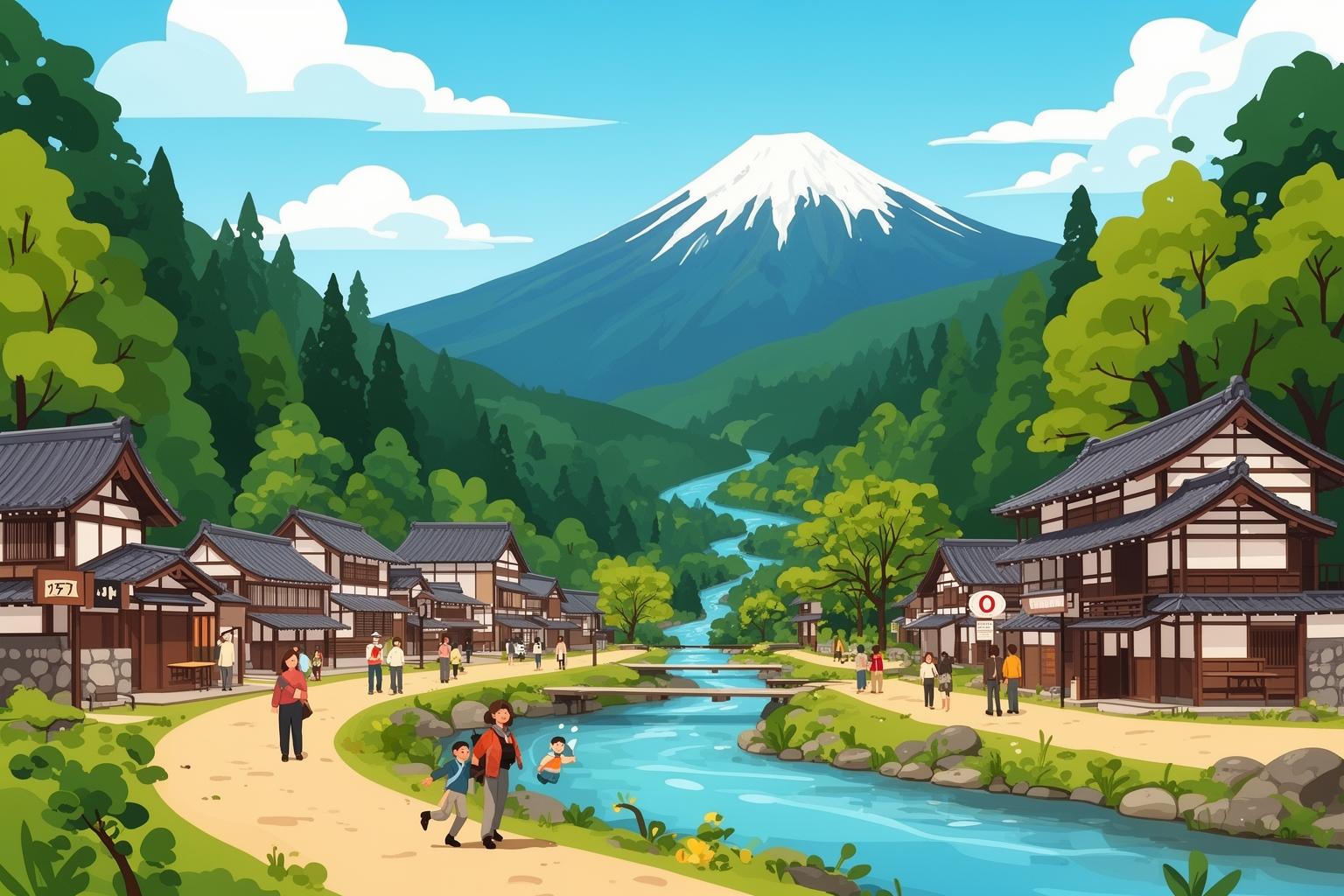
A journey along the Nakasendo is rewarding in every season, each offering a unique atmosphere. Spring heralds renewal, with cherry blossoms and other flowering trees painting the landscape in shades of pink and white. Autumn is arguably the most popular time, as the mountains burst into a spectacular display of red, orange, and gold foliage, providing a breathtaking backdrop to the dark wooden post towns. Summer brings rich, vibrant greens but can be hot and humid, with an increased chance of rain. Winter transforms the valley into a quiet, monochromatic world, with snow covering rooftops and the forest floor, creating a serene, though colder, experience.
What to Wear and Bring
Though the Magome-Tsumago trail isn’t a challenging mountain trek, proper preparation is essential for an enjoyable experience. Sturdy, comfortable walking shoes with good grip are a must, as the stone paths can be slippery, especially when wet. Dressing in layers is advisable, as mountain temperatures can change rapidly. A waterproof jacket is recommended regardless of the weather forecast. Be sure to carry enough water, snacks for energy, and, of course, a camera to capture the stunning scenery. It’s also important to have sufficient Japanese yen in cash. While larger inns and shops may accept credit cards, many smaller teahouses, food stalls, and local craft shops operate on a cash-only basis.
Where to Stay: Embracing Tradition
For a truly immersive experience, an overnight stay in a traditional Japanese inn is highly recommended. Both Magome and Tsumago offer various options, from cozy family-run minshuku to more elaborate ryokan. Staying in one of these accommodations is a cultural experience itself. You’ll sleep on a comfortable futon laid out on a tatami mat floor, bathe in a communal Japanese bath (ofuro), and enjoy a magnificent multi-course dinner known as kaiseki, featuring a beautiful selection of local, seasonal dishes. It’s an opportunity to experience Japanese hospitality, or omotenashi, at its finest and to wake up to the peaceful morning quiet of the town before anyone else stirs.
Beyond the Main Trail: Deepening Your Kiso Valley Experience
While the walk between Magome and Tsumago is the main highlight, the Kiso Valley offers much more for those with additional time. The Nakasendo extends in both directions, and other post towns are definitely worth exploring. Narai-juku, located further north, is another beautifully preserved town, often called “Narai of a Thousand Houses” due to its long, impressive main street. Kiso-Fukushima, a larger and more strategically important checkpoint town, provides a different perspective on the highway’s role. Visiting these other towns can offer a broader understanding of the Nakasendo’s scale and variety.
The Flavors of the Mountains
The cuisine of the Kiso Valley directly reflects its mountainous surroundings. The clear, cold streams are home to river fish such as ayu (sweetfish) and iwana (char), frequently grilled simply with salt to enhance their delicate flavor. The forests yield an abundance of sansai, or wild mountain vegetables, which feature in soups, pickles, and side dishes. Being part of Nagano Prefecture, famed for its buckwheat, enjoying a plate of handmade Shinshu soba noodles is essential. And naturally, no meal is complete without savoring the savory gohei mochi, a modest yet deeply satisfying local specialty. The pure mountain water also helps produce excellent local sake, and visiting a small brewery offers a wonderful opportunity to connect with another of the region’s ancient crafts.
A Final Reflection on the Path
Walking the Nakasendo today is like stepping into a form of time travel. It means deliberately slowing your pace to align with a rhythm shaped by nature and history. The journey from Magome to Tsumago offers more than just a series of stunning views; it provides a complete sensory experience. It’s the sensation of cool, smooth stone beneath your hiking boots, the scent of cedar carried on the breeze, the taste of smoky-sweet rice cake, the distant sound of a temple bell, and the sight of a perfectly preserved street softly illuminated by lanterns. It serves as a powerful reminder that beneath modern Japan’s surface, deep and ancient currents continue to flow. This trail links not only two towns but also the present with the past, reminding us of the countless lives and stories that have unfolded along its path. It leaves you with a profound sense of peace and a renewed appreciation for the lasting beauty of Japan’s cultural and natural heritage.