Some films are just movies. You watch them, you enjoy them, and then you move on. And then there are films that burrow deep into your consciousness, films that are less a story and more an experience. Danny Boyle’s “Slumdog Millionaire” is one of those rare cinematic phenomena. It didn’t just win eight Academy Awards; it captured the world’s imagination with its vibrant, raw, and unflinchingly hopeful portrayal of life in the sprawling metropolis of Mumbai. It’s a story of destiny, a tale of a young man from the slums whose life experiences, no matter how brutal or how beautiful, give him the answers to win an impossible fortune and the love of his life. For a traveler like me, the film was more than a drama; it was an invitation. An invitation to explore the city that was not just a backdrop, but the very soul of the narrative. This journey isn’t about finding movie sets frozen in time; it’s about diving headfirst into the living, breathing heart of Mumbai, a city of a million stories, where the echoes of Jamal Malik’s incredible journey can still be felt in the rhythm of the streets. From the clamor of the world’s busiest train stations to the quiet dignity of its most industrious communities, we’re about to walk in the footsteps of a modern fairy tale, written in the dust and glitter of India.
This cinematic pilgrimage is part of a growing tradition of exploring the real-world settings of powerful films, much like the journey through the Tehran of ‘A Separation’.
The Heartbeat of the Story: Dharavi, The Real Protagonist
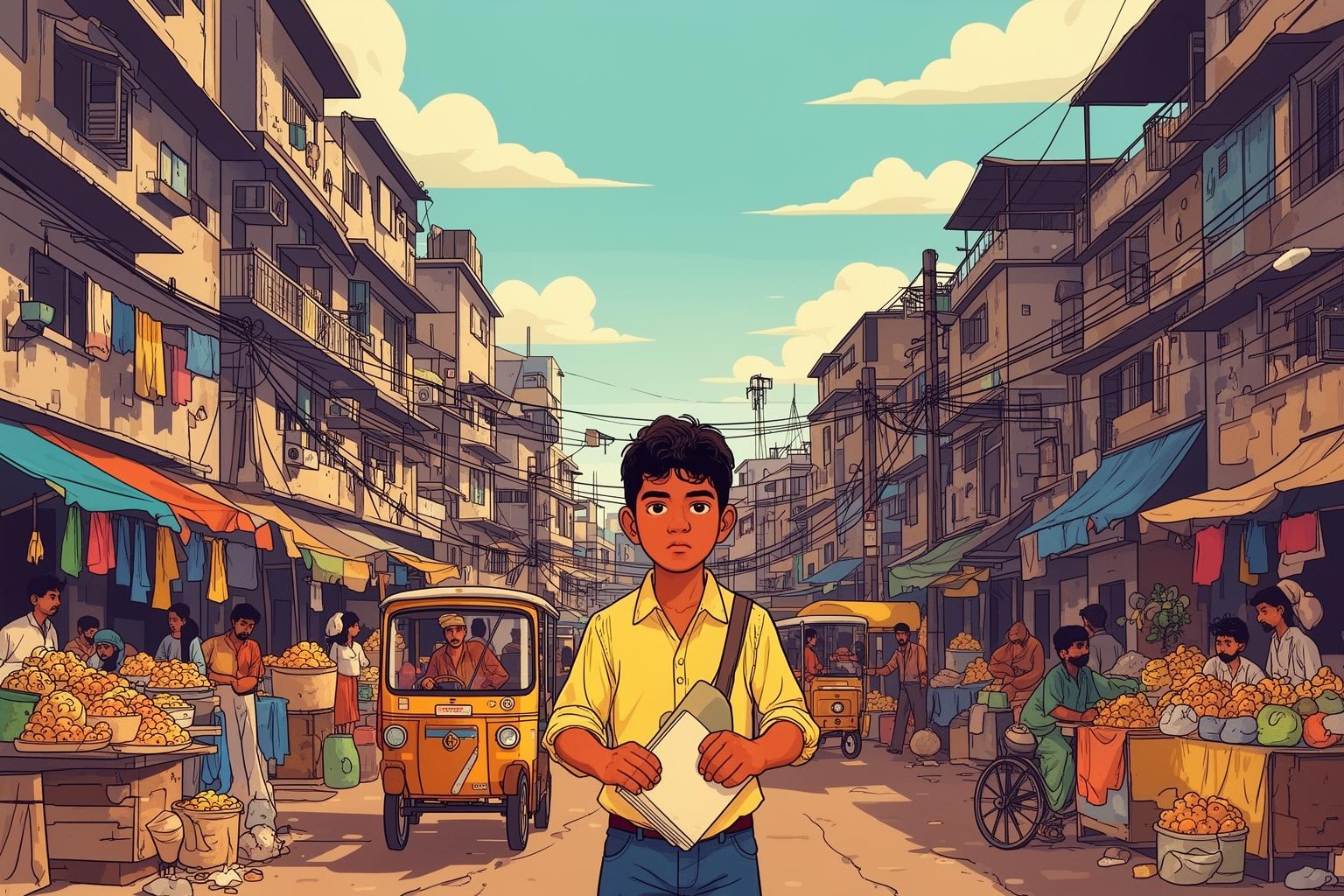
To truly grasp “Slumdog Millionaire,” one must first understand Dharavi. The film begins with an intense, heart-racing chase through Dharavi’s narrow, twisting lanes, instantly plunging the viewer into a world that is dense, chaotic, and teeming with life. Visiting Dharavi is like stepping right into that opening scene. Frequently sensationalized and misunderstood in the West, Dharavi is not merely a place of poverty; it stands as one of Mumbai’s most vibrant economic hubs, embodying human creativity and resilience. It is a city within a city—a vast expanse of small-scale industries, residences, schools, and temples, all layered upon one another in a dizzying yet functional mosaic.
More Than a Movie Set: The Heart of a Community
Dharavi pulses with a distinctive energy—a symphony of industry. As you weave through its labyrinthine alleys, your senses are overwhelmed. You’ll hear the rhythmic pounding of metal being shaped, the hum of countless sewing machines crafting fine leather goods for export, the crackling of clay pots firing in kilns, and the continuous, overlapping chatter in a dozen different languages. The aromas are equally complex—a blend of spices from communal kitchens, the sharp scent of tanning leather, the sweet fragrance of freshly baked bread, and the earthy smell of damp clay. This is the reality the film so vividly captured. It is through these very lanes that young Jamal and Salim learned to survive, their childhoods a blur of running, hiding, and hustling amid relentless activity. The film portrays Dharavi not as a uniform slum but as a complex social ecosystem where community bonds are vital. People live, work, and celebrate together in tight quarters, forging a connection that is palpable even to visitors.
Exploring Dharavi with Intent and Respect
Visiting Dharavi is not something to be done lightly or treated as “poverty tourism.” This is a community of hardworking individuals, and their homes are not a spectacle. The best—and truly the only responsible—way to experience Dharavi is with a local guide. Several reputable tour companies, many founded by residents, offer walking tours highlighting the area’s remarkable industries and community spirit. A significant portion of the profits often goes back into social initiatives like education and healthcare. Guided tours take you through commercial zones where you can witness the recycling industry managing much of Mumbai’s waste, artisans crafting leather goods, and bakers preparing pastries. You will observe the resourcefulness that defines this place. Importantly, these tours emphasize local etiquette, including a strict no-photography rule in residential areas, a simple gesture of respect for residents’ privacy that allows for a more authentic and less intrusive visit. This approach turns your experience from passive observation into meaningful cultural exchange.
Experiencing Jamal and Salim’s World
With a guide, you can safely explore areas that capture the essence of the film’s early scenes. Although you won’t find the exact locations, the spirit of the boys’ world is everywhere. You’ll see children playing cricket with makeshift bats in cramped clearings, their laughter echoing from corrugated metal walls. You’ll notice the intricate web of overhead wires crisscrossing the sky, reflecting the entangled lives below. You can almost imagine Jamal and Salim darting through these same pathways, their bare feet pounding the packed earth as they flee danger or chase dreams. Here, the film’s fiction feels most real, where the boundary between story and vibrant community merges into one powerful experience. You depart not with pity, but with deep admiration for the indomitable spirit thriving in every corner of Dharavi.
The Grand Finale: Chhatrapati Shivaji Maharaj Terminus (CSMT)
If Dharavi represents the heart of “Slumdog Millionaire,” then the Chhatrapati Shivaji Maharaj Terminus embodies its soaring, triumphant soul. This iconic location hosts the film’s unforgettable closing scene—the electrifying “Jai Ho” dance number that leaves audiences uplifted with pure euphoria. Yet long before it became a cinematic backdrop, CSMT, formerly Victoria Terminus, has served as Mumbai’s grand central artery—a cathedral of transport welcoming and dispatching millions of people daily.
An Architectural Marvel of Grand Scale
Standing before CSMT is an awe-inspiring experience. Designated a UNESCO World Heritage site for good reason, the building is a stunning example of Victorian Gothic architecture blended with designs inspired by traditional Indian palaces. It is an exquisitely ornate structure made of sandstone and limestone, featuring lofty arches, intricate turrets, and an impressive central dome. On closer inspection, detailed carvings of gargoyles, peacocks, and monkeys can be seen gazing down from the facade. Designed by Frederick William Stevens and completed in 1887, the station was conceived as a monument to British Raj power and a symbol of Mumbai’s prominence as a global trading center. It stands as both a relic of colonial history and a representation of modern India’s relentless progress. Stepping inside transports you to another realm—the vast main hall, with its vaulted ceilings and stained-glass windows, feels more like a European cathedral than a train station. Yet this serene architecture contrasts sharply with the chaotic, rhythmic flow of Mumbai’s lifeblood: the local trains.
The “Jai Ho” Moment and the City’s Rhythm
Here is where fantasy meets reality. Anyone who has watched the movie can’t help but stand on the platform and hear A.R. Rahman’s Oscar-winning score playing in their mind. The entire scene unfolds vividly: Jamal and Latika, finally reunited, joining a massive, synchronized dance erupting throughout the station. The dance perfectly symbolizes the film itself—a vibrant, joyous, and resilient celebration of life and love against all odds. But the true magic happens when you divert your gaze from this imagined spectacle to the reality bustling around you. You witness the endless stream of humanity: dabbawalas in their white uniforms expertly weaving through crowds carrying stacks of lunch tins; commuters packed tightly into the infamous local trains with unbelievable efficiency; vendors selling chai and vada pav amid the constant roar—the screeching of train wheels, loudspeaker announcements, porters’ calls, and the murmur of countless conversations. To stand inside CSMT is to feel the city’s pulse—a powerful, unceasing rhythm of arrivals and departures, hellos and farewells. It’s the perfect stage for a story about destiny, serving as the starting and ending point for innumerable journeys every minute.
Practical Tips for Visiting the Grand Terminus
Visiting CSMT is straightforward due to its status as a major hub, but a few tips can enrich your experience. To fully appreciate its architecture, try to visit at night when the building is magnificently illuminated. The golden lighting accentuates the intricate details, lending it an almost magical aura. For photography, the best viewpoint is from the pedestrian overpass across the street, offering a full perspective of the facade’s grandeur. To experience the station at its liveliest, drop by during the bustling morning or evening rush hours—an intense but unforgettable immersion into a Mumbaikar’s daily life. However, if you prefer a quieter visit to savor the details, midday is ideal. Stay mindful of your belongings amidst the crowds and prepare for an exhilarating sensory experience. This is not just a place to tick off your list; it’s a space to linger, observe, and witness the remarkable human drama that unfolds daily on its platforms.
A Glimpse of Another Life: Juhu and the Shores of Mumbai

After the claustrophobic intensity of Dharavi, the film offers its young characters a brief respite on the vast sands of Juhu Beach. Here, Jamal and Salim, orphaned and on the run, create a makeshift life amid the shanties that once bordered the shore. The beach symbolizes a different kind of existence—one marked by open skies, the endless horizon of the Arabian Sea, and a delicate sense of freedom sharply contrasting with the life they left behind.
The Beach Where Brothers Dreamed
In the film, Juhu Beach is a raw, untamed space where the boys’ survival instincts are sharpened. Today, although the original shanties have disappeared, the spirit of the place endures. Juhu Beach is Mumbai’s playground. It is not the pristine white-sand paradise described in travel brochures; rather, it is a lively, bustling, and wonderfully chaotic public space that truly comes alive at sunset. The atmosphere is electric. Families gather on the sand, children fly kites, and young couples stroll hand-in-hand along the water’s edge. The air is filled with the enticing aromas of street food from countless stalls lining the entrance. This is where you come to experience Mumbai at ease. Watching the sun dip below the horizon, painting the sky in shades of orange and purple, with fishing boats silhouetted in the distance, is a quintessential Mumbai moment. It’s easy to imagine the young Jamal gazing out at the same sea, his mind filled with thoughts of Latika and a future still beyond his grasp.
The Vibe of Juhu Today
Beyond the beach itself, the Juhu area is now one of Mumbai’s more affluent suburbs. It is famously home to many Bollywood celebrities, whose luxurious apartments and bungalows overlook the very same sea. This creates a fascinating dichotomy that mirrors the themes of the movie itself—the close proximity of immense wealth and profound poverty. A walk through Juhu offers a glimpse into this other side of Mumbai. The best way to enjoy the area is simply to immerse yourself in the local culture. Grab some street food—pav bhaji (a spicy vegetable mash served with soft bread rolls) and bhel puri (a savory snack made from puffed rice, vegetables, and tamarind sauce) are legendary here. Find a spot on the beach, watch the world pass by, and soak in the atmosphere. It’s a place for reflection, a place to ponder the incredible journey of the film’s characters and the city that shaped them.
The Rhythm of the City: Mahalaxmi Dhobi Ghat
Though not a central plot location, the Mahalaxmi Dhobi Ghat appears in the striking montages Danny Boyle uses to embed the visual essence of Mumbai into the film’s fabric. It is a place almost too incredible to believe until seen firsthand. This vast open-air laundry is a spectacle of organized chaos, embodying a system that has operated for over a century. It stands as a potent symbol of the city’s unseen workforce—those who keep Mumbai’s engine running behind the scenes.
A Symphony of Suds and Stone
From the bridge overlooking the ghat, you are granted a breathtaking panoramic view. Below stretch hundreds upon hundreds of concrete wash pens, each equipped with its own flogging stone. Here, the dhobis, traditional laundry workers, carry out a physically demanding ritual handed down through generations. You see them waist-deep in soapy water, rhythmically beating sheets, clothes, and uniforms against the stones, the sound echoing through the air. The area bursts with color; vast stretches of fabric—saris, bedsheets, shirts—are hung on endless lines to dry in the sun, forming a vibrant patchwork that billows with the breeze. The scene is a photographer’s paradise, a brilliant chaos of color, movement, and human effort on an epic scale. It is a living, breathing piece of public art, created not for display, but out of daily necessity.
A System in Motion
What seems like chaos is in fact a highly refined logistical operation. The dhobis collect laundry from across the city—from hotels, hospitals, and private homes. Each item is carefully marked with a code to ensure it returns to its rightful owner. After washing, drying, and ironing with heavy coal-powered presses, the clothes are bundled and sent back into the city. The precision of this system, which operates with little modern technology, is legendary. Witnessing the Dhobi Ghat at work reveals one of Mumbai’s many marvels of human organization. It serves as a powerful reminder of the deep-rooted traditions and communities forming the backbone of this modern megacity—a theme that resonates strongly within the story of a boy whose survival depends on such informal networks and street-level ingenuity.
Beyond Mumbai: The Monument of Love

The story of “Slumdog Millionaire” is firmly anchored in Mumbai, yet it takes a memorable detour to another of India’s most iconic landmarks—a place that symbolizes a very different kind of dream.
Jamal’s Grand Deception: The Taj Mahal, Agra
In a flashback, Jamal and Salim appear at the Taj Mahal in Agra. They are not visiting as tourists but as hustlers. The resourceful Jamal pretends to be an amateur tour guide, weaving fabricated tales about the monument to unsuspecting foreign visitors, while Salim stealthily steals their shoes. Though the scene is humorous, it also offers a poignant glimpse into their will to survive. It cleverly introduces the theme of love, as Jamal stands before the world’s greatest monument to love while his own search for Latika is just beginning.
Experiencing the Real Taj
While the film uses the Taj Mahal as a setting for a scam, a real-life visit to this wonder of the world is a profound and moving experience. Traveling from Mumbai to Agra is a significant journey, usually involving a flight or a long train ride, but it’s one that no visitor to India should skip. As you enter through the main gate and catch your first view of the mausoleum, it’s impossible not to be awe-inspired. The flawless symmetry, the way the white marble absorbs and reflects the changing light throughout the day, and the intricate floral inlay of semi-precious stones all exceed every expectation. Built by the Mughal emperor Shah Jahan in memory of his beloved wife Mumtaz Mahal, it stands as the ultimate architectural tribute to love and loss. To fully appreciate its beauty, plan your visit at sunrise, when the morning mist hangs over the Yamuna River and the first light softens the marble into an ethereal pink. Stroll the grounds, rest on the marble benches, and let the remarkable history and romance of the place envelop you. It offers a beautiful contrast to the grit and energy of the Mumbai scenes, highlighting the incredible diversity of experiences India has to offer—a diversity that the film only begins to explore.
The Spirit of the Film, The Soul of the City
To follow in Jamal Malik’s footsteps is to do more than simply visit a series of filming locations. It means embarking on a journey into the very heart of Mumbai and, by extension, into the essence of modern India. This pilgrimage isn’t about finding a perfect replica of a movie scene, but about uncovering the vibrant reality that inspired such a compelling story. The film’s spirit is discovered not in one single place, but in the collective energy of the city. You witness it in the resilience of the entrepreneurs in Dharavi, feel it in the thunderous pulse of the trains at CSMT, and experience it in the simple beauty of a sunset over Juhu Beach. “Slumdog Millionaire” is a love letter to Mumbai, a city as harsh as it is beautiful, as challenging as it is rewarding. Walking these streets, you realize that Jamal’s story, though fictional, is far from impossible. It is born from a place where destiny feels tangible, where millions of stories of struggle and triumph unfold every day. The greatest souvenir you take home is not a photograph, but a deeper understanding of the incredible human spirit that defines this unforgettable city.