To walk through Portugal is to walk through the pages of a novel written by time itself. The cobblestones of Lisbon, the salty air of the northern coast, the misty hills of Sintra—they all whisper stories. But for those who have been touched by the brilliant, biting prose of José Maria de Eça de Queirós, these whispers become a resonant chorus. He is more than Portugal’s greatest novelist; he is its most eloquent and incisive critic, its most passionate observer, and its most enduring conscience. To trace his footsteps is not merely a literary pilgrimage; it’s a journey into the very soul of a nation as it wrestled with its own identity at the twilight of the 19th century. Eça didn’t just write about places; he dissected them, capturing their light and their shadows, their grand ambitions and their quiet hypocrisies. From the seaside town where his worldview was forged to the grand capital he both loved and satirized, his life and work are imprinted on the landscape. This is an invitation to see Portugal through his eyes, to feel the rhythm of his sentences in the cadence of the streets, and to discover the living, breathing world that fueled a literary revolution. We will wander from the cradle of his youth to the settings of his most profound narratives, seeking the man behind the masterpieces and the country that shaped them both.
This journey into the soul of a nation through its literature is a form of literary pilgrimage, much like tracing the footsteps of other great authors to understand the landscapes that shaped them.
The Northern Shores: Póvoa de Varzim, Birthplace of a Critic
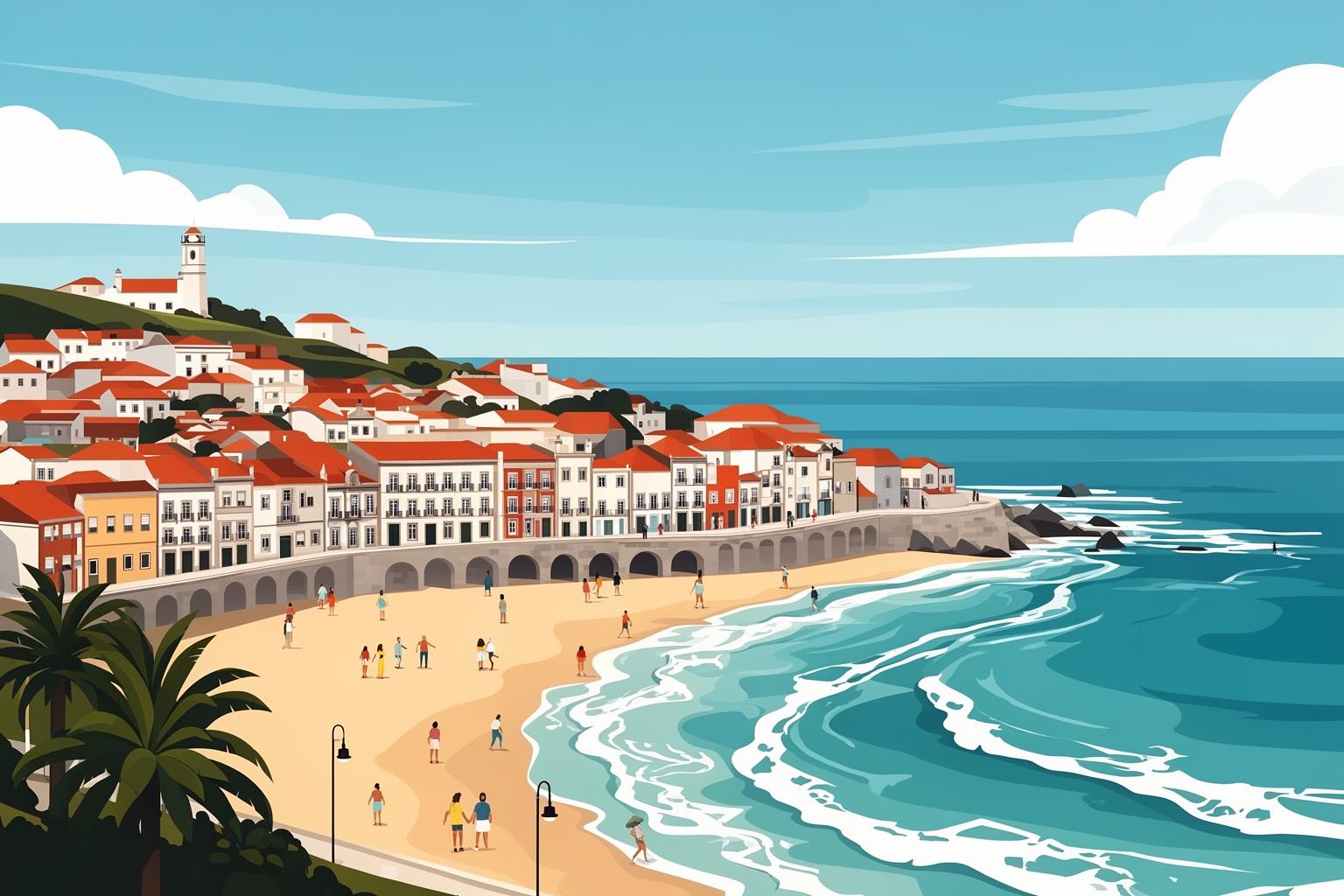
The Atlantic wind sweeping across Póvoa de Varzim brings with it the scent of salt, fish, and a history deeply linked to the sea. Here begins the story of Eça de Queirós, in this industrious fishing town just north of Porto. Born here in 1845, the city claims him rightly as its own. His presence is not a mere ghost but a tangible part of the city’s identity, immortalized in a bronze statue of the author sitting thoughtfully in Praça do Almada, the very square where he was born. He gazes outward, forever observing the flow of life, just as he did in his youth, gathering the raw material that would later form the foundation of his literary world.
To stand in this square is to feel the initial pulse of Eça’s narrative genius. The building of his birth remains, marked by a plaque—a modest origin for a man whose words would shake the core of Portuguese society. The atmosphere of Póvoa de Varzim is key to understanding his early outlook. It is a place of stark contrasts: the vast, untamable ocean on one side and the dense, intricate fabric of a small, conservative community on the other. One can almost hear the gossip carried on the wind, see social hierarchies unfolding in the market, and sense the weight of tradition that Eça so masterfully challenged.
The World in a Town Square
Walking away from the main square into the older parts of town, the streets narrow, lined with tiled houses weathered by countless storms. This is the Portugal Eça knew intimately—a world of fishermen and merchants, powerful priests, and devout women. While his most famous provincial novel, The Crime of Father Amaro, is officially set in a fictionalized Leiria, its essence is forged in towns like Póvoa. The suffocating closeness, the hidden passions simmering beneath a mask of respectability, and the corrosive influence of the clergy on a closed society—all these themes played out vividly around him.
To truly connect with this origin story, one must walk along the waterfront. Observe the fishing boats adorned with their siglas poveiras, ancient symbols passed down through generations. Watch the fishermen mending their nets, their faces weathered by sun and sea. This is a world of grit, resilience, and unwritten rules—far from the perfumed salons of Lisbon that Eça would later enter. It was this grounding in provincial realities that gave his social critique its undeniable authority. He wasn’t merely imagining the struggles of ordinary people; he had lived among them.
A Pilgrim’s Guide to Póvoa
Visiting Póvoa de Varzim is refreshingly simple. It’s easily reachable from Porto via metro, making it an ideal day trip. The best times to visit are late spring or early fall, when the summer crowds have thinned but the weather remains pleasant enough to enjoy the long sandy beaches. Summer offers a lively, bustling atmosphere—a modern resort layered upon its historic core, creating an intriguing contrast.
For first-time visitors, the essential route begins at the Eça de Queirós statue in Praça do Almada. From there, wander through the old town toward the coast. Don’t miss the Fortaleza de Nossa Senhora da Conceição, a 16th-century fort offering commanding views of the harbor and sea. The real charm, however, lies in the unplanned detours—follow a narrow alley, step inside a small church, or find a local restaurant off the main tourist path. Order fresh grilled fish—sardinhas or robalo—and a glass of crisp vinho verde. As you dine, surrounded by the town’s sounds, you become more than a tourist; you partake in the very life Eça so brilliantly portrayed. It is in these simple, authentic moments that his spirit feels most alive.
Lisbon’s Labyrinth: The Heart of Eça’s Universe
If Póvoa de Varzim was the primer, Lisbon was the grand, sprawling text of Eça’s life and work. He came to the capital initially as a student and later returned as a celebrated author and intellectual. The Lisbon of the late 19th century was a city full of contradictions—a place marked by imperial nostalgia and burgeoning republican ideals, home to opulent aristocrats and a struggling working class alike. It provided the perfect backdrop for his magnum opus, The Maias, a novel that is as much a portrait of a decaying family as it is a biography of the city itself.
To follow Eça in Lisbon is to trace the ghosts of his characters. The journey must begin in the Chiado, the city’s literary and intellectual heart. This elegant district, with its theaters, bookshops, and cafés, was the epicenter of the cultural life Eça chronicled. Today, it still hums with sophisticated energy, though the top hats and carriages have given way to tourists and the cheerful clatter of Tram 28.
A Coffee with Immortals in the Chiado
The ultimate pilgrimage spot in the Chiado is the iconic Café A Brasileira. Just outside its doors, a bronze Eça sits nonchalantly at a café table, legs crossed, an eternal observer. Nearby stands another statue—that of the modernist poet Fernando Pessoa. This small stretch of sidewalk is arguably the most hallowed ground in Portuguese literature. To sit at a nearby table, order a bica (a strong espresso), and simply watch the world go by is to partake in a ritual performed by writers and thinkers for over a century.
Inside, A Brasileira retains its old-world charm with dark wood paneling, mirrored walls, and brass fittings. This was the kind of place where Eça and his contemporaries, a group of iconoclastic writers known as the “Generation of the 70s,” gathered to debate politics, art, and Portugal’s future. They were young, brilliant, and determined to pull their country into the modern era. The echoes of their passionate arguments linger in the clatter of coffee cups and murmurs of conversation. For Eça, the Chiado was not just a backdrop but an intellectual battleground and creative sanctuary.
Tracing the Footsteps of The Maias
Eça’s Lisbon is most vividly portrayed in The Maias. The novel’s central family resides in a fictional mansion called Ramalhete, located “to the Janelas Verdes.” While Ramalhete itself is not visitable, you can wander through the elegant neighborhoods of Lapa and Estrela, where it would have stood. Here, quiet streets are lined with aristocratic palaces, walled gardens, and embassies. The atmosphere breathes discreet wealth and faded glory, perfectly encapsulating the spirit of the Maia family. Peering through an iron gate into a lush private garden, you might almost see Carlos da Maia, the novel’s tragic hero, strolling through his own grounds.
Many real locations also appear in the book. A walk along the broad Avenida da Liberdade evokes the fashionable promenades where Lisbon society would see and be seen. Rossio Square, with its magnificent fountains and bustling crowds, was then—as it remains now—a central hub of city life. Perhaps most evocative is the Grémio Literário, or Literary Guild, a private club housed in a stunning 18th-century palace. It was the exclusive retreat of Lisbon’s elite and serves as the setting for several key scenes in The Maias. Though access is restricted, you can admire its beautiful yellow façade and imagine the high-society dramas that unfolded within. A practical tip for visitors is to create their own walking tour: start at A Brasileira, explore the Chiado’s bookshops, head towards the São Carlos National Theatre (another crucial location in the novel), and then meander up to the Grémio Literário. This route lets you physically trace the social geography of Eça’s world.
The Mystical Hills of Sintra: A Romantic Escape
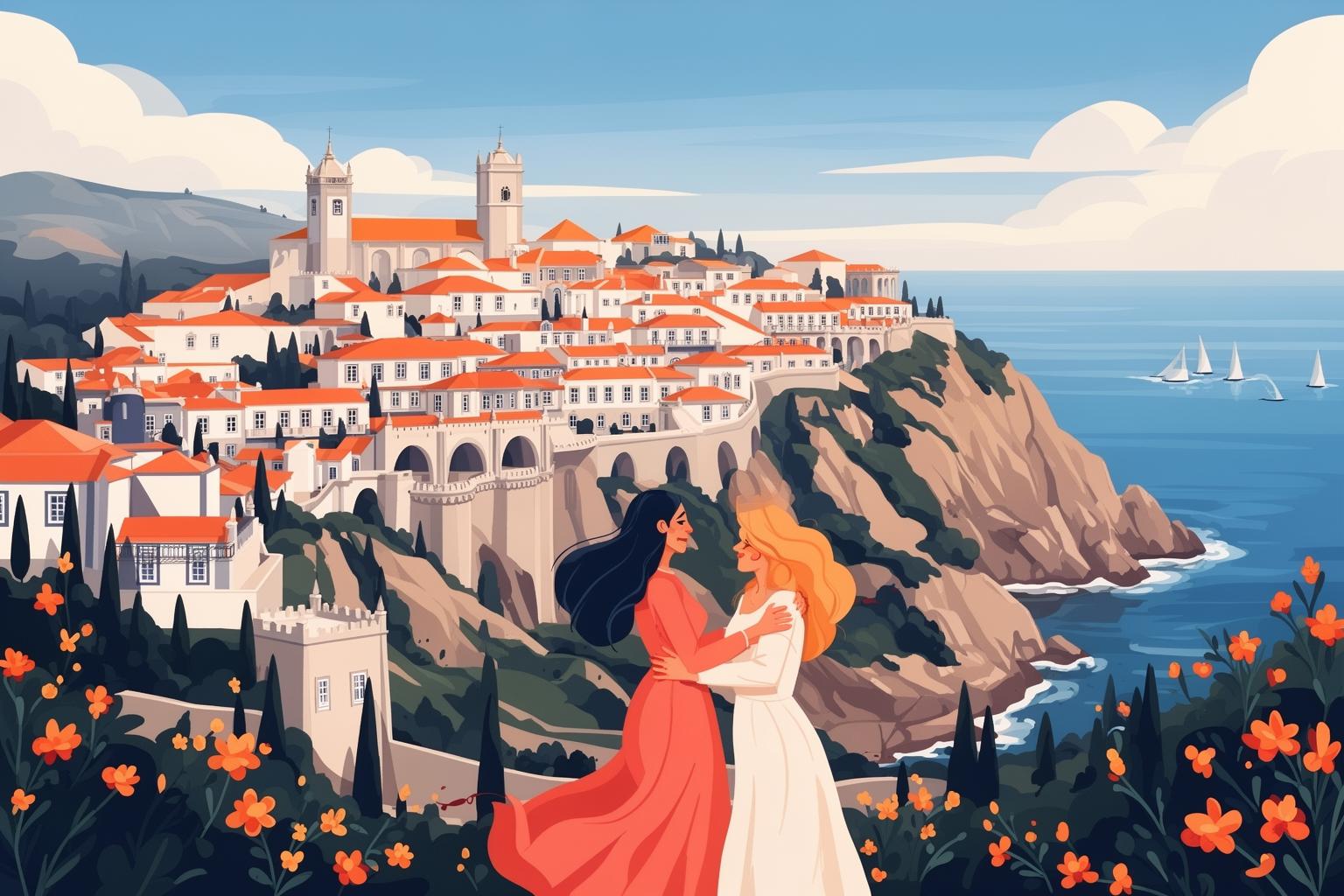
Just a short train ride from the bustling heart of Lisbon lies Sintra, a place that seems as if it stepped straight out of a fairy tale. With its mist-covered forests, elaborate palaces, and lush, exotic gardens, Sintra has long been a refuge for romantics, artists, and royalty alike. For Eça de Queirós, it provided the ideal setting for the most passionate and fateful moments in The Maias, a landscape where forbidden love could flourish and secrets could hide amid the dense foliage.
Sintra embodies a different dimension of the Portuguese spirit—mystical, sentimental, and tinged with melancholy. It serves as a counterbalance to Lisbon’s sharp, satirical energy. Eça skillfully used this atmosphere, turning the town into a character itself. The air here is distinct, heavy with moisture and the scent of damp earth and blooming flowers. It’s a place that invites reflection and whispers of forgotten tales.
A Fateful Encounter at Lawrence’s Hotel
At the core of Eça’s Sintra stands a very real location: Lawrence’s Hotel. Established in 1764, it is one of the oldest continuously operating hotels on the Iberian Peninsula. Eça was a regular guest and immortalized it in The Maias as the rendezvous point for Carlos da Maia and Maria Eduarda, the novel’s ill-fated lovers. Stepping inside Lawrence’s feels like entering a scene from the book itself. The hotel has been beautifully maintained, preserving its classic, cozy charm.
The ambiance is one of timeless elegance. You can relax in the lounge, with its plush armchairs and fireplace, and imagine the lovers exchanging whispered secrets as the Sintra mist swirled outside the windows. The staff are well aware of the hotel’s literary heritage and are often happy to share its stories. For devoted fans, spending a night here is an unforgettable experience. Waking up to the view of the Sintra mountains, knowing you’re staying under the same roof that sheltered Eça’s characters, creates a profound connection to the novel. Even if you don’t stay overnight, visiting for afternoon tea offers a wonderful opportunity to absorb the historic atmosphere.
The Romantic Soul of the Landscape
While Lawrence’s is the most tangible link, the entire Sintra landscape feels steeped in the spirit of Eça’s writing. The winding narrow roads, the grand estates (quintas) concealed behind moss-covered walls, and the dramatic views from the Moorish Castle all add to the novel’s romantic tension. When Eça describes Carlos and Maria Eduarda taking a carriage ride through the mountains, he is painting a vivid picture of these very paths. The landscape’s beauty—the vibrant green ferns, the striking bursts of hydrangea color, the monumental palace silhouettes against the sky—forms a stunning yet ultimately tragic backdrop to their story.
To truly experience this, visitors should embrace wandering off the beaten path. Leave behind the crowded historic center and explore the many walking trails weaving through the Serra de Sintra. A stroll through the gardens of Quinta da Regaleira, with its grottoes and secret tunnels, or a hike up to the whimsical Pena Palace, evokes the gothic and romantic sensibilities that Eça both admired and gently satirized. Practical advice for travelers to Sintra is essential: arrive early to avoid the crowds, wear comfortable shoes, and book tickets for major palaces online ahead of time to save time. And don’t miss sampling the local pastries—the sweet queijadas and flaky travesseiros—at the historic Piriquita pastry shop. It’s a small, delicious indulgence perfectly suited to Sintra’s enchanting character.
Tormes and the Douro: Finding Roots in the Golden Valley
The final chapter of our pilgrimage leads us back north, but this time inland, to the stunning beauty of the Douro Valley. This landscape features terraced vineyards clinging to steep hillsides that descend to the winding Douro River. It is a region of profound, almost austere beauty, reflecting centuries of human effort and natural splendor. Here, in a small parish called Santa Cruz do Douro, we discover the most personal and revealing site connected to Eça de Queirós: the Quinta de Tormes.
This place marks a fascinating moment where fiction merged with reality. In his late novel, The City and the Mountains, Eça narrates the story of Jacinto, a fabulously wealthy Portuguese intellectual living in Paris, surrounded by the latest technological wonders. Disillusioned by the emptiness of modern urban life, Jacinto eventually rediscovers meaning, joy, and authenticity by returning to his ancestral estate, Tormes, in the Portuguese countryside. In a remarkable twist, Eça himself inherited a dilapidated property in the Douro region from his wife’s family. He lovingly restored it and, as a nod to his fictional creation, named it Quinta de Tormes. It became his real-life retreat.
The House Where Fiction Became Reality
Today, the Quinta de Tormes is managed by the Eça de Queiroz Foundation and functions as a museum, restaurant, and guesthouse. Visiting it is an immersive and deeply moving experience. The house is a beautiful, rustic manor, painted a warm yellow and surrounded by gardens and vineyards. Inside, many of Eça’s personal belongings remain: his writing desk, library, photographs, and manuscripts. Walking through these rooms, you feel a personal connection to the man himself, not just the author. You can see the view from his window, a breathtaking panorama of the valley, and understand why this place brought him such profound peace.
What makes Tormes so special is that it embodies the very philosophy Eça expressed in The City and the Mountains. The novel is a powerful critique of the artificiality of modern life and a celebration of the virtues of rural living: wholesome food, honest labor, connection to the land, and strong community bonds. At Quinta de Tormes, this philosophy is lived out. The restaurant serves traditional regional cuisine made with ingredients grown on the estate. The wine is produced from their own vineyards. The atmosphere is one of sincere, unpretentious hospitality. It stands as a living testament to the idea that simplicity is key to true fulfillment.
Pilgrimage to the Golden Valley
Reaching Quinta de Tormes requires a bit more effort than visiting Lisbon or Sintra, but the journey itself is part of the reward. It is located near the town of Baião, and the most scenic route to the region is via the Linha do Douro, a historic railway line that winds along the river from Porto. The views from the train are among the most beautiful in Europe. From the local station, a short taxi ride brings you to the Quinta.
For the fullest experience, consider staying overnight in one of the guesthouse rooms. Awaking to the valley’s silence, broken only by birdsong, is enchanting. It gives you time to explore the estate, stroll through the vineyards, and relax on the terrace with a glass of wine as the sun sets over the river. This is a place for slow travel and reflection. Bring a copy of The City and the Mountains and read it in the very setting that inspired its name. It’s a moment of perfect harmony where literature, landscape, and the author’s life converge. A visit to Tormes is not just about seeing where Eça lived; it is about understanding the final, powerful message he wished to leave with the world.
The Diplomat’s Gaze: Eça Abroad

Although Eça de Queirós’s soul is unmistakably Portuguese, his intellect was molded and honed by decades abroad as a diplomat. These years of foreign service were more than just a job; they constituted a vital period of observation that deeply shaped his literary style and worldview. Living outside Portugal afforded him the critical distance to view his homeland with a fresh, often harsh, clarity. His travels transformed him from a provincial intellectual into a cosmopolitan man of letters, and this international outlook is essential to fully grasping the depth of his work.
An English Education in Realism
His early consular assignments took him to Havana and, notably, to England, where he served in Newcastle-upon-Tyne and Bristol from 1874 to 1879. The Britain he encountered was the world’s industrial powerhouse, a nation wrestling with the profound social changes brought on by capitalism. He found himself both fascinated and appalled by the energy, the inequality, the smoke-belching factories, and the rigid class system. His letters from this era are rich with keen observations on English society, its customs, and its literature.
This English period was a literary apprenticeship in realism. He eagerly read Dickens, Thackeray, and George Eliot, absorbing their methods of depicting society in all its complexity. The harsh, unsentimental reality of industrial England stood in sharp contrast to the often romanticized image of Portugal he had left behind. This experience equipped him with a new arsenal of tools for social critique, which he later wielded with great effect in his novels. When you study the detailed portrayals of Lisbon’s social structure in The Maias, you are witnessing the influence of the great English realists—an influence nurtured on the damp streets of Newcastle.
Paris: The Capital of the 19th Century
Eça’s final and lengthiest posting was in Paris, where he served as consul from 1888 until his death in 1900. Paris was the undisputed cultural and intellectual capital of the West, the heart of the modernity that so captivated him. It was the city of grand boulevards, universal exhibitions, and pioneering artistic movements. For Jacinto, the protagonist of The City and the Mountains, Paris symbolized the pinnacle of civilization—a technological utopia that ultimately revealed itself as a gilded cage.
Residing in Neuilly-sur-Seine, a fashionable suburb of Paris, Eça was ideally placed to observe this dazzling, multifaceted world. He frequented its salons, attended its theaters, and absorbed its intellectual currents. Yet he always retained the perspective of an outsider, casting a discreetly ironic, critical gaze on the very modernity he depicted. His time in Paris completed the arc of his life. He had begun in the provincial calm of Póvoa de Varzim, journeyed through the ambitious heart of Lisbon, and now found himself at the core of the European world. This vast range of experience enabled him to write with remarkable authority on one of his most enduring themes: the often-painful relationship between Portugal and the broader, more “advanced” world.
An Unending Conversation
A journey following the footsteps of Eça de Queirós is one without a fixed destination. It is an ongoing dialogue with a brilliant mind, a conversation that takes place in the lively cafés of Chiado, along the misty paths of Sintra, and amidst the serene vineyards of the Douro. Visiting these locations reveals that Eça’s work extends beyond the printed page; it lives within the landscape, the architecture, and the very character of the Portuguese people he portrayed with both affection and unflinching honesty.
He gave his nation a mirror, and in it, Portugal saw its own reflection—its flaws, its charms, its tragic grandeur, and its resilient spirit. As we walk these routes today, we become part of that reflection. We witness the past and present layered together, with the world Eça described still resonating in contemporary times. The greatest gift a writer can provide is a fresh perspective, and Eça offers us a lens through which Portugal becomes richer, deeper, and endlessly more intriguing. So pick up one of his books, let his voice guide you, and step into the world he created. The story awaits you on the streets of Portugal.