There are road trips, and then there’s the road trip. The one that rips up the map, throws the itinerary to the wind, and becomes something more. A rebellion. An awakening. An escape into the vast, unforgiving, and beautiful heart of the American West. Ridley Scott’s 1991 masterpiece, Thelma & Louise, isn’t just a film; it’s a cultural declaration of independence, a feminist cry that echoes across the decades, carried on the desert wind. And for those of us who felt that cry in our bones, the journey of its two heroines is more than just a story. It’s a map to a place of ultimate freedom. The irony, of course, is that the map is a lie. The cinematic journey from Arkansas through Oklahoma and Colorado to a final, defiant leap into the Grand Canyon was a feat of movie magic, a tapestry woven almost entirely from the landscapes of California and, most pivotally, Utah. This is a pilgrimage not to the fictional route, but to the real soul of the film—the sun-scorched asphalt, the monumental red rocks, and the impossibly wide horizons where Thelma Dickinson and Louise Sawyer truly came alive. It’s a journey to the places that gave their freedom a physical form, a landscape so powerful it became the third main character in the film. So grab your sunglasses, cue up the playlist, and put the top down. We’re going on a pilgrimage to the edge of the world, following the tire tracks of a ’66 Thunderbird into the heart of Thelma & Louise country.
If you’re inspired to trace the cinematic footsteps of other iconic journeys, consider exploring our guide to the filming locations of Slumdog Millionaire.
The Illusion of the Open Road: California’s Deceptive Start
Every great escape must begin somewhere, and for Thelma and Louise, that starting point was a world of stifling order and unspoken expectations. The film opens in a sunlit yet sterile Arkansas, a landscape of manicured lawns and nondescript architecture that symbolizes everything the women are about to leave behind. In truth, this world was entirely created within the sprawling suburbs and dusty outskirts of Los Angeles County, showcasing Hollywood’s talent for finding the universal within the specific. This part of their journey is a study in contrasts, a visit to the cage before their flight.
The Cage of Comfort: Thelma’s House in the Valley
The adventure begins at 8528 Colonia Avenue in Tarzana, a quiet residential street in the heart of Los Angeles’ San Fernando Valley. This is the actual location of the house Thelma shared with her overbearing and pitiful husband, Darryl. Driving through these streets today, the atmosphere captured in the film is immediately felt. The single-story ranch-style homes, the perfectly tended grass, the pervasive sense of suburban calm—it is the portrait of the American Dream, but for Thelma, it is a prison painted in pastel hues. The house remains a private residence, so any visit here must be one of silent observation from the street. There are no plaques or markers, only the quiet acknowledgment of a place where a monumental story began. You can almost see Thelma, dressed in denim, packing her bags with nervous excitement, savoring the first illicit thrill of her weekend escape. Standing here, you realize that her journey was not only away from Darryl but away from this entire world of imposed expectations. The Valley, with its hazy skies and sprawling uniformity, serves as the perfect generic backdrop for a life unlived, the essential starting point for a woman about to discover her true self.
The Point of No Return: The Silver Bullet Bar
Freedom’s first taste is often bitter. The first stop on their trip, the Silver Bullet roadhouse where a night of dancing turns into a nightmare, was a real location, though it no longer exists. The exterior shots were filmed at a now-demolished building in Cerritos, while the dark, smoky, and menacing interiors were captured at the long-closed Cowboy Country club in Long Beach. Although you can no longer step inside and order a Wild Turkey, the spirit of this place endures in the DNA of countless roadside bars across America. It represents that liminal space on the edge of town, a place of fleeting encounters and potential peril. The scene is a brutal catalyst. Harlan’s assault and Louise’s swift, deadly response in that dusty parking lot are the gunshot that cuts their ties to their old lives forever. Visiting the area in Long Beach today, a bustling part of Southern California, it’s hard to imagine the gritty desperation of that moment. But it remains a crucial stop in the mental pilgrimage, a time to reflect on the irreversible choice that transformed a fishing trip into a desperate flight for survival. It’s where the fantasy of the open road collided with violent reality, raising the stakes impossibly high and turning the Thunderbird not just toward the horizon, but away from everything they had ever known.
Kicking Up Dust: The Desolate Roads of Gorman
As Thelma and Louise speed away from the Silver Bullet, the landscape begins to shift. The manicured suburbs give way to the parched, golden hills and winding asphalt of rural Los Angeles County. Many of these early driving scenes, meant to depict the backroads of Arkansas and Oklahoma, were filmed near the town of Gorman, close to the infamous stretch of Interstate 5 known as the Grapevine. This is where the pilgrimage starts to feel real, where you can put the pedal to the metal and feel the wind in your hair. The roads that twist through the hills off the main highway remain much as they appeared in the film. The sun beats down on the dry grass, and the air is heavy with the scent of dust and sage. Here, the initial panic of escape begins to blend with a thrilling sense of freedom. You can almost hear Thelma’s infectious laughter as she takes her first sip from a mini bottle of bourbon. Driving these roads, you sense the vastness of California unfolding around you. It’s not yet the iconic red rock desert, but it is a crucial transition. It’s a landscape of rolling, anonymous hills that could be anywhere, perfectly reflecting the women’s own state of being—they are no longer defined by their homes, but have yet to find their destination. They are simply in-between, on the run, a feeling this particular stretch of Southern California backroad still evokes with striking clarity. A helpful tip for travelers here is to explore the roads off the main highway in the late afternoon when the “golden hour” light bathes the hills in warm, cinematic hues, making you feel as though you’ve driven right into a movie scene.
The Heart of the West: Utah’s Monumental Soul
If California provided the setting, Utah embodies the soul of Thelma & Louise. It is in the state’s southern regions that the film’s visual language bursts into a vivid symphony of red rock, deep canyons, and endless sky. This is where the Thunderbird seems most at home, and where the women’s inner transformation is reflected by the raw, majestic, and untamed landscape surrounding them. The journey through Utah forms the heart of the pilgrimage, featuring a series of sacred sites that mark the story’s most pivotal moments—from a fateful encounter with a charming drifter to the final, transcendent leap of faith.
The Seduction of the Drifter: A Motel Stop Frozen in Time
Before venturing deep into the wilderness, Thelma and Louise encounter a young, dangerously charming drifter named J.D., portrayed by a then-unknown Brad Pitt. The scenes where J.D. teaches Thelma to rob a store, then cheats her out of all their money, occur at a classic mid-century motel. While the film situates this in Oklahoma City, the actual location was the Vagabond Inn, now the Biltmore Hotel, in downtown Los Angeles. Yet, the true essence of these scenes can be found in any of the numerous vintage roadside motels scattered along old highways leading into Utah. These motels, with their flickering neon signs, kidney-shaped pools, and doors opening directly onto the parking lot, are relics from a bygone era of American travel. They buzz with an atmosphere of anonymity and transience, providing the perfect backdrop for both personal awakening and heartbreaking betrayal. For Thelma, this stop represents a crucial turning point. It’s where she discovers her own sexuality and agency—only to have her newfound confidence shattered. For the pilgrim, staying in a similar motel—perhaps in Green River or Hanksville, Utah—is a way to connect with this chapter of the story. The lonely hum of the ice machine, the feel of a worn bedspread, the view of the highway from the window—all evoke that feeling of being unmoored, suspended between an unattainable past and a future fraught with uncertainty.
Echoes in the Emptiness: Cisco, the Ghost Town
One of the film’s most haunting and atmospheric scenes unfolds as the women pull off the highway into the desolate, crumbling ruins of a ghost town. There, they meet an old man, a permanent resident of the remains, who provides a cryptic and poignant contrast to their desperate journey. This location is the real ghost town of Cisco, Utah, just off Interstate 70. Visiting Cisco today is like stepping into the film itself. Time seems frozen, or more accurately, eroded by the desert. Rusted cars, collapsing shacks, and sun-bleached debris scatter the landscape. The profound silence is broken only by the wind whistling through shattered windowpanes. This is where the weight of their journey truly settles in. The romanticism of escape is stripped away, revealing a stark reality. The old man symbolizes a different kind of fugitive—not from the law, but from time itself. Walking through Cisco, visitors can feel that same profound isolation and stark beauty. It’s not a tourist destination; it’s a graveyard of dreams demanding respect. Visitors should tread lightly, take only photographs, and leave the ghosts of the past undisturbed. This powerful, meditative stop grounds the film’s fantasy in the harsh reality of the American West.
Arches National Park: A Cathedral of Stone and Sky
As Thelma and Louise journey further into Utah, the landscape transforms into something truly majestic. They enter a realm of towering sandstone monoliths and improbable rock formations, a place that feels both ancient and sacred. These breathtaking scenes were filmed in and around Arches National Park, near the adventure hub of Moab. The road they travel, with the La Sal Mountains beautifully framed in the distance, is the park’s main scenic drive. Today, driving this route is nearly a spiritual experience. Formations like Courthouse Towers, the Three Gossips, and the Organ rise from the desert floor like sculptures carved by giants. The enormity of it all is humbling. This is the landscape where Thelma finally comes into her own. After skillfully robbing a convenience store with the techniques J.D. taught her, she is reborn—not a victim anymore, but an outlaw in her own right. The majestic, defiant terrain of Arches provides the perfect stage for this transformation. The rocks themselves seem to defy gravity and time, just as Thelma and Louise defy law and societal expectations. A key pilgrimage stop is the spot where they pause to have a life-affirming conversation with the friendly truck driver they previously antagonized. Standing there, gazing upon the vast panorama, one can sense the shift in their spirits. Fear remains, but it is now eclipsed by a sense of power and belonging. They belong to this wild land now. For visitors, the ideal time to experience Arches is sunrise or sunset, when the low-angle light ignites the red rocks in fiery color, creating a scene of near unbearable beauty that perfectly captures the film’s emotional peak.
The Canyonlands Chase: Dancing on the Edge
As the law closes in, the film’s climax unfolds in a series of thrilling chases across a vast and perilous canyon landscape. These scenes, where Detective Slocumb and state police relentlessly pursue the women, were primarily filmed along the Shafer Trail, an awe-inspiring and hair-raising dirt road that switchbacks down from the Island in the Sky district of Canyonlands National Park to the canyon floor below. This is where the movie magic is most evident, and where the pilgrimage demands the greatest caution. In the film, the Thunderbird glides effortlessly around hairpin turns. In reality, the Shafer Trail is a serious off-road challenge requiring a high-clearance 4×4 vehicle and nerves of steel. Attempting it in a passenger car is not only unwise but extremely dangerous. However, you don’t need to drive the trail to feel its power. From the visitor center and various overlooks atop the mesa, you can gaze down at the very roads where the chase was filmed. The view is breathtaking. The road snakes along the cliffside, a narrow ribbon of dirt perched above a thousand-foot drop. It is a landscape that speaks of high stakes and no escape. The immense, labyrinthine canyons stretch to the horizon, a visual metaphor for the inescapable net tightening around the heroines. Here, geography becomes an adversary—a beautiful, deadly maze with no exit.
The Final Leap: A Moment Beyond the Grand Canyon
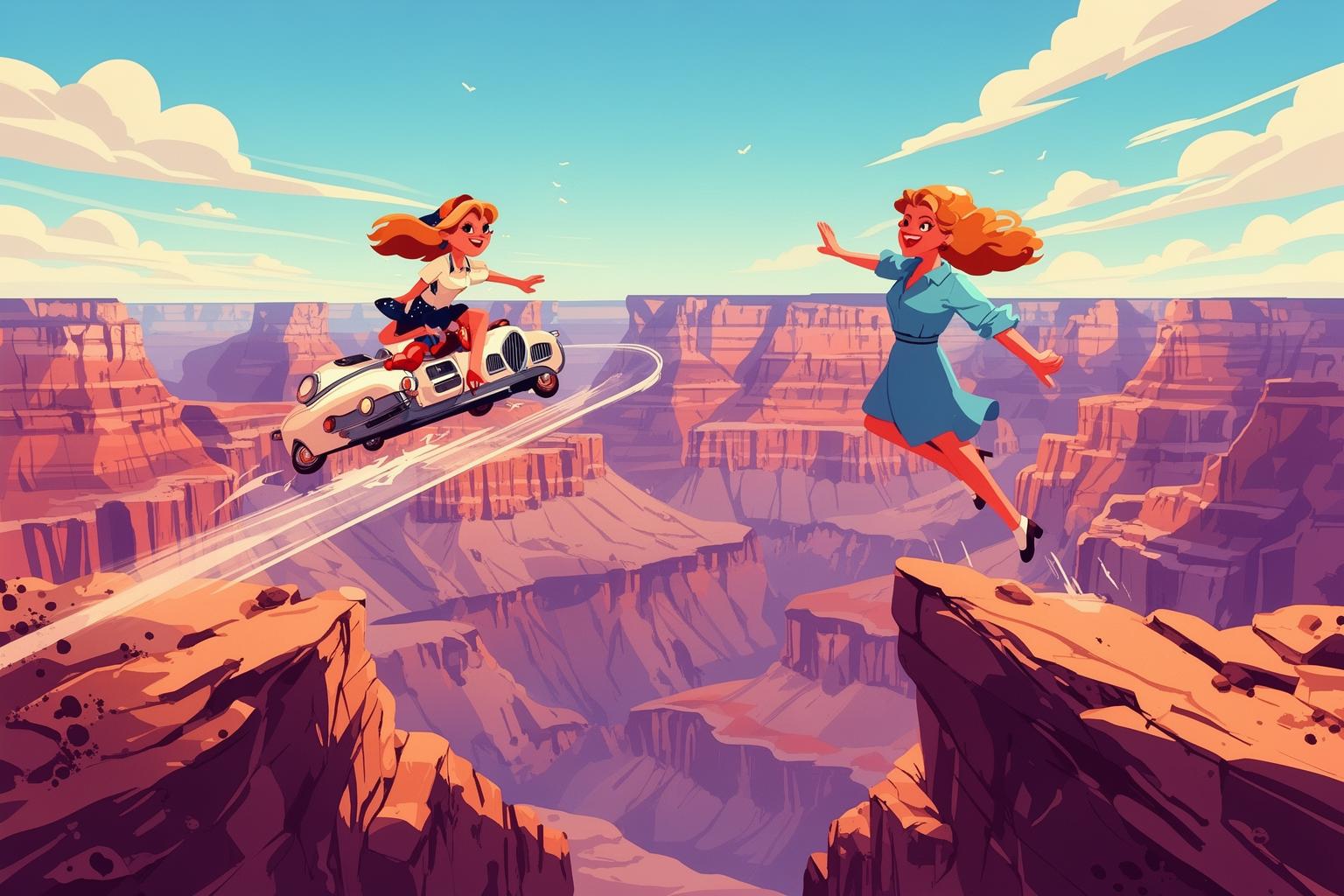
It is one of the most iconic final shots in the history of cinema. A turquoise 1966 Ford Thunderbird, surrounded by a fleet of police cars and a swirling helicopter, pauses at the brink of an impossibly vast canyon. The two women inside exchange smiles, hold hands, and accelerate, launching their car—and their legend—into the abyss and into cinematic immortality. For decades, audiences have believed this climactic moment took place at the Grand Canyon, as the film’s dialogue implies. However, the truth lies in a pilgrimage to a different, and arguably more cinematic, location in Utah.
The True Edge of the World: Dead Horse Point
The final scene was shot at Dead Horse Point State Park, a stunning peninsula of rock extending into Canyonlands, offering a breathtaking view of a gooseneck in the Colorado River 2,000 feet below. The exact spot is a viewpoint near the end of the park’s main road, which has become sacred ground for film enthusiasts. Standing there today, the emotional impact of the location is overwhelming. It’s easy to see why Ridley Scott chose this site over the actual Grand Canyon. While the Grand Canyon is unimaginably vast, its immense scale can be challenging to capture on film. Dead Horse Point is more contained, more theatrical. The river bend forms a perfect natural stage, and the opposing cliffs resemble the walls of a grand amphitheater, focusing all attention on the drama unfolding at the edge. The sensation at the overlook is one of awe blended with a hint of vertigo. The silence is profound, and as you gaze into the canyon, you can almost hear the roar of the Thunderbird, the whir of the helicopter blades, and the strains of Hans Zimmer’s score. This is more than just a viewpoint; it’s a shrine to defiance, friendship, and a choice made on one’s own terms. Pilgrims often leave small tokens here, a testament to the film’s lasting impact. It’s a place to stand and contemplate what it means to be truly free, even if that freedom lasts only for a single, soaring moment before the fade to white. For first-time visitors, the experience is most powerful in the early morning or late afternoon, when long shadows emphasize the canyon’s immense depth and the colors are at their richest. It is the ultimate destination of the journey, a place where a fictional story has created a very real and enduring legacy on the landscape.
Crafting Your Own Outlaw Journey
Embarking on a Thelma & Louise pilgrimage means more than simply visiting filming locations; it’s about embracing the spirit of the journey itself. It’s about the freedom found on the open road, the strength of friendship, and the breathtaking, life-changing beauty of the American Southwest. Planning your own trip lets you craft a personal story, blending your experiences into the rich tapestry of the film’s iconic narrative.
Planning Your Route: From LA to Moab
A practical itinerary to capture the film’s essence typically spans five to seven days. Begin in Los Angeles, dedicating a day to quietly explore the suburban settings in the San Fernando Valley. From there, travel east on Interstate 15 toward Las Vegas, then head north into Utah. The drive itself is part of the adventure. Watch the landscape shift from the sprawling urban areas of Southern California to the stark, stunning emptiness of the Mojave Desert. The key destinations in Utah cluster around the town of Moab, a charming, rugged hub that serves as your base for visiting Arches National Park, Canyonlands National Park, and Dead Horse Point State Park. Plan to spend at least three full days in this region. Since the drive from LA to Moab is lengthy, break it up with stops in towns like St. George or Green River to rest and soak in the local vibe. Opt for US highways such as Route 191 in Utah for a more intimate and scenic experience compared to the interstate. This journey is meant to be savored, not rushed.
The Essentials: The Car, The Playlist, The Gear
While a ’66 Thunderbird convertible is the ideal, reliability is paramount. Any comfortable vehicle will work, though something with decent ground clearance is beneficial if you plan to venture down unpaved backroads. A 4×4 is only essential if you aim to drive the Shafer Trail in Canyonlands. The most vital accessory, however, is the playlist. The film’s soundtrack provides a perfect foundation with its bluesy, soulful, and defiant anthems. Enhance it with artists like Stevie Nicks, Tom Petty, Lucinda Williams, and Johnny Cash. The right music turns long, straight desert highways into a cinematic experience. When it comes to gear, practicality is key. The Utah desert is a land of extremes, so pack for hot days and cool nights. Sunscreen, a wide-brimmed hat, sunglasses, and sturdy walking shoes are must-haves. Most importantly, bring more water than you think you’ll need, along with snacks. Cell service can be patchy or nonexistent in many areas, so carrying a physical map as a backup to your GPS is a smart precaution.
Beyond the Frame: Embracing the Southwest Spirit
This pilgrimage offers more than just sightseeing; it’s a chance to connect with the spirit of the Southwest. Stop at roadside diners and chat with the waitresses. Visit small-town general stores. When night falls, pull over somewhere safe, turn off your engine and headlights, and simply look up. The stargazing in the Utah desert, far from city light pollution, is a deeply moving experience that connects you to the vastness of the universe. Leave room for spontaneity. If a dusty side road looks intriguing, take it. Thelma and Louise’s journey was ultimately about breaking free from the script and writing their own story. Your pilgrimage should honor that. Let the landscape lead you. The true magic of this trip lies not just in seeing the film locations but in feeling the same sense of discovery, freedom, and awe that Thelma and Louise experienced as they drove headlong into the unknown.
A Journey Beyond the Final Frame

Journeying through the landscapes of Thelma & Louise allows you to grasp the film on a deeper, more tangible level. The story’s impact is deeply intertwined with its setting. The vast horizons symbolized the promise of escape, while the towering canyons served as a fitting backdrop for its tragic yet triumphant finale. Standing at Dead Horse Point, feeling the wind swirl around you as you stare into that breathtaking void, you come to understand that their final act was not one of desperation, but a powerful assertion of self-determination. They chose to soar rather than be confined. Visiting these sites is a pilgrimage into the essence of that choice. It reminds us that sometimes, the most meaningful destination isn’t a spot on a map but a state of mind. The open road remains ahead, waiting. And the legacy of two women in a turquoise Thunderbird continues to resonate through the canyons, a timeless invitation to keep moving forward, no matter what.