To understand Henri Matisse is to understand the geography of his soul. His life was not a static existence in a single studio but a relentless pilgrimage, a decades-long chase for a certain quality of light, a specific vibration of color. He was an artist painted by the places he inhabited, from the somber industrial skies of his northern birthplace to the incandescent blue of the French Riviera that became his final canvas. Following his path is more than an art history tour; it’s a sensory journey into the very heart of his creative genius. It’s about standing on the same cobblestones, feeling the same sun on your face, and breathing the same salt-laced air that transformed a man trained in law into a titan of modern art, a high priest of color who taught the world to see again. We will walk through the landscapes that unraveled him and then built him anew, discovering that for Matisse, place was never just a backdrop. It was the subject, the muse, and the medium all at once. This journey takes us across France, from the cradle of his youth to the chapel that became his final, sublime masterpiece, tracing the evolution of a revolutionary vision that continues to shape our world.
If you’re inspired to trace the artistic journeys of other modern masters, consider embarking on a pilgrimage to Salvador Dalí’s Catalonia.
The Genesis of a Genius: Le Cateau-Cambrésis
A World Before Color
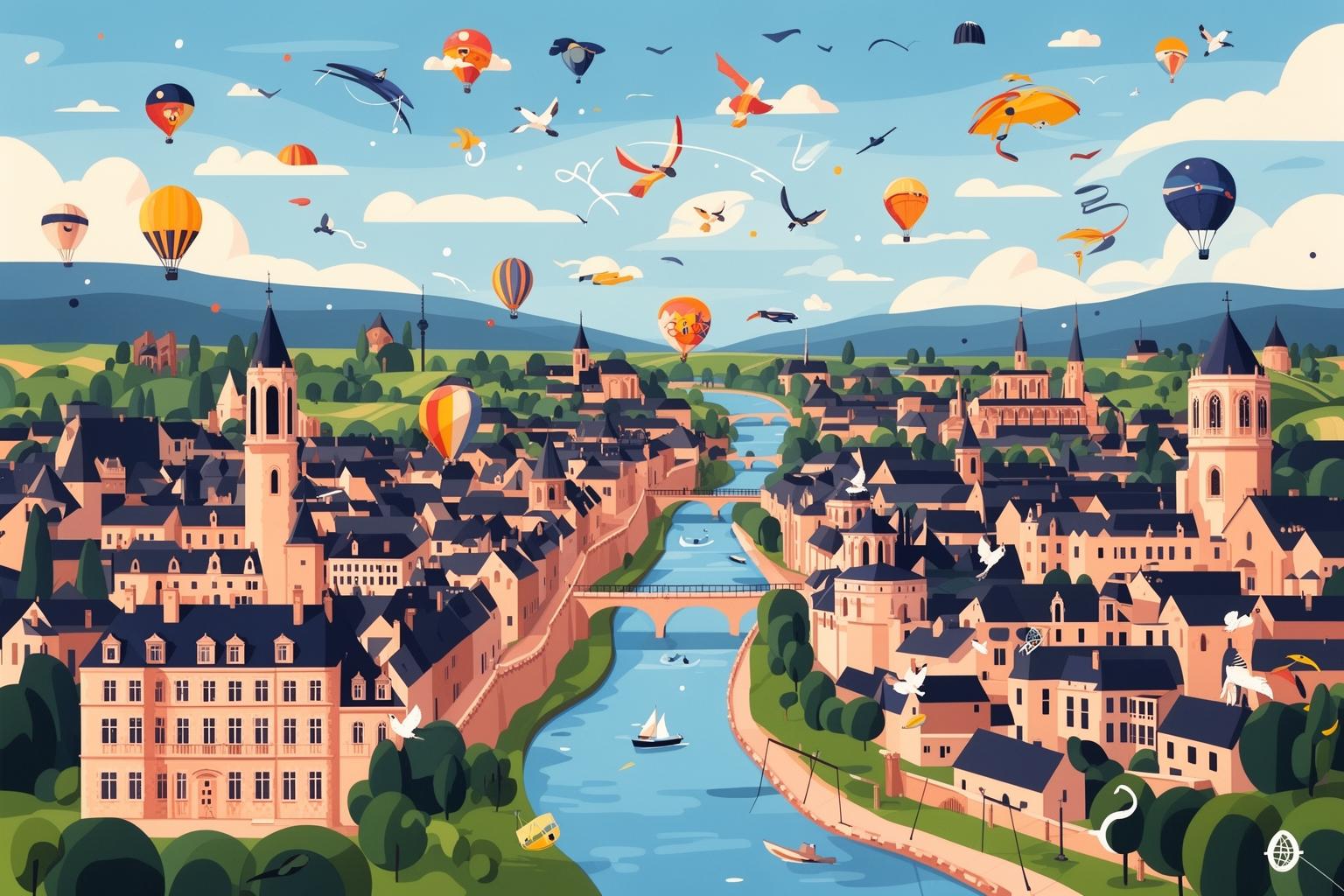
Every explosion has its point of origin—a quiet place under immense pressure before the blast. For the Technicolor eruption that was Henri Matisse’s career, that place was Le Cateau-Cambrésis. Nestled within the flat, often gray landscape of northern France, this town pulsed with the rhythmic clatter of textile looms, its identity woven from threads of wool and silk. Born in 1869, Matisse grew up beneath slate-colored skies, in a world shaped by hard work and practicality. The family business was grain—a solid, dependable trade far removed from the bohemian allure of Parisian art studios. Color, in this early life, was a commodity, something dyed into fabric rather than splashed across canvas with abandon.
His path seemed set: law. A dutiful son, he moved to Paris to clerk and study, his future seemingly drawn in sensible, monochrome lines. But fate intervened in the form of a severe appendicitis attack. Confined to bed during a lengthy recovery, his mother—a creative woman who painted ceramics—gave him a box of paints to pass the time. It was more than a gift; it was a key. That simple box unlocked a new universe. The pure, brilliant pigments were a revelation against the gray backdrop of his life. He would later describe it as discovering a kind of paradise. The world of law, with its rigid rules and gray text, could no longer contain him. The seed planted in the sober northern soil was destined to blossom into the most spectacular hues imaginable.
The Musée Matisse: A Homecoming
Visiting Le Cateau-Cambrésis today is to witness that origin firsthand. The town retains its quiet, industrious charm, but its heart beats within the walls of the Musée Matisse. This is not just another museum housing his work; it is his museum. Founded by Matisse himself in 1952, it was his gift to the town that shaped him—a deeply personal collection curated to tell his story. He donated over eighty works, creating a narrative you can walk through—from his earliest, most academic paintings to the revolutionary Fauvist canvases and the profound simplicity of his later drawings.
The museum occupies the former Fénelon Palace, a grand 18th-century archbishop’s residence whose classical elegance contrasts strikingly with the modernity of the art inside. Walking through its halls is an intimate experience. You see student copies of Old Masters, meticulous and skillful, revealing the strong foundation of draftsmanship on which his revolution was built. You witness his first tentative steps away from realism: colors growing just a little too bright, brushstrokes a bit too bold. Sculptures, book illustrations, and personal effects complete the picture of the whole artist—the man behind the myth. Unlike the grand museums in Paris or Nice that showcase his triumphant peaks, the museum in Le Cateau offers the journey. It’s the story of becoming. You feel the struggle, the searching, the breakthroughs. Visiting this museum is essential for any true Matisse enthusiast. It’s a pilgrimage to the source, a quiet conversation with the artist before he belonged to the world. It is a reminder that even the most vibrant flower must first push through dark earth.
Forging an Identity in the City of Light: Paris
The Student and the Rebel
If Le Cateau-Cambrésis was the seed, Paris was the chaotic, fertile greenhouse where it was forced to grow. When Matisse abandoned law to devote himself to art in the 1890s, he plunged into the undisputed center of the Western art world. Paris at the turn of the century was a crucible of ideas, a city brimming with change. It was a place of strict tradition and explosive rebellion, and Matisse navigated both currents with quiet yet fierce determination.
His formal education took place at the legendary École des Beaux-Arts, where he studied under the Symbolist painter Gustave Moreau. Moreau was an unconventional teacher. While he insisted on mastering the classical foundations of drawing and composition—lessons Matisse absorbed deeply by spending countless hours copying masters like Chardin and Rembrandt at the Louvre—he also encouraged his students to follow their own inner vision. He famously told Matisse, “You are going to simplify painting.” It was a prophetic statement. Within the hallowed, dusty halls of the academy, amid the scent of turpentine and tradition, Moreau provided Matisse with the tools to build and the permission to one day tear it all down.
The atmosphere in his studio was electric. There he met fellow artists like Georges Rouault and Albert Marquet, forming friendships and rivalries that would fuel his artistic growth. The city itself was a classroom. He absorbed the Impressionist and Post-Impressionist works displayed in galleries, mesmerized by Monet’s broken color and Van Gogh’s emotional intensity. The cobbled streets of Montparnasse, the smoky cafés where artists and writers debated late into the night, the bustling energy of the grand boulevards—all nourished his evolving sensibility. Paris challenged him, sharpened him, and provided the intellectual framework for the revolution that was to come.
The Birth of Fauvism
That revolution burst into public consciousness in Room VII of the 1905 Salon d’Automne. It was there that Matisse and a group of contemporaries, including André Derain and Maurice de Vlaminck, exhibited works with such shocking, raw, and non-naturalistic color that a critic, Louis Vauxcelles, exclaimed, in the presence of a Renaissance-style sculpture, “Donatello au milieu des fauves!” (“Donatello among the wild beasts!”). The name stuck. Fauvism was born.
Imagine the Parisian public of the time, accustomed to the subtle palettes of academic painting or even the dappled light of Impressionism, confronted with Matisse’s “Woman with a Hat.” A portrait of his wife, Amélie, her face rendered in bold swathes of green, yellow, and pink, with a background a chaotic collision of pure, unmixed color. It was an assault on the senses, a declaration of independence from descriptive, natural color. For Matisse and the Fauves, color was not meant to replicate reality; it was meant to express emotion, to create its own reality on the canvas. It was a purely visual language of joy, energy, and intensity.
This moment cemented Paris as the battlefield where modern art was contested and defined. To walk through the city today, visiting the Grand Palais where the Salon was held, or the Musée d’Orsay and the Centre Pompidou where these revolutionary works now hang in triumph, is to feel the echoes of that seismic shock. Paris was not just the city where Matisse lived; it was the intellectual and artistic arena where he wrestled with the past, challenged the establishment, and ultimately freed color from its chains, changing the course of art forever.
Where Light Became Color: The Fauvist Summer in Collioure
A Symphony of Sun and Sea
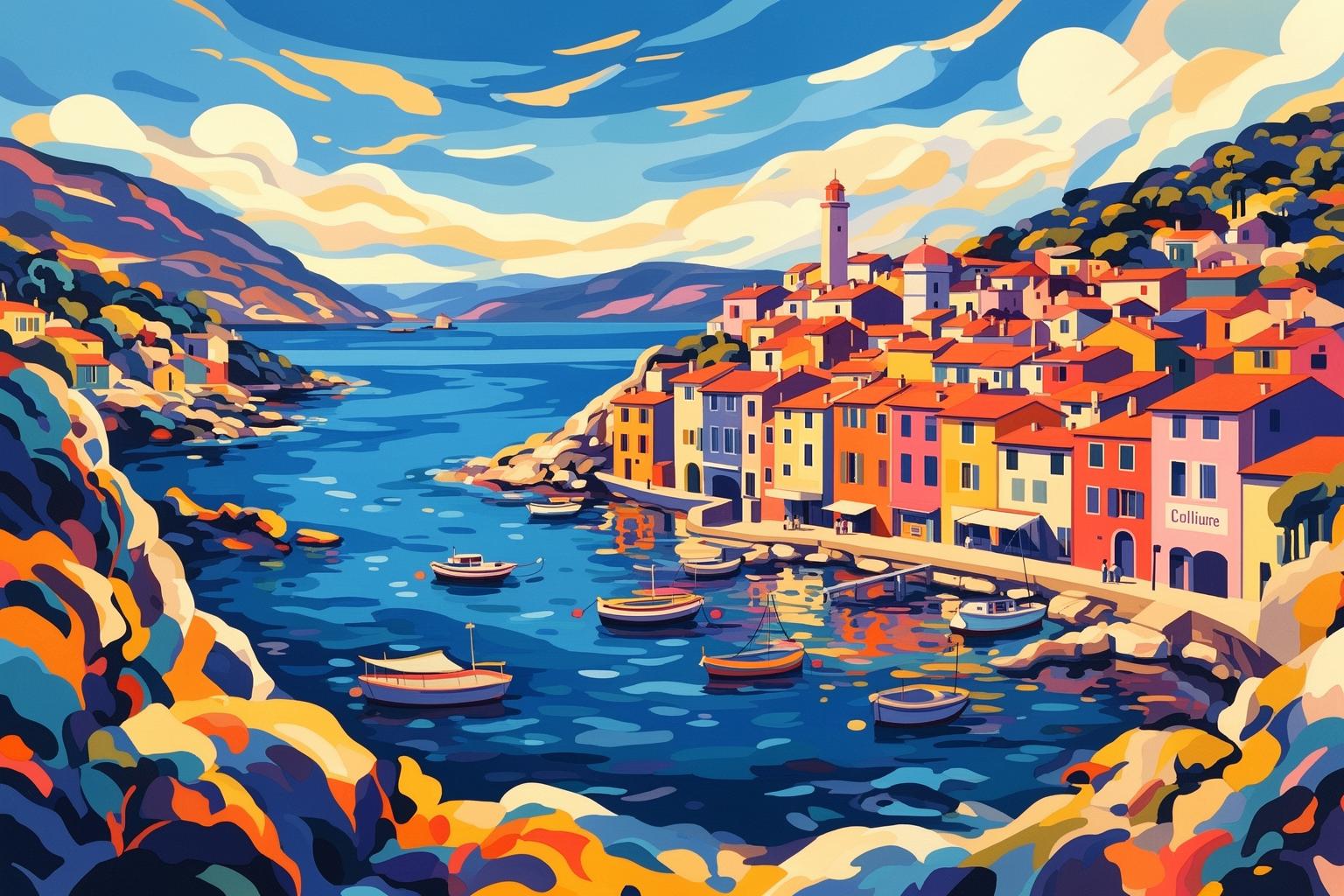
After the theoretical clashes in Paris, Matisse sought a place to bring his radical new ideas to life. He found that place in the summer of 1905 in Collioure, a small, sun-drenched fishing village nestled on the Mediterranean coast, just miles from the Spanish border. While Paris provided the theory, Collioure offered the light. This was not the soft, silvery light of the north, nor the filtered urban glow of the capital. It was something entirely different: a dazzling, almost fierce brilliance that bleached the sky to a pale, intense blue and sharpened every color to an extraordinary vibrancy.
Stepping into Collioure feels like stepping inside a Fauvist painting. The elements that fascinated Matisse and his friend André Derain, who joined him for that iconic summer, remain unchanged. The deep blue Mediterranean crashes against a harbor filled with vividly painted Catalan fishing boats—vermilion, cobalt, and cadmium yellow. The ancient stones of the Château Royal and the distinctive clock tower of the Notre-Dame-des-Anges church glow with ochre and pink hues in the afternoon sun. Terracotta roofs cascade down the hillside, a mosaic of warm reds and oranges set against the green vineyards. The air is thick with the scent of salt, pine, and grilled sardines. It’s a place where the senses are flooded, and it was this sensory richness that fueled their artistic experiments. Here, employing a green streak to outline a nose or painting the sea fiery orange no longer seemed absurd; it felt essential to capturing the sheer intensity of the experience.
Walking the “Chemin du Fauvisme”
For art enthusiasts, the greatest delight of visiting Collioure is the “Chemin du Fauvisme,” or Path of Fauvism. This is not a museum enclosed by walls, but an open-air trail weaving through the very spots where Matisse and Derain placed their easels. Scattered throughout the village are twenty reproductions of the masterpieces they created during that single, explosive summer. Standing on the quay, you can look out at the harbor and see a reproduction of Matisse’s “The Open Window, Collioure” displayed on a stand, perfectly framing the view he captured over a century ago. You witness both his vision and the reality at once, and the space between them is where the magic happens.
You can follow the path from Boramar beach, where fishing boats are still drawn ashore, through the winding, narrow streets of the old town, the Mouré district. Each stop reveals something new. You see how Matisse transformed the shimmering reflections on the water into bold, flat planes of color, and how he turned the interplay of sunlight and shadow on a wall into a vibrant pattern of pure pigment. It’s a deeply moving experience that demystifies the artistic process and enhances your admiration for his genius. You realize he wasn’t simply painting a lovely scene; he was painting the feeling of the sun, the heat, the dazzling light. A practical tip for visitors: wear comfortable shoes, as the streets are steep and cobbled. The best time to experience Collioure’s true light is in late spring or early autumn, when the sun remains brilliant but the summer crowds have dispersed. Find a café by the harbor, order a glass of local Banyuls wine, and watch the light shift on the clock tower. In that moment, everything becomes clear.
A Room with a View: Finding a New Paradise in Nice
The Lure of the Côte d’Azur
If Collioure was a passionate summer fling, Nice was a lifelong romance. Matisse first arrived on the Côte d’Azur in the winter of 1917, seeking shelter from the cold Parisian gloom and treatment for bronchitis. He checked into the Hôtel Beau-Rivage, and from his window, he witnessed a unique light—different from the sharp light of Collioure. As he described it, it was “soft and tender, despite its brilliance.” He was entranced. That initial visit evolved into an almost permanent residence; for the next three and a half decades, Nice and its surroundings became his home and studio.
The city became deeply intertwined with some of his most iconic works. He lived and worked in a succession of apartments and hotel rooms, most notably at the Hôtel de la Méditerranée (now demolished) and later at the grand Hôtel Régina in the hilltop district of Cimiez. These interiors became his universe. The view from his window—the sweeping arc of the Baie des Anges (Bay of Angels), the swaying palms along the Promenade des Anglais, and the ever-changing light on the water—was a constant inspiration. Yet, he was equally captivated by the interior world he fashioned. He filled his rooms with patterned fabrics, exotic screens, potted plants, and North African textiles, crafting lush, theatrical settings. Within these vibrant, light-filled spaces, he painted his famous series of odalisques—languid nudes set in sensual, decorative interiors that blended Western and Eastern aesthetics into something entirely original and deeply personal. Nice provided him with a stable, sunlit refuge where he could endlessly explore his fascination with pattern, decoration, and the dialogue between interior and exterior worlds.
The Musée Matisse in Cimiez
Just as Le Cateau-Cambrésis chronicles his beginnings, the Musée Matisse in Nice narrates his maturity and magnificent final chapter. Situated high on the Cimiez hill, the museum is housed in the Villa des Arènes, a striking 17th-century Genoese villa painted vibrant red ochre. It rests in a peaceful park, surrounded by ancient olive groves and the ruins of a Roman amphitheater—a setting that seems worlds apart from the bustling beachfront below. The atmosphere invites serene contemplation, an ideal environment to appreciate the later stages of the artist’s career.
The collection here is intensely personal, much of it donated by Matisse himself and his family. It offers a comprehensive view of his evolution from the end of his Fauvist period to his final groundbreaking pieces. While the paintings are impressive, the true treasure lies in the collection’s breadth. There are powerful bronze sculptures demonstrating his mastery of form, preliminary drawings and sketches that provide a rare look into his creative process, and most notably, an extensive selection of his late-period paper cut-outs. These works, which he called “drawing with scissors,” were his response to being confined to bed or a wheelchair after major surgery. Far from a lesser art form, these gouaches découpées represent a brilliant culmination of his life’s work—a synthesis of line and color into a singular, joyous expression. Masterpieces like “Blue Nude IV” and the maquette for “Flowers and Fruits” glow with vibrant energy. A visit to the Musée Matisse in Cimiez is more than an art viewing; it is an insight into the relentless creativity of a man who, despite old age and infirmity, never ceased innovating or searching for new ways to express joy.
A Testament of Faith and Form: The Rosary Chapel in Vence
Art as a Spiritual Space
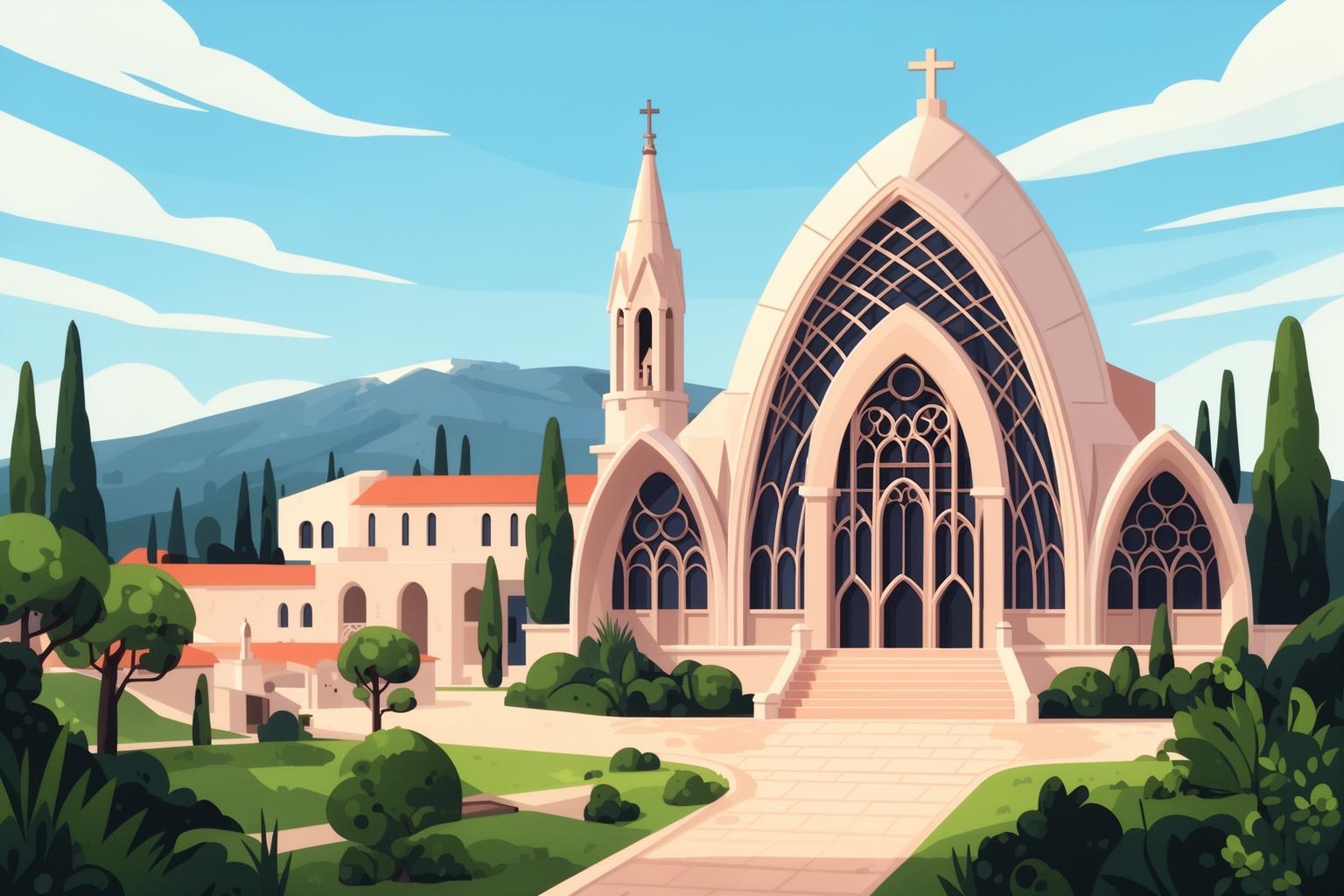
High in the hills above Nice, in the picturesque medieval town of Vence, stands what Henri Matisse regarded as the pinnacle of his life’s work. It is neither a painting nor a sculpture but a small building: the Chapelle du Rosaire, the Rosary Chapel. The story behind its creation is one of friendship and gratitude. In the early 1940s, while recovering from a serious surgery, Matisse was cared for by a young nurse named Monique Bourgeois, with whom he formed a close bond. Years later, Monique joined a Dominican convent in Vence, becoming Sister Jacques-Marie. When the convent decided to build a chapel, she approached the elderly artist, then in his late 70s and largely confined to a wheelchair, seeking his input on a stained-glass window.
Though not a religious man, Matisse threw himself into the project with the zeal of a true believer. He did not only design a window; he designed everything. For four years, he devoted all his energy and artistic expertise to create a unified, harmonious space. He designed the architecture, the stained-glass windows, the striking black-and-white ceramic murals, the altar, the crucifix, the candlesticks, and even the vestments worn by the priests. He said, “This work required me to put forth all my effort… It is the result of a whole life dedicated to work. I consider it, despite all its imperfections, to be my masterpiece.” For Matisse, it was not about religious doctrine but about crafting a space of light, peace, and spiritual serenity.
An Experience of Pure Light and Line
To step inside the Rosary Chapel is to be purified. The interior is remarkably simple, nearly all white. Your gaze is immediately drawn to the three large murals he created on white ceramic tiles, depicted with pure, assured black lines. One wall features Saint Dominic, another the Virgin and Child—both stripped down to their very essence. The largest wall shows the fourteen Stations of the Cross, a turbulent and emotional scene portrayed with an almost frantic, graffiti-like energy that is deeply moving in its rawness.
Yet, the true spirit of the chapel is its light. The two sets of stained-glass windows are non-figurative. They display abstract patterns in just three colors: a vivid ultramarine blue (symbolizing the heavens and the Madonna), a botanical green (representing nature), and a bright lemon yellow (symbolizing the sun and divine light). When the Mediterranean sun pours through these windows, the pristine white interior transforms into a living canvas. Sheets of pure, ethereal color wash over the white tiles, the altar, and the visitors themselves. The colors shift and move as the day progresses, creating a dynamic, immersive experience that is both visually breathtaking and profoundly spiritual. This is the ultimate expression of Matisse’s art: line and color distilled to their most essential forms, working in perfect harmony to evoke an overwhelming sense of joy and peace. Visiting the chapel requires some planning, as its opening hours are limited. But to sit quietly on one of the simple wooden benches and watch the light play across the walls is to witness the final, radiant testament of a modern master. It is an unforgettable pilgrimage.
The Endless Journey of Light
Tracing Henri Matisse’s footsteps across France is to follow a path illuminated by the sun. The journey starts beneath the soft, pearly skies of the industrial north, where color existed as a dormant dream. It moves through the vibrant intellectual atmosphere of Paris, where that dream was shaped into a bold new theory. It bursts into life under the dazzling, crystalline light of Collioure, where color was ultimately liberated. It deepens into a profound, enduring affection within the gentle, glowing ambiance of Nice, and reaches its highest spiritual expression in the transcendent colored light of the Vence chapel.
Each place served as a catalyst, an essential element in the alchemy of his art. Matisse didn’t merely paint landscapes; he absorbed them, allowing the distinct quality of light in each location to steer the progression of his style. He was a translator of light into feeling, of place into pure color. To follow this route today is more than just to visit the sites that inspired him; it’s a chance to perceive the world through his revolutionary vision. It offers the opportunity to feel the warmth of the Riviera sun and understand why he depicted a shadow in vivid blue, or to stand in Collioure’s harbor and grasp why a boat could be a stroke of pure vermilion. His journey shows us that art never emerges from isolation. It is born from experience, observation, and a lifelong, passionate quest for light. This journey never ends, because once you’ve learned to view the world with Matisse’s joyful intensity, every sunrise, every shimmer on water, becomes a masterpiece.