
There are books that you read, and then there are books that you inhabit. They wrap around you like a wool cloak on a windswept moor, their atmosphere seeping into your very bones. For millions, the novels of Charlotte Brontë, particularly the revolutionary passion of Jane Eyre, are not just stories; they are worlds. They are fierce, intelligent, and raw, born from a mind that burned with a fire seemingly far too bright for the quiet, gray stone parsonage where it was forged. To truly understand the genius of Charlotte, and indeed her equally brilliant sisters Emily and Anne, one must go to the source. One must walk the land that shaped them, a rugged, beautiful, and unforgiving corner of West Yorkshire in the north of England. This is not just a trip; it is a pilgrimage to Haworth, the village clinging to a hillside that served as the Brontë family’s home, their sanctuary, and their crucible. It’s a journey into the very landscape that became a character in their revolutionary fiction—the wild, brooding moors. Here, the boundary between literature and life becomes beautifully, hauntingly blurred. You come to see the world through their eyes, to feel the wind that whispered their stories, and to understand that this place is not merely the setting of their lives, but the secret ink with which their legacies were written.
This profound connection between author and landscape is a hallmark of literary pilgrimage, a journey that can also be experienced by following the footsteps of Hemingway.
The Heart of the Matter: Haworth and the Brontë Parsonage Museum
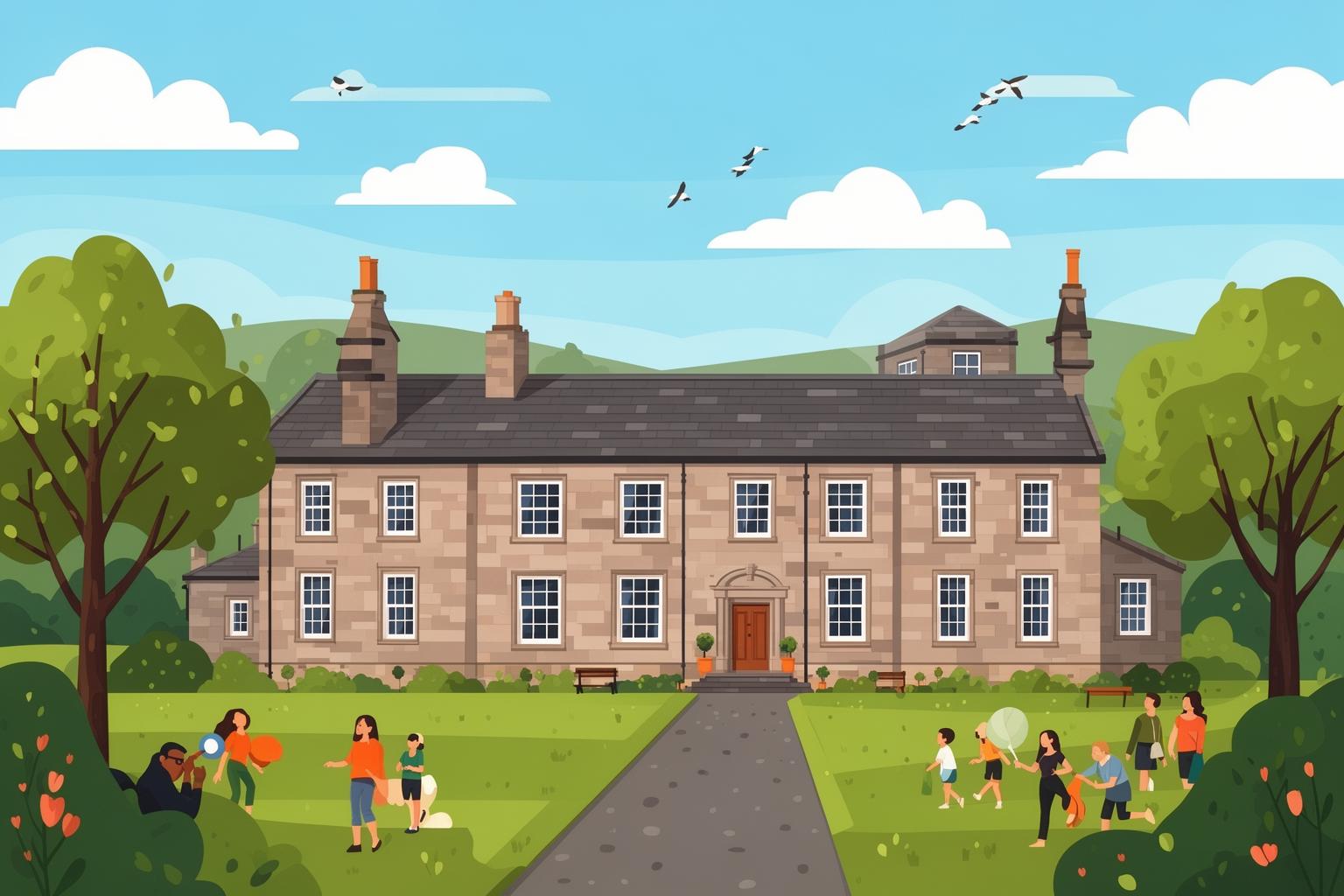
The journey to Haworth feels like a purposeful stripping away of modern layers. Whether you arrive by car, navigating the winding Dales roads, or take the far more romantic approach of the Keighley & Worth Valley steam railway, the final stretch prepares you. The world softens, growing greener, stonier, and more elemental. Then you see it: a village of dark gritstone houses, seemingly stacked one atop another, ascending a steep hill toward the sky. This is Haworth, a place fiercely preserving its character, a living tribute to its most famous residents.
Stepping Back in Time on Main Street
Haworth’s Main Street is the village’s lifeline, and walking it is an experience in itself. It is unapologetically steep, a cobbled lane that tests your calves and rewards you with a profound sense of temporal displacement. The stone buildings crowd close, their windows like watchful eyes. Quaint shops selling books, local crafts, and old-fashioned sweets now occupy what were once apothecaries and grocers. The air feels different here, often tinged with the nostalgic scent of coal smoke from a nearby heritage railway, mixing with the damp chill that perpetually clings to the ancient stone. It’s a place that insists you slow down. Haworth’s rhythm is not rush but deliberate climbing, pausing to catch your breath, looking back down the hill, absorbing the unyielding presence of history. Halfway up, you’ll find the Black Bull, the pub favored by the talented yet tragic Brontë brother, Branwell. It stands as a solemn reminder of the shadows entwined with the family’s brilliance, a refuge where he sought both solace and oblivion. To stand before it is to feel the weight of his story, a tangible fragment of the family’s complex and often sorrowful tapestry.
The Parsonage: A Crucible of Genius
At the top of Main Street, the village gives way to a more solemn space. You pass St. Michael and All Angels’ Church, a gothic sentinel standing watch, and walk beside its expansive, weathered graveyard. There, at the path’s end, lies the destination: the Brontë Parsonage. It is a handsome, solid Georgian house, yet smaller than you might expect, almost humble. It is a place of profound contradictions—a home filled with immense love and devastating loss, a space of physical confinement that sparked boundless imaginative freedom. Today, it serves as the Brontë Parsonage Museum, and crossing its threshold feels like stepping directly into the pages of their biography. The Brontë Society has masterfully preserved the house not as a sterile gallery but as a home frozen in the moment of its occupants’ lives. The air is still, reverent. The floorboards creak with the ghosts of their footsteps. You aren’t merely viewing a historic site; you are standing in the very rooms where literary history was forged, and the feeling is electrifying.
The Dining Room: A World of Imagination
Of all the rooms in the Parsonage, none feels more sacred than the dining room. This was the family’s creative heart. By day, it was a space for meals and daily life. But by night, after their father, Patrick Brontë, had retired, it transformed. Here, around the simple mahogany table still anchoring the room, Charlotte, Emily, and Anne would pace, circling again and again as they read their work aloud, shared ideas, and wove the intricate plots of their novels. This is where Jane Eyre, Wuthering Heights, and Agnes Grey were born. You can almost hear the rustle of paper, the quiet murmur of their voices against the howling Yorkshire wind outside. On display are astonishing artifacts, including tiny, hand-sewn books they created as children, filled with minuscule writing revealing a shared imaginative world so intense it’s nearly incomprehensible. Standing in this room, you feel the concentrated power of their collaboration, a creative furnace that burned against the boredom and isolation of their lives.
Charlotte’s Room: Glimpses of a Private World
The personal effects displayed throughout the house truly bridge the gap between the literary legends and the women behind them. In what was once Charlotte’s room, or in various display cases, you find breathtakingly intimate items. One of her dresses, its tiny frame a stark reminder of her small, delicate stature, contrasts sharply with the immense strength of her heroines. You see her thin-rimmed spectacles, a poignant symbol of the poor eyesight burdening her from years of writing and detailed drawing in poor light. There are her impossibly small shoes, worn from walks on the moors. These objects are not mere curiosities but relics that humanize her, transforming her from a portrait on a book cover into a living, breathing person who felt cold, suffered headaches, and possessed iron will. Seeing her handwriting on a letter, the neat, controlled script pouring out such torrents of passion, is deeply moving.
The Studio and Branwell’s Shadow
The Brontë story would be incomplete without the tragic figure of their brother, Branwell. His studio is a space of both artistic ambition and painful failure. Here, he worked on his paintings, including the famous portrait of his three sisters. In a haunting act of self-effacement or dissatisfaction, he painted himself out of the picture, leaving a ghostly pillar-like shape between Emily and Charlotte—a visible void where he should have been. This room tells the story of his decline into alcohol and opium addiction, a source of immense grief for the family. It adds a layer of deep, resonant sadness to the Parsonage, reminding us that alongside the creation of immortal art, this house also held very real and painful human drama.
The Church and the Graveyard: Life and Loss
The Parsonage is inseparable from its surroundings: the church and the graveyard. The Brontë family pew remains inside St. Michael and All Angels’ Church, where their public lives were centered. But it is the graveyard that leaves the most lasting impression. Pressing right up against the Parsonage walls, it is a constant, inescapable reminder of mortality. In the 19th century, Haworth was an overcrowded, unsanitary village with a shockingly high death rate—a fact Patrick Brontë campaigned to change. The water supply was contaminated by the overflowing graveyard, and life expectancy was alarmingly low. The Brontës were not spared. Charlotte’s older sisters, Maria and Elizabeth, died young from illnesses contracted at boarding school. And during a devastating eight-month period between 1848 and 1849, Branwell, Emily, and Anne all succumbed to tuberculosis. The family vault lies within the church itself. Walking among these weathered headstones immerses you in the grief and resilience that shaped the Brontë sisters’ worldview. Death was never distant; it was a constant neighbor. This pervasive atmosphere of loss and survival breathes through every page of their novels, giving them their gothic depth and a profound appreciation for the human spirit’s tenacity.
Into the Wild: The Moors as Muse and Monster
To truly connect with the spirit of the Brontës, you must leave the village behind and venture out onto the moors. This was their refuge, their cathedral, their playground, and the wild landscape that ignited their imaginations. The shift from the enclosed world of the Parsonage to the vast, open moorland is breathtaking. It’s like stepping out of a tightly penned chapter and into a sweeping, epic poem. The landscape acts as a character itself—a force of nature that is at once beautiful and brutal, freeing and frightening. This is the wild heart of Brontë country.
The Call of the Heather
The moors engage all the senses. The first thing you notice is the wind—a constant, whispering presence that rushes through the hardy grasses, sharing secrets in your ear. Beneath your feet lies a springy, damp carpet of peat, moss, and heather. The colors shift dramatically with the seasons. In spring and early summer, it’s a patchwork of greens and earthy browns. But in late summer, from August through September, the moors transform magically, becoming a rolling sea of purple as the heather blooms fully. It is a view of such staggering, wild beauty that it almost feels otherworldly. Above, the sky stretches vast, a canvas for dramatic, fast-moving clouds that cast ever-changing shadows across the land. This is the setting for Jane Eyre’s desperate flight from Thornfield, the very wilderness that embraced and nearly overwhelmed her. It embodies, in every sense, the soul of Emily Brontë’s Wuthering Heights—a place of elemental emotions mirroring the stormy love between Catherine and Heathcliff.
Tracing Their Footsteps: The Brontë Walk
A network of public footpaths crisscrosses the moors, with several well-trodden routes allowing you to follow the sisters’ footsteps. The most popular and accessible is the walk to the Brontë Bridge and Waterfall. This is a journey of a few miles, leading you from the Parsonage down into a sheltered valley. The path is clear, though often muddy, making sturdy, waterproof footwear essential. As you walk, the sounds of the village fade away, replaced by the cries of curlews and the gentle murmur of a stream. Eventually, you reach the Brontë Bridge—a simple, sturdy stone slab spanning a beck. It’s an impossibly picturesque and peaceful spot, easy to imagine as a place where the sisters rested, talked, and dreamed. A little farther is the Brontë Waterfall, a charming cascade tumbling over mossy rocks. It’s not grand or towering but a gentle, intimate waterfall—a perfect place for quiet reflection. Sitting here with a book and a flask of tea is one of the most rewarding pleasures of the pilgrimage.
The Ruins of Top Withens: The Ghost of Wuthering Heights
For the more adventurous pilgrim, the ultimate destination is Top Withens. This longer, more challenging walk takes you deeper into the moors, reaching a higher and more exposed elevation. The path grows rougher, and the surroundings become wilder and more desolate. After a demanding hike, you are met with a haunting sight: the ruins of a remote, abandoned farmhouse. A plaque nearby states that Top Withens is not the actual location of Wuthering Heights, but its setting and atmosphere undoubtedly inspired Emily Brontë. Standing there, you understand why. The isolation is complete. The wind howls through the empty window openings of the crumbling stone walls. The view stretches out to nothing but an endless expanse of bleak, beautiful, and unforgiving moorland. It is a place that feels profoundly lonely yet deeply romantic. You sense the full untamed power of Emily’s gothic vision. You are not merely looking at a landscape; you are standing within the pages of her novel, feeling the raw, elemental force she captured so brilliantly. It is a powerful, unforgettable experience that connects you to her genius like nothing else can.
Practical Advice for Moorland Trekkers
Walking the moors demands respect and preparation. The weather here is famously changeable and can shift in moments. A bright morning may turn into a cold, windswept afternoon with driving rain. Always dress in layers and carry a waterproof jacket, even if the sky is clear when you start. Sturdy, waterproof hiking boots are essential. The terrain is uneven and often boggy. It’s also surprisingly easy to become disoriented, especially if mist rolls in. Stick to marked footpaths, carry a map and compass (or a fully charged phone with reliable GPS), and inform someone of your route. Walks can last several hours, so bring water and snacks. The best time to see the heather is in late August, but spring and autumn each have their own evocative beauty. Winter walks are for the truly hardy, delivering a stark, dramatic experience that perhaps most closely captures the novels’ atmosphere.
Beyond Haworth: Other Corners of Charlotte’s World
Though Haworth and its moors lie at the heart of the Brontë story, Charlotte’s life and work extended to other equally captivating places for the literary pilgrim. These sites provide deeper insight into the experiences that influenced her novels, especially Villette and the later parts of Jane Eyre.
Brussels: The Villette Connection
In 1842, Charlotte and Emily traveled to Brussels to improve their French and German at the Pensionnat Heger. This period was one of the most formative and emotionally turbulent of Charlotte’s life. She developed a profound, unrequited love for her married tutor, the charismatic Constantin Heger. The feeling of being an outsider in a foreign city, combined with intellectual stimulation and emotional intensity, became the foundation for two of her novels, The Professor and, more masterfully, Villette. Although the original Pensionnat building no longer stands as it once did, you can visit the area where it was located, now part of the Centre for Fine Arts (Bozar). Walking the streets of Brussels, you can still sense the city that Lucy Snowe, the protagonist of Villette, navigated. You can feel the loneliness and longing that Charlotte infused into her writing, a powerful testament to how she transformed personal pain into universal art.
Hathersage: The Real-Life Thornfield Hall
For fans of Jane Eyre, a visit to the village of Hathersage in the Peak District is an essential detour. In 1845, Charlotte stayed here with her friend Ellen Nussey, whose brother was the local vicar. The area inspired much of the detail she wove into her masterpiece. The most remarkable find is North Lees Hall, a 16th-century manor house widely regarded as the primary model for Mr. Rochester’s Thornfield Hall. With its imposing structure and battlements, the similarity is striking. One can almost envision Jane arriving, a small, determined figure against a grand, brooding backdrop. The village of Hathersage itself is thought to be the model for Morton, where Jane seeks refuge with the Rivers family. In a final, poignant twist, the local churchyard holds several graves bearing the Eyre name, which Charlotte likely saw and borrowed for her iconic heroine. Hathersage offers a fascinating glimpse into Charlotte’s creative process, revealing how she gathered real-world details and skillfully adapted them into her fictional realm.
Scarborough: Anne’s Final Resting Place
While this pilgrimage centers on Charlotte, the story remains incomplete without honoring her youngest sister, Anne, often the most overlooked of the trio. Anne had a deep affection for the seaside town of Scarborough, where she worked as a governess. When she became terminally ill with tuberculosis, her final wish was to visit the sea one last time, hoping the fresh air might bring relief. She traveled there with Charlotte in May 1849 but died just days after their arrival. Heartbroken and alone, Charlotte made the difficult decision to bury Anne in Scarborough rather than subject her sister’s remains to the long journey back to Haworth. Anne Brontë’s grave can be found in the churchyard of St Mary’s Church, in a beautiful spot on a hill overlooking the sea she loved. Visiting her grave is a deeply moving experience, marking the end of the extraordinary creative flame of the Brontë siblings and serving as a quiet, dignified tribute to Anne’s unique and courageous literary voice.
A Pilgrim’s Practical Guide: Planning Your Brontë Journey
Embarking on a journey to Brontë country is an incredibly fulfilling experience, and a bit of planning will help ensure it goes smoothly. The area warmly welcomes visitors, though its rugged landscape and historical character bring unique considerations.
Getting to Haworth
The most atmospheric way to arrive is by train. The national rail network will bring you to the nearby town of Keighley. From there, you can transfer to the Keighley & Worth Valley Railway, a heritage line featuring beautifully preserved steam and diesel trains. The ride itself, winding through the rolling Yorkshire countryside, sets the perfect tone for the historical immersion awaiting you in Haworth. Alternatively, regular buses connect Keighley to Haworth. If you choose to drive, be prepared for narrow, winding roads. Parking in the village can be tricky, especially during peak season, but there is a large car park at the top of the village, conveniently located near the Parsonage.
Where to Stay and Eat
Haworth offers a variety of charming accommodations. For an authentic experience, consider staying at one of the historic inns or cozy Bed & Breakfasts along Main Street. Waking up to the sight of cobbled streets and stone houses is the best way to absorb the village’s atmosphere. When it comes to dining, you’re in the heart of Yorkshire, so embrace local traditions. Enjoy a hearty meal at a classic pub—the Black Bull is essential for its historical significance, though other pubs like the Old White Lion serve excellent food and local ales. No visit to Yorkshire is complete without a proper cream tea, and several tea rooms in Haworth offer delicious scones with clotted cream and jam, the perfect treat after a long walk on the moors.
When to Visit
Each season reveals a different perspective of Brontë country. Spring brings milder weather and blossoming flowers, accompanied by fewer crowds than summer. Summer promises the best chances for good weather and long daylight hours, ideal for extensive moorland hikes. Late summer, especially late August and early September, is peak season for good reason: the moors are transformed by spectacular purple heather. Autumn can be breathtaking, with moody, dramatic skies and rich colors creating an exquisitely gothic atmosphere. Winter is for the dedicated pilgrim; the weather can be harsh, with cold, wind, and even snow, but it offers a stark, powerful sense of the isolation and hardship the Brontës endured. It’s also a time when you might have the moors almost entirely to yourself.
A Gentle Pace for a Deep Experience
The most important advice is not to rush your visit. This is a place to be savored, not simply seen. To truly soak in the atmosphere, plan to spend at least two full days. This allows one day to explore the village, spend several hours in the Parsonage Museum, and wander through the church and graveyard. Dedicate the second day to a proper moorland walk, whether the gentler route to the waterfall or the more ambitious trek to Top Withens. Find a bench, open a copy of Jane Eyre or Wuthering Heights, and read a few pages in the very environment where these works were born. Let the world slow down. Listen to the wind. Connect with the history embedded in the very stones around you.
Your journey into the world of Charlotte Brontë is more than a literary tour; it is an emotional and imaginative odyssey. It provides a chance to connect with the spirit of a woman and her family who, from a remote corner of the world, challenged the conventions of their time and wrote with a truth and passion that still resonates centuries later. You will depart with a deeper understanding of their genius, a profound sense of the interplay between landscape and imagination, and the haunting beauty of the Yorkshire moors etched forever in your memory. You arrive as a reader of their work, but leave as a witness to their world, carrying the wild, wonderful echo of Haworth within your heart.