
There’s a certain feeling that settles in when you’re deep inside a Haruki Murakami novel. It’s a quiet hum of the surreal, a space where cats might talk, where wells lead to other worlds, and where the melancholic strains of a jazz record can echo through the lonely corridors of the human heart. His stories are not just narratives; they are landscapes. They are the neon-drenched loneliness of a Tokyo night, the salty air of a provincial seaside town, and the hushed, nostalgic avenues of student life. To read Murakami is to inhabit these spaces. But what if you could walk through them? What if you could trace the footsteps of Toru Okada, listen for the two moons of Aomame, or feel the same breeze that inspired a young writer to change the course of modern literature? This is an invitation to do just that. This is a journey into the heart of Haruki Murakami’s Japan, a pilgrimage that blurs the line between fiction and reality, memory and place. We’ll wander from his childhood haunts in the Kansai region to the sprawling, labyrinthine metropolis of Tokyo, seeking not just landmarks, but the very atmosphere that breathes life into his enigmatic worlds. Prepare to get a little lost, to listen closely to the wind’s song, and to discover the magic hidden in the mundane, just as Murakami himself so masterfully does. It’s a journey for the soul, guided by the ghost of a story, a melody, a memory.
If you’re inspired to explore other authors’ worlds, consider embarking on a literary pilgrimage to the English Midlands in the footsteps of George Eliot.
The Early Years: Whispers from the Kansai Coast
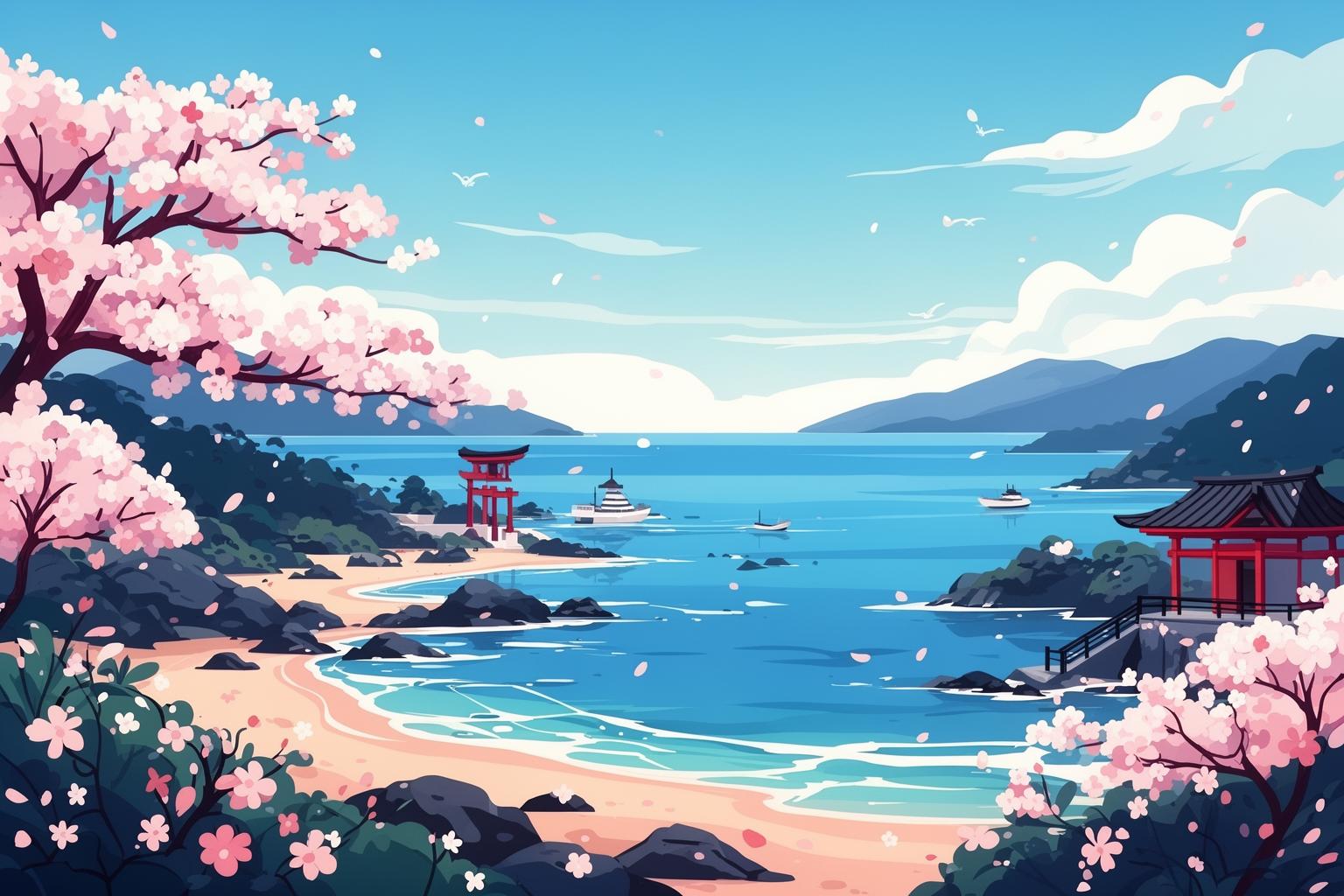
Every story begins somewhere, a wellspring from which the river of narrative flows. For Haruki Murakami, that source is not the hyper-modern Tokyo but the more refined, internationally-tinged Kansai region. Born in Kyoto, he spent his formative years between Kobe and the prosperous suburb of Ashiya in Hyogo Prefecture. This landscape—a unique fusion of Japanese tradition, Western architecture, and the endless expanse of the sea—became part of his literary DNA. It’s the setting for his early ‘Trilogy of the Rat’ novels, a world filled with aimless youths, seaside bars, and an enduring sense of something lost or perhaps never found. The atmosphere here feels distinct—it carries the salt air from the port and the weight of a history that looks inward to Japan and outward to the world.
Strolling Through Ashiya: The Landscape of Youth
To grasp the Murakami behind Hear the Wind Sing or Pinball, 1973, you must first wander the quiet, sloping streets of Ashiya. Nestled between the Rokko Mountains and Osaka Bay, it is a town of understated elegance. This is where the young Murakami grew up, immersed in the subtle influences of Hanshin-kan Modanizumu—a cultural movement from the early 20th century marked by a sophisticated, Western-inspired lifestyle in the region. Its presence is still felt in the architecture of older homes and the broad, leafy avenues.
The Ashiya City Library stands as a silent monument to his literary awakening. Picture a young Murakami cycling here, devouring works by Kurt Vonnegut, Richard Brautigan, and Raymond Chandler, absorbing the American literary styles that would deeply influence his own voice. Although the library building is modern, the act of visiting it connects you to the origins of his passion. Walking along the Ashiya River, especially during cherry blossom season, feels like stepping into a memory. It’s easy to imagine his characters on these same paths, lost in thought, the gentle water flow a quiet companion to their internal monologues. This place is less about landmarks and more about an ambiance—a pristine, orderly, yet subtly melancholic mood that suffuses his early works.
Kobe’s Port of Call: Echoes of the Rat
The port city of Kobe offers a grittier, more worldly counterpoint to Ashiya’s suburban calm. A brief train ride away, Kobe is defined by its harbor and its history as one of Japan’s earliest ports open to foreign trade. The constant arrival of people, cultures, and goods fostered a cosmopolitan and transient vibe that permeates the city’s very core. It’s the kind of place where people come and go, where stories start and end by the water. This sense is the lifeblood of J’s Bar, the fictional gathering spot in the Trilogy of the Rat.
Though J’s Bar exists only in his imagination, its spirit is alive in the city. To find it, stroll through the neighborhoods of Sannomiya and Motomachi, where tiny bars hide within narrow alleys. Then climb the hill to Kitano-cho, once home to foreign merchants and diplomats. The preserved Western-style residences, known as ijinkan, perch on steep slopes overlooking the harbor, evidence of the city’s international heritage. Standing there, gazing over the sprawling city and shimmering sea, you can almost sense the loneliness and possibility his characters wrestle with. Kobe is a city of departures and arrivals, a fitting metaphor for the quest for connection at the core of his early novels. Access to Kobe is straightforward; the Shinkansen bullet train stops at Shin-Kobe Station, placing you at the base of the hills, ready to explore.
Tokyo’s Labyrinth: The University Years and Beyond
If Kansai was the cradle of Murakami’s youth, Tokyo was the forge where he was shaped as both a writer and an individual. It was in Tokyo that he attended university amidst social turmoil, where he discovered jazz and met his future wife, Yoko, and where, on an ideal spring afternoon, he experienced the epiphany that would launch his literary career. In his novels, Tokyo is more than just a backdrop; it becomes a character itself—a vast, complex entity that is simultaneously alienating and intimate, a labyrinth of quiet neighborhoods and roaring highways where anything seems possible.
Waseda University: The Birthplace of a Writer
Waseda University’s campus is a world unto itself. Situated in the northern part of Shinjuku ward, it buzzes with intellectual energy, history, and youthful ambition. This was where Murakami studied drama in the late 1960s, amid intense student protests and cultural shifts in Japan. The turbulent energy of this era underlies Norwegian Wood, a novel steeped in the nostalgia and melancholy of that time. Strolling through the campus, past the iconic Okuma Auditorium, one can sense the layers of history. This is where he met Yoko and spent countless hours in libraries and cafes, developing the worldview that would shape his writing.
A visit to the Tsubouchi Memorial Theatre Museum, with its striking Elizabethan-style architecture, is essential. It provides a direct connection to his formal studies and serves as a reminder that his narrative and dialogue skills were sharpened through deep engagement with the dramatic arts. The neighborhood around the university, Takadanobaba, is a classic student district, filled with affordable and tasty eateries, old bookstores, and a lively, unpretentious atmosphere. It’s the ideal place to immerse yourself in the academic and bohemian spirit that nourished Murakami’s early creativity. Access is convenient via the Tokyo Metro Tozai Line to Waseda Station or the JR Yamanote Line to Takadanobaba Station.
The Peter Cat Era: Jazz, Coffee, and a Baseball Revelation
Before he became a celebrated novelist, Haruki Murakami was a jazz club owner—a formative chapter of his life central to his identity. The jazz bar he operated with his wife, called Peter Cat, was a sanctuary of music, smoke, and conversation. It was both his livelihood and passion—a place where he immersed himself in American jazz records that would eventually color the soundscape of his novels. Peter Cat existed in two different locations, each representing a distinct phase of his pre-writing life.
Tracing the Spirit of Peter Cat in Kokubunji
The original Peter Cat was located south of Kokubunji Station in Tokyo’s western suburbs. It was a basement club, a cozy refuge where students and locals could escape into the sounds of John Coltrane and Miles Davis. Today, the building no longer stands, replaced by an unremarkable office structure, with no plaque or sign to mark the site. Still, a visit to Kokubunji is worthwhile. The area retains a laid-back, suburban atmosphere, far from the hectic pace of central Tokyo. Wandering its streets, you will find small independent shops and bars that echo the spirit Murakami nurtured. It’s a journey of imagination—a quest for the ghost of a sound and a tribute to the years of dedication that preceded his fame.
Sendagaya and Jingu Stadium: The Novelist’s Genesis
The second, and better-known Peter Cat, was in Sendagaya, a quiet neighborhood nestled between the bustling centers of Shinjuku and Shibuya. It was just a short walk from Meiji Jingu Stadium, home of the Yakult Swallows baseball team. It was here, at this stadium, that a defining moment took place. Murakami famously recalls sitting on the grassy outfield on a clear April afternoon in 1978, drinking a beer and watching the game. When the American player Dave Hilton stepped to the plate and hit a clean double, with the crack of the bat resonating through the stadium, Murakami thought, “I think I can write a novel.”
That night, he returned home and started writing Hear the Wind Sing. For this reason, visiting Jingu Stadium is an essential part of any Murakami pilgrimage. You can sense the vastness of the open sky and the lush green field. To fully embrace the experience, attend a Swallows game, where the atmosphere is both electric and warm, with passionate fans, unique cheering rituals like the “umbrella dance,” and the feeling of timeless summer afternoons. The Sendagaya area itself is worth exploring, a refined and tranquil part of Tokyo, home to the National Stadium and Shinjuku Gyoen National Garden. It’s a perfect place for quiet reflection, ideal for contemplating the sudden, enigmatic moments of inspiration that have the power to change a life forever.
The Settings of the Stories: Walking Through Fictional Worlds
One of the most exciting aspects of a Murakami pilgrimage is the chance to step directly into the pages of his novels. He anchors his most surreal and fantastical narratives in real, tangible Tokyo locations, forging a strong connection between the fictional world and the physical city. Walking these streets, you become part of the story, your own footsteps merging with those of his unforgettable characters.
Norwegian Wood and the Scars of Memory
Norwegian Wood is perhaps Murakami’s most realistic and nostalgic work, with its geography deeply imprinted on the map of Tokyo. The story unfolds as a long, melancholic stroll through the memories of its protagonist, Toru Watanabe, and you can literally retrace many of his paths.
The Walk from Yotsuya to Komagome
The novel’s most iconic scene is the extended, aimless Sunday walk Toru takes with Naoko. This journey forms a literary map of sorrow and intimacy. You can start, as they do, near Yotsuya Station and follow their wandering route northwards. The path leads past Sophia University, along the Sotobori Moat with views of the Ichigaya fishing ponds, and into the lively area around Iidabashi Station. From there, you follow the Kanda River toward Suidobashi, home to the Tokyo Dome, before ascending the hill into the academic neighborhood of Hongo, near the University of Tokyo. Their walk concludes in Komagome, a quiet residential area. Taking this walk yourself is a profound experience. It is a long journey, several hours at a leisurely pace, allowing you to sense the city’s rhythm shifting from one neighborhood to the next. You can feel the weight of their unspoken words during the silent stretches and the anonymity of their grief amid the crowds. This walk connects you intimately with the emotional heart of the book.
The Waseda Dormitory and Beyond
Toru’s student life centers around Waseda, and the dormitory he inhabits was modeled on the real-life Wako-ryo, which has since been demolished. However, the area still vibrates with the student energy he describes. A distinctive element of the novel’s atmosphere is the Toden Arakawa Line, Tokyo’s last streetcar. Toru rides this charming tram to visit Naoko’s friend Reiko. Riding the Arakawa Line feels like stepping back in time. It rattles through quiet residential neighborhoods, offering a glimpse of a slower, nostalgic Tokyo—a perfect way to capture the wistful mood of Norwegian Wood.
The Alternate Realities of 1Q84
Murakami’s epic 1Q84 depicts a Tokyo that is subtly yet profoundly altered from our own—a world with two moons in the sky. The gateway to this strange reality is a very specific and very real place.
The Emergency Staircase in Sangen-jaya
Aomame, one of the novel’s protagonists, enters the world of 1Q84 by descending an emergency staircase from the elevated Metropolitan Expressway near Sangen-jaya. Fans have pinpointed the exact location: a spiral staircase descending from the expressway near the Ikejiri-ohashi exit. Although you cannot access the expressway on foot, the staircase is visible from the streets below. The Sangen-jaya neighborhood, affectionately called “Sancha,” is an ideal setting for this portal. It is a lively hub with a slightly bohemian, almost gritty atmosphere. Its maze-like backstreets host tiny bars, independent theaters, and vintage shops. It feels like a place where reality’s fabric might easily wear thin, where you could turn a corner and find yourself in a world that is almost, but not quite, the same.
Koenji: A World of Its Own
The other protagonist, Tengo, lives in the Koenji neighborhood. This is no coincidence. Koenji, located west of Shinjuku on the JR Chuo Line, has long been Tokyo’s countercultural heart. It is renowned for its punk rock scene, numerous second-hand clothing shops, and fiercely independent spirit. It’s a place that marches to its own beat, much like the quiet, self-contained Tengo. Exploring Koenji’s covered shotengai (shopping arcades) and the labyrinthine streets south of the station is an adventure itself. You can spend hours browsing vinyl stores, sipping coffee in retro cafes, and observing the distinctive street fashion. It’s a neighborhood that feels like a world unto itself, a fitting home for a character living a life full of extraordinary secrets.
Suburban Mysteries: From The Wind-Up Bird Chronicle to Kafka on the Shore
Murakami often situates his most surreal events in the most mundane settings: the quiet, leafy suburbs of Tokyo. It is in these seemingly ordinary places that wells become portals and ordinary men are called to extraordinary quests.
The Dry Well in Setagaya
The Wind-Up Bird Chronicle begins in a peaceful, unnamed neighborhood widely believed to be in the Setagaya or Nerima wards of western Tokyo. The protagonist, Toru Okada, leads a quiet domestic life until his cat disappears and he ventures into a dry well in a neighbor’s yard. This well serves as the novel’s central portal, a gateway to a strange and violent subconscious realm. While you cannot visit the actual house or well, you can absorb the atmosphere by exploring these suburbs. Take the train on the Odakyu or Seibu lines from Shinjuku and disembark at a random stop. Wander narrow streets past manicured gardens, small parks, and local shrines. The profound stillness of these areas, just kilometers from the world’s busiest city, creates a palpable tension. It’s the sensation that just beneath this peaceful exterior, something deeply strange might be unfolding.
Takamatsu and the Journey of Kafka Tamura
To fully follow Murakami’s literary map, you eventually have to leave Tokyo. Kafka on the Shore sends its title character on a journey of self-discovery to Takamatsu, a city on Shikoku island. This location choice is meaningful. Shikoku is famous for the Shikoku Henro, an ancient 88-temple Buddhist pilgrimage route. Kafka’s journey is a modern pilgrimage of his own. Takamatsu is a charming, relaxed port city, renowned for its beautiful Ritsurin Garden and proximity to the art island Naoshima. The novel’s key setting is the fictional Komura Memorial Library, a haven of refuge and discovery for Kafka. While the library itself doesn’t exist, Takamatsu boasts an excellent prefectural library and a rich cultural scene that embody its spirit. Visiting Takamatsu lets you experience the sense of escape and transformation Kafka seeks. You can savor the famous Sanuki udon noodles he enjoys and embrace the slower pace of life—a stark contrast to Tokyo’s relentless energy.
The Murakami Library: A Modern Mecca
For decades, the physical legacy of Haruki Murakami was dispersed across the landscapes that inspired him. However, in 2021, a definitive destination for his admirers opened its doors: The Waseda International House of Literature, more affectionately known as the Haruki Murakami Library. Situated on the campus of his alma mater, Waseda University, this space is more than just an archive; it is a living, breathing tribute to his work and the literary world he has inspired.
Architecture and Atmosphere
Designed by the renowned architect Kengo Kuma, the building itself is a piece of art. Its dramatic, tunnel-like form, crafted from undulating wooden planks, appears to organically rise from the ground, welcoming visitors into an imaginative environment. Inside, the design seamlessly combines modernity with comfort. The space is bright, open, and filled with cozy corners for reading and reflection. The design concept aimed to create a vibrant atmosphere where students, researchers, and fans can interact and share ideas, rather than a silent, dusty museum. The architecture itself seems to mirror Murakami’s style—clean, intricate, and full of unexpected twists.
What to Experience Inside
The library is a treasure trove for any Murakami enthusiast. Here, you can find first editions of his books alongside translations in more than 50 languages. A highlight for many visitors is the recreation of his study and a listening room featuring a vast collection of vinyl records, many from his personal collection, which can be enjoyed on high-quality audio equipment. This intimate connection to the music so integral to his writing offers a profound experience: you can play a record mentioned in one of his novels and bring the story to life in a new dimension. The library also preserves an archive of his manuscripts, correspondence, and other materials, serving as an essential hub for academic research. To complete the experience, there is a student-run café on-site called the “Orange Cat,” a charming tribute to Peter Cat and Murakami’s well-known affection for felines. Visiting here is the ultimate Murakami pilgrimage, a place where the many strands of his life and work—literature, music, translation, and scholarship—converge. Please be sure to check the official website in advance, as reservations are often required to regulate visitor flow.
Practical Tips for the Murakami Pilgrim
Exploring Murakami’s Japan is an adventure that rewards curiosity and a willingness to wander. Here are some tips to help make your pilgrimage smooth and meaningful.
Getting Around
Japan’s public transportation system is a marvel of efficiency. For travel between major cities like Tokyo, Kobe, and Takamatsu, the Japan Rail Pass is an invaluable investment, providing unlimited rides on the Shinkansen and most other JR trains. Within Tokyo, a rechargeable IC card such as a Suica or Pasmo is essential. It works seamlessly on subways, trains, and buses alike, letting you navigate the city’s complex network with ease. Don’t be intimidated by the seemingly chaotic station maps; everything is color-coded and clearly marked in English.
The Right Mindset
It’s important to remember that this pilgrimage is often more about capturing a feeling than locating a specific film set. Many of the novel’s locations are either fictional or have changed over time. The aim is not to find an exact replica but to immerse yourself in the atmosphere that Murakami so brilliantly evokes. Allow yourself to get lost. Wander down an intriguing side street. Sit quietly in a park and observe. The most profound “Murakami moments” often come unexpectedly—in a quiet jazz cafe, on a late-night train, or watching rain fall across the city. Bring a copy of the book you’re focusing on. Reading a passage from Norwegian Wood while sitting in a park in Komagome, or from 1Q84 while gazing at the expressway in Sangen-jaya, creates a powerful, layered experience.
Beyond the Obvious
To truly immerse yourself in the Murakami vibe, go beyond the specific locations mentioned in his works. Seek out jazz kissaten, traditional jazz cafes where conversation is minimal and deep listening is emphasized. Shinjuku’s Dug, referenced in Norwegian Wood, still exists, but countless others are tucked away in basements and upper floors of old buildings. Spend time exploring record stores in neighborhoods like Shimo-kitazawa or Koenji, browsing through vinyl. Find a local sento (public bath) for a uniquely Japanese experience of quiet contemplation. These are the places where the spirit of his novels—the blend of solitude, music, and quiet observation—is most vividly alive.
A Journey Without a Map
A pilgrimage through Haruki Murakami’s Japan ultimately becomes a journey into a state of mind. It is an exploration of the spaces between reality and imagination, the ordinary and the extraordinary. You start by tracing the footsteps of his characters, but soon find yourself on a path uniquely your own. You’ll discover that the empty baseball field, the quiet suburban street, and the melancholic tune from a hidden bar are not merely settings for his tales, but gateways into your own experience. This journey reminds us that the world is far stranger and more beautiful than it seems on the surface, with other realms lying just beyond our perception. So go forth, wander, and listen. While you may not encounter a talking cat or a woman without a name, you will surely uncover a piece of the quiet, profound mystery that makes his work—and Japan itself—so endlessly enchanting.