Words are not merely symbols on a page; they are vessels of time, carrying feelings, histories, and the very essence of human connection. Few stories capture this profound truth with as much quiet grace and heartfelt dedication as The Great Passage (舟を編む – Fune wo Amu). Whether you discovered it through Shion Miura’s breathtaking novel, the Academy Award-winning live-action film, or the beautifully rendered anime series, the narrative leaves an indelible mark. It’s a love letter to language itself, chronicling the painstaking, decade-long journey of a team of lexicographers crafting a new dictionary, The Great Passage. It’s a story about patience, passion, and the quiet heroism of dedicating one’s life to a singular, monumental task. But the story’s soul isn’t just confined to its characters like the endearingly awkward Mitsuya Majime or the charismatic Masashi Nishioka; it’s deeply rooted in the very streets and neighborhoods of Tokyo where their journey unfolds. These are not just backdrops; they are living, breathing participants in the narrative. To walk these streets is to step inside the story, to feel the rustle of turning pages in the air, and to understand the world that shaped Majime’s quest to capture the ocean of words. This is a pilgrimage not to grand temples, but to the sacred spaces of knowledge, community, and quiet contemplation that define The Great Passage. It’s a journey into the heart of Tokyo’s literary world, a chance to trace the footsteps of dictionary-makers and find your own meaning in the spaces between the lines. So let’s begin our own passage, navigating the currents of the city to the shores where words are born.
If you’re inspired to explore more literary landscapes that shape an author’s world, consider embarking on a literary pilgrimage through Haruki Murakami’s Japan.
The Heart of the Word Ocean: Jimbocho Book Town
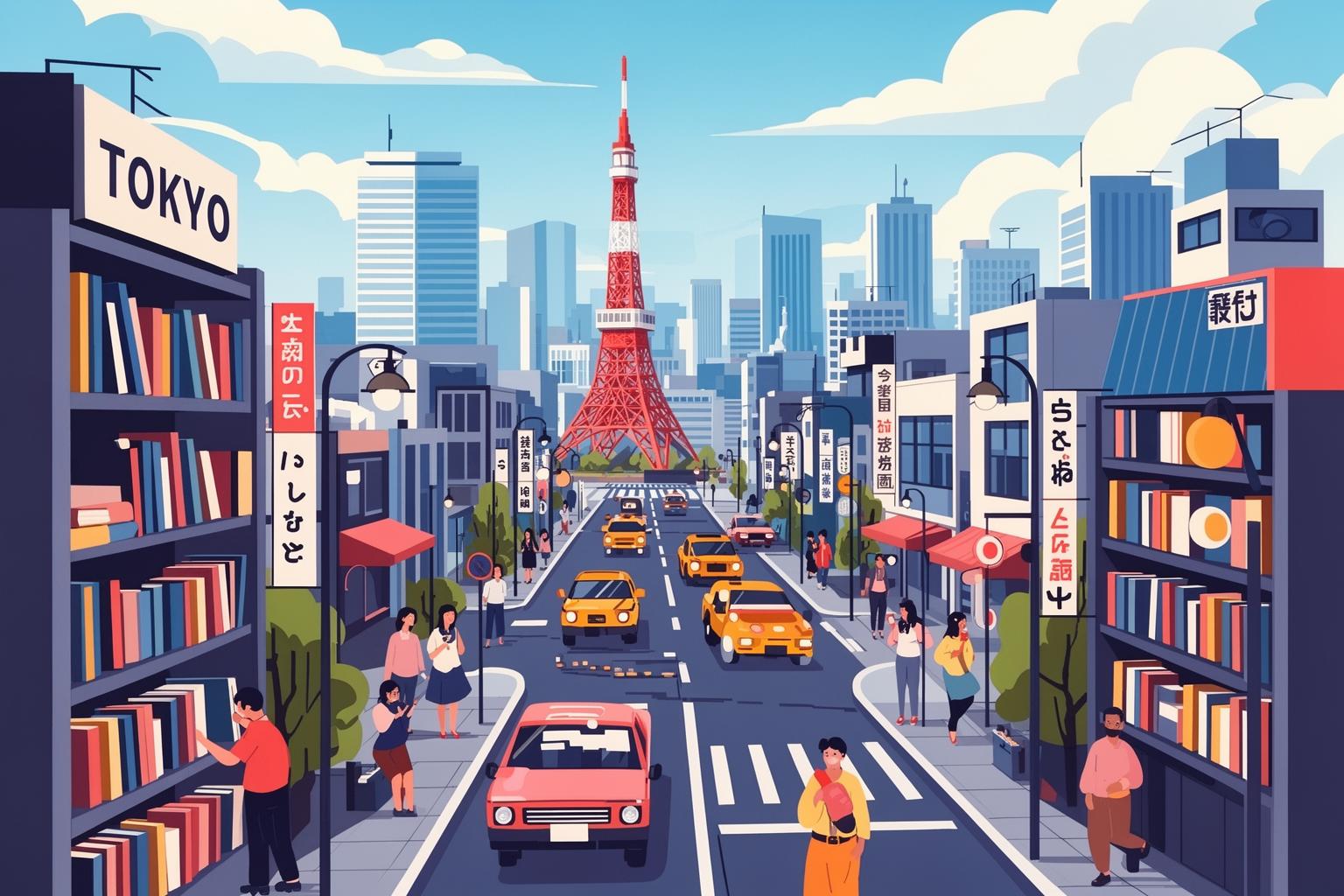
Every great journey requires a starting point, and for The Great Passage, that point is unmistakably Jimbocho. This is more than just a neighborhood in Tokyo; it’s a living library, a haven for book lovers, and the spiritual home of the fictional Genbu Shobo publishing house. As you step out of Jimbocho Station onto Yasukuni-dori, the atmosphere shifts. It becomes quieter, infused with the scent of aged paper, ink, and leather bindings. This is the place that awakened Majime’s soul, where the chaotic ocean of words found order on endless shelves, and where our pilgrimage truly begins.
The Atmosphere of a Thousand Stories
Strolling through Jimbocho offers a sensory experience unlike any other in Tokyo. Forget the neon lights of Shibuya or the towering skyscrapers of Shinjuku. Here, the panorama is defined by towering bookshelves, their titles whispering from behind glass. The streets—the main thoroughfare and the smaller alleys branching off—are home to over 150 bookstores. Some are modern, multi-story giants, while others are small, family-run shops that have stood the test of generations, their wooden facades weathered by time. One can feel the weight of a century’s worth of intellectual curiosity and devoted collecting. It’s a place of reverence. University students carefully pull academic texts from high shelves, elderly men in tweed jackets scrutinize rare first editions through magnifying glasses, and young artists sketch in notebooks, inspired by antique woodblock prints. This vibrant energy fuels The Great Passage—a profound and enduring love for the printed word. It’s easy to envision a young Majime, immersed in this world, discovering his calling not in a sudden revelation, but in the quiet, steady rhythm of this literary ecosystem.
In the Footsteps of Genbu Shobo
Though Genbu Shobo is fictional, it embodies the essence of real publishing houses that have long been rooted in the Kanda area, including Jimbocho. Literary giants such as Iwanami Shoten, Shogakukan, and Shueisha maintain their headquarters nearby. The architecture—an eclectic mix of stoic mid-century modernism and older, ornate buildings—imbues the neighborhood with a sense of gravitas. One can almost sense the intellectual intensity radiating from these walls—the deadlines, the manuscript debates, the distant echoes of printing presses from another era. The dictionary editorial department portrayed in the story, with its dusty, paper-strewn desks and scholarly atmosphere, fits perfectly here. It is a realm built on meticulous care and unwavering dedication, and that spirit permeates Jimbocho itself. To walk these streets is to walk through Majime and his colleagues’ workspace. Glance up at the windows of the publishing houses, and you can nearly glimpse the soft glow of a desk lamp, imagining a lexicographer inside, tirelessly wrestling with definitions late into the night, striving to capture the perfect nuance of human experience.
A Deeper Dive into the Shelves
To truly appreciate Jimbocho, you must let yourself get lost. Wander the side streets and explore the specialty shops. There are stores devoted entirely to film, art, philosophy, and even old maps. Isseido Booksellers, with its charming historic facade, feels like a portal to the past, specializing in rare and antiquarian books. Sanseido Shoten is a towering giant, a multi-story paradise where nearly any new title you seek can be found. Yet the real magic often lies in the smaller, unnamed secondhand shops. In these cramped, delightfully cluttered spaces, you might discover a forgotten gem—a book with a handwritten inscription by a past owner, a collection of Showa-era postcards, or a beautifully illustrated volume on botany. It is in these moments of serendipitous discovery, encountering a book you never knew you needed, that you connect most deeply with Majime’s own journey. His work was to map the vast ocean of language, but it began with a passion for a single, perfect word. Your journey here starts with the love for a single, perfect book waiting quietly on a dusty shelf.
The Publisher’s Soul: Kanda’s Kissaten Culture
Just beyond the immediate boundaries of Jimbocho lies the larger Kanda district, a neighborhood that extends the literary and academic ambiance. Historically a student town, Kanda is home to numerous universities, and this intellectual vitality has nurtured a unique culture that perfectly complements the world of The Great Passage. It’s a place of quiet reflection, where profound thoughts are stirred by strong coffee in rooms that seem paused in time. Within these spaces, the true work of the mind—the kind of focused, uninterrupted thinking essential for dictionary-making—can genuinely thrive.
The Sanctuary of the Kissaten
The Japanese kissaten, or traditional coffee shop, is an institution, and those in Kanda are renowned. They are nothing like the bright, bustling chain cafes common today. A genuine kissaten is a sanctuary of calm. Enter one, such as the famous Sabouru or Ladリオ, and you are instantly transported to another era. The air is cool, scented with dark-roast coffee and often a faint hint of tobacco from a time when smoking was customary. The decor features dark wood, worn velvet chairs, Tiffany-style lamps casting a warm amber light, and classical or soft jazz music playing softly from a vintage sound system. These are not places for laptops or loud conversations. They are spots for reading, contemplating, and quiet dialogue. It’s in places like this that you can imagine the dictionary team taking a break from the office. Picture the elder Professor Matsumoto gently stirring his coffee as he muses over a challenging definition, or Nishioka leaning back in his chair, trying to persuade a colleague from another department to support their underfunded project. These kissaten are extensions of the editorial department—perhaps less formal, but equally vital to the intellectual process. Ordering a siphon coffee and watching the master brew it with ritualistic care is a meditative experience, perfectly mirroring the careful attention the lexicographers devote to their craft.
A Taste of a Bygone Era
When you visit a kissaten in Kanda, don’t simply order a coffee. Sample the classic menu items that have nourished students and writers for decades. Try the naporitan, a uniquely Japanese spaghetti dish with a sweet ketchup-based sauce, onions, and peppers. Or savor the thick, fluffy toast served with a pat of butter and a small portion of jam. This isn’t gourmet fare; it’s comfort food, designed to be hearty and familiar. Eating such food in this setting creates a connection to the countless scholars, artists, and dreamers who have sat in these very booths, wrestling with their own great passages. It’s a moment of communion with the neighborhood’s intellectual spirit. Here, the abstract world of words and ideas is grounded in the simple, satisfying reality of a good meal and a hot drink, providing the energy for the long hours of mental labor the story honors.
Majime’s World: The Quiet Life in Yanaka
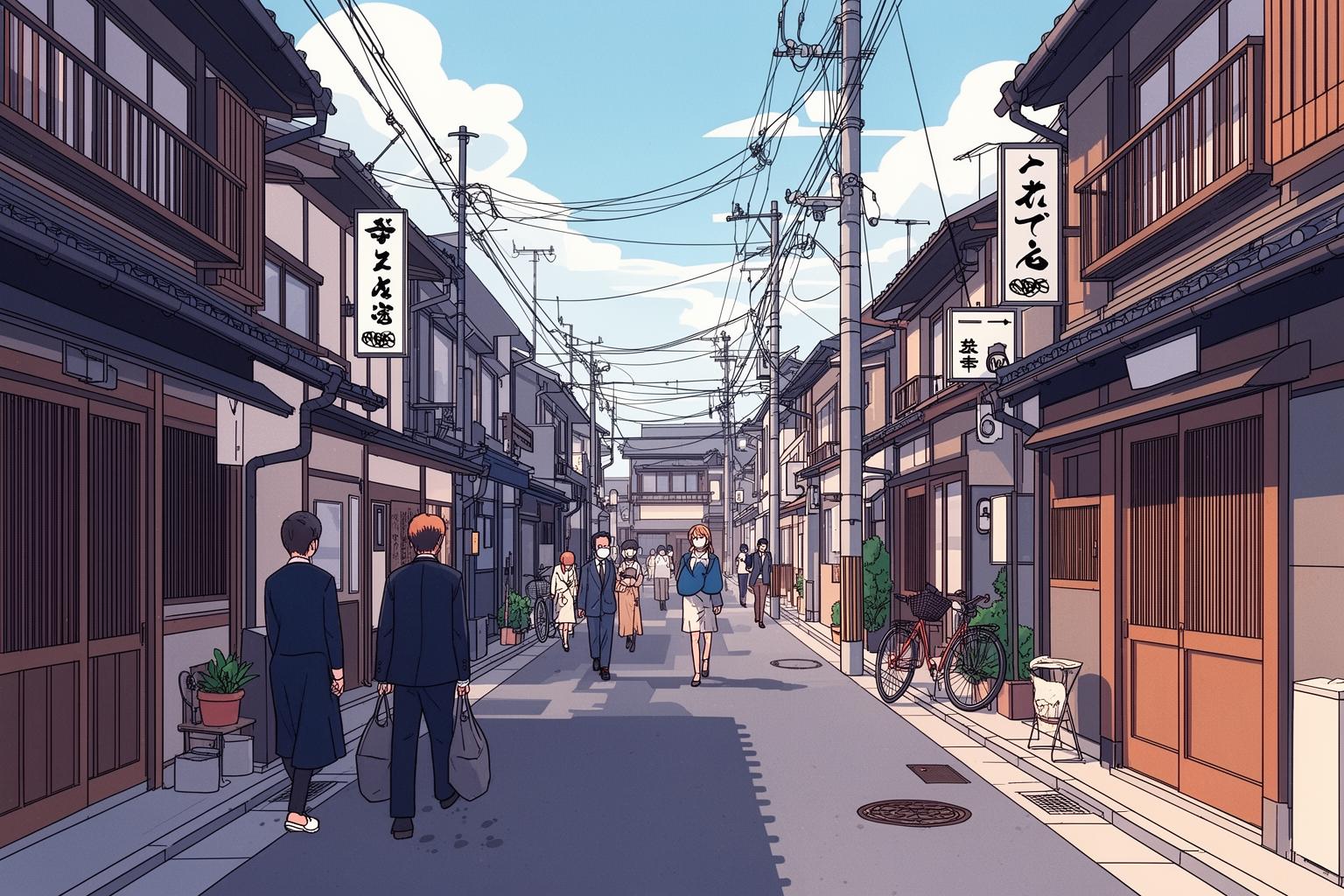
While Jimbocho marks Majime’s professional awakening, his personal and emotional development unfolds far from the publishing world, within the serene, traditional boarding house of Sou-un-sou. Although the boarding house itself is fictional, its essence is beautifully captured in Tokyo’s Yanaka neighborhood. Traveling from the intense intellectual environment of Kanda to the calm, neighborhood rhythm of Yanaka mirrors Majime’s transformation from a socially awkward recluse to a man who discovers love, community, and a place to call home. Yanaka, one of the rare Tokyo areas to have survived the World War II firebombings, preserves a charming shitamachi (old downtown) atmosphere that feels worlds apart from the modern cityscape.
The Ambiance of Sou-un-sou
Disembarking at Nippori Station and heading toward Yanaka is like passing through a temporal veil. Wide avenues give way to narrow, winding alleys. Modern apartment blocks are replaced by two-story wooden houses with tiled roofs and potted plants at their entrances. Small family-run shops offer tofu, rice crackers, and traditional sweets. This is a neighborhood designed on a human scale. You hear neighbors chatting, children’s laughter from a small local park, and the distant, melodic chime of a temple bell. This is the realm of Sou-un-sou, a place of shared meals, quiet conversations, and the gentle support of a found family. It’s here that Majime learns to connect with others under the guidance of his landlady, Take, and where he falls in love with Kaguya Hayashi, a chef-in-training whose passion for her craft parallels his own. Walking through Yanaka, you sense the warmth and intimacy that nurtured Majime’s growth.
A Stroll Through Time and Tranquility
Exploring Yanaka should be done at a leisurely pace. Begin with a walk through the stunning Yanaka Cemetery. While it may sound somber, it is among Tokyo’s most beautiful and peaceful green spaces. Its central avenue, Sakura-dori, is lined with cherry trees that create a breathtaking pink tunnel in spring. The cemetery resembles more of a park, a place for quiet reflection. Weathered tombstones stand amid towering trees, exuding an atmosphere of profound serenity. It is an ideal spot to contemplate themes of time, legacy, and life’s passage, which are central to the story. From the cemetery, head to Yanaka Ginza, the neighborhood’s beloved shopping street. This short, lively pedestrian lane offers a glimpse of mid-20th-century Japan. Red lanterns hang overhead, and vendors call out, selling fresh fish, vegetables, and delectable street food. Sample a menchi katsu (deep-fried ground meat cutlet) from a local butcher or a sweet manju bun from a confectioner. Be sure to watch for the neighborhood’s most famous residents: the many cats lounging in sunny spots, completely indifferent to the human bustle around them. This slow, gentle rhythm of life provides a perfect counterbalance to the intensity of dictionary-making and supplies Majime with the emotional grounding he needs to fulfill his life’s work.
Capturing the Narrative: The Filming Locations on Screen
The 2013 live-action film adaptation of The Great Passage beautifully captured the novel’s quiet, introspective tone on screen by thoughtfully choosing locations that echoed the story’s central themes. While many scenes were filmed on soundstages, several important real-world locations helped anchor the film in a tangible reality, providing fans with a unique chance to step directly into the cinematic universe.
The Real Dictionary Department
Crafting the look and atmosphere of the Genbu Shobo dictionary editorial department was essential; it needed to feel both old-fashioned and sacred, a treasure trove of knowledge piled high to the ceiling. The filmmakers discovered the ideal setting at the Toppan Printing Museum in Bunkyo, Tokyo. This museum, devoted to the history of printing—from woodblock techniques to modern digital processes—features a library and archives with tall, dark wooden shelves, rolling ladders, and endless rows of books and documents that transformed into the on-screen Genbu Shobo. For any fan of the story, visiting the museum is a captivating experience. You can witness firsthand the incredible craftsmanship and technological progress behind the creation of any published work, including a dictionary. The exhibits on typography and bookbinding deepen one’s appreciation for the physical book—an object the characters hold in such high regard. Standing in the museum, it’s easy to imagine the rustle of Majime turning a page or the contemplative silence of the team as they refine a single, perfect phrase. It establishes a strong, palpable connection to the film’s visual and thematic core.
Practical Information for the Pilgrim
The Toppan Printing Museum is situated near Edogawabashi Station or Iidabashi Station and is a must-see for devoted fans. Be sure to check their official website for current opening hours and any special exhibitions before visiting. Although access to the specific archive rooms used in filming may be restricted, the entire museum radiates the same atmosphere. It is a place that honors the very process The Great Passage celebrates: the transformation of ideas and language into a durable, physical form. Visiting here enriches one’s understanding of the story, bridging the divide between the fictional narrative and the genuine history of the printed word.
Practical Tips for Your Own Great Passage
Embarking on a pilgrimage through the world of The Great Passage is a fulfilling journey, but a bit of preparation can make the experience even more rewarding. These neighborhoods are best enjoyed at a slow pace, allowing for unexpected discoveries and moments of quiet reflection.
Best Time to Visit
Although Tokyo is lovely throughout the year, autumn is arguably the ideal season for this pilgrimage. The weather is cool and crisp, perfect for long walks. More importantly, early November hosts the Kanda Used Book Festival in Jimbocho. The streets fill with outdoor stalls, creating a vast open-air library that is truly a sight to see. It’s a lively, joyful celebration of books that wonderfully embodies the spirit of the area. Spring is also a great option, with the cherry blossoms in Yanaka Cemetery offering a fleeting beauty that enhances contemplative strolls.
Getting Around and What to Bring
The best way to explore Jimbocho, Kanda, and Yanaka is on foot. For traveling between districts, the subway is your most convenient option. The Toei Mita and Shinjuku lines, along with the Tokyo Metro Hanzomon Line, all stop at Jimbocho Station. For Yanaka, the JR Yamanote Line to Nippori Station is the easiest access point. Make sure to wear comfortable walking shoes, as you will cover quite a bit of ground. Bring a tote bag or a small backpack, since leaving Jimbocho without purchasing at least one book is nearly impossible. Most importantly, carry a notebook and pen—these inspiring, thought-provoking neighborhoods might just prompt you to jot down a few thoughts of your own.
A Note on Etiquette
These neighborhoods, especially the smaller bookstores and kissaten, function with a quiet respect. When browsing books, handle them gently, particularly the older volumes. It is generally polite to ask before taking photos inside smaller shops. In the kissaten, keep your voice low and avoid lengthy phone calls. These simple courtesies help maintain the unique, tranquil atmosphere that makes these places so special. By being a considerate visitor, you become an appreciated part of the neighborhood’s living culture.
The Words That Remain
A journey through the world of The Great Passage is more than mere sightseeing. It is an immersion into a particular state of mind, a celebration of the slow, the meticulous, and the deeply passionate. In an era of instant communication and fleeting digital content, this story and these places stand as a powerful reminder of the enduring value of craftsmanship and the profound effort required to create something of lasting significance. As you wander from the revered halls of Jimbocho’s bookstores to the cozy warmth of a Kanda kissaten, and finally to the gentle, timeless streets of Yanaka, you trace a map of the human heart. This journey reveals how a life’s purpose can be discovered in the most unexpected places, and how love and community provide the anchor needed to navigate the vast, daunting ocean of existence. You may arrive in Tokyo as a fan of a story, but you will leave with a deeper appreciation for the quiet corners of the world where passion is nurtured, dedication becomes an art, and every single word truly matters. This is your invitation to embark on the passage, to find the words waiting just for you.