
There are stories that don’t just live on a page or a screen; they seep into your soul, leaving an indelible stain of atmosphere. Nagabe’s masterpiece, The Girl From the Other Side (とつくにの少女, Totsukuni no Shōjo), is one such tale. It is a hauntingly beautiful, achingly tender fairytale whispered in ink and shadow. The story of Shiva, a sweet, innocent human girl, and Teacher, her cursed, monstrous guardian, unfolds in a world starkly divided. There is the Inside, a realm of fragile human civilization, and the Outside, a cursed land of eternal twilight inhabited by beings who spread a terrible affliction with a single touch. The aesthetic is not one of bright, bustling Tokyo streets or idyllic Japanese countryside. Instead, it’s a world of moss-dampened stone, gnarled forests, and a silence heavy with forgotten history. It feels ancient, European, and deeply rooted in folklore. This has led pilgrims of the heart, those of us captivated by its somber beauty, to ask a fundamental question: where is this place? The answer isn’t found on a map of Japan. To walk in the footsteps of Shiva and Teacher, one must cross the sea. The soul of The Girl From the Other Side resides in the mists, the rolling green hills, and the crumbling ruins of Ireland. This journey is not about finding exact scene-for-scene locations. It is an atmospheric pilgrimage, a quest to breathe the air that inspired Nagabe’s world, to feel the chill of the Outside, and to understand the profound, melancholic beauty that defines this incredible work of art.
This atmospheric pilgrimage is a testament to how literature can inspire journeys, much like the literary pilgrimage through Normandy that follows in the footsteps of Flaubert.
The Celtic Canvas: Unraveling Nagabe’s Inspiration

To grasp why Ireland serves as the spiritual home of The Girl From the Other Side, we need to look beyond the manga’s panels and the anime’s frames. We must explore the very essence of its aesthetic. Nagabe’s art style is itself a tribute to the golden age of Western illustration, reminiscent of the intricate, sometimes eerie work of artists like Arthur Rackham and John Bauer. These illustrators brought classic European fairytales to life, stories filled with dark forests, mysterious creatures, and a vivid sense of wonder and dread. Their worlds were far from clean and polished; they were organic, textured, and ancient. This is the same visual language Nagabe employs. The cross-hatching, the deep blacks, and the delicate, wavering lines craft a world that feels like it was pulled from a long-forgotten storybook found in a dusty attic.
Ireland embodies this aesthetic. It is a land rich in folklore, where the boundary between worlds feels thin. The concept of the Outside and the Inside reflects the Celtic belief in the Otherworld—the realm of the fae, or the Aos Sí, a supernatural race living alongside humanity. Contact between these worlds was often perilous, governed by rules and taboos, much like the curse dividing Shiva and Teacher. The Irish landscape itself narrates these tales. It is a place where myth is etched into the very stones. The rolling hills, the constant green moisture that allows moss and ivy to cover every surface, the abrupt, dramatic changes from bright sun to enveloping mist—all combine to create an atmosphere of enchantment and melancholy. This is not merely a backdrop; it is a character in its own right, a silent witness to centuries of stories. When you behold Ireland’s dense, tangled forests or its stark, lonely coastlines, you are seeing more than just a beautiful landscape; you are witnessing the emotional and visual palette from which Nagabe painted the world of Shiva and Teacher.
Into the Desolate Beauty: County Clare and The Burren
If there is one place in Ireland that perfectly captures the eerie, desolate beauty of the Outside, it is The Burren in County Clare. The name itself, derived from the Irish word Boíreann meaning “a rocky place,” hardly does it justice. This vast, otherworldly karst landscape is a pavement of grey limestone broken into countless pieces, stretching for miles. When you first set foot in The Burren, the world seems to fade away. A profound silence pervades, interrupted only by the wind. It feels ancient, primeval, and utterly alien. This is the land Teacher would have called home, a cursed earth where few things appear to thrive.
The Haunting Expanse of the Limestone Pavement
Walking across The Burren is an experience for the senses unlike any other. The ground beneath you is a mosaic of giant limestone slabs, known as clints, separated by deep fissures called grykes. It’s a landscape that demands your full attention, encouraging a slow and deliberate pace. It mirrors the careful, tentative steps between Shiva and Teacher, always wary of the dangerous space between them. Yet, if you look closely into those fissures, you’ll find a miracle of life. Sheltered from the wind, a unique ecosystem of Mediterranean and Arctic-alpine flowers defies the harsh environment. Delicate, vibrant blooms push through cracks in the grey stone. This paradox lies at the heart of The Girl From the Other Side—the persistence of warmth, life, and innocence (embodied by Shiva) in a world that is overwhelmingly cold, desolate, and cursed (The Burren, the Outside).
Whispers from Ancient Stones: Poulnabrone Dolmen
The Burren is far from empty; it is haunted by ghosts. The landscape is scattered with megalithic tombs, ring forts, and ancient stone monuments—relics of a people who lived and died here thousands of years ago. The most iconic among them is the Poulnabrone Dolmen, a portal tomb standing like a skeletal sentinel against the sky. Its massive capstone, precariously balanced on two towering portal stones, creates a stark, unforgettable silhouette. Standing before it, you feel the immense weight of time. This is not merely a structure; it is a gateway to the past, a place of ritual and death. It is exactly the kind of mysterious, forgotten landmark you would expect deep within the Outside. It’s easy to imagine Teacher explaining its grim history to a curious Shiva, another lesson in the somber realities of their world. These ancient ruins lend The Burren an aura of sacred, sorrowful history that resonates deeply with the tone of the manga.
A Pilgrim’s Practical Guide to The Burren
To fully experience The Burren, a rental car is essential. Public transportation is limited, and the region’s magic lies in the freedom to stop whenever a striking view or ancient ruin catches your eye. Base yourself in one of the charming coastal villages like Doolin, famed for its traditional Irish music, or the slightly larger town of Ennistymon. Be prepared for all kinds of weather; the Atlantic coast is notoriously unpredictable. A sunny morning can quickly turn into a misty, rain-soaked afternoon. But don’t despair the rain— the mist only deepens The Burren’s mystique, softening its harsh edges and making the world feel even more dreamlike. Sturdy, waterproof hiking boots are a must, as the limestone can be uneven and slippery when wet. Give yourself time here. The Burren’s beauty doesn’t shout; it whispers. It invites you to slow down, observe closely, and listen to the silence.
The Sheltering Woods: Killarney National Park
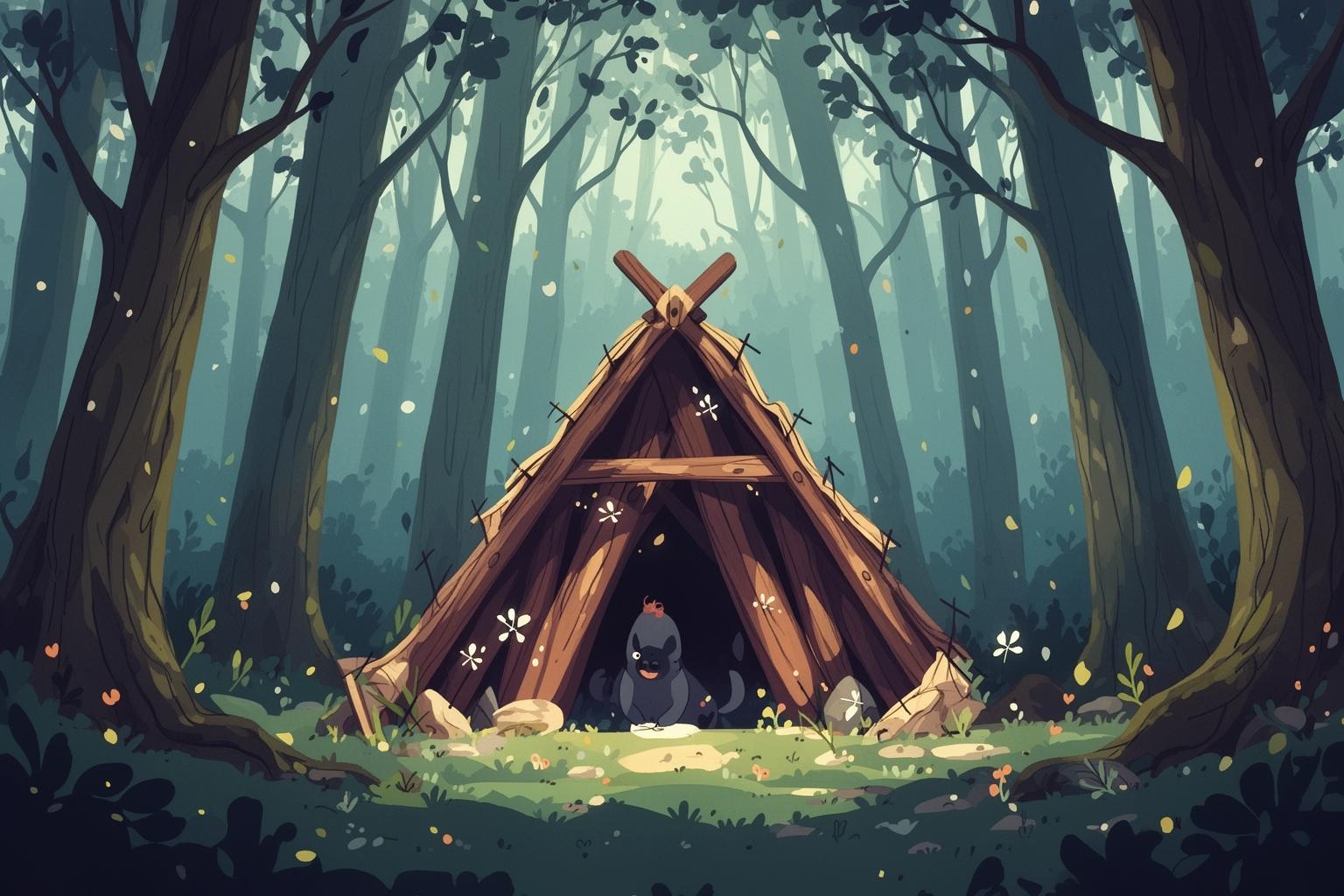
While The Burren symbolizes the barren emptiness of the Outside, the dense, ancient woodlands of Killarney National Park in County Kerry reveal its opposite side: a deep, dark, and protective forest where Shiva and Teacher create their small, fragile home. This world is filled with towering oak and yew trees, forest floors blanketed in a thick, velvety moss, and a light that is consistently filtered, green, and ethereal. It is a place of secrets, a sanctuary that is simultaneously beautiful and suffocating.
Muckross Abbey: A Ruin Embraced by Nature
Located within the park are the hauntingly beautiful ruins of Muckross Abbey. This 15th-century Franciscan friary, now roofless and exposed to the elements, perfectly parallels the structures scattered across Nagabe’s world. Nature is gradually reclaiming the stone—ivy climbs the walls while ferns grow from crevices in the Gothic archways. The central courtyard is dominated by a magnificent, ancient yew tree, its dark branches extending through the open space where the cloister garth once stood. Walking through the abbey feels like stepping directly into a manga panel, where history, piety, and decay coexist. It is a place of profound peace and deep melancholy. One can almost hear Shiva’s soft footsteps exploring the crumbling corridors, her white dress stark against the dark stone and vibrant green moss, while Teacher watches cautiously from the shadows.
The Verdant Embrace of the Ancient Woods
The true magic of Killarney lies in its temperate rainforests, especially the old oakwoods around the lakes. The air is thick with moisture and the scent of damp earth and decomposing leaves. Every surface teems with life: moss, thick and plush as carpet, covers tree trunks, branches, and rocks; lichens dangle like old men’s beards from the boughs. Unlike The Burren, the silence here is muffled and alive, interrupted by water dripping from leaves and the distant calls of birds. This is the sensory world surrounding Shiva and Teacher’s cottage—a protective forest with a dense canopy shielding them from the outside world, yet one that also harbors a sense of danger. The deep shadows and tangled undergrowth could conceal anything. It perfectly embodies the duality of their existence: a sanctuary that constantly reminds them of the curse enveloping them.
Discovering the Forest’s Heart in Killarney
Killarney National Park is expansive, offering many ways to appreciate its beauty. For a fairytale-like experience, consider hiring a jaunting car—a traditional horse-drawn cart—to travel from the town of Killarney to Muckross House and the Abbey. The drivers, or jarveys, are renowned storytellers who enrich your journey with local history and folklore. To fully immerse yourself in the woods, explore one of the numerous walking trails. The route around Muckross Lake boasts stunning views and passes through some of the most beautiful sections of the oak and yew forest. For added drama, a walk to Torc Waterfall—particularly after rainfall—is essential. The roar of water cascading down mossy rocks powerfully exemplifies nature’s untamed energy. Visiting during the shoulder seasons of spring or autumn is highly recommended to avoid crowds and increase your chances of experiencing the atmospheric mists that enhance the landscape’s enchanting beauty.
On the Edge of the Inside: The Dingle Peninsula
The world of The Girl From the Other Side is characterized by its boundary. The Dingle Peninsula, with its dramatic coastline, ancient stone structures, and fields framed by endless stone walls, stands as a powerful metaphor for this edge—the place where the delicate human world, the Inside, meets the vast, untamed unknown.
Echoes of an Isolated People: The Beehive Huts
Scattered throughout the peninsula, especially along the breathtaking Slea Head Drive, are clusters of ancient stone dwellings known as clocháns, or beehive huts. These small, circular buildings, constructed from corbelled stone without mortar, testify to the resilience of the people who once lived along this wild coast. The Fahan Group of huts is among the most remarkable examples. Seeing them clustered together on the windswept hillside gives a tangible sense of a community holding on to survival at the edge of the world. They appear humble, ancient, and vulnerable. This is the architecture of the Inside. One can easily imagine the village Shiva came from resembling this: a small, fearful settlement of sturdy stone houses, its inhabitants ever aware of the encroaching darkness of the Outside lying just beyond their fields.
The Walls that Divide Worlds
One of the most striking features of the Irish landscape, particularly on the Dingle Peninsula and the Aran Islands, is the intricate network of dry-stone walls. These walls, built over centuries by clearing stones from fields, crisscross the landscape in an almost endless grid. They serve as a powerful visual symbol of humanity’s effort to impose order on a wild terrain, to create boundaries, and to separate what belongs from what does not. In the context of our pilgrimage, these walls physically embody the separation between the Inside and the Outside. They are the fragile barriers humanity has erected to keep the curse at bay. As you drive along winding coastal roads, with the wild Atlantic on one side and the walled green fields on the other, the central theme of Nagabe’s story feels vivid and tangible. It is a landscape defined by its divisions, both natural and human-made.
Tracing the Slea Head Drive
The best way to experience the Dingle Peninsula is by driving the Slea Head Drive, a stunning coastal loop offering breathtaking views at every turn. Begin and end your journey in the lively town of Dingle, an ideal base for your explorations. The drive is narrow and winding, so take your time. Set aside a full day to pause and explore numerous historical sites, such as the Gallarus Oratory, a perfectly preserved early Christian church, and the various beehive huts. Stop at a viewpoint overlooking the Blasket Islands and feel the raw force of the Atlantic wind. The journey constantly reminds you of the boundary between land and sea, safety and danger. In the evening, retreat to the warmth and light of a pub in Dingle. The contrast between the wild coast and the cozy, welcoming pub interior—with its live music, hearty food, and good company—is the perfect way to experience the transition from the Outside back to the comfort of the Inside.
Capturing the Somber Soul: A Photographer’s Guide

A pilgrimage to the world of The Girl From the Other Side is as much about capturing its atmosphere as it is about experiencing it firsthand. Ireland’s landscapes provide an ideal backdrop for photographers aiming to evoke the manga’s distinctive aesthetic. This isn’t about bright, sunny holiday snapshots; it’s about capturing mood, texture, and a timeless sense of melancholy.
Embrace the Moody Light
Forget the golden hour at sunset. For this look, the true magical moments come at dawn, dusk, or whenever the sky is heavy with dramatic, overcast clouds. The soft, diffused light of a grey day is invaluable. It softens shadows and highlights the vibrant greens of moss and the subtle textures of stone. Early morning mist acts like a blessing, cloaking the landscape in mystery and beautifully isolating subjects. It instantly evokes the feeling of the Outside—a realm of limited sight where imagination thrives.
A Focus on Texture and Intimacy
Nagabe’s art is profoundly tactile. You can almost sense the roughness of Teacher’s skin, the softness of Shiva’s dress, and the dampness of the forest floor. Use your camera to delve into these textures. Get close to moss growing on a stone wall. Capture the intricate lichen patterns on tree branches. Photograph the gnarled roots of an ancient oak or the crumbling mortar of an abbey wall. These detailed, intimate shots create a rich, sensory visual story that reflects the experience of reading the manga. A macro lens is ideal, but even a standard lens can reveal these details if you move in close and focus on the small elements.
The Power of Solitude and Scale
At its core, The Girl From the Other Side is a tale of deep loneliness and the connections that grow from it. Use your compositions to explore this theme. Position a single, small figure within a vast, empty landscape like The Burren to highlight isolation and scale. Frame a shot through a crumbling stone window of an abbey to suggest peering into a hidden, forgotten world. Find a lone, windswept tree on a hillside. These images, emphasizing solitude and the relationship between subject and indifferent vastness, will strongly echo the emotional heart of the story.
The Pilgrim’s Respite: Finding the Inside
After days spent wandering misty, melancholic landscapes that evoke the Outside, the journey inevitably leads back to the Inside. In Ireland, the Inside is a place of remarkable warmth, art, and hospitality. The pilgrimage experience remains incomplete without embracing the contrast between the wild landscape and the welcoming culture.
Immerse yourself in the folklore that fills the land. Visit a local bookstore and pick up collections of tales by W.B. Yeats or Lady Gregory. Discover stories of the Tuatha Dé Danann, the Sidhe, and legends of changelings and curses. You’ll find that the thematic roots of Nagabe’s story run deep in this soil. The Irish storytelling tradition is vibrant and thriving, offering a rich context for the modern fairytale you’re exploring.
Seek refuge in a traditional pub. Order a pint of Guinness alongside a hearty bowl of stew. Listen to a session of live traditional music, a joyous and life-affirming sound worlds apart from the silence of ancient ruins. This is the human world, the Inside, in its purest form: community, warmth, and shared stories. Converse with the locals. Stay in family-run B&Bs. The kindness and humor of the Irish people provide a necessary and beautiful contrast to the somber themes of your journey.
This pilgrimage is a study in contrasts, much like the manga itself. It is about feeling the cold wind on a desolate limestone plateau, then the warmth of a peat fire in a pub. It is standing in the silent, decaying nave of an ancient abbey, then listening to the lively lilt of a fiddle. It is in this interplay between the desolate beauty of the Outside and the vibrant warmth of the Inside that the true spirit of your journey—and of Nagabe’s masterpiece—can be found.
A journey to Ireland in search of The Girl From the Other Side is an act of translation, turning the emotional landscape of a beloved story into a physical one. You won’t find Teacher’s exact cottage or the precise village where Shiva was born, but you will discover something far more profound. You will feel the wind that rustles the pages of the manga, the ancient stones that hold the weight of its history, and the deep, dark woods that harbor its secrets. You walk these paths not simply to see but to feel. It is a pilgrimage of the heart, a chance to step through the ink of the page and into the mist of the fairytale itself—perhaps leaving a small piece of your own soul in the beautiful, haunted, and unforgettable world of the Outside.