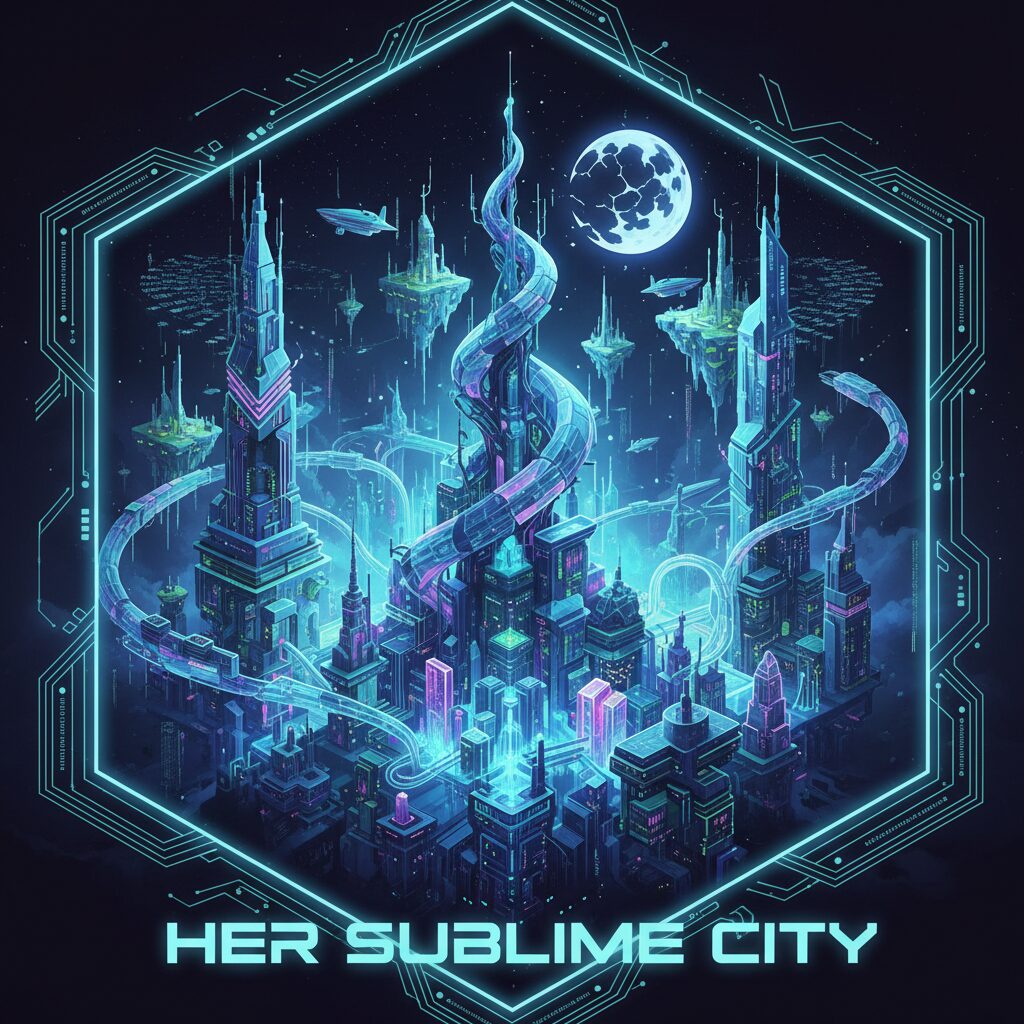
Spike Jonze’s 2013 masterpiece, Her, isn’t just a film; it’s a feeling. It’s a warm, melancholic dream of a near-future Los Angeles, a city that feels both intimately familiar and wonderfully, impossibly new. It’s a world of high-waisted trousers, soft-lit apartments, and a love story that transcends the physical realm. The film’s protagonist, Theodore Twombly, navigates this world with a tender heart, and the city itself becomes a character in his journey—a silent witness to his joy, his confusion, and his ultimate heartbreak. But here’s the secret, the cinematic magic that makes the world of Her so uniquely captivating: it’s not one city. It’s two. Jonze and his production designer, K.K. Barrett, masterfully stitched together the architectural landscapes of Los Angeles and Shanghai, China, to create a singular, seamless metropolis. The result is a cityscape that feels like a memory of a place you’ve never been, a future that feels nostalgic. It’s a world where the sleek, sprawling infrastructure of a modern Asian megacity cradles the sun-drenched, individualistic spirit of Southern California. For fans of the film, visiting these locations is more than just a sightseeing trip; it’s a pilgrimage. It’s a chance to walk in Theodore’s footsteps, to stand on the same elevated walkways he traversed while talking to Samantha, to feel the hum of the subway he rode, and to gaze out at the same skyline that framed his quiet moments of reflection. It’s an opportunity to physically inhabit the emotional landscape of the film, to see how these real-world places were transformed into a backdrop for one of the most poignant love stories of our time. This journey isn’t just about finding film sets; it’s about finding the feeling of Her in the concrete, glass, and steel of our own world. It’s about understanding how a place can shape a story, and how a story can, in turn, give a place a soul. So, let’s step into this beautifully crafted future, a world just around the corner, waiting to be explored.
If you’re inspired to embark on your own journey through the landscapes of a beloved story, you might also enjoy our guide to the soul-stirring journey of Elizabeth Gilbert.
The Shanghai Dreamscape: Crafting the Future

The essence of Her‘s futuristic cityscape resonates most powerfully in Shanghai. While Los Angeles grounds the film emotionally and culturally, Shanghai provides the soaring, awe-inspiring architecture that makes the film’s world feel both advanced and believable. Jonze selected Shanghai not for its traditional landmarks, but for its everyday infrastructure—the elevated walkways, expansive metro stations, and the dense vertical growth. It is within these spaces, designed for the mass movement of people, that Theodore experiences moments of private intimacy with Samantha. This contrast lies at the heart of the film’s visual language. The Pudong district, in particular, acts as the main canvas for Theodore’s world.
Lujiazui’s Elevated Walkways: A Sky-High Stroll
Imagine the scene: Theodore, engrossed in conversation with Samantha, maneuvers through a crowd on a sleek, circular pedestrian bridge, surrounded by towering skyscrapers piercing the sky. This is the Lujiazui Central Pedestrian Walkway in Pudong. This extensive network of elevated bridges is a brilliant example of urban planning, designed to keep foot traffic separate from the busy roads below. In Her, it becomes Theodore’s everyday commute, his personal promenade. Walking here feels like stepping directly into the film. You are suspended between ground and sky, surrounded by some of the world’s most iconic modern architecture: the Pearl Tower with its retro-futuristic spheres, the graceful pagoda-inspired Jin Mao Tower, and the immense Shanghai World Financial Center, often called “the bottle opener.”
The Atmosphere of the Walkway
The energy here is unique. It’s not chaotic; it’s a steady, rhythmic flow. By day, it fills with office workers and tourists, a river of humanity moving with intent. The air hums with distant traffic sounds and the murmur of multiple languages. The monumental scale of the surrounding buildings is awe-inspiring. You feel small, yet in a motivating way, like a vital part of a vast, magnificent machine. As dusk falls, the mood shifts. The buildings light up with a dazzling array of colors, their reflections gleaming on glass facades. The walkway transforms into a river of lights, an ideal backdrop for the introspective, romantic wandering Theodore often indulges in. Here, the city feels like a living organism, and you walk through its glowing veins.
Practical Pilgrim’s Guide
Reaching this spot is straightforward. Take Shanghai Metro Line 2 to Lujiazui Station. Upon exit, you step directly into this architectural marvel, with stairways and escalators leading up to the walkway system. Access is free; it’s a public thoroughfare. For the best cinematic experience, visit on a weekday in the late afternoon. You’ll witness the transition from golden hour, when sunlight glints off skyscrapers, to the electric blue twilight as the city’s neon pulse quickens. Allocate at least an hour or two to stroll, discover different perspectives, and absorb the overwhelming sense of the future that pervades this area. Many key city attractions, like the Shanghai Tower observation deck, are accessible directly from the walkway, making it a perfect base for exploring Pudong.
The Himalayas Center: An Organic Oasis
One of the most distinctive and remarkable locations in Her is the subway station where Theodore frequently waits for his train. Its cavernous, forest-like interior, with irregular columns and a ceiling that appears to drip with organic shapes, seems more grown than constructed. This isn’t actually a subway station but the interior of the Zendai Himalayas Center, a multi-use complex designed by noted architect Arata Isozaki. Positioned farther from central Pudong, this building is a hidden gem overlooked by many tourists.
Experiencing Isozaki’s Vision
The interior, called the “Wuji Plaza,” aims to evoke a natural forest, sharply contrasting with the city’s rigid geometry. Walking through it is surreal. Massive, amorphous columns branch upward to form a canopy of shadows and light. The plain concrete is raw and elemental, yet the forms are fluid and soft. In the film, Jonze employs this space to convey Theodore’s state as someone in transition—a place caught between office and home, between reality and his evolving relationship with Samantha. The organic architecture subtly reflects the messy, unpredictable nature of his emotions. It feels both ancient and futuristic, a concrete cave for the modern soul.
How to Visit the Himalayas
The Himalayas Center lies in Pudong next to the Shanghai New International Expo Centre. The easiest access is via Shanghai Metro Line 7 to Huamu Road Station, which exits straight into the complex. The main plaza connects to a shopping mall and the Jumeirah Hotel and is open to the public. It is often quiet, especially on weekdays, offering a peaceful break from the city’s rush. You can wander freely, take photos, and admire the architecture without hurry. While there, check the schedule at the Himalayas Museum, located within the complex, which regularly holds contemporary art exhibitions. Visiting this site feels like uncovering a secret set piece from the film—an authentic slice of its unique aesthetic.
Wujiaochang’s Neon Heart: The Sunken Plaza
Recall the stunning shot of Theodore standing at the center of a vast, circular intersection, as traffic flows around him, crowned by a giant illuminated egg-shaped structure? This is Wujiaochang, a vibrant commercial hub in Shanghai’s Yangpu district. The “egg” serves as a futuristic canopy over a sunken pedestrian plaza, ingeniously designed to let people cross the five-way intersection safely underground while forming a striking visual centerpiece.
The Feeling of Wujiaochang
This location perfectly embodies the overwhelming sensory experience Jonze aimed to capture in a modern metropolis. Standing in the sunken plaza, looking up through the egg’s opening, you see the sky framed by the towering Wanda Plaza and other shopping centers. Above, the world blurs with cars, buses, and elevated trains, while below you enjoy a protected, pedestrian-focused space. At night, the area truly comes alive. The egg structure shifts through dazzling colors, and the giant video screens on surrounding buildings flood the plaza with a vibrant commercial glow. Its energy is optimistic, dynamic, and slightly disorienting—mirroring the emotional complexity Theodore undergoes as his bond with Samantha deepens. It is a place of connection and solitude, where thousands pass through, each lost in their own world, much like Theodore with his OS.
A Guide to the ‘Egg’
Wujiaochang is easily accessible via Shanghai Metro Line 10. Exit at Wujiaochang Station to enter the underground passage network and the sunken plaza directly. This major shopping area is always bustling, though evenings are when it truly sparkles. Photographers will find endless long-exposure opportunities, capturing glowing traffic trails and vibrant city lights. One tip: be patient. Find a bench, sit, and simply observe—the flow of people, the changing illumination, the city’s dance. It is in these quiet moments that you can genuinely connect with the atmosphere that made this location perfect for Her.
Wuzhen Water Town: A Fleeting Analog Escape
Amid the film’s futuristic urbanism, the brief journey Theodore and Samantha take to a misty, timeless water town offers a striking and poignant contrast. This serene refuge was filmed in Wuzhen, one of China’s most beautiful and well-preserved ancient water towns. Located a few hours from Shanghai, Wuzhen is a maze of stone bridges, narrow canals, and expertly restored wooden houses. It is the film’s sole true escape from the glass-and-steel world—a step back into a simpler, more tangible reality.
The Romance of Wuzhen
Visiting Wuzhen is like stepping into a classical Chinese painting. The city’s noise yields to the gentle lapping of water against stone and the creak of wooden sculls pulling gondolas through canals. The air carries scents of water and aged wood. In Her, this setting is vital—it’s where Theodore and Samantha’s relationship feels most authentic and fragile. Removed from city distractions, they focus solely on each other. The town’s foggy, ethereal atmosphere perfectly reflects the intangible nature of their love. Crossing ancient stone bridges, you almost hear their intimate conversations and laughter echoing in narrow alleyways. Wuzhen symbolizes a fantasy—not the future, but the past—a romantic ideal both beautiful and ultimately out of reach.
Planning Your Wuzhen Getaway
Wuzhen deserves more than a quick day visit; an overnight stay allows full appreciation. The town divides into two parts: the East Scenic Zone (Dong Zha) and West Scenic Zone (Xi Zha). The West is larger, more beautifully restored, and preferred for overnight stays. High-speed trains run from Shanghai Hongqiao Railway Station to Tongxiang city, from where buses or taxis bring you to Wuzhen. Alternatively, direct tourist buses depart Shanghai South Bus Station. To capture the film’s misty, tranquil vibe, visit in shoulder seasons (spring or autumn) and try weekdays to avoid crowds. Wuzhen’s true magic emerges after day-trippers leave. Lit by traditional lanterns, the town grows romantic and peaceful. A nighttime boat ride on the canals is an unforgettable experience—the closest one can come to living Theodore’s fleeting escape.
The Los Angeles Foundation: Sun, Soul, and Concrete
While Shanghai offers the futuristic skyline, Los Angeles provides Her with its heart and soul. At its core, the film is an L.A. story, capturing the city’s unique mix of sunshine and solitude, its sprawling landscapes, and its culture of seeking connection in unconventional ways. Jonze employed specific L.A. locations not just as they are, but as they could be, blending them seamlessly with the Shanghai footage to create his utopian vision. These places ground Theodore’s story, serving as the familiar structure beneath the futuristic exterior.
The Red Line Metro: A Journey Through the City’s Veins
In the world of Her, Los Angeles features a clean, efficient, and widely used public transit system—a somewhat idealized version of reality. Theodore is often seen on the train, lost in his own world alongside Samantha. These scenes were filmed on the L.A. Metro’s Red Line. Riding the same trains Theodore did is one of the easiest ways to connect with the film’s L.A. essence. The clean, minimalist design of stations like the Vermont/Santa Monica stop serves as a blank canvas reflecting Theodore’s emotional state. The train journey is a recurring visual motif symbolizing his inward journey.
Riding Theodore’s Route
To experience this, simply purchase a TAP card and take the Metro. The Red Line runs from Downtown L.A. to North Hollywood. As you travel, observe how the city unfolds through the window. Unlike Shanghai’s elevated trains, much of the L.A. Metro runs underground, creating a more enclosed atmosphere. Play the film’s soundtrack by Arcade Fire, gaze at the fleeting tunnel lights and brief glimpses of station platforms, and you can instantly sense the contemplative mood of Theodore’s commutes. It’s in these transitional moments, moving from one part of his life to another, that his bond with Samantha truly deepens.
Walt Disney Concert Hall: A Steel Garden
The striking, Frank Gehry-designed Walt Disney Concert Hall in Downtown Los Angeles appears memorably as the entrance to Theodore’s workplace. Its sweeping, sail-like curves of stainless steel are instantly recognizable. In the film, it’s depicted not as a concert hall but as part of the everyday urban landscape, a beautiful gateway to an ordinary office building. This choice elevates the mundane, suggesting a future where magnificent architecture is woven into daily life.
The Atmosphere of Gehry’s Masterpiece
Exploring the exterior of the concert hall is an experience in itself. The way its metallic surfaces reflect the brilliant Southern California sky is mesmerizing. The building’s character shifts throughout the day as the light changes. You can wander through the hidden public gardens and walkways nestled on its upper levels, offering stunning views of the surrounding cityscape. It feels less like a building and more like an enormous, inhabitable metallic sculpture. It’s a place that inspires creativity and wonder, making it the perfect symbolic entrance for a company like Beautiful Handwritten Letters, where art and emotion are commodified.
Visiting the Concert Hall
Located on Grand Avenue in Downtown L.A., the Walt Disney Concert Hall is easily accessible, and its exterior is open for exploration at any time. You can walk the same path as Theodore, climbing the grand staircase at the corner of Grand and 1st Street. While there, consider taking a guided or self-guided audio tour of the interior to fully appreciate Gehry’s architectural brilliance. The nearby Grand Avenue cultural corridor also includes The Broad museum and the Museum of Contemporary Art (MOCA), making it an ideal spot for an art-filled afternoon.
Pacific Design Center: The Blue Whale
The sprawling, vividly colored buildings of the Pacific Design Center in West Hollywood serve as the backdrop for the large office complex where Theodore works. Specifically, the iconic Center Blue building, known as the “Blue Whale,” is featured for its vast, minimalist interiors and escalators. The film removes the location’s real-world identity as a high-end interior design showroom, instead using its clean lines and expansive open spaces to create a sleek, modern corporate environment that feels somewhat impersonal.
The Vibe of WeHo’s Landmark
The Pacific Design Center is a striking landmark. The trio of buildings—blue, green, and red—are bold and unapologetic. The immense scale of the Center Blue building is impressive. Inside, the atrium is wide and bathed in light. Riding the long escalators, you can easily picture Theodore heading to his desk, just another anonymous worker in a sea of creative professionals. The atmosphere is one of upscale commerce and design: quiet, polished, and meticulously maintained. It embodies the film’s clean, curated aesthetic, where every surface is smooth, and every color is intentional.
A Practical Stop
Situated on Melrose Avenue in West Hollywood, the Pacific Design Center’s showrooms are typically open only to trade professionals, but the building’s public areas, including the lobby and atrium, are accessible to visitors during business hours. It’s worth visiting to appreciate the scale and boldness of the architecture up close. The surrounding West Hollywood neighborhood is well known for its design shops, art galleries, and cafes, making it easy to incorporate a stop at the PDC into a broader exploration of the area.
The Beach and the Mountains: California’s Natural Soul
Beyond architecture, Her beautifully portrays the natural landscapes that define Los Angeles. The beach scene, where Theodore takes his OS on a date, embodies pure California. The wide sandy shore, gentle waves, and soft golden light create a mood of relaxed intimacy. This was filmed at Leo Carrillo State Park in Malibu, a classic L.A. filming location famed for its sea caves and dramatic rock formations. Similarly, the scenes where Theodore and his friend Amy go hiking in the mountains highlight the wild, rugged nature bordering the city. These moments offer a vital breath of fresh air, reminding viewers of the tangible, real world beyond Theodore’s increasingly technology-driven existence.
Finding Nature in L.A.
To experience the essence of these scenes, a trip to the coast is essential. Take the Pacific Coast Highway to Malibu. Leo Carrillo State Park provides a beautiful beach ideal for a long walk. Alternatively, beaches in Santa Monica or Venice offer that quintessential L.A. beach vibe. For hiking, explore trails in the Santa Monica Mountains or Runyon Canyon. The contrast between dense urban spaces and wide-open natural landscapes is a key part of the Los Angeles experience, and Her taps into this theme with subtle brilliance.
The Art of the Blend: Why Two Cities Became One

Understanding the locations of Her involves more than simply listing places from two different countries. The real brilliance lies in their fusion. Spike Jonze and K.K. Barrett weren’t aiming for a typical futuristic city. They wanted a world that felt emotionally meaningful, one that reflected Theodore’s inner experience. By merging Los Angeles and Shanghai, they created something extraordinary. The resulting city possesses the vertical density and advanced infrastructure of a modern Asian metropolis, yet it’s imbued with the warm light, laid-back culture, and emotional openness of Southern California.
A Vertical Los Angeles
The film envisions a future L.A. that has expanded upward, addressing its infamous sprawl with highly efficient public transit and dense high-rise living. Shanghai provided the ideal visual vocabulary for this. The elevated walkways of Lujiazui transform into new freeways, while metro stations become civic hubs. Despite this, the inhabitants carry the spirit of Angelenos. They wear comfortable, retro-inspired clothing and speak openly about emotions and relationships with therapeutic candor. The sun perpetually shines with that distinctive, hazy golden glow unique to L.A. This combination creates a world both aspirational and relatable—a cleaner, more efficient, and more beautiful version of our own, yet populated by people grappling with timeless human challenges: love, loneliness, and the search for connection.
A Placeless Place for a Disembodied Love
The seamless blending of two cities 6,000 miles apart also serves a vital thematic function. It lends the film’s setting a universal and slightly surreal quality. This sense of placelessness parallels the nature of Theodore’s relationship with Samantha. She is an operating system—an intelligence without a body, a presence without a physical location. Their love exists in the non-space between devices, in the cloud. By crafting a city that is itself a hybrid of East and West, the film anchors their disembodied romance in a world that is equally fluid and undefined. The city is everywhere and nowhere, just like Samantha. When visiting these locations, the most profound feeling isn’t “this is where they filmed that scene,” but rather, “this is part of that world.” You start to notice the Her aesthetic everywhere—in the sleek curve of a new building, the way light filters through a train window, the sea of faces absorbed in their phones on a bustling street. The pilgrimage for Her is not merely about visiting Shanghai and Los Angeles; it is about learning to recognize the beautiful, lonely, and hopeful future they embody within the world we already inhabit.