Step into the heart of Japan, and you’ll find stories layered in the soil, whispered by the winds that rustle through ancient temple groves. A millennium ago, in the luminous, secluded world of the Heian court, a woman known as Murasaki Shikibu took up her brush. With ink and silk, she wove a narrative so vast, so psychologically profound, that it would forever change the landscape of world literature. The Tale of Genji, often called the world’s first novel, is not merely a book; it is a universe. It’s an intricate tapestry of romance, political intrigue, and the ephemeral beauty of life, all seen through the eyes of the impossibly handsome “Shining Prince,” Genji. To understand this masterpiece is to understand the soul of Heian Japan, an era where aesthetics were a language and emotion was an art form. But to truly feel it, you must walk where Murasaki walked, see the moon she saw, and stand in the places that gave breath to her characters. This is not just a tour of historic sites; it is a pilgrimage into the heart of a story that has captivated readers for over a thousand years. It’s a journey to connect with the mind of a literary genius and the timeless world she created, a world that still echoes in the gardens, temples, and riverbanks of Japan today.
This journey to connect with Murasaki Shikibu’s world is a form of literary pilgrimage, much like exploring the landscapes that inspired other great authors.
The Heart of the Capital: Murasaki’s Kyoto
Kyoto, once called Heian-kyō, was the dazzling heart of Murasaki Shikibu’s world. It was a city of vast aristocratic residences, imperial palaces, and sacred temples, all arranged in a precise grid. This served as the backdrop for The Tale of Genji, a realm where every rustle of silk, every carefully crafted poem, and every subtle glance carried deep significance. For Murasaki, a lady-in-waiting to Empress Shōshi, this was not fiction but her lived experience. Walking through Kyoto today is like peeling back layers of time to sense the faint but persistent heartbeat of the Heian era. Although the original wooden structures have long disappeared, the locations, landscapes, and spirit endure, offering a direct gateway into the world she so vividly depicted.
Rozan-ji Temple: The Birthplace of a Masterpiece
No place is more closely linked to the creation of the tale than Rozan-ji. Nestled in a quiet neighborhood just east of the Kyoto Imperial Palace, this temple stands on the very site where Murasaki Shikibu’s paternal great-grandfather established the family home. It is believed she lived here as a noble lady, married, bore her daughter, and most importantly, wrote much of The Tale of Genji. Passing through the temple gate is like crossing into a profoundly personal realm. It feels less like a tourist attraction and more like a solemn tribute, a place of deep literary respect.
Whispers in the Garden of Bellflowers
Rozan-ji’s true charm is revealed in its Genji Garden. Rather than a vast landscape, it is an intimate, carefully tended karensansui—a dry landscape garden. Patterns raked into white gravel evoke flowing water around moss-covered mounds resembling islands of timeless youth. The garden is designed to be appreciated from the temple’s veranda, offering a perfect frame for quiet reflection. The air is one of calm, understated elegance—an aesthetic central to the Heian worldview. The garden’s signature feature is its blanket of kikyo, or Japanese bellflowers. From late spring into summer, the garden floor transforms into a sea of vibrant purple, a hue closely associated with the imperial court, nobility, and to Murasaki herself. Sitting on the veranda, feeling the soft breeze and gazing at the bellflowers, you can almost hear the faint scratch of her brush on silk as she imagined the romantic adventures and poignant sorrows of her characters.
Stepping into Her World
The temple’s main hall is a serene, reflective space filled with the gentle scent of incense. It houses treasures tied to the temple’s history and its notable resident. Although the current buildings are later reconstructions, the sense of place remains tangible. A small altar honors Murasaki Shikibu, where visitors may offer a silent tribute. In one corner, displays depict Heian court life, helping to visualize the world she inhabited. Artifacts and calligraphic scrolls recount the temple’s long history, founded by the great priest Ryōgen in the 10th century. The experience is not about grand relics but about absorbing the quiet, creative energy permeating the air. It invites you to imagine a woman of extraordinary talent and intellect, constrained by society’s strictures, creating a realm of limitless freedom and emotional depth within these walls.
Practical Pilgrim’s Notes for Rozan-ji
Visiting Rozan-ji offers a peaceful interlude easily combined with a day exploring the Imperial Palace area. It is a short walk from Demachiyanagi Station on the Keihan Line or Jingu-Marutamachi Station. From Kyoto Station, the most direct route is via the Karasuma Subway Line to Marutamachi Station, followed by about a 20-minute walk. Several city buses also stop nearby. The temple is generally open from 9:00 AM to 4:00 PM, with a modest admission fee for the garden and main hall. The best time to visit is from June to early September when the kikyo bloom fully, turning the garden into a purple dreamscape. Even outside this season, the serene beauty of moss and stone offers a profound sense of calm.
The Imperial Court: Imagining the Shining Prince’s Stage
The expansive grounds of Kyoto Gyoen National Garden, home to the Kyoto Imperial Palace, were the center of power, culture, and drama in Murasaki’s time. Although the original Heian Palace was located slightly west of the current site, this area was dominated by grand residences of high-ranking aristocrats, including the influential Fujiwara clan, to which Murasaki’s distant relatives belonged. The present Imperial Palace is a 19th-century reconstruction built following traditional designs, preserving the scale and atmosphere of the courtly world. Strolling through its vast gravel courtyards and past magnificent gates is essential to grasping the physical and social stage upon which Genji’s life unfolded.
The Shishinden and the World of Power
The Shishinden, or Hall for State Ceremonies, is the palace’s most important building. It was here the emperor conducted official business, and its grand, austere beauty reflects the immense power and divinity of the throne. For Genji, a son of the emperor demoted to commoner status, navigating this world of formal power required great skill and charm. Standing before its massive veranda, one can imagine the elaborate ceremonies, courtiers in stiff, colorful robes, and the intricate political maneuvering that serve as the novel’s backdrop. The palace was not merely a residence but a complex web of hierarchies, alliances, and rivalries, all governed by strict etiquette. The novel abounds with scenes of imperial processions, poetry contests at court, and secret meetings in palace corridors.
A Stroll Through Heian Society
As you explore the palace grounds, notice the various gates and halls, each serving a specific purpose and associated with different ranks of courtiers. The Kenreimon Gate, for instance, was reserved exclusively for the emperor. The arrangement of buildings, covered corridors linking them, and carefully placed gardens all embody the Heian obsession with form, beauty, and order. In this society, one’s proximity to the emperor, both physically and politically, dictated one’s entire life. For women of the court like Murasaki, life was largely confined indoors, behind screens and curtains, with limited interaction with the outside world. Visiting the palace grounds helps to appreciate the scale of this world and the gilded cage it represented, making Murasaki’s literary achievement all the more remarkable.
Visiting the Imperial Grounds
Kyoto Gyoen, the outer park, is open to the public at all times and provides a lovely place for a walk. The palace complex can be visited through guided tours (offered in English) or, on designated days, simply by registering at the entrance. Access is convenient, bordered by Marutamachi and Imadegawa subway stations on the Karasuma Line. There is no admission fee for the park or palace grounds. Visiting here is not about seeing Murasaki’s original buildings but about soaking in the imperial atmosphere and imagining the grandeur and constraint of the world she knew intimately. It offers the perfect setting to understand the tales of love and loss that unfold within The Tale of Genji’s palace walls.
The Bridge of Dreams: The Final Chapters in Uji
South of Kyoto, where the Uji River flows out of Lake Biwa, lies the small, elegant city of Uji. In Murasaki’s era, this was a favored retreat for Heian aristocrats, a place of scenic beauty dotted with countryside villas. For readers of The Tale of Genji, however, Uji carries a special, melancholic significance. The final ten chapters of the novel, known as the “Uji Chapters,” are set here. The mood shifts dramatically from the glittering court of Prince Genji to a darker, more introspective world focused on his supposed son, Kaoru, and his grandson, Niou. The Uji Chapters are a masterful exploration of psychological realism, delving into themes of desire, disillusionment, and the inescapable burdens of the past. To visit Uji is to step into the final, haunting act of this epic tale.
Byodo-in Temple: A Phoenix Hall on Earth
Nothing captures the essence of Uji more iconically than the Byodo-in Temple’s Phoenix Hall. Originally constructed as a villa for Fujiwara no Michinaga, the era’s most powerful statesman and father of Empress Shoshi, whom Murasaki served, it was converted into a temple by his son in 1052. The Phoenix Hall, or Hoodo, is one of the very few Heian-period structures to have survived intact to the present day. Its graceful wings, poised as if about to take flight, are perfectly reflected in the Aji-ike Pond before it. This sublime vision was believed to represent a terrestrial recreation of Amida Buddha’s Pure Land paradise. It stands as the pinnacle of Heian aesthetic achievement.
The Pure Land in a Pond
When standing before the Phoenix Hall, you encounter what Murasaki and her contemporaries regarded as the ultimate expression of beauty and faith. The Heian nobility were deeply influenced by Pure Land Buddhism, which taught that chanting Amida Buddha’s name could lead to rebirth in his Western Paradise. The Phoenix Hall was designed to embody that paradise on earth. Its delicate symmetry, the elegant curve of its roof, and its seemingly weightless stance on its island in the pond create an atmosphere of otherworldly calm. It’s easy to imagine the characters of the Uji Chapters, torn by earthly passions, seeking solace and spiritual meaning here. The very air feels different—refined, still, and suffused with timeless beauty.
Artistry of a Golden Age
No visit to Byodo-in is complete without exploring the Hoshokan Museum. This modern, thoughtfully designed museum houses the temple’s original treasures, including the original temple bell, magnificent paintings, and a breathtaking collection of 52 wooden Bodhisattvas, each with its own unique expression, that once adorned the Phoenix Hall’s walls. The centerpiece is the original statue of Amida Buddha crafted by the master sculptor Jocho. Viewing this art up close is a powerful experience, revealing the incredible sophistication and spirituality of Heian culture. The craftsmanship is exquisite, the expressions serene, forging an immediate connection to the people who created and worshipped here a millennium ago.
A Moment of Contemplation
The best way to experience Byodo-in is with patience. After visiting the museum and touring the Phoenix Hall (which requires a separate ticket and timed entry), find a bench by the pond. Sit and watch the light shift on the water as the hall’s reflection shimmers. This is a place that rewards stillness, allowing the profound sense of mono no aware—the gentle pathos of things, a central theme in The Tale of Genji—to settle within you. It’s in this quiet reflection that the stories of Kaoru and the Uji princesses, their hopes and heartbreaks, feel most alive.
The Uji River and the Famed Bridge
The Uji River is the lifeblood of the city and a central figure in the Uji Chapters. Its powerful currents and misty mornings create a dramatic backdrop for the story’s events. The Uji Bridge, rebuilt many times over the centuries but still standing in its historic location, is a key landmark. It serves both as a physical and symbolic crossing point in the narrative.
A Crossing of Fates
In the novel, the bridge is a place of fateful meetings and agonizing farewells. It is where characters travel between their secluded villas and the outside world, exchange messages, and set destinies in motion. Standing on the modern bridge, with the rushing river below and Uji’s green hills rising around you, you can sense the dramatic power of this landscape. In summer, you may witness ukai, or cormorant fishing—a tradition centuries old—in which fishermen use trained birds to catch fish by torchlight. This ancient practice adds another layer of historic atmosphere, linking you directly to the rhythms of life on this river through generations.
Echoes of Kaoru and Niou
As you stroll along the riverbanks, perhaps moving from Byodo-in to Ujigami Shrine on the opposite side, it’s easy to envision the scenes. Picture Kaoru, the brooding, contemplative hero tormented by the secret of his parentage, gazing over these same waters. Or the impulsive Prince Niou, crossing the bridge secretly for a clandestine meeting. The river is both beautiful and perilous, reflecting the passionate and often destructive emotions that drive the characters in these final chapters. A small island in the river’s midst, linked by footbridges, offers a lovely spot to pause and take in the view.
The Tale of Genji Museum: A Visual Journey
For those wishing to deepen their understanding of Murasaki’s world, Uji’s Tale of Genji Museum is an essential stop. Far from a dry collection of artifacts, the museum offers a brilliantly designed immersive experience that brings the Heian period vividly to life.
Bringing the Scroll to Life
The museum combines exquisite dioramas, life-sized reconstructions of scenes from the Uji Chapters, short films, and interactive displays to transport visitors back to the 11th century. Here, you can see a model of Rokujo-in, Prince Genji’s grand residential complex; peer into a reconstruction of an aristocrat’s carriage; or admire the intricate layers of the jūnihitoe, the formal 12-layered robe worn by court ladies. Dramatic, atmospheric lighting focuses attention on the details of daily life—the games they played, the incense they blended, and the beautiful calligraphy they practiced. With a strong focus on the Uji Chapters, the museum perfectly complements a day spent exploring the area, providing a visual context that makes the literary world tangible.
Planning Your Uji Immersion
Uji makes for an easy and highly recommended day trip from Kyoto. Take the JR Nara Line from Kyoto Station; the journey to JR Uji Station takes about 20 to 30 minutes, depending on whether you catch a rapid or local train. From the station, all major sights are within easy walking distance. A logical route is to begin at Byodo-in, cross the Uji River via the bridge, visit Ujigami Shrine (a UNESCO World Heritage site and possibly Japan’s oldest standing shrine), and finish at The Tale of Genji Museum before returning to the station on foot. Along the main approach to Byodo-in, you’ll be tempted by the aroma of roasted tea. Uji is renowned as Japan’s premier center of high-quality green tea. Be sure to stop at a traditional teahouse to savor a bowl of matcha with a seasonal sweet—a simple yet profound way to connect with the refined culture of the Heian aristocracy.
The Moon Over the Lake: A Spark of Inspiration at Ishiyama-dera
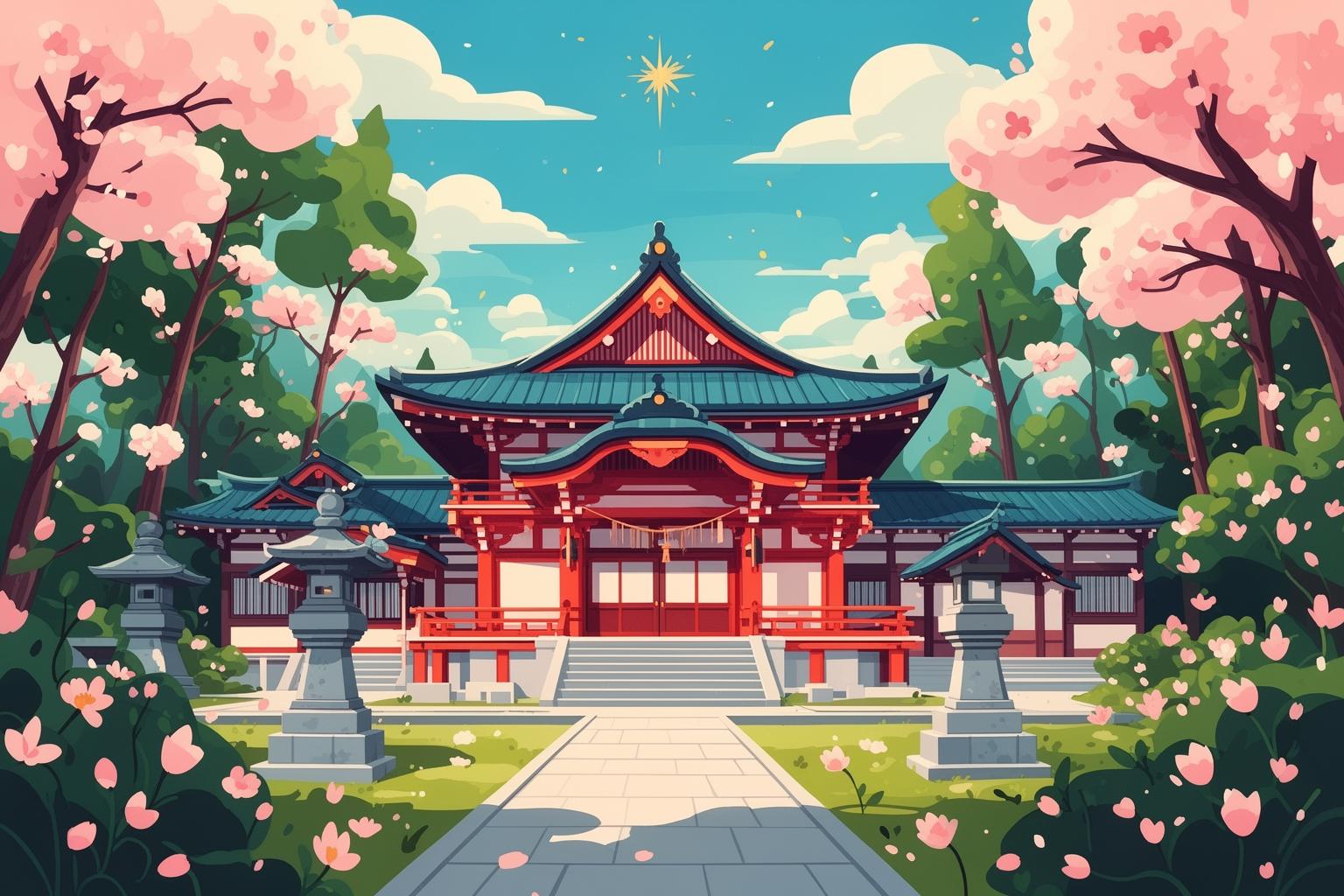
West of Uji, in the city of Otsu along the shores of Lake Biwa, stands a temple rich in literary legend: Ishiyama-dera. This expansive temple complex, built atop and around a vast outcrop of wollastonite rock (a designated natural monument), has drawn spiritual pilgrims for centuries. For admirers of Japanese literature, it holds a uniquely significant place. According to a beloved tradition, it was here, on a full moon night in August of the year 1004, that Murasaki Shikibu began writing The Tale of Genji.
A Temple on the Stone Mountain
In contrast to the elegant, refined temples of Kyoto and Uji, Ishiyama-dera exudes a rugged, natural power. The path winds up the mountainside, through a dense forest of towering trees, passing halls and pagodas that appear to emerge organically from the stone. The temple’s name, meaning “Stone Mountain Temple,” reflects the ever-present ancient, weathered rock. This bond with the raw forces of nature imparts the temple with a distinct spiritual energy—one that feels both ancient and elemental.
The Legend of the First Chapter
The tale recounts that Empress Shoshi, lamenting the lack of fresh and engaging stories at court, requested Murasaki to write one. Seeking divine inspiration, Murasaki undertook a seven-day pilgrimage to Ishiyama-dera, a temple renowned for its spiritual power. On the final night, as she sat in a small room in the main hall overlooking Lake Biwa, she saw the full moon’s reflection on the water. In that moment of perfect, radiant beauty, she was inspired to write. The vision of a handsome, exiled nobleman—the Shining Prince Genji—gazing at the same moon from his lonely exile at Suma beach flooded her mind. She immediately asked for an inkstone and brush and penned the opening chapters. While the historical accuracy of this legend remains debated, its emotional truth is unequivocal. It captures the profound connection between nature, spirituality, and artistic creation so central to Japanese culture.
The Genji Room (Genji no Ma)
Today, visitors to Ishiyama-dera can view the very room where this legendary event occurred. Situated in a corner of the temple’s main hall (Hondo), the Genji Room is a small, carefully preserved space. Inside, a life-sized doll of Murasaki Shikibu, dressed in exquisite Heian court attire, sits before a writing desk, her brush poised as if in the midst of creation. Her gaze is fixed out the window, toward the distant shimmer of Lake Biwa. Standing in this room is a powerful experience. Whether fact or fiction, the space has become a sacred site devoted to the act of writing itself, a monument to the spark of inspiration. The air is heavy with the weight of a thousand years of literary devotion. One can feel the creative energy that has drawn countless writers and artists to this place over the centuries, all seeking to connect with Murasaki’s spirit.
A Pilgrimage for Writers
Ishiyama-dera’s literary significance extends well beyond Murasaki Shikibu. Other great writers, including the poets Matsuo Basho and Shimazaki Toson, have lingered here, inspired by its beauty, and composed works about it. Stone monuments engraved with their poems dot the temple grounds. This makes a visit to Ishiyama-dera a pilgrimage not only for fans of Genji but for anyone who cherishes Japanese literature. It is a place that honors and sanctifies the creative process, celebrating the power of words to capture both the beauty and sorrow of human experience.
Practical Path to Ishiyama-dera
Ishiyama-dera is easily reached from Kyoto. Take the JR Tokaido Line to Ishiyama Station (about 15 minutes). From there, transfer to the Keihan Ishiyama Sakamoto Line and disembark at Ishiyamadera Station (a brief 5-minute ride). The temple is a pleasant 10-minute walk from the station along the Seta River. Given the temple’s extensive grounds, allow at least a couple of hours for a full visit. Admission is charged to enter the main temple area. A trip here can be combined with other nearby attractions around Lake Biwa, Japan’s largest freshwater lake. The temple is beautiful year-round but is especially famous for its spring cherry blossoms and brilliant autumn foliage.
A Provincial Perspective: Murasaki in Echizen
While Kyoto was the center of her world, a pivotal period of Murasaki’s life was spent far from the capital, in the remote northern province of Echizen (now part of modern-day Fukui Prefecture). For one or two years, she accompanied her father, who had been appointed governor of the province. Though brief, this experience likely had a significant impact on the young writer, offering her a perspective on life quite different from the rarefied, insular world of the Heian court.
The Northern Exile
From Court to Countryside
Imagine the culture shock for a young woman accustomed to the height of aesthetic refinement, political intrigue, and literary society. Echizen was a rugged, rustic frontier. The weather was severe, with heavy snowfall in winter. The people were less polished, their concerns more practical. This was not a world of perfumed sleeves and allusive poetry contests, but one of provincial administration, tax collection, and border defense. Murasaki’s letters from this time reveal a certain loneliness and longing for the capital, but also a keen, observant eye taking in the details of her new surroundings.
How Landscape Shapes a Writer
Literary scholars suggest that this period in Echizen was crucial to Murasaki’s development. It gave her an understanding of Japan that went beyond the palace walls. She witnessed a different side of human nature and a different rhythm of life governed by the seasons and the land. This broader perspective undoubtedly enriched her writing, enabling her to create a novel that, while centered on the aristocracy, resonates universally in its emotional depth. It may also have given her the empathy to portray characters in exile, like Genji at Suma, with such convincing poignancy. The contrast between the glittering capital and the stark beauty of the countryside is a recurring theme in her work, and her time in Echizen provided her with firsthand education in that dichotomy.
Murasaki Shikibu Park: A Modern Tribute
Although no Heian-era buildings survive in Fukui, the city of Echizen (formerly Takefu) honors its connection to the great writer through Murasaki Shikibu Park. This is not a historical site in the strict sense, but a beautiful recreation designed to celebrate her legacy and the aesthetics of her era.
A Garden of Heian Dreams
The park is designed as a classic Heian-style aristocratic strolling garden (shinden-zukuri style), featuring a central pond, an arched bridge, and carefully arranged plantings. It is a tranquil and beautiful space intended to evoke the kind of environment a noble like Murasaki would have enjoyed. The centerpiece is a striking golden statue of Murasaki Shikibu, depicting her gazing toward Kyoto, perhaps with a sense of longing. The park stands as a physical reminder of her connection to the region and reflects the deep pride the local people take in their link to Japan’s most famous literary work.
Visiting Echizen
A trip to Echizen is for the truly dedicated Genji pilgrim, as it lies off the main tourist routes. From Kyoto or Osaka, take a Limited Express train on the JR Hokuriku Main Line to Takefu Station (about an hour and a half journey). Murasaki Shikibu Park is a short bus or taxi ride from the station. A visit here offers a unique chance to connect with a different chapter of Murasaki’s life story and to appreciate how the provinces contributed to the cultural richness of the Heian period. It’s an opportunity to see the world from the outside in, just as she once did.
Weaving the Threads: A Traveler’s Guide to the Heian World
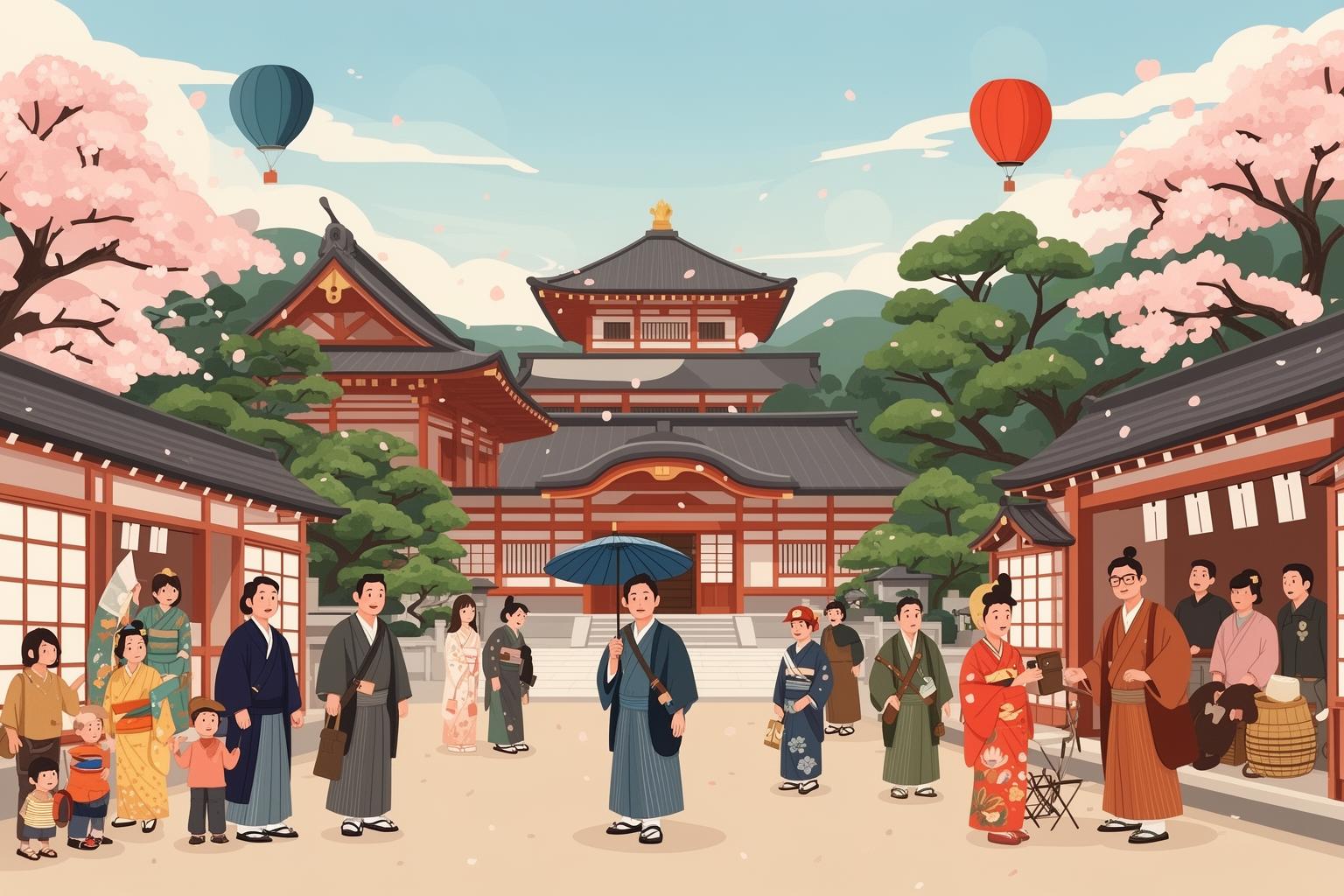
A pilgrimage tracing the footsteps of Murasaki Shikibu is much more than visiting a series of sites; it is an exercise in perception. It involves learning to view the world through a Heian perspective, appreciating the subtle aesthetics and profound emotions interwoven in her tale. To truly connect with her world, one must grasp the cultural language she expressed.
The Art of Seeing: Understanding Heian Aesthetics
Mono no Aware
If there is a single concept that unlocks The Tale of Genji, it is mono no aware. This phrase is often translated as “the pathos of things,” “an empathy toward things,” or “a gentle sadness.” It denotes the bittersweet awareness of the impermanence of all things. It is the deep feeling evoked by seeing cherry blossoms in full bloom, knowing they will soon fall. It is the melancholy of a beautiful sunset, the ache of a cherished memory. This feeling suffuses the novel and recurs repeatedly at sites related to Murasaki. When you gaze upon the Byodo-in temple, both beautiful and ancient, you sense its endurance through time alongside the fragility of the world that created it. Standing in the Genji Room at Ishiyama-dera, you feel the force of a creative moment that occurred a millennium ago—a moment gone forever yet sustained through her work. Embracing an awareness of mono no aware will transform your journey from a mere tour into a deeply emotional experience.
A World of Scent and Color
The Heian court was a realm of heightened sensory perception. The art of incense blending (kodo) was highly refined, and characters in the novel are often distinguished by their unique fragrances. The colors of a woman’s layered sleeves, glimpsed at the edge of her carriage window, conveyed her taste, status, and attunement to the season. The choice of paper for a letter—its color and texture—was as significant as the poem inscribed upon it. As you travel, attend carefully to these sensory details. Notice the scent of incense wafting from a temple hall. Observe the seasonal flowers and how their hues complement the temple architecture. Allow yourself to slow down and appreciate these subtle nuances. This art of seeing, perfected by Heian aristocrats, is the key to entering their world.
Your Own Genji Journey: Practical Tips
When to Go
Your experience of these places will be profoundly influenced by the season. Spring, with its iconic cherry and plum blossoms, offers breathtaking beauty that perfectly echoes the many flower-viewing gatherings depicted in the novel. Early summer brings purple bellflowers to Rozan-ji and lush greenery along the Uji River. Autumn is perhaps the most poignant season, as the vivid red and gold of maple leaves evoke themes of change and the passage of time central to mono no aware. Winter, especially in Kyoto and Echizen, presents a stark, quiet beauty, with snow covering temple roofs and gardens, creating a serene and contemplative atmosphere.
Reading the Tale
To gain the fullest appreciation of your journey, it’s highly recommended to familiarize yourself with The Tale of Genji in advance. Though it is a long and complex novel, don’t feel obliged to read all 54 chapters. A good summary or focusing on specific sections related to the sites you’ll visit—such as the early chapters set in Kyoto or the final Uji Chapters—can be equally rewarding. Several English translations are available, each with its own style. Arthur Waley’s early version is poetic and beautiful but takes some liberties. Edward Seidensticker’s and Royall Tyler’s translations are regarded as more faithful to the original text. The most recent translation by Dennis Washburn is praised for its readability. Carrying the voices of Genji, Murasaki, Kaoru, and the Uji princesses in your mind as you walk these grounds will greatly enrich your experience, transforming the landscape from a beautiful scene into a living story.
A Legacy Woven in Time
Tracing the path of Murasaki Shikibu reveals the lasting power of a single creative vision. More than a thousand years ago, a woman in a secluded court crafted a work of such profound psychological insight and artistic elegance that it still resonates with us today. Her characters are not mere historical relics; they are living, breathing explorations of the human heart, facing the same desires, sorrows, and joys as we do. Visiting the places where she lived, wrote, and found inspiration allows time to collapse. Standing by the Uji River or gazing at the moon from Ishiyama-dera, you share a view with a ghost, a genius, a woman who shaped the very course of literature. Her legacy lives not only within the pages of her book but also in the quiet moss gardens, the graceful temple halls, and the landscapes that carry the echoes of her story. It is a story that continues to unfold, inviting you to step inside and discover your own connection to the world of the Shining Prince.