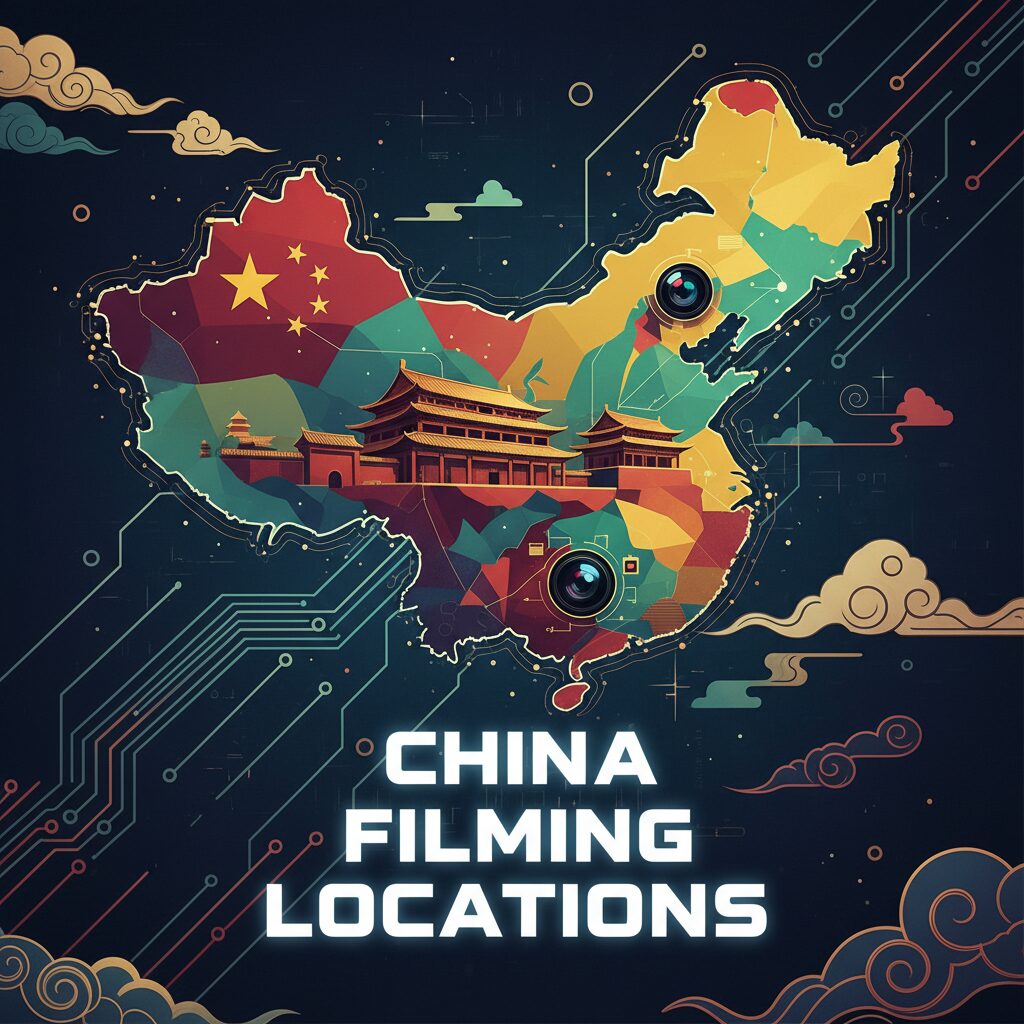
There are films that entertain, and then there are films that transport you. They sweep you up in a tide of history, color, and sound, leaving you breathless on a distant shore of time and place. Bernardo Bertolucci’s 1987 masterpiece, The Last Emperor, is one such film. It’s an epic in the truest sense, a visually staggering chronicle of the life of Puyi, the last emperor of China, from his gilded cage in the Forbidden City to his quiet end as an ordinary citizen in the People’s Republic. But what makes the film an enduring legend is its unprecedented access. For the first time, a Western production was allowed to film within the vermilion walls and golden-tiled roofs of the Forbidden City, the heart of Imperial China for five centuries. The result is not just a movie; it’s a portal. To watch it is to see the palace not as a museum, but as a living, breathing character. This journey is for those of us who felt that pull, who want to step through the screen and walk the same stone courtyards, trace the outlines of the dragon thrones, and feel the immense weight of history that Bertolucci so brilliantly captured. We’ll trace the arc of an emperor’s life, from the seat of absolute power in Beijing to the cold exile of Manchuria, following the cinematic ghost of Puyi through modern China.
If you’re captivated by cinematic journeys through history, you might also be interested in exploring the filming locations of The Last Samurai in Japan.
Echoes of the Dragon Throne: Inside Beijing’s Forbidden City
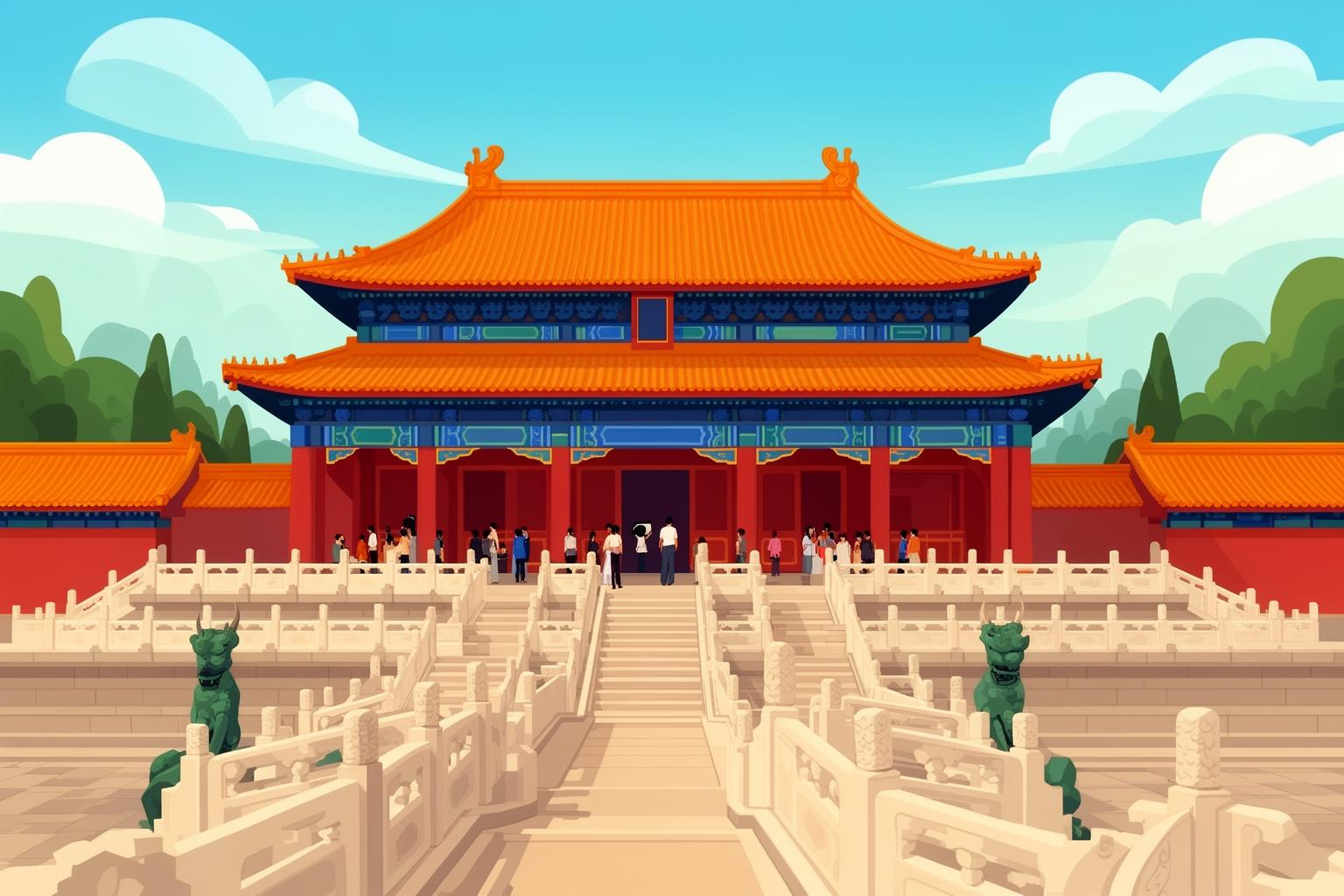
Your pilgrimage begins, just as Puyi’s life did, in the Forbidden City. This is more than a mere setting; it embodies the very soul of the film’s opening act. Known today as the Palace Museum, the sheer, staggering scale of the site strips away the modern name as you pass through the Meridian Gate. Here, you truly stand in the Forbidden City. The atmosphere is distinct, heavy with the silence of centuries. It is a city within a city—a 180-acre maze of plazas, halls, and private chambers arranged along a flawless north-south axis, a cosmic emblem of power carved in wood and stone. Bertolucci masterfully exploited this enormity, frequently framing the small figure of the child emperor against vast, empty courtyards, visually symbolizing his deep loneliness.
To fully appreciate this part of your journey, you must allow ample time. Rushing through the Forbidden City is like skimming a history book’s pages. Dedicate an entire day. Arrive early, right as the gates open, to catch a brief moment of tranquility before the crowds flood in. The morning light striking the golden roofs creates an almost otherworldly glow, exactly as cinematographer Vittorio Storaro captured on film. Be sure to book your tickets online in advance, since entry is timed and requires your passport information—a non-negotiable step that often trips up unprepared visitors. Once inside, resist following the main crowds and take a moment to stand quietly in the first grand courtyard. Feel its symmetry and overwhelming grandeur. This is where the cinematic journey becomes tangible.
The Gate of Supreme Harmony: A Portal to a Lost Era
Your first prominent landmark is the Gate of Supreme Harmony (Taihemen). In the film, it’s the site of a breathtaking spectacle as thousands of court officials kowtow to an emperor invisible to them. Standing before it, one can almost hear the rustling of silk robes against stone. The gate is flanked by imposing bronze lions—symbols of imperial might. The male lion rests his paw on a globe, representing world dominion, while the female’s paw lies on a cub, symbolizing the nurturing of the empire. Study these details—they form the language of this place. Bertolucci’s camera lingers thoughtfully on these emblems, recognizing their storytelling power.
The vast courtyard ahead is designed to inspire awe and humble the individual, a stage set for the theater of power. Imagine it as portrayed in the film: brimming with banners, incense smoke, and silent, prostrating masses. Today, it hums with the energy of global tourists, yet the monumental scale remains undiminished. It’s a profound place to reflect on power—its projection, perception, and impermanence. For the best photos, use the morning light; the rising sun from the east bathes the gate’s facade in a beautiful glow. Don’t just snap a quick shot and move on—find a spot near the courtyard’s edge and observe how visitors move through the space, dwarfed by the surrounding architecture.
The Hall of Supreme Harmony: The Empire’s Ceremonial Heart
Beyond the gate lies the Outer Court’s zenith: the Hall of Supreme Harmony (Taihedian). This is the largest wooden structure in China and the ceremonial core of the empire. Here is where the film’s vivid coronation scene unfolds, with the bewildered toddler Puyi enthroned as the Son of Heaven. The scene bursts with color—imperial yellow, vivid red, deep blue—all filmed right here. The hall stands atop a three-tiered marble terrace, towering over the courtyard and inducing a palpable feeling of supplication in visitors.
As you climb the steps, note the carved marble ramp in the center, reserved solely for the emperor’s sedan chair. The dragons and cloud motifs are exquisitely crafted, showcasing the era’s unmatched artisanship. Inside, though access is limited to a view from the doorway, the sight is unforgettable. Deep within the dim, cavernous hall rests the Dragon Throne—ornate, gilded, and imposing—the symbolic center of the Chinese cosmos. Bertolucci was granted rare access to film the throne close-up, capturing intricate details. Modern visitors see it from farther away, yet the power it radiates remains undiminished. This hall witnessed coronations, imperial weddings, and proclamations of major edicts. The air still carries the weight of these past ceremonies. Spend time observing the roof, ceiling, and pillars—all saturated with symbolism, from the regal dragon motifs to the number of mythical beasts lining the roof ridges, denoting the hall’s supreme status.
The Inner Court: A Gilded Prison
Beyond the grand ceremonial Outer Court lies the Inner Court, the emperor’s residential quarters, where the atmosphere changes distinctly. The scale feels more intimate, courtyards smaller, yet the sense of confinement—central to Puyi’s story—is palpable. This is where the young emperor lived, a lonely boy-god ensnared by ritual and tradition. The film powerfully contrasts the material splendor of this gilded cage with Puyi’s emotional isolation.
A focal point is the Hall of Mental Cultivation (Yangxindian), the living and working quarters of the emperors from the 18th century onward. Here, young Puyi attempted reforms while clashing with the powerful court eunuchs. Wandering these smaller halls and chambers offers a glimpse into daily court life. You might imagine Puyi riding his bicycle through the courtyards—an act of startling modernity shown in the film—or studying with his Scottish tutor, Reginald Johnston, who broadened his horizons beyond the palace walls.
Don’t miss the Imperial Garden (Yuhuayuan) at the northern edge of the palace. This classical Chinese garden, with its twisted cypresses, intricate rock formations, and serene pavilions, feels like another realm. In the film, it represents rare, fleeting freedom for the young emperor. For visitors, it provides a peaceful retreat from the overwhelming grandeur of the main halls—a place to rest, reflect, and absorb the vast story you’ve been traversing. The garden invites contemplation of the human side behind the imperial yellow robes—the boy within.
Deepening Your Forbidden City Journey
Exploring the Forbidden City demands strategy. While the main tourist path runs straight south to north, take detours to fully engage with locations featured in the film. Venture into side halls, many exhibiting specialized museum collections of ceramics, clocks, or treasures. The Treasure Gallery and the Clock and Watch Gallery, located in the northeastern section, require a small additional fee but are well worth it. These galleries are housed in former palaces of empresses and concubines, offering insights into their lives and revealing the Qing dynasty’s immense wealth. These same halls appear in the film, depicting Puyi’s mother and grandmother making pivotal decisions about his fate.
Comfortable shoes are essential; this is not a suggestion. Prepare to walk miles across unforgiving ancient stone. Bring water and snacks, though refreshments are available inside. Renting an audio guide is highly recommended—it provides context and stories you would otherwise miss, enhancing your visit and helping you identify key film locations. Finally, respect the site’s cultural significance. Follow rules, behave considerately, and seek moments of quiet observation amid the crowds. The Forbidden City is far more than a tourist site; it stands as a cultural beacon and a monument to a fallen civilization.
From Emperor to Puppet: Tracing Puyi’s Exile in Northern China
Puyi’s story did not conclude when he was expelled from the Forbidden City in 1924. The film continues to follow him into his next phase as a private citizen, a decadent playboy in the Japanese concession of Tianjin, and ultimately, as the puppet emperor of Manchukuo. To explore this part of his narrative, you must leave Beijing and head north to cities whose histories are deeply intertwined with 20th-century colonial ambitions.
Dalian: A Glimpse of Colonial Glamour
Although the film portrays Puyi’s “playboy” years in Tianjin, Bertolucci chose the coastal city of Dalian as the perfect substitute for its European-style architecture. Situated at the tip of the Liaodong Peninsula, Dalian bears the marks of Russian and Japanese occupation, resulting in a distinctive architectural heritage of grand squares and colonial-era buildings. This is where the scenes of Puyi dancing in ballrooms and living a Westernized lifestyle were shot.
The must-see location here is the former Yamato Hotel, now known as the Dalian Hotel, which overlooks the historic Zhongshan Square. Stepping into this area feels like entering a film set. The square is surrounded by a dozen impressive buildings erected by the Japanese in the early 20th century, each showcasing its own unique neoclassical style. The Dalian Hotel itself, with its magnificent facade and lavish interiors, perfectly embodies the intoxicated, detached world Puyi inhabited during this time. While you might not have access to all the interiors, the lobby and exterior are evocative enough to transport you back to the jazz-age extravagance portrayed in the film. Visiting Dalian offers a striking contrast to Beijing, revealing a different chapter in China’s history — one marked by foreign influence and rapid, enforced modernization. It is a vital stop for understanding the external forces that shaped the latter part of Puyi’s life.
Changchun: The Puppet State of Manchukuo
The most solemn and perhaps historically significant location beyond Beijing is Changchun, the city the Japanese designated as the capital of their puppet state, Manchukuo. It was here that Puyi was installed as Emperor Kangde, a figure with no real power, manipulated as a pawn in Japan’s imperial ambitions. This phase of his life is filled with disillusionment and danger, and the film effectively conveys the chilling atmosphere of his court.
Unlike in Beijing, where he lived in a magnificent, ancient palace, his residence in Changchun was a relatively modest compound built around an old government office. Today, this entire site is preserved as The Museum of the Imperial Palace of the Manchu State. Visiting this museum offers a deeply moving and unsettling experience. It does not celebrate imperial glory but stands as a stark memorial to a tragic historical period. The museum comprises a maze of buildings that recount Puyi’s life here. Visitors can walk through the very rooms where he lived, worked, and held audiences. You’ll see the throne hall, an odd blend of Western and Eastern styles, which feels almost pitiful compared to the grandeur of the Hall of Supreme Harmony. You can also view his living quarters, his wife’s rooms (where she fell into opium addiction, a poignant subplot in the film), and even the air-raid shelter in the garden.
The atmosphere is heavy. The exhibits unflinchingly depict Japanese control and the harsh realities of their rule in Manchuria. It serves as a sobering contrast to the romanticized image of royalty. Here, the gilded cage of the Forbidden City was replaced by a very real one. The museum not only shows where Puyi lived but also immerses visitors in the political and personal tragedy of his situation. It is a crucial part of the journey, providing context for his eventual capture and imprisonment. This site underlines the film’s central theme: the clash between an ancient identity and the brutal forces of modern geopolitics.
The Long Road Home: Puyi’s Return to Beijing
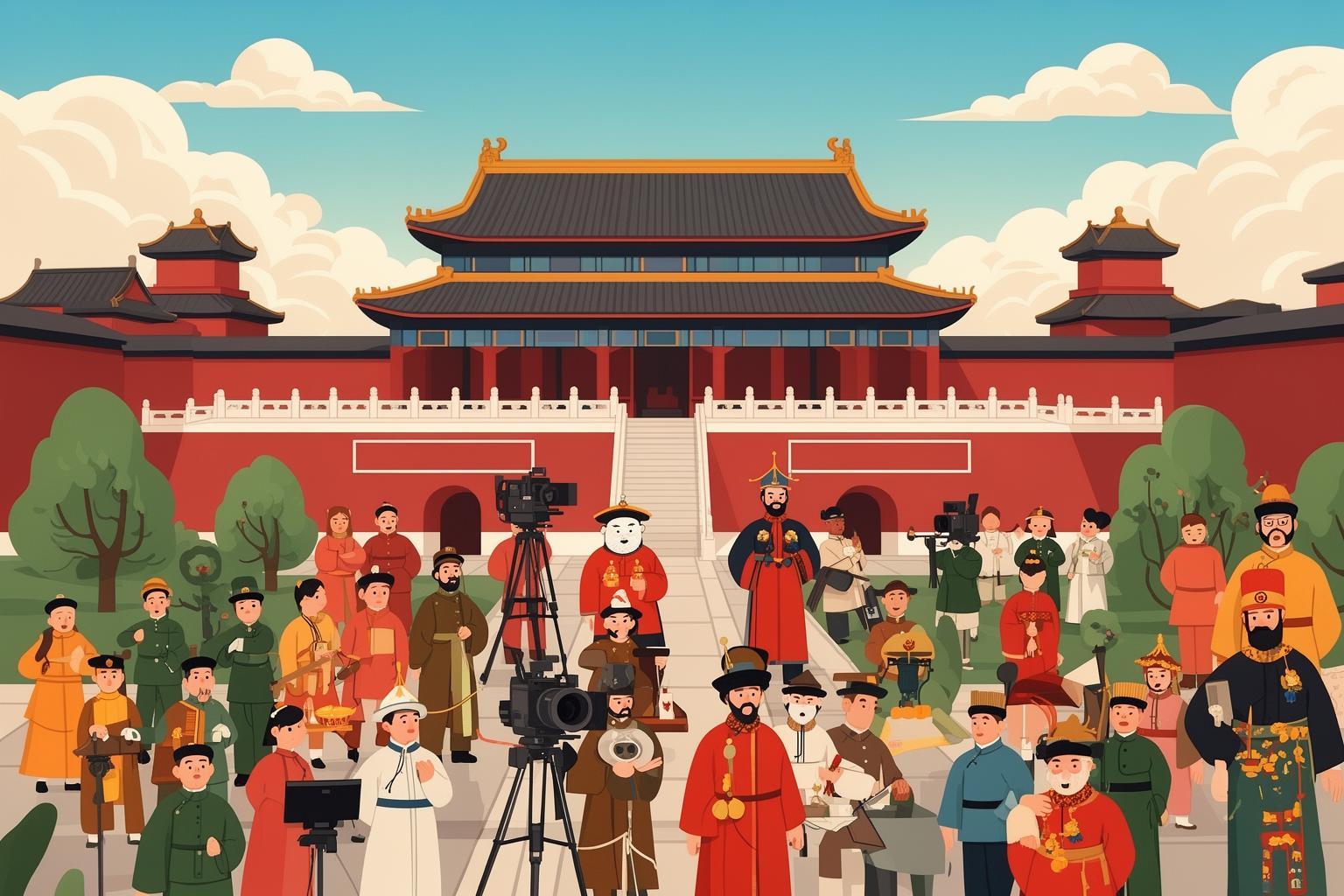
The final chapter of both Puyi’s life and the film depicts a process of re-education and, ultimately, a subdued redemption. After his capture by the Soviets and transfer to the Chinese Communists, the former emperor spends ten years in a re-education camp before being released as an ordinary citizen. This transformation from Son of Heaven to gardener is perhaps the most profound aspect of his journey.
The Fushun War Criminals Management Centre
Puyi was “re-educated” at the Fushun War Criminals Management Centre. Although the prison scenes in the film were shot on a set, this actual site grounds the story’s framing device, where Puyi writes his autobiography. The camp held former officials from the Manchukuo puppet state, Kuomintang officers, and Japanese war criminals, all subjected to indoctrination by the new Communist regime. The film presents this process with subtlety, depicting Puyi’s initial resistance, gradual breakdown, and eventual acceptance of his new identity as a citizen of the People’s Republic.
Visiting the real site today can be challenging, as it is not a common tourist spot. However, understanding its significance is key to appreciating the film’s narrative arc. It symbolizes the total dismantling of Puyi’s former self. All imperial titles, rituals, and privileges were stripped away, compelling him to confront his past and his complicity with the Japanese. The scenes set here in the film are powerful, showing a man forced to learn to tie his own shoes and care for himself for the first time. It marks the final and most profound breaking of the imperial bubble.
The Botanical Gardens and a Life in Obscurity
The film’s concluding scenes are among its most touching. We see an elderly Puyi, now a humble gardener, working at the Beijing Botanical Garden. In the film’s final, masterful sequence, he returns to the Forbidden City as an anonymous visitor. Approaching the Dragon Throne where he once ruled as a god, he retrieves a cricket cage he hid there as a child. This deeply moving moment brings his extraordinary story full circle.
Visiting the Beijing Botanical Garden offers an ideal way to end your journey. While the precise filming locations of his gardening scenes are not confirmed, the gardens themselves embody the peace and anonymity he found in his later years. It is a stark contrast to the rigid order and immense power of the Forbidden City. Here, there is a sense of quiet natural life—a place for reflection. As you stroll among the plants and trees, you can contemplate the vast journey of the man whose footsteps you have been following. From emperor to prisoner to citizen, Puyi’s life spanned one of the most turbulent periods in Chinese history. The gardens provide a serene space in which to absorb the weight of that history.
The Lasting Image: A Journey Through Time and Cinema
To trace the locations of The Last Emperor is to do more than simply visit film sets; it is to embark on a historical and emotional journey. You stand in the vast emptiness of the Forbidden City’s courtyards and feel the isolation of a child ruler. You walk through the somber halls of a puppet palace in Changchun and sense the heavy burden of a false crown. You conclude your journey in the tranquil greenery of a Beijing garden, reflecting on the possibility of finding meaning after a life defined by lost power. Bertolucci did more than create a film; he crafted a map, a guide that enables us to connect with the human story behind the grand sweep of history. This pilgrimage stands as a testament to the lasting power of his vision, bridging the gap between cinematic image and the tangible world, leaving you with a profound understanding of the man, the empire, and the remarkable century that shaped them both forever.