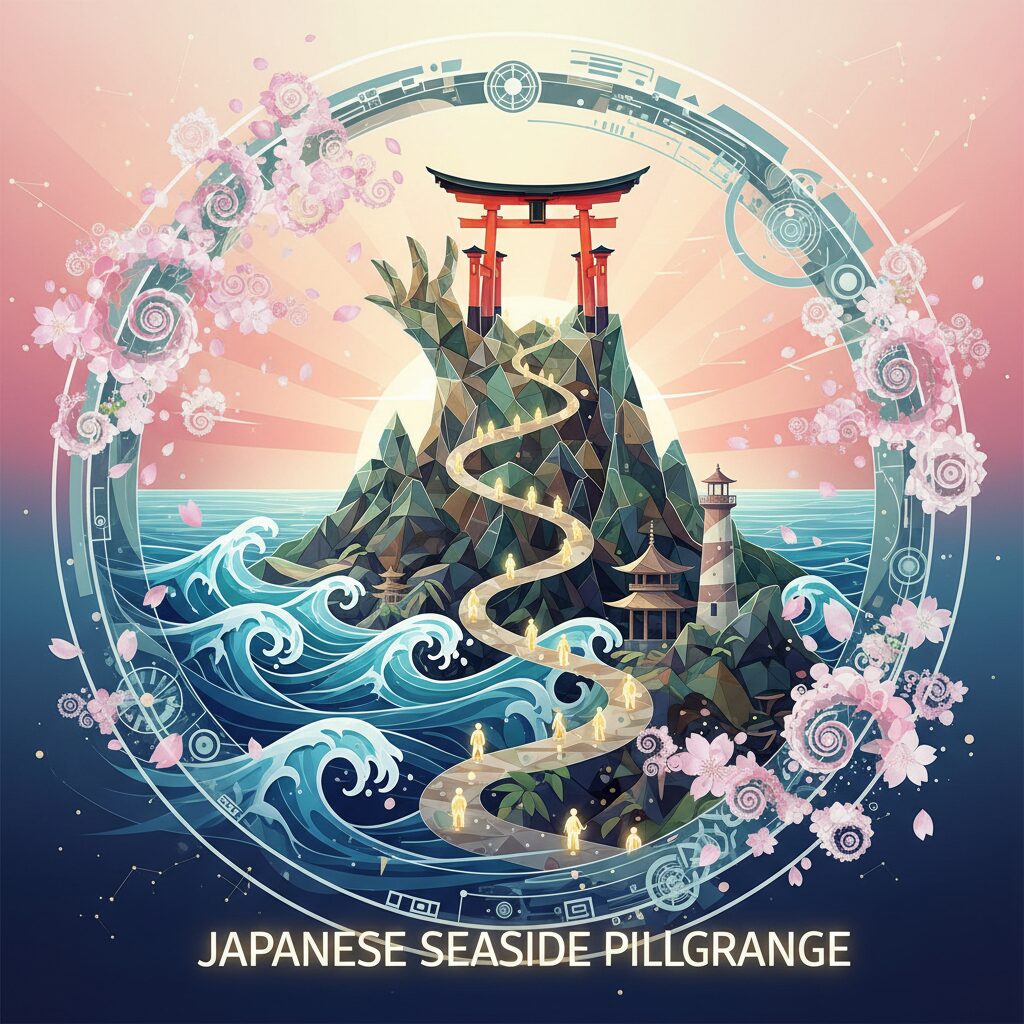
There are stories that feel as if they were born from the sea itself, their currents pulling at our hearts with the steady, inexorable rhythm of the tides. P.A. Works’ masterpiece, A Lull in the Sea (Nagi no Asukara), is one such narrative. It presents a world of breathtaking beauty and profound emotional turmoil, built upon the division between those who live on the surface and those who dwell in Shioshishio, a shimmering village beneath the waves. The story explores love, loss, prejudice, and the painful, beautiful process of change, all set against a backdrop so vivid it feels like a memory. For many who were captivated by the ethereal glow of Ena and the deep blue of the sea, the world of Shioshishio and its surface counterpart, Oshiooshi, feels like a place that must exist somewhere. And in a way, it does. Along the rugged, spiritually resonant coastline of Mie Prefecture in Japan, the landscapes that gave birth to this unforgettable anime await, offering not just a visual match but a deep, atmospheric connection to the soul of the story. This journey is more than a simple location hunt; it is a pilgrimage to the heart of the lull, a chance to stand on the shores that inspired a modern classic and feel the same salt-laced wind that carried the characters’ whispered feelings across the water. Here, in the quiet fishing towns and along the ancient pilgrim roads of the Kii Peninsula, the world of A Lull in the Sea breathes.
This pilgrimage to the heart of A Lull in the Sea is part of a beautiful tradition of anime location pilgrimages, where fans travel to the real-world settings that inspired their favorite stories.
The Heart of the Calm: Kii-Nagashima and the Echoes of Oshiooshi

Our journey begins in the modest yet richly atmospheric port town of Kii-Nagashima. Tucked away in a deep inlet along the Kumano Sea’s coastline, this town stands as the unmistakable heart of the surface world portrayed in A Lull in the Sea. As you step off the train at Kii-Nagashima Station, the atmosphere shifts noticeably. The air carries the salty tang of the ocean, mingled with the faint diesel scent from fishing boats and the quiet, diligent energy of a community whose life pulses with the water. This is Oshiooshi brought to life. While the town isn’t an exact replica, it serves as the foundation for the anime’s entire aesthetic and mood. It is a place rooted in reality, a living testament to the intertwined relationship between people and the sea, a theme central to the anime’s essence.
The Whispering Port Town
Strolling through Kii-Nagashima’s streets is like stepping into a story. Narrow roads curve around the harbor, flanked by homes and small businesses that have weathered many generations. Yet the true enchantment lies at the port itself. Fishing boats of varying sizes rest along the docks, their bright flags dancing in the breeze. Nets are stacked high, ready to be repaired by experienced hands. The steady hum of a boat engine heading out for the day’s catch or the calls of seabirds circling above serve as the town’s natural soundtrack. This is the very heart of the port where Manaka, Hikari, and their friends would have first emerged from the sea, blinking in the surface sun’s brightness. It’s easy to imagine them walking along these concrete breakwaters, their conversations and struggles unfolding against the backdrop of the deep blue water. The town feels genuine, lived-in, untouched by the superficial sheen of a tourist hotspot. It carries a quiet dignity and a timelessness that offers visitors a seamless escape into the anime’s world. Spend some quiet moments by the harbor, observing its daily rhythm. Here, you’ll discover the strongest connection to the series’ surface world—a place of comforting routine and the soft, constant murmur of the sea.
A Passage Between Worlds: The Nagashima Tunnel
One of the most visually striking and symbolically rich locations in the anime is the tunnel the characters pass through. Its real-life counterpart, the Nagashima Tunnel, stands as a meaningful landmark for any pilgrim. Just a short walk from the main port, the tunnel cuts through the hillside, linking different parts of the town. In the anime, it symbolizes more than a physical transition between places—it marks a passage between the emotional and physical realms of land and sea. Standing before its entrance is a surreal moment. The weathered concrete, the gentle curve of the arch, and the dim light inside are immediately familiar. As you walk through, the outside sounds fade away, replaced by the echo of your footsteps. The air cools. For a brief time, you inhabit a liminal space, a threshold of transformation. Coming out the other side feels like a subtle rebirth, a return to the light. Though simple in structure, for A Lull in the Sea fans, it is brimming with meaning. It’s the route of daily school commutes, the setting for quiet confessions and unspoken emotions. This tangible fragment of the anime’s world offers a deep sense of connection, the sensation of treading the same paths as the beloved characters.
Tracing the Path of Youth: The Winding Roads of Hadasu
While Kii-Nagashima embodies the soul of the town, the stunning coastal views and winding, elevated roads that mark the characters’ journey to and from school lie further down the coast in the Hadasu area of Mihama Town. Although this region is somewhat more remote, it remains an indispensable stop on any Nagi no Asukara pilgrimage. The journey itself—whether by car or the infrequent local train—is part of the experience, guiding you along a coastline of dramatic cliffs and sparkling bays. Hadasu is where mountains meet the sea in a breathtaking display, creating a landscape that is both challenging and immensely beautiful, much like the emotional journey of the anime’s young protagonists.
A View from Above
The iconic image of Hadasu is its ‘serpentine road’ hugging the steep hillside, offering sweeping views of the Pacific Ocean below. This area is renowned for its terraced mikan (mandarin orange) groves, which form a striking patchwork of green and orange against the deep blue of the sea. As you wind along these narrow, twisting roads, you are instantly transported to the scenes of the characters walking to Mihama Middle School. The perspective is flawless—the guardrails, the sharp drop-off, and the endless stretch of water reaching the horizon. This is where they laughed, argued, and wrestled with their complex adolescent emotions. The view from these roads is nothing less than breathtaking. On a clear day, sunlight dances across the water, creating a million shimmering diamonds—a phenomenon the anime captured with ethereal beauty. It’s a place that invites quiet reflection. Pull over safely and gaze out at the sea; you can feel the vastness of the world alongside the intimate, powerful dramas unfolding within it. This landscape is more than just a backdrop; it’s a character itself, its beauty silently witnessing the story’s unfolding heartaches and joys.
The Scent of the Tides and Citrus
One of the most evocative parts of a pilgrimage is engaging all the senses, and Hadasu offers a distinctive aromatic experience. The air here is a rich blend of the sharp, salty tang of the sea breeze and the sweet, fragrant scent of citrus blossoms or ripening fruit, depending on the season. This sensory mix is incredibly evocative, grounding the animated world in a tangible reality. Close your eyes, and you can almost imagine the scent clinging to the uniforms of the Shioshishio children as they make their way up the hill—a constant reminder of the two worlds they inhabit. This fusion of scents—one from the land, one from the sea—perfectly reflects the central theme of the series: the merging of two different cultures and the beauty that arises from it.
Practical Pilgrimage: Accessing Hadasu
A practical note is essential for this part of the journey. The Hadasu area is rural, and its most iconic spots are best—and safest—accessed by car. Renting a vehicle from a larger nearby city like Nagoya, or even a closer town such as Owase, will give you the freedom to explore these winding roads at your own pace and stop for photos wherever the views are most compelling. While there is a Hadasu Station on the JR Kisei Main Line, train service is infrequent, and the walk from the station to the best scenic spots is considerable and involves steep inclines. Having a car allows you to fully immerse yourself in the landscape without being bound by a strict timetable, turning travel between locations into an integral and enjoyable part of the pilgrimage itself. Just be sure to drive carefully, as the roads are narrow and shared with local residents and agricultural vehicles.
The Crystalline Shores: Atashika and Goza Shirahama Beaches

The world of A Lull in the Sea is characterized by its pristine waters and stunning shorelines, places for play, reflection, and dramatic moments. The beaches are where the children of sea and land first genuinely connect, and where many key events in the story take place. Mie Prefecture boasts an abundance of beautiful beaches that perfectly embody this idyllic charm, with two in particular standing out as essential destinations for any fan.
Atashika’s Crescent of Sand
Just a short trip from Hadasu is Atashika Beach, a perfect crescent of golden sand embraced by a lush green bay. This beach is widely regarded as the direct inspiration for the main beach featured in the anime. The crystal-clear water, the gentle slope of the sand, and the protective arms of the cove create a scene of tranquil beauty. In summer, it’s a vibrant spot, bustling with families and swimmers enjoying the calm, clear waters. However, visiting during the off-season—spring or autumn—offers an experience closer to the anime’s often melancholic and contemplative tone. In these quieter seasons, you may find the beach almost deserted. Strolling along the shoreline, with waves softly lapping the sand, it’s easy to sense the weight of the story. It’s a place to sit on the sand and reflect on the five-year time skip, on the feelings of those left behind and those lost to the Saltflake Snow. The soft light and serene atmosphere make Atashika Beach a space for introspection, a beautiful and poignant stop on the pilgrimage.
The White Sands of Shima: Goza Shirahama
While Atashika captures the intimate atmosphere of the anime’s main beach, the wider Shima Peninsula offers another breathtaking example of the region’s coastal beauty at Goza Shirahama Beach. Known for its fine, almost impossibly white sand and turquoise waters, Goza Shirahama reflects the more idealized, almost heavenly beauty seen in some of the anime’s most striking visual sequences. It represents the broader aesthetic of the Kii Peninsula’s coastline that clearly inspired the artists. Visiting Goza Shirahama reveals that the anime’s setting wasn’t based on a single place but is a composite—an artistic blend of the most beautiful features from across the area. This beach, with its nearly tropical vibe, displays the raw natural splendor that makes Mie Prefecture such a fitting real-world counterpart for a story celebrated for its visual artistry. It stands as a reminder of the untamed, majestic beauty of the sea that the people of Shioshishio revered so deeply.
The Ancient Gods of the Sea: Onigajo’s Mythic Landscape
To truly grasp the inspiration behind the mystical, underwater realm of Shioshishio and the formidable, god-like figure of Uroko-sama, one must journey to the southern edge of this region, to the city of Kumano. Here lies Onigajo, the ‘Demon’s Castle,’ a stunning stretch of coastline marked by rock formations so distinctive and otherworldly they appear sculpted by divine hands. This is more than just a geological marvel; it is a designated UNESCO World Heritage site, included among the sacred sites and pilgrimage routes of the Kii Mountain Range.
Where Uroko-sama Dwells
As you follow the cliffside path winding through Onigajo, the connection to A Lull in the Sea becomes vividly clear. The rocks, shaped over millennia by the relentless wind and waves of the Pacific Ocean, have eroded into jagged, layered formations that closely resemble scales. It is in this raw and powerful landscape that one can sense the inspiration for the scales of the Sea God, Uroko-sama. The cavernous hollows and honeycomb patterns in the cliffs recall the texture and sacred architecture of Shioshishio itself. The largest of these hollows, called Senjojiki (‘One Thousand Tatami Mats’), evokes a grand, submerged hall where the Sea God might hold court. The sound of waves crashing against the rocks below is a constant, thunderous roar—a powerful expression of the ocean’s might and a voice that seems divine. Onigajo is where the mythological foundation of the anime takes root in the real world, a place where the boundary between nature and divinity feels both beautiful and terrifyingly thin.
A Walk Through Legend and Time
The experience at Onigajo is deepened by its immense historical and cultural significance. The path you tread is part of the ancient Kumano Kodo pilgrimage route, a network of trails traveled by emperors, samurai, and commoners for over a millennium on their spiritual journey to the three grand shrines of Kumano. As a historian, I find this intersection of anime inspiration and profound history utterly captivating. Here, you walk in the footsteps of countless pilgrims who came to this coastline to honor the power of nature, regarded as the dwelling place of kami, or gods. This enduring Shinto belief in nature’s divinity perfectly reflects the spiritual world of Nagi no Asukara, where the Sea God is a real, tangible force governing the lives of people. Thus, walking through Onigajo represents a dual pilgrimage: one into the world of a cherished anime, and another into the very heart of Japan’s spiritual heritage.
The Spirit of Kumano
The entire Kumano region is regarded as one of Japan’s most sacred areas—a place where nature worship and organized religion have intertwined seamlessly for centuries. Understanding this background enhances one’s appreciation of A Lull in the Sea. The portrayal of rituals like the Ofunehiki, the veneration of Uroko-sama, and the profound respect for the sea’s moods are not mere fantasy elements; they reflect a cultural worldview long rooted in this part of Japan. The anime’s creators did not merely draw inspiration from the landscapes here; they also captured a spirit, a way of life intricately connected to the natural world, weaving it deeply into the fabric of their story. Visiting Onigajo and the Kumano area allows one to experience this spirit firsthand and to comprehend the cultural soil from which Shioshishio’s seeds took root.
A Practical Guide to Your Own Lull in the Sea

Embarking on a pilgrimage to the settings of A Lull in the Sea is an immensely rewarding experience, though it requires some planning due to the rural and dispersed nature of the locations. A carefully crafted itinerary will help you enjoy the journey without the stress of navigating unfamiliar, remote areas.
Exploring Mie’s Coastal Charm
Your main entry point to this region will likely be Nagoya, easily reached via the Shinkansen (bullet train). From Nagoya Station, the most direct access is the JR Kisei Main Line, a scenic railway that traces the coastline of the Kii Peninsula. This line takes you to stations such as Kii-Nagashima, Hadasu, and Kumano-shi (for Onigajo). While the train ride offers beautiful views, it’s crucial to highlight the advantages of renting a car. As noted, having a car gives you the essential freedom to explore Hadasu’s winding roads, travel between beaches, and visit Onigajo on your own timetable. Public transit in this area can be sparse, and relying on it might cause you to miss some of the more subtle, off-the-beaten-path spots that truly embody the anime’s atmosphere. Plan to rent a car from a larger city like Nagoya or possibly a town along the Kisei Main Line, such as Matsusaka or Owase.
The best time to visit depends on the kind of experience you desire. Summer (July and August) brings lush greenery and ideal weather for beach activities, but it’s also the busiest and most humid season. Spring (April and May) and Autumn (October and November) are arguably perfect, featuring pleasant temperatures, fewer crowds, and stunning seasonal beauty—cherry blossoms in spring and vibrant foliage in autumn’s mountains. Winter (December to February) offers a different allure: the coast becomes stark and quiet, with crisp, clear air. This season may best evoke the somber, introspective tone of the anime’s latter half, after the hibernation. The serene desolation can be deeply beautiful, allowing a more personal, reflective pilgrimage.
Beyond the Anime: Embracing Local Culture
A genuine pilgrimage means immersing yourself in the local culture, and Mie Prefecture abundantly rewards visitors. The area is a culinary haven, especially for seafood enthusiasts. In Kii-Nagashima, don’t miss tasting the local catch at a cozy portside restaurant. The region is renowned for Ise-ebi (spiny lobster) and katsuo (bonito). Further inland, the area is famous for its premium beef and, naturally, the delicious mikan oranges grown in the terraced groves of Hadasu. Engaging with the local cuisine offers a meaningful connection to the land and sea that shaped the anime’s world.
For lodging, consider staying in a traditional Japanese inn. A ryokan or a smaller, family-operated minshuku will provide a far more memorable experience than a typical hotel. Waking up to a traditional Japanese breakfast and enjoying the hospitality of a local family offers a deeper connection to the rhythm of life in this coastal community. Options are available in Kii-Nagashima itself, as well as nearby hot spring towns like Kii-Katsuura, which provide the added pleasure of a soothing soak after a day of exploration.
An Update on What Has Changed
It is important for visitors to note a significant change in the region. For many years, Shima Marineland, known for its distinctive sunfish-shaped building, was a popular landmark and a favored stop for pilgrims. Unfortunately, the aquarium closed permanently in 2021. While its unique architecture contributed to the overall aesthetic of the Shima area that inspired the anime, it is no longer accessible. This reflects the natural evolution of any place. The true essence of the pilgrimage lies not in a single building, but in the timeless landscapes—the ports, roads, beaches, and sea—that remain as beautiful and evocative as ever.
The Enduring Resonance of the Sea
To journey through Mie’s coastal heartlands is to grasp why the creators of A Lull in the Sea selected this location. They discovered more than just picturesque scenery to replicate. They encountered a region where the sea is not merely a backdrop but a living, breathing force shaping every facet of life. They found quiet port towns where tradition persists, winding roads offering breathtaking moments of clarity, and ancient, sacred sites where nature’s power is revered as divine. The deep bond between the people and the ocean, the sense of a history extending into myth—these elements give the anime its remarkable depth and emotional resonance.
A pilgrimage here is a quiet one. It is a journey of reflection, of standing on a breakwater and feeling the sea spray, of driving a mountain road with the vast blue stretch beside you, of hearing the thunderous roar of waves in a rocky cove. It is in these moments that the boundary between reality and the anime’s world fades away. You come to understand that the emotions of love, jealousy, and longing experienced by Hikari, Manaka, and their friends are as universal and timeless as the tides. You depart with more than photographs of familiar places; you carry a deeper appreciation for the story and a piece of that tranquil, powerful lull within your own heart.