
There are stories that feel like coming home, even if you’ve never been to the places they depict. They wrap you in a warmth of nostalgia for a life unlived, for struggles overcome and friendships forged. P.A. Works’ 2011 masterpiece, Hanasaku Iroha—or The True Colors of Blossoming—is one such tale. It’s a vibrant, heartfelt story about Ohana Matsumae, a spirited Tokyo teenager suddenly uprooted and sent to live with her estranged grandmother at a traditional hot spring inn, or ryokan, in the fictional countryside town of Yunosagi. It’s a narrative steeped in the rhythms of hard work, the bittersweet ache of growing up, and the quiet dignity of Japanese hospitality, or omotenashi. But what makes this story resonate so deeply, long after the final credits roll, is that Yunosagi isn’t merely a flight of fancy. It has a real-world soul, a place you can walk, breathe, and feel. Welcome to Yuwaku Onsen, a secluded hot spring hamlet tucked away in the mountains on the outskirts of Kanazawa City in Ishikawa Prefecture. This is the world of Hanasaku Iroha brought to life, a place where the lines between animation and reality blur into a beautiful, tangible dream. Here, the soft murmur of a river, the gentle hiss of steam from ancient springs, and the rustle of leaves in the mountain air form the soundtrack to Ohana’s journey, and now, perhaps, to yours. A pilgrimage here isn’t just about spotting familiar backdrops; it’s about stepping into the very heart of the story and understanding the deep-rooted culture that inspired it. It’s a chance to see the blossoms for yourself.
If you’re inspired to seek out more real-world locations that have shaped beloved anime stories, consider planning a pilgrimage to the heart of ‘The Anthem of the Heart’ in Chichibu.
The Heart of Yunosagi: Discovering Yuwaku Onsen
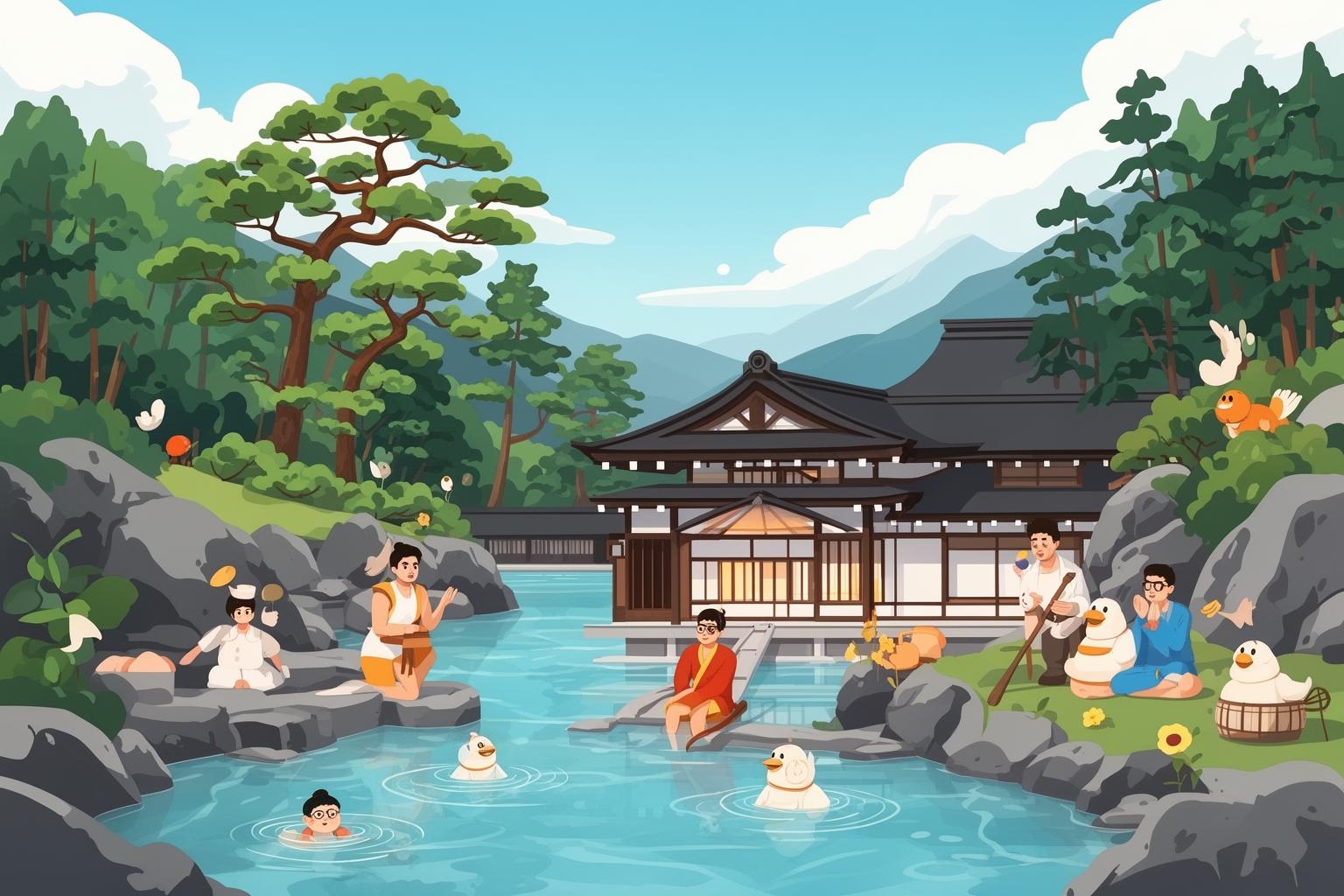
Your journey truly begins the moment the bus from Kanazawa embarks on its winding ascent into the mountains. The urban sprawl gradually gives way to dense bamboo groves and towering cedar trees, and the air becomes cooler and cleaner. When you finally step off in Yuwaku Onsen, the change is unmistakable. You have left the modern world behind. This small, compact village, nestled in a valley and embraced by mountains, is the exact likeness of Yunosagi. The narrow main street, the small river running through the town with its stone embankments, the traditional wooden facades of the inns and shops—it’s all here, captured with breathtaking accuracy. It feels less like a tourist spot and more like a living, breathing community that time has kindly chosen to overlook.
A Town Frozen in Time
Yuwaku’s atmosphere is one of profound tranquility. The loudest sounds often come from chirping birds or the gentle burbling of the river. As you walk, you’ll find your pace slowing subconsciously, tuning into the subtle details that the animators at P.A. Works painstakingly recreated. You’ll notice the small red-railed bridges that Ohana and her friends crossed countless times. You’ll pass the local post office and the quaint storefronts that, in the anime, served as the backdrop for everyday life. A powerful sense of déjà vu lingers in the air, a feeling of familiarity for a place you’ve only seen through a screen. The town’s layout is mirrored so faithfully that you can navigate it purely from memory of the anime scenes. You can almost picture Ohana, dressed in her work uniform, rushing down the street, or Minko and Nako sharing a quiet moment by the riverbank. This is the magic of Yuwaku; it doesn’t just resemble Yunosagi, it feels like it. The air carries the same weight of history, tradition, and the quiet promise of new beginnings.
The Spirit of Kissuiso: Echoes of a Grand Ryokan
At the heart of Hanasaku Iroha lies the Kissuiso, the grand old ryokan where Ohana works and learns the art of hospitality. Although the main inspiration for the inn’s exterior, the historic Hakui Royokan, was unfortunately demolished before the anime aired, its spirit lives on throughout Yuwaku. The town is home to several beautiful, long-established ryokan that embody the very essence of Kissuiso. Inns like Hatori and Kanaya, with their elegant wooden architecture, meticulously maintained gardens, and plumes of steam rising from their onsen, capture the grandeur and dignity of Ohana’s workplace. To fully complete your pilgrimage, a stay in one of these inns is essential. It’s an immersion into the world of omotenashi. From the moment you arrive, you are treated not as a mere guest but as an honored visitor. You’ll be led to a tatami mat room, its clean, grassy scent a hallmark of Japanese tradition. You’ll be given a yukata, a light cotton robe to wear around the inn and to the baths. The highlight, naturally, is the onsen itself. This hot spring water, discovered over 1,300 years ago, is soft and rejuvenating, the perfect remedy for weary travelers. Soaking in an open-air bath, or rotenburo, surrounded by mountain scenery, is an experience that goes beyond simple relaxation. In the evening, you’ll be served a kaiseki dinner, a multi-course artistic expression of local, seasonal ingredients. Each dish is a miniature work of art, beautifully arranged to delight all the senses. This entire experience—the attentive service, the respect for tradition, and the connection to nature—is the living heart of Kissuiso, a testament to the dedication and work ethic that Ohana comes to embrace.
Walking in Ohana’s Footsteps: A Scene-by-Scene Guide
While Yuwaku Onsen embodies the soul of Yunosagi, the world of Hanasaku Iroha reaches beyond the village, with key locations scattered throughout Kanazawa and the nearby Noto Peninsula. Following these sites strengthens the connection to the story, transforming a simple visit into an immersive narrative journey.
The Fukuya Department Store Bridge
One of the anime’s most moving early scenes unfolds on a large bridge where Ohana, having just learned she must leave Tokyo, shares a dramatic and emotional phone call. This moment wasn’t set in the serene countryside but in the heart of Kanazawa City. The bridge is the Asanogawa Ohashi Bridge, a wide, graceful structure spanning the Asano River. Standing in the middle of this bridge, with the gentle river flowing beneath and a mix of traditional and modern buildings lining its banks, you can sense the emotional upheaval turning Ohana’s world upside down. It’s a place of transition, connecting the life she once knew with the uncertain future awaiting her in Yunosagi. Visiting the bridge is straightforward, as it’s centrally located in Kanazawa, offering a fresh perspective on the region that serves as the story’s setting. It reminds us that Ohana’s journey was not merely about embracing tradition but also reconciling her past with her present.
The Path to School
The students’ daily commute in Hanasaku Iroha was no mere casual walk; it involved climbing steep, winding mountain roads. These paths are very much real in and around Yuwaku Onsen. Walking them offers a tangible way to connect with the characters’ everyday lives. As you ascend the slopes leading away from the village, you’re surrounded by dense forest, the air still except for the buzzing of insects in summer or the crunch of autumn leaves underfoot. Along one of these trails, a small Inari shrine stands, its bright red torii gates contrasting vividly with the rich green foliage. This shrine served as the model for the one frequently shown in the anime, a quiet sanctuary for reflection for the characters. Standing there, you can easily picture Ohana pausing to catch her breath or Minko lost in thought. These paths are more than mere routes; they are spaces for contemplation, where the mountain’s silence encourages introspection—an essential theme in the characters’ personal growth throughout the series.
Yunosagi Station: A Detour to the Noto Peninsula
The iconic Yunosagi Station, with its charming wooden building and platform overlooking the sea, is arguably the most famous location beyond the hot spring town itself. However, reaching it requires a dedicated journey. The real-world inspiration is Nishigishi Station, located not in Kanazawa but quite a distance away on the Noto Railway line, which traces the scenic coastline of the Noto Peninsula. The pilgrimage to Nishigishi is an experience in its own right. The Noto Railway is a quaint, local line, often running a single, colorfully painted carriage through landscapes of rice paddies and sleepy fishing villages. Approaching Nishigishi, the tracks draw near the coast, suddenly unveiling the vast blue expanse of the Sea of Japan. Stepping onto Nishigishi’s platform feels surreal. It is impeccably preserved, almost like a shrine to the anime. A wooden sign proudly labels it “Yunosagi Station,” and the interior is adorned with posters, memorabilia, and a guestbook filled with messages from fans worldwide. It stands as a testament to the deep affection for the series. Standing there, feeling the sea breeze and watching the train’s departure, you’re perfectly recreating one of the show’s most iconic visuals—a powerful, cinematic moment that makes the journey entirely worthwhile.
The Journey to the Noto Peninsula
Traveling to Nishigishi Station presents an opportunity to explore the broader Noto region, an area of rugged, untamed beauty. The author’s background as an outdoor enthusiast shines here. The Noto Peninsula is a paradise for lovers of dramatic coastlines, tranquil countryside, and a slower pace of life. Driving along the coast reveals breathtaking views of jagged cliffs and windswept beaches. You can visit Shiroyone Senmaida, a stunning series of over a thousand terraced rice paddies cascading down a steep hillside to the sea—a truly unforgettable sight. The peninsula also hosts traditional salt farms and fishing ports that have operated unchanged for centuries. Exploring this region offers deeper insight into the world of Hanasaku Iroha. It’s a land forged by nature and tradition, where hard work and harmony with the seasons are not just ideas but a way of life. This enriches your understanding of the cultural foundation from which a place like Kissuiso could emerge.
The Bonbori Festival: From Fiction to Reality
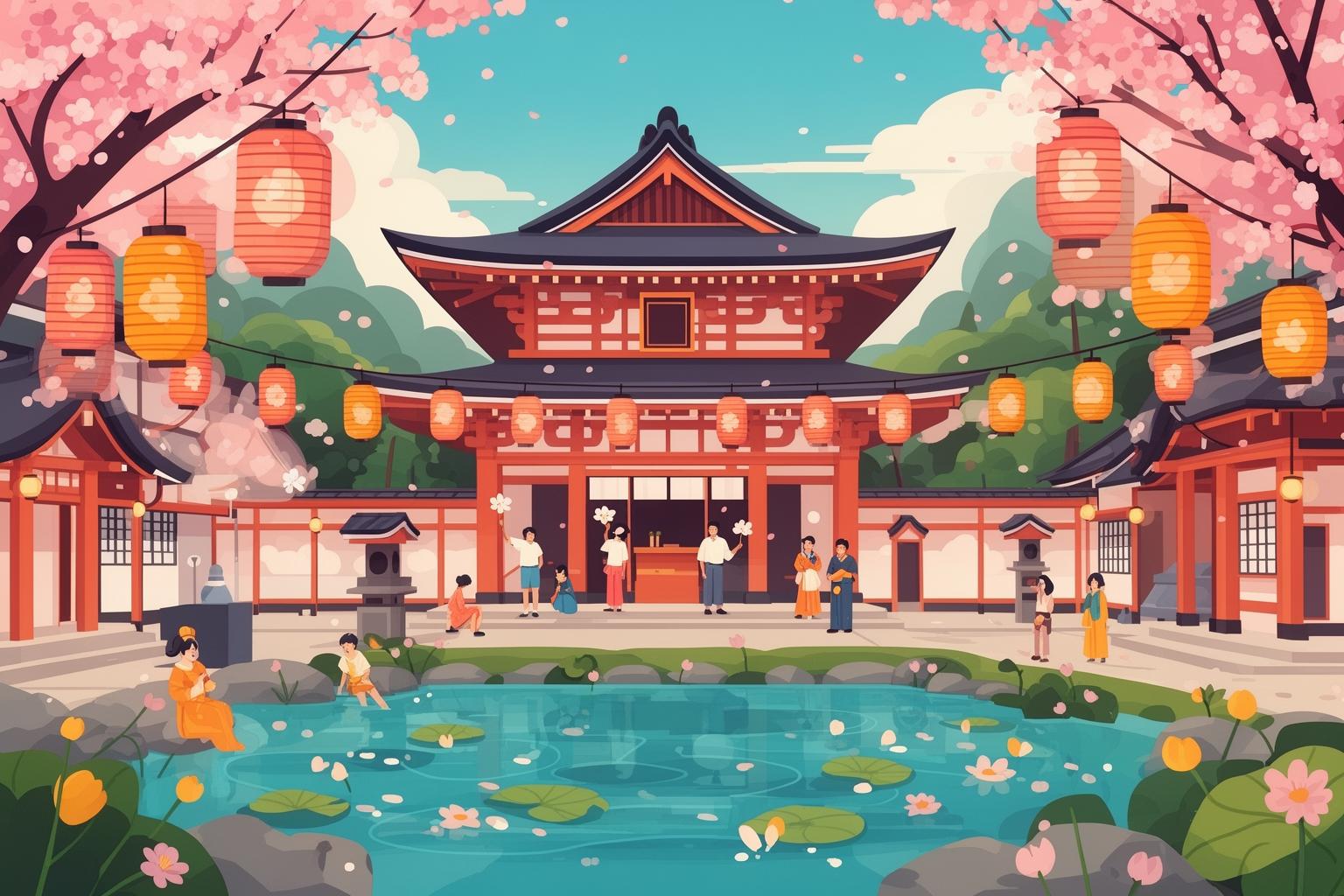
Perhaps the most remarkable legacy of Hanasaku Iroha is the Bonbori Festival. This stunning lantern festival, portrayed in the anime as an ancient local tradition meant to guide a deity on her path, was entirely invented for the story. It had never existed before. However, after the anime aired, fans flocked to Yuwaku Onsen, eagerly asking when the Bonbori Festival would take place. In an extraordinary case of life imitating art, the town chose to bring the festival to life. This decision beautifully reflects the anime’s own themes of community and the creation of new traditions. It has since become an annual event, serving as a powerful and unique connection between the fictional world and reality.
The Birth of a New Tradition
The origin story of the real Bonbori Festival is just as heartwarming as the anime itself. The production team from P.A. Works partnered with the local community and tourism association to design the event from scratch, basing it on the lore created for the show. The festival’s purpose remains unchanged: to light the way for the gods. Key features, such as the distinct hexagonal bonbori lanterns and the hanging of wooden wish plaques called nozomi-fuda, were directly transferred from the animation into reality. This collaboration between creators, fans, and the local community is a rare and beautiful phenomenon, making the Bonbori Festival a genuinely special pilgrimage event.
Experiencing the Festival Today
Held annually on a weekend in October, the Bonbori Festival transforms the tranquil town of Yuwaku into a vibrant and magical wonderland. Thousands of visitors, a mix of anime enthusiasts and curious locals, flood the village. The streets, typically quiet, come alive with a gentle, excited energy. As dusk settles, hundreds of paper lanterns, each bearing the festival’s unique crest, are lit, casting a warm, ethereal glow over the entire town. The main street fills with stalls selling local delicacies. The festival’s centerpiece is the procession. A portable shrine is carried through the town to the Inari shrine on the hillside, accompanied by music and chanting. Visitors write their wishes on the nozomi-fuda and hang them at the shrine, creating a tapestry of hopes and dreams. The festival concludes with a solemn ceremony where the wishes are blessed. The atmosphere is one of shared joy and reverence. It is a deeply moving experience to stand among a crowd united by a shared love for a story, participating in a tradition they collectively helped bring into being. If you plan to attend, be warned: it is extremely popular. Accommodations in Yuwaku and even nearby Kanazawa fill up many months, sometimes even a full year, in advance. Special shuttle buses run from Kanazawa Station to accommodate the crowds, so careful planning is absolutely essential.
Beyond the Anime: Savoring Kanazawa and the Noto Region
Although the call of the pilgrimage is strong, it would be unfortunate to visit this part of Japan without also exploring the rich cultural tapestry surrounding Yuwaku Onsen. Kanazawa itself is a treasure trove of history and art, often referred to as “Little Kyoto” due to its beautifully preserved historical districts and cultural sophistication.
Kanazawa, the City of Gold and Gardens
Kanazawa remarkably avoided the bombing raids of World War II, leaving its historical areas almost completely intact. Spending a day or two exploring the city perfectly complements a stay in Yuwaku. At the top of any list is Kenrokuen Garden, widely regarded as one of Japan’s three most beautiful landscape gardens. Each path unveils a new, exquisitely composed scene of ponds, ancient trees, and teahouses. Within the garden, you’ll also find Kanazawa Shrine, whose atmosphere feels connected to the pilgrimage experience. Nearby lies the Higashi Chaya District, a beautifully preserved geisha neighborhood with streets lined by traditional wooden teahouses, many now converted into cafes and shops selling local crafts, including gold leaf products, a Kanazawa specialty. For a modern touch, the 21st Century Museum of Contemporary Art provides a striking contrast with its circular glass architecture and playful, interactive exhibits. Exploring these sites deepens your appreciation of the region’s profound respect for both beauty and craftsmanship, themes central to Hanasaku Iroha.
A Practical Guide for Your Yunosagi Pilgrimage
Embarking on this journey requires some planning, but the rewards are truly invaluable. With the right information, exploring the world of Hanasaku Iroha can be a smooth and delightful experience.
Getting to Yuwaku Onsen
The entry point to the region is Kanazawa Station. It’s easily reachable from major cities like Tokyo and Kyoto via the Hokuriku Shinkansen, a fast and comfortable bullet train. If flying, the closest airport is Komatsu Airport (KMQ), which offers a convenient direct bus service to Kanazawa Station. Upon arriving at the bustling and architecturally striking Kanazawa Station, your final leg begins. Head to the Hokutetsu bus terminal just outside the station’s east exit, and look for the bus stop serving line 12, with the destination clearly marked as Yuwaku Onsen (湯涌温泉). The bus ride itself is part of the adventure, lasting about 50 minutes. You’ll watch the cityscape transition into suburbs, then into lush green mountains, signaling your arrival in Yunosagi. The fare is reasonable, and the schedule fairly regular; however, it’s wise to check the latest timetable before you set off.
When to Visit: A Year in Yunosagi
Yuwaku Onsen welcomes visitors all year round, with each season offering a unique charm and fresh ways to experience the anime’s world.
Spring symbolizes renewal. In April, cherry blossoms adorn the mountainsides and riverbanks in soft pinks and whites, with fresh, crisp air perfectly echoing Ohana’s new beginning at Kissuiso. It’s a fantastic season for hiking the village trails.
Summer blankets the landscape in vibrant green. The days are warm and often humid, filled with the iconic summer sounds of cicadas. This lush season reflects the intensity of work and the growing relationships at the inn during its busiest time.
Autumn is unquestionably the most popular season, and for good reasons. October brings the Bonbori Festival, attracting fans worldwide. Beyond the celebrations, the mountains blaze with brilliant reds, oranges, and yellows throughout October and November. The cool, crisp air enhances the onsen experience.
Winter cloaks Yuwaku in a quiet, magical snowscape. A thick layer of snow softens all sound, creating a peaceful atmosphere. This season offers perhaps the best time to enjoy the hot springs. Soaking in an outdoor rotenburo beneath gently falling snow—known as yukimiburo—is pure bliss. It’s a calm, reflective time, ideal for contemplating the story’s deeper themes.
Local Tips and Etiquette
To fully enjoy your visit and respect local customs, a few tips may help. When visiting an onsen, always wash thoroughly at the shower stations before entering communal baths. Small towels can be used for modesty while moving around but should not be immersed in the bathwater. Tattoos remain a concern at some traditional establishments, so it’s advisable to check your ryokan’s policy in advance. At a ryokan, meal times are generally fixed, and hosts typically come to your room in the evening to lay out futon bedding while you dine. Lastly, as a visitor, remember that Yuwaku Onsen is home to its residents. Be respectful when photographing, stay on designated paths, and support the local economy by buying souvenirs or enjoying snacks at village shops. This quiet town has warmly welcomed anime fans; it is our privilege to return that kindness.
Hanasaku Iroha tells a story about finding one’s place through hard work, honoring tradition, and “blossoming” into the person you’re meant to be. A trip to Yuwaku Onsen is more than an anime pilgrimage—it’s a chance to step into the world that gives these themes their depth and authenticity. Here, fiction and reality blend so seamlessly that the story feels more vivid than ever. Standing by the river, soaking in ancient waters, or watching lanterns glow at dusk, you connect with Ohana’s journey in a visceral way. You sense the pull of tradition, the warmth of community, and the quiet promise that, in this small mountain town, you too can find a place to blossom.