Written by Shun Ogawa
There are films that entertain, and then there are films that linger. They seep into the quiet moments of your life, coloring the way you see a passing train, a flurry of cherry blossoms, or the vast, star-dusted sky. Makoto Shinkai’s 2007 masterpiece, 5 Centimeters per Second, is one such film. It’s a quiet elegy to first love, a meditation on the vast distances that grow between people, and a visual poem painted with the hyper-realistic, breathtakingly beautiful palette of everyday Japan. The film’s subtitle, “a chain of short stories about their distance,” perfectly captures its essence, and this distance is not just emotional—it is geographical. Shinkai, a master of weaving real-world settings into his narratives, uses the tangible, specific locations of Japan as a canvas for the intangible ache of his characters, Takaki Tono and Akari Shinohara.
For fans around the world, the experience of watching 5 Centimeters per Second is often followed by a unique desire: to walk in the characters’ footsteps, to stand on the same train platform, to feel the same sea breeze. This is the heart of seichi junrei, or anime pilgrimage, a journey to bridge the gap between fiction and reality. It’s a way of understanding the story not just with your eyes, but with all your senses. This guide is your map and your companion on that journey. We will travel from the bustling, crisscrossing train lines of Tokyo to the remote, windswept shores of Tanegashima island, tracing the physical path of a love story defined by the relentless, beautiful, and sometimes cruel passage of time. These are not just backdrops; they are silent characters in a story that continues to resonate with anyone who has ever looked back and wondered, “what if?”
If you’re captivated by the idea of visiting real-world anime settings, you might also enjoy planning an anime pilgrimage in New York City.
Episode 1: Cherry Blossom – The Echoes of Youth in Tokyo
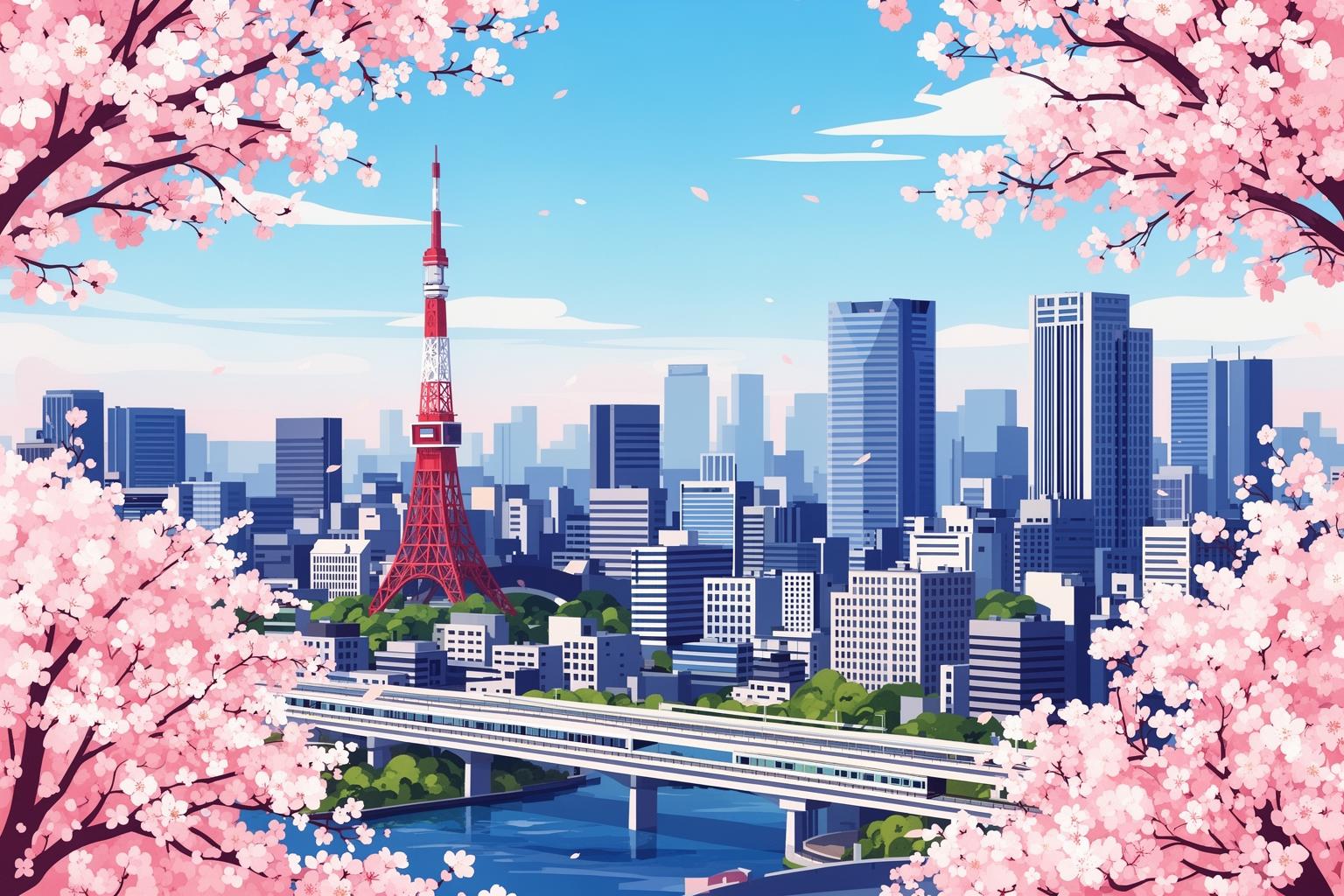
The story begins, as many do in Japan, amid the gentle cascade of sakura petals. The first act, “Oukashou” (Cherry Blossom), is a tender symphony of childhood promises set against Tokyo’s urban backdrop. Shinkai portrays the capital not as a cold, impersonal city, but as a place of intimate corners, hidden playgrounds, and the constant pulse of the railway—the veins that both connect people and sometimes pull them apart. This part of the pilgrimage is a journey back in time, to the locations where Takaki and Akari’s shared history unfolded.
Sangubashi and the Fateful Crossing
The film’s most iconic opening scenes take place in the tranquil, residential area around Sangubashi Station on the Odakyu Line. This isn’t the Tokyo of neon-lit skyscrapers, but a softer, more muted version. It’s a neighborhood of low-rise apartments, small local shops, and the steady, comforting rumble of trains. Stepping off the platform at Sangubashi, the film’s atmosphere descends instantly. The air feels calmer here, a sharp contrast to the hectic energy of nearby Shinjuku.
A short walk from the station leads to the very railway crossings so central to Takaki and Akari’s childhood. The first, Sangubashi Park crossing, is where they gaze at the tracks with cherry blossoms drifting down like snow. Standing there, you can almost hear their youthful voices debating the speed at which the petals fall—five centimeters per second. It’s a moment of pure, heartfelt connection, and the site itself feels infused with that memory. The real crossing is unmistakable, from the yellow and black striped barriers to the web of overhead power lines Shinkai painstakingly recreated. Seeing the Odakyu Line train rush past—those same silver cars with blue stripes—makes the scene’s vivid reality hit home.
Since this is a residential area, a visit demands sensitivity. This is not a tourist hotspot but a living neighborhood. The pilgrimage’s beauty here lies in subtlety—taking in quiet details: the way light filters through leaves, the sound of the crossing bell, the sensation of being in a place that holds a fictional yet deeply real significance. Take your time, wander the streets, and let the film’s quiet melancholy envelop you. It’s in these ordinary moments that Shinkai’s storytelling magic truly shines.
The Long Journey to Iwafune
The emotional heart of the first act is Takaki’s difficult train ride through a snowstorm to meet Akari one last time before she moves even farther away. This sequence is a masterful portrayal of emotional struggle through physical travel. Shinkai doesn’t just depict a train moving from point A to B; he immerses viewers in Takaki’s growing anxiety as each delay widens the distance between him and Akari. This part of the pilgrimage focuses less on a specific location and more on evoking the feeling of that journey.
Takaki starts in Tokyo, transferring at hubs like Shinjuku and Musashi-Urawa, before heading north through Saitama and eventually Tochigi Prefecture. While tracing his exact route is possible, the true essence of this pilgrimage lies in experiencing a long-distance train ride through rural Japan. Find a local line leaving the city, ideally on a winter day. Sit by the window and watch dense urban sprawl give way to small towns, open fields, and eventually a quieter, more remote landscape. The film exquisitely captures the unique atmosphere inside a late-night train car—the low hum of the engine, the rhythmic clack of wheels, the reflection of your own face in the dark window against fleeting lights outside.
His destination is Iwafune Station in Tochigi. Visiting this station is deeply moving. It’s a small, unpretentious countryside stop, preserved almost exactly as depicted in the anime. The wooden waiting room, simple platform, and surrounding snowy fields feel suspended in time. Standing there, one can almost sense the warmth of the stove Takaki huddled by and the heavy weight of his wait. When Akari finally arrives, breathless and relieved, the station transforms into a sanctuary—a small bubble of warmth against the cold, indifferent storm. A trip to Iwafune stands as a testament to the power of place; a location that, thanks to the film, carries the emotions of reunion, relief, and the bittersweet ache of a final farewell.
Episode 2: Cosmonaut – A Universe of Longing on Tanegashima
The film’s second act, “Cosmonaut,” marks a dramatic shift in both setting and perspective. We leave behind the cold, snowy landscapes of Honshu and arrive on the subtropical island of Tanegashima, located south of Kyushu. The narrative now unfolds through the eyes of Kanae Sumida, a classmate harboring a deep, unspoken crush on the relocated Takaki. The island itself becomes almost a character, with its expansive, open skies and the towering presence of the Tanegashima Space Center serving as a poignant metaphor for the emotional distance Kanae feels from the boy whose gaze is always directed toward something—or someone—far, far away.
The Island of Endless Skies and Rocket Dreams
Tanegashima offers a world apart from Tokyo. Life moves at a slower pace, governed by the ebb of the waves and the changing seasons. The air is dense with the scent of salt and tropical blooms. To truly immerse yourself in the “Cosmonaut” world, renting a car or scooter is essential. The island’s attractions are scattered, and the journey along the coastal roads, with the vast Pacific Ocean stretching out to the horizon, is a crucial part of the pilgrimage. This mirrors the daily rides Kanae and Takaki share after school on their scooters, a routine layered with Kanae’s quiet longings.
Their high school is modeled after Tanegashima Chuo High School (Tanegashima Central High School). Although entering the campus itself is not allowed, the surrounding area remains instantly recognizable. From the road, you can glimpse the school building, athletic fields, and the route they would take home. It’s easy to imagine Kanae deliberately slowing down to savor a few extra moments with Takaki.
A notable spot is the convenience store where Kanae often waits, hoping to “accidentally” encounter Takaki. The particular store in the film, an I-Shop, may have changed or shut down over time, but the location and its ambiance persist. It’s an ordinary, everyday place that the film turns into a stage for adolescent drama. Here, Kanae grapples with her emotions, her indecision mirrored in the simple act of choosing a drink from the cooler. This small, relatable moment of vulnerability feels especially authentic when standing inside a similar convenience store on the island, with fluorescent lights buzzing overhead.
Where Earth Meets Sky: The Space Center
At the heart of Tanegashima in the film lies the JAXA Tanegashima Space Center. This is Japan’s largest rocket-launch facility, a site of tremendous scientific ambition and a gateway to space. For Kanae and Takaki, the upcoming rocket launch is a constant backdrop. They watch as the massive transporter carrying the rocket slowly moves along the island roads, a spectacle that interrupts their daily routine.
The rocket itself serves as a vivid metaphor. For Takaki, it embodies the overwhelming speed and distance of modern life—the very forces that separated him from Akari. For Kanae, it represents her feelings for Takaki—powerful and explosive, yet something she struggles to set in motion. The climax of this act, where they witness the rocket’s ascent into the sky, stands as one of the film’s most visually and emotionally breathtaking moments. Visiting the Space Center allows you to appreciate the enormity of this endeavor. You can tour the facilities, see the launch pads, and explore the museum. Standing there, gazing skyward, you gain a sense of the awe and smallness the characters must have experienced—a feeling that beautifully captures the anxieties of youth and the ache of loving someone who seems a universe away.
Episode 3: 5 Centimeters per Second – Ghosts of the Past in Tokyo
The final act returns us to Tokyo, years later. Takaki is now an adult, working as a programmer and struggling to keep pace with the city’s relentless tempo. The vibrant energy of Tokyo, once brimming with possibility, now serves as a backdrop for his deep loneliness and emotional stagnation. The cherry blossoms continue to fall, but their beauty is tinged with a profound sense of loss. This last stage of the journey is a return to where it all began—a quest for closure in the very places where the story first unfolded.
The Crossing of a Lifetime
No location in modern anime is more iconic or emotionally charged than the railway crossing featured in the film’s final moments. It is here, on a spring day, that adult Takaki and Akari pass one another. They both turn, a flicker of recognition passing between them, only for their view to be blocked by a passing train. This moment is breathtakingly cruel and poetically perfect.
This sacred site for fans lies in a quiet residential area between Sangubashi and Yoyogi Hachiman stations. Discovering it feels like uncovering a hidden secret. As you approach, the scene plays out just as it does in the film. The two separate tracks, the gentle incline of the road, and the cherry blossom trees lining the way are all exactly as depicted. The tension in the air is almost tangible. You stand on one side, watching passersby, waiting for the crossing bells to ring.
When the barriers lower and the Odakyu Line train rushes past, the noise and motion are overwhelming. In that fleeting instant, the film’s central theme becomes clear. Time, like the train, moves relentlessly forward. It won’t pause for you to make sense of the past. Once the train has gone—and the person on the other side has disappeared—the silence left behind is profound. Takaki’s small, melancholic smile in the final frame symbolizes acceptance—a recognition that he must finally move on. Being at this crossing is not just about taking a photograph; it is about embracing that moment of catharsis. It stands as the emotional climax of the entire pilgrimage.
Remember to be deeply respectful here. This is a quiet neighborhood where people live and work. The magic of this spot lies in its everyday existence. Do not block traffic, keep noise to a minimum, and soak in the atmosphere with quiet reflection.
A City of Solitude
Beyond that final crossing, adult Takaki’s Tokyo unfolds as a landscape of beautiful isolation. Shinjuku, with its towering skyscrapers and flowing crowds, becomes the backdrop for his solitary life. The NTT Docomo Yoyogi Building—a landmark featured in many of Shinkai’s works—often looms silently in the background, a testament to the modern world he feels estranged from. Walking through Shinjuku at night, surrounded by millions yet feeling utterly alone, is to step into Takaki’s shoes. The film poignantly captures this paradox of urban existence. The city’s radiant lights can feel warm and inviting, yet simultaneously highlight the emptiness inside. A walk from the south exit of Shinjuku Station toward Yoyogi offers numerous views of the cityscape, allowing you to see Tokyo through Takaki’s melancholic eyes.
Capturing the Shinkai Aesthetic
A pilgrimage to the world of 5 Centimeters per Second is also an opportunity to see life through Makoto Shinkai’s perspective. His work is characterized by a unique visual language, a way of discovering stunning beauty in the everyday. It’s found in the intricate network of electrical wires against a twilight sky, the lens flare from a setting sun, the reflection of a train on a rain-drenched platform, and the delicate detail of a single cherry blossom petal.
As you explore these places, challenge yourself to notice these moments. Don’t simply seek the exact camera angle from the film. Instead, observe the quality of light. Watch how the colors of the sky shift during the “magic hour” after sunset. Take in the textures of the city—the weathered concrete, the rusted metal of a railway sign, the smooth glass of a skyscraper. Shinkai’s art reminds us that beauty lies not only in grand landscapes but also in the overlooked details of everyday life. Bring a camera, but also bring a patient and attentive eye. Aim to capture not just the location, but the feeling it inspires—the nostalgia, the longing, the quiet beauty of a fleeting moment. This is the true spirit of a Shinkai pilgrimage.
A Pilgrim’s Practical Guide
Embarking on this journey calls for some planning to fully immerse yourself in the film’s atmosphere. The timing of your visit can significantly influence the experience.
For the Tokyo locations, late March to early April is the ideal period. This is the height of cherry blossom season, and seeing the sakura in full bloom at the Sangubashi crossing offers a direct connection to the film’s opening and closing scenes. Watching the petals drift down at five centimeters per second is a poetic experience you can truly live. Winter, by contrast, creates a more somber mood that matches Takaki’s snowy train ride.
On Tanegashima, the summer months of July and August bring the bright, sun-filled, humid atmosphere of “Cosmonaut.” The sky will be wide and blue, the ocean warm, and the cicadas will provide their constant soundtrack, just as in the film. However, for more comfortable travel conditions, the milder weather of spring and autumn is also a great option.
Navigating Tokyo is easy thanks to the city’s excellent public transportation system. A Suica or Pasmo card will be your key to accessing trains and subways. For Tanegashima, advance planning is important. Typically, you’ll fly to Kagoshima and then take a high-speed ferry to the island. Once there, renting a car is the best way to explore the scattered locations at your own pace. Above all, remember the essential rule of seichi junrei: respect. These are not just film sets but living communities, schools, and homes. Be a quiet observer, a respectful visitor, and leave these beautiful places just as you found them.
The Lingering Echoes of a Story
A journey through the world of 5 Centimeters per Second is more than merely a tour of anime locations. It offers a profound and introspective experience. It provides an opportunity to physically walk through the landscapes of memory, distance, and time that shape Shinkai’s narrative. Standing on a train platform in Tochigi, you don’t simply see a station; you sense the weight of a promise kept. Gazing out over the ocean from a cliff on Tanegashima, you don’t just witness a view; you feel the ache of unspoken love. And as you watch a train pass that fateful crossing in Tokyo, you don’t merely observe a scene; you experience the bittersweet release of letting go.
The film shows us that life is made up of fleeting moments and that the spaces between us can hold as much meaning as the connections themselves. These real-world places, so beautifully depicted by Shinkai, are no longer just points on a map. They become vessels of emotion, forever etched with a story that reminds us of the beautiful, painful, and ultimately universal journey of the human heart.