
By Ayaka Mori
There are stories that live with you. They don’t just entertain; they carve out a space in your heart, leaving a permanent echo long after the final page is turned or the credits roll. Akimi Yoshida’s masterpiece, Banana Fish, is one such story. A raw, poignant, and devastatingly beautiful narrative that first graced the pages of Bessatsu Shōjo Comic in 1985, it has since captivated a global audience, finding new life and a new generation of devoted fans through its stunning 2018 anime adaptation. The story of Ash Lynx, a brilliant and beautiful gang leader trapped in the gilded cage of New York’s criminal underworld, and Eiji Okumura, a gentle photographer from Japan who stumbles into his violent world, is a symphony of tragedy, loyalty, and a desperate search for freedom. But beyond the unforgettable characters and the gut-wrenching plot, there is another central figure in this tale: New York City itself. The city is not merely a backdrop; it’s a living, breathing entity, its streets pulsing with the same danger, beauty, and melancholy that define Ash’s existence. For fans, the desire to walk those same streets, to stand in the spaces where Ash and Eiji shared fleeting moments of peace or faced down their demons, is a powerful calling. This is the heart of seichi junrei, the anime pilgrimage—a journey to connect with a beloved story on a physical, tangible level. This guide is your map, your compass, to navigating the world of Banana Fish, from the hallowed halls of a grand library to the quiet, cobblestoned corners of a downtown loft. It’s a journey into the heart of New York, and into the heart of a story that will never let you go.
For more on how anime can inspire real-world journeys, explore our guide to anime pilgrimage.
The Heart of the Story: Greenwich Village & SoHo
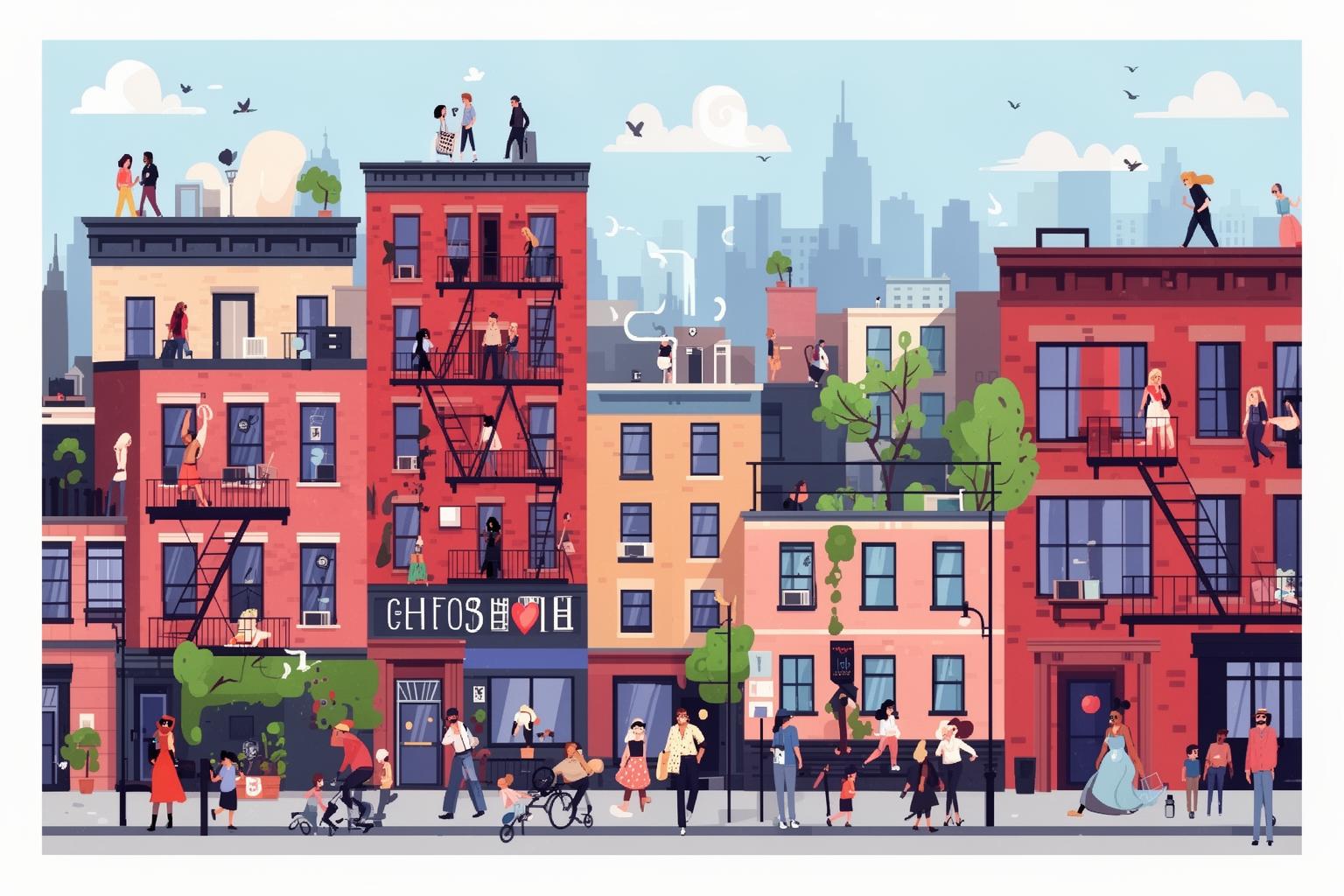
The essence of Banana Fish is found in the winding streets of Lower Manhattan. This is Ash’s domain, his realm shaped by grit and intellect. The neighborhoods of Greenwich Village and SoHo, with their distinctive mix of bohemian heritage, artistic vibrancy, and preserved 19th-century architecture, serve as the primary backdrop for many of the story’s intimate scenes and secretive operations. Walking here, you can sense the story’s heartbeat beneath your feet.
590 Broome Street: A Haven in SoHo
At the center of Ash’s world lies his loft, a space that functions as a command post, a refuge, and, most importantly, a home—perhaps the only genuine one he has ever known. The address, 590 Broome Street, situates this refuge right in the heart of SoHo (South of Houston Street). Although the building in the anime is a fictional composite, the location’s spirit is captured perfectly. Standing on Broome Street today, you are surrounded by the iconic cast-iron architecture that characterizes the neighborhood. These structures, with their ornate facades, large windows, and fire escapes clinging to their sides, were once warehouses and factories. Today, they are some of the city’s most desirable lofts and galleries. The atmosphere blends creative energy with industrial history. You can almost sense Ash’s crew nearby, the tension of their operations buzzing behind one of these grand windows. When visiting, take a moment to simply observe. Notice how sunlight filters between the buildings, the rumble of trucks crossing cobblestone streets, the mix of upscale boutiques and old-world charm. This is the environment that shaped Ash. For visitors, finding the block of Broome Street near Varick Street is key. It’s a residential area, so be considerate and respectful. The true experience lies not in finding an exact door, but in breathing in the air of the place Ash claimed as his own— a fortress against a world that sought to break him. Imagine the quiet moments within, the strategic planning, and the rare laughter that Eiji brought into that heavily guarded space. The contrast between the beautiful, historic exterior and the violent life lived inside is central to Ash’s character, and it resonates deeply here.
Washington Square Park: A Brief Moment of Calm
A short stroll north from SoHo leads you to the vibrant core of Greenwich Village: Washington Square Park. This park starkly contrasts the shadowy dealings woven throughout the series. It symbolizes normalcy, freedom, and the gentle world Eiji comes from. Here, Ash and Eiji share quiet conversations, a brief escape from unrelenting danger. The park is instantly identifiable by the majestic Washington Square Arch framing the Empire State Building to the north, and the iconic fountain at its center. The energy here is vibrant and contagious. Any day, the park bursts with city life: NYU students studying on the grass, jazz musicians playing near the fountain, focused chess players huddled over boards, children laughing, artists sketching, and locals savoring moments of sunshine. It feels as if the entire city converges here to breathe. For a Banana Fish fan, sitting on a bench near that fountain is a powerful experience. You can easily imagine Ash, alert and tense even in peace, and Eiji, with his camera, trying to capture life’s simple beauty. It’s a place of precious, fragile moments. The scene where Eiji teaches Ash to pole vault—a memory from his own past—is especially moving. It represents an attempt to share a piece of innocence with someone who has never known it. To fully absorb the park’s atmosphere, visit on a sunny afternoon. Allow yourself to sit and watch the world go by. This isn’t a place of dramatic plot twists, but of quiet character moments. It’s where you can feel the depth of Ash and Eiji’s bond—a connection forged not only in violence but in these stolen moments of peace. It embodies what might have been, a bittersweet ache that is quintessentially Banana Fish.
Institutions of Power and Knowledge
Beyond the gritty streets of downtown, the story’s conflict unfolds against the backdrop of some of New York’s most venerable and imposing institutions. These locations symbolize knowledge, power, and the societal structures that both protect and confine the characters. They are vast spaces where personal dramas play out in the shadows of grand history.
The New York Public Library: A Sanctuary of Words
No place in Banana Fish is as emotionally charged, beautiful, or heartbreaking as the New York Public Library, specifically the Stephen A. Schwarzman Building at 5th Avenue and 42nd Street. This iconic Beaux-Arts landmark, guarded by its famous marble lions, Patience and Fortitude, serves as a pivotal setting throughout the series. It is a refuge for Ash, a place where he can engage his intellect, a neutral ground for tense meetings, and ultimately, the site of the story’s unforgettable, tragic climax. Climbing the grand stone steps and passing between those stoic lions, you immediately sense a feeling of reverence. The vast scale and opulence of the interior—the soaring marble arches of Astor Hall, the intricate wood carvings, the hushed echoes of footsteps—transport you. The library is a sanctuary for Ash because it’s a realm he can master with his mind, a sharp contrast to the physical violence he endures elsewhere. For visitors, the most important destination within this vast building is the Rose Main Reading Room on the third floor. This breathtaking, cavernous space, with its long oak tables, brass reading lamps, and magnificent ceiling painted with ethereal clouds, is a cathedral of knowledge. Here, Ash sits, finding a moment of solitude. It is also here that he reads Eiji’s letter, a final, pure expression of love and hope from his closest friend. To sit at one of those tables is to place yourself directly into the story’s most defining moment. The atmosphere is one of profound quiet and concentration. You can feel the weight of countless stories in the air, both in the books lining the walls and in the silent readers around you. Visiting this room, while reflecting on the anime’s final scenes, is an intensely emotional experience. It feels sacred. Remember to remain completely silent and respectful; it is a working reading room. As you leave, retracing Ash’s final steps, the library’s grandeur feels transformed. It carries a beautiful sorrow. The library, a place of stories, becomes the final chapter of his own.
American Museum of Natural History: A Shadowy Confrontation
On the Upper West Side, overlooking Central Park, stands another monumental institution: the American Museum of Natural History. This sprawling museum, a treasure trove of scientific and historical artifacts, sets the stage for one of the series’ most thrilling and tense sequences. Ash, hunted and cornered, uses his wits to navigate the maze-like halls and massive exhibits to evade his pursuers, culminating in a dramatic confrontation with Arthur. The anime depicts the museum with incredible accuracy, and visiting it feels like stepping directly into the chase. The first thing that strikes you is the sheer size of the place. It’s a maze of halls dedicated to everything from dinosaurs to distant galaxies. The key location for any Banana Fish fan is the Milstein Hall of Ocean Life. Descending the stairs into this hall, you are immediately awed by the magnificent, 94-foot-long model of a blue whale suspended from the ceiling. It hangs in an ethereal, blue-lit space, creating an underwater atmosphere that is both awe-inspiring and slightly eerie. It is beneath the shadow of this gentle giant that some of the most intense action unfolds. The anime skillfully uses the whale’s scale and the hall’s dim lighting to evoke a sense of claustrophobia and grandeur. Standing there, you can feel the tension of the scene—Ash using the dioramas as cover, the echoes of footsteps in the vast space. It perfectly illustrates how the series employs real New York locations to heighten its drama. When visiting, allow yourself several hours to explore. While the Hall of Ocean Life is the main attraction for fans, wandering through the darkened halls of dinosaur skeletons or intricate cultural exhibits also captures the feeling of a chase, of hiding in plain sight. It’s an adventure that lets you appreciate both the museum’s wonders and the anime’s clever direction.
Echoes of the Underworld: Lower Manhattan & The Docks
The world of organized crime in Banana Fish is deeply embedded in the concrete and steel of Lower Manhattan. This realm belongs to Dino Golzine, a sphere of corporate influence, finance, and the cold, relentless machinery of the underworld concealed beneath a facade of legitimacy. Towering skyscrapers and waterfront vistas form a backdrop of immense power and fleeting freedom.
The Financial District & Wall Street: Golzine’s Territory
The Financial District, with its narrow streets overshadowed by imposing skyscrapers, stands as the symbolic center of Dino Golzine’s influence. While no particular building is identified as his base, the whole area, including Wall Street, reflects the cold, strategic ambition of Ash’s oppressor. Walking through these steel and glass canyons is a formidable experience. Sunlight barely reaches the street level, and the overwhelming wealth and power surrounding you are impossible to ignore. The architecture blends Gilded Age financial temples with sleek, modern towers that mirror the sky. The energy is frenetic—a constant stream of suited figures, the air vibrating with the electric pulse of commerce. This environment perfectly represents Golzine’s world: impersonal, dominant, and utterly merciless. When contrasted with the intimate, community atmosphere of Greenwich Village, the dual forces in Ash’s life become clear. Though there isn’t a single landmark to visit, the experience lies in immersing yourself in the setting. Stand before the New York Stock Exchange, stroll down Wall Street, and feel the oppressive grandeur of the buildings. It reveals the magnitude of the adversary Ash faced—not just an individual, but an entire system of power and corruption.
The Staten Island Ferry: A Moment of Freedom
The Staten Island Ferry offers some of the most iconic and reflective moments in the series. For characters perpetually confined, the journey across New York Harbor’s open water symbolizes a profound, if brief, escape. The ferry ride, with its unobstructed views of the Statue of Liberty and the ever-present Manhattan skyline, provides time for contemplation, quiet dialogues, and a sense of the vast world beyond their immediate crises. Best of all for visitors to New York, this experience is entirely free. Boarding the large, orange ferry at the Whitehall Terminal in Lower Manhattan, you can feel a sense of relief as the boat departs. Find a place on deck and feel the wind and sea spray. Watching the dense cluster of skyscrapers diminish into a breathtaking panorama helps explain why this journey is so meaningful. It offers perspective. For Ash and Eiji, it’s a moment to breathe and view the city from afar—not as a prison, but as a place of stunning, terrible beauty. The sight of Lady Liberty, a universal symbol of freedom, is especially touching given Ash’s own desperate struggle for it. The trip takes about 25 minutes each way. Take the round trip. Use the time to listen to the Banana Fish soundtrack and let the emotional depth of the story wash over you as you gaze at the same skyline that bore witness to their entire journey.
Beyond the Five Boroughs: Traces in Other Lands
While New York City serves as the core setting of Banana Fish, the narrative reaches beyond its limits, offering glimpses into diverse worlds and lives, each creating a striking contrast to the urban battleground.
Cape Cod, Massachusetts: A Fleeting Dream of ‘Okumura’
At moments of pure, idyllic escape, parts of the story unfold in a charming seaside house in Cape Cod. This place symbolizes the ultimate dream of a tranquil life—a world that Eiji wishes to share with Ash. It stands in stark contrast to the violence and concrete of New York. Cape Cod, a hook-shaped peninsula in Massachusetts, is renowned for its quaint towns, sandy shores, and peaceful coastal ambiance. The scenes set here glow with warm, gentle light and are filled with the sounds of waves and seagulls. It represents a paradise, a glimpse of what could be if Ash were free. Although the specific house is fictional, visiting any town on the Cape—such as Provincetown or Chatham—instantly immerses you in this serene atmosphere. The contrast is both jarring and beautiful, emphasizing Ash’s tragic situation and revealing the simple, happy life just beyond his reach. A trip here is less about pinpointing a precise location and more about experiencing the sense of escape that Eiji offered.
Los Angeles, California: Where It All Began
The early chapters and episodes of the story take place in Los Angeles, a markedly different urban setting from New York. LA, with its vast highways, sun-bleached streets, and palm trees, introduces Ash’s brother Griffin and serves as the starting point for the ‘Banana Fish’ mystery. The atmosphere is less claustrophobic than New York’s but holds its own gritty character. It is a world of noirish shadows beneath a bright, relentless sun. Visiting LA after exploring New York locations offers a compelling conclusion to the journey, revealing the West Coast origins of this ultimately East Coast tale.
How to Experience the World of Banana Fish

A pilgrimage is more than just sightseeing; it’s about connecting with the spirit of a story. Here’s how to create your own journey through Ash and Eiji’s New York.
A Self-Guided Walking Tour
The best way to experience these spots is on foot, just as the characters did. Begin your day in the Financial District to sense the weight of Golzine’s world. Then, take the Staten Island Ferry for a contemplative ride on the water. After returning, stroll north through the historic streets of SoHo to find Broome Street. Continue into Greenwich Village and unwind in Washington Square Park. Finally, catch the subway uptown—a quintessential New York experience—to Midtown, where you can visit the New York Public Library. End your day with an evening visit to the American Museum of Natural History. This route lets the city’s narrative unfold naturally, from halls of power to intimate neighborhood streets.
Capturing the Mood: Photography and Observation
Bring a camera, or simply use your eyes. Look for the details the animators lovingly recreated. Notice the unique design of SoHo’s fire escapes, the way light falls on the marble at the library’s entrance, reflections in the glass of Financial District skyscrapers, and the diverse faces in Washington Square Park. Try to capture the city’s feeling—its loneliness, energy, and beauty. Photography lets you see the world through Eiji’s eyes, discovering beauty and meaning in everyday moments amid the chaos.
Practical Tips for Your NYC Pilgrimage
To get around like a local, the subway is your best ally. Get a MetroCard or use the OMNY tap-to-pay system for easy travel. Spring and fall offer the best weather for walking and exploring the city. New York is generally safe, but as in any major metropolis, stay aware of your surroundings, especially at night—something Ash would surely advise. Most importantly, many of these places, especially the SoHo loft area and the library’s reading room, are real spaces where people live and work. Be quiet, respectful, and take photos discreetly. The aim is to be a silent observer, a pilgrim walking in the footsteps of ghosts.
The Enduring Legacy: Why These Places Matter
Visiting the real-world locations of Banana Fish allows you to connect with the story on a deeper, more meaningful level. It shifts the narrative from something you simply watched or read to something you can truly feel, hear, and touch. Standing on a street corner in SoHo, you can almost hear the echo of Ash’s footsteps. Sitting on a bench in Washington Square Park, you sense the warmth of a friendship that transcended worlds. In the quiet reverence of the New York Public Library, you feel the profound weight of a soul finding its final peace. This pilgrimage bridges the divide between fiction and reality, making the characters’ struggles and joys palpable and real. New York City itself is the final, silent character in Banana Fish. It witnessed Ash Lynx’s brief, brilliant, and tragic life. It held his rage, his sorrow, and his fleeting moments of happiness. By walking its streets, you are not just visiting a film set; you are honoring an unforgettable story and the characters who will forever live in the heart of this incredible, unforgiving, and beautiful city. You are chasing their ghosts, and in doing so, keeping their memory alive.