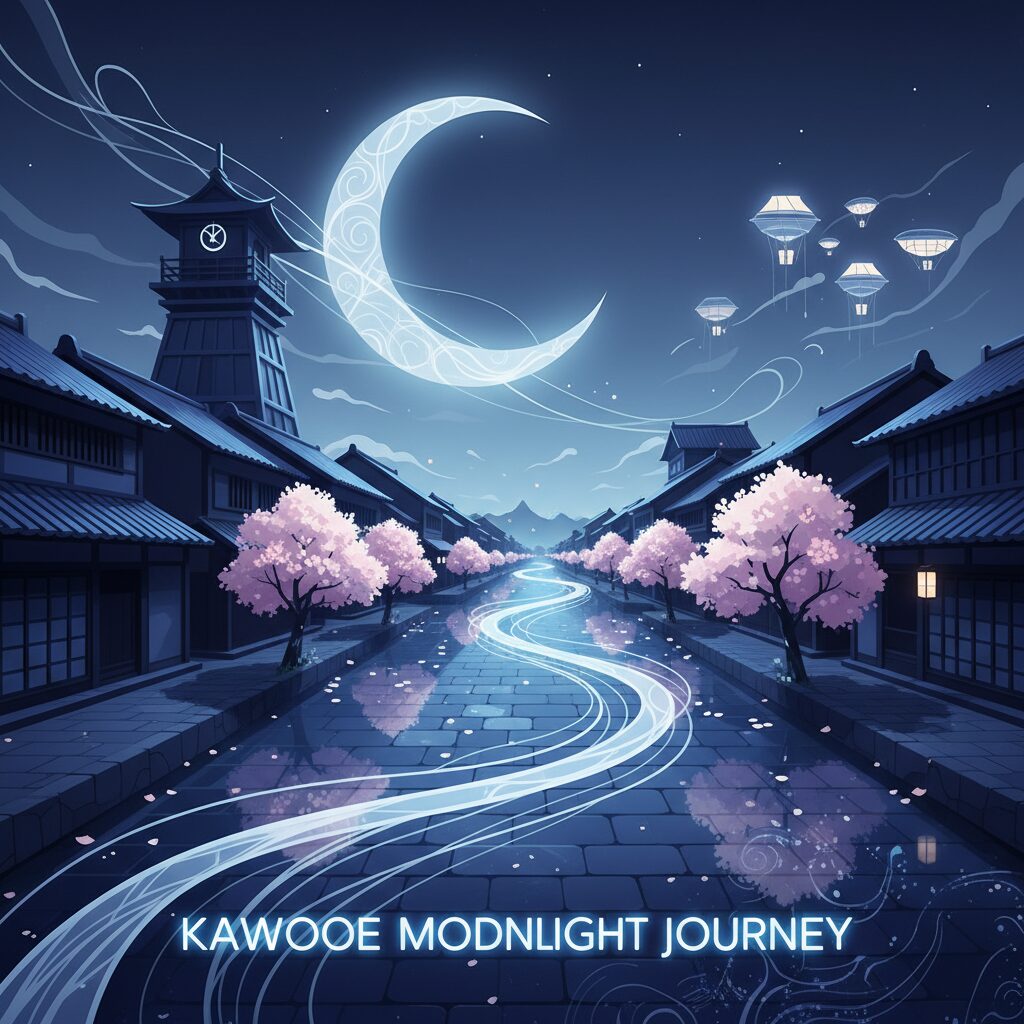
There’s a certain quiet magic to first love, a feeling as delicate and luminous as a full moon on a clear night. It’s a universal story, yet the anime Tsuki ga Kirei managed to capture its fragile essence with a sincerity that resonated deeply with viewers around the world. The tender, fumbling romance of Kotaro Azumi and Akane Mizuno felt so profoundly real, in large part because their story unfolded not in a fantasy world, but against the backdrop of a living, breathing Japanese town. That town is Kawagoe, a place where the past isn’t just remembered; it’s woven into the very fabric of daily life. Nestled in Saitama Prefecture, just a short train ride from the relentless modernity of Tokyo, Kawagoe offers a gentle escape into a different era. Known affectionately as ‘Koedo’ or ‘Little Edo,’ its streets are lined with the dark, imposing silhouettes of kurazukuri warehouse-style buildings, a testament to its history as a prosperous castle town. For fans of Tsuki ga Kirei, Kawagoe is more than just a beautiful destination; it is a pilgrimage. It’s a chance to walk the same paths as Kotaro and Akane, to stand in the quiet precincts of the shrines where they made their wishes, and to feel the gentle current of the Shingashi River, which mirrored the steady, unassuming flow of their affection. This journey isn’t about simply ticking off locations from a checklist; it’s about stepping into the world of the anime and discovering that the warmth, nostalgia, and quiet beauty depicted on screen are tangible realities, waiting to be experienced. It’s about finding the poetry in the everyday, just as Kotaro did, and feeling the heartbeat of a town that became a silent, supportive character in one of modern anime’s most cherished love stories.
If you’re inspired to explore more real-world anime settings, consider planning a similar anime pilgrimage to the locations featured in My Dress-Up Darling.
The Enduring Soul of Koedo: The Kurazukuri Warehouse District
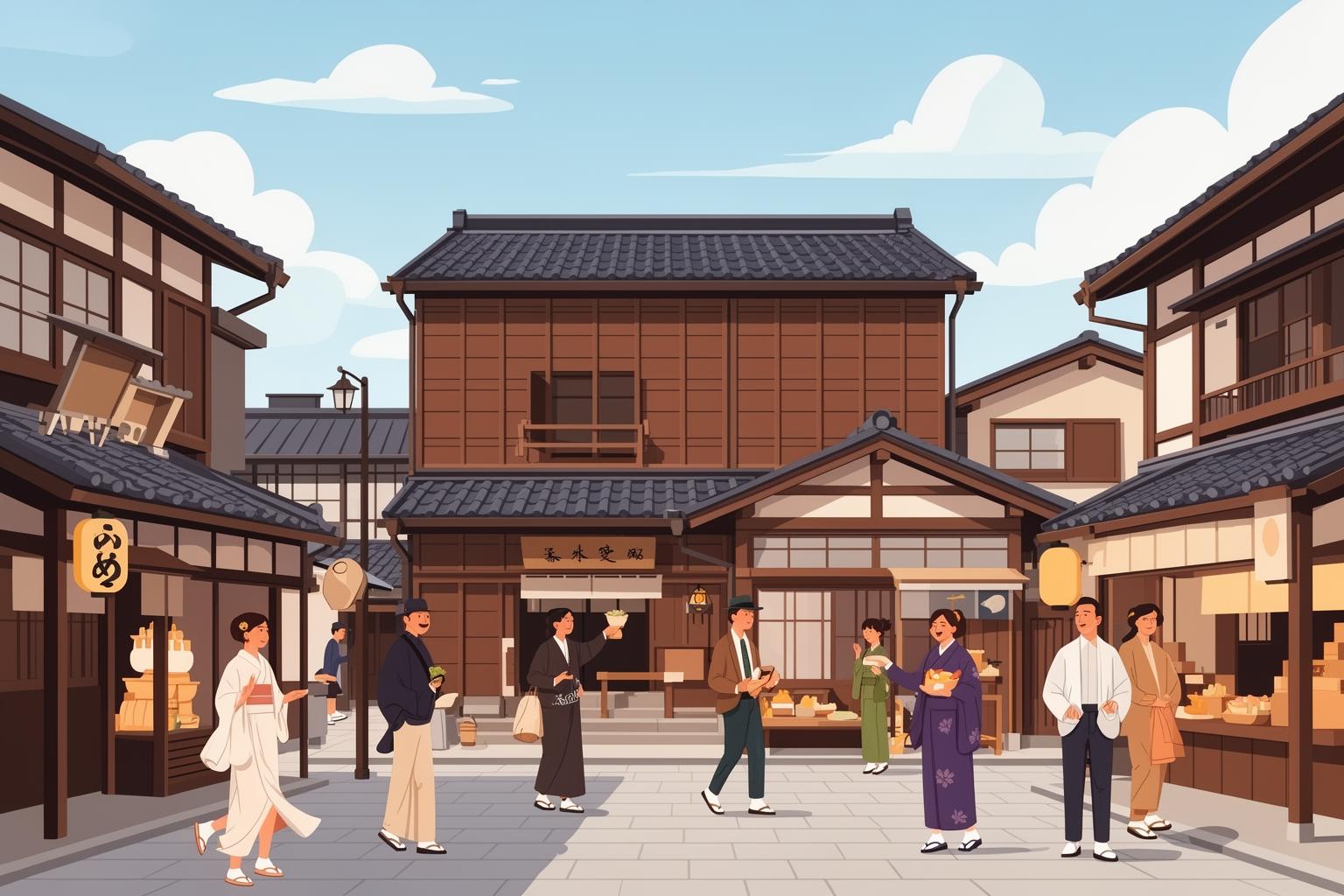
Your first steps onto Kawagoe’s main thoroughfare feel like a deliberate escape from the 21st century. The atmosphere shifts, the rhythm of life slows, and the skyline is dominated not by glass and steel but by the heavy, charcoal-gray tiles of traditional rooftops. This is the Kurazukuri Zone, the historical core of Kawagoe and the town’s defining visual hallmark as depicted in Tsuki ga Kirei. These warehouse-style buildings, with their thick, fireproof clay walls and imposing presence, are remnants of the Edo Period’s commercial strength. They line the street like steadfast, ancient sentinels, their dark facades creating a striking, dramatic contrast against the sky. As a photographer, I find the interplay of light and shadow here endlessly fascinating. The sunlight highlights the intricate tile work, while the deep recesses of the doorways harbor a cool, inviting darkness.
Echoes of an Older Japan on the Main Street
Strolling down this street engages all your senses. You hear the distant, rhythmic toll of a temple bell, the lively chatter of vendors, and the soft crunch of gravel in a hidden alley. The air is rich with the sweet, smoky scent of roasted sweet potatoes, a local delicacy, and the subtle fragrance of incense wafting from small shops. In the anime, these streets serve as a backdrop for the quiet moments of everyday life. We see characters walking home from school, their figures dwarfed by the historic architecture, creating a poignant visual metaphor for how personal stories unfold within the broader sweep of history. It’s through these establishing shots, these tender depictions of the townscape, that the series grounds its emotional realism. Standing here, you feel it immediately. The weight of history is tangible, yet it doesn’t feel like a museum. It feels alive, a place where generations have walked, talked, and perhaps fallen in love for the very first time. You can almost imagine Kotaro, deep in thought, wandering these same streets, the centuries-old buildings silently witnessing his growing feelings.
The Bell of Time: Toki no Kane
Rising above the two-story merchant houses is Kawagoe’s unmistakable symbol: the Toki no Kane, or Bell of Time. This wooden bell tower, rebuilt in the late 19th century after a fire, has been marking the hours for townspeople for centuries. It appears often in Tsuki ga Kirei, a steady, comforting presence in the background. It chimes four times daily—at 6 a.m., noon, 3 p.m., and 6 p.m.—its deep, resonant sound rolling through the streets, linking the present moment to a long, unbroken chain of yesterdays. Standing beneath it and waiting for the chime is a uniquely special experience. The world seems to pause as the first powerful note rings out. It’s a sound both melancholic and hopeful, a reminder of the relentless flow of time and the beauty of the moments we live within it. For Kotaro and Akane, the bell was part of the soundtrack of their lives, a familiar rhythm marking the start and end of school days and the quiet hours between. Seeing it in person, you feel a direct connection to that rhythm—a shared experience with the characters that transcends the screen.
A Taste of Tradition: The Flavors of Little Edo
One of the most enjoyable aspects of exploring the Kurazukuri district is savoring the local street food, much of which revolves around the area’s famous sweet potatoes. The anime often shows characters enjoying snacks after school, and in Kawagoe, these simple pleasures are truly elevated. You absolutely must try the imo koi, a steamed bun filled with sweet potato and red bean paste. It’s warm, soft, and comforting—an ideal treat for a cool day stroll. Along the street, you’ll also find shops selling sweet potato soft-serve ice cream, vivid purple in color and surprisingly nuanced in flavor. There are crispy sweet potato chips, glazed sweet potato sticks, and even a local craft beer brewed with sweet potatoes. This connection to the land, to a single celebrated crop, contributes to Kawagoe’s unique character. It’s a reminder that this historic town is not merely a tourist spot but a place with its own distinctive culture and traditions, a theme that quietly informs the grounded, realistic world of Tsuki ga Kirei.
Crossroads of Fate: Shrines and Sacred Spaces
Beyond the bustling commercial streets lies the spiritual heart of Kawagoe—and the essence of Kotaro and Akane’s story—in its beautiful, serene shrines. In Japan, Shinto shrines and Buddhist temples are not merely venues for grand ceremonies; they are vital parts of community life, serving as spaces for quiet reflection, seasonal festivals, and personal prayers. For the characters in the anime, these sacred places mark crucial turning points where unspoken emotions surface and pivotal encounters occur.
Kawagoe Kumano Shrine: Where Paths First Cross
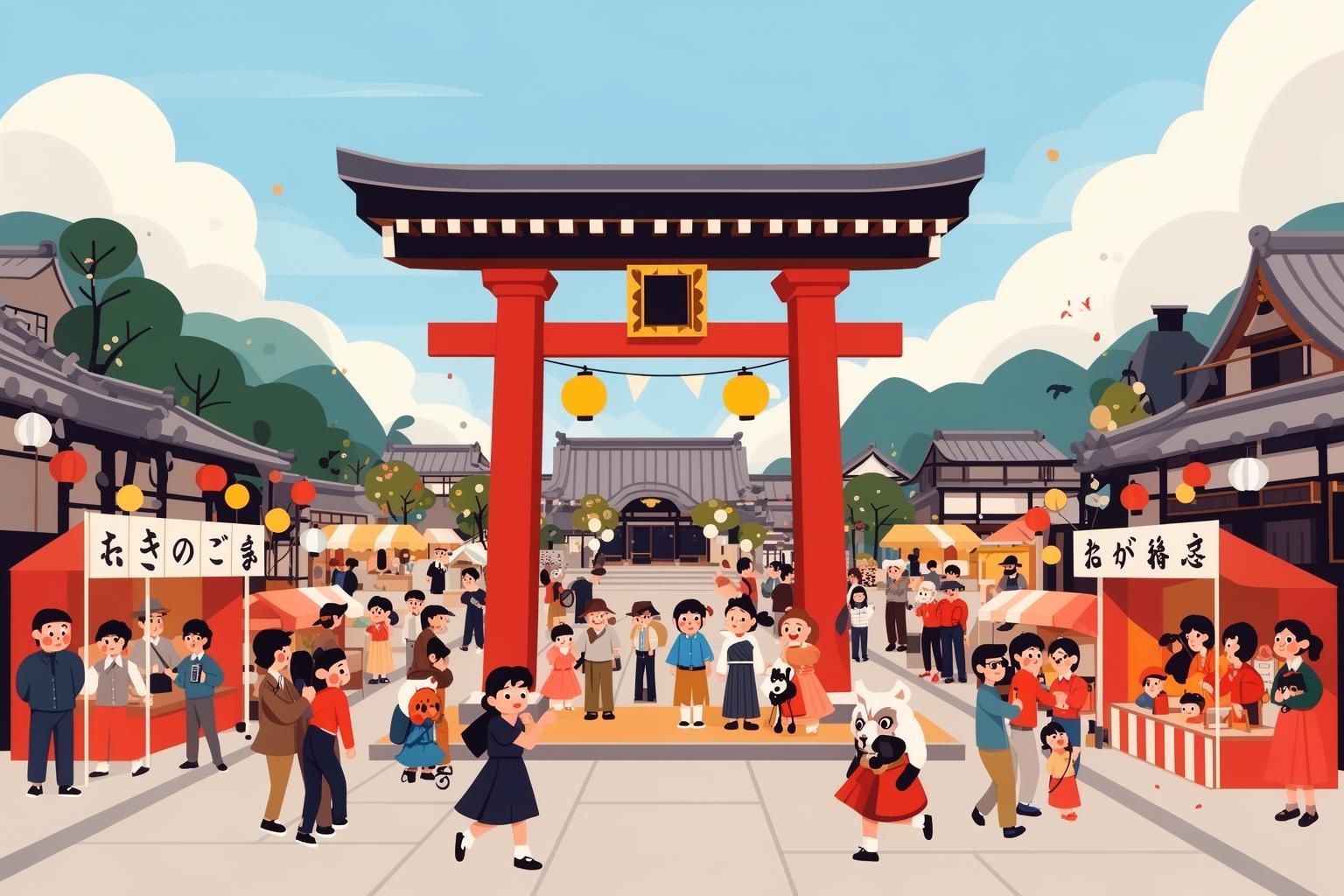
I vividly recall the scene: the lively festival atmosphere, the warm glow of lanterns, and the fateful meeting at Kumano Shrine. This is one of the earliest spots where Kotaro and Akane’s worlds genuinely begin to intersect. Situated just a short walk from the main Kurazukuri street, the shrine is a charming and interactive place. Passing through the stone torii gate, visitors are welcomed by a cleansing fountain to purify their hands and mouth, a ritual that feels like shedding the noise of the outside world. Dedicated to three deities, the shrine is famous for its associations with good fortune and matchmaking. Among its popular features are a pebble path for foot-massaging meant to improve health and various ring-toss games where visitors can test their luck for the year. Yet, for a pilgrim, the real magic is standing where the story began to shift. You can see the main hall where the characters worked during the festival and sense the blend of sacred energy and community spirit. The shrine perfectly captures the fusion of the divine and the everyday that defines life in Japan. Visitors can make a wish, draw a fortune, and perhaps feel a little closer to the serendipity that brought the two young protagonists together.
Hikawa Shrine: The Sanctuary of Matchmaking
If Kumano Shrine was the site of their first genuine meeting, Hikawa Shrine) stands as the undisputed sanctuary of their blossoming romance. With a history stretching back over 1,500 years, this shrine is famously dedicated to a divine couple and is revered across Japan as a powerful place for those seeking love and strong relationships. Its role in Tsuki ga Kirei is central to the anime’s romantic theme. The shrine itself is stunning, especially the main hall with its intricate Edo-period carvings. However, it is the unique features that make it so memorable. The most striking is the Tunnel of Ema, a passage lined on both sides with thousands of small wooden prayer plaques. Visitors write their wishes for love and hang them here, creating a dense, rustling wall of hopes and dreams. Walking through it and reading the heartfelt messages is profoundly moving. It serves as a physical embodiment of the universal human longing for connection—the emotion driving the anime’s narrative.
A River of Wishes and the Wind’s Song
Behind the main shrine complex, the grounds stretch toward the Shingashi River, where you’ll find the Aitai-bashi, or ‘Meeting Bridge,’ crossed by those hoping to meet their destined partner. The shrine also offers a unique fortune-telling experience: the tai-mikuji, where a miniature fishing rod is used to catch a sea bream-shaped charm containing your fortune slip. It’s a playful, memorable ritual. In summer, Hikawa Shrine hosts the Enmusubi Furin Matsuri, the Wind Chime Festival. Over two thousand glass wind chimes decorate the grounds, each bearing a strip of paper inscribed with a wish. The gentle, constant tinkling of the chimes creates a magical, ethereal soundscape. The corridor of chimes forms a tunnel of sound and color—an overwhelmingly beautiful experience that feels like stepping into a dream. This festival, centered on wishes carried by the wind, perfectly embodies the delicate, hopeful nature of Kotaro and Akane’s love. One can easily imagine them walking here, surrounded by shimmering glass and the chorus of chimes—a perfect, fleeting moment of summer magic.
The Shingashi Riverbank: A Current of Quiet Emotion
Flowing gently behind Hikawa Shrine, the Shingashi River serves as another key location, offering a place for contemplation and quiet conversation. In spring, its banks are famously lined with cherry blossom trees, bursting into a breathtaking canopy of pale pink. The image of sakura petals drifting down onto the gently flowing water is among Japan’s most iconic, and it is used in the anime to powerful effect, symbolizing new beginnings and the beautiful, fleeting nature of youth. Traditional boat rides along the river allow visitors to glide beneath the blossoms in a scene reminiscent of the show. It is a deeply peaceful and romantic experience. Even beyond cherry blossom season, the riverbank remains a wonderful place for walks. It is where characters are seen taking leisurely strolls or riding their bikes—the simple, everyday moments that truly ground their relationship. The river is a constant, quiet observer reflecting the sky, seasons, and subtle changes in the characters’ hearts. Walking along its edge, you find yourself slowing down, breathing deeper, and appreciating the simple beauty of the moment, just as they did.
The Everyday Stage: Schools, Stations, and Sanctuaries of Solitude
A significant part of what makes Tsuki ga Kirei so relatable is its emphasis on the mundane, everyday routines that define the lives of its middle school protagonists. The anime transforms these ordinary settings—the school, the train station, the local library—into places of deep meaning. For a pilgrim, visiting these locations means connecting with the daily rhythm of the characters’ world.
The Path to School: A Window into Their Lives
The school attended by Kotaro, Akane, and their friends is modeled after the real Kawagoe Municipal First Junior High School and Kawagoe Municipal Third Junior High School, among others. While it’s important to respect that these remain active educational facilities not open to the public, their exteriors and nearby neighborhoods are instantly recognizable. The walk to school, passing typical Japanese houses with manicured gardens and tiled roofs, is a pilgrimage in itself. The steep hill leading up to the school, which the characters climb daily, feels like a small but meaningful part of their journey. Seeing the school gates, the sports field visible from the road, and the overall architecture makes their world feel tangibly real. The commute to and from school is a classic anime trope for good reason: it’s a transitional space where friendships develop, conversations unfold, and inner thoughts surface. By walking these paths, you trace the physical and emotional landscape of their lives.
Hon-Kawagoe Station: Gateways to Connection and Separation
Train stations in Japan serve as more than mere transit points; they act as hubs of community life, sites of greetings and partings, anticipation and nostalgia. Hon-Kawagoe Station, with its distinctive Taisho-era-inspired design, functions as a principal gateway into town and a key setting in the anime. It’s where characters wait for one another, embark on journeys, and confront the painful realities of distance. The platform benches, the sound of arriving trains, the automated announcements—these sensory details are captured beautifully by the anime. Standing on the same platform, one can feel the weight of those moments. The station symbolizes both a connection to the broader world and the potential for separation—a powerful theme in the later arcs of Kotaro and Akane’s story as they consider their futures. Visiting the station is more than viewing a building; it’s about grasping its role as a pivot in the characters’ emotional lives.
The Library of Quiet Dreams: A Writer’s Sanctuary
For an aspiring writer like Kotaro, the library serves as a refuge. The Kawagoe City Central Library inspires the location where he immerses himself in Osamu Dazai’s works and sharpens his own skills. Like the schools, it’s an active public space, so respectful conduct is essential. Stepping inside, one is immediately enveloped by the characteristic quiet of a Japanese library—a hushed, orderly environment filled with the soft rustling of pages and the gentle hum of air conditioning. You can picture Kotaro seated at one of the long wooden tables, sunlight streaming through the large windows, fully absorbed in a world of words. This spot is fundamental to his character: his escape and his training ground. It embodies his inner life, his passions, and his dreams, which he often finds hard to express aloud. For fans who identify with Kotaro’s quiet intensity and creative spirit, visiting the library offers a chance to connect with the very source of his inspiration.
A Photographer’s Guide to Capturing the Mood of Kawagoe
As someone who sees the world through a lens, I find Kawagoe to be an endless well of inspiration. It’s a town that rewards a patient, observant gaze. It’s not just about photographing the famous landmarks; it’s about capturing the essence of the place—the same nostalgic, gentle ambiance that the animators of Tsuki ga Kirei so beautifully portrayed. Here are some thoughts on how to approach photographing this remarkable town.
Chasing the Golden Hour on Kurazukuri Street
The Kurazukuri warehouse district becomes most enchanting during the golden hours—the first hour after sunrise and the last hour before sunset. In the early morning, the streets are almost deserted. The low, warm light highlights the texture of the dark plaster walls and makes the tiled roofs glow. This is when you can capture the street at its quietest, a sleeping giant waiting to awaken. In the late afternoon, the soft golden light returns, casting long, dramatic shadows that emphasize the shapes of the old buildings. The warm glow of lanterns beginning to light adds another layer of enchantment. This lighting feels closest to the anime—soft, nostalgic, and imbued with a gentle melancholy. Avoid the harsh midday sun, which tends to flatten textures and create unflattering contrasts.
Framing the Details: The Poetry of the Small
While the expansive views are captivating, the true soul of Kawagoe, and of Tsuki ga Kirei, is found in the small details. Seek out the little elements that tell a story. Focus your lens on the intricate onigawara roof tiles, often shaped like demons to ward off evil. Capture the weathered texture of an old wooden door, the pattern on a worn manhole cover, or a small Jizo statue wearing a knitted red cap. Notice how sunlight filters through the colorful glass of wind chimes at Hikawa Shrine, or watch the steam rising from a freshly made sweet potato bun. These close-up, detailed shots are what will truly convey the feeling of being there. They serve as the visual equivalent of the quiet, observational moments that define the anime’s style.
Capturing the River’s Ever-Changing Mood
The Shingashi River offers a unique photographic challenge and reward with each season. In spring, aim to capture the breathtaking beauty of the cherry blossoms. Use a wide lens to show the scale of the trees arching over the water, and include traditional boats in your composition to add a sense of scale and story. In summer, the atmosphere shifts to lush, vibrant green. Light filtering through the dense canopy creates a beautiful dappled effect on the water. In autumn, the colorful foliage introduces warm hues, and in winter, the bare branches create a more graphic, minimalist beauty. Try shooting from the small bridges that cross the river for classic, symmetrical compositions, or get low at the water’s edge to capture reflections.
Practical Pilgrimage: Planning Your Journey to Little Edo
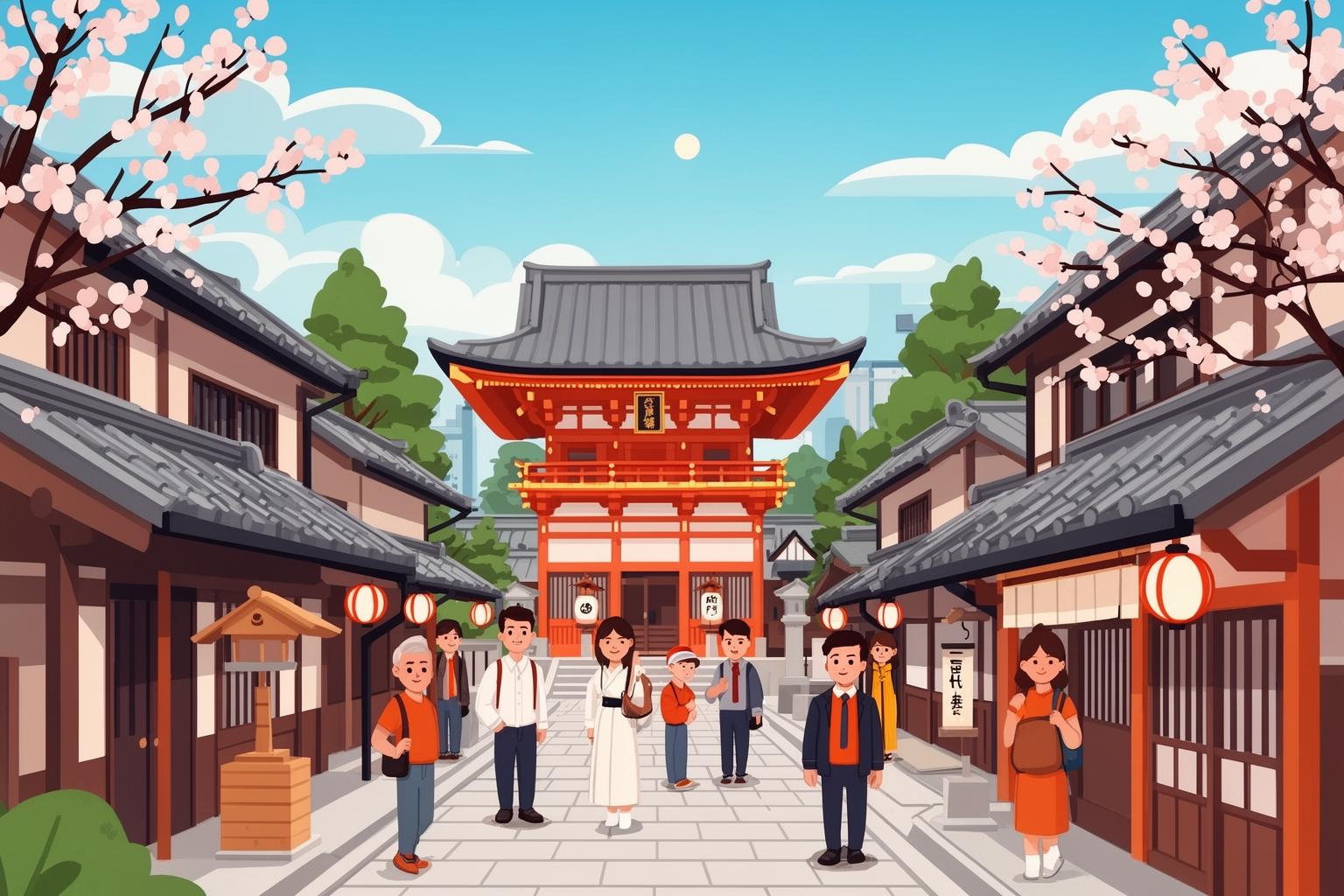
One of the greatest advantages of Kawagoe is its excellent accessibility. It makes for an ideal day trip from Tokyo, providing a complete change in pace and atmosphere without a lengthy or complicated journey. With a bit of planning, you can fully enjoy your time in the world of Kotaro and Akane.
How to Get to Kawagoe from Central Tokyo
There are three great train options to reach Kawagoe, each offering distinct benefits. Your choice will often depend on your location within Tokyo.
Seibu-Shinjuku Line: Running from Seibu-Shinjuku Station (a short walk from JR Shinjuku Station) directly to Hon-Kawagoe Station, this is likely the most convenient option since Hon-Kawagoe is closer to the main Kurazukuri historic district. The limited express train makes the trip fast and comfortable, taking about 45 minutes.
Tobu-Tojo Line: Departing from Ikebukuro Station, this line takes you to Kawagoe Station. It is often the fastest and most affordable choice, with express trains traveling the route in roughly 30 minutes. Kawagoe Station lies a bit farther from the main attractions than Hon-Kawagoe but is easily accessible by a pleasant walk or a brief bus ride.
JR Kawagoe Line: If you hold a Japan Rail Pass, this is the most cost-effective route. You can take the Saikyo/Kawagoe Line directly from major JR stations such as Shinjuku, Shibuya, or Ikebukuro to Kawagoe Station. The journey lasts about 50 to 60 minutes.
For international visitors, Tobu Railway offers a Kawagoe Discount Pass, which includes a round-trip ticket from Ikebukuro plus discounts at various shops and restaurants in Kawagoe—offering excellent value.
Getting Around Kawagoe
Once you arrive, Kawagoe is very walkable. The main attractions—including the Kurazukuri Zone, Toki no Kane, and Kumano Shrine—are all within a 15 to 20-minute walk from Hon-Kawagoe Station. To explore further or visit sites like Hikawa Shrine, you have several options. The Koedo Loop Bus is convenient, stopping at all key tourist spots and featuring charming retro-designed buses that enhance the experience. For a truly immersive visit reminiscent of the anime, I strongly recommend renting a bicycle. Several rental shops are located near the train stations, and cycling enables you to explore at your own pace, discover quiet side streets, and easily travel between the main town and the Shingashi Riverbank. It offers the most authentic way to experience the town as a local, rather than a tourist.
When to Visit Little Edo: A Seasonal Guide
Kawagoe is a wonderful destination year-round, with each season bringing its own distinct charm.
Spring (Late March to April): Possibly the most stunning season, highlighted by cherry blossoms. The Shingashi Riverbank transforms into a pink tunnel, creating a festive and joyous atmosphere. The Kawagoe Spring Festival also takes place, featuring parades and floats.
Summer (July to August): Summer’s highlight is the Enmusubi Furin Matsuri (Wind Chime Festival) at Hikawa Shrine. The sight and sound of thousands of wind chimes create an unforgettable ambiance. Although the weather can be hot and humid, the magical atmosphere makes it worthwhile.
Autumn (October to November): Late October brings the magnificent Kawagoe Festival, a grand event showcasing ornate floats parading through the streets. The weather is cool and comfortable, with autumn foliage adding beautiful reds and golds to the scenery.
Winter (December to February): Winter is the quietest time to visit, with far fewer crowds, allowing for a more reflective and intimate experience. The stark beauty of bare trees against crisp, clear air is very photogenic. Plus, warm sweet potato treats taste even better in the cold.
A Gentle Reminder About Etiquette
As you explore, it’s important to remember that Kawagoe is a living community, not a theme park; people live and work here. When visiting shrines, follow simple etiquette: offer a small bow at the torii gate, cleanse your hands at the temizuya before approaching the main hall, and speak quietly and respectfully. When taking photos of streets or shops, be mindful of including people without their permission. A smile and polite gesture go a long way. Showing respect for the place and its residents not only is appreciated but also enriches your connection to the charming town of Kawagoe.
As the day ends in Kawagoe and the last rays of sun paint the tiled roofs in hues of orange and purple, you begin to understand. You understand why this town was the perfect setting for a story as gentle and heartfelt as Tsuki ga Kirei. The town itself seems to possess a soul, a quiet wisdom that comes from centuries of watching over the lives of its inhabitants. Walking back towards the station, the memory of the bell’s chime, the scent of roasting potatoes, and the sight of the lanterns glowing in the dusk all blend into a single, beautiful feeling. You came here chasing the ghost of an anime, looking for the places where fictional characters stood. But you leave with something more. You leave with the feeling of the town itself imprinted on your memory. Kawagoe isn’t just a backdrop; it’s a place that fosters introspection and cherishes the beauty of the unspoken. It’s a town where, even for a day, you can feel the profound, simple truth that Akane and Kotaro discovered: that even the most ordinary moments can be as beautiful and as luminous as the moon in the night sky.
Please make slight modifications to the whole sentence if possible.