The night has a voice of its own. In the sprawling urban landscapes of Japan, this voice is a complex symphony of humming vending machines, the distant rattle of the last train, and the whisper of wind navigating canyons of concrete and glass. It’s a world away from the crushing, vibrant energy of the daytime. This is the world that Ko Yamori, a disillusioned middle schooler plagued by insomnia, discovers and finds himself irresistibly drawn to. This is the world of Call of the Night (Yofukashi no Uta), an anime that paints the nocturnal city not as a place of fear, but as a vast, liberating playground of freedom, introspection, and supernatural romance. The series, guided by the whimsical and enigmatic vampire Nazuna Nanakusa, transforms the mundane after-hours scenery of a typical Japanese city into a realm of breathtaking beauty and quiet magic. For those of us captivated by this fluorescent-lit dreamscape, the question inevitably arises: can we walk these same streets? The answer is a resounding yes. The soul of Ko and Nazuna’s world beats strongest in Chiba Prefecture, a city that lives in the shadow of Tokyo yet possesses a unique nocturnal character all its own. This journey is more than a simple location hunt; it’s an invitation to listen to the city’s pulse after dark, to see the familiar through the eyes of a boy discovering the world for the first time and a vampire who has seen it all. It’s a pilgrimage into the heart of the night itself, a quest to find the beauty in the quiet and the extraordinary in the ordinary.
This pilgrimage into the nocturnal heart of Chiba is not unlike the gritty, neon-soaked pilgrimage through Tokyo one might undertake for another series that finds profound meaning in the city’s after-hours life.
The Heartbeat of the City: Chiba After Dark
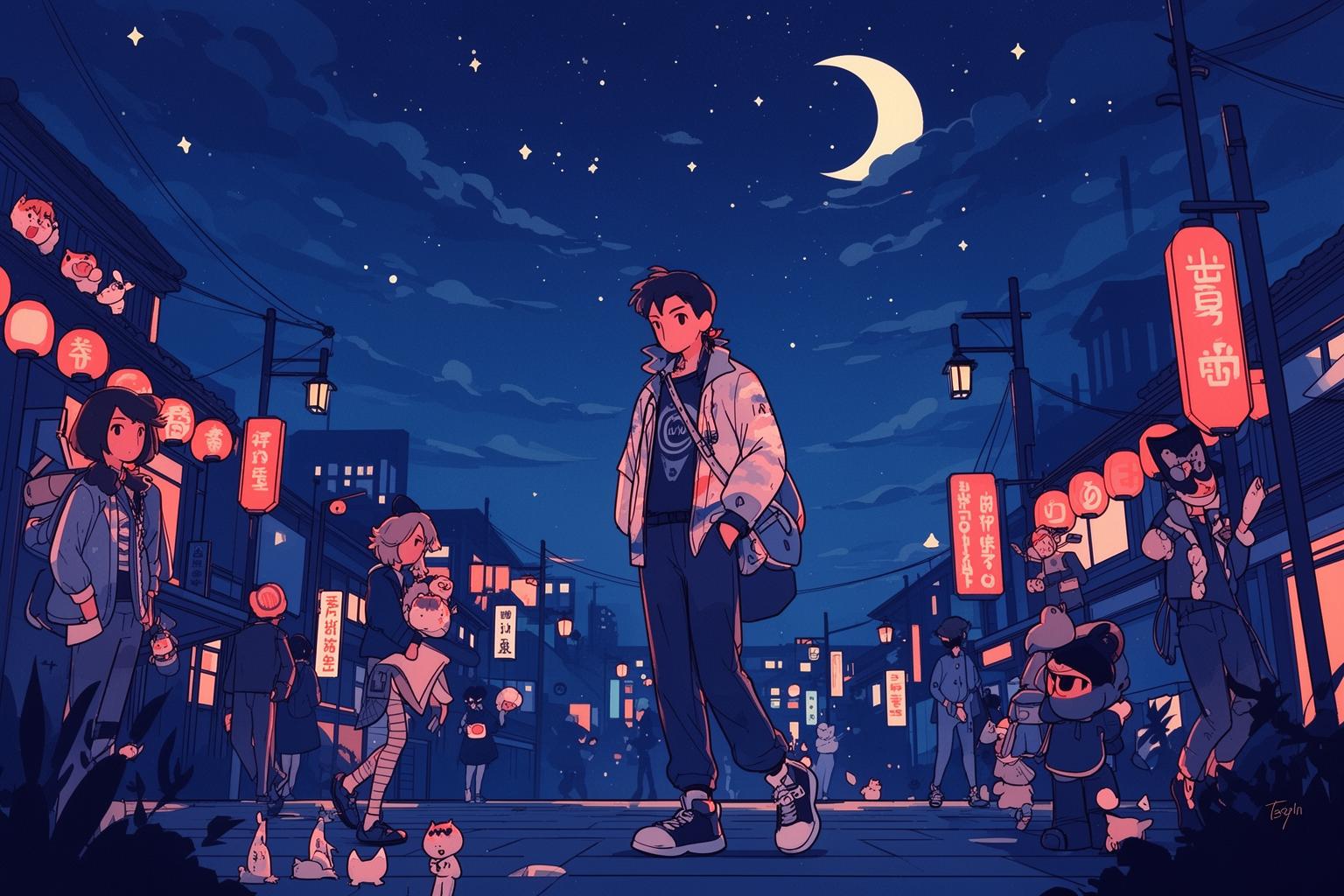
To grasp the setting of Call of the Night, one must first understand Chiba City itself. Situated just east of Tokyo, it functions as a major commuter hub—a so-called “bedtown” where millions who work in the capital return to rest. This very role makes it the perfect backdrop for the anime’s nocturnal themes. By day, Chiba is a lively, practical urban center. But as night falls and the last trains depart, it undergoes a profound change. The city doesn’t die; it begins to breathe in a different way. The crowds disappear, revealing an expansive, illuminated framework of streets, parks, and buildings. This emptiness is not sorrowful but rather peaceful, a blank canvas on which Ko and Nazuna create their adventures. Choosing Chiba over, for example, the endlessly vibrant Shinjuku is intentional. Chiba’s night is characterized by a tangible quiet and solitude. It’s a place where you can hear your footsteps echoing on the pavement, where the glow of a solitary vending machine feels like a lighthouse amid silent apartments. This duality forms the aesthetic core of the series: the contrast between the vast, impersonal scale of the urban environment and the deeply personal, intimate moments shared by its two protagonists. The anime’s visual storytelling masterfully captures this, employing a palette of deep blues, purples, and vivid neons to depict the cityscape as a dreamlike realm. Strolling through Chiba after midnight, you experience this transformation firsthand. The familiar daytime world fades away, replaced by a space that feels both immense and intensely private—a world where daytime rules no longer hold.
The Neon Beacon: Chiba Port Tower
Dominating the skyline in many of the anime’s most stunning scenes is a slender, diamond-latticed tower that appears to pierce the velvety night sky. This is the Chiba Port Tower, arguably the most iconic real-world landmark featured in the series. It acts as a steady point of reference and a silent witness to the story unfolding beneath it. For Ko and Nazuna, it is a destination, a backdrop, and a symbol of the vast, sleeping world they share.
A Tower Reaching for the Midnight Sky
Situated in Chiba Port Park at the edge of Tokyo Bay, the Chiba Port Tower boasts a distinctive design—a slim steel frame clad in half-mirrored glass—that makes it a captivating sight. By day, it reflects the sky and sea, almost blending into its surroundings. At night, however, it lights up, transforming into the neon beacon portrayed in the anime. The animators of Call of the Night skillfully captured its essence, often exaggerating its height and glow to highlight its ethereal presence in Ko’s world. The tower symbolizes a peak—a vantage point from which to survey the city—making it a fitting metaphor for the fresh perspective Ko gains through his nocturnal journeys. It feels less like a man-made structure and more like a celestial object that has gently settled on the city’s edge, watching over its resting inhabitants.
Experiencing the View from Above
To fully immerse yourself in the series, a visit to the tower is a must. It is conveniently reachable by a short walk from Chiba-Minato Station on the JR Keiyo Line or the Chiba Urban Monorail. Although the observation decks close in the evening, scheduling your visit to coincide with sunset and the moment city lights begin to twinkle is truly unforgettable. From 113 meters high, the panorama is breathtaking. You see the sprawling industrial port, a landscape of cranes and cargo ships with a stark, brutalist charm. You glimpse the dark, shimmering expanse of Tokyo Bay, and view the endless grid of lights spreading to the horizon—each light representing a home, a life, a story paused for the night. This vantage point offers the exact clarity Ko experiences, where he feels both minuscule and deeply connected to the world below. It’s a moving sensation, and the Chiba Port Tower’s observation deck is one of the few public spaces where it can be felt so palpably. Be sure to check the official website for seasonal hours, as they vary, to catch that perfect transition from dusk to deep night.
The Atmosphere at the Base
While the view from above is a highlight, the nighttime atmosphere at the tower’s base is equally important for those making the pilgrimage. The surrounding Chiba Port Park becomes a vast, quiet expanse. The wide lawns and promenades, bustling with families during the day, often lie empty after dark. Here, you can most authentically recreate the anime’s mood. Find a bench facing the illuminated tower, play the anime’s soundtrack, and simply be present in the moment. The contrast is what makes it so special: the towering, brilliantly lit structure above and the profound quiet darkness of the park around you. You can almost picture Nazuna teaching Ko to fly here—leaping from the ground into the neon-lit sky. It’s a spot for peaceful reflection, where you can feel the cool sea breeze and hear the gentle lapping of the bay’s waters against the shore. This captures the essence of yofukashi—staying up late, not for any particular reason, but to simply experience the world in its nocturnal state.
Urban Oasis and Nocturnal Playgrounds
Beyond the famous tower, Ko and Nazuna’s adventures take place in the city’s more familiar areas: the parks that act as green lungs amid the concrete, and the intricate streets and walkways that serve as the city’s circulatory system. These settings focus less on grand views and more on the intimate textures of the urban night.
The Whispering Trees of Chiba Park
Not far from central Chiba Station lies Chiba Park, an important green space frequently featured in the anime. It’s a classic urban park, complete with a large pond, winding paths, and dense tree clusters. In Call of the Night, this park serves as a sanctuary—a place where the characters escape for heartfelt conversations, and where the city’s artificial light filters through a canopy of natural leaves. The real Chiba Park perfectly captures this atmosphere. At night, it transforms into a world of its own. The main trails are dimly lit, casting long, dramatic shadows. The surface of the central pond, known for its Oga lotus flowers during summer, becomes a black mirror reflecting the moon and the distant glow of the city. Walking here after dark is a multisensory experience: the rustling leaves, frogs croaking by the pond, and the faint hum of the city blend into a unique nocturnal soundscape. It feels both peaceful and mysterious, a place where the boundary between urban and wild grows thin. In such places, Ko’s transformation feels most real; he shifts from being a boy confined to his room to someone who feels at home in the vast, quiet world outside.
The Concrete Labyrinth: Around Chiba Station
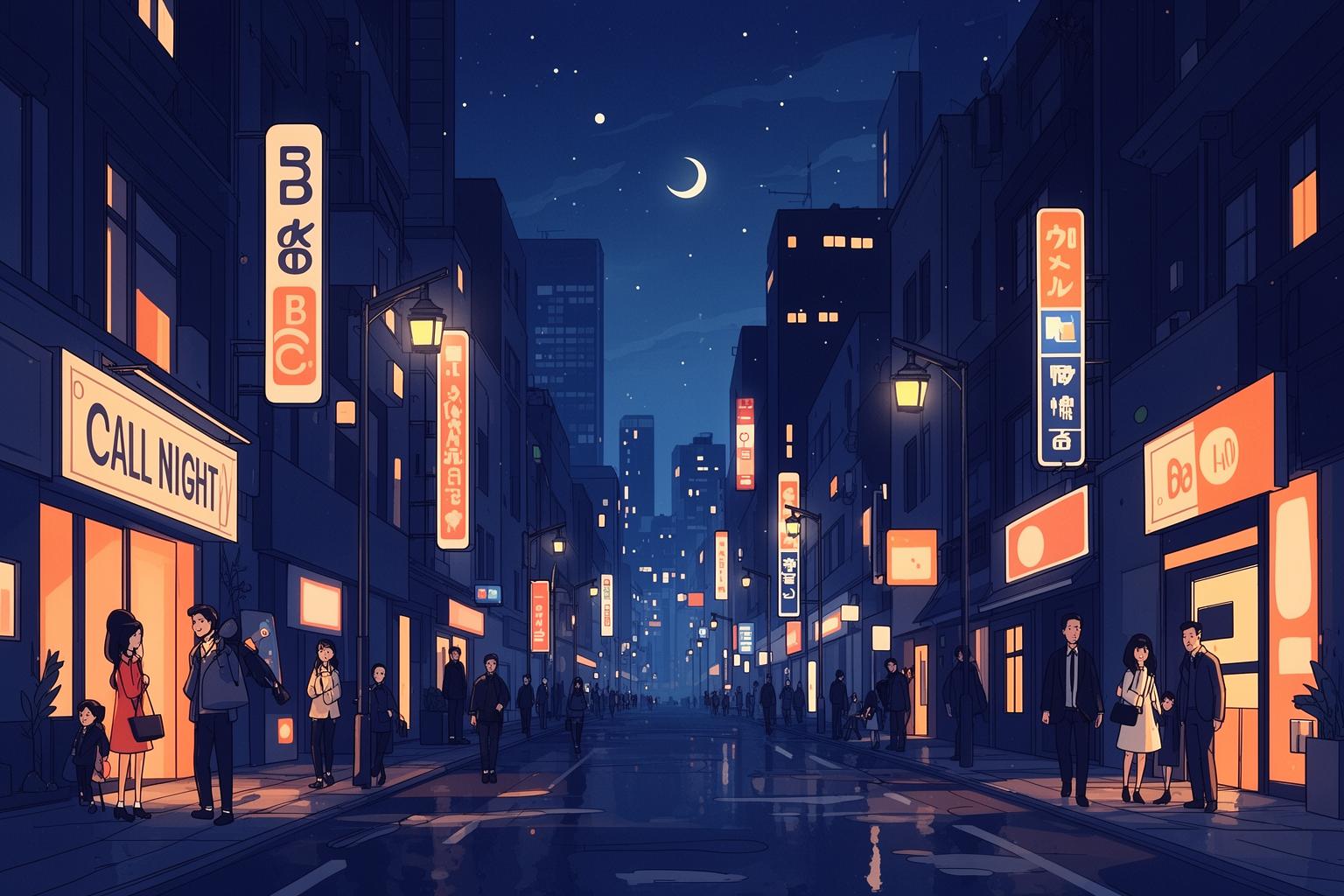
The area around Chiba Station is a vast network of elevated pedestrian walkways, covered shopping arcades (known as shotengai), and narrow side streets. This quintessential Japanese urban environment is portrayed with great care in the anime. These paths are the arteries of Ko’s world—the routes he wanders aimlessly along before his fateful encounter with Nazuna. The pedestrian overpasses hold special significance, providing a unique perspective by lifting you above street level to observe the flow of late-night traffic and a few other night owls from a detached vantage point. After midnight, these walkways are nearly deserted, and footsteps echo in the enclosed spaces. The shuttered storefronts of the shotengai form a repeating pattern of metal and glass, their silence sharply contrasting with the daytime bustle. Yet the area is far from lifeless. Neon signs from karaoke bars, pachinko parlors, and 24-hour restaurants cast pools of vibrant color onto the pavement, creating scenes straight out of the anime’s distinctive palette. This is the perfect place to begin your own night walk. Start at Chiba Station after the last train has left, then let your feet lead you. Follow the covered arcades, ascend the stairs to the pedestrian bridges, and explore the side alleys. You’ll discover that the anime didn’t just replicate the appearance of these places—it captured their very spirit.
The Mundane Made Magical: Residential Nightscapes
One of the most remarkable accomplishments of Call of the Night is its talent for discovering magic in the most ordinary of environments. The series devotes as much attention to tranquil residential neighborhoods as it does to the vibrant city center, turning bland apartment blocks and commonplace vending machines into essential parts of its captivating world.
The Poetry of the Danchi
Ko lives in a danchi, a large-scale public housing complex. These vast, uniform apartment buildings are a typical feature of Japanese suburban scenery, constructed during the post-war economic boom. Architecturally, they are often viewed as monotonous and impersonal. Yet through Nazuna’s eyes, and with her gift of flight, they transform into something entirely different. The rooftops serve as private observation decks, the walls become vertical launchpads, and the buildings’ grid-like arrangement turns into a geometric playground. The anime reimagines these symbols of conformity as spaces of ultimate freedom. While the exact danchi that inspired Ko’s home isn’t officially identified, you can experience the atmosphere of such places in residential areas throughout Chiba, including neighborhoods along the Chiba Urban Monorail line. Taking a respectful, quiet walk through one of these complexes at night is a powerful experience. The immense scale of the buildings, paired with the silence and the gentle glow from scattered windows, evokes a deep sense of solitude. You become keenly aware of the hundreds of lives unfolding in parallel, all paused in sleep. It’s a humbling and richly atmospheric moment that captures exactly what Ko feels as he stands on his balcony, gazing out at the slumbering city and sensing he’s the only one awake in the world.
Vending Machines: Beacons in the Dark
No reflection on the aesthetic of Call of the Night would be complete without acknowledging the humble vending machine. In Japan, they are ubiquitous, but in the anime, they are elevated to an almost totemic presence. They shine as glowing beacons in the darkness, dependable oases in the stillness of night. For Ko and Nazuna, they serve as destinations, meeting spots, and the source of a shared can of coffee or juice marking a quiet moment. The hum of a vending machine’s compressor becomes part of the night’s ambient soundtrack. Its light casts a small, safe pool on the sidewalk, a fleeting refuge during a long walk. An essential part of any Call of the Night journey is to engage in this simple ritual. While wandering the streets of Chiba, take a moment to pause. Notice the remarkable variety of drinks available. Insert your coins, hear the satisfying clink of the can dropping, and savor a quiet drink under its fluorescent glow. It’s a small, modest act, yet it connects you directly to the characters’ experience. In that instant, you are not merely a visitor; you are a fellow night-walker, a yofukashi.
Echoes of Tokyo: The Broader Influence
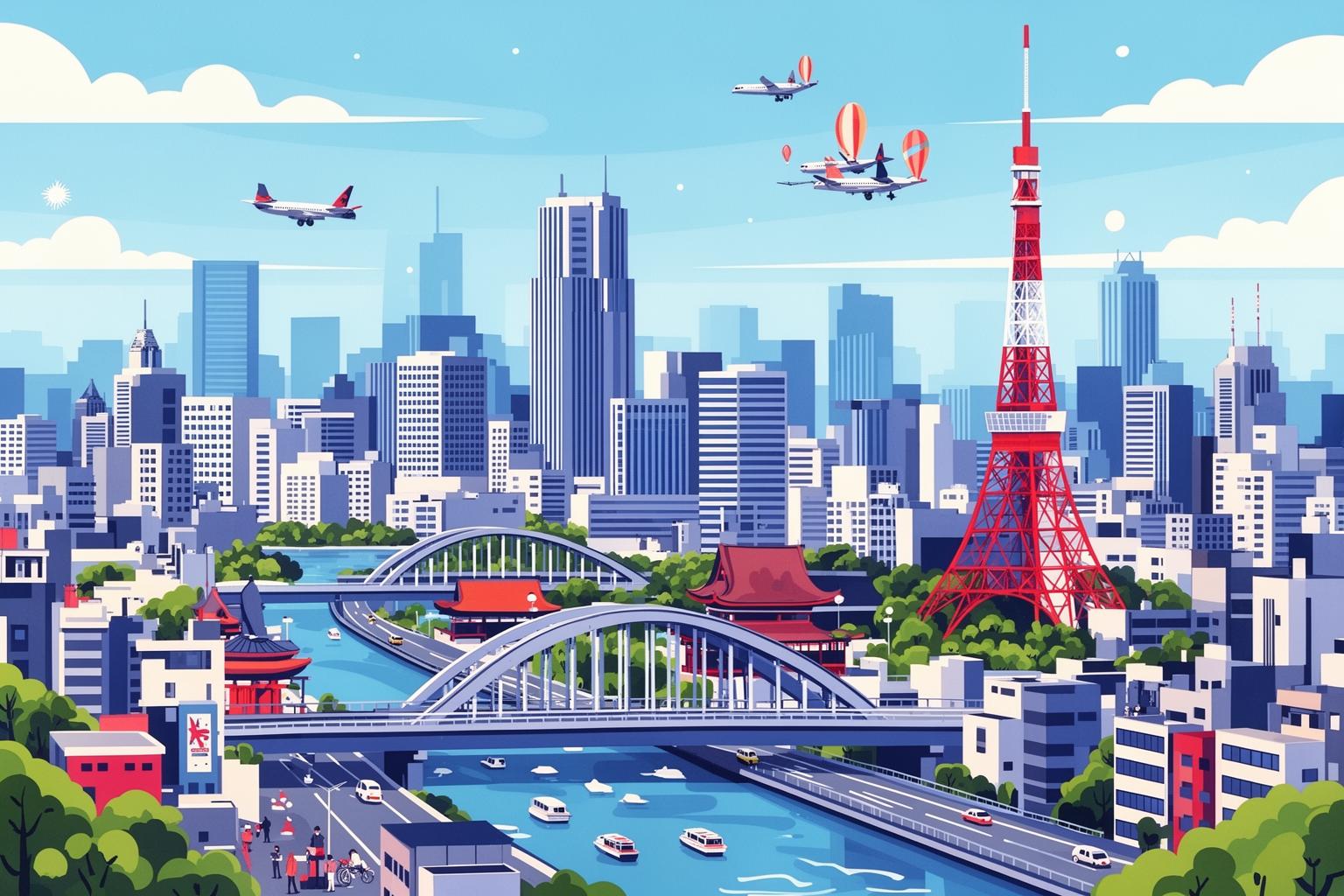
While Chiba serves as the series’ specific geographic setting, the broader atmospheric tone draws inspiration from the entire Tokyo megalopolis. The creative essence of Call of the Night resonates with Tokyo’s more intense and diverse nocturnal scenes, offering deeper layers for devoted fans to explore.
Shinjuku’s Neon Soul
Certain anime scenes, filled with a dense array of neon signs and towering digital billboards, evoke the spirit of Tokyo’s Shinjuku district more than the quieter Chiba. Shinjuku, especially its entertainment hub Kabukicho, represents the archetype of a futuristic, neon-saturated Japanese city. A nighttime stroll through Shinjuku is a sensory overload—the sheer flood of light and sound is extraordinary. Although Ko’s nightly wanderings tend to be much calmer, this vibrant urban energy embodies the night’s potential, the chaotic and lively counterpart to his peaceful solitude. Visiting Shinjuku provides a striking contrast to time spent in Chiba, showcasing the full spectrum of the Japanese night—from a suburb’s gentle hum to the relentless, 24/7 pulse of one of the world’s largest cities. This contrast emphasizes why Chiba’s relative tranquility is vital to the anime’s contemplative mood.
The Author’s Footprints: Suginami and Beyond
For those eager to explore further, it’s notable that the manga’s creator, Kotoyama, reportedly lives in Suginami City, a Tokyo ward. While this doesn’t imply exact locations are directly depicted, an artist’s everyday surroundings inevitably influence their work. Suginami is known for its relaxed, residential vibe and traditional shotengai, like the one in Asagaya. These quaint, retro shopping streets—with their blend of old and new shops—carry a distinct character closely aligned with some neighborhood scenes in Call of the Night. Visiting places like Asagaya or nearby Koenji offers insight into a quieter side of Tokyo life, focused less on skyscrapers and more on community and routine. This isn’t a literal location pilgrimage but rather an atmospheric one—an attempt to connect with the subtle influences that likely shaped the story’s world.
A Practical Guide for the Night Wanderer
Embarking on a Call of the Night pilgrimage calls for a mindset different from typical sightseeing. Your aim is to experience a moment in time, not just a location. Here are some practical tips for your nocturnal journey.
Timing Your Pilgrimage
The magic starts when the city quiets down. The best time to begin your walk is after 10:00 PM, but the true atmosphere emerges after the last trains have run, usually between midnight and 1:00 AM. This is when the streets grow empty and the world transforms. Seasonally, the summer nights shown in the anime are ideal. The warm air, the constant buzz of cicadas, and the humidity make the neon lights shimmer beautifully. However, winter has its own stark charm. The cold, crisp air sharpens city lights, making them seem brighter and more vivid, while the solitude feels even deeper. Just be sure to dress warmly in layers. Although Japan is remarkably safe even at night, it’s important to stay aware of your surroundings. Stick to well-lit streets when moving between major spots, and let someone know your general itinerary if you’re exploring solo.
Getting Around
Chiba is easily accessible from Tokyo via the JR Sobu or JR Keiyo lines. Once there, the city is best explored on foot. Central areas such as Chiba Station, Chiba Park, and the path to Chiba Port are all within a comfortable walking distance. This is vital because walking embodies Ko’s experience. It’s through these long, aimless strolls that he reflects and encounters the wonders of the night. For slightly longer distances, renting a bicycle is an excellent choice that also fits the spirit of the series. After the trains stop running, your own two feet become the best way to travel, encouraging you to slow down and fully absorb your surroundings.
Essential Gear for a Night Out
To get the most out of your pilgrimage, a bit of preparation goes a long way. Comfortable walking shoes are the single most important item, as you’ll be on your feet for hours. A portable phone charger ranks close behind, since you’ll rely on your device for navigation and photos. If you’re serious about capturing nightscapes, a camera with strong low-light performance (or a modern smartphone with advanced night mode) is essential. Always carry some cash, especially coins, for vending machine stops. Even on warm summer nights, temperatures can drop in the early hours before dawn, so a light jacket is a smart addition. Lastly, consider bringing headphones to listen to the Yofukashi no Uta official soundtrack, a perfect way to fully immerse yourself in the world.
Beyond the Anime: Embracing the Philosophy of the Night

A pilgrimage to the sites featured in Call of the Night is ultimately about far more than simply matching real-world locations with animated scenes. It offers a chance to engage with the series’ central philosophy. The story celebrates non-conformity. In a society that highly values productivity, order, and collective harmony, Ko’s choice to leave behind the daytime world acts as a quiet act of rebellion. The night gives him freedom from the pressures and expectations of school and society—a space where he can simply be. This idea resonates strongly within East Asian cultures, where academic and professional demands can be intense. Nighttime becomes a rare, unscheduled moment for genuine self-exploration. As you traverse the empty streets of Chiba, try to embrace this spirit. Don’t just hurry from one photo spot to another. Take your time. Sit on a park bench and do nothing for an hour. Grab a drink from a vending machine and watch the traffic lights cycle through their colors in solitude. Notice the subtle sounds, the quality of the light, the feel of the air. The real magic of this pilgrimage lies in discovering your own personal connection to the night. It’s about understanding why Ko, and perhaps a part of all of us, feels more alive when the rest of the world is asleep.
Your journey through Chiba offers a chance to step into the scenes of an anime that touched hearts with its unique mix of romance, comedy, and existential wonder. But more importantly, it gives you the opportunity to see a familiar urban landscape with fresh eyes. The locations are waiting—the gleaming tower, the quiet park, the endless concrete corridors. Yet the true essence of Call of the Night is found in the feeling of cool night air on your skin, in the lonely beauty of a neon sign mirrored in a puddle, and in the deep peace that comes from being awake to witness the world in its most quiet and sincere state. The night is calling. It invites you to wander, to explore, and to uncover the vibrant, magical world that awakens after sunset. Go and find your own song of the night.