
Written by Keiko Nakamura
There is a sound, a pure and resonant vibration, that signifies a perfect shot in the ancient art of Japanese archery. It is the tsurune—the sound of the bowstring as it strikes the archer’s guard after releasing an arrow. It is a sound of clarity, of focus, of a moment when mind, body, and spirit align. For fans of Kyoto Animation’s masterpiece, “Tsurune,” this sound is not just a technical detail; it is the very soul of the story. It echoes through the struggles and triumphs of Minato Narumiya and the Kazemai High School Kyudo Club. But what few may realize is that this sound, and the world it inhabits, is deeply rooted in a real place, a city cradled by mountains where tradition and modern life flow together like a clear river. That place is Nagano City, the heart of Nagano Prefecture. This is not just a guide to finding backdrops from an anime. This is an invitation to step into the world of “Tsurune,” to walk the same streets, to breathe the same crisp mountain air, and to feel the profound stillness of the dojo. It is a journey to understand how a physical place can shape a story, and how a story can, in turn, reveal the hidden magic of a place. From the familiar school gate on a hilltop to the quiet riverbanks where doubts are confronted and friendships are forged, we will trace the steps of the Kazemai archers and discover the tangible beauty that inspired their animated world. Prepare to find your own focus, to listen for your own inner resonance, and to embark on a pilgrimage that connects the art of animation with the enduring spirit of Japan.
If you’re inspired to explore other anime pilgrimages, consider a journey into the urban labyrinth of Satoshi Kon’s Paranoia Agent.
The Heartbeat of Kazemai High: Echoes in a Real Nagano School
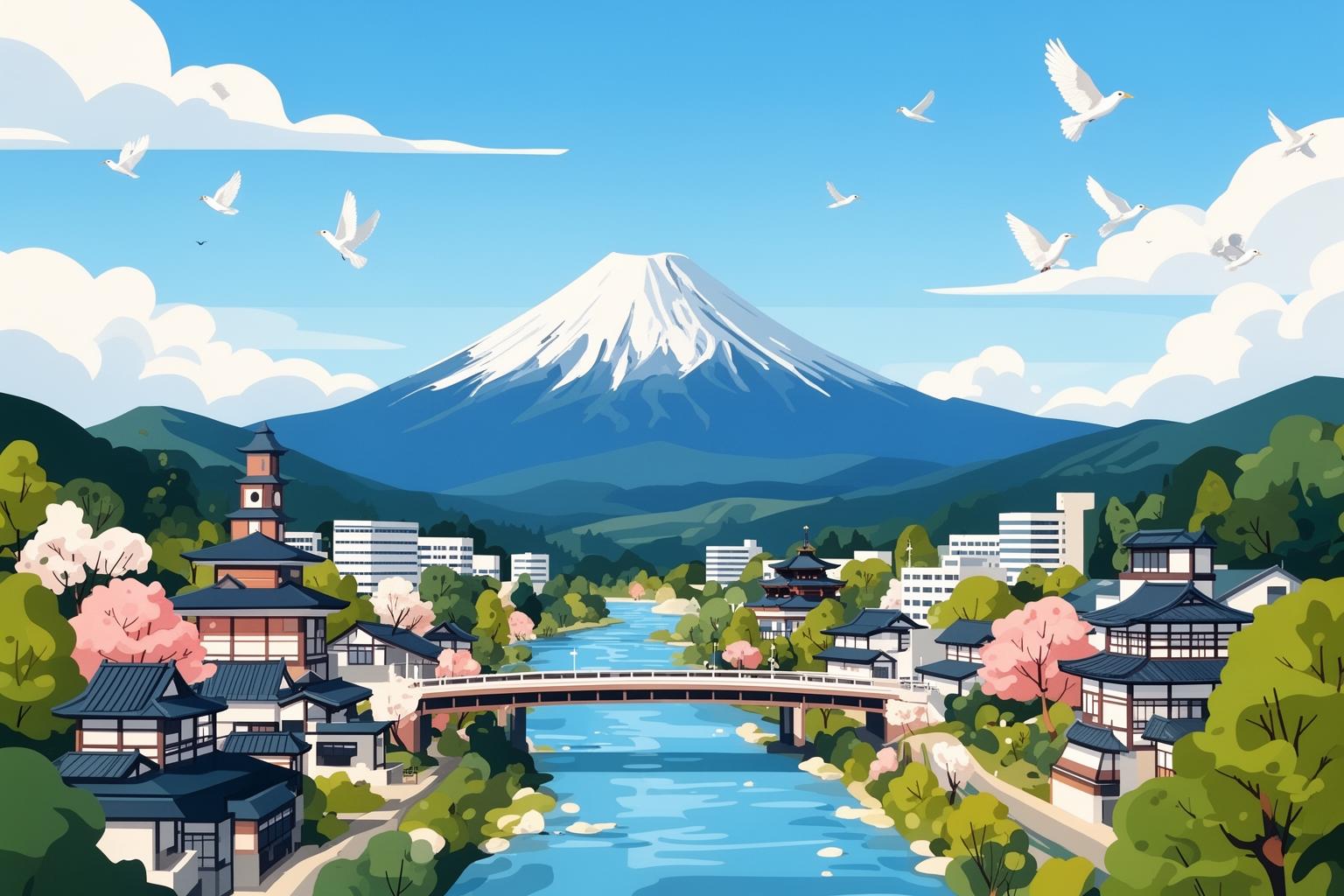
The story of any high school drama naturally begins at the school itself. Kazemai High School is more than just a backdrop in “Tsurune”; it serves as a character in its own right. Its sunlit classrooms, bustling corridors, and, most importantly, the path to the famed kyudo dojo form the stage where our characters develop. The animators at Kyoto Animation are well-known for their painstaking research and world-building, and Kazemai exemplifies this, being modeled after a real institution that overlooks Nagano City from its elevated position.
Nagano West High School: The Inspiration Behind Kazemai
Situated on the hills in Nagano City’s western area, Nagano Prefectural Nagano West High School stands prominently. From the moment you spot its distinctive gate and building layout, the likeness to Kazemai is unmistakable. The walkway leading to the school, the main building’s placement, and the overall ambiance will feel profoundly familiar to anyone following Minato, Seiya, and their team’s journey. Here, you can almost envision the friends chatting on their way to class or Rika Mizusaka making her stylish entrance. The school embodies youth and the daily routines that underpin our most formative years.
Visiting this location requires a sincere sense of respect and understanding. This is neither a tourist spot nor a movie set; it remains an active school where students live their own genuine stories. Visitors must not enter the school grounds. The true pleasure of a pilgrimage comes from observing respectfully from the public roads surrounding the school. From there, you can take in the view the students see daily, gazing out over Nagano city. It is a quiet moment to consider how an ordinary school setting can serve as the backdrop for remarkable personal growth. Stand on the public street, feel the breeze, and imagine the school bell ringing—calling not only to the students but to the start of a story we all cherish. This represents Kazemai’s real-world foundation, a place of learning and aspiration, both in fiction and reality.
The Route to School: Along the Susobana River
Characters in stories are often shaped by their daily travels, and for the Kazemai Kyudo Club members, the path along the Susobana River is a space for reflection, exercise, and quiet resolve. This gentle river, flowing along Nagano City’s western side, appears repeatedly as a vital landscape in “Tsurune.” Its tree-lined banks, open skies, and sturdy bridges are rendered with loving detail, offering moments of serene beauty that highlight the drama of the archery range.
The most iconic spot is the Shinkiri Bridge, instantly recognizable to fans. Here, and on the nearby riverside paths, we see Minato jogging, trying to outrun his anxieties and the target panic that plagues him. The flowing Susobana mirrors his emotional state—sometimes turbulent, sometimes calm, but always moving forward. Walking these same paths offers a deeply immersive experience. You feel the vast sky that often frames the characters’ introspective moments. You hear the gentle rush of water, a natural soundtrack far more immediate and real than any composed music. This is where the anime’s world and reality truly blend. You can take a leisurely walk, find a spot to watch the river, or go for a light jog to fully step into Minato’s shoes. The experience varies with the seasons, just as in the anime—from the fresh greens of spring and summer to the crisp air of autumn, each season casting a new light on the riverbanks. It’s a place that reminds you the journey is as important as the destination, a central theme in both kyudo and life.
The Sacred Space: Finding Yata no Mori Kyudojo
At the very heart of “Tsurune” lies a space of profound calm and intense pressure: the Yata no Mori Kyudojo. It serves as a refuge, a training ground, and a sanctuary where the characters face their deepest fears and build unbreakable bonds. Nestled within a dense, almost mystical forest, this dojo is where Minato rekindles his passion for archery under the eccentric yet wise guidance of Masaki Takigawa. Discovering the real-world inspiration behind such a magical place is a key goal for any pilgrim.
The Soul of the Archer: Nagano City Kyudo Hall
The main model for the stunning Yata no Mori Kyudojo is the Nagano City Kyudo Hall. Situated in a sports park, this facility is a center for local archery enthusiasts. While it may not have the mythical forest entrance of its anime counterpart, the essence of the dojo itself remains powerfully intact. The building’s traditional design, with its sweeping roof and wooden framework, immediately calls to mind the world of “Tsurune.” If you are lucky enough to visit during a practice session or tournament, you will be immersed in an atmosphere of intense focus.
The air inside a real kyudojo is filled with a unique energy. It is a place of deep silence, broken only by the soft footsteps on wooden floors, the controlled whisper of breath, and then, the sharp, resonant tsurune of the bowstring. This is the sound that the entire series is named after, and to hear it firsthand, in the very kind of hall that inspired the anime, is an incredibly moving experience. You can watch the archers, their movements a graceful and deliberate ritual passed down through centuries. You see the concentration in their eyes, the straightness of their posture, the embodiment of the kyudo principle of shai, or correct form. It is in this real-world setting that you can fully appreciate the incredible detail Kyoto Animation infused into their work, capturing not only the physical space but also the spiritual discipline it nurtures. As with the high school, visitors should be aware that this is a functioning facility. Photography may be limited, and maintaining silence and respectful observation is essential. By doing so, you become a quiet witness to the living tradition that “Tsurune” so beautifully honors.
The Spirit of the Forest Shrine
One of the most captivating features of the Yata no Mori Kyudojo is its secluded, shrine-like entrance. The moss-covered stone lanterns, towering trees, and the sacred torii gate evoke a sense of stepping into another realm. While the Nagano City Kyudo Hall inspired the dojo building itself, this iconic entrance is widely believed to be drawn from a location in a separate city within Nagano Prefecture: Agata no Mori Park in Matsumoto. This detail is vital for devoted pilgrims. Matsumoto is a rewarding trip from Nagano City, and this charming park, with its historic structures and peaceful pathways, holds the secret to that magical approach. Walking through the wooded areas of Agata no Mori Park, you can discover paths and clearings that perfectly resemble the entrance to Masaki’s dojo. The dappled sunlight filtering through the thick leaf canopy, the gentle rustle of the wind, and the earthy scent of the forest floor all come together to recreate that mystical atmosphere. This geographic separation between the dojo and its entrance illustrates a fascinating aspect of anime pilgrimage—sometimes, the ideal animated location is a composite, blending the finest elements of several real places, crafting a world even more enchanting than reality. It inspires a wider exploration, a journey that leads you not just to a single city, but through the rich and varied landscapes of the entire Shinshu region, as Nagano has long been known.
Beyond the Dojo: Everyday Life in Nagano City

While the school and the dojo act as the twin pillars of the narrative, “Tsurune” is also rich with smaller, quieter moments set in the everyday streets and corners of Nagano. These locations anchor the story in a believable reality, revealing the characters’ lives beyond the formal setting of kyudo practice. They are the places where friendships are challenged, chance encounters take place, and the fabric of daily life is woven. Exploring these spots adds a rich layer of texture to the journey, making the city itself feel like a familiar companion.
A Fateful Encounter: The Uematsu Postbox
Sometimes, the most meaningful moments occur in the most unassuming places. In “Tsurune,” the first proper meeting between Minato and his future mentor, Masaki Takigawa, happens by a simple red postbox. This is not just a random prop; it’s a real location, situated right outside the Nagano Uematsu Post Office. For fans of the series, discovering this spot is a delightful moment. It’s a small, almost mundane detail, yet it sparks Minato’s entire return to kyudo. Standing there, it’s easy to imagine the scene: Minato, lost in thought, and the enigmatic Masaki with his owl, Futa-san, creating a moment of subtle magic in an ordinary setting. It serves as a powerful reminder that turning points in our lives often come without grand ceremony. They happen on a street corner, by a postbox, on an ordinary afternoon. Visiting the Uematsu Post Office is a brief but meaningful stop—a nod to the quiet, fated encounters that set great stories in motion.
City Views and Quiet Moments: Jouyama Park
High school students need places to unwind, talk, and simply be themselves away from the pressures of school and club activities. In Nagano, Jouyama Park, perched on a hill near the famous Zenkou-ji Temple, serves precisely this purpose. The park, which also includes a small zoo, appears in the series as a spot where the characters relax and enjoy the view of their hometown. From the park’s vantage points, you can see a panoramic spread of Nagano City, framed by the surrounding mountains. This is the very same view the members of the Kazemai team would experience. It offers perspective—a way to see the entire city where their individual stories unfold. Visiting Jouyama Park is a lovely way to connect with the more laid-back side of the characters’ lives. You can stroll the paths, visit the charming Jouyama Zoo with its friendly animals, and find a bench to sit and reflect. It’s a place to feel the city’s atmosphere and appreciate the natural beauty always within reach in Nagano. This location highlights how well the anime portrays the lifestyle of local students, blending urban living with easy access to green, open spaces.
Experiencing the Spirit of Kyudo and Nagano
A pilgrimage for “Tsurune” is ultimately about more than simply matching scenes from the anime to real-world locations. It serves as an opportunity to immerse oneself in the culture that forms the foundation of the story: the profound discipline of kyudo and the distinctive character of Nagano itself. Appreciating these elements transforms the journey from mere sightseeing into a genuinely enriching cultural experience. It allows you to view the world through the characters’ perspectives and to grasp the deeper themes that give the series its lasting impact.
The Essence of “The Way of the Bow”
Kyudo, or “The Way of the Bow,” is not just a sport focused on striking a target. It is a budo, a traditional Japanese martial art that emphasizes moral and spiritual growth. The ultimate aim is to reach a state of shin-zen-bi, meaning “truth, goodness, and beauty.” This philosophy quietly drives the narrative of “Tsurune.” Minato’s struggle with hayake, or target panic, is not merely a technical challenge but a spiritual one, reflecting a disconnection from this ideal. Although you might not be able to practice kyudo yourself during your visit without prior arrangement, you can still engage with its spirit. Watch the archers at the Nagano City Kyudo Hall and observe the meticulous eight-stage shooting process, the hassetsu. Each movement is deliberate, precise, and rich in meaning—a meditation in motion. This focus on the process rather than the outcome is what Masaki tries to instill in Minato. The perfect shot, the true tsurune, arises not from a goal to hit the target but from pure, correct form and a calm, uncluttered mind. Understanding this adds new significance to the sites you visit. The dojo becomes a place of purification, and Minato’s jogs along the river transform into moving meditation, a quest for inner harmony.
A Pilgrim’s Practical Guide to Nagano
Getting around Nagano is simple and enjoyable. The city is easily reachable from Tokyo via the Hokuriku Shinkansen, a comfortable bullet train journey of about 90 minutes. Upon arriving at Nagano Station, the city’s compact layout makes exploration easy. Many notable “Tsurune” locations, including the areas around the Susobana River and Uematsu Post Office, lie within walking distance or a short bus ride from the city center. A local bus pass provides a convenient and cost-effective way to get around. When planning your visit, consider the season. Nagano Prefecture boasts four distinct and beautiful seasons, each offering a unique perspective on the anime’s world. Spring brings cherry blossoms that gently dust the banks of the Susobana River in soft pink. Summer offers lush, vibrant greenery, making the forests feel deep and mysterious, much like Yata no Mori. Autumn lights the mountains in brilliant shades of red and gold, a breathtaking natural display. Winter, for which Nagano is renowned as a former Winter Olympics host, blankets the landscape in pristine white snow, creating a calm and peaceful ambiance. Most importantly, remember the etiquette of pilgrimage. Be a respectful visitor. Keep your voice low near homes and schools, dispose of trash properly, and always be mindful when taking photos to avoid disturbing local residents or practitioners at the dojo.
Expanding the Pilgrimage: A Glimpse of Kirisaki High
No story about a protagonist team is complete without a formidable rival. In “Tsurune,” this role is played by the powerful and elegant archers of Kirisaki High School, led by the talented Shuu Fujiwara. Their kyudo is disciplined, precise, and strikingly beautiful—an embodiment of their elite training environment. For the truly devoted fan willing to explore a bit further, it’s possible to visit the location believed to have inspired the Kirisaki dojo.
The Rivals’ Stronghold: Ueda Castle Park Kyudojo
To reach the champions’ home, one must travel to the nearby city of Ueda, another historic town in Nagano Prefecture. Here, within the grounds of the ruins of Ueda Castle, lies the Ueda Castle Park Kyudojo. The setting itself is immediately impressive. The dojo is surrounded by the history and grandeur of a samurai-era castle, complete with stone walls and towering yagura turrets. This atmosphere perfectly reflects the prestigious and historically grounded image of Kirisaki High. The dojo at Ueda exudes dignity and tradition, perfectly matching Kirisaki’s methodical and powerful archery style. It feels like a place where champions are born. Visiting here provides a striking contrast to the more rustic, natural settings of the Kazemai locations. It enriches the pilgrimage by allowing you to physically immerse yourself in the rivals’ world, gaining insight into their perspective and the environment that shapes them. Combining a visit to Ueda with your Nagano City tour offers a fuller picture of the “Tsurune” universe. You can explore the historic castle grounds, learn about the famous Sanada clan who once ruled there, and then quietly observe the dojo, imagining the silent, intense training of Shuu and his teammates. This turns the pilgrimage into a broader journey through Nagano’s rich samurai history and its living martial traditions.
Immersing Yourself in the Nagano Atmosphere
To fully complete your “Tsurune” pilgrimage, you need to let yourself wander beyond the specific checklist of anime sites and simply absorb the atmosphere of Nagano. The city’s essence—its spiritual core, culinary treasures, and ever-present natural beauty—forms the unseen backdrop that gives the anime its authentic and grounded feel. This is your opportunity to experience the city not just as a fan, but as a traveler discovering a captivating new destination.
Beyond the Anime Trail: Zenkou-ji Temple and Local Flavors
No trip to Nagano City is complete without visiting Zenkou-ji Temple. This magnificent temple, with a history spanning over 1,400 years, is one of the most important and cherished pilgrimage sites in Japan. While it isn’t featured directly as a “Tsurune” location, its spiritual presence permeates the entire city. The long, atmospheric Nakamise-dori street leading to the temple is lined with traditional shops and eateries, and the impressive scale and beauty of the main hall are breathtaking. Participating in the morning prayers, where ancient sutras are chanted in a deeply resonant chorus, is an unforgettable experience that connects you to the region’s profound spiritual traditions. After exploring the temple, dive into the local cuisine. Nagano is renowned for its Shinshu soba noodles, prized for their delicate texture and nutty flavor. You can also sample oyaki, savory steamed or grilled dumplings filled with vegetables or sweet bean paste—a perfect snack while wandering the town. Savoring these local dishes offers a way to connect with the daily life of the city, much like Minato and his friends do.
The Sound of the Mountains
Lastly, take a moment to simply look up and around. Nagano City is nestled within the Japanese Alps. These majestic mountains form a constant, comforting presence on the horizon, as seen in countless scenic shots in “Tsurune.” They are the source of the clear waters in the Susobana River and the crisp, clean air you breathe. They shape the landscape and the spirit of the people who live here. Find a quiet spot—perhaps in Jouyama Park or on a bridge over the river—and just listen. Listen to the wind rustling through the trees, the distant hum of the city, the flow of water. In the quiet between these sounds, you might begin to grasp the stillness that a kyudo archer seeks. You may feel the same peace and clarity that Minato experiences when he finally achieves his perfect shot. The true pilgrimage isn’t just about seeing sights; it’s about discovering that inner harmony, your own tsurune, in the heart of the mountains.
A journey to Nagano following the footsteps of the Kazemai Kyudo Club is a uniquely rewarding experience. It’s a path that leads you through bustling city streets and into the serene silence of the dojo, across familiar bridges and up to hilltop views stretching miles. You arrive looking to find the world of an anime you love, but you leave with something more: a genuine connection to a real place, its culture, traditions, and profound natural beauty. You come to realize that the story of “Tsurune” couldn’t have been set anywhere else. The discipline of kyudo, the significance of nature, and the quiet strength of its characters all reflect Nagano itself. So come, walk the path, breathe the air, and listen closely. The sound you’re chasing may be closer than you imagine.