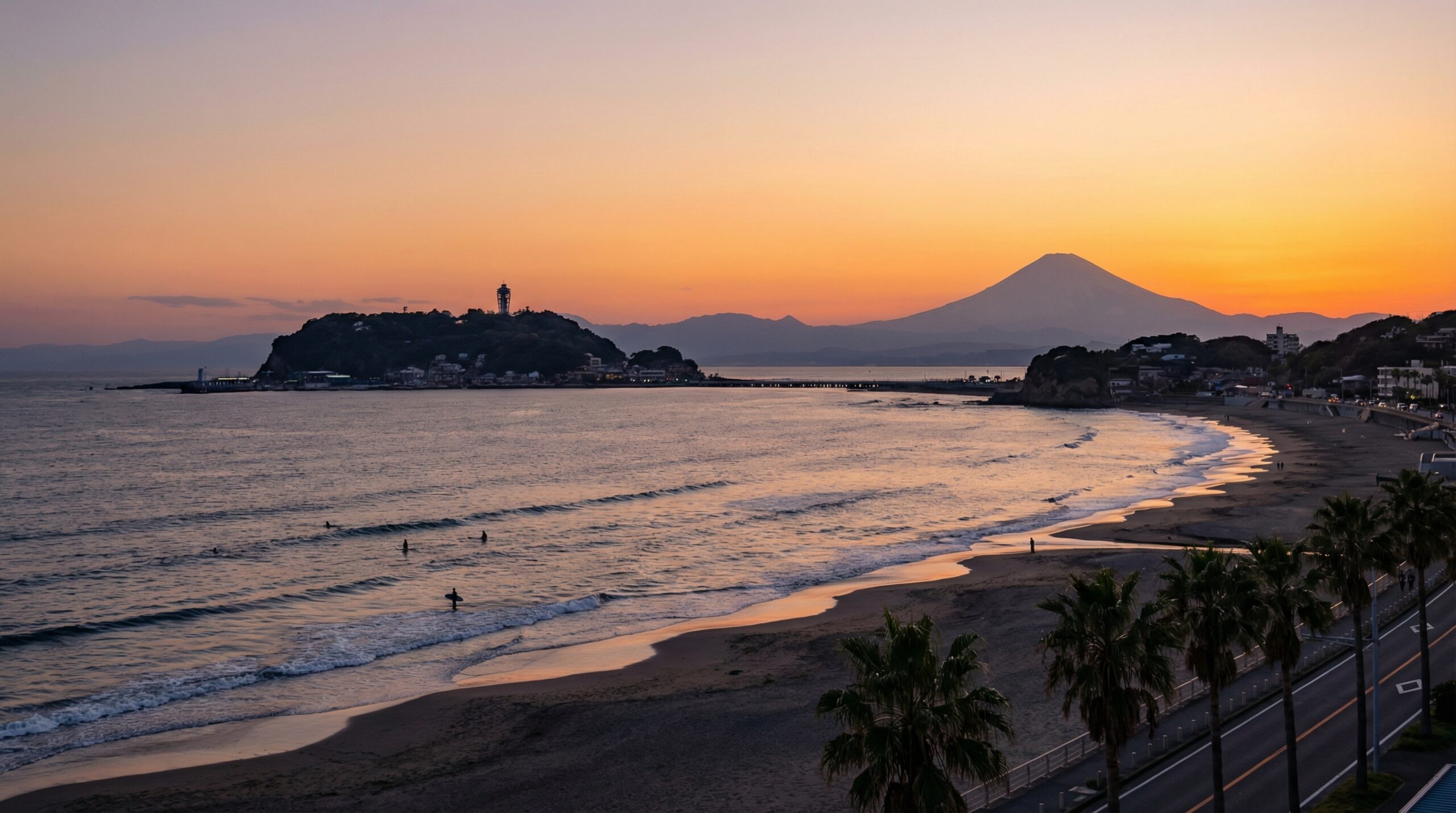
There’s a certain kind of quiet that settles over a town just before graduation. It’s a stillness thick with unspoken feelings, the bittersweet ache of endings, and the trembling excitement of new beginnings. This is the very air you breathe in the anime Just Because!, a story that paints the final semester of high school with a palette of subtle, realistic emotions. But the series does more than just tell a story; it transports you to a place. That place is the Shonan region of Kanagawa Prefecture, specifically the neighboring cities of Fujisawa and Kamakura. Here, the salty sea breeze, the rhythmic rattle of the local train, and the gentle winter sunlight aren’t just background details—they are the heartbeat of the narrative, shaping every glance, every hesitation, and every heartfelt confession. This isn’t a pilgrimage to a fantasy world; it’s a journey into the tangible, everyday reality of Eita Izumi, Mio Natsume, and their friends. It’s a chance to walk the same streets, feel the same coastal chill, and stand in the very spots where their lives began to change, just because. As your guide, I want to take you beyond a simple location checklist. We’ll explore the atmosphere, the feeling of what it’s like to stand on that train platform as dusk falls, or to look out at the same ocean view that gave the characters a moment of clarity. This is a tour through the soul of Shonan, a landscape that holds the echoes of a beautiful, fleeting moment in time.
The Lifeline of Shonan: Riding the Enoden
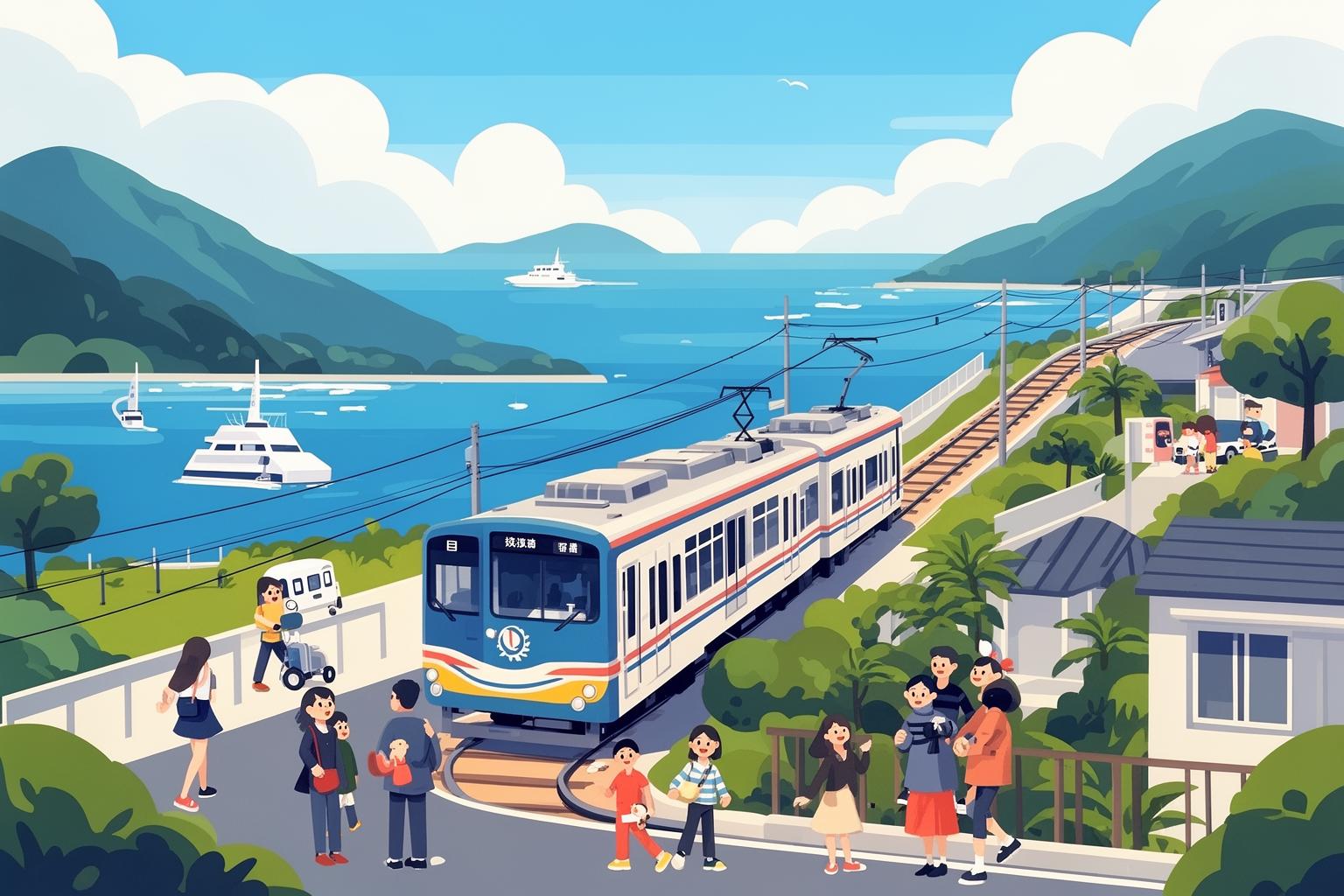
Before exploring any specific location, we first need to discuss the thread that links them all together: the Enoshima Electric Railway, affectionately called the Enoden. This charming, often single-tracked train line is more than mere transportation; it offers a moving perspective, a piece of living history, and a central figure in the Shonan narrative. In Just Because!, the Enoden is ever-present. It serves as the means for Eita’s return, the backdrop for Mio’s daily commute, and the setting for countless quiet moments of reflection as characters gaze out the window, lost in thought. To fully embrace this pilgrimage, your journey must start aboard one of its distinctive green and cream-colored carriages.
The Sensory Experience of the Rails
Boarding the Enoden is an experience on its own. The train cars are smaller and more intimate compared to the sprawling commuter trains of Tokyo. The sounds are distinctive: the gentle groan as it navigates sharp curves, the rhythmic clack-clack that seems to slow time, and the cheerful chime announcing each station. As the train departs from Fujisawa or Kamakura Station, it plunges into a dense urban environment, rattling through narrow corridors where houses sit so close you feel you could almost reach out and touch them. This closeness to everyday life is a key part of its charm and a central theme in the anime. You see laundry hanging from balconies, gardens tucked into tiny spaces, and people going about their daily routines. It grounds the story in a deep sense of reality.
Then, the scenery shifts dramatically. Between Koshigoe and Kamakurakokomae, the tracks run alongside the coast. Suddenly, the world opens wide. The Sagami Bay stretches out before you, a vast expanse of blue, with the silhouette of Enoshima Island rising in the distance. This is the iconic Shonan view—the one that takes your breath away and instantly connects you with the characters’ emotions. In winter, when Just Because! is set, the sunlight hits the water at a low angle, making it sparkle with a cool, brilliant intensity. You can almost sense Mio’s contemplative mood as she watches the waves, her reflection in the glass blending with the passing scenery. Riding the Enoden isn’t just about traveling from point A to point B; it’s about surrendering to the rhythm of the coast and allowing the landscape to tell its own story.
Ofuna Station: The Crossroads of Reunion and Routine
Our pilgrimage truly begins not by the sea, but a bit inland, at the lively hub of Ofuna Station. This major interchange is a place of constant activity where JR lines, the Shonan Monorail, and countless commuters converge. For Eita Izumi, this station marks the gateway back to a life he once left behind. It’s his point of re-entry, and the anime captures the sensation of returning to a place that is both painfully familiar and subtly transformed. For visitors, Ofuna serves as an ideal starting point, linking the coastal areas with the inland residential neighborhoods that are just as essential to the anime’s setting.
The Grand Concourse: A Stage for Beginnings
The main concourse of Ofuna Station is spacious and modern, filled with people moving purposefully. It’s here that the story’s catalyst unfolds. The expansive, airy space, with its high ceiling and streams of natural light, is where Eita first arrives. The anime frames him against this backdrop of anonymous motion, highlighting his role as a solitary observer rejoining the flow of his former life. Standing there amid the ebb and flow of travelers, you can sense the feeling of being a small part of a much larger scene. Take a moment to simply watch—see the high school students in their uniforms, the shoppers, the families—it’s the heartbeat of the community the characters belong to. The station isn’t just a sterile transit point; it’s the very place where the subtle drama of Just Because! begins.
The Monorail’s Embrace: A Journey Above the Everyday
Among Ofuna Station’s most distinctive features is the Shonan Monorail. Unlike typical trains, this one is suspended, hanging from the track above as it glides over the city. It’s a somewhat futuristic sight, and its platform at Ofuna has a unique ambiance. In the anime, this transport links the main hub to the more suburban, hilly neighborhoods where the characters live. Riding the monorail feels like a secret journey. It elevates you above the traffic and rooftops, offering glimpses into backyards and quiet streets. The ride is surprisingly smooth and quiet, a gentle sway worlds apart from the rumbling trains below. It symbolizes the private, domestic side of the characters’ lives—the journey home after a long day of school and unspoken emotional struggles. Taking even a short monorail ride, just a stop or two, deepens your appreciation for the geography of their world as well as the divide between their public school lives and private home lives.
Echoes of Youth: The Slopes of Koshigoe and Kamakura High School
No anime pilgrimage in this area would be complete without visiting one of Japan’s most iconic sights, a place immortalized in countless photos and, naturally, anime. We’re referring to the area around Kamakurakokomae Station, home to the legendary railroad crossing and the high school that served as the inspiration for the school attended by Mio, Haruto, and their friends.
The Kamakurakokomae Railroad Crossing: A Moment Frozen in Time
As you step off the Enoden at Kamakurakokomae Station, you’re immediately greeted by the fresh, salty air and an unparalleled ocean view. The station platform itself seems to hang over the water. Yet the main attraction lies just a few steps away. The railroad crossing, with its iconic yellow and black barriers, gently sloping tracks, and the brilliant blue sea providing a perfect backdrop, is instantly recognizable. While famously linked to Slam Dunk, Just Because! lays claim to this spot for its own more quiet, reflective moments. It’s a place of transit and waiting. You can easily picture Mio standing here, waiting for the train, lost in thought as the warning bells ring. The scene carries a strong sense of anticipation and the passage of time.
Expect crowds, as this is a popular tourist destination. Still, despite many visitors competing for the perfect photo, the magic of this place is undeniable. The key is patience. Wait for a break between crowds, watch the charming Enoden train as it slowly passes by, and see the scene exactly as depicted in the anime. The best time to visit is on a clear weekday, especially late afternoon. The “golden hour” light bathes the entire scene in a warm, nostalgic glow that perfectly matches the anime’s sentimental vibe. You’ll quickly understand why this small crossing has captured so many imaginations. It’s a perfect blend of the ordinary (a railroad crossing) and the extraordinary (the Pacific Ocean), a theme deeply woven into Just Because!.
The Walk to Kashiogawa High School
The actual school that inspired Kashiogawa High is Kamakura High School. Situated atop a steep hill overlooking the ocean, the journey there is as significant a part of the pilgrimage as the destination itself. Keep in mind this is a functioning school, so entry is prohibited and privacy must be respected. The pilgrimage is more about the journey than the destination. The steep, winding path known as Gokusho-zaka provides a physical appreciation for the characters’ daily commute. As you climb, the view of the sea and Enoshima grows increasingly spectacular with each step. It’s easy to imagine the characters walking this path, their conversations punctuated by the effort of the ascent, their youthful energy pushing them onward. This daily uphill trek serves as a subtle metaphor for their own struggles and journey toward an uncertain future. Standing near the school entrance, gazing out at the same panoramic view the students see every day, you feel a deep connection to their world. It’s a vista filled with the promise of the vast ocean and the comforting familiarity of the town below.
Fujisawa’s Urban Heart: Where Daily Lives Unfold
While Kamakura presents the iconic coastal views, Fujisawa embodies the vibrant, modern core of the characters’ lives. Fujisawa Station and its nearby area serve as their places for shopping, meeting up, and handling the practical aspects of daily life. This environment features pedestrian overpasses, department stores, and secluded spots with personal meaning.
Fujisawa Station South Exit: The Contemporary Center
The vicinity around the south exit of Fujisawa Station is a bustling hub. It sharply contrasts with the quiet, scenic atmosphere of the Enoden line. Here, you’ll find the pedestrian deck prominently featured in the anime. Characters frequently meet there, their silhouettes set against the Odakyu department store and the moving crowd. This elevated walkway offers an excellent viewpoint. From this spot, you can watch the city’s rhythm—the buses arriving and departing, salarymen hurrying for their trains, and students chatting and laughing. The area feels vibrant and full of life. Standing on that overpass, it’s easy to imagine Eita waiting or Mio rushing by, each absorbed in their own world yet part of the broader urban fabric. The anime’s artists masterfully captured the lighting here—from the bright, clinical midday illumination to the warm, welcoming glow of the city lights at night. This place feels authentic and lived-in, making it the perfect setting for the story’s realistic, grounded drama.
The Underpass Murals: A Canvas for Aspirations
One of the most touching and particular spots in Fujisawa is the underpass near the station, recognizable by its vivid murals. In Just Because!, this somewhat neglected, grimy area becomes Haruto’s personal training ground. It is here that he tirelessly practices his baseball swing, the bat’s sound reverberating in the enclosed space. It’s also where he shares some of his most vulnerable moments, his bravado fading in the dim light. Visiting this spot feels like entering a secret world. The murals, painted by local children, bring a sense of innocence and hope to the concrete surroundings. You can almost hear the echo of Haruto’s bat striking the air, a sound filled with pure determination and youthful tension. This location reminds us that important moments don’t always take place in beautiful settings. Sometimes, they happen in overlooked corners of a city, making them all the more intimate and meaningful.
Enoshima: Island of Romance and Winter Light

Rising off the coast and connected to the mainland by a lengthy bridge is the island of Enoshima. This island is rich in mythology, romance, and natural beauty. In Just Because!, Enoshima and its nearby aquarium set the stage for a key group date—a day marked by awkwardness, blossoming romance, and the complex dynamics of a group of friends on the brink of drifting apart.
The Enoshima Aquarium: An Underwater World
The Enoshima Aquarium, locally known as “Enosui,” is a modern, beautiful facility situated on the mainland just before the bridge to the island. The anime’s date scene is a brilliant example of character animation, capturing both the wonder and the tension of the moment. As you walk through the aquarium, the giant Sagami Bay tank stands out, where Mio is captivated by the swirling sardine schools. The soft, blue light filtering through the water creates a dreamlike ambiance—a self-contained world where outside worries vanish. It’s an ideal setting for the characters to briefly escape the pressures of their impending graduation. This peaceful environment subtly amplifies the romantic tension and offers a space for quiet contemplation. Standing before that immense tank, you share the same sense of awe and smallness the characters feel.
Samuel Cocking Garden and the Sea Candle
After crossing Bentenbashi Bridge onto Enoshima itself, a stroll along the island’s winding paths brings you to Samuel Cocking Garden and the Enoshima Sea Candle, the island’s iconic observation tower. Set in winter, Just Because! showcases this location at its best. During this season, the garden hosts a stunning winter illumination event called “Shonan no Hoseki” (Jewel of Shonan). The entire area glows with countless sparkling lights, creating a deeply romantic and magical mood. This serves as the setting for some of the date’s most important moments. Witnessing the illuminations in person is breathtaking. The cool, crisp winter air makes the lights appear even brighter. As you wander through tunnels of light and look up at the glowing Sea Candle, you’re experiencing more than just a beautiful spectacle—you’re stepping into the emotional climax of the characters’ island journey. It’s a moment when reality surpasses the anime’s beauty, allowing you to feel the romance and melancholy of their situation with moving intensity.
The Atmosphere of a Shonan Winter
What truly distinguishes Just Because! is its seasonal setting. While most beach town stories choose the vibrant energy of summer, this one takes place in winter, creating a different, more reflective mood that perfectly echoes the characters’ inner states. To fully grasp this journey, you need to understand the distinctive nature of a Shonan winter.
The Quality of the Light
The winter light in Shonan is unique. The sun rests lower in the sky, casting long shadows and enveloping the landscape in a soft, golden hue, especially during late afternoons. This light is gentler and less intense than the summer sun, evoking a sense of nostalgia and the feeling of things coming to a close. The anime’s visual style captures this wonderfully. The artists carefully depict how the winter light glimmers on the ocean, streams through the windows of the Enoden train, and brightens the quiet residential streets. When you visit from December to February, you’ll witness this light firsthand. It fosters quiet reflection and makes the familiar scenery feel tender and profoundly beautiful.
A Quiet and Contemplative Coast
Shonan’s beaches are known for being crowded with surfers and sunbathers during summer, but in winter they transform. They become vast, silent, and nearly deserted. The lively energy disappears, replaced by a deep sense of calm. Walking along the shore, accompanied only by the sound of waves and the cries of gulls, offers a meditative experience. It’s easy to see how this setting encourages introspection. The landscape provides space for thought. This stillness serves as the emotional backdrop of Just Because!. The empty beaches symbolize the characters’ feelings of uncertainty and the void that will soon appear in their lives as they go their separate ways. Experiencing Shonan in winter lets you connect with the story on a much deeper, more heartfelt level.
A Pilgrim’s Practical Guide

Starting this journey is easy, but a few tips can help make your experience more seamless and engaging.
Navigating the Area
Your two best allies in the Shonan area are the JR lines and the Enoden. JR lines, such as the Tokaido and Yokosuka lines, will efficiently transport you from Tokyo to the main hubs of Fujisawa and Ofuna. Once you arrive, the Enoden line becomes essential for exploring the coastal part of your trip. Consider buying the “Noriorikun,” a one-day Enoden pass that lets you hop on and off freely—ideal for a pilgrimage with multiple stops. For inland destinations, the Shonan Monorail is a vital route, and buses from Fujisawa Station can take you to more residential areas if you’re up for some adventure. The region is very walkable, but be ready for some steep hills, especially around Kamakura.
Enjoying the Local Cuisine
To fully engage your senses, don’t forget to eat. Shonan is renowned for its seafood, and the must-try dish is shirasu-don—a bowl of rice topped with fresh, tiny whitebait. You can have them boiled (kamaage) or raw (nama), with the raw variety being a true local specialty available only when they’re in season and freshly caught. Restaurants serving this dish are found throughout Enoshima and Kamakura. Enjoying a meal while gazing out at the ocean offers a perfect break from your pilgrimage and lets you absorb the local vibe. It adds a deeper authenticity to your experience, connecting you to the culture of the place that inspired the story.
A Final Thought on a Passing Season
Strolling through the streets of Fujisawa and Kamakura in the footsteps of Eita and Mio is more than mere sightseeing; it is an act of empathy. You begin to sense the chill in the air they experienced, notice the sparkle of the ocean that caught their eye, and grasp how the simple wait for a train could carry such emotional weight. The charm of Just Because! resides in its realism and its attention to the small, unspoken moments that shape our lives. The Shonan setting perfectly complements this style of storytelling, offering a landscape that is beautiful without being overly dramatic, where ordinary life unfolds against an extraordinary backdrop.
As you ride the Enoden back at day’s end, watching city lights twinkle and the last rays fade from the sky, you carry with you more than just photographs—you carry feelings. The sensation of a chapter closing, a bittersweet nostalgia for a time and place you can never revisit, and a quiet hope for what lies ahead. This pilgrimage does not provide grand revelations; rather, it offers a gentle understanding. It reminds you that even the most ordinary days, in the most ordinary towns, can hold some of the most profound moments of our lives. And that, in itself, is a journey worth making.