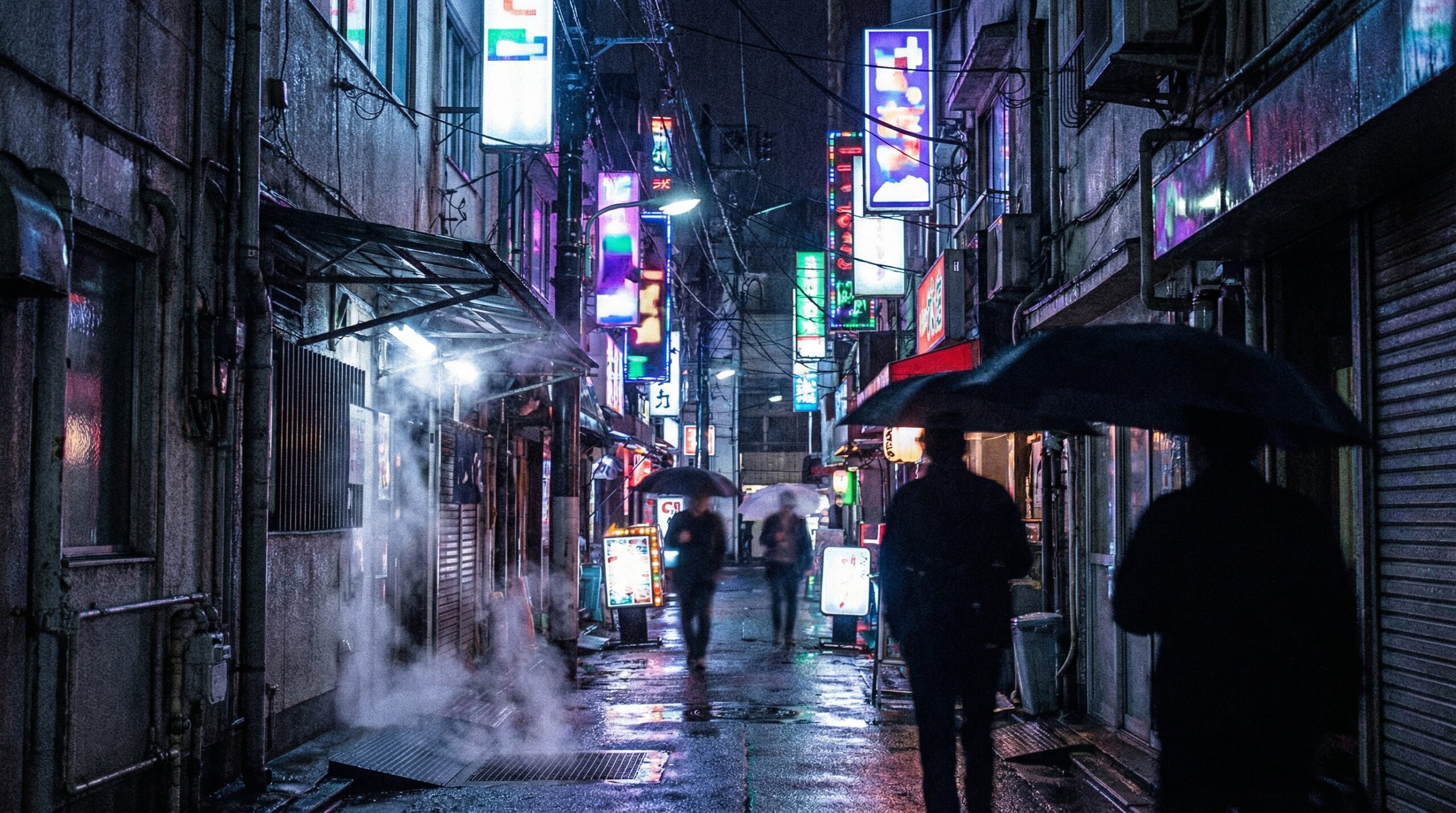
The night descends on Tokyo, but the city never sleeps. It hums with a million different stories, a million different heartbeats, all flowing through veins of asphalt and concrete. For Hiroshi Odokawa, a 41-year-old walrus taxi driver, these stories are his daily bread. He listens, he observes, he connects the seemingly disparate threads of his passengers’ lives from the quiet solitude of his driver’s seat. The anime Odd Taxi captured audiences with its sharp dialogue, intricate mystery, and unforgettable cast of anthropomorphic characters, but its true secret weapon was its setting: a breathing, tangible, and unflinchingly real Tokyo. The show’s genius lies in its ability to ground its extraordinary narrative in the most ordinary of places. The anxieties of an idol group, the schemes of a small-time hoodlum, the desperate gambles of a student—they all unfold not in some fantastical version of Japan, but on the very real streets of Shibuya, Sangenjaya, and Kichijoji. This isn’t just a background; it’s a character in its own right, its geography shaping the plot as much as any single character’s decision. Embarking on a pilgrimage to the real-life locations of Odd Taxi is more than just an anime tour. It’s an invitation to see the city through Odokawa’s world-weary eyes, to feel the pulse of the metropolis that powers this modern noir masterpiece, and to discover the quiet drama playing out on every corner. This journey will take you from the chaotic heart of youth culture to the tranquil parks where secrets are whispered, and into the cozy residential nooks that offer a respite from the urban sprawl. Prepare to start your meter and dive deep into the concrete jungle that shaped one of the most compelling anime of the decade.
For fans of anime location pilgrimages, this experience is akin to discovering the real-life settings of Tsurezure Children, where the city itself becomes a tangible part of the narrative.
The Heart of the Mystery: Cruising Through Shibuya’s Concrete Jungle
Shibuya stands as the unquestionable heart of Odd Taxi‘s intricate narrative web. It is the crossroads where paths meet, destinies merge, and the central mystery begins to unfold. Odokawa’s taxi serves as a steady presence here—a yellow vessel navigating through a sea of neon lights, noise, and bustling crowds. To truly grasp the world of Odd Taxi, one must first experience the relentless, overwhelming energy of Shibuya. This district is a realm of constant motion, a dazzling and dizzying spectacle that perfectly sets the stage for the show’s high-stakes drama. It is where the public personas of characters like the idol group Mystery Kiss are showcased, and where the secretive dealings of figures like Dobu play out in the shadows just beyond the brightly lit main streets. Shibuya is a place of contrasts—teeming crowds alongside deep loneliness, glittering success intermixed with desperate ambition—mirroring key themes woven throughout the anime’s storyline.
The Iconic Scramble Crossing: A Convergence of a Million Stories
Nothing symbolizes modern Tokyo more than the Shibuya Scramble Crossing, a location that Odd Taxi exploits to its fullest narrative potential. We see it framed through Odokawa’s windshield—a mesmerizing tide of pedestrians moving in a chaotic yet synchronized rhythm beneath the glow of colossal video screens. In the anime, this spot transcends being just a landmark; it functions as a narrative tool. It is where characters become anonymous faces in the crowd, yet simultaneously where their personal journeys intersect, often without their awareness. Standing at the crossing’s edge, waiting for the light to change, one feels an overwhelming sense of scale. The city’s ambient soundtrack—the rumble of trains from the station, overlapping store jingles, murmurs of countless conversations, and the electronic pulse from the advertisements overhead—creates a symphony of urban life. When the walk signal turns green, you are swept forward by a human tide. It is here that you can picture Odokawa pausing at a red light, his gaze scanning the crowd, perhaps catching sight of a future passenger or a key figure in the unfolding drama. For the ideal view, visit the second floor of the Starbucks in the Tsutaya building. From this vantage point, you watch the spectacle unfold from above, gaining a perspective akin to the show’s omniscient narration, observing the intricate patterns of city life below. The crossing’s atmosphere shifts with the time of day; in the afternoon, it buzzes with shoppers and tourists, while at night, illuminated by neon and massive screens, it fully embodies the noir-tinged mood of Odd Taxi.
Center Gai and the Maze of Backstreets
Just a short distance from the Scramble Crossing lies Shibuya Center Gai, a narrow pedestrian street that pulses as the main artery of Shibuya’s youth culture. Within the world of Odd Taxi, these crowded streets and the even narrower alleys branching off from them represent the city’s underbelly. This is the domain of characters like Dobu, the dangerous yet pragmatic gangster. It’s easy to envision clandestine meetings and tense exchanges taking place in the shadows cast by these buildings. Walking through Center Gai is a sensory overload. The street is lined with fast-food outlets, clothing stores, karaoke bars, and pachinko parlors, each blasting its own music, creating a layered cacophony. The dense crowds and commercial energy evoke both claustrophobia and excitement. Yet the true allure for an Odd Taxi fan lies in exploring the backstreets. Step into a side alley, and the noise of the main street fades instantly. You enter a labyrinth of tiny izakayas, hidden bars, and graffiti-covered walls. The air is rich with the scent of grilled yakitori and steaming ramen broth. These spaces lie between Shibuya’s public spectacle; here the city’s genuine spirit resides. It is in these in-between places that the show’s mystery feels most tangible. One can almost hear whispers of tense dialogue echoing against the concrete. Spending time getting lost here is a rewarding experience, directly connecting you to the gritty realism that makes the anime so captivating. Every dim doorway and steep staircase feels poised as a potential scene—a place where secrets are held.
Sangenjaya’s Local Charm: Odokawa’s Home Turf
If Shibuya represents the chaotic, public stage of Odd Taxi, then Sangenjaya serves as its quiet, private backstage. This residential neighborhood, affectionately called ‘Sancha’ by locals, is where Odokawa lives and where the story finds its grounding. It stands in stark contrast to the relentless energy of Shibuya, revealing a more relaxed, everyday side of Tokyo life. The streets are narrower, buildings smaller, and the pace notably slower. This is the world Odokawa returns to after his long shifts—a place of familiar routines and quiet reflection. The anime beautifully captures the lived-in atmosphere of Sangenjaya, from its covered shopping arcades to its quirky local landmarks. Exploring this area lets you step directly into the protagonist’s shoes and see the city not as a dazzling spectacle but as a home. It’s a vital part of the pilgrimage, providing the emotional core that balances the high-stakes mystery of the main plot.
The Gorilla in the Alley: Goriki’s Clinic and the Vibe of Sancha
One of the most iconic and eagerly sought-after spots for any Odd Taxi fan is the real-life inspiration for the Gouriki Medical Clinic. In the anime, Odokawa’s trusted friend, the gorilla doctor Ayumu Goriki, runs his practice here. The show depicts a distinctive building with a giant gorilla statue clinging to the facade. In reality, this building exists just a short walk from Sangenjaya Station. Tucked away on a side street, you’ll find a structure with a surprisingly large, muscular gorilla figure scaling its wall. Seeing it in person is a wonderfully surreal experience. The absurdity of this giant primate in an otherwise normal residential neighborhood perfectly captures the show’s blend of the mundane and the bizarre. It feels like a secret that only insiders would recognize. The building itself houses several businesses, not a medical clinic, but the visual is unmistakable. Finding the gorilla feels like solving a small piece of the anime’s puzzle. The surrounding area is quintessential Sangenjaya, filled with small, independent shops, cozy cafes, and local bars. This is the perfect place to slow down and soak up the atmosphere. Imagine Odokawa walking these same streets on his way to see Goriki, the weight of his passengers’ secrets on his mind. The presence of the gorilla statue is a testament to the show’s incredible attention to detail and its commitment to anchoring its story in the charming quirks of the real world.
A Glimpse from the Carrot Tower
Throughout the series, we are treated to panoramic shots of the city, often seen from a high vantage point during moments of introspection for the characters. Many of these views reflect the skyline seen from Sangenjaya, with the most prominent landmark being the Carrot Tower. This 26-story commercial building, named for its distinctive orange-rust color, is a central feature of the neighborhood. While it may not be as famous as the Tokyo Skytree or Tokyo Tower, it offers something special for the Odd Taxi pilgrim: a free observation deck on the top floor. From here, you can gaze out over the vast stretch of the Setagaya ward and beyond. The view is spectacular, especially at sunset. You can trace the train lines, watch the steady flow of traffic, and on clear days, even glimpse the distant silhouette of Mount Fuji. Looking out from the Carrot Tower, it’s easy to picture Odokawa having one of his internal monologues, trying to piece together the snippets of conversation gathered in his taxi. The sprawling cityscape below becomes a physical representation of the complex, interconnected mystery he’s working to solve. It’s a moment of quiet reflection, offering a chance to see the bigger picture—just as the characters in the show often strive to do. Visiting the observation deck is a must; it provides a perspective that is both literally and figuratively central to the Odd Taxi experience.
Kichijoji’s Bohemian Rhapsody: Where Art and Life Intersect
Kichijoji presents a unique side of Tokyo, one that feels integral to the world of Odd Taxi. Frequently ranked among the most desirable neighborhoods in the city, Kichijoji perfectly balances urban convenience with natural beauty. It exudes a relaxed, slightly bohemian vibe that attracts students, artists, and families alike. In the anime, this setting serves as the backdrop for characters wrestling with dreams, ambitions, and the often messy realities of creative endeavors. It’s where the members of Mystery Kiss face the pressures of the idol industry and where university students like Kabasawa pursue viral fame. The neighborhood’s mix of tranquil nature and busy commercial streets creates a dynamic environment for these personal stories to unfold.
Inokashira Park: Swans, Secrets, and Serenity
No place in Kichijoji is more pivotal to the Odd Taxi plot than the stunning Inokashira Park. This expansive park, centered around a large pond, hosts several crucial conversations and character moments. It’s where Odokawa and the alpaca nurse, Miho Shirakawa, share a tense yet revealing swan boat ride. It’s also a spot where characters meet on benches, exchanging quiet information beneath the park’s vastness. Visiting Inokashira Park feels like stepping into an episode. The swan boats, a key visual symbol, are readily available for rent. As you paddle across the calm water, you’re reminded of the charged conversation between Odokawa and Shirakawa—a prime example of the show’s ability to build intense tension in a peaceful setting. Beyond the pond, the park is a lush retreat. Winding trails take you through verdant woods, over quaint bridges, and past the Benzaiten Shrine, dedicated to the goddess of art and fortune—a fitting figure for a park frequented by the anime’s aspiring artists. On weekends, the park buzzes with street performers, musicians, and artists selling their crafts, amplifying the creative and vibrant atmosphere. It’s a perfect place for long strolls and quiet reflection. Find a bench overlooking the water and simply watch life unfold. These peaceful moments capture the essence of Odd Taxi—its focus on observation and the inner lives of its characters—bringing the series’ spirit vividly to life.
The Swan Boat Legend
Adding another layer to the scenes at Inokashira Park is a well-known local urban legend. The story says that the goddess Benzaiten, enshrined on an island in the pond, is a jealous deity. If a romantic couple rides a swan boat together, she becomes envious and causes them to break up. This local folklore adds a poignant, ironic undertone to the interactions between Odokawa and Shirakawa. Their boat ride, already filled with suspicion and unspoken truths, gains deeper meaning through this legend, highlighting themes of broken trust and ill-fated relationships threaded throughout the anime. It perfectly exemplifies how the creators incorporated real-world cultural details into the narrative, rewarding viewers familiar with the lore and adding rich subtext for others. Whether or not you believe the legend, it undeniably influences the mood as you watch swan boats glide across the pond.
Harmonica Yokocho: A Taste of Showa-Era Tokyo
Located right beside Kichijoji Station, Harmonica Yokocho is a maze of narrow alleyways that feels like stepping back in time. The name derives from the image of the tiny shops lined up side by side, resembling the reeds of a harmonica. By day, it’s a lively market filled with fishmongers, butchers, and flower vendors. But as evening falls, the scene transforms. Red lanterns light up, and the alleys fill with smoke and savory aromas from numerous tiny eateries and standing bars. It’s the kind of place you can easily imagine Odd Taxi characters dropping by for a quick meal or a strong drink after a long day. The atmosphere is intimate, slightly gritty, and rich with character. Maneuvering through the crowded alleys is an experience itself; you’ll brush shoulders with locals as you make your way to counters serving yakitori, gyoza, or ramen. The vibe is lively, welcoming, and authentically Japanese. Harmonica Yokocho embodies the nostalgic Showa-era spirit that still lives within modern Tokyo. It forms a striking contrast to the open, natural beauty of Inokashira Park just minutes away, showcasing the diverse experiences Kichijoji offers. To truly savor the local life that grounds Odd Taxi, spending an evening wandering these alleys is an absolute must.
Beyond the Main Hubs: Other Key Odd Taxi Spots
While Shibuya, Sangenjaya, and Kichijoji form the central triangle on the Odd Taxi map, the show’s setting extends into other intriguing corners of the Tokyo metropolitan area. Though these locations may appear more briefly, each is chosen with the same careful intention, adding unique layers to the story and offering additional opportunities for dedicated fans to explore. They frequently represent a departure from the urban core, providing varied perspectives on the characters’ lives and motivations, from the quiet observation at a zoo to the open expanses of a park where dreams come to life.
The Quiet Refuge of the Zoo: Tama Zoological Park
Several important scenes, especially those that develop the relationship between Odokawa and Shirakawa, take place at a zoo. The location most closely matching the anime’s setting is Tama Zoological Park, situated in the western suburbs of Hino. This is no typical urban zoo with cramped enclosures. Tama Zoo is known for its extensive, sprawling grounds, where animals live in large, open habitats designed to mimic their natural environments. Visiting requires a bit of a trip from central Tokyo, but it is well worth the effort. The iconic scene where Shirakawa excitedly points out the capybaras can be recreated here, as the zoo features a popular capybara enclosure. The zoo’s atmosphere—marked by quiet observation—resonates perfectly with Odokawa’s personality. He is a character who watches silently, and the zoo is a space where visitors come to do just that. The animals, in their silent existence, provide a backdrop to the very human drama unfolding among the characters. The zoo’s Lion Bus, a specially designed vehicle that drives through the lion enclosure, also appears visually in the anime. A day trip to Tama Zoo offers a refreshing change from the dense city, providing a more reflective experience aligned with the show’s contemplative moments.
Yoyogi Park’s Expansive Grounds: A Stage for Dreams
Next to the lively areas of Harajuku and Shibuya lies Yoyogi Park, one of Tokyo’s largest and most vibrant public spaces. In Odd Taxi, Yoyogi Park serves as a stage for ambition and performance. It’s the sort of place where an emerging group like Mystery Kiss might rehearse their dance routines or where street performers attempt to attract an audience. The park draws Tokyo’s creative and subcultural communities. On any given day, you’ll find musicians practicing, dancers refining their moves, and artists sketching. It is a space for public self-expression, honing one’s craft, and dreaming of success. This perfectly captures the hopes and struggles of the show’s entertainment industry characters. The park’s wide-open lawns and tree-lined paths provide a sense of freedom and possibility that contrasts with the often cramped city streets. A stroll through Yoyogi Park on a Sunday afternoon is a quintessential Tokyo experience, and for Odd Taxi fans, it’s an opportunity to witness the real-life energy and ambition that inspire many of the show’s characters.
The Long Night Drive: Cruising the Shuto Expressway
One of the most striking and recurring visual themes in Odd Taxi is not a single place but a journey: Odokawa’s taxi gliding through the night on the Shuto Expressway. These elevated highways wind through the city, offering breathtaking views of the illuminated skyline. Scenes of the taxi moving through this river of lights serve as the series’ visual heartbeat. They symbolize Odokawa’s isolation, his unique role as an observer traveling through the city but never fully part of it. They act as the connective tissue tying together every character and subplot. While you can’t exactly walk along the expressway, you can experience this view by taking a nighttime limousine bus from one of Tokyo’s airports or by riding in a taxi for part of your journey. The view is truly captivating—the endless streams of red and white lights, skyscrapers glowing with advertisements, and the vast urban landscape all blend to create a sensation of being inside a living, breathing machine. These drives are moments when the show’s evocative soundtrack shines, creating a contemplative and melancholic mood. Witnessing this view firsthand completes the experience, allowing you to fully appreciate the lonely, beautiful, and complex world of Hiroshi Odokawa.
How to Plan Your Odd Taxi Pilgrimage
Embarking on a journey to explore the real-life locations featured in Odd Taxi is a deeply rewarding adventure, though a bit of planning will help you get the most out of it. Tokyo is an enormous city, and while its public transportation is unrivaled, understanding how to navigate between spots will save you time and allow you to immerse yourself more fully in the experience. The key is to think like Odokawa: view the city as a network of interconnected points, each with its own story to share.
A Suggested Itinerary: Connecting the Dots
To follow the anime’s narrative flow, it’s best to organize your visits by neighborhood. You could easily devote an entire day to exploring just two of these key areas. A great way to start would be with the high-energy bustle of Shibuya. Spend your morning wandering through the Scramble Crossing and the backstreets of Center Gai, soaking in the city’s most intense pulse. In the afternoon, take the Tokyu Den-en-toshi Line from Shibuya Station for a short ride to Sangenjaya. The change in atmosphere will be immediate. Track down the gorilla statue, enjoy coffee at a local café, and head up the Carrot Tower for a sunset view of the city you’ve just explored. On another day, make your way to Kichijoji. Plan for a leisurely afternoon at Inokashira Park, perhaps renting a swan boat and strolling around the pond. As evening approaches, dive into the warm, glowing alleys of Harmonica Yokocho for dinner and drinks. The Tama Zoological Park, located in the suburbs, is best reserved for a half-day or full-day trip. Combining a visit to Yoyogi Park with explorations of nearby Harajuku and Meiji Jingu is also an excellent way to structure a day. This approach lets you fully appreciate the unique character of each place without feeling rushed.
Getting Around Tokyo: Your Own Urban Taxi
Tokyo’s public transport system is a marvel of efficiency and the best way to move between these locations. Get a Suica or Pasmo IC card upon arrival; you can tap it on readers for smooth access to trains and buses. The JR Yamanote Line, a loop around central Tokyo, will be your ally, connecting you to major hubs like Shibuya. From there, local lines such as the Keio Inokashira Line (to Kichijoji) and the Tokyu Den-en-toshi Line (to Sangenjaya) will bring you directly into the heart of Odd Taxi’s world. Use a navigation app like Google Maps or Japan Transit Planner to discover the best routes in real-time. While trains reign supreme, consider taking at least one taxi ride during your trip, ideally at night. Though pricier, the experience of watching city lights blur past from the backseat, just like one of Odokawa’s passengers, is an invaluable part of this pilgrimage. It lets you feel the rhythm of the road that shapes the protagonist’s life.
Beyond the Locations: Capturing the Odd Taxi Vibe
The true magic of an Odd Taxi pilgrimage isn’t just about photographing landmarks and moving on. It’s about capturing a feeling. The show’s heart lies in its quiet observation of human nature and the everyday details of city life. As you explore, try adopting Odokawa’s perspective. Sit on a park bench and simply watch people. Listen to the ambient sounds of the city. Notice small details: a quirky sign, a unique piece of graffiti, the way light filters down a narrow alley. Allow yourself to get a bit lost. Wander down side streets not found on your map. Try a small, local restaurant where you’re the only tourist. The essence of Odd Taxi lives in these authentic, unscripted moments. It’s found in quiet conversations, chance encounters, and the sense of being one small story amid millions in a city. This is how you turn a location hunt into a genuinely memorable experience.
An Odd Taxi tour of Tokyo is a journey into the core of a modern masterpiece. It reveals the meticulous craftsmanship behind the anime and deepens your appreciation for the story it tells. You’ll come away with more than just photos of familiar places; you’ll gain a profound sense of place and a fresh perspective on the sprawling, beautiful, and endlessly fascinating city of Tokyo. You’ll realize that the show’s world isn’t fiction—it’s simply our world, seen from the driver’s seat of a lonely taxi, where every passenger has a secret and every street corner holds a potential clue. The mystery may have been solved on screen, but the city’s stories are endless, waiting for the next quiet observer to arrive and listen.