
There’s a certain kind of quiet ache that resonates through the story of My Teen Romantic Comedy SNAFU, or Yahari Ore no Seishun Rabukome wa Machigatteiru., better known to its legions of fans as Oregairu. It’s the story of Hachiman Hikigaya, a high schooler whose profound cynicism is a suit of armor, and his reluctant involvement with the Service Club, alongside the beautiful, icy Yukino Yukinoshita and the cheerful, socially adept Yui Yuigahama. Their task is to help fellow students, a premise that forces Hachiman’s carefully constructed world of isolation to crack open, revealing the complex, messy, and often painful realities of human connection. But what makes Oregairu so deeply compelling isn’t just its sharp dialogue or its painfully accurate portrayal of adolescent social dynamics. It’s the world it inhabits. The series is a love letter to a specific place, a city that breathes with the same understated, complicated energy as its characters: Chiba, Japan.
For fans, stepping into Chiba is like stepping through the screen. This isn’t a fantastical, otherworldly setting; it’s a real, lived-in prefecture just east of Tokyo. The concrete riverbanks where Hachiman cycles, the sterile gleam of the shopping malls where friendships are tested, the quiet coastal parks where confessions hang unspoken in the salty air—they are all real places you can visit. This pilgrimage, or seichi junrei as it’s known in Japanese, is more than just sightseeing. It’s a way to connect with the emotional core of the story, to stand in the same spot where Hachiman wrestled with his worldview, or where Yukino took a fragile step toward opening her heart. It’s a journey to find something “genuine,” the very thing the characters so desperately search for, in the tangible streets and landmarks of their world. This guide is your companion on that journey, a deep dive into the heart of Chiba, the unsung fourth member of the Service Club.
This journey to find something “genuine” in Chiba is a form of seichi junrei, much like the pilgrimage fans undertake to the real-world locations of Clannad After Story.
The Soul of the City: Central Chiba and the Monorail
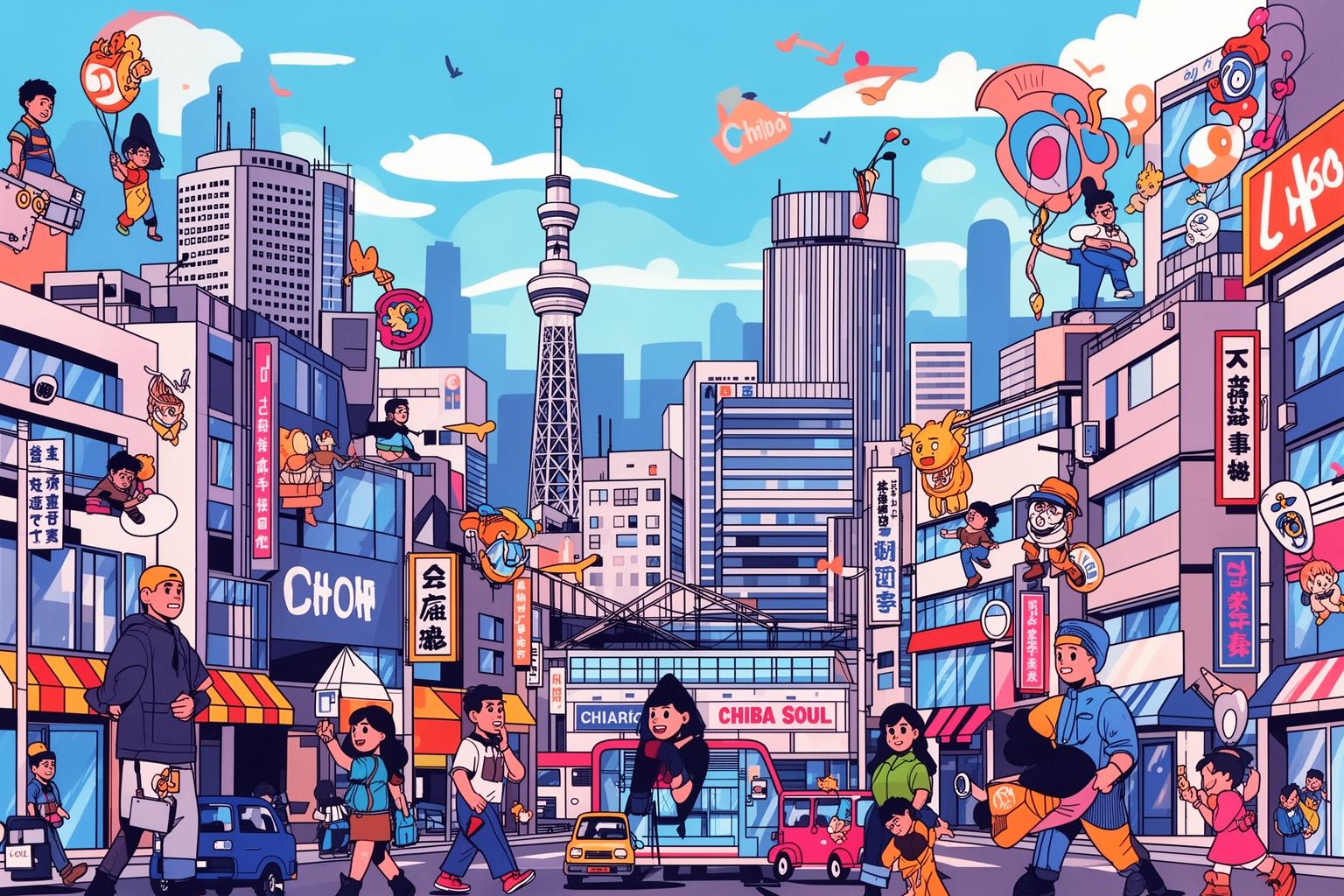
The story of Oregairu is essentially urban, intricately woven into the fabric of a contemporary Japanese city. The daily commute, the after-school detours, the aimless wandering—these instances form the lifeblood of the narrative. Central Chiba serves as the main stage for this everyday drama, a place of constant motion where paths cross and part, often with significant consequences.
Chiba Station: The Crossroads of Youth
In the world of Oregairu, Chiba Station is more than just a transportation hub; it acts as a nexus of fate. It is the bustling heart from which the story’s arteries extend. This is where characters gather before heading out, separate following difficult conversations, and often find themselves alone amidst a crowd, lost in thought. The actual Chiba Station perfectly embodies this atmosphere. It is a sprawling complex of JR lines, private railways, and the iconic monorail, alive with activity from early morning until late at night. For a pilgrim, stepping out of the ticket gates feels momentous.
To fully grasp its significance, spend some time simply watching. Locate the West Exit (Nishi-guchi), frequently featured in the anime’s establishing shots, and observe the ebb and flow of people. You can almost see Yui waiting, phone in hand, or Hachiman scanning the crowd, his gaze detached and analytical. The station’s interior, filled with numerous signs, shops, and escalators, sets the scene for countless small moments. It doesn’t feel like a tourist spot but a genuine, functioning space. This very mundanity gives it its strength. The characters’ lives aren’t epic adventures; they are a sequence of ordinary days punctuated by moments of intense emotional clarity, with Chiba Station symbolizing that daily rhythm. To visit, simply take any major JR line going east from Tokyo, such as the Sobu Line Rapid, and you’ll arrive within an hour. It’s the natural starting point for any pilgrimage.
Riding the Suspended World: The Chiba Urban Monorail
One of the most visually striking features of Chiba’s cityscape in the anime is its unique suspended monorail. Unlike typical monorails that run atop a track, Chiba’s trains hang beneath it, gliding through the city like something from a science fiction movie. This vantage point is pure Hachiman. The show often frames scenes from inside the monorail car, gazing down on the world below. The glass reflects his face, layered over the cityscape, a perfect visual metaphor for his feeling both part of and apart from the world he observes.
For any pilgrim, riding the monorail is essential. It’s not merely about traveling from point A to B; it’s about seeing the world through the characters’ perspective. Board Line 2, which runs from Chiba Station toward the neighborhoods around Sobu High. As the train departs the station and gently sways, you’ll take in familiar views from the anime: the dense clusters of buildings, concrete waterways, endless rooftops. Notice when the track dips and rises, enhancing the sense of movement. Stops like Chiba-Minato and Shiyakusho-mae (City Hall) feature prominently. The ride offers a quiet, contemplative moment. Put on headphones, listen to the anime’s soundtrack, and watch Chiba slip past. It’s a strangely serene and immersive experience, connecting you directly to Hachiman’s solitary commutes and inner reflections. The monorail is easily accessed from JR Chiba Station, with clear signs guiding you to the platforms.
In the Shadow of Sobu High: The School’s Surroundings
Sobu High School is the crucible where all the drama unfolds. It serves as the center of the characters’ universe. Although the school itself is fictional, its design is heavily inspired by a real institution: Chiba Municipal Inage Senior High School. It is crucial for visitors to remember this is a functioning school. Entry to the grounds is not permitted, and respect must be shown toward students and faculty—avoid photographing them or disrupting their daily routine. The pilgrimage here focuses not on the building itself but on the journey to and from it.
The real charm lies in exploring the surrounding streets. This area is a quiet residential neighborhood. Walking from the nearest station provides the most genuine experience. You can trace the paths the characters take on their way to school, spotting small bridges, narrow canals, and unassuming streets rendered with loving detail in the anime. One iconic spot is the bridge over the canal where Hachiman often rides his bike. Standing there, you can sense the quiet solitude of his morning rides. The atmosphere is calm, almost sleepy, contrasting sharply with the emotional upheaval inside the school walls. It’s a place for quiet reflection. Consider the countless journeys the characters made along these very paths, marked by changing seasons as they grew. This part of the pilgrimage is about absorbing the ambiance of their everyday lives—the steady backdrop even as their relationships grew ever more complex.
Waterfront Whispers: Iconic Dates and Contemplative Spaces
If central Chiba represents the daily grind, the city’s waterfront is where emotional barriers break down. The vast sky, open water, and sea breeze seem to draw out the characters’ concealed emotions. These coastal spots host some of Oregairu’s most crucial and emotionally intense scenes, making them hallowed ground for any fan.
Inage Seaside Park: A Place of Unspoken Emotions
Inage Seaside Park (Inage Kaihin Koen) stands as one of the most significant locations in the series. This expansive park with its long sandy beach offers a space for quiet reflection and important emotional turning points. It appears throughout all three seasons, with each visit marking a new phase in the characters’ relationships. It’s the place where Hachiman has a deeply uncomfortable yet revealing conversation with Yukino’s sister, Haruno. It’s also where he endures a taxing “date” with Iroha Isshiki as she prepares for a real one. Additionally, it serves as the backdrop for numerous scenes of characters walking along the shore, lost in thought.
When visiting the park, you’ll be impressed by its size and serenity. It feels far removed from the busy city center. The long, flat beach invites walking, just as the characters did. Find a bench facing the water and sit for a while. The sound of waves and the cries of seagulls are just as portrayed in the show. The park transforms dramatically with the seasons. In summer, it’s lively, reflecting the more energetic scenes, while in the cooler months—often depicted in the anime—it carries a more melancholic, introspective mood that resonates with the series’ tone. Don’t miss the Chiba City Floral Museum (Mihama-en), the stunning glass building within the park that inspired the aquarium seen in the series. Though the park requires a bit of effort to reach, either by bus from Inage-Kaigan Station or a long but pleasant walk, it deserves a few hours of your time. It’s a place that rewards patience, offering a quiet space to breathe and ponder the story’s deeper themes.
Chiba Port Tower: A View from Above
Rising over Tokyo Bay, the Chiba Port Tower is a slim, graceful mirrored glass structure that provides panoramic views of the industrial port, the city, and, on clear days, even Mount Fuji. In Season 3, this tower becomes the site of a highly anticipated and pivotal scene: Hachiman and Yukino’s final, defining “date” as they resolve their club’s last request. The entire scene is a masterclass in tension and subtle emotional nuance, with the setting playing a key role.
Plan your visit in the late afternoon to catch the sunset, mirroring the anime’s timing. Take the elevator up to the main observation deck where the view is stunning—a vast panorama of urban and natural landscapes. Below, the port hums with activity, and the bay stretches endlessly. Find the spot where Hachiman and Yukino stood, gazing out as they searched for the right words. The tower has a designated “Lover’s Sanctuary” spot, which adds a touch of irony given their awkward yet deeply intimate conversation. The calm, quiet atmosphere inside the deck provides a perfect setting to replay the scene in your mind. The contrast between the romantic cliché of the location and the raw, uncomfortable honesty of their interaction is what makes the moment so impactful. Visiting the tower lets you experience that contrast firsthand. There’s a small entrance fee, but the experience is well worth it. It’s a place that feels both grand and deeply personal, much like the relationship it helped to define.
The Gleam of Modernity: Navigating Social Spaces in Makuhari

While central Chiba symbolizes the characters’ everyday lives and the waterfront reflects their inner struggles, the Makuhari district represents the broader social realm they often must navigate. This newer, hyper-modern section of Chiba, with its shining towers, expansive convention centers, and vast shopping malls, serves as the setting for group dates, school events, and the performative social interactions that Hachiman dislikes.
Kaihin-Makuhari Station: Entry Point to Group Dynamics
Similar to Chiba Station, Kaihin-Makuhari Station is an important meeting spot, but it fulfills a different role. It acts as the gateway to Makuhari’s polished, commercial world. The station itself is sleek and modern, and its nearby plaza, featuring a distinctive clock tower, is instantly recognizable from the anime. This is where the characters gather before heading to the mall, a concert, or a movie. It marks a starting point, the beginning of the social challenges Hachiman must face.
When you arrive, take a moment to stand in the plaza and observe your surroundings. You’ll notice the wide-open space, the futuristic design of the station roof, and the towering office buildings and hotels encircling it. The atmosphere here differs from central Chiba—it’s less about daily commuting and more about leisure and commerce. It feels more impersonal, which perfectly fits how these locations are portrayed in the story. They function as neutral zones where the complexities of group dynamics unfold. It’s an ideal place to begin exploring Makuhari, setting the tone for the consumer-driven environments just beyond.
Consumerism and Confessions: The Malls of Makuhari
Oregairu spends a considerable amount of time in the vast shopping malls around Makuhari. These serve as the settings for the notorious double date in Season 2 and various other group outings. The primary inspiration for these locations is the enormous AEON Mall Makuhari New City, one of Japan’s largest shopping complexes. It’s practically a city within a city, with hundreds of shops, restaurants, a cinema, and even a small theme park.
Walking through AEON Mall feels slightly surreal for a fan. The immense scale can be overwhelming. You can wander its wide, spotless corridors and recognize familiar backdrops: the food court where they ate, the storefronts they passed, and the cinema where they watched a movie. These malls in Oregairu become battlegrounds of social anxiety. They are loud, bright, and crowded—all the things that make Hachiman uneasy. For him, they are places where one must perform a certain version of themselves. Visiting the mall, you can sense that sensory overload. Yet, they are also places of unexpected vulnerability, like the quiet conversation between Hachiman and Hayama in the movie theater. Spend an afternoon here. Catch a movie, enjoy a meal in the food court. Immersing yourself in this environment deepens your appreciation for the social pressures the characters confront every time they step into these gleaming temples of commerce.
Makuhari Messe: The Venue for Major Events
Makuhari Messe is a vast international convention center, consisting of enormous halls that host everything from auto shows and tech expos to stadium-level concerts. In the world of Oregairu, it serves as the setting for large-scale school and community events, such as the Christmas celebration the Service Club helps organize. It’s a place that dwarfs the individual—a stage for grand, coordinated efforts.
Unless attending a specific event, access to the exhibition halls isn’t possible. However, you can walk around the exterior of the complex to appreciate its immense scale. The long, covered walkways and futuristic architecture frequently appear in the anime. When no major event is taking place, the area feels vast and somewhat empty, offering an intriguing experience in itself. This contrast highlights the difference between quiet planning stages and the chaotic energy of the event itself. It serves as a reminder that much of the drama in Oregairu occurs behind the scenes, in the preparation and negotiations, long before the curtain rises.
The Flavor of Everyday Life: Cafes, Restaurants, and MAX Coffee
Beyond the major landmarks, the heart of Oregairu lies in the smaller, everyday places where the characters converse, plan, and simply exist. These spots form the connective tissue of the story, and visiting their real-life counterparts offers a uniquely intimate link to the series.
The Saizeriya Summit: Where Strategies Are Forged
Many of the Service Club’s most intense strategy sessions and post-discussions don’t take place in the clubroom; rather, they happen over inexpensive drinks and pasta at a family restaurant, or “famiresu.” The eatery depicted in the anime closely resembles Saizeriya, a popular and extremely affordable Italian-style chain found throughout Japan. These establishments are staples for Japanese students, providing a place to sit for hours with a drink bar and a few small dishes—ideal for studying, chatting, or, in the Service Club’s case, analyzing social issues.
To complete your pilgrimage, a visit to Saizeriya is essential. Several are located around Chiba Station and Makuhari. Step inside, and you’ll be welcomed by the familiar atmosphere: the slightly outdated decor, the murmur of conversation, and the sound of the button pressed to summon a server. Order a plate of Milan-style doria or simple peperoncino pasta, and grab a glass from the all-you-can-drink bar. As you sit there, it’s easy to picture the club members gathered around a table, Yukino sipping tea, Yui picking at her food, and Hachiman explaining one of his self-destructive, socially awkward plans. It’s one of the simplest and most satisfying ways to feel fully immersed in the show’s world—a taste of their real, everyday student life.
A Moment of Calm: The Coffee Shop
In contrast to the lively famiresu, Yukino often retreats to quiet, more upscale coffee shops where she can read in peace. While the anime’s coffee shop is a generic blend, Chiba offers many spots capturing its spirit. Seek out a local, independent café, perhaps near the university or in a quieter district. Such places, with warm lighting, comfortable seating, and the soft clink of ceramic cups on saucers, offer a pleasant escape from the city’s rush.
Finding your own “Yukino café” can be a delightful side quest on your pilgrimage. It’s an opportunity to slow down and see the city from another angle. Order a proper cup of tea or coffee, bring a book (perhaps a classic by Soseki Natsume, an author Yukino might admire), and simply savor the moment. This experience isn’t about locating an exact anime setting but about evoking a feeling—the serene solitude Yukino so often seeks.
The Flavor of Cynicism: The Quest for MAX Coffee
No Oregairu pilgrimage is complete without honoring Hachiman’s signature drink: MAX Coffee. This isn’t merely a prop—it’s a character detail rich with meaning. MAX Coffee is a notoriously, almost comically, sweet canned coffee beverage made with condensed milk. It’s mainly sold in the Chiba and Ibaraki prefectures, making it a true local specialty. For Hachiman, the drink symbolizes his outlook. He prefers its predictable, artificial sweetness over the bitter complexity of real coffee, much like his cynical worldview favors simplicity over the messy unpredictability of real relationships.
Luckily, you won’t need to search long for it. MAX Coffee is everywhere in Chiba, found in countless vending machines (jihanki) on street corners, train stations, and convenience stores. The bright yellow can is unmistakable. Buying a can from a vending machine, just as Hachiman does repeatedly, is a simple yet deeply satisfying ritual. How does it taste? Incredibly sweet. It’s a shock to the palate, and you’ll either love it or hate it. But as you take a sip, you might understand Hachiman a little more. It’s a flavor of his deliberate, self-imposed isolation, a small, sweet comfort in a bitter world.
A Pilgrim’s Path: Crafting Your Oregairu Journey
With numerous locations spread throughout the city, planning your pilgrimage might feel overwhelming. The key is to group sites by area and allow yourself sufficient time to fully absorb the atmosphere at each one. Here are some suggestions for organizing your visit.
A One-Day Chiba Intensive
If you have just one day, concentrate on central Chiba and the waterfront regions, where the greatest number of emotionally significant spots can be found.
- Morning: Begin at JR Chiba Station. Spend some time exploring the station and its nearby surroundings. Then, take the Chiba Urban Monorail for a scenic ride. Get off near the school district and take a respectful walk through the neighborhood, observing the canal and the bridge.
- Afternoon: Return to the station and catch a train or bus to the waterfront. Your destination is Inage Seaside Park. Spend a few hours walking along the beach, visiting the floral museum (the “aquarium”), and finding a bench to rest on. Use this time for quiet reflection.
- Evening: Head to Chiba Port Tower. Arrive before sunset to watch the changing light over the bay. Take in the view from the observation deck as the city lights start to sparkle, providing a perfect, emotionally moving conclusion to your day.
A Two-Day Deep Dive
With two days, you can explore more leisurely and include the Makuhari area.
- Day One: Follow the one-day intensive plan for central Chiba and the waterfront, but instead of rushing, linger longer at each spot. Consider stopping at a local café for an afternoon break. In the evening, enjoy dinner at a Saizeriya near Chiba Station to round out the experience.
- Day Two: Spend this day in Makuhari. Take the JR Keiyo Line to Kaihin-Makuhari Station. Begin by exploring the station plaza. Then, visit the AEON Mall Makuhari New City. Plan to spend a good portion of your day here—have lunch, browse shops, and maybe watch a film to mirror the characters’ experience. Later in the afternoon, walk to the Makuhari Messe area to see the exterior of the convention center. This itinerary will give you a clear impression of the contrasting areas of Chiba that the characters inhabit.
Essential Pilgrim’s Etiquette
A seichi junrei is a wonderful way to connect with a beloved series, but it also carries the responsibility to be a good representative of the fan community. Remember, these are not theme parks; they are real places where people live and work.
- Be Respectful: This is especially important around the school. Avoid trespassing, blocking traffic, or photographing students and residents. Maintain a quiet and discreet presence.
- Support Local Businesses: When you stop for a drink or a meal, you’re not just re-creating scenes; you’re also supporting the local economy of the city that inspired the series.
- Leave No Trace: Be conscious of your environment and dispose of trash properly. Leave these beautiful locations just as you found them.
Beyond the Prefecture: Brief Encounters in Tokyo and Kyoto
While Chiba serves as the core setting of Oregairu, the narrative occasionally steps beyond its boundaries for key moments. For devoted fans, these sites provide an added layer of meaning.
Destinyland and the Ferris Wheel
The emotional peak of Season 1, where Hachiman makes a heartfelt confession to Yukino and Yui, occurs on a Ferris wheel at a theme park called “Destinyland.” Though the name parodies Tokyo Disneyland, the actual location is inspired by Kasai Rinkai Park in Tokyo, conveniently reachable via the JR Keiyo Line. The park’s iconic Diamond and Flower Ferris Wheel is an exact replica of the one seen in the anime. Riding this Ferris wheel, with its breathtaking views of Tokyo Bay, creates a deeply moving experience. As the cabin ascends, you can almost imagine the quiet, emotional dialogue from that scene unfolding.
Echoes of the Past: The Kyoto School Trip
Season 2 includes a multi-episode arc focusing on the cast’s school trip to Kyoto. This arc represents a significant turning point in the group’s relationships and is set against some of Japan’s most stunning and historic backdrops. Important locations featured include Arashiyama Bamboo Grove—where Hachiman has a crucial discussion with Hayama’s group—Kiyomizu-dera Temple, and the streets of Gion. Exploring these places adds depth to the story by contrasting Kyoto’s timeless, traditional beauty with the characters’ contemporary, internal struggles. While a trip to Kyoto is a major endeavor, fans who visit can find it rewarding to retrace the footsteps of the Sobu High students.
Chiba’s Enduring Character: Why This City Was the Perfect Setting

After walking its streets, riding its monorail, and standing on its shores, one question lingers: why Chiba? The creators of Oregairu could have placed their story anywhere. They might have chosen the iconic, densely packed landscape of central Tokyo or a quiet, sleepy rural town. But they chose Chiba, and in doing so, they gave the story a strong, grounding sense of place that is inseparable from its themes.
Chiba exists in a state of “in-between.” It’s a major city, yet it lives in the shadow of its colossal neighbor, Tokyo. It features gleaming modern districts like Makuhari, but also quiet, aging residential neighborhoods. It is a hub of industry and commerce, yet it also offers serene parks and a long, beautiful coastline. This multifaceted identity perfectly reflects the internal struggles of its characters. Hachiman, Yukino, and Yui are all trying to find their place. They are neither the absolute center of the social universe nor complete outcasts. They exist in the complex, gray areas in between, navigating a world that offers no easy answers or clear-cut labels.
Chiba is not a postcard. It’s a real city, with a tangible texture and quiet dignity. Its landscape is one of concrete and glass, vending machines and family restaurants, train schedules and coastal breezes. This authenticity allows the series’ sharp psychological realism to resonate so deeply. The characters’ problems feel real because the world they inhabit feels real. Their search for something “genuine” is not a flight of fancy; it’s a journey taken on the very real streets of Chiba. And for those who follow in their footsteps, that journey becomes our own—a pilgrimage not just into an anime’s world, but into a deeper understanding of its beautifully, painfully honest heart.