To watch Violet Evergarden is to be submerged in a world of profound emotion, painted with a beauty so poignant it almost hurts. The series, a masterpiece of animation by Kyoto Animation, follows the journey of a former child soldier, Violet, as she learns to understand the complexities of the human heart by working as an “Auto Memory Doll”—a ghostwriter for those who cannot express their own feelings. But just as central as Violet’s emotional odyssey is the world she inhabits. The continent of Telesis, and particularly the city of Leiden, feels like a character in its own right—a post-war landscape of cobblestone streets, grand architecture, and breathtaking natural vistas that breathe with a sense of history, sorrow, and burgeoning hope. It feels European, historic, and achingly familiar, yet it exists only in the realm of animation. Or does it? The truth is, the world of Violet Evergarden is a carefully crafted mosaic, its pieces drawn from real-world locations that you can actually walk through, breathe in, and experience. This is not just a guide to anime filming locations; it is an invitation to step through the screen and into the very soul of Violet’s world, a pilgrimage to the heartlands of Germany and beyond that served as the primary canvas for this unforgettable story. We will wander through towns that cling to riverbanks, stand before fountains that mirror Leiden’s grand plaza, and feel the same wind that might have carried the letters Violet so painstakingly wrote. Prepare to embark on a journey where fiction and reality blur, where the powerful emotions of the series are etched into the very stones of ancient towns, waiting for you to discover them.
If you’re inspired to explore more anime worlds brought to life, consider embarking on a real-life pilgrimage to Tomogashima Island, the inspiration behind Summer Time Rendering.
The Heart of Leiden: Echoes of Germany’s Romantic Road
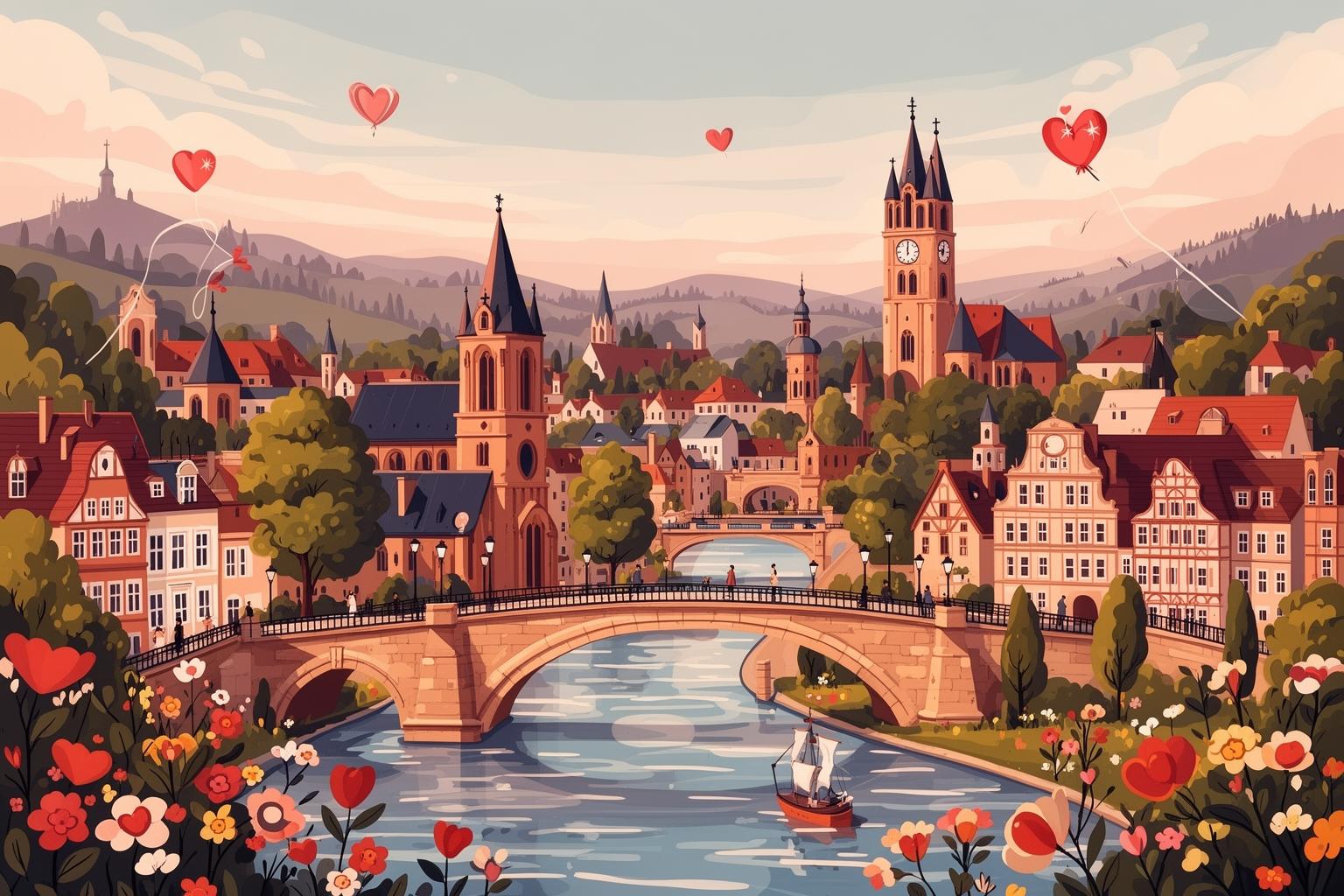
The fictional city of Leiden—with its lively port, central clock tower, and quaint architecture—is not a single place but a skillful blend of many. Yet, its essence is most deeply experienced along the winding rivers and historic towns of Germany. Here, the core aesthetic of Violet Evergarden took shape in settings where time appears to slow, allowing history and beauty to infuse the streets themselves. The animators at Kyoto Animation famously journeyed to Germany for inspiration, and their painstaking research shines through in every frame. Walking these paths is to follow in their footsteps and see the world through their eyes—and through Violet’s.
Cochem: The Riverside Town of Dreams
Set in the scenic Moselle Valley, Cochem in western Germany stands as one of the key real-world inspirations for Leiden. Whether arriving by train along the river or driving through winding vineyard roads, the feeling is immediate and overwhelming: you’ve stepped straight into the anime. The town stretches along the Moselle River’s gentle curve, its waterfront promenade lined with colorful buildings, cafes, and the soft murmur of riverboats. This setting captures the spirit of Leiden’s port—a place of arrivals, departures, beginnings, and endings. The air itself is distinct, a mix of fresh river breeze, the sweet aroma of Riesling grapes from nearby hills, and the subtle, grounding scent of ancient stone buildings. It’s a sensory journey that transports you instantly.
Reichsburg Cochem: The Post Company Headquarters?
Towering above the town is Reichsburg Cochem, a stunning castle seemingly lifted from a fairytale. Its stone ramparts, conical turrets, and commanding silhouette evoke the CH Postal Company headquarters where Violet works. Although the anime places the building more centrally in the city, the architectural style and sense of prominence are unmistakably alike. Seeing this castle connects you to the company that gave Violet her purpose. Inside, guided tours wind through knight’s halls and elaborately decorated chambers, but the true magic lies in the view from outside. Stand on the bridge across the river and look up at the castle bathed in golden late-afternoon light—it’s easy to imagine Violet, crisp in her blue uniform and determined expression, ascending the hill to start her day. From the castle itself, the panoramic view of the town and winding river below recalls the sweeping establishing shots defining Leiden in the series. It’s a perspective that conveys scale and a world brimming with countless untold stories.
The Moselle River Promenade: Strolls of Contemplation
Cochem’s riverside invites calm reflection, echoing many scenes in Violet Evergarden where characters walk by the water, lost in thought or deep in heartfelt conversation. The stone embankment, the gentle ripple of the water, the elegant arches of the bridges—all contribute to a peaceful, introspective mood. Find a bench along the promenade and simply watch life unfold: tour boats gliding past, distant church bells ringing, light and shadow playing across the half-timbered houses opposite the river. This serene rhythm forms the backdrop to Leiden’s narrative, a place where profound emotions and healing quietly unfold. It feels like somewhere one could truly grasp the meaning of words, just as Violet did. The bridges here, especially the Skagerrak-Brücke, offer stunning photo opportunities and recall the iconic bridge Violet often crosses, parasol in hand.
Practical Pilgrim’s Guide to Cochem
Reaching Cochem is fairly easy. It lies on a major train route connecting to cities like Koblenz and Trier, with simple transfers from international hubs such as Cologne or Frankfurt. The journey itself—following the river—is part of the charm. The best times to visit are the shoulder seasons of spring and autumn: spring brings lush greenery, while autumn offers vibrant harvest colors and a festive mood. Summer is lovely but busy, so expect crowds. For solo travelers, Cochem feels safe and welcoming. The compact town is easy to explore on foot, though the path to the castle is steep. Comfortable shoes are a must, as charming cobblestones can be unforgiving. Food and drink here celebrate the Moselle wine region; be sure to try the local Riesling—crisp, aromatic, and world-renowned—and pair it with regional dishes like Zwiebelkuchen (onion cake) for a genuinely authentic tasting experience.
Rüdesheim am Rhein: A Tapestry of Vineyards and Memories
Further south along the equally majestic Rhine River lies Rüdesheim am Rhein. While Cochem embodies Leiden’s grand scale and riverside charm, Rüdesheim offers a glimpse into its more intimate, bustling street life. This vibrant town is famed for its wine culture and historic lanes, representing the lively, commercial heart of Leiden—where merchants call out, music spills from taverns, and the energy of everyday life is palpable.
The Drosselgasse Lane: A Whisper of Leiden’s Streets
Rüdesheim’s most famous street, the Drosselgasse, is a must-see for any Violet Evergarden fan. This narrow, 144-meter cobblestone lane is packed with wine taverns, souvenir shops, and restaurants. The air hums with live music, cheerful chatter, and the clink of glasses. It’s this dense, vibrant atmosphere that evokes the marketplaces and side streets Violet frequents during her assignments. Walking amidst the crowds beneath hanging decorative signs, you can almost picture her navigating the throng, her silver prosthetic hand catching the light on her way to meet a client. The timber-framed, charmingly crooked facades add to the sense of stepping back in time—to a world both historic and alive.
Cable Car Views and Niederwald Monument: A Grand Perspective
For a broader view, take the Seilbahn (cable car) from the town center over the vineyards to the Niederwald Monument. The ride itself is peaceful, gliding silently above endless grapevines with the Rhine River stretching below. This uplifting journey delivers the kind of dramatic, sweeping landscapes iconic to the anime. These grand vistas invite reflection on the vastness of the world and each individual’s place within it—an important theme throughout the series. At the summit near the imposing Germania monument, the panoramic Rhine Valley view is simply breathtaking. From here, you see the river’s bend, the town nestled below, and rolling hills spreading to the horizon—a vista that inspires awe and perspective, echoing the growth Violet experiences as she journeys and connects with people.
Navigating Rüdesheim with Grace
Rüdesheim is a popular stop for Rhine river cruises and can be quite crowded, especially in summer. To enjoy its charm more peacefully, visit on a weekday or early in the morning before day-trippers arrive. The Drosselgasse is best savored slowly. Beyond this famous lane, quieter streets and a lovely riverfront provide perfect spots for leisurely walks. For travelers who appreciate style, this is a place to choose classic, comfortable attire: breathable linens, a sun hat, and sturdy yet stylish walking sandals. It’s an environment for seeing and being seen, but comfort remains essential for exploring hills and crowds. Naturally, no visit is complete without savoring local wine—the many vintners offering tastings in enchanting courtyards provide an ideal refreshing pause during your adventures.
The Soul of the Scenery: Other German Jewels in Violet’s World
While Cochem and Rüdesheim establish the foundational atmosphere of Leiden, the animators drew from a broader array of German cities and landmarks to shape their world. These places contribute distinctive architectural features and moods, enriching the fictional continent of Telesis with layers of detail and realism. Visiting them feels like gathering precious fragments of Violet’s journey.
Mannheim’s Majestic Water Tower: A Symbol of Grandeur
In several key scenes of Violet Evergarden, especially in the movie, a grand plaza featuring an ornate central fountain serves as a focal point for the city of Leiden. This magnificent public space is widely believed to be directly inspired by Friedrichsplatz in Mannheim, home to the city’s iconic Wasserturm, or water tower. Standing in this square, the similarity is unmistakable and striking. The Mannheim Water Tower, a breathtaking blend of Art Nouveau and Neo-Baroque architecture, stands proudly at the forefront of an expansive park dotted with fountains, manicured gardens, and elegant statues. The entire complex radiates civic pride, elegance, and artistry. It embodies the image of a prosperous, cultured city rebuilding itself with beauty and hope after a time of conflict—a central theme in the anime.
The Friedrichsplatz and its Art Nouveau Charm
Take time to stroll around the plaza and appreciate the intricate details of the water tower, the graceful curves of the fountains, and the symmetry of the formal gardens. The atmosphere here exudes peaceful grandeur. It is a place where citizens come to relax, meet friends, and enjoy moments of beauty amid their daily routines. It’s easy to envision the scene from the movie where Dietfried and Violet converse near a similar fountain, the cascading water providing a gentle soundtrack to their poignant dialogue. The Art Nouveau style, with its flowing lines and organic motifs, perfectly enhances the series’ elegant aesthetic. For photographers, Friedrichsplatz is a dream. The way light plays on the water and sandstone, especially during golden hour, creates a magical, almost ethereal effect. It feels like a space crafted for important moments, a stage for life’s grand dramas.
A Moment of Urban Elegance
Mannheim is a larger, more modern city compared to Cochem or Rüdesheim, offering a different experience. It’s easily reachable via high-speed train from all major German cities. Friedrichsplatz is just a short walk from the main train station. A visit here doesn’t require a full day; a few hours suffice to soak in the ambiance and capture its beauty. It serves as a perfect stop on a broader pilgrimage itinerary. This location reflects the more metropolitan side of Leiden—a city that is not only quaint but also a vital cultural and economic hub. It adds a layer of sophistication to our understanding of Violet’s world.
The Hohenzollern Bridge in Cologne: A Bridge of Locked-In Emotions
Bridges serve as a recurring visual motif in Violet Evergarden, symbolizing connection, transition, and the distances letters must travel. The grand, steel-arched railway bridge prominently featured in Leiden strongly resembles the Hohenzollern Bridge in Cologne. Spanning the Rhine River adjacent to the magnificent Cologne Cathedral, this bridge is an impressive feat of engineering and a potent symbol of the city. Walking along its pedestrian path—with trains thundering by on one side and the flowing river below—you sense the industrial strength and resilience of a city that has weathered much. It perfectly captures the post-war industrial boom portrayed in the anime.
Love Locks and Steel Arches
A visit to the Hohenzollern Bridge holds special poignancy for fans of the series due to its modern tradition of “love locks.” The fences beside the pedestrian walkway are covered with hundreds of thousands of padlocks, left by couples as symbols of their enduring love. They inscribe their names or initials on a lock, attach it to the fence, and throw the key into the Rhine below. This sea of colorful locks, each representing a unique story and powerful emotion, is an incredibly moving sight. It resonates deeply with the very heart of Violet’s work. Each letter she writes is, in essence, a lock of emotion—a feeling captured, sealed, and sent across a distance, hoping it will endure. Standing on this bridge, surrounded by these tangible symbols of human connection, you can’t help but think of all the “I love yous” Violet helped to express. It’s a profound and beautiful convergence of fiction and real-world sentiment.
Experiencing the Bridge and Cathedral
Cologne is a major transportation hub, making it an easy and essential stop. The bridge sits right behind the main train station (Köln Hauptbahnhof) and beside the Cologne Cathedral, a UNESCO World Heritage site. The best way to experience it is by walking across to the opposite bank (the Deutz side) for the iconic view of the bridge with the cathedral spires rising dramatically behind it. The view is especially breathtaking at sunset or at night when both structures are illuminated. From a safety standpoint, the area is busy and generally secure, but as with any major urban landmark, it’s wise to be mindful of your surroundings and belongings.
Beyond Germany: Whispers of Other Lands
While Germany serves as the primary architectural and atmospheric reference for Violet Evergarden, the series’ world is expansive, and its creators subtly incorporated influences from various European landscapes to portray different regions and moods. These settings enrich the narrative’s emotional depth, ranging from serene tranquility to the brutal realities of war.
The English Countryside: Gilbert’s Secluded Sanctuary
Major Gilbert Bougainvillea, who is central to Violet’s past and her journey for understanding, is frequently linked with idyllic, rural surroundings. His family estate and the secluded cottage where he is eventually found are nestled amid lush, green scenery that distinctly contrasts with the German river valleys. These scenes evoke the timeless charm of the English countryside, particularly areas like the Cotswolds or Somerset. Though no specific location has been officially confirmed, the aesthetic is unmistakable. Picture ancient stone cottages covered in climbing roses, gentle rolling hills dotted with sheep, and narrow country lanes shaded by venerable trees. This is Gilbert’s refuge: a place of calm, healing, and profound melancholy.
Mells, Somerset and the Cotswolds’ Appeal
To capture this ambiance, visiting a village like Mells in Somerset or any classic Cotswold village such as Bibury or Castle Combe would be an apt pilgrimage. These places are renowned for their honey-colored stone buildings and a deep sense of tranquility. Strolling through these villages feels like stepping into a fairytale. The atmosphere is one of peaceful isolation, far removed from the bustle of cities and the trauma of war. It’s the perfect setting to understand Gilbert’s yearning for a quiet life and to appreciate the deep peace Violet ultimately seeks. This landscape symbolizes the promise of an “after,” a future where wounds can heal and new beginnings are possible.
Finding Peace in the English Landscape
Exploring the English countryside is best done by car, as it provides the freedom to discover hidden lanes and tiny villages. The experience is less about checking off landmarks and more about immersing yourself in the atmosphere. Take long walks along public footpaths, stop for a pint and a meal at centuries-old pubs, and simply listen to the sounds of nature. It’s a journey of quiet reflection, connecting you with the series’ more pastoral and deeply personal themes—memory, loss, and the enduring hope for a peaceful reunion.
The Swiss Alps: A Glimpse of the Harsh Frontlines
In striking contrast to the peaceful countryside, Violet Evergarden also portrays the brutal realities of the war that shaped its characters. The fierce battles fought in mountainous terrain, with soldiers navigating perilous peaks and railways clinging to cliff faces, visually evoke the dramatic landscapes of the Swiss Alps. The vast scale and ruthless nature of these mountains provide a powerful backdrop for the horrors of war. Towering, snow-capped peaks and deep, shadowed valleys convey a sense of overwhelming power and danger, reflecting the emotional and physical struggles faced by the soldiers.
The Majestic Landscapes of the Eiger and Jungfrau Region
Swiss regions such as the area around Interlaken, Grindelwald, and the iconic peaks of the Eiger, Mönch, and Jungfrau offer scenery that closely mirrors these intense scenes. Jagged peaks, extensive glaciers, and dramatic, cloud-filled skies are both awe-inspiring and humbling. Riding a cogwheel train, like the one ascending to Jungfraujoch—the “Top of Europe”—is an experience that resonates with the series. As the train climbs higher, passing through tunnels carved into the mountains, one appreciates the remarkable engineering feats required to conquer such terrain—and, by extension, the immense challenges of waging war there. The summit view reveals a panorama of raw, untamed nature, a beauty that is simultaneously magnificent and terrifying—a fitting metaphor for the sublime and harrowing experiences Violet endured during the war.
A Reflective Journey
A visit to the Swiss Alps offers an opportunity to reflect on trauma and memory. The stark beauty of the mountains silently testifies to the forces of nature, much as Violet’s quiet demeanor stands as a testament to the powerful forces that shaped her. It is a place to contemplate the contrast between the enduring beauty of the natural world and the fleeting, often destructive nature of human conflict. This part of the pilgrimage is less about charming streets and more about connecting with the raw, elemental power that underpins the entire story.
Dressing the Part: A Fashionable Pilgrim’s Guide
As a writer who views style as a form of storytelling, I believe that what you wear during your travels can profoundly enrich the experience. A pilgrimage to the world of Violet Evergarden offers the perfect opportunity to adopt an aesthetic that is both practical for exploration and evocative of the series’ elegant, turn-of-the-century charm. This isn’t about cosplay; it’s about capturing the essence, the atmosphere, and the grace of the world you are entering.
Embracing Violet’s Elegance: A Practical Style Guide
The fashion in Violet Evergarden beautifully blends Victorian and Edwardian influences, emphasizing structured silhouettes, quality fabrics, and thoughtful details. The aim is to evoke this elegance while ensuring comfort for long days spent walking on cobblestones and exploring castles.
The Auto Memory Doll Aesthetic
Think in terms of layers and timeless pieces. A midi or maxi skirt in a flowing fabric like cotton or viscose offers both elegance and ease of movement. Pair it with a simple, well-tailored blouse—perhaps featuring details like a modest high neck, delicate pin-tucks, or bishop sleeves. For outerwear, a classic trench coat or a tailored wool coat is ideal for the often unpredictable European weather. It adds sophistication and practicality alike. The series’ color palette is rich yet subdued, so consider hues like navy blue, deep greens, burgundy, and cream. When it comes to footwear, comfort is essential. Sturdy yet stylish leather boots with a low heel or classic brogues will serve you well on city streets and country paths alike. They reflect the practical, sensible footwear of the era while suiting the modern traveler perfectly.
Accessorizing Your Journey
Accessories allow for creative expression within the theme. A structured leather satchel or crossbody bag is practical for carrying your essentials—a journal, pen, camera, map—and also perfectly captures the look of a traveling Auto Memory Doll on assignment. On cooler days, a pair of leather or suede gloves adds an immediate touch of old-world elegance. Finally, consider a small, personal detail: a simple brooch pinned to your coat, perhaps with a botanical motif or vintage style, can serve as a personal tribute to the emerald brooch that holds such significance for Violet. It’s a subtle accent that connects your own journey to hers.
The Traveler’s Toolkit: Practical Advice for Your Pilgrimage
A journey of this kind, covering several locations, calls for some planning to make sure it runs as smoothly and enjoyably as possible. Germany and its neighboring countries are incredibly travel-friendly, but a few helpful tips can boost your confidence and ease, letting you fully embrace the magic of the experience.
Navigating Germany with Ease
Germany’s public transportation system is a traveler’s dream—efficient, punctual, and widespread. It offers the best way to travel between cities and towns on your pilgrimage route.
The Deutsche Bahn and Regional Passes
Deutsche Bahn (DB), the national railway company, links almost every corner of the country. For long-distance trips between hubs like Cologne and Mannheim, booking high-speed ICE train tickets online in advance can save you a good deal of money. When exploring regions more thoroughly, such as the Rhine and Moselle valleys, consider regional travel passes. For example, the “Rheinland-Pfalz-Ticket” grants unlimited travel on regional trains and buses for a day within the state, covering places like Cochem and Rüdesheim. These passes are highly cost-effective, especially for small groups.
Language and Etiquette
Although German is the official language, English is widely spoken in tourist areas, hotels, and restaurants. Still, learning a few basic German phrases is appreciated by locals and enhances your interactions. Simple greetings like “Guten Tag” (Good Day), “Danke” (Thank you), and “Entschuldigung” (Excuse me) go a long way. German culture places great value on punctuality and efficiency, so be punctual for reservations or tours. When dining, it is customary to round up the bill as a small tip, although service charges are typically included.
Safety and Solo Travel: A Woman’s Perspective
As a solo female traveler, safety is always a priority. I’m pleased to say that Germany is an exceptionally safe and comfortable destination for women traveling alone. Towns are well-kept, public spaces feel secure, and the overall atmosphere promotes order and respect. Nonetheless, smart travel habits remain advisable.
Staying Aware in Picturesque Towns
The charming towns on this itinerary attract many visitors, which can bring pickpockets. In busy spots like the Drosselgasse in Rüdesheim or crowded train stations, keep your bag zipped and close. Stay aware of your surroundings without letting it diminish your enjoyment. Although the risk is low, vigilance is important. At night, town centers are generally well-lit and safe to stroll through; still, it’s wise to stick to main streets and follow your intuition.
The Comforts of German Hospitality
One of the pleasures of traveling in Germany is the high quality of accommodations. From family-run guesthouses (Gasthäuser) to modern hotels, you can expect cleanliness, comfort, and security. I often find that smaller, locally-owned places offer a warmer, more personal touch. The hosts are frequently excellent sources of local knowledge and advice. The reliability of infrastructure—from transport to lodging—eliminates much of the stress solo travel can bring, allowing you to fully immerse yourself in your pilgrimage and the deeply emotional world of Violet Evergarden.
This journey is far more than a simple sightseeing trip. It is a quest to connect with the heart of a story that has touched many. To stand on a bridge in Cologne, to look up at a castle in Cochem, or to wander through a square in Mannheim is to feel the echoes of Violet’s own path of discovery. You are walking through the very landscapes that inspired the artists to create a world so rich in feeling—a world that teaches us about the profound, healing power of words and the universal human quest for the meaning of love. As you travel, you might feel inspired to pick up pen and paper—perhaps to write a letter to someone special or to record your own thoughts in a journal. Ultimately, this pilgrimage is an invitation to become your own Auto Memory Doll: to observe the world with open eyes, listen with an open heart, and find the words to tell the beautiful, complex story that is uniquely yours.