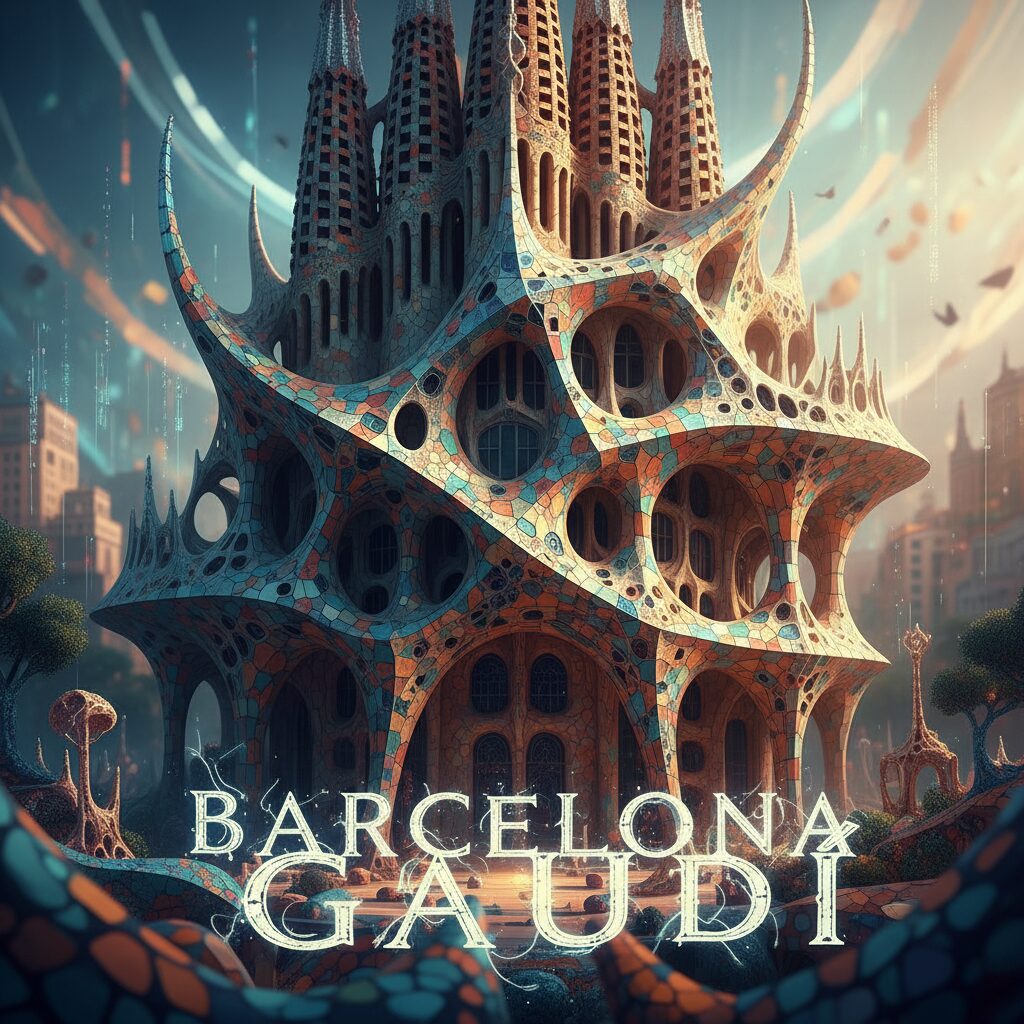
Step off the plane into Barcelona and you feel it instantly. It’s a city that hums with a vibrant, creative pulse, where the Mediterranean sun doesn’t just illuminate, it transforms. It paints the Gothic Quarter in shades of honey and gold, it glints off the sea with a million tiny diamonds, and it breathes life into the city’s most fantastic, most beloved, and most audacious architectural treasures. This is the world that Antoni Gaudí built. To walk through Barcelona is to walk through the mind of a genius, a man who saw not just buildings, but living, breathing organisms. He didn’t construct with straight lines and rigid angles; he sculpted with the curves of nature, the colors of a sunrise, and the devotion of a true believer. This isn’t just a tour of famous buildings; it’s a pilgrimage to the sacred sites of Catalan Modernisme, a journey into a fantasia of stone, tile, and light that will reshape how you see the world. It’s a chance to follow the footsteps of a master who dared to dream in three dimensions, leaving behind a legacy that continues to grow, quite literally, toward the heavens. Before we begin our journey into this wonderland, let’s get our bearings and see where these masterpieces are scattered across the beautiful city canvas.
While Gaudí’s organic forms define Barcelona, other artists like Kazimir Malevich pursued revolutionary abstraction in their work.
La Sagrada Família: The Unfinished Symphony in Stone
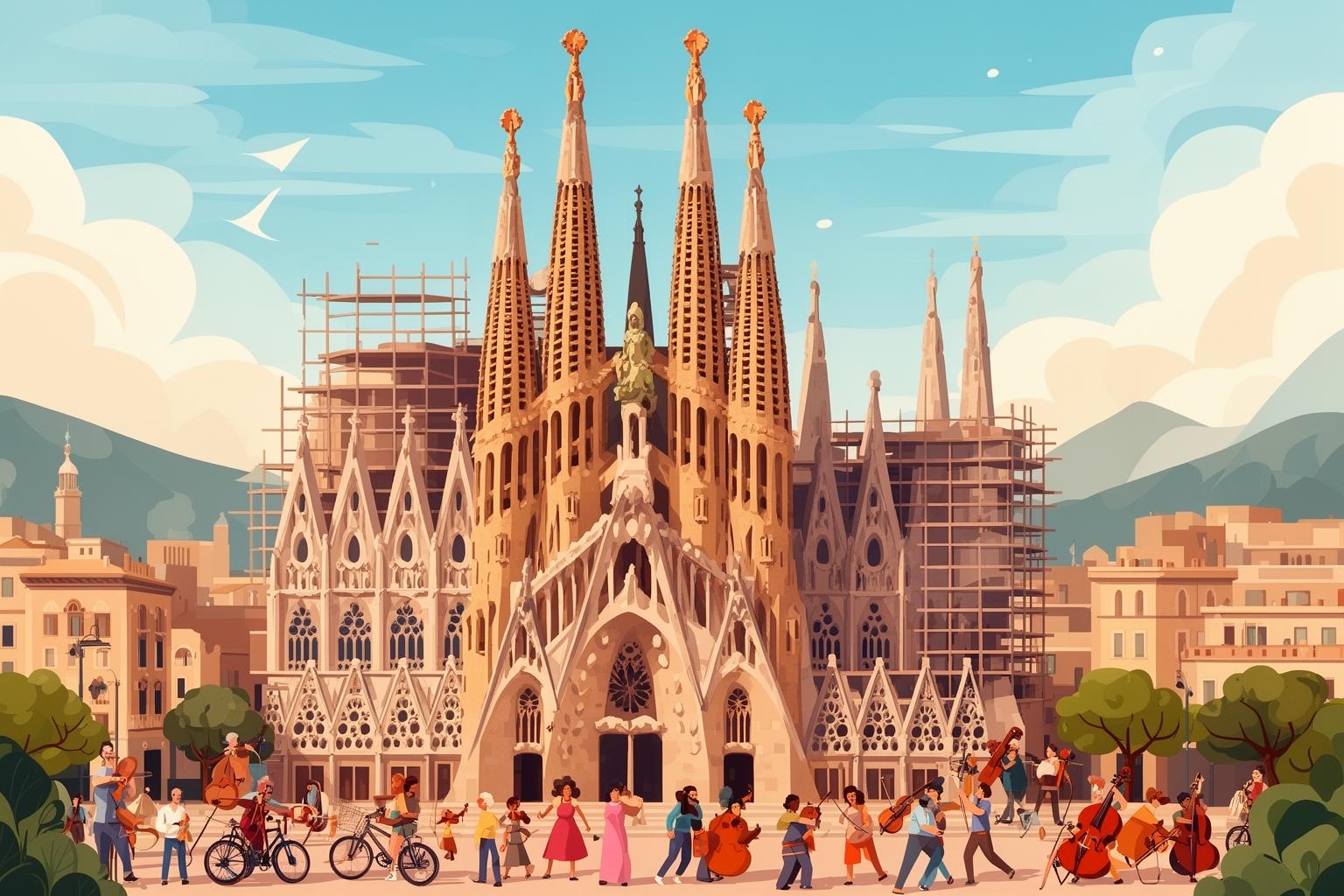
No image captures the essence of Barcelona quite like the surreal spires of La Sagrada Família reaching skyward. This is Gaudí’s masterpiece, his lifelong passion, a colossal endeavor that has outlived its creator by more than a century and continues to edge toward completion. Viewing it from afar is one thing; standing at its feet and craning your neck to absorb its full grandeur is an entirely different experience. It feels less like a cathedral and more like a gigantic sandcastle fallen from the heavens—an organic geological formation sprouting from the city’s soil. The atmosphere hums with a distinct energy—a blend of tourist excitement, local pride, and a quiet, tangible reverence. This is the soul of Gaudí’s Barcelona, a testament to faith, nature, and the far reaches of human creativity.
A First Glimpse: The Awe of the Façades
Your journey starts before entering. The basilica tells its story through three majestic façades, each representing a crucial chapter in the Christian story, and each crafted in a uniquely stunning artistic style. Circling the exterior is like reading a storybook carved in stone, a visual sermon designed by Gaudí to be understood by all, regardless of language. The building seems to shift its mood and character as you walk around it, revealing fresh details and new angles with every step.
The Nativity Façade: A Storybook in Sculpture
This is the only façade largely finished during Gaudí’s lifetime and bears his most personal stamp. Positioned to greet the rising sun in the east, it is a joyful, exuberant, and richly ornate tribute to Christ’s birth. The stone appears to drip and flow, adorned with a profusion of sculptures depicting the Holy Family, shepherds, wise men, and an array of plants and animals. It is a hymn to life and nature. Look closely, and you’ll spot turtles at the base of the main columns symbolizing earth’s permanence, while chameleons climb the sides representing change. Gaudí used real people and animals as models to create astonishing realism. The entire scene is framed by four towers symbolizing the Apostles, their tops gleaming with mosaics that sparkle in the morning light like episcopal jewels. The atmosphere is one of hope, wonder, and intricate detail—you could spend an hour trying to identify every creature and plant woven into this stone tapestry.
The Passion Façade: Stark, Somber, and Striking
If the Nativity Façade celebrates life, the Passion Façade, facing the setting sun, is its stark and powerful contrast. Sculpted by Josep Maria Subirachs following Gaudí’s surviving sketches, it marks a dramatic stylistic shift. The figures are angular, emaciated, and skeletal, carved with sharp lines and deep shadows that evoke the pain and sacrifice of Christ’s final days. The style is modern, almost cubist, and deeply moving. It recounts the story from the Last Supper to the Crucifixion through a series of intense, emotionally charged scenes. Seek out the enigmatic magic square where all rows and columns total 33—the age of Christ at his death. A cloaked figure representing Gaudí himself stands silently as an observer of the tragedy. The aura here is somber, reflective, and immensely powerful, compelling contemplation of the story’s gravity. The cold, bare stone and sharp angles evoke unease and sorrow with profound effect.
The Glory Façade: A Vision of the Future
Still under construction and largely hidden by scaffolding, the Glory Façade will ultimately serve as the basilica’s main entrance. It is dedicated to God’s glory and portrays the journey to salvation: Death, the Final Judgment, and Eternal Glory. According to Gaudí’s designs, it will be the largest and most monumental of the three façades, featuring a grand staircase above a subterranean passage representing Hell. The doors will bear the Lord’s Prayer in dozens of languages, while the columns will take the forms of gigantic demons and virtues. Though we can only glimpse its future form, it embodies the basilica’s ultimate promise—a final, triumphant ascension into light. It reminds us this is a living, evolving project, a story still unfolding in Barcelona’s skyline.
Stepping Inside: A Forest of Light and Color
Nothing can prepare you for the moment you step through the doors into the main nave. The impact is immediate and overwhelming. You are no longer inside a building; you are immersed in an enchanted forest. The air is thick with wonder, and a hushed silence descends as everyone collectively gazes upward, their faces bathed in a kaleidoscope of colors. Gaudí’s architectural brilliance is fully on display here—a space both structurally revolutionary and spiritually profound. This place is designed to make you feel small in the universe’s vastness yet intimately connected to its divine beauty.
The Columns that Reach for the Heavens
Forget conventional cathedral columns. Gaudí, nature’s devoted student, designed these pillars to resemble a forest canopy. They rise from the floor and branch out near the ceiling, forming an intricate, interlocking web that supports the vaults above. This wasn’t just an aesthetic choice; it was an engineering marvel that eliminated the need for the flying buttresses typical of Gothic architecture, enabling vast, uninterrupted stained-glass walls. The columns themselves are made from various stones—from tough, reddish porphyry at the base to lighter sandstone higher up—reflecting the different loads they bear, just as a tree trunk is thickest at its roots. Standing at the nave’s center and looking up is a dizzying, hypnotic experience.
The Stained Glass Symphony: Painting with Sunlight
For Gaudí, light was the ultimate symbol of life, and the basilica’s stained-glass windows are his masterpiece of illumination. He designed them as a symphony of color that shifts with the passing day. On the sunrise side, the windows cascade with cool blues and greens, evoking dawn. As the sun travels across the sky, light filtering into the central nave warms to vibrant yellows, oranges, and fiery reds, bathing the interior in a golden, ethereal glow that feels miraculous. It isn’t just colored light; it is a spiritual atmosphere. The light doesn’t merely enter; it dances within, reflecting off pale stone and transforming the mood moment by moment. This is architecture as living art, performing a daily duet with the sun.
The Ascent: Towers with a View and a Purpose
For those unafraid of heights, a visit to one of the finished towers is a must. You ascend by elevator and descend a narrow, spiraling staircase offering tantalizing views of the city and the basilica’s exterior details. The vistas from the top are spectacular, providing a unique look at Barcelona’s grid-like Eixample district below. More than that, it’s an intimate encounter with the intricately mosaic-covered pinnacles. Gaudí designed the towers to be visible throughout the city, topping them with colorful symbols representing bishops, complete with miter, crosier, and ring. The winding descent down the snail-shell staircase is an architectural thrill itself, a dizzying spiral resembling a journey into the heart of a seashell. It’s an exhilarating conclusion to the visit, physically connecting you with the immense scale of this extraordinary structure.
Practical Pilgrim’s Notes for Sagrada Família
Visiting a site of this scale requires a bit of planning to ensure a smooth and magical experience. You can’t simply arrive and expect to walk in, especially during peak periods. Some preparation will transform your visit from potentially stressful to truly unforgettable.
Booking Your Passage: The Essential First Step
This cannot be emphasized enough: reserve your tickets online well in advance—weeks or even months ahead if you’re visiting in summer or during holidays. Tickets often sell out, and on-site booths are frequently closed. The official website is the best place to secure your entry. You’ll need to select a specific entry time, so plan your day accordingly. Consider purchasing a combination ticket that includes an audio guide and tower access. The audio guide is excellent, providing rich context and highlighting details easily missed on your own. When choosing a tower, the Nativity tower offers better city views, while the Passion tower provides a closer look at the ongoing construction of the central spires.
Timing Your Visit: Chasing the Golden Hour
Anytime is breathtaking, but two timings are especially magical. The first is early morning, right when the doors open—crowds are smaller, and the cool blue-green light filters in through the eastern windows in peaceful quiet. The second, perhaps the most spectacular, is late afternoon, an hour or two before closing. This is when sunlight floods the western windows, bathing the nave in a warm, golden orange glow that makes the entire space appear ablaze. It’s a paradise for photographers and a deeply spiritual moment. Be prepared for more visitors, but the visual reward is well worth it.
Dress and Decorum: Respecting Sacred Space
Remember that La Sagrada Família is an active Roman Catholic basilica. While the dress code is less strict than at some other European cathedrals, respect is essential. Shoulders should be covered, and shorts or skirts must be modest in length. Hats are not allowed inside the nave. As a place of worship, keep your voice low and be considerate of those present for prayer or reflection. This is a space that demands reverence, and honoring that will enrich your experience of its profound beauty and spiritual weight.
Park Güell: A Whimsical Wonderland Overlooking the City
Leave behind the bustling city grid and climb up to Park Güell, where architecture blends seamlessly with nature in a burst of color and imaginative forms. Situated on Carmel Hill, this public park was initially planned as a utopian residential community for Barcelona’s elite, commissioned by Gaudí’s devoted patron, Eusebi Güell. Although the project failed commercially, what remains is a public space full of unparalleled fantasy and charm. It serves as a playground for the soul, inviting you to explore, touch, and marvel. The atmosphere is joyful and relaxed, perfectly combining manicured surrealism with rugged Mediterranean parkland, all framed by stunning views of the city and sea.
The Grand Entrance: A Storybook Welcome
Your journey into this fairy-tale world begins at the main entrance on Carrer d’Olot. You are welcomed by a scene reminiscent of Hansel and Gretel. Two whimsical pavilions flank the gates, their undulating roofs adorned with a mosaic of broken ceramic tiles using the trencadís technique perfected by Gaudí. These structures were intended to serve as the gatekeeper’s lodge and reception area, their gingerbread-house look complete with mushroom-shaped pinnacles signaling that you are about to leave the ordinary behind.
The Dragon Stairway and El Drac
Just past the gates lies the monumental Dragon Stairway, a grand double-flight staircase leading you into the heart of the park. The centerpiece—and perhaps its most famous figure—is the colorful mosaic dragon, or salamander, affectionately known as ‘El Drac’. Covered in vibrant trencadís, this cheerful guardian spouts water and attracts visitors for photos, often surrounding a happy crowd. The stairway itself is embedded with symbolic Catalan elements, including snakes and the shield of Catalonia, making the ascent both a symbolic and physical journey.
The Heart of the Park: The Hypostyle Room and Nature Square
At the top of the Dragon Stairway, you reach the park’s main social hubs—two outstanding examples of Gaudí’s fusion of structure and ornament. These areas were designed as the community’s marketplace and central plaza and continue to be the lively heart of the park today.
The Hall of a Hundred Columns: An Underground Forest
The Hypostyle Room, beneath the main terrace, was conceived as a covered market for future residents. It features 86 massive Doric columns—despite its name, not actually one hundred. The outer columns tilt inward, a classic Gaudí defiance of convention that adds a dynamic sense of movement. The space feels cool and cavernous, providing a welcome refuge from the sun. Look up to find exquisite trencadís medallions crafted by Gaudí’s collaborator, Josep Maria Jujol. These columns are not only structural but part of an ingenious water-collection system, channeling rainwater from the plaza above down hollow cores into an underground cistern.
The Serpentine Bench: The World’s Most Artistic Viewpoint
Emerging from the Hypostyle Room, you arrive at the expansive terrace originally called the Greek Theatre, now known as the Plaça de la Natura, or Nature Square. This grand plaza’s edge is lined with the world’s most famous, and possibly longest, bench. It winds and curves in a continuous, flowing line, creating cozy, semi-private seating areas. The bench’s surface is a kaleidoscope of trencadís—an exuberant yet harmonious mix of colors and textures. Legend says Gaudí had a workman sit on wet plaster to shape the bench’s ergonomically perfect form. Find a spot to sit, relax, and enjoy one of Barcelona’s most breathtaking panoramic views. It’s an ideal place for people-watching, feeling the sea breeze, and appreciating a space crafted for both public spectacle and intimate conversation.
Beyond the Monuments: Exploring the Verdant Paths
Although the Monumental Zone draws most of the attention, the larger part of Park Güell is a freely accessible public park filled with winding trails, rustic stone viaducts, and lush Mediterranean flora. It’s well worth spending time here to get lost, escape the crowds, and discover the quieter, more natural side of Gaudí’s vision.
The Austria Gardens and Hidden Viaducts
Stroll through the Austria Gardens, named for a donation of trees from Austria, to enjoy a more traditional but beautiful green space. Follow the hillside paths to reveal the remarkable viaducts Gaudí designed to span the park’s ravines. These colonnaded, covered walkways appear sculpted by wind and rain, with tilted stone pillars mimicking surrounding trees’ natural forms. They are architectural marvels, providing shaded routes and stunning framed views of the city below. Far less crowded than the main sites, they offer a perfect place for peaceful reflection.
The Gaudí House Museum: A Glimpse into the Master’s Life
Hidden within the park is the house where Antoni Gaudí lived with his father and niece for almost 20 years, from 1906 to 1925. This charming pink house, designed by Gaudí’s colleague Francesc Berenguer rather than Gaudí himself, now serves as a museum. A separate ticket is required, but this museum offers fascinating insights into the architect’s personal life and work methods. Its collection includes furniture and items Gaudí designed for other homes, as well as personal belongings that reveal a man of simple habits despite his extravagant artistic vision.
Practical Pilgrim’s Notes for Park Güell
To get the most from your visit to this whimsical retreat, some preparation is helpful. The park’s hillside layout and division create challenges and opportunities best navigated with a bit of insider knowledge.
Navigating the Zones: Free vs. Monumental
It’s key to know that Park Güell is divided into two main sections. Most of the park is free to explore at your leisure. However, the core area that contains the most famous features—the Dragon Stairway, the Hypostyle Room, and Nature Square with its serpentine bench—is the ‘Monumental Zone’. Entrance to this area requires a ticket with timed entry to regulate crowds. Like at the Sagrada Família, these tickets must be booked online in advance. Your ticket grants a 30-minute window to enter, but once inside, you can remain as long as you wish.
The Best Time to Wander
Early morning remains one of the best times to visit. Arriving for the first entry slot gives you a chance to experience the Monumental Zone before crowds arrive, making for better photos and a more peaceful atmosphere. The light is soft and beautiful then. Late afternoon is also ideal, as the setting sun casts a warm glow over the city, creating a spectacular backdrop from the main terrace. Be aware that midday, especially in summer, can be hot and crowded, since the main plaza offers little shade. If visiting at that time, bring water, a hat, and sunscreen.
Getting There: The Uphill Journey
Park Güell sits atop a hill, so reaching it involves an uphill trek. The nearest metro stops are Lesseps or Vallcarca on Line 3. From either stop, it’s about a 20-minute walk, but be prepared for steep streets. The route from Vallcarca includes outdoor escalators, which can be a great help. Alternatively, the number 24 bus from Plaça de Catalunya drops you near a side entrance, reducing the uphill climb. A taxi is the easiest but most costly option. Whatever you choose, wear comfortable shoes—your feet will thank you.
Casa Batlló: The House of the Dragon
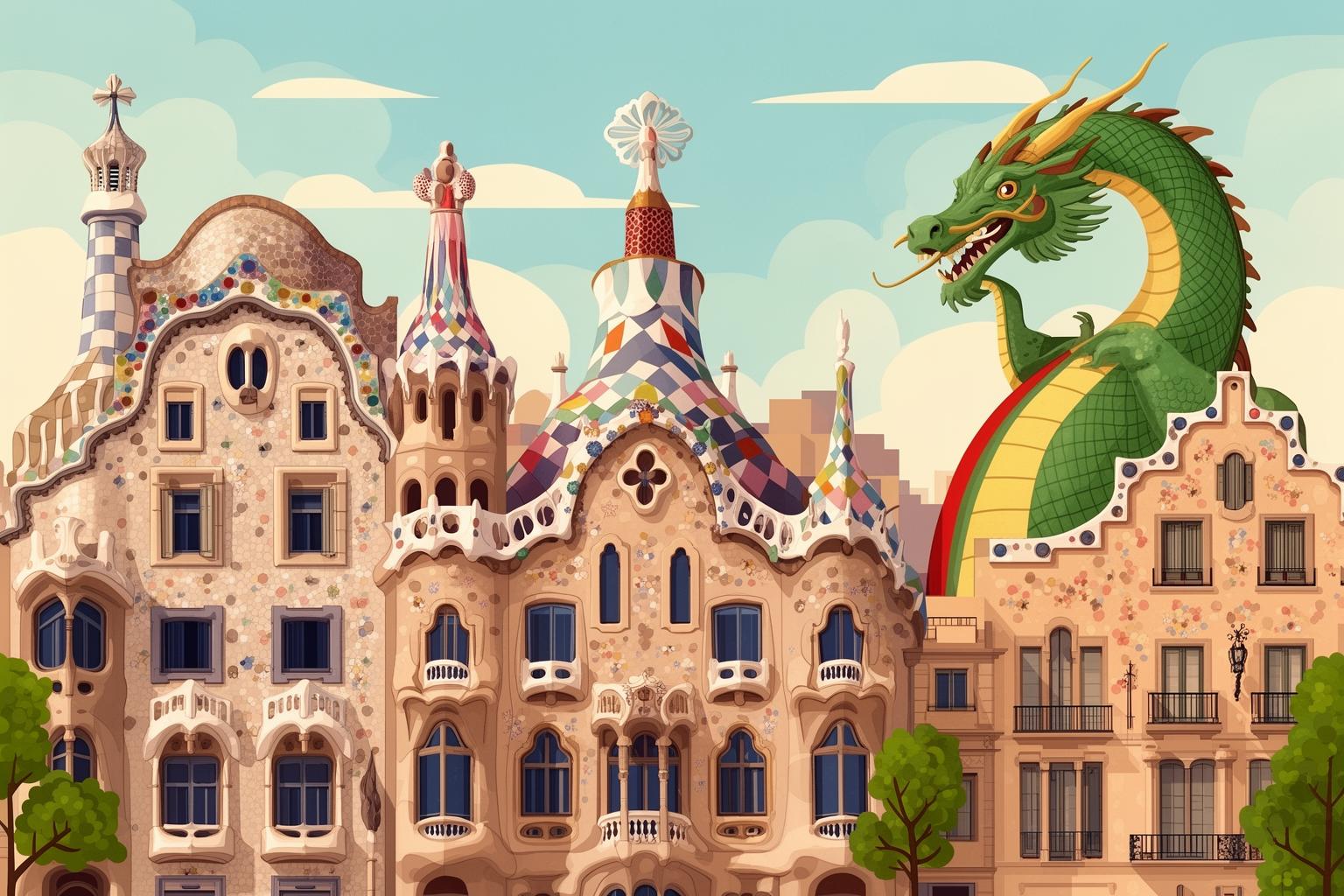
Situated on the glamorous Passeig de Gràcia, amidst a row of magnificent Modernista mansions, stands Casa Batlló. This is more than just a building; it’s a fairytale brought to life. Gaudí transformed a conventional apartment block into a vibrant, living masterpiece of color, light, and fantasy, seemingly born from the depths of the sea or the pages of legend. The house celebrates St. George, Catalonia’s patron saint, with the entire structure symbolizing his mythical battle with the dragon. The ambiance radiates aquatic wonder and dreamlike beauty, where every surface, doorknob, and window is a unique work of art.
The Façade: A Living, Breathing Masterpiece
Even from the street, Casa Batlló captivates onlookers. Its façade appears not as stone, but as living tissue. It’s a shimmering, flowing surface adorned with a mosaic of glass and ceramic tiles in hues of blue, mauve, and green, reminiscent of a tranquil lake—an effect inspired by Monet’s Water Lilies. The building entirely abandons straight lines, embracing organic curves and fluidity.
The Skull and Bones Balconies
Emerging from the colorful façade are the house’s most intriguing and slightly eerie features: the balconies. The wrought iron railings resemble fragmented skulls or masks, while the supporting pillars on the lower floors evoke giant bones. This has earned the building the local nickname ‘Casa dels ossos’ (House of Bones). These elements symbolize the victims of the dragon, a macabre yet elegantly integrated detail within the broader narrative. They create a striking contrast between the delicate, shimmering wall and the stark skeletal forms affixed to it.
The Iridescent Dragon’s Back Roof
The crowning jewel of the building is its roofline—undoubtedly one of the world’s most famous. It arches gracefully, covered in large, iridescent scales that mimic the back of a mighty dragon. Colors shift from green to deep blue and violet as you move, giving the illusion of a living creature shimmering under sunlight. Embedded in the dragon’s spine is a small turret topped with a cross, symbolizing St. George’s sword, marking the triumphant climax of the legend. This spectacular piece of architectural storytelling is visible up and down the boulevard.
Inside the Whale’s Belly: An Aquatic Dream
Entering Casa Batlló feels like descending into a beautiful underwater grotto. Gaudí’s passion for nature shines in every detail—walls, ceilings, and doorways ripple without a single sharp corner. The design guides you on an immersive journey, ascending from the ocean’s depths to the light-filled rooftop heavens.
The Noble Floor: A Swirl of Wood and Glass
The main floor, once home to the Batlló family, is a design marvel. A large, mushroom-shaped fireplace forms a cozy, cave-like nook perfect for intimate gatherings. The most breathtaking feature is the main salon overlooking Passeig de Gràcia. Its vast, undulating oak-framed windows can be raised and lowered via counterweights, opening the entire space to the city. The ceiling swirls like a vortex, drawing the eye to an ornate, sun-shaped chandelier at its center. Every detail, from sculpted wooden doors to custom ergonomic hardware, reflects Gaudí’s meticulous care.
The Lightwell: A Cascade of Blue Tiles
One of Casa Batlló’s most ingenious features is the central lightwell, or patio de luces. Typically a dark, overlooked area in most buildings, Gaudí transformed it into a vibrant conduit of light. Walls are covered with ceramic tiles graduating in blues—from deep cobalt at the top to pearly white at the bottom—ensuring even light distribution across floors. The effect is stunning, like looking up from the ocean depths toward a sunlit surface. The rippled glass of the stairwell windows enhances this watery illusion.
The Loft and the Ribcage
The attic, or loft, surprises with unexpected beauty. Rather than a dark, dusty storage space, Gaudí designed it as a bright, clean, functional, yet aesthetically striking area. Sixty catenary arches, crafted from thin brick layers, form a structure resembling the ribcage of a giant creature—possibly the very dragon whose spine crowns the roof. This stark white space, once used for laundry and storage, exemplifies how functionality can be elevated to art.
The Immersive Experience: A Modern Twist on a Classic
Today’s visit to Casa Batlló is enhanced by a brilliant augmented reality video guide. As you point your device around, Gaudí’s inspirations come to life onscreen: a turtle-shell skylight becomes a swimming sea turtle, and the mushroom-shaped fireplace sprouts fungi. It’s an engaging way to delve into the architect’s imagination and the natural forms that shaped his work. The tour culminates in the ‘Gaudí Cube,’ an immersive LED experience that invites you into the mind of this genius.
Practical Pilgrim’s Notes for Casa Batlló
This gem on Passeig de Gràcia is one of Barcelona’s most popular attractions, so expect crowds and a premium price. Here’s how to make your visit as enchanting as the house itself.
Choosing Your Ticket: Day, Night, or Gold?
Casa Batlló offers tiered tickets with varying levels of access and experiences. The standard ‘Blue’ ticket includes the audio guide. The ‘Silver’ ticket grants entry to the Gaudí Dôme, while the ‘Gold’ ticket allows you to skip lines, access private rooms, and receive a vintage-style photo. All tickets should be purchased online in advance to guarantee your spot and avoid higher door prices. For most visitors, the standard ticket provides an excellent and complete experience.
The Magic of the Night Visit
For a uniquely romantic and special experience, consider the ‘Magic Nights’ event on the rooftop during warmer months. Your ticket includes an evening house tour followed by a live concert on the spectacular dragon’s back roof and a complimentary drink. Viewing the whimsical chimneys illuminated against the night sky, with Barcelona’s lights twinkling below, is unforgettable. Though more expensive, this option offers a distinctive and less crowded way to enjoy the masterpiece.
Location on the Block of Discord
Casa Batlló is part of the ‘Illa de la Discòrdia’—the Block of Discord—so named because it features homes by four of the most important Modernista architects: Lluís Domènech i Montaner (Casa Lleó Morera), Josep Puig i Cadafalch (Casa Amatller), and, of course, Gaudí himself. Casa Amatller, next door with its Flemish stepped gable, is also open to the public and offers a fascinating contrast to Gaudí’s flowing style. Take a moment to admire this strikingly discordant yet harmonious architectural ensemble from across the street.
Casa Milà (La Pedrera): The Stone Quarry
Just a short stroll up Passeig de Gràcia from Casa Batlló stands another of Gaudí’s residential masterpieces, Casa Milà. Nicknamed La Pedrera, meaning ‘The Stone Quarry’, this name was originally given mockingly by locals shocked by its radical, undulating stone façade and twisted iron balconies. Today, it is celebrated as one of Gaudí’s most innovative and mature works. While Casa Batlló is a colorful fantasy, La Pedrera embodies a powerful, organic, and almost primal force of nature. It feels less like a building and more like a coastal cliff face, carved by the relentless rhythm of the waves. The atmosphere exudes raw, elemental power and artistic daring.
An Undulating Façade: A Cliff Face on Passeig de Gràcia
The building’s exterior is its most striking feature. It is a massive, self-supporting stone structure—a revolutionary concept at the time—that allowed Gaudí complete freedom to design an open-plan interior. The entire façade ripples and curves, with not a single straight line to be found. It feels heavy and monumental, yet simultaneously fluid, as if the stone were suspended in motion. This was Gaudí’s last private residence project and showcases the culmination of his architectural philosophy.
The Seaweed-like Wrought Iron Balconies
Enhancing the organic feel are the incredible wrought iron balconies, which appear to cling to the stone like tangled clumps of seaweed. Each is unique, an abstract sculpture of twisted metal created largely from recycled materials by Josep Maria Jujol, who improvised their shapes on-site. They provide a dark, intricate contrast to the pale, flowing stone, adding to the building’s marine and geological character.
The Absence of Straight Lines
The dedication to natural forms continues throughout the building. Gaudí believed the straight line belonged to man, while the curved line belonged to God. In La Pedrera, he enacted this philosophy on an epic scale. The building is arranged around two large, circular courtyards that bring light and air into the center of the deep floor plan, with apartments flowing around these central voids. The entire structure feels like a living organism, a cave shaped by natural forces.
The Warrior Rooftop: A Sentinel’s Garden
If the building is a cliff, its rooftop is a surreal and enchanting landscape. Ascending to La Pedrera’s roof feels like stepping onto another planet. It’s a space populated by fantastical sculptures—a ‘garden of warriors’ that transforms functional architectural elements into striking works of art. The rooftop is split-level, its rolling, uneven surface following the curves of the attic arches beneath, creating a dynamic and exciting space to explore.
The Chimneys as Surrealist Sculptures
The rooftop’s true stars are the chimneys and ventilation shafts. Gaudí grouped them together and covered them in trencadís, turning them into clusters of abstract sculptures that resemble medieval knights or sentinels, their helmet-like forms guarding the city. Some are coated in shimmering broken white tiles, while others remain as bare sculptural forms. They are both beautiful and slightly eerie—a legion of stone guardians that have fascinated artists and filmmakers for decades. Salvador Dalí was a great admirer, and their surreal quality is unmistakable.
Framing Barcelona: Views Through the Arches
The rooftop is more than a sculpture garden; it is a magnificent viewpoint. Gaudí cleverly used the undulating forms and large catenary arches along the roof’s edge to frame specific views of the city. As you wander, you’ll find perfect arch-framed glimpses of La Sagrada Família in the distance, a deliberate and poignant link between two of his greatest works. It’s a photographer’s dream and a place that encourages you to pause and view the city from a fresh, artistic perspective.
The Whale’s Attic and the Pedrera Apartment
Beneath the warrior rooftop lies another of Gaudí’s magical attics. Similar to the one in Casa Batlló, this space—known as the Espai Gaudí—is defined by 270 parabolic brick arches, creating a structure resembling the skeleton of a huge whale. Today, this beautiful space houses the only exhibition dedicated to Gaudí’s life and work, revealing his incredible innovations through models, drawings, and audiovisual displays. It’s the perfect spot to truly appreciate the genius behind the beauty.
A Bourgeois Home Frozen in Time
The visit also includes a tour of a fully restored and furnished early 20th-century apartment. This ‘Pedrera Apartment’ offers a chance to step back in time and see how a wealthy bourgeois family lived in a Gaudí-designed home. It’s a fascinating contrast, viewing conventional, ornate furniture of the period set against wildly unconventional, curving walls and custom-designed details. This highlights just how revolutionary Gaudí’s vision of living truly was.
Practical Pilgrim’s Notes for Casa Milà
Visiting La Pedrera provides a different yet equally rewarding experience to Casa Batlló. Here’s what you need to know to make the most of your time at ‘The Stone Quarry’.
Day vs. Night Experiences: The Pedrera’s Two Souls
La Pedrera offers distinct day and night experiences. The daytime tour, ‘La Pedrera Essential’, lets you explore the rooftop, attic, apartment, and courtyards at your own pace. For a more atmospheric visit, consider the ‘La Pedrera Night Experience’. This guided evening tour culminates in a spectacular audiovisual show projected onto the sculptural rooftop chimneys. It’s a truly magical way to see the ‘garden of warriors’ come alive under the stars, complete with a glass of cava.
Accessibility and Tips for a Smooth Visit
La Pedrera is highly accessible, with elevators reaching all main visitor areas, including the rooftop—an important advantage for those with mobility challenges. As always, book your tickets online in advance to select your time slot and avoid lines. The main entrance can get very busy, so arriving a few minutes early is advisable. Allow at least an hour and a half to two hours to fully appreciate everything, especially the detailed exhibition in the attic.
The Lesser-Known Gems: Beyond the Main Trail
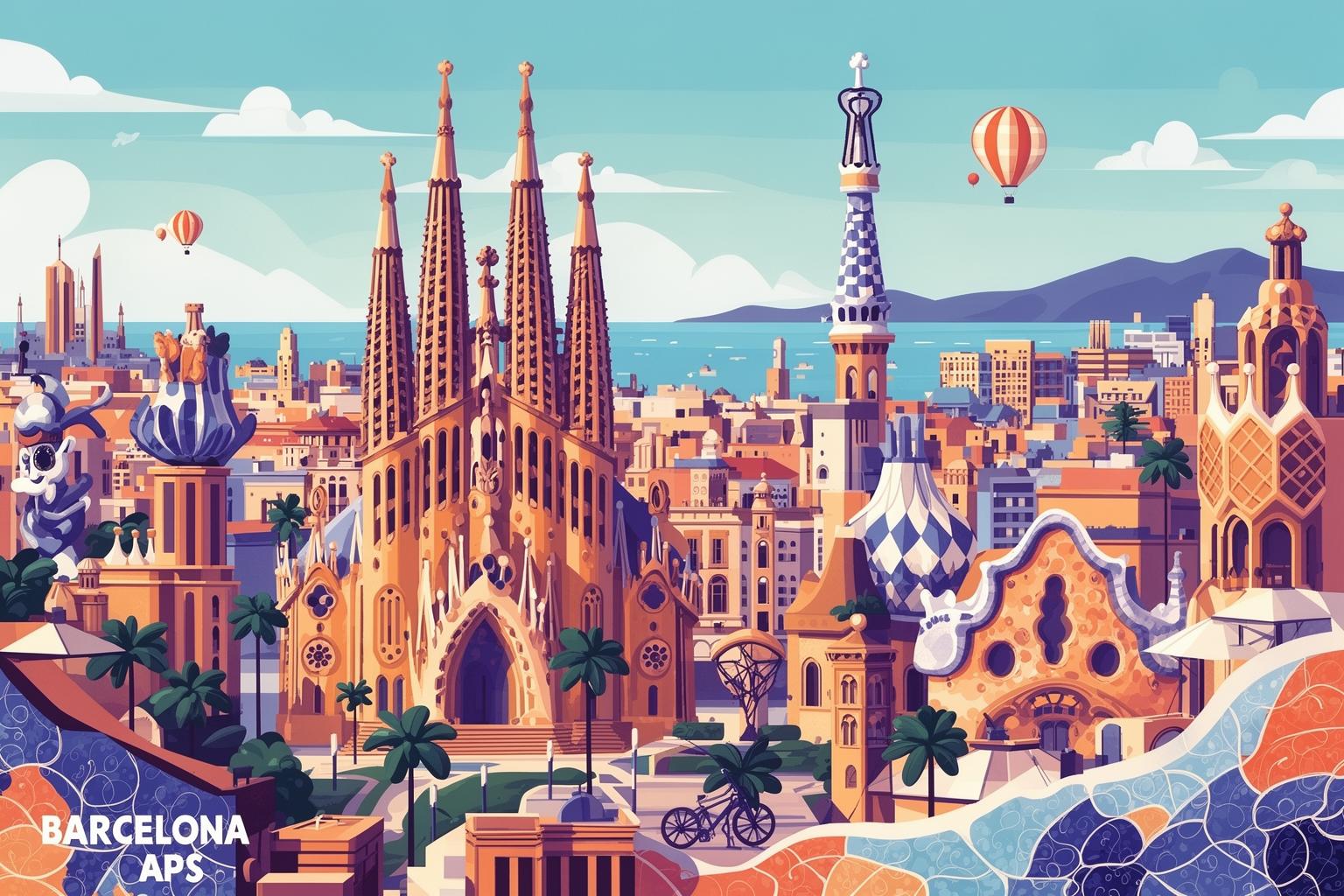
While the big four—Sagrada Família, Park Güell, Casa Batlló, and Casa Milà—are the essential stops on any Gaudí pilgrimage, true devotees will want to explore his other, less-crowded works. These sites provide a more intimate glimpse into the evolution of his style and showcase some of his most brilliant and unrestrained ideas.
Palau Güell: A Darkly Lavish Urban Palace
Nestled just off the bustling La Rambla in the El Raval neighborhood, Palau Güell was one of Gaudí’s earliest major commissions from his patron Eusebi Güell. It is a much darker, more imposing, and almost medieval-feeling building compared to his later works. The façade is somber and powerful, featuring two magnificent parabolic arches that serve as the entrance for horse-drawn carriages. Inside, the space is lavish yet intimate, centered around a soaring central hall topped by a parabolic dome. Light filters down through small perforations in the dome, creating the effect of a starry night sky during the day. The true magic, however, lies on the roof, where Gaudí unleashed his imagination, crafting a fantasy landscape of 20 chimneys, each a unique sculpture adorned with whimsical trencadís. These playful, colorful precursors to the famous rooftops of Casa Batlló and La Pedrera form a hidden wonderland in the heart of the old city.
Casa Vicens: The First House, A Moorish Fantasy
Situated in the charming Gràcia neighborhood, Casa Vicens was Gaudí’s very first major architectural project. Recently opened to the public after meticulous restoration, it stands as a stunning and vital piece of his story. The style is strikingly different from his later works, showing strong Mudejar (Moorish) and oriental influences. The façade presents a vibrant, rigid checkerboard of exposed red brick and green and white ceramic tiles decorated with marigolds—a nod to the flowers once growing on the site. Inside, visitors encounter a riot of color and ornamentation, including papier-mâché ceilings, intricate woodwork, and nature-themed paintings. Visiting Casa Vicens feels like discovering the seed from which all of Gaudí’s later, more fluid masterpieces would emerge. It’s a must-see for anyone seeking to understand his complete artistic journey.
The Crypt of Colònia Güell: The Laboratory for Sagrada Família
For the most dedicated pilgrims, a short train ride outside Barcelona to the industrial village of Colònia Güell is essential. Here, Eusebi Güell commissioned Gaudí to build a church for his workers. Although the project was never completed, the constructed portion—the crypt—is regarded by many as one of his most perfect creations. This is where Gaudí tested the structural innovations he would later employ in Sagrada Família. Using a brilliant model made of strings and weights, he calculated the complex system of tilted columns and arches necessary to support the structure without buttresses. The result is a space that feels utterly organic, like a cave in a primeval forest. Columns of basalt and brick lean and twist, stained-glass windows resemble flower petals, and the pews exhibit a marvel of ergonomic design. It’s Gaudí’s architectural philosophy in its purest, most distilled form—a hidden gem of breathtaking beauty and ingenuity.
Barcelona is a city forever shaped by the dreams of one man. A journey through Gaudí’s works is more than a simple sightseeing tour; it is an immersion into a world where nature is the ultimate architect, light serves as a building material, and faith moves mountains of stone. You will leave with a camera full of impossible shapes and vibrant colors, but more importantly, you will carry the feeling of having touched something truly magical. The spirit of Gaudí lives on—in the forest of columns reaching for light, in the dragon guarding its perch over the city, and in the relentless, rhythmic pulse of the city he loved. Come and see it for yourself; let Barcelona’s dream weaver capture your imagination. You won’t just see the city—you will feel it in an entirely new way.