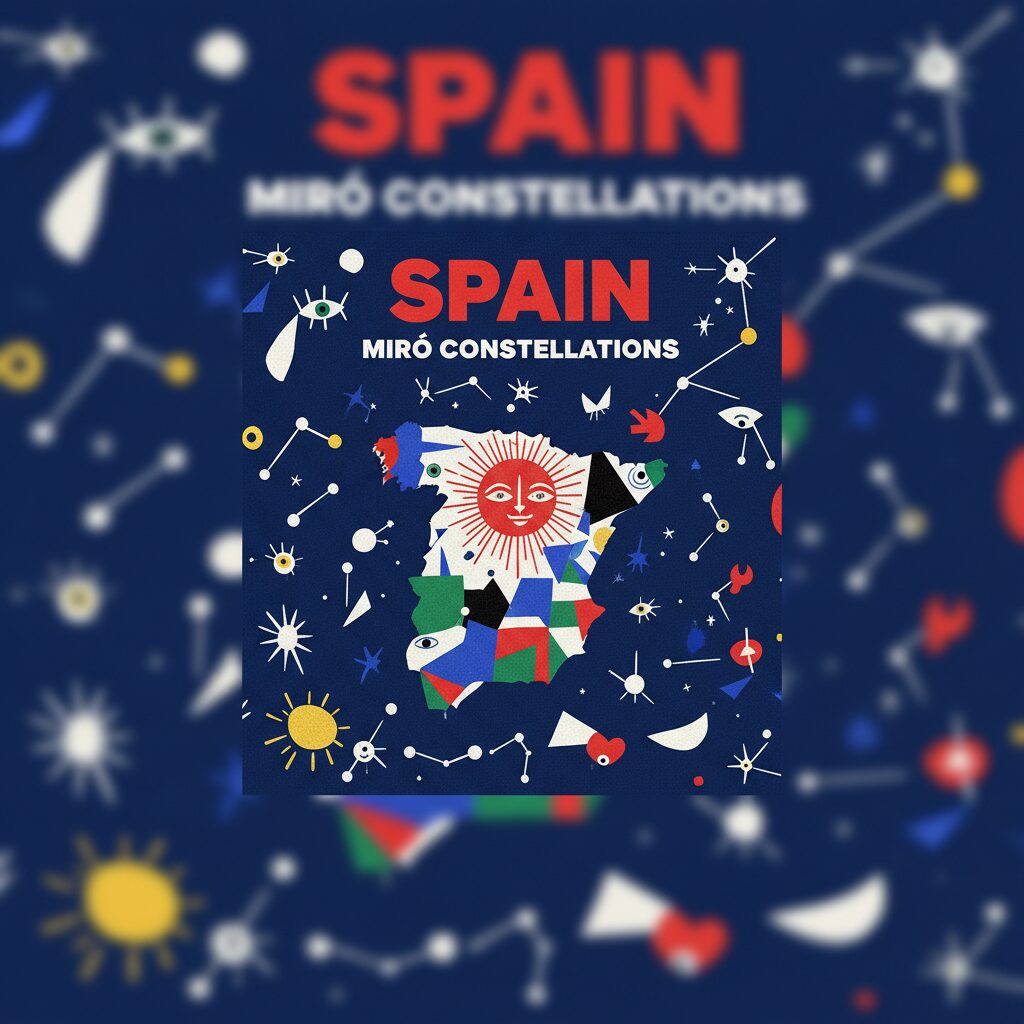
Hello, fellow dreamers and art lovers! Sofia here, ready to take you on a journey that’s less about destinations and more about diving headfirst into a universe of color, symbolism, and pure, unadulterated joy. Today, we’re tracing the footsteps of a true titan of the 20th century, an artist who painted with the freedom of a child and the wisdom of a philosopher: the one and only Joan Miró. This isn’t just a trip to a museum; it’s a pilgrimage through the very landscapes that shaped his soul, from the bustling Gothic alleyways of his Barcelona birthplace to the sun-drenched, silent shores of Mallorca, and the rustic, red earth of Catalonia that he called his spiritual home. Miró’s art is a language of its own, a vibrant dialogue between the earth and the cosmos, the real and the surreal. To truly understand it, you have to feel the sun on your skin in Mont-roig, hear the murmur of the crowds on Las Ramblas, and breathe in the salty Mediterranean air that filled his final studio. This journey will take us through the heart of his inspiration, showing us how place, memory, and emotion were meticulously woven into every star, every bird, and every whimsical figure he ever created. It’s a quest to see the world through his eyes—a world where the ordinary becomes magical and the ground beneath our feet is just a starting point for a flight into the constellations. So, pack your most stylish walking shoes and an open heart. We’re about to step into the canvas.
If you’re inspired by this journey through Miró’s Catalonia, you might also enjoy exploring how another artist’s environment shaped their vision in our guide to Salvador Dalí’s Catalonia.
The Barcelona Beginnings: A City Woven into Canvas
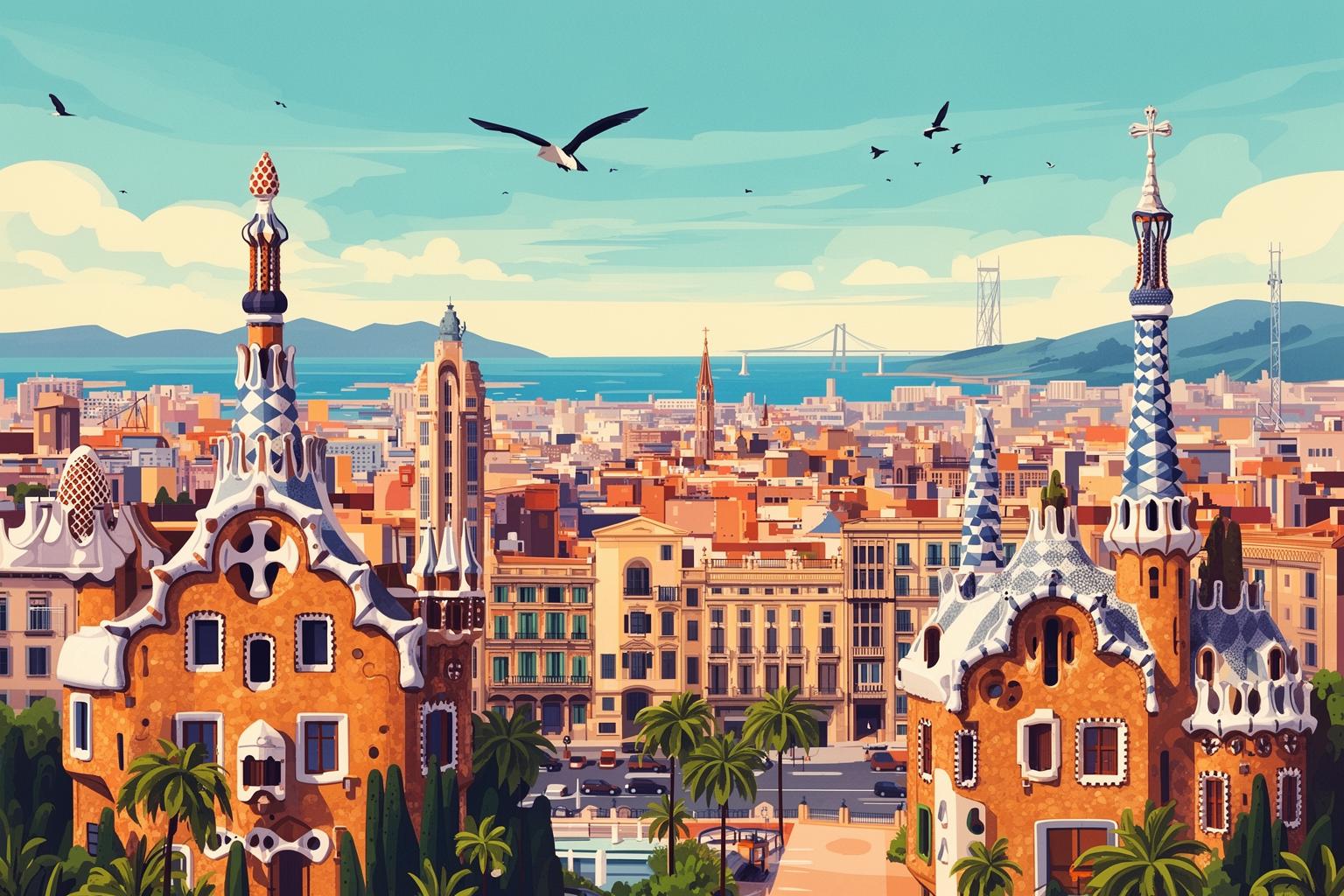
Our story begins in Barcelona, a city alive with a unique creative energy. It is a place of architectural marvels and bohemian spirit, where Joan Miró was born amid the interplay of tradition and modernisme. Barcelona was not only his hometown but also his first muse—a rich tapestry of sights, sounds, and history that left a lasting impression on his young mind. From the ancient stones of the Gothic Quarter to the forward-thinking energy of the early 20th century, the city served as a classroom, a playground, and an endless source of inspiration that resonated throughout his career. Walking through Barcelona today feels like turning the early pages of his biography, discovering traces of his world at every corner.
The Gothic Heartbeat: Birthplace and Early Inspirations
To uncover the very beginning, you must lose yourself in the Barri Gòtic, the Gothic Quarter—the ancient soul of Barcelona with its maze of narrow, winding streets. It was here, at Passatge del Crèdit number 4, that Miró was born in 1893. Though the building is now a private residence, standing in that quiet passage feels like hearing a secret whispered from the past. You can almost hear the sounds of the late 19th century—the clang of a blacksmith, chatter from open windows, the footsteps of a boy destined for greatness. Within this dense, historic setting, Miró’s visual language began to take shape. Surrounded by the raw, expressive power of Catalan Romanesque and Gothic art—from the city’s grand cathedral to the small, dim churches tucked into hidden squares—the bold lines, flattened perspectives, and intense earthy colors of medieval frescoes and altarpieces profoundly influenced him. They taught him a visual language that was direct, symbolic, and deeply connected to the land. As you wander these atmospheric alleys, let the shadows dance on the stone walls and notice details—a gargoyle here, a coat of arms there—seeing the very textures that would later transform into symbolic landscapes in his paintings.
A Beacon on Montjuïc: The Fundació Joan Miró
From the city’s ancient heart, we climb the lush slopes of Montjuïc hill, a place offering breathtaking views and cultural richness. Perched here like a modernist temple bathed in Mediterranean light is the Fundació Joan Miró. More than a museum, it is the artist’s gift to his beloved city—a space he imagined not as a mausoleum but as a vibrant, living center for contemporary art. The building itself, designed in collaboration with his close friend, architect Josep Lluís Sert, is a masterpiece of rationalist architecture infused with Mediterranean warmth. It is a symphony of white concrete, terracotta tiles, and expansive glass windows that blur the boundaries between inside and out. Light actively participates here, streaming through skylights and courtyards to bathe the art in a natural, ever-changing glow. The atmosphere is airy, peaceful, and filled with deep respect for the works housed within.
The Architecture of Light and Air
The building’s design is a journey in its own right. Sert, who had collaborated with Le Corbusier, shared Miró’s vision of a space that was both functional and poetic. Moving through the galleries, you’ll notice distinct quarter-vault skylights that capture northern light, softly diffusing it downward to create ideal, shadowless conditions for viewing art. The layout flows intuitively from vast rooms showcasing his large canvases to intimate spaces for drawings and prints. Internal courtyards planted with olive trees and aromatic herbs bring nature inside, reminding visitors of the earthly roots underpinning even Miró’s most cosmic creations. One of the most enchanting spots is the rooftop sculpture terrace, where amidst a collection of playful bronze creatures, visitors enjoy panoramic views of Barcelona stretching from the mountains to the sea. It’s a perfect photo opportunity—a place where art and city breathe together in stunning visual harmony. Standing here feels like being on the bridge of a ship, with Miró’s joyful sculptures as your crew, navigating a sea of rooftops.
Stepping into the Art
Inside, the collection offers a breathtaking overview of Miró’s entire career, letting visitors trace his evolution from early Fauvist-inspired Catalan landscapes to his mature style of biomorphic forms and celestial symbols. You can stand mere inches from masterpieces once known only through books. Witness the raw power of Triptych of the Hope of a Condemned Man, a visceral reaction to the political unrest of Franco’s Spain, or marvel at the monumental Tapestry of the Fundació, its explosion of color and energy greeting you as you arrive. The collection is arranged to tell a story, revealing themes that preoccupied him—woman, bird, star, night. It reveals his proud Catalan identity, playful material experiments, and steadfast belief in art’s power to liberate the human spirit. A practical tip: buy tickets online in advance to avoid queues, especially in peak season, and give yourself time to absorb it all. Find a quiet bench in a courtyard, let the art surround you, and lose yourself in his world.
Miró on the Streets: Art for Everyone
Miró passionately believed art should extend beyond galleries. He wanted it to weave into everyday life, to be touched, seen, and experienced by all. Barcelona stands as his grandest open-air gallery, featuring three major public works he gifted to the city, each placed at key arrival points: the airport for air, the port for sea (though this project was never fully realized as intended), and the city center for land. Together, these works create a public art trail celebrating his civic pride and democratic spirit.
A Welcome and Farewell at El Prat
For most visitors, the first and final encounter with Miró’s work occurs at Barcelona-El Prat Airport. In Terminal 2B’s arrivals hall, a vast ceramic mural bursts across the wall—a vibrant greeting composed of primary colors and bold black lines. Created in partnership with ceramicist Josep Llorens Artigas, the mural’s dynamic energy perfectly suits the bustling, transitional airport setting. It delivers a powerful message: from the moment you arrive, you have entered a city that lives and breathes art. Miró intended it as a warm welcome—a glimpse of the creative spirit defining Barcelona. As you rush to baggage claim or your departure gate, pause and appreciate it—a reminder that beauty can reside even in the most functional spaces.
A Mosaic Underfoot on Las Ramblas
Dive into the chaotic, vibrant heart of Barcelona along Las Ramblas, and you’ll find Miró’s next gift. At Pla de l’Os, amidst the bustling pedestrian flow, lies a large circular mosaic embedded directly into the pavement. Many tourists walk over it unaware—which is precisely the point. Miró cherished the idea of his art blending with the city’s pulse, worn and weathered by millions of footsteps. The mosaic’s signature splashes of blue, red, and yellow and its simple, archetypal forms offer a joyful surprise underfoot. It invites you to look down and find art in the unexpected. Discovering it feels like unveiling a secret. Watch the diverse flow of people—locals striding purposefully, tourists pausing for photos, children hopping between colors—it is art in its most democratic form, a living piece of the city’s soul. One tile even bears Miró’s hidden signature, a secret for those who know where to look.
The Playful Giant of Parc de Joan Miró
A short stroll from the lively Plaça d’Espanya brings you to a serene green space officially named Parc de Joan Miró but known locally as “Parc de l’Escorxador” (Park of the Slaughterhouse), after the old city abattoir once on the site. Dominating the park is one of Miró’s most monumental, beloved sculptures: Dona i Ocell (Woman and Bird). Towering twenty-two meters high, this colossal figure rises from a reflecting pool with striking force and whimsy. Covered in broken, brightly colored ceramic tiles (trencadís), a technique famously used by Gaudí, the sculpture pays proud homage to Catalan artistic tradition. Its phallic form symbolizes the masculine and the earthly, while the vulva-like opening represents the feminine and creative. Atop sits the bird, a classic Miró emblem of freedom and poetic imagination. The sculpture is simultaneously powerful and playful, ancient and thoroughly modern—a friendly guardian watching over the city. The park is an ideal place to unwind. On sunny afternoons, families picnic, children play, and locals read on benches, all beneath Miró’s cheerful giant. It perfectly embodies his vision of art as a joyful, integral part of everyday life.
Mont-roig del Camp: The Red Earth of the Soul
To truly grasp the essence of Joan Miró, you must leave the city behind and head south to the countryside of Tarragona, to a small village named Mont-roig del Camp. This place, meaning “Red Mountain,” was more than just a summer refuge for Miró; it was his spiritual anchor, the origin of his entire artistic world. He famously stated, “All of my work is conceived in Mont-roig.” The stark, stunning landscape—the rust-colored earth, the twisted carob and olive trees, the jagged mountains on the horizon—became the language of his paintings. Here, he shed others’ influences and discovered his own, unique voice, a style deeply rooted in the land and reaching toward the stars.
The Landscape as a Language
The magic of Mont-roig lies in its raw, primal beauty. The moment you arrive, it becomes clear. The earth’s very color is a burst of vibrant reddish-brown, a hue that seems to radiate warmth and life. This color grounds many of his most iconic works. Look around and you will find the elements of his paintings everywhere. The meticulously depicted plants, insects, animals, and farm tools were all part of his everyday environment. The night sky is breathtaking. Far from the city’s light pollution, the stars and constellations shine with an intensity that is utterly captivating. It’s easy to see how this nightly display inspired his fascination with celestial bodies. He would take long walks through the countryside, absorbing every detail not just with his eyes, but with all his senses: the scent of wild rosemary and thyme, the dry rustling of leaves in the wind, the deafening summer buzz of cicadas. This profound sensory connection to the land is what makes his work from this period so powerful and genuine. He wasn’t merely painting a landscape; he was expressing his relationship with it.
La Masia: Cataloging a Universe
At the core of Miró’s Mont-roig experience is the family farmhouse, Mas Miró. Central to his artistic breakthrough is the painting it inspired: The Farm (La Masia). Finished between 1921 and 1922, this masterpiece marks a turning point, bridging his early detailed realism with his later surrealist expression. He described it as “a summary of my entire life in the country.” Standing before the actual Mas Miró today, now a beautifully preserved museum, is an emotional moment. You see the very scene from the painting before you: the pale farmhouse, the eucalyptus tree, the animal pen, the tiled path. Yet, the painting is far more than a realistic portrayal. It is an inventory of his soul. Miró painstakingly cataloged each element that held significance for him, from the tiny snail on the wall to the cracks in the plaster and the herbs growing in the garden. Each object is rendered with an almost hallucinatory precision, what he called “detailist” realism. The painting took nine months of intense labor, and when struggling to finish it in Paris, he even had soil from Mont-roig sent to him to maintain his connection to his subject. Visiting Mas Miró, you can enter his first studio, a small humble room where this remarkable work took shape. You can feel the history, the passion, and the immense effort it took to capture not just a place, but a feeling of belonging.
Exploring the Source: The Centre Miró and the Countryside
To fully immerse yourself, a visit to the Centre Miró in Mont-roig village is essential. Housed in the old church, this interpretation center doesn’t showcase original works but rather high-quality facsimiles of every piece Miró created inspired by the local landscape. It’s a brilliant idea. You see the art and then receive a map—the “Miró territory map”—that leads you to the exact spots that inspired the paintings. You can stand on La Pixerota beach and see the very shoreline from his early seascapes. You can hike to the Hermitage of the Mare de Déu de la Roca, a tiny chapel perched dramatically on a red sandstone outcrop, and grasp the spiritual and physical significance of this place for him. This chapel, with its stark silhouette against the sky, appears in several of his works. The experience is transformative. It’s like holding a secret key to unlock his paintings. The landscape no longer serves as mere backdrop but becomes the main character, the living source from which all his symbols and shapes emerged. This is a slow, contemplative journey, best enjoyed with sturdy walking shoes and a willingness to simply sit and observe, just as the artist did for so many years.
Parisian Dreams: The Crucible of Surrealism
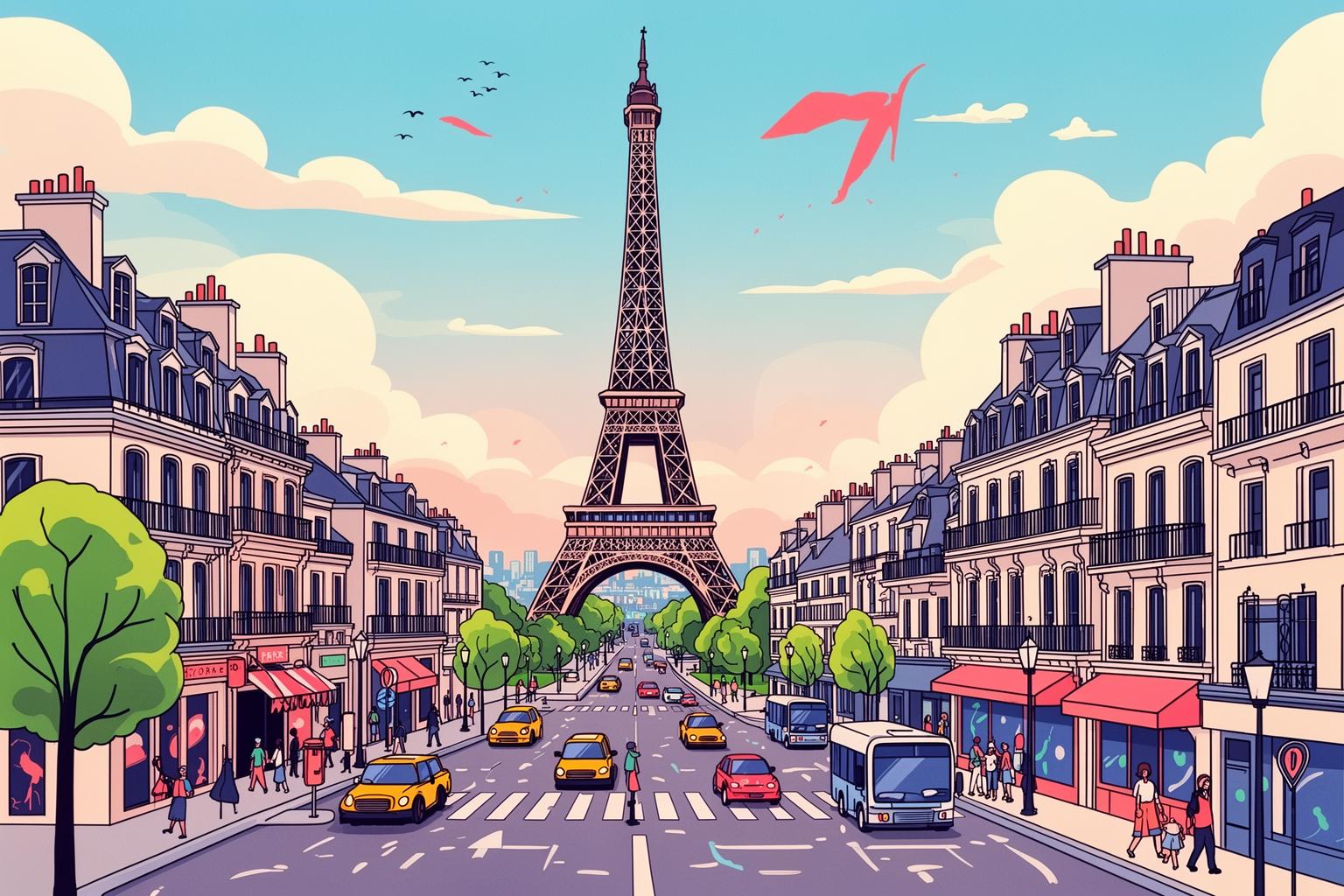
While Catalonia was the essence of Miró’s soul, Paris was the realm of his mind. It was the city that challenged him, shaped his vision, and ultimately propelled him onto the international stage. During the 1920s, Paris stood as the undisputed epicenter of the art world—a vibrant, chaotic hub of radical ideas and revolutionary movements. For a young artist from Barcelona, arriving in this creative furnace was both daunting and exhilarating. It was here that he transcended the earthly realism of his Mont-roig period and delved into the subconscious realms of Surrealism, crafting the dreamlike visual language that would become his hallmark.
Montparnasse and the Rue Blomet Studio
Miró’s Paris was the bohemian enclave of Montparnasse. Forget the polished allure of the Champs-Élysées; this was a district of struggling artists, poets, and intellectuals who survived on cheap wine, passionate debates, and relentless ambition. Miró secured a humble studio at 45 Rue Blomet, sharing the space with a community of kindred spirits. His neighbor was the artist André Masson, who would become a close friend and serve as his entrée into the emerging Surrealist circle. Life was challenging. Miró famously endured severe poverty during these years, often lacking money even for food. He later recounted his “hunger hallucinations,” vivid, swirling visions that inspired the fantastical creatures and biomorphic forms in his paintings. The iconic The Harlequin’s Carnival emerged directly from this period—a fevered, intricate explosion of bizarre and playful figures born from hunger and a fertile imagination. Today, wandering through Montparnasse, you can still visit legendary cafés like La Rotonde and Le Dôme, where Miró and his contemporaries, including Picasso, Hemingway, and Giacometti, once gathered to debate art and life. Though the neighborhood has evolved, the spirit of that revolutionary era still lingers in the air.
A Dialogue with the Avant-Garde
Paris offered the intellectual stimulus absent in Mont-roig. Here, Miró formally connected with André Breton, the poet and leader of the Surrealist movement. Though Miró never wished to be confined by any single ideology, he deeply resonated with the Surrealists’ fascination with dreams, the subconscious, and automatic drawing. He embraced their mission to free art from the shackles of logic and reason. This Parisian influence compelled him to “assassinate” traditional painting, dismantling forms to invent a new pictorial space. His canvases from this era grew more sparse and poetic. A simple line, a dot of color, a cryptic symbol—these became his instruments for exploring an inner universe. To witness this transformation firsthand, a visit to the Centre Pompidou in Paris is essential. The museum houses an exceptional collection of his works from the 1920s and ’30s, allowing visitors to follow his progression from the detailed world of The Farm to the abstract poetry of paintings like the Blue triptych. Viewing his art within this Parisian framework, alongside the work of his Surrealist peers, underscores his singular position: an artist who drew on the ancient, earthy traditions of his homeland to create a visual language that was radically and universally modern.
Mallorca: The Silence, The Sun, The Stars
If Barcelona was his birthplace and Mont-roig his soul, then the island of Mallorca was his ultimate refuge. It was where his mother and his wife, Pilar, lived, and a place familiar to him since childhood. Yet it was from the mid-1950s onward, in the final phases of his life, that he made it his permanent home, seeking a tranquil sanctuary where he could realize the grand visions of his imagination. Bathed in the brilliant, crystalline light of the Mediterranean, his work entered a magnificent final phase. The colors grew bolder, the gestures more expansive, and the themes more elemental: the infinite cosmos, the cycle of life and death, the profound silence of the island’s landscape. Mallorca became his grand studio, offering the space and freedom he had always longed for.
An Island Sanctuary in Cala Major
Miró and his wife settled in Cala Major, a peaceful suburb just outside Palma, the island’s capital. Perched high on a hill with sweeping views of the turquoise bay, he created his creative haven. Today, this revered place is preserved as the Fundació Pilar i Joan Miró a Mallorca, a remarkable arts center providing one of the most intimate and moving artist experiences worldwide. The foundation consists of three main buildings, each an architectural gem representing different chapters of Miró’s later years. Visiting here is unlike going to a typical museum; it feels like entering the artist’s private world, where the vibrant energy of creation still lingers in the air. The atmosphere exudes calm focus, far removed from the bustling tourist hubs below. It offers a chance to slow down and connect with the spirit of a master at the peak of his powers.
The Sacred Space: Sert’s Studio and Son Boter
For any true Miró enthusiast, the emotional core of the foundation is the Sert Studio, the realization of a lifelong dream. After decades of working in cramped quarters, Miró finally commissioned his friend, architect Josep Lluís Sert, to design the studio he had always yearned for. Finished in 1956, the building is a marvel of modernist design, featuring a dramatic curved roof and expansive windows that fill the space with Mallorca’s distinctive silvery light. The true magic lies in the fact that the studio has been preserved exactly as it was on the day Miró passed away in 1983.
A Glimpse into the Master’s Process
Stepping inside is a breathtaking, almost sacred experience. Through the glass, you peer into a moment frozen in time. Unfinished canvases rest on easels—some marked by just a few bold black strokes, others awaiting their final color touches. Hundreds of brushes and pots of pigment cluster on tables and carts, splattered with evidence of his vigorous process. Postcards, newspaper clippings, and folk art objects—a traditional Mallorcan siurell whistle, a dried starfish, a child’s drawing—are pinned to the walls, forming a constellation of personal inspirations. You see the worn armchairs where he would reflect on his work for hours, a practice he called “the immobile voyage.” It offers a deeply powerful and intimate glimpse into the daily rituals of a genius. His presence, energy, and unwavering dedication can be felt palpably. A short walk uphill leads to Son Boter, an 18th-century traditional Mallorcan farmhouse Miró later acquired as a second studio. The contrast with the sleek, modern Sert studio is striking. Here, he worked directly on the rough, whitewashed walls, covering them in charcoal graffiti—sketches, ideas, and preparatory drawings for future sculptures and paintings. This raw, rustic space served as a laboratory for experimentation and primal expression.
The Gardens and the Mediterranean Vista
The buildings sit within beautiful Mediterranean gardens, dotted with his monumental bronze sculptures. These whimsical, powerful figures inhabit the space naturally among pine trees and cacti, their dark silhouettes striking against the brilliant blue sky and sea. The gardens themselves are a peaceful retreat, offering stunning views over the Bay of Palma. Visitors can stroll the paths, discover hidden corners, and witness the world as Miró saw it daily from his studio window—the deep, intense blue of the water, the bright sun, the dark green pines. This is the palette of his later works, vividly alive before your eyes. It is also an ideal spot for photography, capturing the extraordinary interaction of nature, art, and architecture that makes this place so unique.
The Legacy in Light: The Moneo Building
The foundation’s final element is the main museum building, designed by renowned Spanish architect Rafael Moneo and inaugurated in 1992. This striking, modern structure, partially embedded into the hillside, houses a vast collection of Miró’s works, many gifted by the artist himself. Its star-shaped footprint subtly references one of his favored symbols. Inside, the galleries display the remarkable output of his final decades—large, expressive canvases, bold sculptural experiments, and a vast array of drawings and prints. The scale and freedom of these late works are astonishing. They reveal an artist at life’s end, still playful, still experimental, and boldly pushing the boundaries of his art with the curiosity and vigor of youth. It stands as a testament to his belief in art as a continuous, lifelong journey of discovery.
A Traveler’s Palette: Practical Tips for Your Miró Pilgrimage
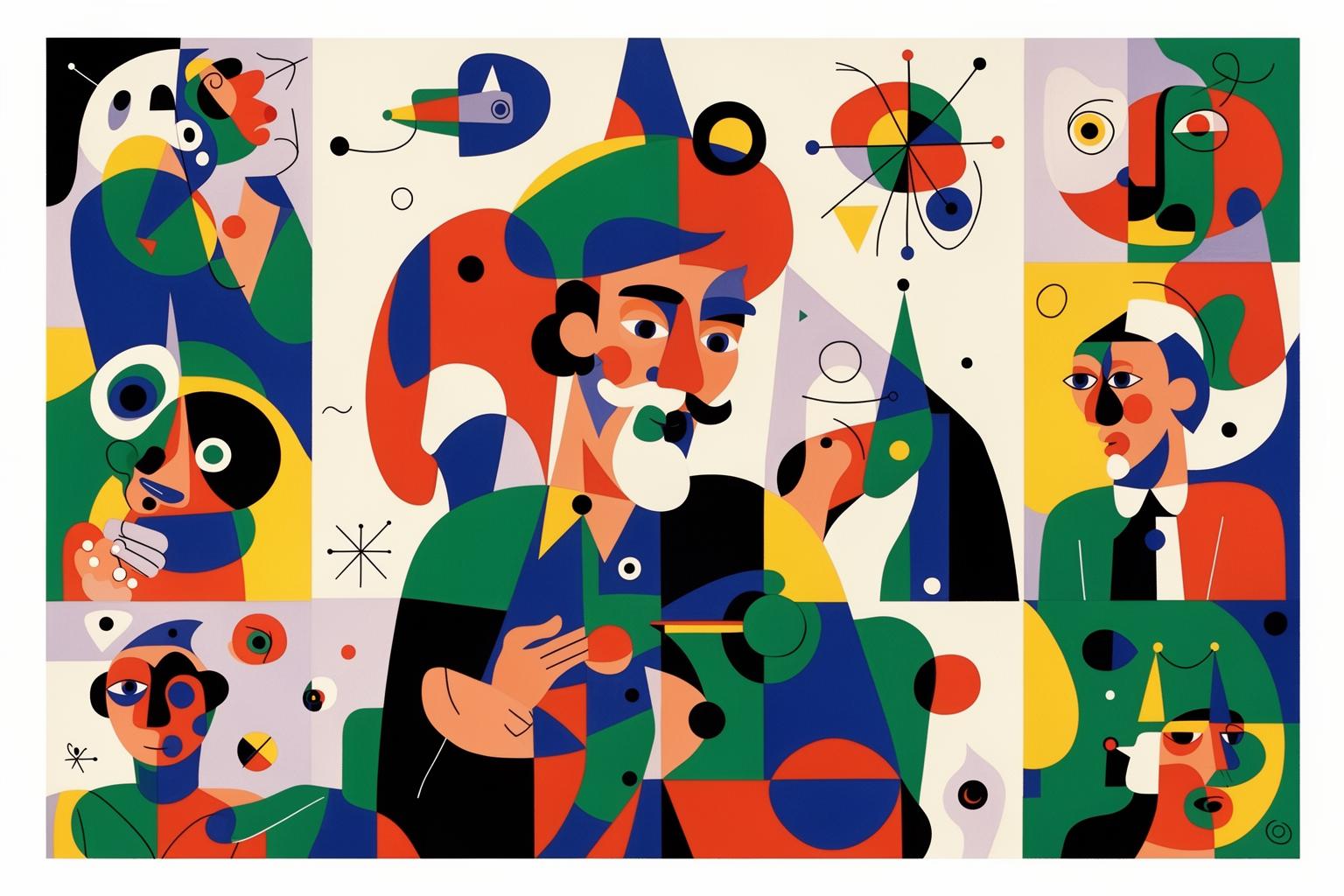
Exploring Miró’s world is an incredibly fulfilling experience, and a bit of planning can help you maximize it. His main sites are scattered throughout Catalonia and the Balearic Islands, so organizing your logistics will ensure a smooth and inspiring trip.
Crafting Your Itinerary
Most visitors will find it easiest to base themselves in Barcelona for the first part of the trip. The city alone offers enough Miró sites to occupy at least two full days, including the Fundació on Montjuïc, the public artworks, and the vibrant atmosphere of the Gothic Quarter. From Barcelona, a day trip to Mont-roig del Camp is highly recommended. You can take a train to nearby Cambrils and then a taxi, or rent a car for added flexibility, allowing you to explore the surrounding countryside and visit key landscape spots like the Hermitage of La Roca. For the Mallorcan leg, you’ll need to fly or take a ferry from Barcelona to Palma. Plan to spend at least half a day at the Fundació Pilar i Joan Miró, although you might want longer to fully absorb the studios and gardens. Combining these stops creates a meaningful pilgrimage that traces the chronological and spiritual journey of his life.
Getting Around
Barcelona boasts an excellent public transport system. The metro is efficient, and a funicular railway carries you partway up Montjuïc hill to the Fundació. Walking is the best way to experience the city’s energy and see his public art. Las Ramblas is entirely pedestrian, and Parc de Joan Miró is just a short stroll from Plaça d’Espanya. To travel between Catalonia and Mallorca, budget airlines provide frequent and affordable flights. Once on Mallorca, local buses run from Palma’s center to Cala Major. Renting a car is also an excellent choice if you want to explore more of the island’s stunning coastline and interior, where Miró found much of his inspiration.
Beyond the Museums
To truly embrace Miró’s spirit, immerse yourself in the culture that shaped him. In Barcelona, visit the El Raval neighborhood, home to the MACBA (Barcelona Museum of Contemporary Art), to see his work alongside other modern masters. Enjoy a traditional Catalan meal and savor the regional flavors. In Mont-roig, take a picnic and find a quiet spot among the olive groves, letting the sun and silence envelop you. In Mallorca, after your foundation visit, go down to a small local beach, dip your toes in the Mediterranean, and watch the light shift on the water as the sun sets. This journey is as much about sensing the spirit of a place as it is about viewing art. By connecting with the landscapes, cuisine, and light of Catalonia and Mallorca, you connect with the essence of Joan Miró.
This pilgrimage is more than just an art tour; it’s an invitation to see the world with renewed wonder. Walking in Miró’s footsteps, you understand that for him, life and art were inseparable, just as the earth beneath him and the cosmos above were intertwined. He showed that a simple line could hold the universe’s energy and a splash of color could convey profound human emotion. You’ll leave not only with beautiful photos and memories but with a fresh perspective on the world—where everything, from a cracked wall to a gnarled tree to a starry night sky, holds poetic possibility. It’s a journey that delights the eyes, inspires the mind, and, most importantly, nourishes the soul.