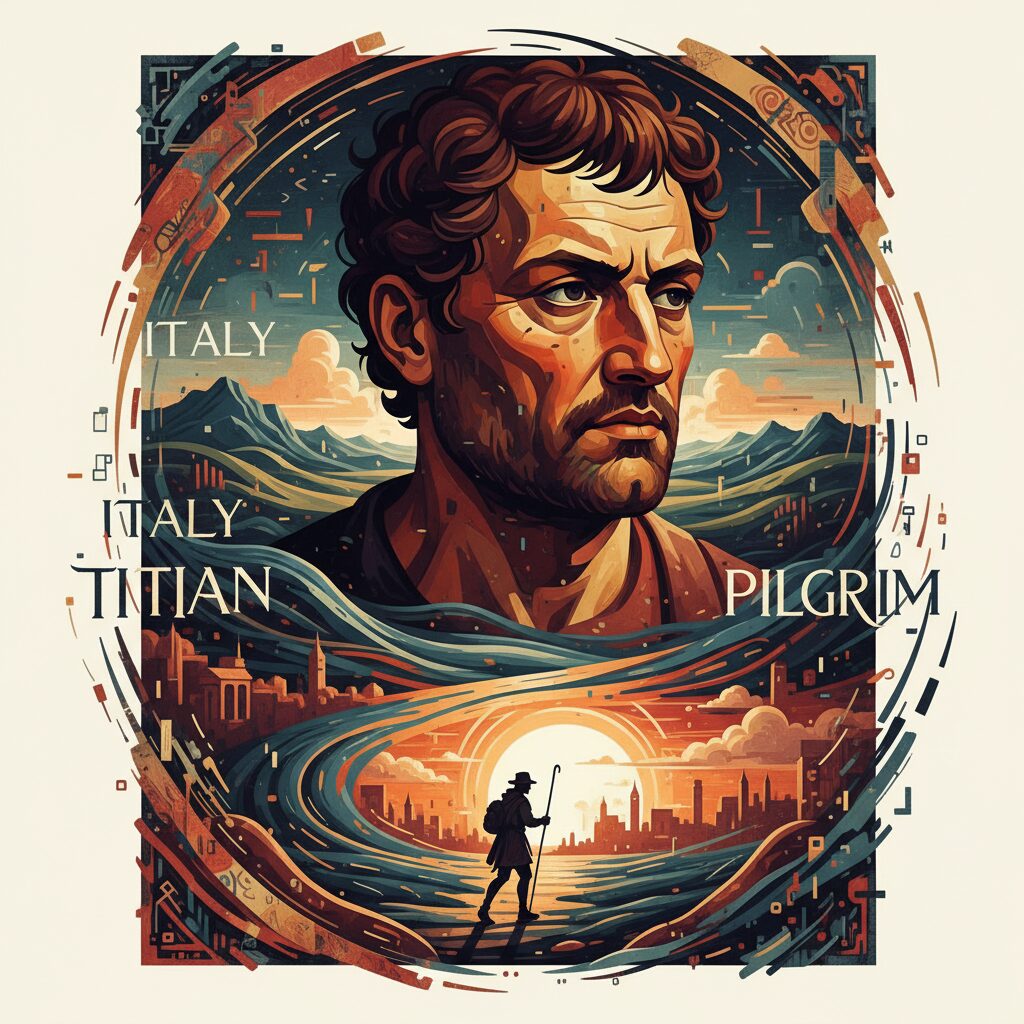
The air in Venice shimmers. It’s a city born of water and light, where gilded domes float above a labyrinth of turquoise canals, and the sun sets in strokes of fiery crimson and bruised purple. To walk here is to step inside a painting, and for centuries, one artist, above all others, captured this impossible beauty and broadcast it to the world. His name was Tiziano Vecellio, but we know him as Titian. He was a titan of the High Renaissance, a master whose command of color was so profound it was said he painted with “crushed jewels.” His brushwork was alchemy, transforming canvas and wood into living flesh, shimmering silk, and divine light. This journey is not just a tour of museums; it is a pilgrimage. It’s a quest to follow the ghost of Titian, to stand in the places that shaped him, from the jagged, sun-drenched peaks of his mountain birthplace to the opulent, shadowy basilicas of his adopted home, Venice, and onward to the regal courts of Europe that clamored for his genius. We will trace the arc of his life and art, seeking not just to see his masterpieces, but to feel the world that created them—to breathe the same air, to witness the same light, and to understand how a boy from the mountains became the undisputed king of Venetian painting.
If you’re inspired to follow in the footsteps of other artistic giants, consider embarking on a journey through the colorful worlds of Wassily Kandinsky.
The Alpine Cradle: Pieve di Cadore

Birthplace of a Titan
Long before the world recognized his name, Titian was a child of the mountains. Our journey begins not amid the canals of Venice but far to the north, in Pieve di Cadore, a small town nestled among the formidable, jagged peaks of the Dolomite Mountains. This is a landscape full of high drama, where sheer cliffs of pale rock blush pink and orange in the alpine glow of sunrise and sunset—a phenomenon known as enrosadira. Standing here, one immediately understands the origins of Titian’s palette. The intense blues of the sky, the deep emerald of the pine forests, and the fiery crimsons of the fading day are not artistic exaggerations; they are the colors of his home.
At the core of this pilgrimage is the Casa Natale di Tiziano, the very house where the artist was born around 1488. It’s a humble, rustic stone and dark timber structure, a world apart from the Venetian palazzi and royal courts he would later frequent. Stepping inside feels like stepping back in time. The rooms are small, the ceilings low, and the air thick with the scent of old wood and history. There is a profound intimacy here, a connection to the artist’s simple beginnings. You can stand by a window and gaze at the same sawtooth mountains that would have been the first grand vistas of his childhood. It is in this contrast—the rustic simplicity of his home against the epic scale of the surrounding nature—that the roots of his genius begin to take shape. He learned about light and shadow not in a studio, but from the way the sun carved its path across the Cridola and Marmarole mountain ranges.
A short walk from his birthplace leads to the Archdeaconal Church of Santa Maria Nascente. The church itself is a beautiful example of local architecture, but for a Titian pilgrim, it holds a special treasure. Inside, one finds a painting depicting the Madonna and Child with Saints, including St. Tiziano, the artist’s namesake. Though its attribution is debated, with some scholars suggesting it was created by his workshop under his supervision, its presence here is powerful. Seeing a piece so intimately connected to him in his own hometown, far from grand museums, feels like discovering a secret. It is a testament to his bond with this place—a place he returned to throughout his life, not only for family but, one imagines, for the raw, elemental inspiration of the mountains.
The Spirit of the Mountains
The atmosphere in Pieve di Cadore is one of crisp clarity and quiet reverence. The air is thin and pure, and silence is broken only by the chime of church bells and the distant call of birds. It is a place that invites contemplation. One can easily imagine a young Titian, gifted with an extraordinary sensitivity to the visual world, absorbing the dramatic interplay of light, color, and form that surrounded him. The sharp, diagonal thrust of a mountain peak foreshadows the dynamic compositions of his later narrative paintings. The soft, hazy atmosphere of summer valley mornings finds its echo in the sfumato of his portraits. This landscape was his first teacher.
To truly connect with Titian’s origins, you must immerse yourself in this environment. The best time to visit is late spring or summer, when valleys are lush and green, and hiking paths invite exploration of the very scenes that populate the backgrounds of paintings like The Three Ages of Man. A walk along the shores of nearby Lago di Centro Cadore offers breathtaking reflections of the peaks, creating a living canvas of blues and greens. For first-time visitors, a simple tip is to slow down. Don’t just visit the house and church; sit in an outdoor café in the main piazza, order a coffee, and simply watch the light shift on the mountains. This is the light Titian carried with him to Venice.
Practically speaking, reaching Pieve di Cadore is a journey in itself. It is most easily reached by car or a combination of train and bus from Venice—a scenic route that moves from the flat wetlands of the lagoon into the foothills and finally into the heart of the Dolomites. The journey itself is part of the experience, a gradual ascent into the world of Titian’s youth. While you are there, be sure to indulge in the local cuisine. This is mountain food at its heart—robust and comforting. Try casunziei, half-moon shaped pasta filled with beetroot or spinach, often served with melted butter and poppy seeds. It is a dish as vibrant and surprising as a Titian masterpiece, a perfect taste of the land that gave birth to a giant.
La Serenissima: Venice, the Floating Muse
The Workshop of the World
If Cadore was Titian’s birthplace, Venice was where his talent was truly forged. In this shimmering, seemingly impossible city of canals and commerce, his raw ability transformed into unmatched mastery. He arrived as a boy, a mountain youth plunged into the most cosmopolitan and artistically vibrant city on Earth. Sixteenth-century Venice was more than a city; it was an empire, the crossroads between East and West. Its bustling port welcomed ships laden with silks from Damascus, spices from Alexandria, and pigments from Afghanistan. The very atmosphere was saturated with color and luxury. For a young artist attuned to color, it must have been an overwhelming sensory delight, a paradise of visual inspiration.
He began his apprenticeship in the workshop of the Bellini brothers, Gentile and then Giovanni, leaders of the Venetian School. There, he absorbed the Venetian focus on colorito (color) rather than the Florentine and Roman preference for disegno (drawing and design). While Michelangelo sculpted figures from intellectual ideals of form, the Venetians constructed them through layers of color, capturing the fleeting play of light, the warmth of flesh, and the texture of fabric. Titian took in these lessons but was destined to outshine his mentors. His early partnership and spirited rivalry with the brilliant yet short-lived Giorgione propelled him into a new territory of psychological depth and atmospheric richness.
His breakthrough—and the moment Venice truly recognized this natural force among them—occurred in 1518. It came as a monumental public commission for the high altar of the city’s most significant Franciscan church, the Basilica di Santa Maria Gloriosa dei Frari. The work was the Assumption of the Virgin. It was electrifying. Instantly, the gentle, contemplative style of Bellini appeared outdated by a generation. Titian’s Virgin was no passive icon but a vivid, dynamic figure swept heavenward in a whirlwind of golden light and ecstatic apostles. The painting thrummed with energy, emotion, and a revolutionary use of color and dramatic gesture. Venice was captivated. The mountain boy had arrived and made the city his own.
A Venetian Itinerary: Tracking Titian’s Brushstrokes
To trace Titian’s presence in Venice is to wander through a living gallery. His works are not confined to a museum; they are embedded in the city’s very churches and halls, displayed where he intended them to be seen, under the natural light that inspired him.
Basilica di Santa Maria Gloriosa dei Frari
Your first and most essential stop is the Frari. This vast, soaring Gothic basilica honors the Franciscan order’s influence, but for art lovers, it is Titian’s sacred home. As you walk down the long nave, your gaze is inevitably drawn toward the high altar and the monumental masterpiece above it. The Assumption of the Virgin is breathtaking—not merely a painting, but an event. The canvas splits into three tiers: the earthbound apostles below, gesturing in a tumult of shock, awe, and disbelief; the Virgin Mary at the center, arms raised, ascending on a cloud of cherubs into a blinding golden light; and God the Father above, poised to receive her. What makes it revolutionary is its sheer energy. The swirling crimson of the Virgin’s robe, the apostles’ dynamic poses, the radiant light—all combine to create an explosive sense of upward movement. Standing before it, you feel the ground drop away. Take your time here. Observe the individual expressions on the apostles’ faces. Sense the warmth of that divine glow. This painting sealed Titian’s fame, and experiencing it in its sacred setting is a spiritual encounter.
Yet the Frari holds another, arguably more innovative, masterpiece. In a side aisle stands the Pesaro Madonna (or Madonna di Ca’ Pesaro). Commissioned by Jacopo Pesaro to celebrate a naval victory, this altarpiece defied centuries of compositional tradition. Instead of a static, frontal arrangement with the Madonna and Child enthroned at the center, Titian arranges the scene diagonally. The Virgin sits off-center, guiding the viewer’s eye inward and upward. Pesaro family members appear as donors, their portraits so vivid they seem alive. Two towering columns stretch beyond the frame, creating an illusion of vast architectural space. The light is soft and natural, the colors rich and deep, and the whole scene is a carefully balanced blend of the sacred and the secular. It is a quietly confident masterpiece that laid a foundation for Baroque art. Viewing both the Assumption and the Pesaro Madonna in one visit showcases Titian’s range, from explosive drama to refined innovation.
Gallerie dell’Accademia
While the Frari offers the experience of seeing his works in their intended settings, the Gallerie dell’Accademia presents a comprehensive overview of his career. Housed in a former convent on the Grand Canal, this museum is the definitive collection of Venetian painting. Here, you can trace Titian’s evolution across different periods of his long life. Early pieces reveal Giorgione’s influence, while grand public works such as the Presentation of the Virgin at the Temple display vivid detail and a palpable civic pride.
The emotional heart of the collection—and perhaps of any Titian pilgrimage—is his final piece: the Pietà. This deeply personal, poignant work was meant for his tomb in the Frari, a final gift in exchange for a burial spot. He died amid the plague of 1576 before finishing it, and his student Palma Giovane completed the work. The scene is dark, tragic, and almost chaotic. The body of Christ is cradled by a distraught Virgin Mary and a frantic Mary Magdalene. At their feet, a bent, aged figure—a self-portrait of Titian—reaches out to touch Christ. The brushwork is remarkably loose and expressive, a flurry of strokes dissolving form into pure feeling. The colors are somber and illuminated by an eerie, supernatural light. Standing before this raw, unfinished masterpiece is like peering into the soul of an aging artist confronting his mortality. It is a profoundly moving testament to his enduring faith and artistic passion.
Scuola Grande di San Rocco
Although this splendid building is famed for Tintoretto’s overwhelming cycle of paintings—Titian’s great rival—it is essential for understanding 16th-century Venice’s artistic milieu. The rivalry between these two giants was legendary. While here mainly to absorb Tintoretto’s dramatic whirlwind scenes, don’t miss Titian’s contribution. In the Sala dell’Albergo hangs his Christ Carrying the Cross. It is a compelling, claustrophobic composition placing the viewer uncomfortably close to Christ’s suffering. Quieter and more intensely focused than the surrounding Tintorettos, it offers profound psychological insight amid epic drama. Nearby, in the Church of San Salvador, another Titian masterpiece awaits: a radiant Annunciation, famous for its shimmering, almost impressionistic angel Gabriel, who seems to materialize out of pure light. These works enhance the context of Titian’s career, revealing how he engaged with and often surpassed his contemporaries.
Basilica di Santa Maria della Salute
This magnificent Baroque basilica, built to commemorate the end of a plague, stands like a gleaming white sentinel at the Grand Canal’s entrance. Though its architecture is later, the sacristy houses a collection of early Titian pieces that are indispensable. Here, ceiling panels depict Old Testament tales: Cain and Abel, The Sacrifice of Abraham and Isaac, and David and Goliath. These works are bursting with dynamism and daring. Painted to be viewed from below (di sotto in sù), they feature radical foreshortening and twisting figures that seem to tumble from the heavens. They reveal the young Titian’s ambition and early mastery of complex compositions. Seen in the sacristy’s intimate space, after the grand public statements of the Frari, they reveal yet another side of his genius—his ability to tailor his style to the scale and function of each commission, always with stunning effect.
Living Like Titian in Venice
To fully appreciate Titian’s Venice, you must engage with the city’s sensory wonders. A first-time visitor should learn to navigate the vaporetto, Venice’s water bus system. Purchase a multi-day pass for unlimited journeys. Take the Line 1 boat for a slow, majestic ride along the Grand Canal, a floating tour past palazzi known to Titian and his patrons. When visiting churches, be respectful: dress modestly with shoulders and knees covered, and note opening hours as some close midday. Booking tickets for the Gallerie dell’Accademia in advance—especially in peak season—is highly advisable to avoid long waits.
The true enchantment, however, lies in getting lost. Wander beyond the main arteries of San Marco and Rialto. Explore quiet residential neighborhoods like Cannaregio or Dorsoduro. Here you’ll encounter the Venice Titian knew: sunlit squares where laundry flutters between buildings, silent canals echoing only the sound of water lapping against stone, and the sudden, breathtaking reveal of a hidden garden behind an iron gate. Pay close attention to the light—the way it reflects on the water and casts shimmering, dancing patterns beneath bridges and on building facades. This is the living light that suffuses his canvases. This is the atmosphere he inhaled and wove into his paintings.
The Call of Popes and Princes: Rome and the Courts of Europe
A Roman Interlude
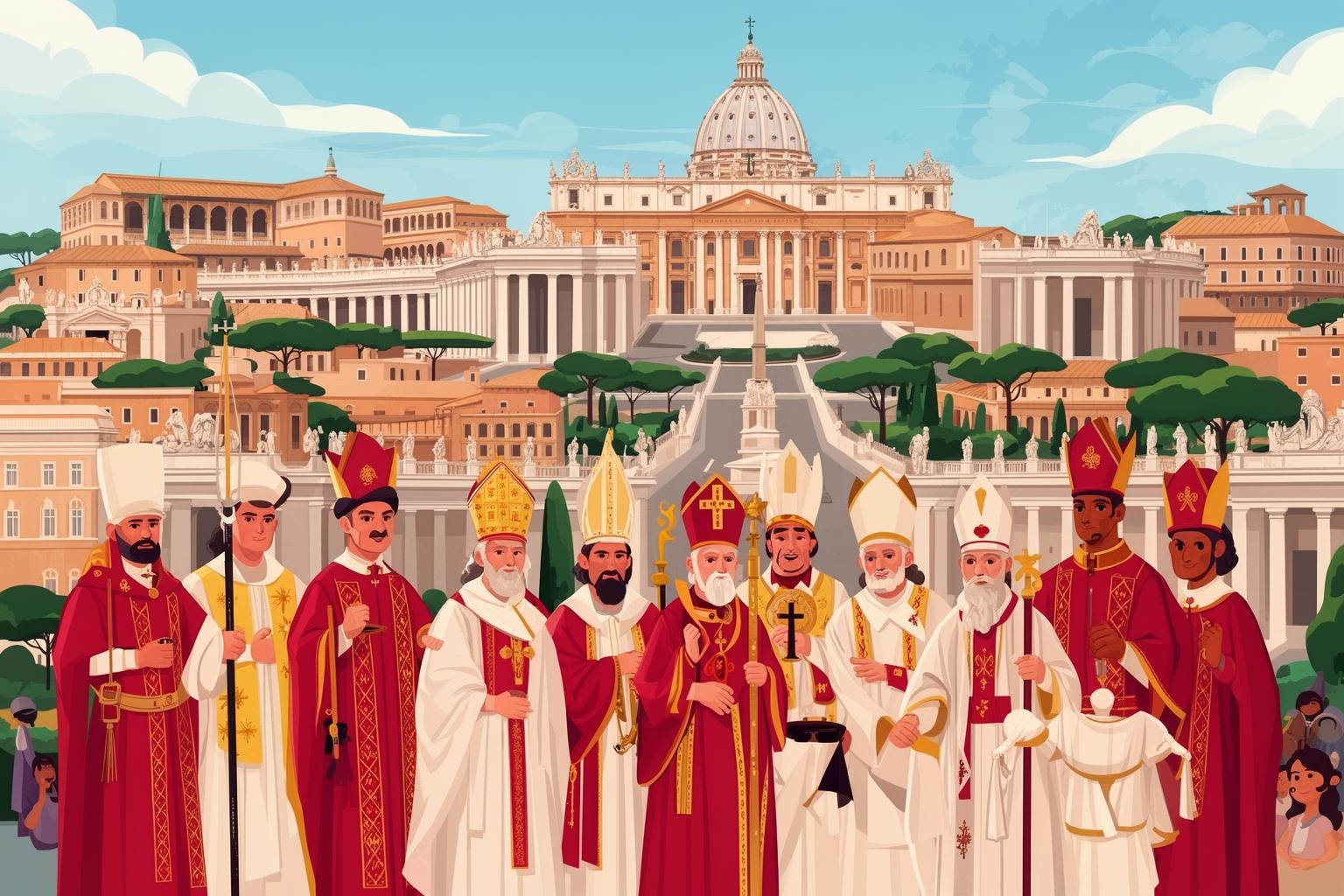
By the mid-16th century, Titian had become more than just a Venetian master; he was an international celebrity. His renown reached popes and emperors alike, and in 1545, he undertook a significant journey to Rome at the invitation of Pope Paul III. This marked his first long stay in the city of antiquities and the monumental High Renaissance art. He strolled through the Roman Forum, admired newly unearthed classical sculptures such as the Laocoön, and confronted the colossal achievements of his great rivals, Raphael and Michelangelo. He viewed the Sistine Chapel ceiling and, most notably, the recently finished Last Judgment.
This experience deeply influenced him. Though he stayed true to the Venetian emphasis on color and light, his time in Rome fostered a newfound respect for monumentality, anatomical strength, and grand, intricate compositions. The eternal city challenged and enriched his artistry, guiding him toward the heroic style that would define much of his later work for his most powerful patrons. Following him to Rome reveals this crucial turning point in his career.
Today, Rome houses a small but exquisite collection of his masterpieces. The premier destination is Villa Borghese, a splendid villa set within a lush park. Inside the Galleria Borghese, alongside works by Bernini and Caravaggio, hangs one of Titian’s most renowned and mysterious paintings: Sacred and Profane Love. It is a work of sublime beauty and puzzling symbolism. Two women—one elegantly dressed, the other sensuously nude—sit on either side of a sarcophagus-like fountain in a serene landscape. Scholars have debated its meaning for centuries: is it an allegory of marriage, a Neoplatonic discourse on love, or something altogether different? Whatever the interpretation, the painting is a technical masterpiece. The textures of silk and flesh, the warm, glowing light of the landscape, and the tranquil beauty of the figures create a visual poem. Encountering it in the opulent setting of the Borghese is an unforgettable experience.
Other Roman treasures include the Doria Pamphilj Gallery, a private collection housed in a grand palace, where one can see his powerful Salome with the Head of John the Baptist. The Vatican Museums display his masterful portrait of Doge Niccolò Marcello, a testament to Venetian power and dignity. Viewing Titian’s works in Rome allows one to sense the artistic dialogue he engaged in with the city’s legacy—absorbing its lessons on grandeur and form while steadfastly maintaining his unique command of color and emotion.
The Emperor’s Painter: Titian and the Habsburgs
Titian’s most significant patron was neither a pope nor a doge, but the most powerful man in the world: the Holy Roman Emperor, Charles V. Their relationship was marked by mutual respect and admiration. Titian became the emperor’s official court painter, a prestigious role that elevated him to noble status. He produced a series of definitive portraits that shaped the emperor’s public image for posterity. Although he spent little time at court, his influence was vast, with his paintings dispatched across Europe, securing his international stature. This patronage continued under Charles’s son, Philip II of Spain, a more reserved but equally devoted collector of Titian’s work.
To fully appreciate the magnitude of Titian’s later career, one must venture beyond Italy to the museums housing these royal collections. The ultimate destination for any dedicated Titian enthusiast is the Prado Museum in Madrid.
The Prado Museum, Madrid: A Royal Collection
The Prado is, quite simply, the greatest repository of Titian’s paintings worldwide. Built primarily from Spanish royal holdings, the collection is breathtaking in both quality and volume. Walking through the Titian rooms at the Prado reveals the full, magnificent range of his mature and late styles. Here hangs the iconic Equestrian Portrait of Charles V at Mühlberg. More than a portrait, it is a masterpiece of political propaganda, depicting the emperor as a victorious Christian knight, solitary and steadfast against a vast, atmospheric landscape. The gleam of light on his armor, the weariness and resolve in his eyes, and the dramatic sunset make it the definitive image of imperial authority.
Yet the Prado is perhaps best known for the series of mythological paintings Titian created for Philip II, which he called his poesie, or “painted poems.” These are among the most sensuous and emotionally complex works in Western art history. Paintings such as Danaë Receiving the Golden Rain, Venus and Adonis, and The Rape of Europa explore themes of love, desire, tragedy, and the often-brutal interactions between mortals and gods. In these later works, Titian’s brushwork became increasingly loose and expressive. Up close, the canvases break down into a flurry of seemingly abstract strokes and patches of color—a style critics termed pittura di macchia (painting of patches). Yet from afar, these strokes merge into shimmering forms, capturing the play of light on flesh, water, and fabric with stunning realism. The poesie stand as a testament to the inexhaustible creativity of the aging master, who continued to innovate and extend the boundaries of his medium until the very end.
Vienna and Munich: Echoes of the Empire
The Habsburg legacy ensures that other major European museums also boast remarkable Titian collections. The Kunsthistorisches Museum in Vienna is another essential stop. Originating from the Austrian imperial collections, it features masterpieces from all stages of his career, including the stately Isabella d’Este, the dramatic and crowded Ecce Homo, and the tender Madonna of the Cherries. In Munich, the Alte Pinakothek holds additional treasures such as The Crowning with Thorns, a dark, intense night scene demonstrating his mastery of chiaroscuro, and another commanding portrait of Charles V Seated, capturing the emperor in a more intimate, fatigued moment. Visiting these collections reveals the vast scale of his output and the continent-wide demand for his work. He was not merely a Venetian painter; he was the painter of Europe.
The Titian Palette: A Culinary and Sensory Journey
To follow Titian is to awaken every sense. His paintings offer a visual banquet, a vibrant harmony of color and texture so lifelike they invite you to reach out and touch them. To forge a deeper bond, one should also savor the flavors of the regions that inspired him, for the landscape’s palette is inseparably intertwined with the artist’s own.
Tastes of the Veneto
The culinary heritage of the Veneto region is as rich and diverse as Titian’s masterpieces. The deep, velvety reds adorning senators and saints in his portraits find their perfect counterpart in a glass of Amarone della Valpolicella, a powerful, nuanced red wine crafted from partially dried grapes. Its bold notes of cherry, plum, and spice are as dramatic and intense as the Assumption of the Virgin. The golden light illuminating his Venetian scenes is reflected in a plate of creamy risotto, perhaps perfumed with saffron, or a soft, comforting heap of golden polenta, a regional staple often paired with savory stews or mountain cheeses from near his home.
The Rialto Market, a place Titian would have known well, is like a living still life. Its vibrant produce presents a riot of Titian-inspired color: the bitter, deep purple of Treviso radicchio, the bright orange of pumpkins, the shimmering silver of freshly caught Adriatic sardines. To savor a dish of sarde in saor (sweet and sour sardines with onions, pine nuts, and raisins) is to taste the history of Venice as a trading empire, blending local ingredients with exotic spices from the East — a dish embodying the cosmopolitan world Titian once knew.
A Roman Feast
Titian’s time in Rome introduced him to a distinct aesthetic—one defined by monumental form, classical balance, and earthy gravitas. Roman cuisine mirrors this spirit. Rather than delicate nuances, it favors bold, straightforward, and hearty flavors. Picture Titian, after a day spent admiring Michelangelo’s powerful sculptures, sitting down to robust Roman fare. Perhaps a plate of cacio e pepe, a simple yet profound pasta dish combining sharp Pecorino Romano cheese and black pepper. Or carciofi alla giudia (Jewish-style fried artichokes), with crispy outer leaves and tender hearts. These dishes are rooted in earth and tradition, much like the ancient sculptures and imposing architecture that captivated him. A glass of rich red wine from Lazio would complete a meal as solid and timeless as the city itself.
A Legacy in Color and Light
Our pilgrimage, beginning in the crisp, clean air of the Dolomites and meandering through the misty, labyrinthine canals of Venice to the grand halls of popes and emperors, reveals a journey of breathtaking artistic evolution. Titian was a man who absorbed the world around him—the raw power of nature, the decadent splendor of La Serenissima, the classical grandeur of Rome—and transformed it through his brush into something eternal. He showed the world how color could express not only appearance but emotion, drama, and psychology. His influence is immeasurable; from Rubens and Velázquez to Delacroix and the Impressionists, artists across centuries have regarded Titian as the ultimate master of paint and passion.
To follow in his footsteps is to understand that his art is not meant to be confined behind velvet ropes. It is alive. It breathes in the pink glow of an alpine sunset over Cadore, in the shimmering reflection of a palazzo on the Grand Canal, and in the profound humanity that gazes from his portraits. A journey into Titian’s world is more than an art history lesson; it is an invitation to see the world as he did— as a place of infinite beauty, drama, and color. It is a quest that leaves you with more than memories of paintings; it grants you a richer, more vibrant way of experiencing everything.