There’s a certain kind of light that falls on the half-timbered houses of Nuremberg, a soft, golden glow that seems to seep into the very sandstone of the Imperial Castle perched above the city. It’s a light that feels ancient, a light that has witnessed the rise and fall of empires, the birth of ideas, and the meticulous work of a master’s hand. This is the light of Albrecht Dürer, the titan of the Northern Renaissance, an artist whose vision was so precise, so profoundly inquisitive, that to walk through the cities he inhabited is to see the world through his eyes. For a photographer, this journey is more than a simple tour; it’s a pilgrimage to the source code of modern observation, a quest to understand a man who, with a single line of an engraving tool, could capture the weight of a soul, the texture of a hare’s fur, or the complex sorrow of an angel. Dürer was not merely a painter or a printmaker; he was a revolutionary, a scientist of sight, a bridge between the Gothic world of his youth and the humanistic dawn of the Renaissance. He traveled, he learned, he observed, and he synthesized everything he saw into a body of work that forever changed the course of Western art. Our journey will not be confined to a single gallery but will trace the map of his life, from the bustling heart of Franconia to the luminous canals of Venice and the windswept shores of the North Sea. We are chasing the ghost of a genius, following the echo of his footsteps on cobblestone streets and Alpine passes, seeking to find not just the places he saw, but the very essence of how he saw them.
Just as Dürer’s travels shaped his revolutionary vision, one can also embark on a modern artistic pilgrimage by tracing the life and landscapes of Juan Gris.
The Heart of the World: Nuremberg’s Enduring Embrace
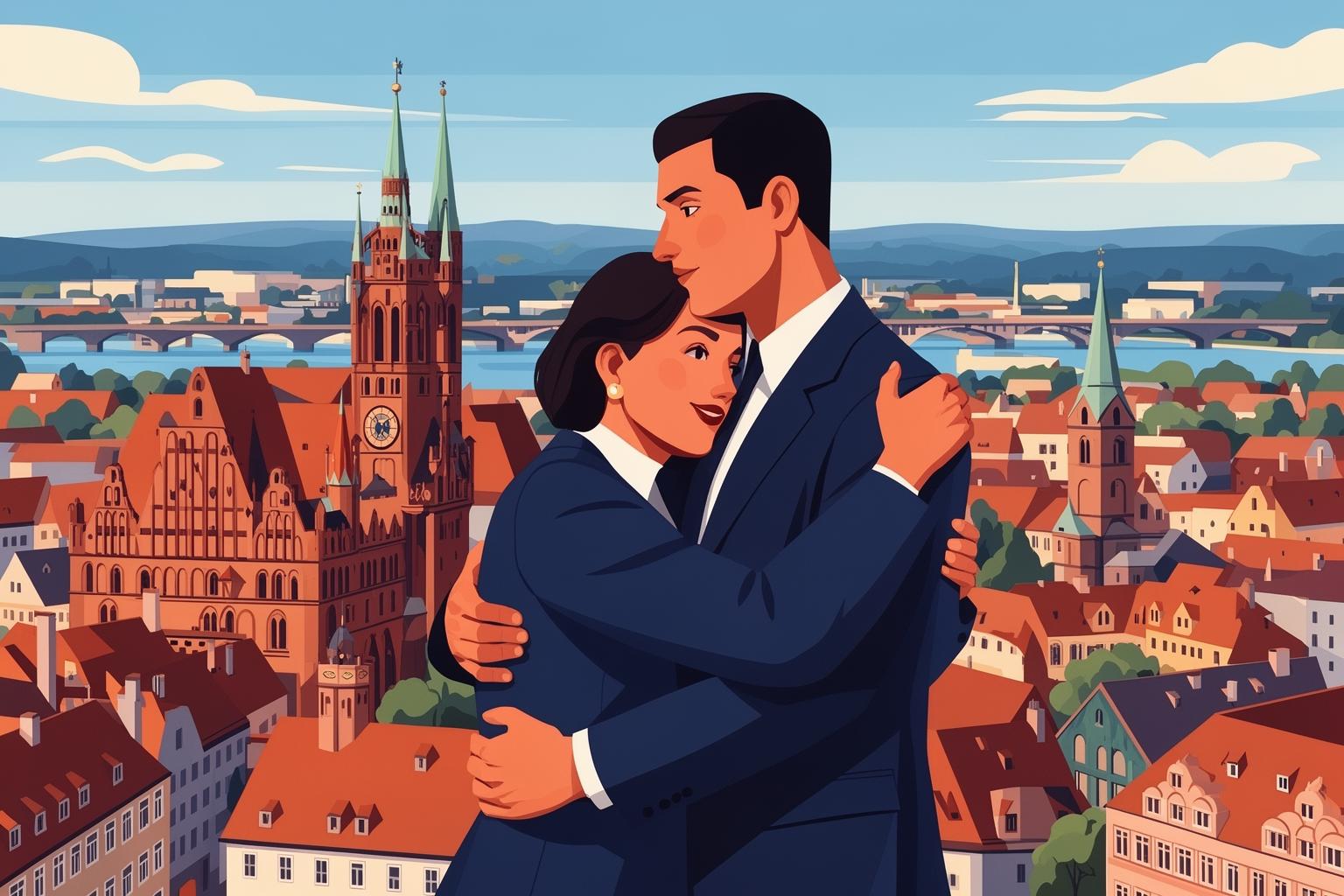
Our pilgrimage begins, as it must, in Nuremberg. To understand Dürer, one must first understand this city. In the late 15th century, Nuremberg was more than just a city; it was an entire universe. As a Free Imperial City, it answered only to the Holy Roman Emperor and thrived as a center of trade, invention, and intellectual exchange. It was a place where artisans, merchants, humanists, mathematicians, printers, and clockmakers mingled and shared ideas beneath the shadow of the grand castle. This was the world that shaped Dürer, and its influence is evident in every line he ever drew. The entire Old Town, painstakingly reconstructed after World War II’s destruction, feels like a living museum—a tribute to the city’s golden era.
The House on the Hill: Albrecht-Dürer-Haus
At the very top of the old city, just below the Kaiserburg fortifications, stands an impressive, striking half-timbered house. This is the Albrecht-Dürer-Haus, his home and workshop from 1509 until his death in 1528. To stand before it is to feel an immediate, tangible connection to the past. The building’s strong vertical lines, with dark timbers crossing its white plaster, convey a distinct sense of German seriousness and ambition. This was more than a home; it was a deliberate statement. Inside, the air carries the scent of aged wood and linseed oil. The floors creak under the weight of centuries. The museum has expertly recreated the atmosphere of a 16th-century patrician house and artist’s studio. You move upward through the living quarters, furnished with heavy wooden pieces and leaded glass windows, to the upper levels where the creative work took place. The most awe-inspiring room is the reconstructed workshop. Light floods in from the large windows—clear, steady light the master printmaker would have prized. Replicas of his tools and printing press let you imagine the intense focus needed to carve the impossibly fine lines of his engravings. An actress portraying Dürer’s wife, Agnes, frequently conducts tours, adding a layer of living history that transports you back in time, her remarks on household expenses and her husband’s travels making the legendary artist surprisingly relatable. For first-time visitors, the key is to take your time. Don’t rush through the rooms. Pause at the windows and gaze over Tiergärtnertorplatz, the same view Dürer once had. Imagine the city’s sounds—the clang of blacksmiths’ hammers, the rumble of carts on cobblestones—that formed the soundtrack to his creations. This house is the cornerstone of our entire journey, the sanctum where a global vision blossomed within local walls.
The City as a Canvas: Exploring Dürer’s Nuremberg
Beyond his doorstep, the city of Nuremberg itself was Dürer’s muse and subject. A stroll through the Altstadt is a walk through his portfolio. Begin at the Kaiserburg, the Imperial Castle—a sprawling sandstone complex dominating the skyline. Dürer frequently sketched and painted this fortress, capturing its formidable strength and romantic silhouette against the sky. From its ramparts, you can take in a panoramic view of the city’s distinctive red-tiled roofs—a sea of terracotta that has remained largely unchanged. This perspective inspired his famous cityscapes, a god’s-eye view expressing both the city’s power and his pride in it. As you wander down the steep, winding streets from the castle, you follow the very path he would have taken to Hauptmarkt, the main market square. This vast open area remains the city’s vibrant heart, dominated by the spires of the Frauenkirche and the ornate Schöner Brunnen, a 14th-century fountain resembling a miniature Gothic cathedral. Picture Dürer here, observing merchants from Venice and Flanders, sketching faces, absorbing everyday life’s textures and details that would later appear in his religious scenes and portraits. A practical tip for visitors: the market is an excellent place to try local Franconian specialties, such as Nürnberger Rostbratwürste—tiny grilled sausages served with horseradish and hearty bread rolls. This simple, robust fare has likely sustained Nurembergers for centuries. The city’s two great Gothic churches, St. Sebaldus and St. Lorenz, were central to its spiritual and civic life. Dürer was deeply involved in the religious debates of his time, ultimately becoming a devoted supporter of Martin Luther and the Reformation. Though many of his altarpieces were moved or lost, standing inside these vast, light-filled churches, surrounded by soaring stone columns and radiant stained glass, offers a profound sense of the spiritual world he sought to capture, question, and redefine. The exquisite sculptures and carvings by artists like Veit Stoss and Adam Kraft served both as inspiration and as benchmarks for his own artistic ambitions.
A Final Resting Place: The Johannisfriedhof
No pilgrimage to Dürer’s Nuremberg is complete without visiting the Johannisfriedhof, the cemetery where he is buried. Located just outside the old city walls, it is a tranquil and hauntingly beautiful site. Unlike modern cemeteries, the graves are marked by large, horizontal stone slabs, many adorned with elaborate bronze epitaphs. The air is still, with only the rustling of leaves in ancient trees breaking the silence. Finding Dürer’s grave—Grave No. 649—is a moving experience. The epitaph, penned by his great friend, the humanist Willibald Pirckheimer, reads: “Quicquid Alberti Dureri mortale fuit, sub hoc conditur tumulo” (Whatever was mortal of Albrecht Dürer lies under this mound). It is a simple yet profound statement. Standing there, one feels both the finality of a great life and the immortality of his legacy. The cemetery itself is an artistic treasure—a sculpture garden of remembrance reflecting the city’s pride in its leading families. It offers a place for quiet reflection, a perfect conclusion to the city’s bustling center. The walk there from Tiergärtnertor, through the lovely Hesperidengärten, is beautiful, especially in the late afternoon when the sun casts long shadows across weathered stones.
The Journeyman’s Path: Forging a Vision Across Europe
Dürer did not become a master by remaining at home. A vital part of his education was his Wanderjahre, the journeyman years during which a young craftsman traveled to learn from other masters. For Dürer, this was a formative time that broadened his horizons beyond the Gothic traditions of Nuremberg and introduced him to the wider currents of European art. Following this route takes us westward, into present-day France and Switzerland, passing through towns that still preserve their late-medieval character.
The Master’s Ghost: Colmar and the Schongauer Legacy
His first significant destination was Colmar, in the Alsace region, to meet Martin Schongauer, the most renowned engraver of the prior generation. Sadly, by the time Dürer arrived in 1492, Schongauer had already passed away. One can only imagine the disappointment of the aspiring young artist. Still, the visit was not fruitless. He was welcomed by Schongauer’s brothers, also artists, who likely granted him access to the master’s drawings and plates. Today, Colmar is a fairytale town of canals and colorful half-timbered houses, a place that feels almost impossibly picturesque. The atmosphere here is softer, more Gallic than in Nuremberg. To understand what Dürer came to see, a visit to the Musée Unterlinden is essential. Housed in a former convent, its crowning treasure is the Isenheim Altarpiece by Matthias Grünewald, a work of overwhelming emotional intensity. It also holds an impressive collection of works by Schongauer. Observing Schongauer’s engravings—their graceful lines, delicate shading, and mastery of composition—you can discern the foundation upon which Dürer would build his own revolutionary style. You can sense the torch being passed in a posthumous way. Strolling through the “Little Venice” district of Colmar, with its flower-lined canals, feels like stepping back in time. For visitors, the best way to enjoy it is to get lost in the maze of streets, allowing the charm of the place to wash over you, just as a young Dürer might have done, absorbing the spirit of a new and different artistic world.
The Printed Word: Basel and the Rise of an Industry
From Colmar, Dürer’s journey led him to Basel, Switzerland. In the 15th century, Basel was a major hub of humanism and, importantly, the printing industry. This was a city of ideas, a place where the written word was being spread more widely than ever before. Here, Dürer found work designing woodcuts for books, including the famous title page for an edition of St. Jerome’s letters and illustrations for Sebastian Brant’s satirical masterpiece, Das Narrenschiff (The Ship of Fools). Modern Basel is a sophisticated, vibrant city on the Rhine River. While it has been modernized, its scholarly past remains palpable. Walking through the Old Town reveals its medieval layout, and visiting the Basel Minster, the red sandstone cathedral where the great humanist Erasmus is buried, connects you to the intellectual climate Dürer encountered. To fully engage with his time there, a visit to the Kunstmuseum Basel is recommended, as it houses an outstanding collection of early German and Swiss art, including works by Hans Holbein the Younger, who would later dominate the Basel art scene. The best way to experience the city, however, is to stroll along the banks of the Rhine. The river has always been Basel’s lifeblood, a strong current linking Switzerland to Germany and the Netherlands. Watching the long barges navigate the water, you can appreciate Basel’s strategic significance and imagine a young Dürer, perhaps sketching the river’s flow, sharpening his observational skills, and taking part in the intellectual revolution driven by the city’s printing presses.
Across the Alps: The Revelation of the Italian Renaissance
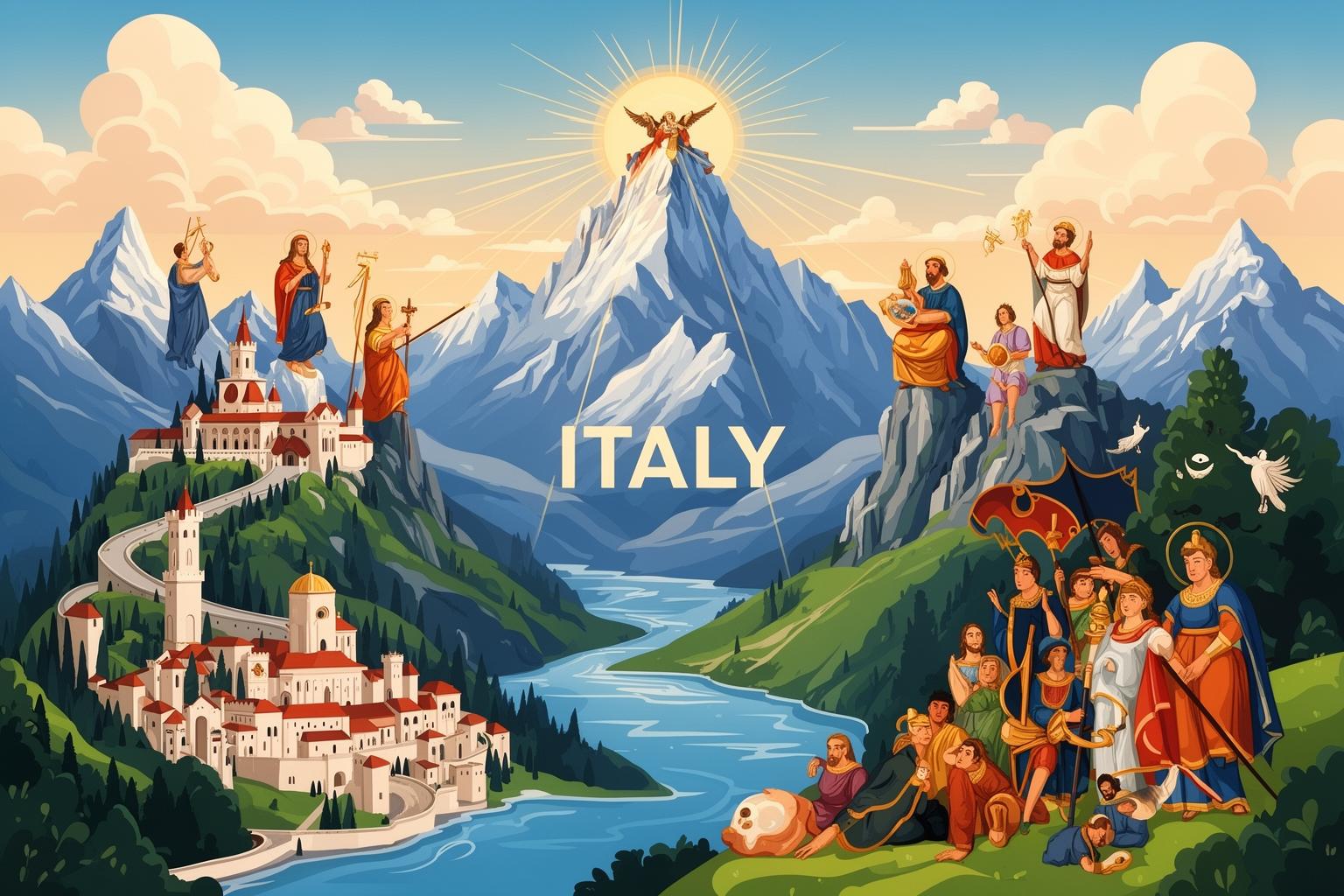
Few experiences were as transformative for Dürer, or for Northern European art in general, as his two journeys to Italy. Crossing the Alps was akin to passing through a cultural gateway, moving from the dark, intricate realm of the Gothic north into the sunlit, classical clarity of the Italian Renaissance. It was there that he encountered firsthand the art of antiquity, the science of perspective, and a new vision of the artist as a celebrated intellectual rather than just a craftsman.
The Journey as a Masterpiece: Dürer’s Alpine Watercolors
The first journey, undertaken in 1494, was spurred by a plague outbreak in Nuremberg. The journey itself became a focus of his art. Equipped with paper and watercolors, Dürer captured the dramatic landscapes he encountered crossing the Alps. These were not generic mountain scenes but precise, topographically accurate views of places like Innsbruck, Trento, and Arco. These works are among the earliest pure landscape paintings in Western art, created not as mere backgrounds to religious narratives but as subjects in their own right. Traveling this route today—perhaps by train from Munich to Verona—offers the opportunity to witness the same breathtaking scenery: the towering, rugged peaks of the Dolomites, the lush green valleys, and picturesque castles perched on seemingly impossible cliffs. A wonderful way to experience this is by stopping in a town like Bolzano in South Tyrol, where German and Italian cultures blend effortlessly. From there, one can hike into the mountains and find a vantage point. As a photographer, witnessing this landscape helps you understand his compulsion to paint it. The scale is vast, the light ever-shifting, and the atmosphere filled with profound awe. Dürer’s watercolors captured this with a freshness and immediacy that was entirely new. He wasn’t merely painting mountains; he was painting the experience of being in the mountains.
The Luminous Republic: Encountering Venice
Venice was his destination. For a young man from the orderly, landlocked city of Nuremberg, Venice must have been a sensory revelation. A city built on water, without the clatter of carts, only the silent glide of gondolas. A city of shimmering light, reflecting off the canals onto the marble palazzi. A city bursting with vibrant color, influenced by trade with the East and perfected by painters like Giovanni Bellini and Vittore Carpaccio. The Venice Dürer encountered was a bustling, cosmopolitan maritime empire at its zenith. Today, despite the crowds, that magic remains tangible. The best advice for today’s visitor is to rise early, before the city fully awakens. Watching the sunrise over the Grand Canal, seeing the first light touch the dome of Santa Maria della Salute, is to experience the city as the artists once did. Dürer spent his time studying, sketching, and absorbing all he could. He was captivated by the Italian mastery of color, perspective, and the idealized human form. His presence can still be felt near the Rialto Bridge, where the Fondaco dei Tedeschi—the warehouse and lodgings of the German merchants—was situated. Here, he would have mingled with compatriots, securing commissions and learning about this foreign world. To grasp the spirit of Dürer’s Venice, spend an afternoon at the Gallerie dell’Accademia. There, you can stand before the masterpieces of Bellini, his mentor and a profound influence. Observe the deep, luminous colors, the gentle modeling of figures, and the serene, light-filled landscapes. You see what Dürer saw, what he absorbed, and what he later blended with his northern penchant for sharp, realistic detail. His second trip to Venice, from 1505 to 1507, was different. He returned not as a student but as a celebrated master. His main commission was a large altarpiece, the Feast of the Rose Garlands, for the German community’s church, San Bartolomeo. The church still stands near the Rialto, though the painting now resides in Prague. Yet standing in the small piazza outside, one can imagine the pressure and pride he must have felt creating a major work to prove to skeptical Italians that a German artist could rival their finest. He wrote in a letter, “Here I am a gentleman; at home I am a parasite.” In Venice, he was esteemed, and this confidence shines through in the work he produced during and after this time.
The Imperial Master: Fame, Faith, and a Final Journey
Upon returning to Nuremberg, Dürer entered the most prolific and renowned phase of his life. He was celebrated across Europe as a distinguished artist, a friend to scholars, and a painter to the Holy Roman Emperor Maximilian I. His later years were deeply shaped by the upheaval of the Protestant Reformation and by a final significant journey to the Low Countries.
In the Emperor’s Service: Augsburg and Imperial Authority
Augsburg, another Free Imperial City located south of Nuremberg, was a frequent destination for Dürer, especially when the Imperial Diet was in session. It was here, in 1518, that he created a striking portrait of Emperor Maximilian I, which became the definitive image of the ruler. Like Nuremberg, Augsburg was a hub of trade and finance, home to the enormously wealthy Fugger family, who served as bankers to much of Europe. Visiting Augsburg today reveals a city adorned with elegant Renaissance and Baroque architecture. The highlight is the Fuggerei, the world’s oldest social housing complex, founded in 1521 by Jakob Fugger the Rich. Strolling through its tranquil, enclosed courtyards offers a remarkable glimpse into the past. Here one can sense the combination of great wealth and civic devotion that characterized these German cities. To connect with Dürer’s era, visit the Schaezlerpalais, a splendid Rococo palace housing the German Baroque Gallery with an excellent collection of German masters’ works, including those of Dürer’s contemporary Hans Burgkmair the Elder. The city exudes a grander, more Italianate atmosphere than Nuremberg, reflecting its close connections to the south. It served as a stage for the major political and religious dramas of the time, with Dürer there to capture its key figures.
The Low Countries: A Master’s Journal
In 1520, Dürer embarked on his last major journey, a year-long trip to the Netherlands with his wife, Agnes. His main objective was to have the new Emperor, Charles V, confirm the pension granted to him by Maximilian. Yet this trip also served as a triumphant farewell tour. He maintained a detailed diary, offering an unparalleled insight into his life, finances, and interactions with the artistic elite of Flanders. His primary base was the bustling port city of Antwerp, then rapidly emerging as the most important commercial center in Northern Europe. Dürer was treated like a celebrity, honored by the painters’ guild, meeting scholars such as Erasmus, and marveling at treasures arriving from the New World. Antwerp’s historic center still retains the grandeur of this golden age. The Grote Markt (Main Square) is surrounded by ornate guild halls, and the Cathedral of Our Lady, with its towering spire, dominates the city. Inside the cathedral today, visitors can admire masterpieces by Peter Paul Rubens, an artist who greatly admired Dürer. Walking through Antwerp, especially near the old port district, one can feel the vibrant energy of international trade that so impressed Dürer. He was an inquisitive traveler who ventured to Brussels to visit the emperor’s court, Aachen for a coronation, and even to the Zeeland coast in a desperate, ultimately unsuccessful attempt to see a stranded whale—a journey during which he likely contracted the illness that troubled him thereafter. This final voyage reveals his boundless curiosity, his stature as a European luminary, and his deep engagement with the world right up to the end.
A Journey Into the Mind of a Genius

Following Albrecht Dürer is more than simply visiting a series of places on a map. It is embarking on a journey into a particular worldview. It is standing in a Nuremberg workshop and sensing the quiet intensity of creation. It is experiencing the awe of the Alps and comprehending the origins of landscape painting. It is being dazzled by the light of Venice and witnessing the blend of two great artistic traditions. And it is walking the vibrant, commercial streets of Antwerp and recognizing the stature of a modern, international artist. Dürer’s legacy goes beyond his paintings, prints, or drawings—it resides in the very act of seeing. He taught us to view the world with greater precision and empathy—to discover the divine in the delicate veins of a leaf, to perceive the universe in the tired eyes of an apostle, and to chart the geography of his own soul in a self-portrait. Traveling in his footsteps, whether with a camera or simply with open eyes, is to embrace that same challenge: to look closely, observe with wonder, and find the profound beauty and complexity in the world he so masterfully captured. The light in Nuremberg still falls in that same golden manner, waiting to be seen.