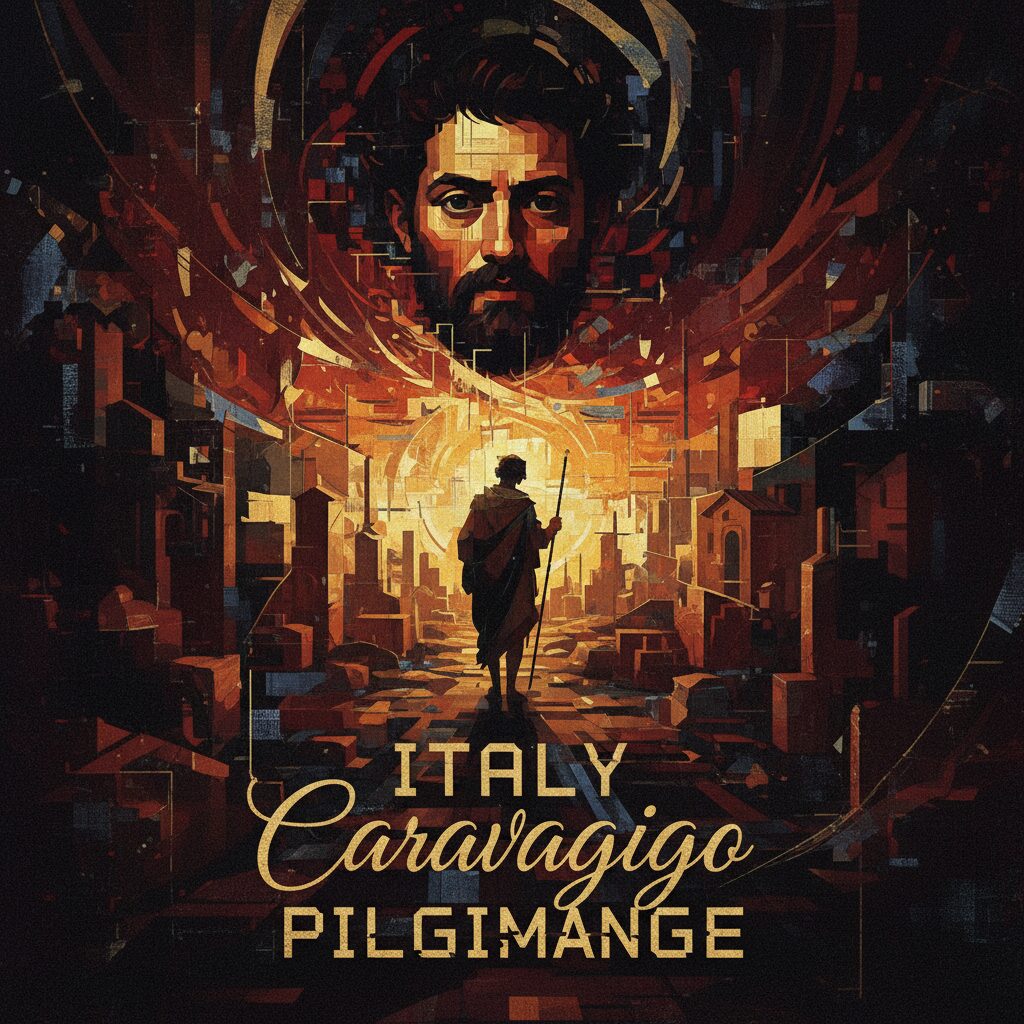
Hello, fellow adventurers and lovers of all things beautiful and dramatic! Sofia here, ready to take you on a journey that’s less of a gentle stroll and more of a passionate chase through the heart of Italy and beyond. We are on the trail of a man who didn’t just paint; he bled onto the canvas. I’m talking about Michelangelo Merisi da Caravaggio, the ultimate artistic rebel, the bad boy of the Baroque. His life was a whirlwind of genius, brawls, and a desperate flight from justice, and his art reflects every chaotic, brilliant moment. To truly understand Caravaggio, you can’t just see his work behind the velvet ropes of a museum. You have to walk where he walked, feel the same oppressive summer heat, and stand in the very churches where his revolutionary canvases first scandalized and electrified the world. This isn’t just an art history tour; it’s a pilgrimage into the soul of a master, a journey through the sun-scorched streets and shadowy alleys of Rome, Naples, Malta, and Sicily. We’re about to chase the light and shadow he so famously mastered, to find the man in the places he called home, and to see how his turbulent life shaped some of the most powerful art ever created. So grab your most comfortable shoes, an open heart, and maybe a little bit of nerve, because following Caravaggio is an unforgettable adventure.
If you’re inspired by this artistic pilgrimage, you might also enjoy a different kind of cultural journey, like exploring the world of Broadway on a budget.
Rome: The Eternal City, The Rebel’s Canvas
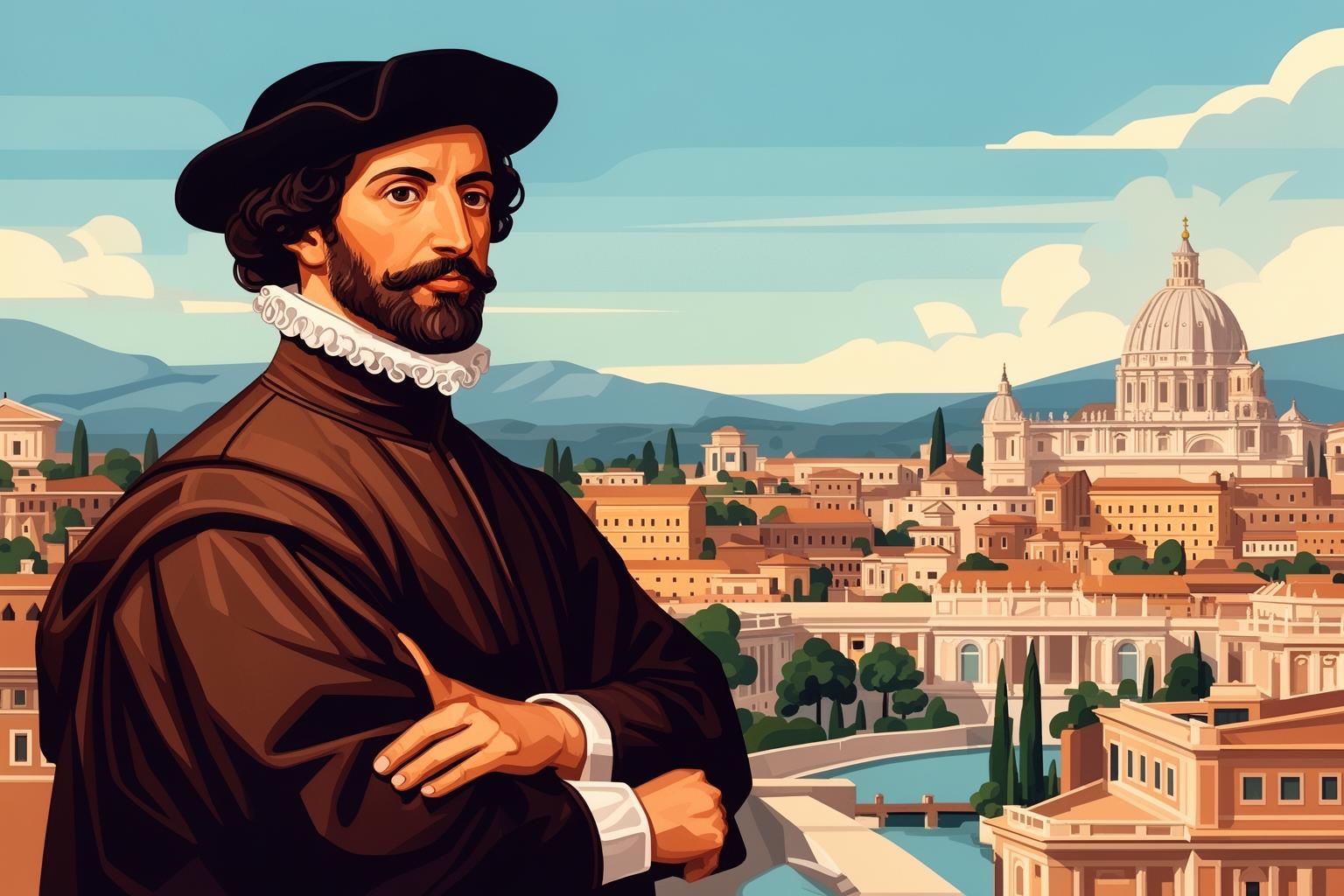
Rome. The very name evokes history, power, and a kind of divine chaos. For a young, fiercely ambitious painter from Lombardy arriving at the end of the 16th century, it must have felt like stepping onto the world’s grandest stage. This was Caravaggio’s crucible. Rome wasn’t merely a backdrop; it was a character in his story—a city of breathtaking beauty and harsh street justice. It was here that he hustled for commissions, found fame, and sealed his tragic fate. Walking through Rome today, you can still sense his presence in the cool, shadowed interiors of its churches and along the cobblestone streets where he swaggered, loved, and fought. The air hums with a duality he would have recognized: the sacred and the profane, locked in an eternal, dramatic embrace.
A Revolution in Light: The Contarelli Chapel
Our journey begins at what feels like ground zero for the Caravaggio phenomenon: the Church of San Luigi dei Francesi. Nestled near the lively Piazza Navona, this church serves as a sanctuary for Rome’s French community but holds a treasure for art lovers that changed the course of painting forever. You step in from the bright Roman sun, your eyes gradually adjusting to the gilded dimness. You make your way to the back, to the last chapel on the left—the Contarelli Chapel. It’s dark. You might even overlook it. But then you spot the small metal box on the wall. You slip in a coin, a click echoes in the silence, and suddenly floodlights illuminate three canvases, pulling them from the shadows. The effect is pure theater. It’s literal and symbolic enlightenment.
Here, you come face to face with The Calling of St. Matthew, The Martyrdom of St. Matthew, and The Inspiration of St. Matthew. This was his first major public commission, and he held nothing back. Look at The Calling. Christ, nearly hidden in shadow, points a finger—a single beam of divine light cutting through the grimy tavern air, lighting the face of a tax collector about to become an apostle. These are not ethereal saints floating on clouds; they are men in contemporary dress, counting money in a backroom. It was shocking. It was real. The chapel’s atmosphere is hushed, reverent. Visitors stand entranced, waiting for the light’s timer to run out and plunge the room back into darkness, only to insert another coin and resurrect it anew. It’s a ritual, and in that simple act, you participate in the very essence of Caravaggio’s art: the dramatic, sudden intrusion of light into a world of shadow.
A Moment of Quiet Contemplation
My advice for visiting San Luigi dei Francesi is to go early in the morning or late afternoon when the tourist crowds are thinner. Find a pew, let the light cycle on and off several times. Don’t just look—feel. Feel the shock of that beam of light. Imagine the Roman citizens of 1600 seeing this for the first time, a scene from their own world elevated to the level of sacred scripture. This is where Caravaggio ceased being merely a painter and became a legend. Have a few one-euro coins ready. Trust me, you’ll want to light it up more than once. Afterwards, stroll over to Piazza Navona for a coffee and let the intensity of the experience settle. You’ve just witnessed the birth of a revolution.
Divine Drama in Piazza del Popolo
From the intimate intensity of the Contarelli Chapel, we move to one of Rome’s most famous gateways, Piazza del Popolo. This magnificent piazza has long been a place of arrivals and departures—a grand entrance to the city. Yet tucked into a corner stands the Basilica of Santa Maria del Popolo, a treasure trove of Renaissance and Baroque art. Inside, in the Cerasi Chapel, Caravaggio unleashes two more thunderbolts: The Crucifixion of St. Peter and The Conversion of St. Paul. Once again, he shatters all convention.
Standing before The Conversion of St. Paul, you are faced not with a glorious divine vision but the rump of a horse. The massive animal dominates the canvas as its handler struggles to control it. Saul, the future St. Paul, lies on the ground, blinded by the light, his arms thrown wide in a gesture of total surrender. Caravaggio pulls you into the scene, making you feel the dust, confusion, and raw, unglamorous reality of a life-altering moment. Across the chapel, The Crucifixion of St. Peter is a study in brute force and agonizing effort. You see the strain in the executioners’ muscles as they hoist the upside-down cross, and the age and vulnerability in Peter’s face. There is no divine rescue—only the harsh, physical reality of martyrdom. The chapel’s small size forces an almost uncomfortable proximity to these masterpieces. The energy is visceral. You can almost hear the laborers’ grunts and the horse’s frantic whinny. This is faith not as abstract concept but as a physical, earth-shattering event.
Capturing the Roman Scene
What makes this experience so unique is the contrast between the bustling piazza outside and the chapel’s intense drama within. You step away from the cheerful chaos of tourists, street performers, and the gentle splash of fountains into a space charged with profound, violent emotion. It’s a perfect metaphor for Rome itself. After absorbing the art, climb the nearby Pincian Hill for a breathtaking panoramic view of the city. As you gaze across the rooftops at sunset, reflect on how Caravaggio captured the city’s raw, dramatic soul and immortalized it on his canvases.
Everyday Saints and Galleried Treasures
Caravaggio’s sacred works are scattered throughout Rome’s churches, turning a city stroll into a treasure hunt. Don’t miss the Church of Sant’Agostino, just steps from San Luigi dei Francesi. There hangs Madonna of Loreto, a painting that sparked another scandal. The Virgin Mary, portrayed as a beautiful but simple woman, stands in a doorway to receive two humble pilgrims. The scandal? The pilgrims’ dirty, calloused feet—a shockingly realistic detail critics found irreverent but worshippers loved. It made the divine accessible and tangible. Standing there, you witness Caravaggio’s belief that holiness dwells among the common, the poor, and the weary.
To see a different side of Caravaggio—the younger, perhaps less tormented artist—you must visit the Galleria Borghese. This exquisite villa, set within expansive and beautiful gardens, houses an unparalleled collection of his secular works. Here you’ll find the sensuous Boy with a Basket of Fruit, the striking self-portrait as the decapitated giant in David with the Head of Goliath, and the hauntingly beautiful Saint Jerome Writing. A visit to the Borghese offers a more refined experience—you are no longer a pilgrim in a dark church but a guest in a lavish villa, seeing the art as its wealthy patrons once did. The key is planning: tickets for the Galleria Borghese sell out weeks, sometimes months, in advance. You absolutely must book online before your trip. It’s a timed, two-hour visit, so plan to arrive early and perhaps enjoy a stroll through the Borghese Gardens beforehand. This is your chance to admire his extraordinary skill with flesh, fabric, and fruit up close, away from the solemnity of a church setting.
Naples: Exile in a City of Extremes
Fleeing Rome with a death warrant over a murder charge, Caravaggio arrived in Naples. While Rome was a grand stage, Naples was a chaotic, visceral, and dangerous maze. In the early 17th century, it ranked among Europe’s largest and most densely populated cities—a bustling port alive with noise, poverty, and profound spirituality. It was the ideal refuge for a fugitive genius. The city’s raw energy, its mix of splendor and squalor, infused his work with newfound urgency and a deeper, more profound darkness. Today, walking through Naples’ historic center—its narrow, canyon-like streets, laundry hanging between balconies like prayer flags, and the constant buzz of scooters and voices—you feel as if you’ve stepped directly into one of his paintings.
A Masterpiece of Mercy: The Seven Works
One work embodies his Neapolitan experience more than any other, a painting inseparably tied to the city’s soul: The Seven Works of Mercy. To see it, you must visit the Pio Monte della Misericordia, a charitable institution founded in 1602. The painting hangs above the high altar in the institution’s octagonal church, the very spot for which it was commissioned. This is vital. This is not museum art; this is art fulfilling its purpose. The impact is breathtaking. Entering a space devoted to charity, you face a canvas swirling with compassionate deeds. Caravaggio masterfully combines all seven corporal acts of mercy—feeding the hungry, giving drink to the thirsty, clothing the naked, sheltering the homeless, visiting the sick, visiting the imprisoned, and burying the dead—into one turbulent Neapolitan night scene. Angels descend from the sky as ordinary people perform extraordinary kindness. It’s dark, crowded, chaotic, yet radiant with humanity. This painting is Naples. It captures the city’s capacity to find grace and beauty amid struggle, the light that always cuts through Neapolitan darkness.
The Spirit of Spaccanapoli
A visit to the Pio Monte feels profoundly authentic. The institution remains active today. After viewing the painting, spend some time wandering the nearby Spaccanapoli, the famous street that cleaves the old city in two. This is Naples’ vibrant heart. Immerse yourself in the chaos. Grab a world-renowned pizza from places like Sorbillo or Da Michele. Let the city’s sounds, smells, and sensations envelop you. In doing so, you’ll grasp the world that inspired Caravaggio’s Neapolitan masterpiece. He wasn’t simply observing this life; he was living it, inhaling it, and channeling its raw power directly into his art.
Echoes of Violence and Redemption
Caravaggio’s time in Naples was prolific but marked by peril. A wanted man, the ever-present threat of violence seems to have permeated his work, intensifying its starkness and drama. To witness this, a visit to the Museo e Real Bosco di Capodimonte is indispensable. This stunning former Bourbon palace, perched atop a hill with views over the city, houses one of Italy’s premier art collections. There you will find his harrowing Flagellation of Christ. Christ is bound to a column, his body luminous against a nearly black backdrop, while his tormentors brutally lash him with chilling, detached efficiency. The violence feels tangible, the composition brutally elegant. The darkness here is more than stylistic; it feels like an encroaching void, a reflection of the artist’s own tormented mindset. Seeing this work, you can’t help but sense the weight of his exile and the fear that constantly shadowed him. The Capodimonte is vast, so allow yourself plenty of time. The ascent offers spectacular views of the Bay of Naples and Mount Vesuvius—an aptly dramatic setting for an artist whose life was marked by eruptions.
Malta: The Pursuit of a Pardon
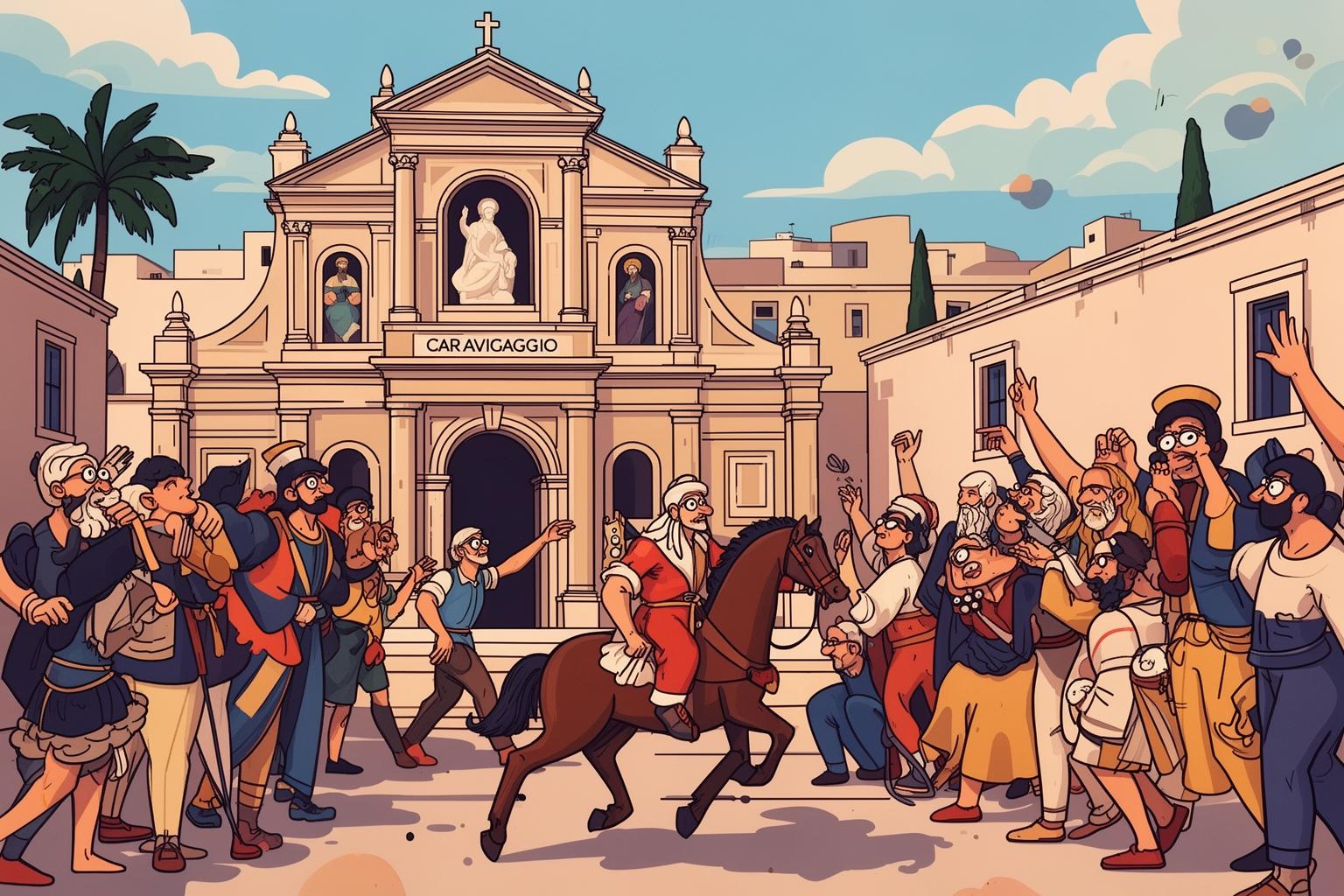
Amid the chaos of Naples, Caravaggio made a daring decision. He sailed to Malta, the fortified island stronghold of the Knights of St. John, with an ambitious aim: to become a Knight himself. This knighthood promised prestige, protection, and, most importantly, the influential connections necessary to secure a papal pardon for his crime in Rome. For a brief, brilliant moment, it seemed his plan would succeed. He was warmly welcomed and celebrated, producing one of his greatest masterpieces for the Order. Malta’s atmosphere, especially in its capital, Valletta, is strikingly different from Naples. It is a city of honey-gold limestone, with imposing bastions and orderly, grid-like streets. It feels like a fortress, a stronghold of Christian chivalry against the world. Here, Caravaggio tried to shed his rebellious image in favor of that of a noble Knight of Justice.
The Beheading: A Signature in Blood
Nothing can truly prepare you for the experience of entering the Oratory of St. John’s Co-Cathedral in Valletta. The cathedral itself is a lavish explosion of Baroque gold and grandeur, every inch adorned with intricate carvings and decorations. Yet the Oratory is different—quiet and somber, designed for a single purpose: to display Caravaggio’s largest and most terrifying painting, The Beheading of Saint John the Baptist. The enormous canvas dominates the room. The scene captures a moment of horrific finality. John the Baptist lies on the ground, bound with his hands behind his back. The executioner holds a knife, poised to sever the last remnants of flesh, while Salome waits with a golden platter. Onlookers peer through a barred window, witnesses to this grim act. But the true horror lies in the brutal, unembellished realism. There are no heavenly choirs, no divine light—just a grimy prison yard and a violent deed.
What transforms this from a mere painting into a profound personal statement is a single, eerie detail: in the pool of blood flowing from John’s neck, Caravaggio painted his own signature, “f. Michelangelo,” with the ‘f’ standing for ‘fra,’ meaning brother, signifying his new status as a Knight. It is the only work he ever signed. To inscribe one’s name in the victim’s blood is a gesture of immense significance. Was it an acknowledgment of guilt, a confession from a man who had also taken a life? Or a plea for mercy, a connection with the martyr? Standing silently in the Oratory, the weight of that signature is overwhelming. It feels like being at a crime scene, witnessing not only a biblical event but the unveiling of an artist’s tortured soul. Also present in the room is his powerful Saint Jerome Writing, another masterpiece of contemplative solitude, but it is The Beheading that will remain etched in your memory forever.
A Fleeting Triumph, A Violent Fall
Caravaggio was knighted in July 1608. Yet his triumph was brief. His violent temper, the very trait he sought to escape, soon caught up with him again. Just a month later, he was involved in another fight, severely injuring a fellow knight, and was imprisoned in Fort St. Angelo, the imposing fortress across the Grand Harbour. Visible from Valletta’s Upper Barrakka Gardens, the fort’s impenetrable walls evoke the desperation he must have felt before staging a daring escape and fleeing to Sicily. Now a fugitive not only from Rome but also from the Knights of Malta, his Maltese chapter, which began with such promise, ended in disgrace and desperate flight.
Sicily: A Fugitive’s Last Stand
Caravaggio arrived in Sicily a broken man, expelled from the Order and hunted by its agents. He was paranoid and frantic, and his art from this final period reveals his desolate state of mind. He moved between Syracuse, Messina, and Palermo, creating large, haunting altarpieces. The Sicilian landscapes, with their ancient ruins and profound sense of layered history, offered a somber final stage for the drama of his life. The paintings made here differ from his Roman and Neapolitan works—they are starker and emptier. Vast, dark spaces frequently dominate the canvases, overshadowing the human figures, who appear huddled together for warmth against a creeping, existential cold.
The Ghosts of Syracuse and Messina
In the magnificent city of Syracuse, on the island of Ortygia, lies the stunning Piazza del Duomo, a vision in white limestone that seems to glow under the Sicilian sun. There, in the Church of Santa Lucia alla Badia, is Caravaggio’s Burial of St. Lucy. The patron saint of Syracuse lies on the ground, her throat slit, while two massive gravediggers loom over a small, huddled group of mourners. More than half the canvas is filled with empty, oppressive architectural space. The painting conveys a profound sense of pathos and exhaustion, as if the artist himself—worn out from a life on the run—could no longer fill the canvas with bravado and was instead facing the void.
From Syracuse, he moved on to Messina, where he painted two more masterpieces, The Raising of Lazarus and The Adoration of the Shepherds, both now held in the city’s Museo Regionale. The Raising of Lazarus is especially harrowing. Christ commands Lazarus to rise, yet the body is stiff with rigor mortis, a truly dead weight being lifted from the grave. It’s a miracle stripped of all sweetness, reduced to its most grim and visceral reality. Scholars believe Caravaggio used a freshly buried corpse as his model. In these final Sicilian works, you sense his frantic energy; his brushstrokes are more hurried, his compositions more emotionally raw than ever before. He was painting against time, haunted by his past and uncertain of his future.
The Final Journey: A Tuscan Tragedy
News finally arrived that a pardon from the Pope was imminent. Caravaggio hurried to return to Rome, boarding a boat heading north with a few precious paintings intended as a peace offering to Cardinal Scipione Borghese. Yet, his tragic misfortune persisted to the very end. He was mistakenly arrested during a stopover in Palo, and by the time he was freed, his boat, along with all his belongings, had already departed. Desperate, he ran along the hot, malarial coast, trying to catch up. He reached Porto Ercole, a beautiful yet rugged fishing port on the Tuscan coast. There, weakened by a raging fever—whether from malaria, exhaustion, or despair—he collapsed and died alone, just days before his pardon was officially announced in Rome. He was only 38 years old. Today, standing on the harbor of Porto Ercole, gazing out at the sparkling Tyrrhenian Sea, it’s a serene and lovely place, yet it’s impossible to ignore the deep tragedy of his death, so near the redemption he had so long sought.
Walking with Caravaggio: A Legacy in Light and Shadow
To follow Caravaggio’s path is to trace a life lived on the edge. It’s a journey that takes you from the grandeur of Roman palaces to the rough streets of Naples, from the chivalric fortress of Malta to the ancient coastlines of Sicily. It’s more than an art tour; it’s a deep immersion into a world of passion, violence, faith, and transcendent genius. Viewing his paintings in the very places they were created is an experience no museum can replicate. You feel the cold stone beneath your feet, you see the single beam of light streaming through a high window, and you understand, on a deeply personal level, the origins of his vision. You realize that his renowned chiaroscuro was not merely a technique; it was his way of seeing the world—a constant struggle between darkness and light, sin and redemption, despair and a fragile, flickering hope. To pursue Caravaggio is to pursue life itself—in all its chaotic, brilliant, and heartbreaking splendor. It’s a journey that will leave you breathless and forever transform the way you perceive light.