There’s a moment, standing in the heart of Italy, when the golden Tuscan light feels ancient, eternal. It’s a light that has inspired artists for centuries, but one man, more than any other, learned to capture its very essence, not just on the canvas, but in the hearts of his figures. This is a journey into the world of Giotto di Bondone, a pilgrimage that follows the footsteps of the shepherd boy who became the father of Western painting. We’re not just visiting museums or churches; we’re stepping through a portal into the very dawn of the Renaissance. Giotto was a revolutionary, a storyteller who took the stiff, gilded figures of Byzantine art and breathed into them life, weight, and profound human emotion. He taught plaster how to weep, how to rejoice, how to convey the silent, earth-shattering weight of a gaze between a mother and her child. Our path will wind from the rolling hills of his birthplace to the bustling artistic crucible of Florence, and onward to the celestial blues of Padua and the spiritual serenity of Assisi. This is more than an art history tour; it is a quest to understand how one man’s vision could so fundamentally alter the way we see the world, laying the groundwork for everyone from Michelangelo to Leonardo. It’s about feeling the rough stone of a bell tower he designed, standing in a chapel that he transformed into a heaven on earth, and seeing, with your own eyes, the very moment art learned to feel again. Prepare to walk through history, to feel the pulse of a new age, and to witness the birth of a light that has never faded.
To truly immerse yourself in the spirit of artistic pilgrimage, consider how global house-sitting can offer a unique and extended stay in the heart of these historic regions.
The Shepherd Boy from Mugello: The Tuscan Origins
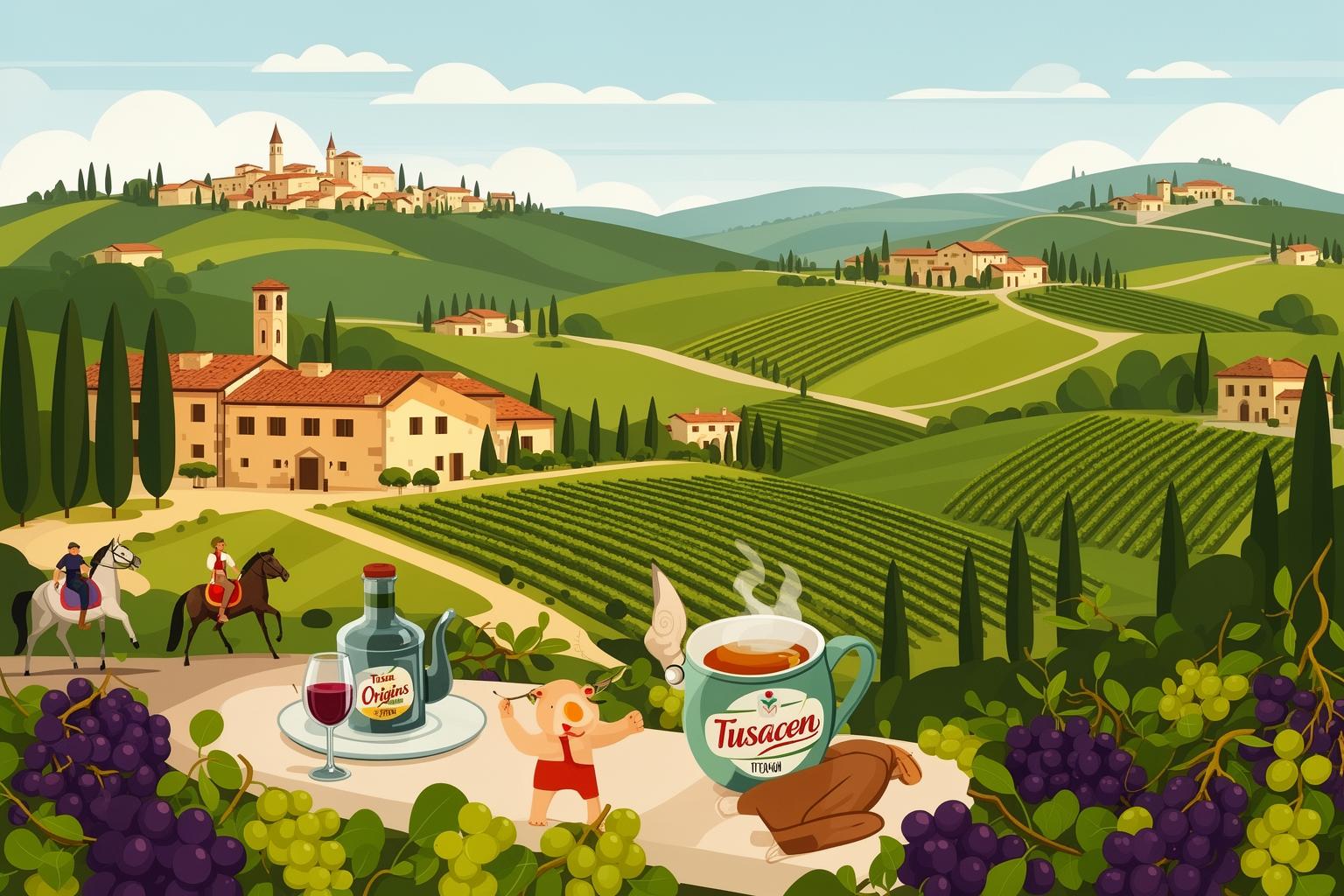
Every great story begins humbly, and Giotto’s origins lie in the fertile, sunlit soil of Tuscany. To truly grasp the essence of the artist who painted with such extraordinary naturalism, one must first visit the landscape that shaped him. Our journey starts not in a bustling city, but in the serene, rolling hills of the Mugello valley—a place that feels worlds apart from Florence’s tourist-packed streets, yet is just a short trip to the north.
Vicchio: The Birthplace of Legends
In the small commune of Vicchio, a legend was born and passed down through generations—a story that perfectly captures Giotto’s raw, innate talent. According to the tale, the great Florentine master Cimabue was traveling through the countryside when he came across a young shepherd boy. This boy, Giotto, was not simply watching his flock; he was deeply focused, using a sharp stone to sketch one of his sheep on a flat rock. Cimabue was amazed. The drawing was so lifelike, so full of form and vitality, that he recognized a prodigy. He immediately took the boy under his wing, bringing him to Florence as his apprentice.
Whether this story is entirely true or a beautifully crafted allegory, it reflects a deeper truth. Giotto’s art sprang from observation—from the earth, from the study of nature, from the way light played on a sheep’s fleece and how a body carried its weight upon the ground. Visiting Vicchio today lets you connect with that origin story. You can explore the Casa di Giotto, a humble stone house on Vespignano hill, believed to be his birthplace. It is a simple, evocative site, a museum serving as a quiet tribute to the artist’s roots.
The Spirit of the Land
The air in Mugello feels distinct—cleaner, scented with wild herbs and cypress. The light here has a unique quality, a soft, golden glow that shapes the hills’ contours. Standing here, gazing at the same views that young Giotto saw, you begin to understand where his artistic revolution took root. His talent for creating realistic landscapes and grounding sacred figures in a tangible, real world surely came from this deep bond with his homeland. The rocky outcrops in his frescoes resemble Mugello’s rocks; the gentle slopes echo the hills of Vespignano. This is more than just a backdrop—it is the visual archive from which he drew throughout his life. The atmosphere invites profound peace, encouraging quiet reflection and deep reverence for the natural world that so clearly inspired the master.
Practical Pilgrim’s Tips
Traveling to Vicchio offers a charming escape from the city. The easiest way is by train from Florence’s Santa Maria Novella station, a scenic trip lasting about an hour. From Vicchio station, Casa di Giotto is a few kilometers away, best reached by a short taxi ride or, for the adventurous, a pleasant country walk. The ideal times to visit are spring and autumn. In May, the hills burst with vibrant green and wildflowers. In October, the landscape is awash in the warm, rustic hues of harvest season. A visit here is not about ticking off a major masterpiece; it’s about setting the scene—breathing the air once breathed by the young genius and understanding the foundation of his entire artistic world.
Florence: The Crucible of the Renaissance
From the pastoral calm of Mugello, we travel to the vibrant core of Giotto’s career: Florence. This was the city where his talent was honed, celebrated, and immortalized. In the late 13th and early 14th centuries, Florence thrived as a center of commerce, intellect, and artistic innovation. It was a city alive with ambition, a place where the gifts of a shepherd boy could elevate him to superstar status. To stroll through Florence today is to walk through Giotto’s workshop, his canvas, and his final monument. Here, his legacy is not limited to a single gallery; it is interwoven with the very fabric of the city’s skyline and its most sacred sites.
A Tower Reaching for the Heavens: Giotto’s Campanile
Your gaze in Florence is naturally drawn upward. The skyline is dominated by Brunelleschi’s magnificent Duomo, but standing beside it, elegant and slender, is a masterpiece of a different nature: Giotto’s Campanile. Though Giotto died before it was completed, he was appointed chief architect of the Florence Cathedral in 1334, and the bell tower’s design and initial construction reflect his vision. It stands as proof that Giotto was more than a painter; he was a complete artist, a master of architecture and design.
The Architect’s Vision
Unlike the solid, imposing towers of the medieval era, the Campanile embodies grace and lightness. Its exterior is a stunning mosaic of white, green, and red polychrome marble, arranged in intricate geometric patterns that seem to make the massive structure dance. Giotto’s design emphasizes verticality, with every line guiding your eyes toward the sky. It serves as both a Christian monument pointing to God and a celebration of Florentine civic pride and artistic mastery. Stand in the Piazza del Duomo and observe it. Notice how the light shifts across the marble, altering its character throughout the day. It feels less like a stone building and more like a finely crafted jewel box.
The Climb and the View
For a fully immersive experience, you must climb the tower. Prepare for a workout; there are 414 steps winding up a narrow, stone staircase. But the ascent is part of the pilgrimage. At each level, you catch glimpses of the city through arched windows, each view expanding more than the last. You can feel the history in the cool, worn stone beneath your hands. Then, you reach the top. The reward is one of Italy’s most breathtaking panoramic views. The entirety of Florence stretches below: the terracotta rooftops like a vast sea, the silver thread of the Arno River, the Ponte Vecchio, and most strikingly, a direct, eye-level view of Brunelleschi’s dome. From this vantage point, you appreciate the city’s medieval street plan that Giotto himself would have navigated. It’s a moment of connection, an opportunity to see his city from a perspective he helped shape.
Reading the Reliefs
Before leaving the Piazza, spend time at the tower’s base. The exquisite hexagonal and lozenge-shaped reliefs you see are masterful copies; the priceless originals by Giotto, Andrea Pisano, and others are safely kept in the nearby Museo dell’Opera del Duomo. Visiting the museum to see them up close is essential. These reliefs serve as a medieval encyclopedia carved in marble, a humanist celebration of creation and human endeavor. They portray the story of Genesis, the invention of arts such as music and metallurgy, and the influence of the planets. This work expresses a profound statement about humanity’s place in the divine order, a theme central to Giotto’s oeuvre.
The Majesty of the Ognissanti Madonna: A Revolution in the Uffizi
From the open air of the Piazza, we move into one of the world’s greatest art treasuries, the Uffizi Gallery. Among a sea of masterpieces, one painting unlocks the secret to Giotto’s revolution. His “Ognissanti Madonna,” painted around 1310, is not merely a beautiful depiction of the Virgin and Child; it marks the dawn of a new era.
Before You Go: Navigating the Uffizi
A visit to the Uffizi requires planning. Tickets should be purchased online well in advance to avoid long waits. Aim for the earliest possible entry to enjoy the galleries with fewer visitors. The gallery is immense, and it’s easy to feel overwhelmed. A good approach is to head straight to the early Renaissance rooms on the second floor. Giotto’s masterpiece is deliberately placed among similar enthroned Madonnas by his predecessors and contemporaries, Cimabue and Duccio. This curatorial choice is brilliant, allowing his innovation to stand in stark, undeniable contrast.
Face to Face with a Queen
Start with Cimabue’s “Santa Trinita Madonna.” It is beautiful, ethereal, and deeply rooted in Byzantine tradition. The figures are elongated, graceful, seeming to float within a golden, divine space. Then turn to Giotto’s painting. The difference is monumental. Giotto’s Madonna possesses substance and weight. You sense the presence of her body beneath the heavy folds of her blue mantle. Her knees project forward, giving a real sense of a lap upon which the Christ Child sits securely. She is not a flat, symbolic icon but a believable, three-dimensional figure inhabiting a real, architectural space. Her throne is solid, rendered with an intuitive grasp of perspective that creates tangible depth. Notice her gaze: calm, majestic, directed at you, inviting you into the scene. The angels beside her are not merely stacked; they are arranged logically in space, some fully visible, others peeking from behind the throne. This is not just a painting; it is a sculpture modeled in paint.
The Atmosphere of the Room
Standing in that room feels like witnessing a conversation across seven centuries. You can sense the artistic ground shifting beneath your feet. You see the past in Cimabue, the elegant Sienese alternative in Duccio, and the future in Giotto. The air hums with the energy of this pivotal moment in art history. It is a powerful, almost overwhelming experience. Take your time. Find a bench if possible. Look back and forth between the paintings. See how Giotto gave Mary a physical, maternal presence and Christ a believable, baby-like solidity. This is where the Renaissance truly begins to awaken.
Whispers in the Chapels of Santa Croce
Our Florentine journey with Giotto concludes in the Basilica of Santa Croce. This grand Franciscan church is often called the “Temple of Italian Glories” because it is the resting place of luminaries such as Michelangelo, Galileo, and Machiavelli. But long before it became a pantheon of Italian geniuses, it was a canvas for Giotto’s most mature and emotionally resonant storytelling.
The Franciscan Heart of Florence
The atmosphere inside Santa Croce differs from that of the Duomo. It is more austere, yet vast and filled with a solemn, echoing peace. To find Giotto’s work, head to the chapels flanking the main altar. Here, in the Peruzzi and Bardi Chapels, Giotto painted fresco cycles depicting the lives of Saints John and Francis, respectively. These were commissions from two of Florence’s most powerful banking families, a testament to his fame.
The Peruzzi Chapel: A Study in Human Drama
The frescoes in the Peruzzi Chapel, illustrating scenes from the lives of John the Baptist and John the Evangelist, are unfortunately in poor condition. They were whitewashed in the 18th century and heavily restored afterward. Yet even in their faded state, Giotto’s genius for composition and drama shines through. Look at “The Feast of Herod.” The tension in the room is palpable, the arrangement of figures in a carefully constructed architectural space deliberate. The figures possess a psychological weight previously unseen. They interact, gesture, and inhabit their world with a quiet, powerful realism that damage cannot entirely obscure.
The Bardi Chapel: The Life of Saint Francis
Next door, the Bardi Chapel holds the emotional core of Giotto’s Florentine work. Here, he narrates the life of St. Francis of Assisi, founder of the Franciscan order. These frescoes are better preserved and demonstrate Giotto’s narrative mastery. The most moving panel is arguably “The Death of St. Francis.” Departing from the serene, divine deaths of Byzantine art, this scene conveys profound human grief. The saint lies on his bier, surrounded by his friars, each reacting uniquely. One kisses his feet in reverence, another looks heavenward, another stares in disbelief, while a fourth, the doubting Jerome, places his fingers into the wound in Francis’s side, mirroring the doubting Thomas. The sorrow is tangible, expressed through posture, gesture, and the heavy slump of a shoulder. These figures are not mere symbols of grief; they embody grief itself. Giotto makes you feel the loss, the humanity of this sacred moment.
A Pilgrim’s Moment
The great chapels of Santa Croce are often less crowded than the Uffizi or the Duomo. This offers a chance for a quieter, more contemplative experience. Find a pew or a quiet corner and simply sit. Let your eyes roam over the walls. Follow the stories panel by panel. Allow the basilica’s silence to amplify the emotional resonance of the frescoes. In the quiet whispers of these chapels, Giotto’s voice rings clearest, telling timeless stories of faith, life, and loss with a humanity that still touches us today.
Padua’s Treasure: The Scrovegni Chapel’s Celestial Blues
If Florence was the workshop where Giotto refined his skills, then Padua is his Sistine Chapel. It is within a modest brick building located on the site of an ancient Roman arena that Giotto unleashed the full extent of his genius. The Scrovegni Chapel, also known as the Arena Chapel, is not just a collection of exquisite paintings; it is a complete, immersive environment—a perfectly preserved masterpiece that ranks among the highest achievements of Western art. To enter is to be transported, enveloped in a story so vividly and emotionally told that it transcends time.
A Jewel Box of Art: The Arena Chapel
The chapel’s history is remarkable in itself. It was commissioned around 1303 by Enrico Scrovegni, a wealthy and influential Paduan banker. His father, Reginaldo, was a notorious usurer, a sin so severe he is mentioned in Dante’s Inferno. Enrico built and adorned this private chapel as an act of devotion, a fervent attempt to atone for his father’s sins and secure his family’s salvation. This personal blend of wealth, guilt, and hope permeates the space, adding a human dimension to the divine narratives that cover the walls.
The Pilgrim’s Entry: A Modern Necessity
Visiting the Scrovegni Chapel is a pilgrimage requiring modern planning. Access is tightly regulated to protect the delicate frescoes, and your visit inside is usually limited to about fifteen minutes. It is crucial to book your tickets online, often weeks or months in advance, especially during peak periods. The process itself has become a ritual. You arrive at your scheduled time and are guided into a climate-controlled waiting room. There, you spend fifteen minutes watching an introductory video while the airlock system stabilizes temperature and humidity. Far from an inconvenience, this pause builds an intense anticipation. You are about to enter a sacred space, and this modern purification procedure heightens the sense that you are about to witness something precious and irreplaceable.
Stepping into Another World: The Fresco Cycle
When the doors slide open, you step inside. Nothing can fully prepare you for the initial impact. The sheer completeness of the art is overwhelming. Every surface—the walls and the barrel-vaulted ceiling—is covered in frescoes. But what strikes you first is the color: a vivid, luminous blue that seems to glow from within. This ultramarine, derived from ground lapis lazuli, was the most costly pigment available, a testament to Enrico Scrovegni’s wealth and devotion. The ceiling represents a celestial sky adorned with golden stars and medallions featuring Christ, Mary, and the prophets. Entering here means stepping into Giotto’s vision of heaven.
The Lapis Lazuli Sky
Begin by standing in the center and looking upward. Let the blue wash over you. It unifies the entire narrative, forming a divine canopy beneath which the story of human salvation unfolds. The effect is both dazzling and profoundly calming. This immersive experience defies capture by any photograph. You feel surrounded by the art, becoming a participant rather than a mere observer.
Reading the Walls: A Visual Bible
The walls are arranged with remarkable narrative clarity. The story unfolds in three horizontal registers, intended to be read much like a comic strip, beginning at the top right and proceeding around the chapel. The upper tier narrates the story of the Virgin Mary’s parents, Joachim and Anne. The middle tier depicts the life and ministry of Christ. The lowest tier shows the Passion, Crucifixion, and Resurrection. This clear, sequential storytelling was revolutionary. Giotto made the Bible accessible to all, regardless of literacy, through images of striking clarity and emotional power. The figures are solid and sculptural, their gestures precise and meaningful, while the simple settings create a credible stage for the divine drama.
Moments of Genius: Key Scenes to Seek Out
With only fifteen minutes, it helps to know where to focus your attention to catch Giotto’s most powerful moments. Locate the “Kiss of Judas” on the lower register of the right wall. It is a masterful scene of controlled chaos. The composition is a whirlwind of torches, spears, and helmets, yet at its center is a pocket of intense stillness. Christ and Judas share a silent gaze. Judas, draped in a vivid, almost aggressive yellow, pulls Christ toward him for the fateful kiss of betrayal. The contrast between Christ’s calm acceptance and Judas’s harsh resolve is heartrending. Giotto has captured the most dramatic instant in time, focusing all the surrounding turmoil into this single, tragic exchange.
Next, turn to the opposite wall to find the “Lamentation (The Mourning of Christ).” This may be the most moving painting of the entire 14th century. Christ’s body lies on the ground, held by his mother. The raw, unfiltered grief on her face as she embraces him is devastating. Around them, others express their sorrow in distinct ways. Mary Magdalene gazes at his wounded feet in anguish, John the Evangelist throws his arms back in despair, and a group of figures, turned away from us, convey grief solely through their heavy, slumped postures. Above, a flock of angels tumbles through the sky, their faces twisted in agony. This is not the reserved, symbolic sorrow typical of earlier art. It is genuine, gut-wrenching human pain portrayed with empathy that spans seven centuries.
The Final Judgment
Before your visit concludes, face the entrance wall. There, Giotto has painted an immense, terrifying, and brilliant “Last Judgment.” Christ sits enthroned as judge, directing the saved to his right and the damned to his left. The depiction of Hell is a grotesque and imaginative vision of eternal torment. Look closely at the bottom center of the fresco, just above the main door, where the chapel’s patron, Enrico Scrovegni, is depicted kneeling and presenting a model of the chapel to the Virgin Mary, appealing for her intercession. This personal signature serves as a poignant reminder of the hope and fear that inspired the creation of this unparalleled masterpiece.
Making the Most of Your Fifteen Minutes
Time will pass swiftly. My advice is to spend the first few minutes absorbing the overall impact of the space without trying to analyze it. Simply feel it. Then, spend about ten minutes seeking out specific scenes, like those described above, moving slowly around the chapel and following the narrative flow. Finally, spend the last couple of minutes returning to the center, letting the celestial blue and the powerful emotions of the stories wash over you once again. This is an experience that will remain with you forever. Reviewing a map of the fresco layout before your visit will help you navigate directly to the scenes you most wish to see, allowing you to make the best use of your limited time.
Assisi: A Contested Legacy in the Hills of Umbria
Our final destination leads us south, beyond the Veneto region and into the mystical, verdant heart of Italy: Umbria. Here, nestled on a hillside, lies the town of Assisi. Bathed in gentle, ethereal light, this stone city is deeply connected to one of history’s most cherished saints, St. Francis. It is also home to one of the most important and debated fresco cycles in all of Italian art history—a cycle traditionally credited to the young Giotto. While the Scrovegni Chapel in Padua stands as Giotto’s undisputed masterpiece, Assisi challenges us with the intriguing complexities of art history, attribution, and the profound influence of a master’s style.
The Spiritual Capital: The Basilica of Saint Francis
Assisi as a whole seems to exude a tangible sense of peace, but its spiritual center is the magnificent Basilica of Saint Francis, a UNESCO World Heritage site. Constructed in the 13th century to enshrine the saint’s remains, it consists of two churches built one atop the other.
A Tale of Two Churches
The experience of the Basilica is marked by striking contrasts. You begin in the Lower Church, a dimly lit, crypt-like space with low, vaulted ceilings adorned with rich, intricate frescoes by some of the most celebrated masters of the late medieval period, including Cimabue and Simone Martini. The atmosphere is intimate, solemn, and deeply reflective—ancient and sacred, crafted for personal prayer near St. Francis’s tomb. Then, you ascend a staircase to the Upper Church, where the mood shifts entirely. The space opens up, vast and airy, filled with light streaming through tall Gothic windows. This luminous church houses the famed fresco cycle depicting the life of St. Francis, traditionally ascribed to a young Giotto.
The Great Debate: The Legend of St. Francis
For centuries, art historians firmly believed that the 28 frescoes decorating the nave of the Upper Church, illustrating the life of St. Francis, were the work of a young Giotto, completed before his Padua commissions. This attribution was made by Giorgio Vasari, the 16th-century art historian, and it endured. The style appeared revolutionary—these frescoes narrate the saint’s story with unprecedented clarity and naturalism. The figures possess volume, the landscapes and architecture are identifiable, and the storytelling is direct and human. Yet in recent decades, this long-accepted view has been questioned by many scholars who highlight stylistic differences compared to Giotto’s authenticated works in Padua and Florence. The debate is intricate and captivating, involving technical analysis and stylistic comparisons. Today, no consensus exists: some still support Giotto’s authorship, others propose an unknown Roman master, and some suggest a collaborative workshop effort.
Giotto or Not, a Masterpiece Awaits
For the visitor on this journey, my advice is to embrace the mystery. While the question of authorship remains academically important, it should not diminish the power of the art itself. Whether painted by Giotto’s own hand or by a brilliant contemporary deeply influenced by his innovative ideas, this fresco cycle is a monumental achievement. Here, the story of a beloved saint was first conveyed with such relatable humanity. Seek out the famous scene of “St. Francis Preaching to the Birds,” where the gentle saint leans forward, fully focused on the flock gathered at his feet and in the surrounding trees, which seem to listen attentively. It is a scene of simple, profound harmony between man and nature. Or find the panel depicting the “Dream of Pope Innocent III,” where the Pope envisions St. Francis physically supporting the tilting Basilica of St. John Lateran—a powerful metaphor for how his new order would uphold the church. The artist, whoever he was, demonstrated a genius for clear, compelling storytelling that broke with past traditions. The spirit of the Giotto revolution—the emphasis on human emotion, clear narrative, and a believable, tangible world—is vibrantly alive on these walls.
Experiencing Assisi’s Serenity
To fully appreciate the art, you must also savor the place. Assisi is more than just the Basilica. It is a town that invites slow, contemplative wandering. The art here feels distinct from that in Florence or Padua. It is less about civic pride or family legacy and more about profound, pervasive spirituality.
A Pilgrim’s Path
Rise early, before the tour buses arrive, and watch the sunrise over the Umbrian valley. The stones of the city glow with pink and gold hues. Stroll the winding medieval streets, discovering hidden alleys and breathtaking vistas. The atmosphere is one of deep tranquility. Unlike the bustling energy of larger cities, Assisi encourages you to slow down, breathe, and simply be present. A visit here is not only about viewing frescoes; it is about experiencing the enduring spirit of St. Francis—a spirit of humility, love for nature, and peace. This feeling offers the perfect context for understanding the art inspired by his life. The frescoes in the Upper Church are best seen in the afternoon, when light floods through the western windows, illuminating the walls where a new chapter in art history was written, regardless of who held the brush.
Following the Light: The Enduring Legacy of Giotto
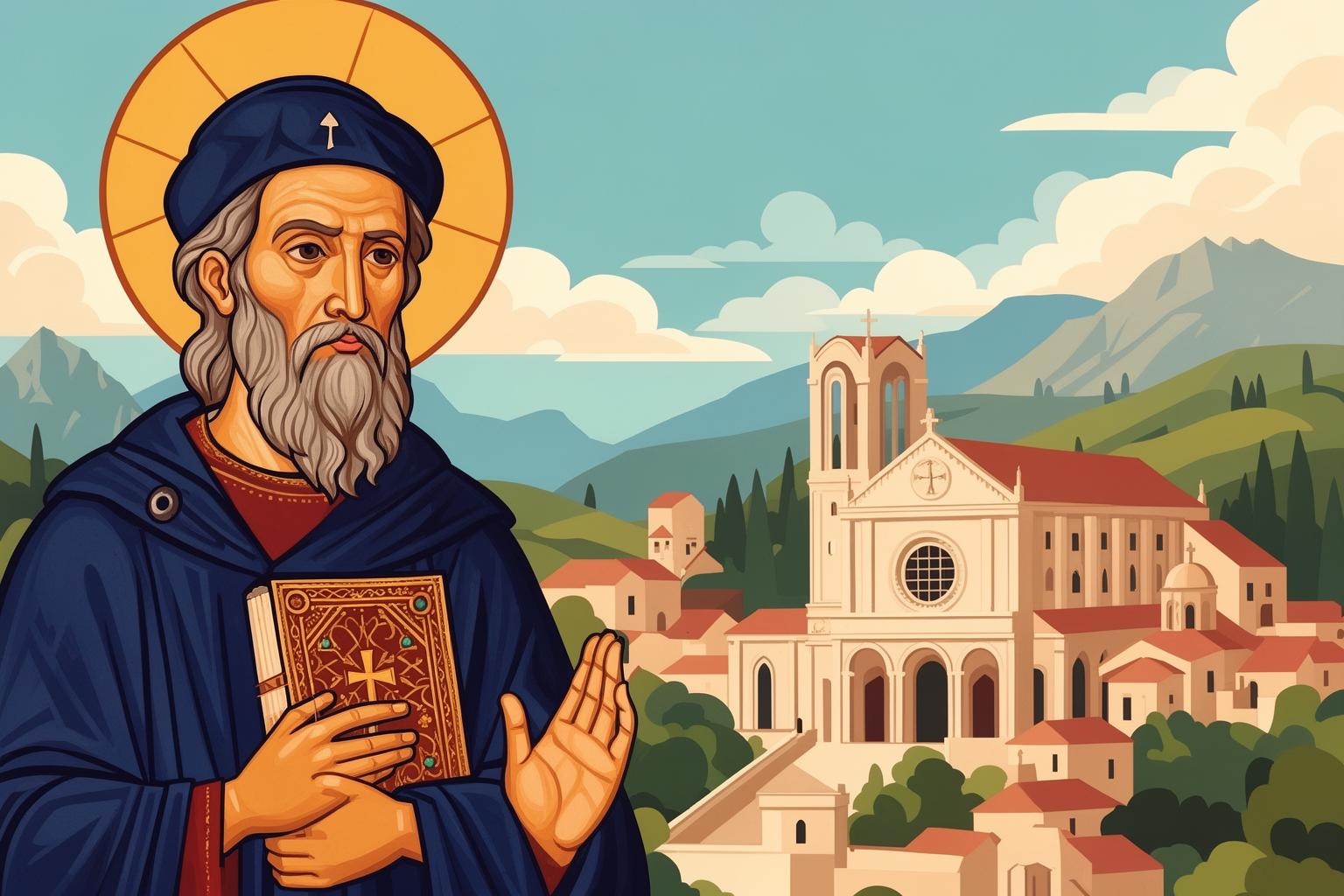
Our journey, which began in the serene pastoral landscape of a Tuscan valley, reaches its climax here, amidst the spiritual ambiance of Umbria, after traversing the grandest stages of the early Renaissance. We have followed the path of a man who did more than paint; he sculpted with color, authored epics through gesture, and constructed worlds with perspective. Tracing Giotto’s footsteps is witnessing the pivotal moment when Western art shifted from the divine and symbolic to the human and tangible. Standing before his Campanile, you sense his ambition and civic pride. In the Uffizi, you encounter his intellectual revolution encapsulated in a single, powerful altarpiece. In the chapels of Santa Croce, you hear his whispered tales of grief and faith. And within the celestial embrace of the Scrovegni Chapel, you are fully immersed in the astonishing power of his narrative genius.
Even in Assisi, amid scholarly debates, his spirit remains unmistakable. The revolution he ignited was too potent to be confined to one man. He taught generations of artists to look, to truly see the world around them, and to recognize that the most profound religious stories could be conveyed through authentic human emotion. He gave his figures weight, placed them in believable settings, and most importantly, endowed them with souls that resonate even seven hundred years later. He was truly the dawn, the first light after a long, dark night. The pilgrimage to witness his work is more than an art tour; it is a journey to the very source code of the Renaissance, an opportunity to stand at the beginning and view the world anew, through the eyes of a shepherd boy who taught stone and plaster how to feel.