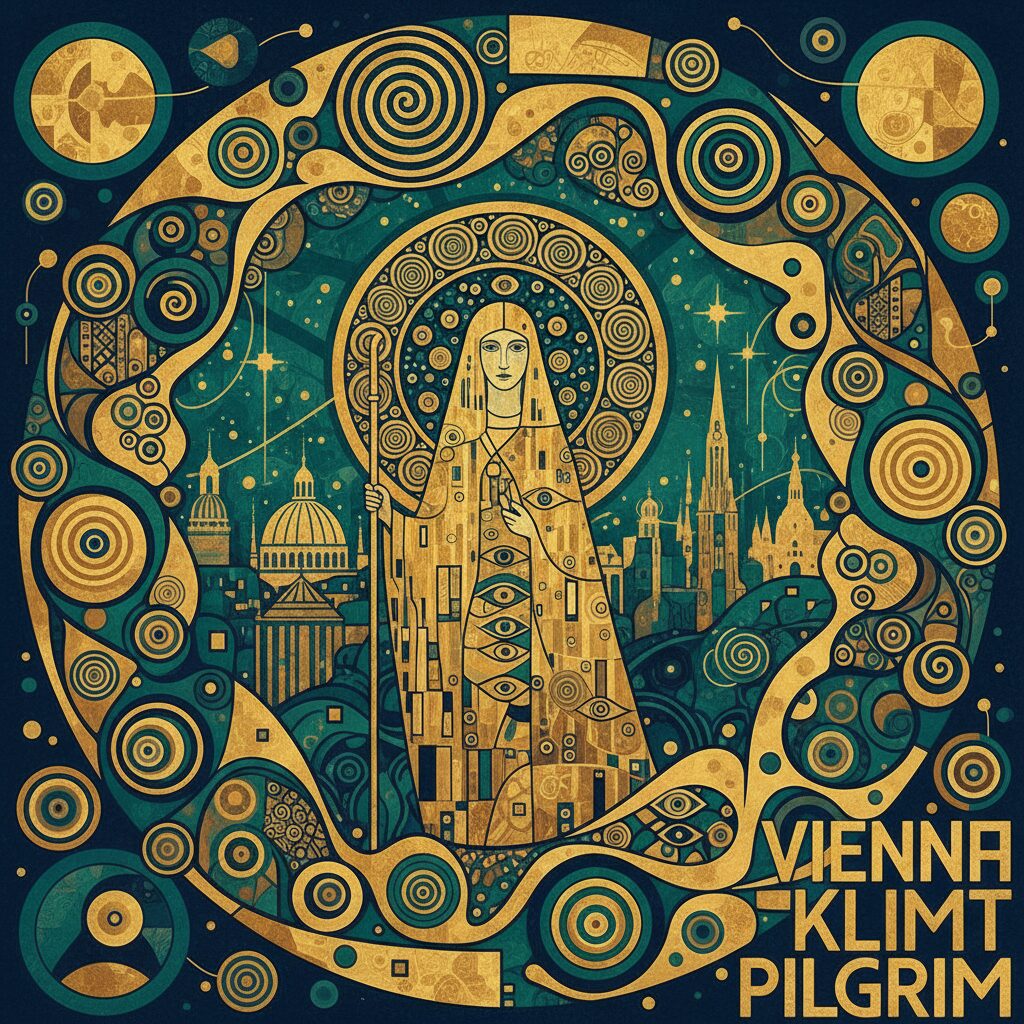
The world knows Gustav Klimt through a shimmer of gold. It knows him through the tangled embrace of lovers, their bodies lost in a mosaic of radiant patterns, a moment of pure ecstasy captured forever in “The Kiss.” His art is a portal to a world of opulent beauty, charged symbolism, and a quiet, revolutionary sensuality. But to truly understand the man who gilded an era, to feel the pulse of the world that birthed his vision, you must walk in his footsteps. This is not a journey to be taken behind the velvet ropes of a museum alone. It is a pilgrimage to the heart of fin-de-siècle Vienna, a city teetering between imperial grandeur and explosive modernism, and to the tranquil, turquoise waters of a summer lake that offered him solace and a different kind of canvas. It’s a quest to see the world through his eyes—to find the patterns in the water, the stories in the architecture, and the golden light that still filters through the cobblestone streets. From the hallowed halls of grand palaces to the quiet garden of his final studio, we will trace the map of his life, discovering that the soul of his art is woven into the very fabric of Austria itself. This journey is an invitation to step inside the frame, to breathe the air that fueled a golden rebellion, and to find the enduring glow of an artist who taught the world a new way to see beauty.
For a similar artistic pilgrimage that explores the life of another European master, consider a journey through the world of Toulouse-Lautrec.
The Gilded Heart of an Empire: Klimt’s Vienna
Arriving in Vienna is to experience the weight and wonder of history firsthand. The very air seems to carry the echoes of Habsburg emperors, Strauss’s waltzes, and Freud’s revolutionary ideas. This was Klimt’s stage—a city of magnificent contradictions. Its grand boulevards and imperial palaces projected unshakable tradition, yet beneath this ornate facade, a new world of art, music, philosophy, and science was struggling to be born. Klimt stood at the epicenter of this cultural upheaval. Trained in the classical traditions that adorned the city’s new monuments, his soul yearned for a visual language capable of expressing the complex inner world of the modern human. Walking through Vienna is a vibrant experience; you continuously move between the world Klimt was born into and the one he helped create.
The Belvedere Palace: Sanctuary of “The Kiss”
Your pilgrimage should start here, at the Belvedere. It is more than a museum; it is a shrine. The expansive Baroque palace, with its terraced gardens and sweeping city views, was once the summer residence of Prince Eugene of Savoy, a military genius of the Habsburg Empire. Today, its Upper Palace houses the world’s most significant collection of Klimt’s work, with the icon itself—“The Kiss”—at its center. No reproduction, however crisp or well-lit, can prepare you for the real thing. Standing before the massive canvas, you are wrapped in its light. The gold leaf is not flat but a living element, capturing light and reflecting a divine glow that seems to emanate from within the lovers’ embrace. It is an overwhelming experience. The figures, poised on the edge of a flowery precipice, are both specific and universal, their faces serene while their bodies dissolve into a storm of ornate, symbolic patterns—rectangles for the man, circles for the woman. It is a perfect fusion of the spiritual and the erotic, a moment of transcendence made tangible.
But do not let “The Kiss” overshadow the other masterpieces around it. Spend time with “Judith and the Head of Holofernes,” a work of breathtaking, unsettling beauty. Klimt’s Judith is no hesitant biblical heroine; she is a quintessential Viennese femme fatale, her expression a mix of ecstasy and triumph, her sheer garment barely veiling a body rendered with startling sensuality. Her gaze challenges the viewer, asserting a power and sexuality both fascinating and terrifying to Viennese society of the time. The collection traces his entire evolution, from early portraits to later allegorical works, allowing you to witness the blossoming of his unique style. A practical tip for modern pilgrims: the Belvedere is Vienna’s crown jewel, and the crowds reflect that. Book your ticket online for a specific time slot, preferably a weekday morning, to enjoy a few quiet moments of communion with these golden titans before the halls fill with admiration.
The Secession Building: A Temple to a New Art
If the Belvedere symbolizes the institution that ultimately embraced Klimt, the Secession Building, a short walk from the grand opera, stands as the monument to his rebellion. With its stark white walls and magnificent filigreed golden dome—affectionately called the “golden cabbage” by locals—the building was a radical statement. It served as the exhibition hall for the Vienna Secession, a movement of artists who broke away from the conservative, state-sponsored art academies in 1897. Klimt was their first president, and their motto, displayed above the entrance, speaks volumes: “To every age its art, to art its freedom.” This was their temple, a space dedicated to showcasing modern, international art free from the constraints of academic juries.
The true treasure lies within—in the basement, in a room created just for it: the Beethoven Frieze. This is not merely a painting to view; it is an environment to experience. Created for the 14th Secessionist exhibition in 1902, the monumental work wraps around three walls, visually interpreting Richard Wagner’s reading of Beethoven’s Ninth Symphony. It is a journey. You begin on the left wall with “Yearning for Happiness,” where floating genii guide humanity past worldly temptations. The central wall presents a terrifying confrontation with the “Hostile Forces,” a monstrous giant Typhoeus flanked by his daughters, the three Gorgons representing sickness, madness, and death, alongside figures of lust, wantonness, and gnawing care. The narrative resolves on the final wall, where the yearning for happiness finds fulfillment in poetry and the arts, culminating in a soaring choir of angels and a couple locked in a tender embrace, receiving a kiss from the entire world. Standing in the center of this room immerses you in Klimt’s philosophical vision. The figures are rendered with stark, linear elegance, using casein paint, stucco, and inlaid materials to create a textured, almost sculptural effect. It is one of the few places on Earth where a major Klimt work can be seen in the exact space for which it was conceived, creating a powerful, direct connection to the revolutionary spirit of 1902.
The Ringstrasse: A Parade of Imperial Dreams and Artistic Rebellion
The Ringstrasse is the soul of imperial Vienna. This grand circular boulevard was Emperor Franz Joseph’s ambitious project to showcase the power and glory of the Habsburg Empire, replacing the old city walls with a stunning procession of opulent buildings. The State Opera, City Hall, Parliament, and great museums were all built in historicist styles—Neo-Gothic, Neo-Renaissance, Neo-Baroque—each looking to the past to legitimize the present. It was within this grand, traditionalist framework that a young Gustav Klimt, along with his brother Ernst and friend Franz Matsch, began his career. As the “Company of Artists,” they were highly sought-after decorators, their classical training ideal for adorning these new temples of culture.
The Burgtheater
A visit to the magnificent Burgtheater, the Imperial Court Theater, is a step back into Klimt’s formative years. Look up at the grand staircases’ ceilings, where you will find his early masterpieces. He painted scenes from the history of theater, including a stunning depiction of London’s Globe Theatre and a self-portrait as one of the spectators. The style is academic, realistic, and masterfully executed. You can see his incredible technical skill and ability to render figures and fabrics with photographic precision. Yet, this world is far removed from the stylized, golden works that made him famous. Seeing these early commissions is essential; they provide the baseline against which his later artistic revolution can be measured. You witness the master of tradition before he became its breaker.
The Kunsthistorisches Museum
Directly across Maria-Theresien-Platz from its twin, the Natural History Museum, stands the Kunsthistorisches Museum—a palace built to house the imperial collections. Here, too, in the soaring main staircase, Klimt and his partners left their mark. High in the spandrels and intercolumnar spaces, they painted a cycle depicting the history of art, from ancient Egypt to Renaissance Florence. Klimt’s contributions are remarkable for their historical accuracy and decorative elegance. It is fascinating to stand in this grand hall, surrounded by old master artworks, and look up at a young artist’s work who would soon challenge everything this institution represented. It was the success of these public commissions that made his name, but the internal conflict between this prescribed historicism and his own emerging modern vision would eventually prompt him to secede and forge his own path.
The Leopold Museum: A Deep Dive into Fin-de-Siècle Genius
Nestled within the vibrant, modern MuseumsQuartier complex, the Leopold Museum offers a different, more focused perspective on Klimt and his era. While the Belvedere presents Klimt in a grand, imperial context, the Leopold places him at the heart of the Expressionist storm that followed. The museum’s crown jewel is Klimt’s monumental allegory, “Death and Life.” It stands as one of his most powerful and profound works. On one side, Death—a grinning skull cloaked in a dark, cross-adorned shroud—watches with cold patience. On the other, a vibrant, tangled mass of humanity—men, women, and children of all ages—clings together in deep sleep, wrapped in a colorful, life-affirming quilt of flowers and patterns. It is a stark and moving meditation on mortality, but ultimately life, in all its interconnected, dreaming beauty, dominates the canvas. The work won first prize at the 1911 International Art Exhibition in Rome, yet Klimt, ever the perfectionist, later revised it, painting over the original gold background with a somber gray, intensifying the contrast between the two forces.
The Leopold Museum also houses the world’s most extensive collection of works by Egon Schiele, Klimt’s brilliant, tormented protégé. Seeing their work side-by-side is revealing. You can trace Klimt’s influence in Schiele’s masterful, expressive lines but also observe his radical departure. Where Klimt used ornament and beauty to explore the psyche, Schiele stripped his figures bare, twisting bodies into raw, angular expressions of psychological torment and unfiltered desire. The Leopold offers the crucial next chapter in Viennese modernism’s story, showing how Klimt’s revolution paved the way for an even more radical form of expression.
Echoes of a Private Life: Klimt’s Last Studio
After immersing yourself in the grand public works, a visit to his final studio in Vienna’s quiet, leafy Hietzing district offers a deeply personal counterpoint. Tucked away in a serene garden, this modest Biedermeier villa is where Klimt worked from 1911 until his untimely death in 1918. Though the original furnishings are gone, the space has been meticulously reconstructed using photographs and records, providing an evocative glimpse into his creative sanctuary. Standing in the large, light-filled reception room, you can almost imagine him dressed in his signature blue painter’s smock, surrounded by his beloved cats and the beautiful models who populated his canvases. The studio is a world apart from the monumental splendor of the Ringstrasse; it feels humble, functional, and deeply peaceful. The adjoining garden was his private Eden, a constant source of inspiration for the floral patterns adorning his most famous works. Here he created some of his most iconic paintings, including many society women’s portraits and allegorical masterpieces from his late period. Visiting this place connects you not to Klimt the public figure or revolutionary artist, but to Klimt the man—a private, hardworking craftsman seeking refuge from the city’s bustle to cultivate his unique vision. It is a quiet, contemplative experience that adds a vital human dimension to the golden legend.
The Turquoise Soul: Klimt’s Summers on the Attersee
To know only Klimt’s Vienna is to understand just half of his artistic spirit. Each summer, he fled the city’s intellectual intensity and social demands, exchanging the coffee houses for the peaceful shores of the Attersee, a stunning alpine lake in the Salzkammergut region. Surrounded by mountains and the ever-changing, jewel-like waters, he found a different kind of muse. He abandoned allegories, portraits, and gold and devoted himself to capturing the pure, unembellished beauty of the landscape. The Attersee was his sanctuary, a place of renewal, inspiring a body of work that is quietly revolutionary in its own right, alongside his more famous figurative masterpieces.
The Klimt Trail: Walking Through a Landscape Painting
The best way to connect with Klimt’s lakeside inspiration is by walking the Klimt-Themenweg, or Klimt Trail. This path, winding along the shoreline and through small villages, is marked with information steles indicating the exact viewpoints from which he painted his landscapes. Standing in these spots offers a profound experience. You gaze across the water at Schloss Kammer, a castle on a small peninsula, and see the very view he captured in his series of paintings of the estate. You notice how he used a telescope or opera glasses to flatten the perspective, compressing water, trees, and architecture into a rich, decorative tapestry of color and texture. He was uninterested in traditional landscape painting with its grand, panoramic views and depth. Instead, he painted in a distinctive square format, cropping the scene to omit the sky and horizon, focusing exclusively on the shimmering water’s surface, leaf patterns, and the mosaic of meadow flowers. Walking the trail, you begin to perceive the world as he did, observing how light fractures on the lake’s surface, shifting from deep emerald to sparkling turquoise, and sensing the rhythm in the birch trunks. It’s an active meditation, a way to step directly into the canvas and grasp his unique, almost abstract vision of nature.
The Klimt Center: A Lakeside Homage
In Schörfling am Attersee, a small yet beautifully curated Gustav Klimt Center stands as the intellectual heart of his time in the region. Located near the spot where the Flöge family—and especially his lifelong companion and muse, Emilie Flöge—had their summer villa, the center does not display original paintings but tells the story of Klimt’s fifty summers in the Salzkammergut through a rich collection of photographs, letters, postcards, and high-quality reproductions. You see images of him in his painter’s smock, rowing on the lake, or relaxing in the garden with friends. The exhibits provide excellent context for his landscape paintings, revealing his techniques and deep connection to the area. It’s the perfect start or end to a day exploring the lake. Pair a visit with a boat tour circling the lake to enjoy a water-level perspective of the landscapes he cherished, or rent a small electric boat to discover your own quiet cove. Summer is undoubtedly the best time to visit—the air is warm, the hills lush green, and the water inviting—offering the only true way to experience the atmosphere that so deeply nourished his art.
Beyond the Canvas: Experiencing Klimt’s Vienna Today
To complete your pilgrimage, you must immerse yourself in the culture that surrounded Klimt—a culture that continues to thrive in Vienna today. The spirit of the fin-de-siècle extends beyond museum walls; it endures in the city’s grand coffee houses and its rich culinary traditions.
The Coffee House Culture: The Avant-Garde’s Catalyst
The Viennese coffee house is a cherished institution, a “public living room” where time seems to slow. During Klimt’s time, these venues served as incubators of modernism. At places like Café Central, with its soaring vaulted ceilings and marble columns, or the cozier Café Sperl, artists, writers, politicians, and philosophers would gather for hours over a single cup of coffee, debating, writing, and sketching the future. Peter Altenberg, a well-known writer, even had his mail delivered to Café Central. To sit in one of these historic establishments is to engage in a living tradition. The atmosphere radiates genteel intellectual comfort, with waiters in black tie gliding between velvet-upholstered booths and the clinking of porcelain and rustling of newspapers providing a calming soundtrack. Order a classic Wiener Melange—a shot of espresso topped with steamed milk and foam—and a slice of Apfelstrudel. Linger. Read a book. Watch the world pass by. This is more than a coffee break; it is a vital Viennese cultural experience, a direct connection to the world of ideas that inspired Klimt and his peers.
The Taste of an Era: Culinary Connections
Truly connecting with a place often means tasting it. Vienna’s cuisine is hearty, traditional, and deeply satisfying, reflecting its imperial heritage. Savor a classic Wiener Schnitzel—a veal cutlet pounded thin, breaded, and fried to a perfect golden brown, reminiscent of the gold in Klimt’s paintings. For dessert, try the legendary Sachertorte, a rich chocolate cake featuring a thin layer of apricot jam, traditionally served with unsweetened whipped cream. Enjoying these dishes in a classic Viennese restaurant, or beisl, offers another way to immerse yourself in the city’s history—a sensory experience that roots your artistic journey in the simple, pleasurable rhythms of daily life.
A Traveler’s Guide: Practicalities for a Golden Journey
Navigating your Klimt pilgrimage is quite straightforward, thanks to Austria’s excellent infrastructure. A bit of planning will guarantee a smooth and rewarding experience.
Getting Around Vienna
Vienna features one of Europe’s top public transportation systems. The U-Bahn (subway), trams, and buses are efficient, clean, and can get you nearly anywhere you need to go. The city center, known as the First District, is extremely walkable and a pleasure to explore on foot. For a picturesque view of the grand buildings along the Ringstrasse, consider taking the Vienna Ring Tram, which completes a full loop around the boulevard. A multi-day transit pass is a convenient and cost-effective choice for most visitors.
Reaching the Attersee
From Vienna, the lake district is easily reachable. The quickest way is by train from Vienna’s main station (Hauptbahnhof) to Vöcklabruck or Attnang-Puchheim. From there, local trains and buses connect to the small towns surrounding the Attersee, such as Schörfling or Kammer. To enjoy maximum flexibility in exploring the various villages and viewpoints around the lake, renting a car is the best option. The drive from Vienna takes approximately two and a half to three hours and offers a scenic journey on its own.
When to Go
Vienna is a destination for all seasons. Spring and autumn provide pleasant temperatures and fewer tourists compared to the summer peak. The winter holidays bring the charm of the world-famous Christmas markets, though warm clothing is necessary. For the Attersee portion of your trip, summer is essential. From June to September, the landscape is at its greenest, the water is warm enough for swimming, and all lakeside attractions, including boat tours and the Klimt Center, are fully operational. This period is the only time to experience the lake as Klimt did.
Insider Tips for the Discerning Pilgrim
Always book tickets online and in advance for major attractions like the Belvedere and Schönbrunn Palace to avoid long waits. While city passes such as the Vienna Pass can be handy, carefully assess if the attractions you want to visit justify the expense. Sometimes purchasing individual tickets is more cost-effective. At the Attersee, don’t restrict yourself to Klimt-related sites alone. The region is an outdoor paradise. Take a hike in the hills for a stunning new view of the lake, rent a paddleboard, or simply relax at a public beach and swim in the crystal-clear water. Fully immersing yourself in the natural surroundings is the best way to understand why they held such a profound influence on him.
The Enduring Glow of a Golden Revolution
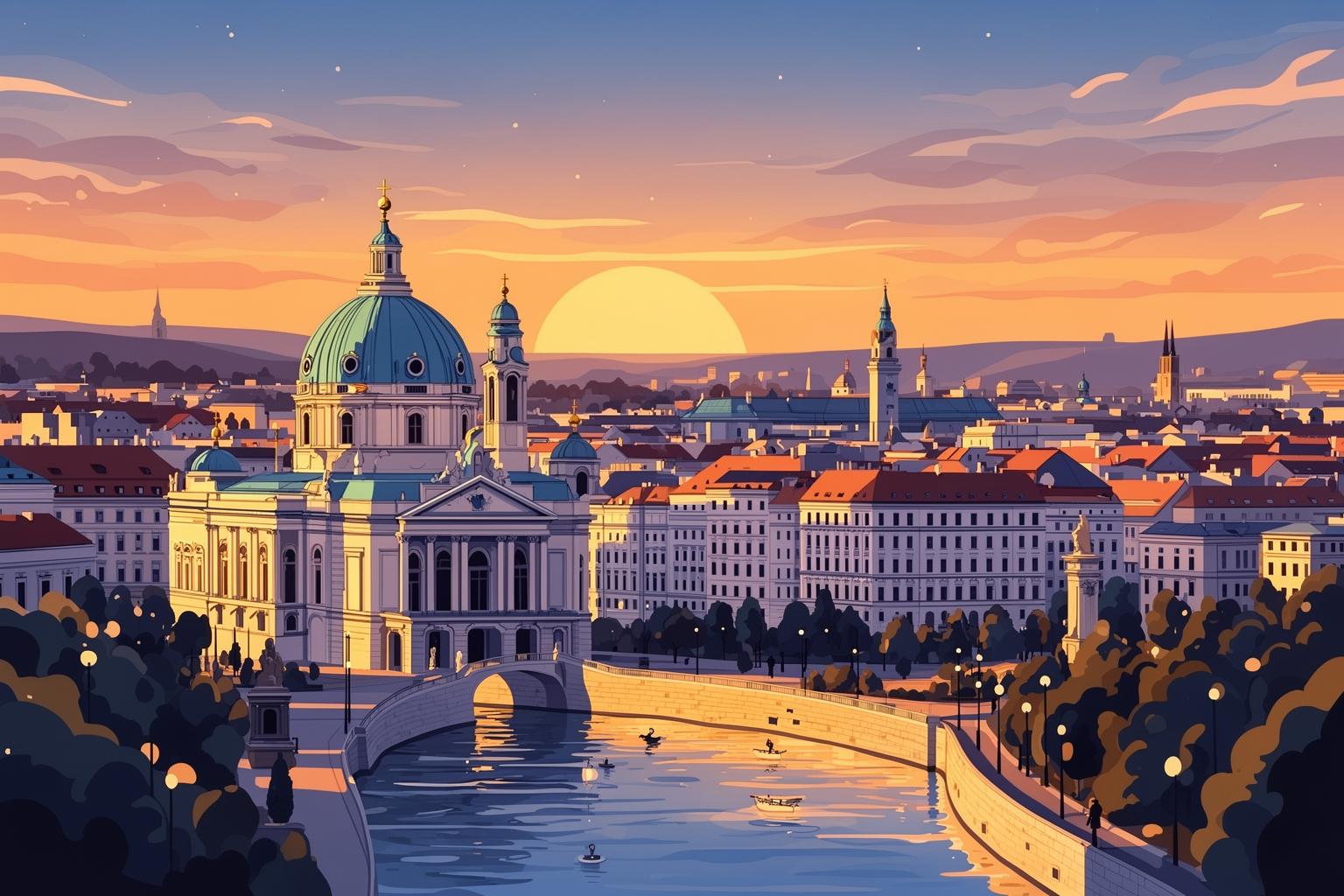
Following Gustav Klimt’s path is a journey between two extremes: the vibrant, intellectual heart of Vienna and the serene, restorative calm of the Attersee. It is a voyage through art, but also through history, culture, and nature. Standing before “The Kiss” reveals the height of his golden, ornamental style—a vision of transcendent love that captivated the world’s imagination. Yet, standing on the shore of the turquoise lake he so passionately painted connects you with the quiet, reflective soul of the artist himself. You come to realize that his revolution was not merely a break from academic tradition, but a creation of a new language to express the deepest truths of human experience—our desires, fears, longing for happiness, and profound bond with the beauty of nature. A pilgrimage following his footsteps offers more than memories of stunning paintings; it gifts you a new perspective—a habit of noticing the patterns in the world, appreciating the sparkle of light on water, and believing, as he did, in art’s redemptive, transformative power. It leaves you with the lasting glow of his golden vision.