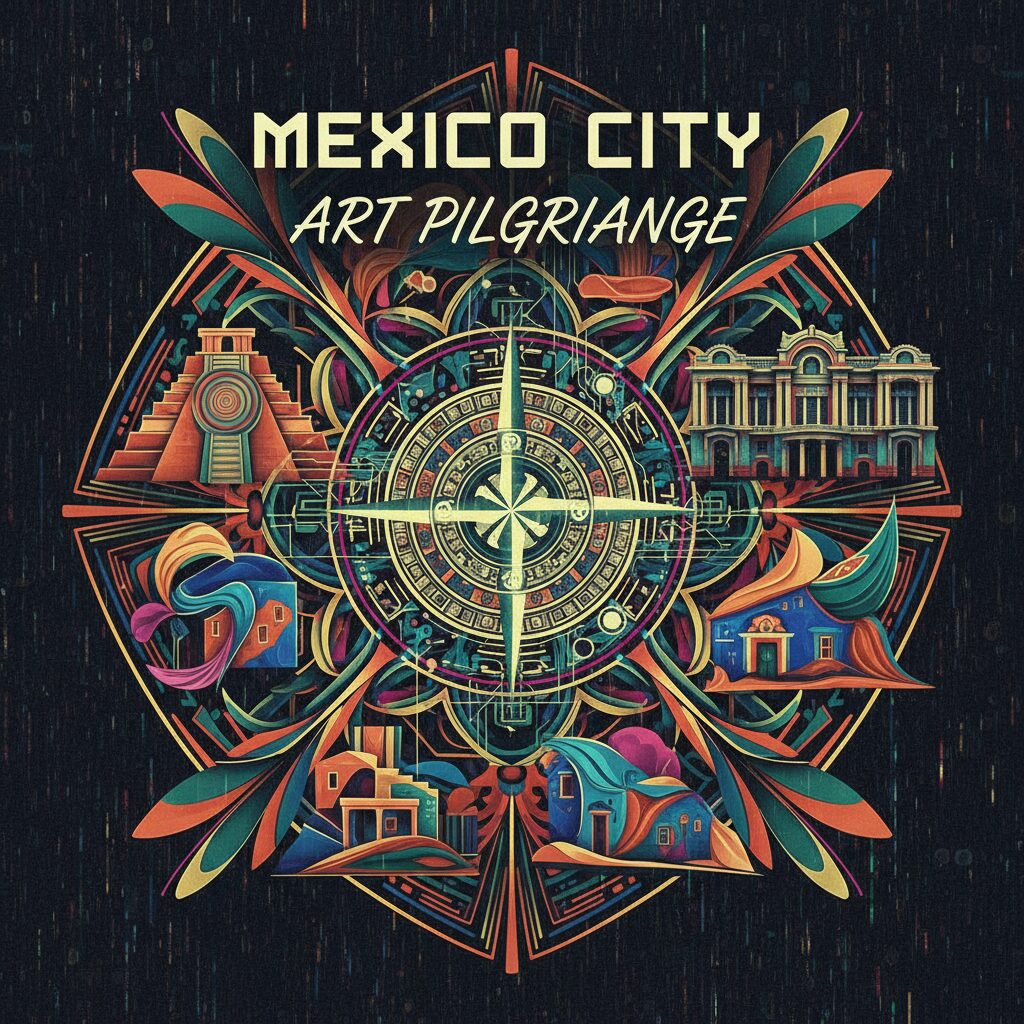
Mexico City doesn’t just have art; it is art. This is a city that breathes in color and exhales poetry, a sprawling, chaotic, beautiful metropolis where every street corner can feel like a gallery and every building tells a story painted in the hues of revolution, passion, and indomitable spirit. It’s a place where ancient Aztec stone rests in the shadow of baroque cathedrals, and where the raw, political power of the muralists still shouts from the walls of government palaces. To walk through Mexico City is to walk through a living timeline of artistic expression, a journey that takes you from the intimate, pain-filled universe of Frida Kahlo to the monumental, nation-defining epics of Diego Rivera, and onto the vibrant, ephemeral language of today’s street artists. This isn’t a passive experience of viewing art behind velvet ropes; it’s an immersion. It’s the scent of jacaranda blossoms mixing with wet paint, the sound of market vendors harmonizing with the distant echo of a protest, the feeling of history under your feet and the pulse of the future all around you. This is a pilgrimage for the soul that seeks inspiration, a deep dive into a culture that has always understood that art is not a luxury, but a vital, visceral part of life itself. It’s a city that challenges you, comforts you, and ultimately, changes the way you see the world. Before we begin our journey into this sprawling masterpiece, let’s orient ourselves in the heart of its creative energy.
To further explore how a city’s soul can be expressed through transformative architecture, consider a similar artistic pilgrimage to Barcelona’s Gaudí.
The Heartbeat of History: Zócalo and the Centro Histórico’s Muralist Masters
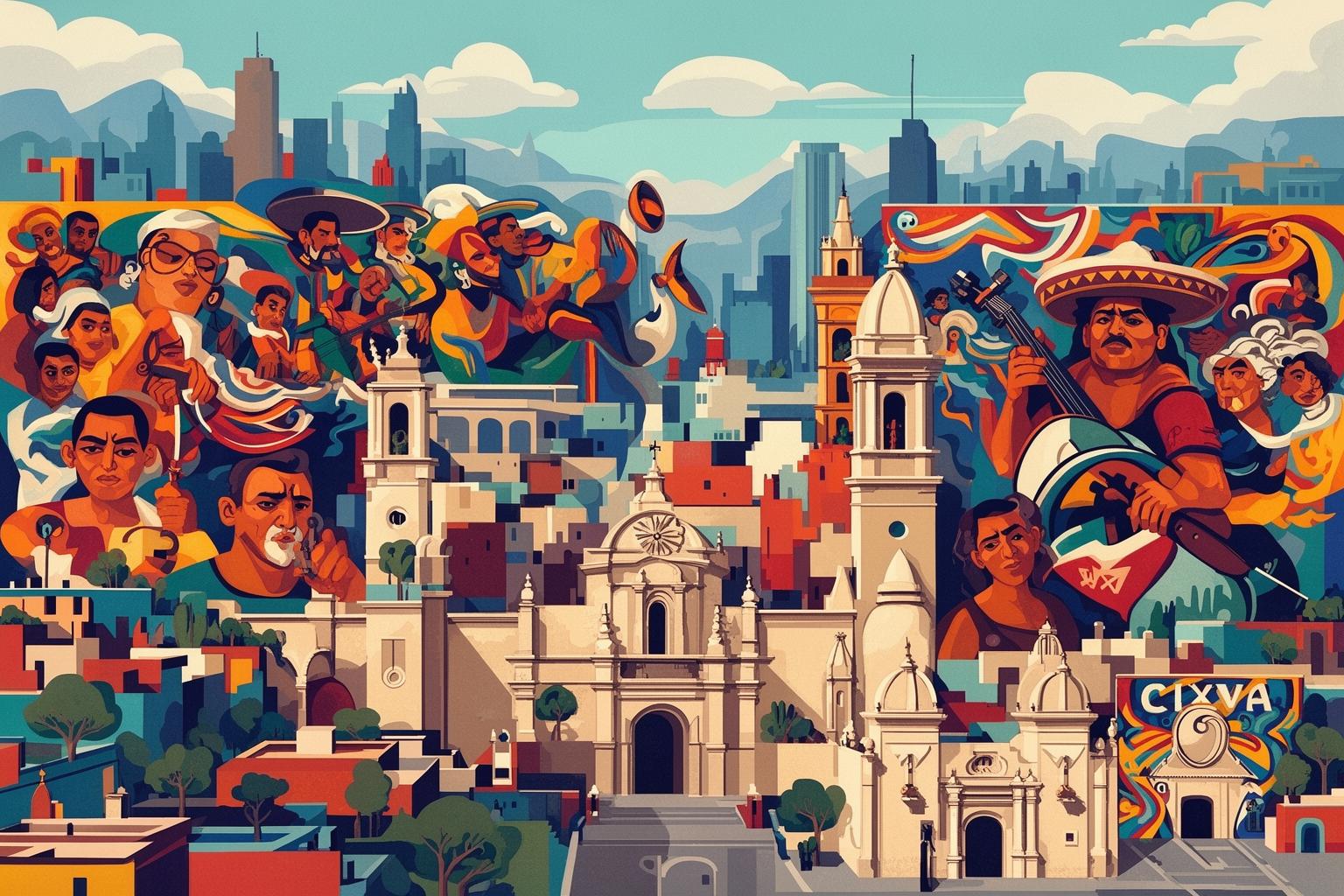
Your journey begins at the birthplace of the city itself, in the sprawling, vibrant heart of the Centro Histórico. The Zócalo, or Plaza de la Constitución, is a vast, windswept stone square—one of the largest city plazas worldwide. It is a place of relentless activity, hosting ceremonies and protests alike, where vendors sell colorful balloons and Aztec dancers, known as concheros, perform ancient rituals near the ruins of the Templo Mayor. The air here pulses with centuries of history, an almost tangible energy emanating from the stones. For the art enthusiast, this square serves as the grand introduction to the tale of Mexican Muralism, the powerful art movement born from the aftermath of the Mexican Revolution that forged a new national identity. This art was never meant for the elite; it was a visual bible for the masses, painted on public walls for everyone to see, understand, and feel.
Palacio Nacional: Diego Rivera’s Epic Chronicle
Bordering the entire eastern side of the Zócalo stands the Palacio Nacional, a building long serving as the seat of power in Mexico since Aztec times. Step into its grand central courtyard and you are immediately immersed in Diego Rivera’s masterpiece, “The History of Mexico.” This is more than just a series of paintings; it is an expansive, cinematic narrative encircling the grand staircase and the second-floor corridors. You don’t merely observe it; you become absorbed by it. Begin at the base and let your eyes follow the story upward—from the mythical pre-Hispanic world of Quetzalcóatl through the violent Spanish conquest, the dark colonial era, the struggle for independence, and the upheaval of the revolution. Rivera, a towering figure with a vast vision, infused his communist ideals and deep love for his homeland onto these walls. He depicted heroes and villains, indigenous farmers and foreign conquerors, the clash of cultures, and the birth of a new mestizo nation. Examine the details closely: the bustling markets of Tenochtitlan, the anguish on the faces of the enslaved, the resolute gaze of revolutionary icons like Zapata. Rivera’s genius lay in transforming complex history into powerful, accessible imagery. He wanted every Mexican, whether literate or not, to grasp their past and be inspired to fight for a better future. It’s a profoundly moving experience to stand in the halls of power surrounded by art that gives voice to the powerless. A practical note for visitors: a valid photo ID is required to enter, as it remains a functioning federal building. Allocate at least two hours here—rushing through this epic would be like reading only the opening and closing chapters of a great novel.
Secretaría de Educación Pública: A Hidden Muralist Gem
While the Palacio Nacional showcases Rivera’s most famed work, one of his most extensive and arguably most personal projects lies a few blocks north, often overlooked by tourists: the headquarters of the Secretariat of Public Education (SEP). This hidden treasure is a calm refuge away from the city’s hustle. The building itself is a stunning colonial structure featuring two large open-air courtyards, with nearly every inch of its three-story arcade adorned with murals by Rivera and his contemporaries. Completed in the 1920s, this was one of the earliest major muralist projects and feels more intimate and experimental than his later works. The murals are split into two main sections: the “Court of Labor” and the “Court of Fiestas.” One side honors the dignity of the Mexican worker—miners, weavers, farmers, potters—celebrating the nation’s industrial and agricultural heart. The other bursts with the vibrant traditions and festivals that define Mexican culture, from the Day of the Dead to regional dances and celebrations. Strolling through these courtyards is an immersive experience. Sunlight filters through the arches, casting shifting shadows over the painted walls. The sounds of the city drift in, but here there’s a prevailing sense of tranquility. You can get very close to the frescos, observe the brushstrokes, and feel the artist’s presence. Here Rivera truly developed his signature style, and the sheer scale of the work is staggering. Because it is less crowded, you can take your time, absorb the stories, and appreciate the quiet strength of art dedicated to celebrating the everyday life of a nation.
Palacio de Bellas Artes: A Cathedral of Culture
At the eastern edge of Alameda Central park stands the magnificent Palacio de Bellas Artes, Mexico City’s grand dame of culture. Its exterior is a dazzling display of Carrara marble, an opulent Art Nouveau fantasy crowned by a soaring dome tiled in orange and yellow. Inside, however, the aesthetic changes dramatically to a powerful, geometric Art Deco style. This building is a monument to the country’s artistic ambition, and its upper floors house a permanent collection of murals representing the holy trinity of Mexican Muralism. Here you’ll find not only Rivera’s work but also masterpieces by his great contemporaries José Clemente Orozco and David Alfaro Siqueiros. The contrast is electrifying. Rivera’s “Man, Controller of the Universe” is a vivid recreation of the controversial mural destroyed at Rockefeller Center, filled with political and scientific symbolism. Nearby, Orozco’s “Catharsis” offers a fiery, apocalyptic vision of humanity engulfed by war and technology, rendered in furious, expressive strokes. Then there is Siqueiros’s three-part piece, “New Democracy,” a dynamic, sculptural work that bursts from the walls, capturing the explosive energy of liberation. Witnessing these three masters in dialogue within this grand hall is an essential Mexico City experience. It’s a masterclass in how different artists approach shared themes—history, progress, conflict, identity—with vastly different styles. For an unforgettable moment, try to time your visit to see the theater’s famous stage curtain, a breathtaking mosaic of nearly a million pieces of Tiffany glass illustrating the volcanoes of the Valley of Mexico. This building is more than a museum; it is a temple celebrating the enduring power of Mexican creativity.
Coyoacán’s Cobalt Dream: In the Footsteps of Frida Kahlo
Leave behind the monumental grandeur of the Centro Histórico and journey south to the neighborhood of Coyoacán. The atmosphere changes immediately. The city’s roar fades into a gentle murmur, replaced by the chirping of birds in leafy plazas. Cobblestone streets meander past colonial-era homes painted in bold splashes of ochre, terracotta, and, most famously, cobalt blue. Coyoacán has long been a refuge for artists, intellectuals, and revolutionaries—a bohemian enclave with a fiercely independent spirit. This is the sacred ground of Frida Kahlo; walking these streets, you can feel her presence, her pain, and her extraordinary passion woven into the fabric of the place she called home. Here, Mexico City’s art story turns quieter and more personal, shifting from the epic to the intimate, from the public mural to the private diary.
La Casa Azul: The Blue House and Frida’s Universe
Few places in the world capture the spirit of an artist as vividly as within the cobalt blue walls of La Casa Azul, the Frida Kahlo Museum. This was her birthplace, childhood home, the house where she lived and worked with Diego Rivera, and where she passed away. It is not merely a sterile museum but a living sanctuary, a vibrant tribute to her extraordinary life. Stepping inside is like stepping directly into her world. The rooms remain preserved much as she left them. In the kitchen, painted in cheerful yellows and blues, traditional ceramic pots spell out Frida and Diego’s names on the wall. The bright, sunlit studio is a moment frozen in time: her wheelchair rests before her easel, which still holds an unfinished portrait of Stalin; her paints, brushes, and books lie scattered as if she had just stepped out briefly. Yet it is the more personal spaces that move visitors most. Her daybed in the sunroom, fitted with a mirror on the canopy so she could paint her famous self-portraits while recovering from numerous surgeries, symbolizes her ability to transform suffering into art. Her actual bedroom is a somber, sacred space, where her death mask rests on the pillow and an urn containing her ashes sits on the dresser. The house is filled with her collections: folk art, pre-Hispanic sculptures, and the intricate Tehuana dresses that became her signature style. The lush garden courtyard, with its miniature pyramid and riot of tropical plants, was her refuge. Walking through this space, it is impossible not to feel a profound connection to this remarkable woman. La Casa Azul reveals that Frida’s greatest masterpiece was not any single painting but the artful, defiant, and beautiful life she built within these blue walls. A vital tip: you must book your tickets online, often weeks or even months in advance. Showing up on the day and hoping for entry is almost always a recipe for disappointment. This pilgrimage site draws visitors worldwide and is treated with the reverence it deserves.
Museo Anahuacalli: Diego Rivera’s Temple to Pre-Hispanic Art
A short drive from the vibrant Casa Azul lies another, sharply contrasting world, also born from the minds of Frida and Diego. Museo Anahuacalli is Diego Rivera’s own architectural creation—a formidable, pyramid-like structure built from black volcanic stone. It feels ancient and primal, a temple devoted to his other great passion: pre-Hispanic art. Rivera was an avid collector, amassing tens of thousands of indigenous artifacts, and designed this building as their permanent home—a bridge between Mexico’s ancient past and present. Visiting is a powerful, atmospheric experience. The interior is dark and cavernous, with low ceilings and small windows that foster a sense of mystery and reverence. As you move through the exhibition spaces, you ascend through levels representing the underworld, the earth, and the heavens, reflecting ancient Mesoamerican cosmology. The collection itself is astounding, featuring figures and pottery from nearly every major pre-Columbian culture in Mexico. Encountering thousands of these pieces, you begin to grasp the deep well of inspiration from which Rivera, Kahlo, and other modernists drew. Their art was not created in a vacuum; it was a conscious effort to reject European colonial aesthetics and embrace a uniquely Mexican identity rooted in this powerful indigenous heritage. The top floor houses a reconstruction of Rivera’s studio from his San Ángel home, and from the rooftop, panoramic views of the city unfold, with the volcanic peaks of Popocatépetl and Iztaccíhuatl in the distance. A visit to Anahuacalli offers essential context for the muralist movement and stands as a profound artistic statement on its own. Often, combination tickets with La Casa Azul are available, making it a perfect companion visit.
Wandering Coyoacán’s Soul
After the deep emotional and historical immersion of the museums, the best way to experience Coyoacán is simply to get lost in it. The neighborhood is a living artwork, best explored on foot. The central plazas, Jardín Centenario and Plaza Hidalgo, form the social heart of the area. Find a bench under the shade of the trees and watch life unfold: families strolling, couples sharing ice cream, street performers captivating passersby. Dive into Mercado de Coyoacán, a bustling sensory explosion of colors, sounds, and aromas. Here you can find everything from intricate crafts and textiles to mountains of exotic fruits and the famous tostada stands where you can savor a delicious, authentic lunch. The market is a living gallery of folk art and culinary tradition. Stroll down quiet streets like Francisco Sosa, lined with magnificent old homes and hidden courtyards. Visit the historic San Juan Bautista church. Coyoacán invites you to slow down, to notice the details: the intricate tilework on a doorway, the cascade of bougainvillea over a wall, the sound of a lone guitar drifting from an open window. This is the atmosphere that nurtured Frida and Diego, and simply being here connects you to their world in a way that transcends viewing their art.
The Modern Pulse: From Condesa’s Galleries to Roma’s Street Canvas
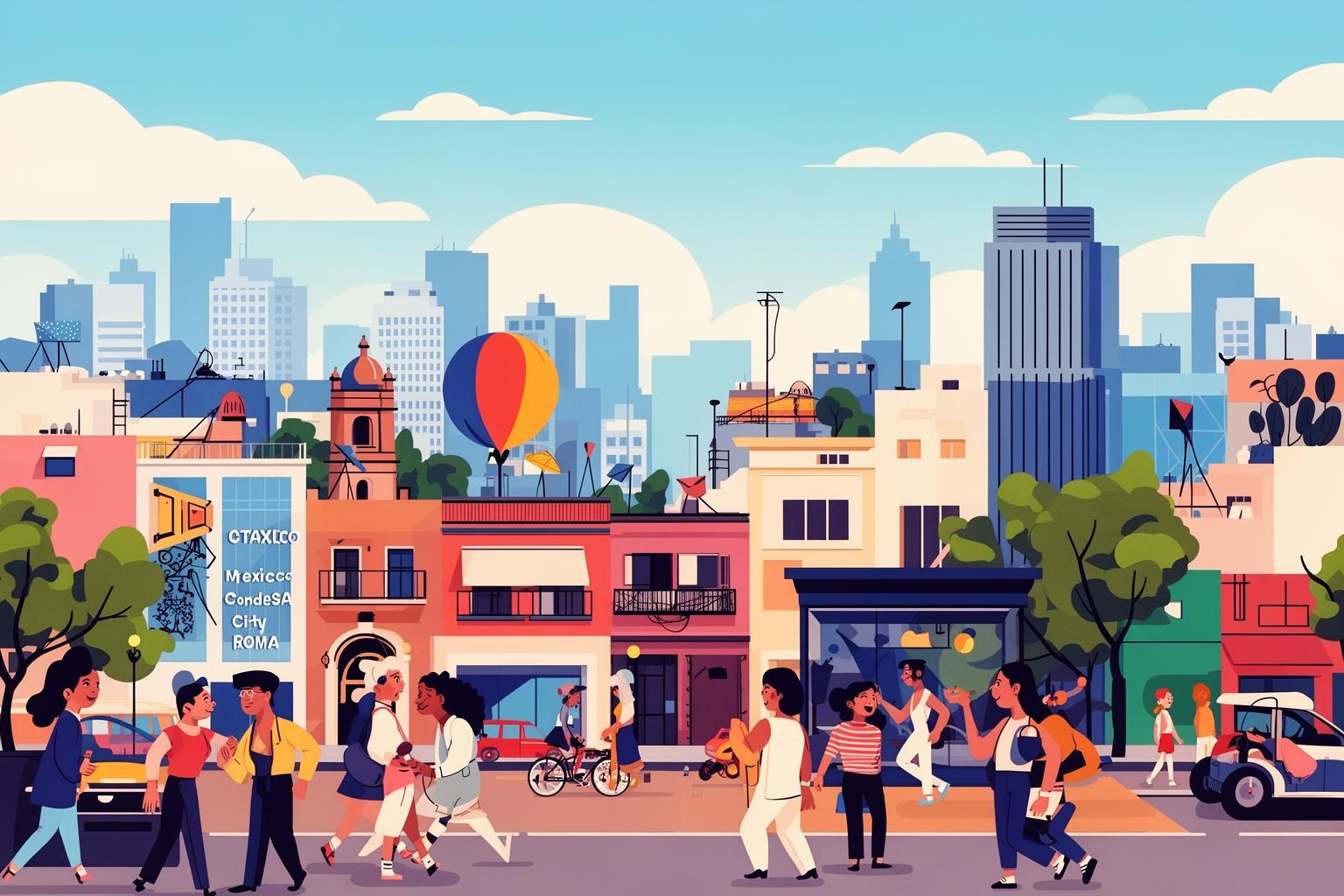
While the muralists and Frida Kahlo stand as towering figures of 20th-century Mexican art, Mexico City’s creative energy is far from being stuck in the past. To experience its contemporary vibe, head to the stylish neighboring areas of Roma and Condesa. Here, the atmosphere shifts. The monumental yields to the experimental, the revolutionary to the refined. These neighborhoods, with their leafy, tree-lined streets, elegant Art Deco apartment buildings, and European-style sidewalk cafes, serve as the hub for the city’s modern art, design, and fashion scenes. It’s a place where history and trendiness collide, and where art is discovered not only in museums but also in sleek commercial galleries and, most excitingly, splashed across the urban environment itself.
The Gallery Circuit: A Contemporary Quest
For those eager to explore the forefront of Mexican and international art, Roma Norte is the destination. This area hosts a concentration of the country’s most influential contemporary art galleries. Forget the quiet, reverential spaces of traditional museums; here, the gallery scene is vibrant and social. Venues like OMR, Kurimanzutto, and Proyectos Monclova occupy beautifully restored old mansions or custom-built modern spaces, showcasing work that is often provocative, conceptual, and politically charged. You may encounter large-scale installations, video art, abstract paintings, or photography that challenges conventional boundaries. The best way to experience it is by wandering. Choose a street such as Córdoba or Colima and explore. Galleries often appear understated from the outside, marked only by a small sign. Ring the bell, step inside, and you’ll enter a clean, white-walled space where the art speaks for itself. The experience feels intimate and direct. A great local tip is to attend gallery opening nights, or inauguraciones, usually held on Tuesdays or Thursdays. These events are when the art world gathers to celebrate, typically open to the public, with free mezcal or beer and the opportunity to mingle with artists, curators, and fellow enthusiasts in a lively and festive setting. It’s a fantastic way to connect directly with the city’s creative community.
Roma and Condesa: Where the Streets Speak Art
One of the most exciting aspects of Roma and Condesa’s art scene is that you don’t even have to enter a gallery to experience it. The neighborhoods themselves are a constantly evolving open-air gallery. The streets become a canvas for a vibrant and varied street art culture. As you stroll, observe the walls, the roll-down metal shutters of shops, and the sides of apartment buildings. You’ll find everything from small, detailed stencils with political messages to vast, building-sized murals bursting with color and energy. This art is transient, democratic, and deeply connected to the city’s rhythm. A wall might display a surrealist portrait one week, only to be covered the next by a bold graphic design. This ongoing transformation is part of the thrill. It’s a visual dialogue taking place in public spaces. Areas near Plaza Río de Janeiro in Roma or along the paths of Parque México in Condesa are especially rich with such discoveries. The best approach is to explore without a plan. Put the map away, look up, and let curiosity lead you down alleyways and side streets. This act of discovery, stumbling upon an unexpected masterpiece on a weathered wall, is one of Mexico City’s great artistic pleasures. It serves as a powerful reminder that art here is not confined to institutions; it is a living, breathing element of the urban landscape.
Museo de Arte Moderno and Tamayo Museum: Icons in the Park
For a more formal, curated experience of modern and contemporary art, visit the city’s expansive green space, the Bosque de Chapultepec. Within this vast park are two of Mexico’s most important art institutions. The Museo de Arte Moderno (MAM) showcases the evolution of Mexican art throughout the 20th century. Its collection features key artists following the great three muralists, including Rufino Tamayo, Leonora Carrington, Remedios Varo, and notably, a significant selection of Frida Kahlo’s works, including her iconic painting “The Two Fridas.” The museum’s circular main building is a striking example of mid-century architecture, and its surrounding sculpture garden offers a peaceful spot to wander. Nearby stands the Museo Tamayo, a stunning example of brutalist architecture that appears to grow naturally from the park’s landscape. Built to house artist Rufino Tamayo and his wife’s personal collection, it focuses on international contemporary art alongside Tamayo’s own radiant abstract paintings. The contrast between these two museums is intriguing: the MAM narrates how Mexican artists shaped their modern identity, while the Tamayo places their work within a global context. Visiting both provides a thorough overview of the artistic currents of the past century. An ideal day includes a morning of art followed by a leisurely afternoon in the park—perhaps renting a paddleboat on the lake or simply relaxing in the shade to absorb all the incredible visual inspiration.
Beyond the Center: San Ángel and the University City
To truly appreciate the vast range of Mexico City’s artistic offerings, you must explore beyond the most popular neighborhoods. The southern districts of San Ángel and the expansive campus of the National Autonomous University of Mexico (UNAM) provide two distinctly different yet equally vital experiences. One immerses you in the rich traditions of Mexican folk art, while the other stands as a grand testament to the blend of art, architecture, and intellectual vision.
San Ángel’s Saturday Bazaar: A Tribute to Folk Art
If your visit falls on a Saturday, a trip to San Ángel is essential. This charming colonial neighborhood, with its winding cobblestone streets and stately old haciendas, transforms into a vibrant hub of creativity during the Bazar del Sábado. The focal point is Plaza San Jacinto, a lovely park where artists display their paintings for sale, creating an extensive open-air gallery. Yet the true enchantment spreads into the surrounding streets and buildings. The bazaar celebrates arte popular, or folk art, a term that describes the incredible variety of handmade crafts from across Mexico. This is no cheap souvenir fare; it is fine artistry handed down through generations. You’ll discover exquisite silver jewelry from Taxco, vivid hand-woven textiles from Oaxaca, detailed Talavera pottery from Puebla, and fantastical, brightly painted wooden animal figures called alebrijes. The level of skill and creativity on display is astonishing. It offers a chance to meet the artisans, hear their stories, and take home a unique piece of Mexican culture. The atmosphere is lively and festive, with music playing and restaurants setting up outdoor tables. Be sure to visit the Museo Casa del Risco beside the plaza, an elegant old house featuring a stunning courtyard fountain made entirely from broken fragments of 18th-century porcelain and Talavera tiles—a baroque collage masterpiece.
UNAM’s Central Campus: A Grand Open-Air Museum
UNAM’s campus is more than a university; it is a UNESCO World Heritage site and one of the 20th century’s most ambitious artistic undertakings. Built in the 1950s, it was conceived as a total work of art, a concept called “plastic integration,” where architecture, landscape, and visual art merge into a seamless whole. The outcome is a vast, open-air museum of modernism. The centerpiece is undoubtedly the Central Library, whose ten-story exterior is covered by a massive mosaic mural by Juan O’Gorman, crafted from millions of naturally colored stones collected from across Mexico. The mural narrates the country’s history: the north wall shows the pre-Hispanic era, the south portrays the colonial period, and the two side walls represent modern Mexico and the university’s role in shaping its future. It is an extraordinary work in both scale and detail, an encyclopedic codex carved in stone. Opposite the green esplanade stands the Rectorate Tower, adorned with a three-dimensional mural by David Alfaro Siqueiros that bursts with kinetic energy from the facade. Also worth seeing is the Olympic Stadium, where Diego Rivera created an immense mosaic relief at the entrance depicting athletes alongside pre-Hispanic symbols. Since the campus is extensive, it’s best to concentrate on the central area around the library and Rectorate. Visiting UNAM offers a profound experience; it embodies a time when Mexico believed deeply in the transformative power of art and education to forge a new, modern nation. The feeling is optimistic, monumental, and completely unique.
Practical Brushstrokes: Navigating Mexico City’s Art Scene
Embarking on an art-centered journey through a city as vast and vibrant as Mexico City calls for some practical knowledge to ensure your experience is seamless and enjoyable. Consider these tips not as strict rules, but as helpful guidance to steer your creative adventures, allowing you to focus on the beauty around you rather than on logistical concerns.
Getting Around: Your Creative Commute
While Mexico City’s immense size can feel overwhelming, navigating it is surprisingly straightforward. For longer trips, ride-sharing services like Uber and Didi are widely available, safe, and incredibly affordable compared to many other major cities. They are ideal for reaching distant spots such as Coyoacán or UNAM. For shorter journeys within the central areas—from Centro Histórico to Roma or Condesa—the Metro is an excellent option. It’s fast, efficient, and an art experience in itself, with numerous stations showcasing distinctive designs, murals, and even archaeological elements integrated into their architecture. Yet, the most rewarding way to discover neighborhoods like Roma, Condesa, Coyoacán, and San Ángel is on foot. Walking invites the serendipitous finds that make a trip memorable—the hidden mural down an alley, a cozy little gallery, or the perfect coffee shop. Allow yourself to wander without a fixed destination. That’s when the city truly unveils its secrets.
Timing Your Masterpiece
Timing plays a crucial role in a successful art-focused visit. One key point to remember is that most museums in Mexico City close on Mondays. Arrange your itinerary accordingly, reserving Mondays for exploring neighborhoods, parks, or markets. Major attractions like the Frida Kahlo Museum and the Palacio de Bellas Artes can become very crowded, especially on weekends. Whenever possible, aim to visit on a weekday morning for a more peaceful experience. Keep in mind the golden rule for La Casa Azul: secure your timed-entry tickets online well in advance. For a unique cultural experience, check out the monthly Noche de Museos (Museum Night), generally held on the last Wednesday of each month, when many institutions stay open late with special events, concerts, and guided tours. It offers a fantastic chance to experience the city’s art scene in a lively, festive atmosphere.
Fueling the Artistic Soul: Food and Drink
In Mexico, culinary arts are as vibrant and essential as visual arts. Don’t separate your art tour from your food tour—blend the two, as they are deeply intertwined. After a morning spent admiring Rivera’s murals, dive into the lively Mercado de San Juan in Centro Histórico. Following a moving visit to Frida’s house, recharge with tostadas and agua fresca at the Coyoacán market. While wandering through the trendy galleries of Roma, pause at one of the neighborhood’s many stylish cafes for a perfectly crafted coffee, or indulge in a creative tasting menu at a top-tier restaurant. Even simple street food, like a skillfully prepared taco al pastor, is a culinary work of art—a harmony of flavors, textures, and colors. Let the local cuisine enrich your sensory experience of the city. It will nourish your body and deepen your appreciation for the profound creativity that shapes Mexican culture.
Mexico City is not merely a destination to check off a list. It is a world to enter, a story to absorb, and an emotion to carry long after you leave. It’s a city that wears its heart openly and paints its history on its walls, inviting you into a conversation that stretches across centuries. From the monumental statements of the muralists to the intimate confessions in Frida Kahlo’s diary, from the ancient stone deities in Rivera’s collection to the fleeting spray-painted murals in Roma, the art here stands as a testament to resilience, a celebration of life, and a constant, powerful reminder of humanity’s drive to create. Come with open eyes and an open heart, and let this living canvas of an extraordinary city paint a new masterpiece in your memory.