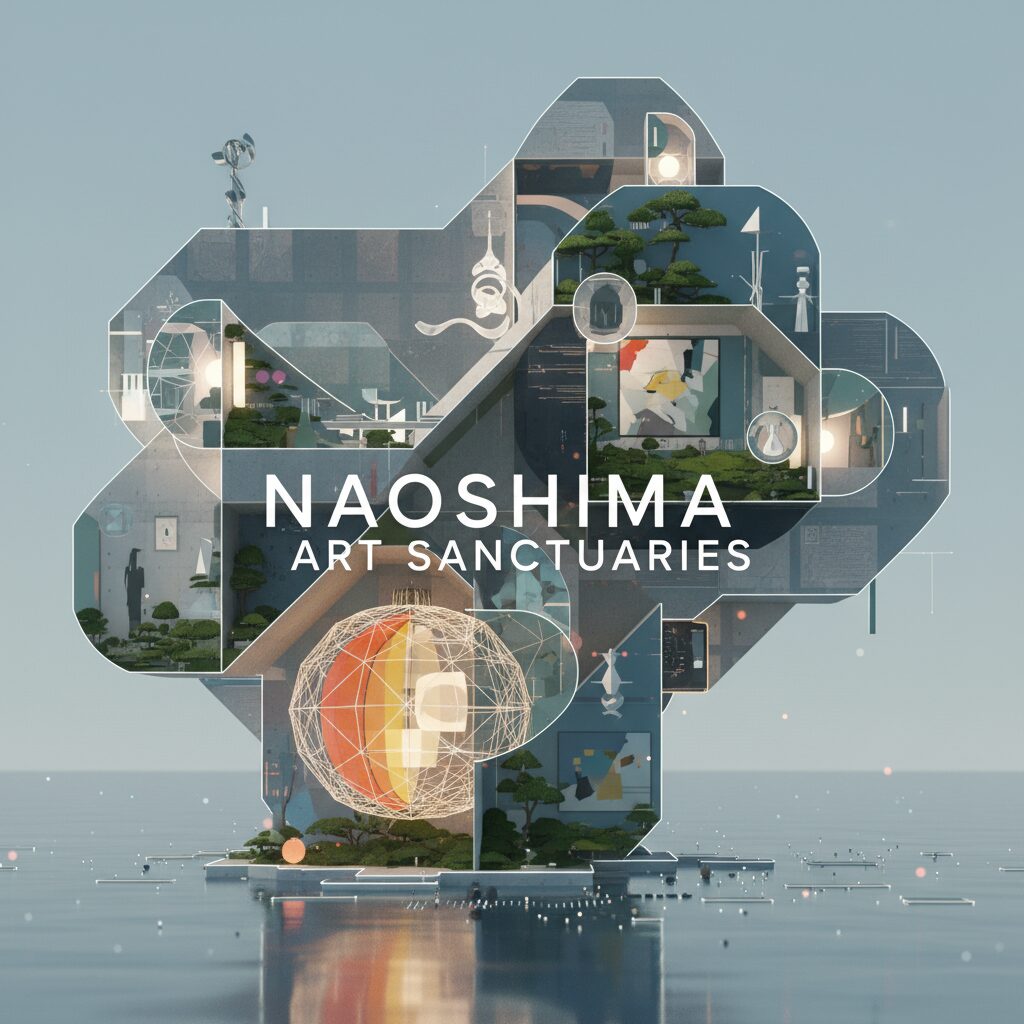
Floating serenely in Japan’s Seto Inland Sea is a place that whispers a different kind of story. It’s a tale of transformation, where industrial scars have blossomed into canvases of world-renowned art. This is Naoshima, an island that doesn’t just display art—it breathes it. Imagine standing on a pier, the gentle sea breeze on your face, looking at a giant, yellow, polka-dotted pumpkin that seems to be contemplating the endless blue horizon. This isn’t a dream; it’s the welcoming embrace of Naoshima, a pilgrimage site for lovers of art, architecture, and the quiet power of nature. Once a landscape of refineries and waste, the island was reimagined through the visionary partnership of the Benesse Corporation and the master architect Tadao Ando. They saw not what it was, but what it could become: a sanctuary where art and the environment engage in a profound, unending dialogue. This journey isn’t about ticking off museums from a list. It’s about slowing down, allowing your senses to awaken, and discovering how a simple concrete wall, a sliver of natural light, or a lovingly restored old house can change the way you see the world. It’s an immersion, a meditation, a pilgrimage to the heart of creativity itself.
For visitors ready to delve deeper, an immersive Naoshima pilgrimage offers a closer look at the island’s transformation from industrial ruin to an art sanctuary.
The Heartbeat of the Island: Benesse House and Its Domain
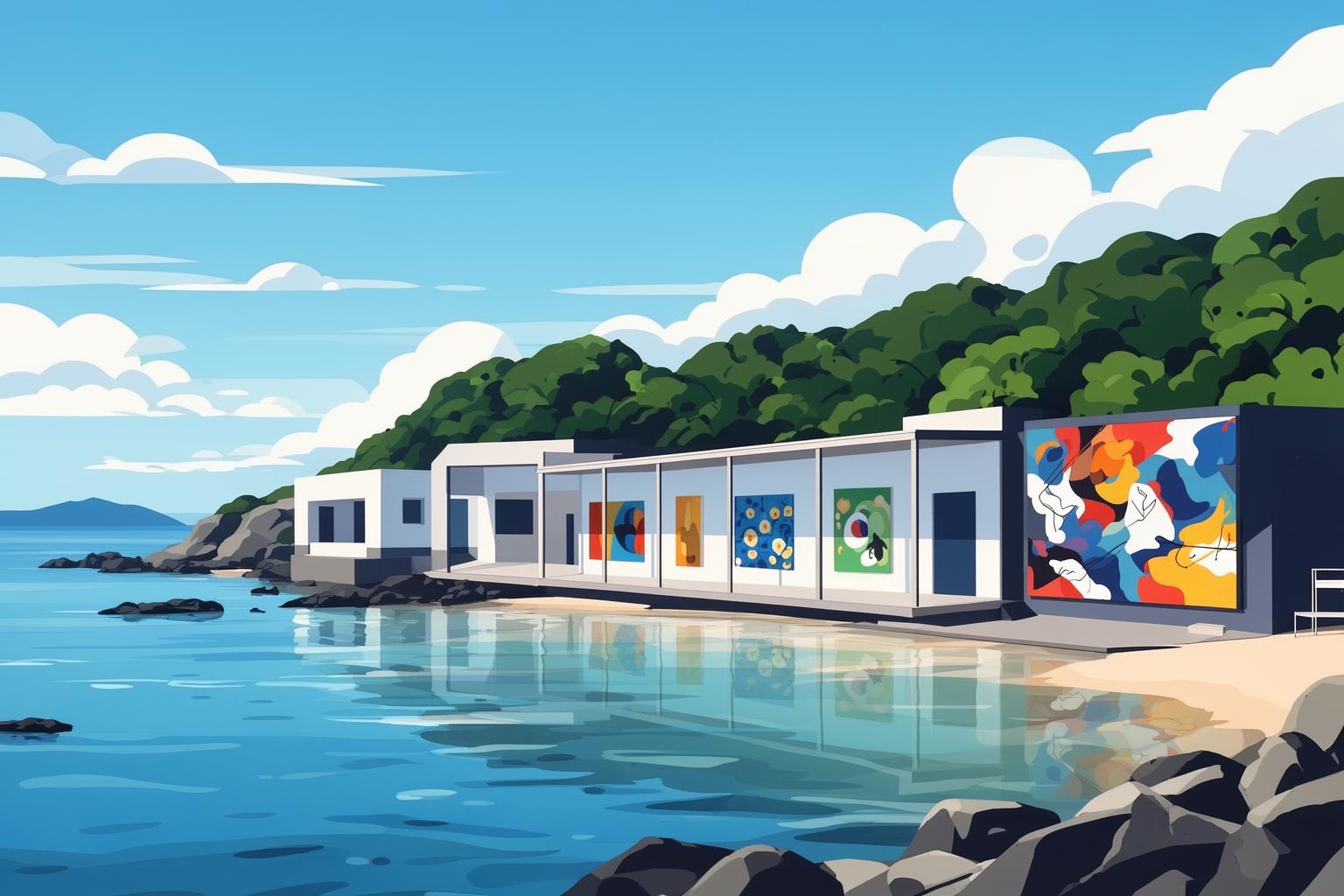
Your first genuine encounter with Naoshima’s soul likely begins in the southern part of the island, where a vast expanse of green hills and coastal views is dominated by the Benesse House complex. This spot marks the birthplace of the island’s artistic revival and continues to serve as its spiritual heart. Here, the boundaries between museum, hotel, and natural park dissolve into a single, harmonious experience. The entire area exemplifies Tadao Ando’s architectural vision: using raw, exposed concrete not as a cold or harsh element, but as a framework that highlights the warmth of sunlight, the play of shadows, and the vibrant hues of the surrounding sea and sky. Strolling through the grounds feels like wandering an open-air gallery where every corner reveals a new delight—a whimsical sculpture hidden among trees, a vivid painting displayed on a seaside cliff, or a minimalist structure perfectly capturing the shifting light of the Seto sun.
Benesse House Museum: More Than Just a Hotel
Imagine waking up, stepping out of your room, and coming face-to-face with a masterpiece by Jean-Michel Basquiat or Cy Twombly. At Benesse House Museum, this is a reality. It is a unique fusion of spaces—a place where guests can live and breathe art. The building itself is an architectural marvel. Tadao Ando’s signature concrete walls curve and intersect, crafting dramatic spaces alongside quiet, contemplative nooks. Large, expansive windows do more than admit light; they frame the ocean and landscape like living paintings, forever changing with the time of day and season. The art here extends beyond traditional galleries, spilling into corridors, onto terraces, and along the shoreline. There’s a profound tranquility in experiencing these powerful works almost in solitude, long after the day-trippers have caught the last ferry back to the mainland. It fosters a slower, more intimate engagement with each piece, allowing its meaning to reveal itself at your own pace. Staying here offers more than accommodation; it is a complete immersion in the island’s core philosophy.
The Iconic Pumpkins: Emblems of Renewal
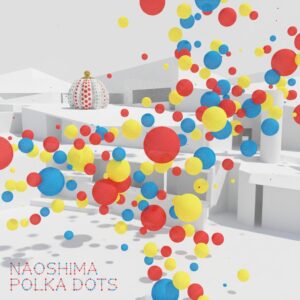
Even if you know little else about Naoshima, you probably recognize the pumpkins. These are the island’s unofficial ambassadors, creations of the internationally acclaimed artist Yayoi Kusama. Upon arriving at Miyanoura Port, you are welcomed by her ‘Red Pumpkin,’ a large, hollow form dotted with black spots that you can actually step inside. It’s a playful, vibrant greeting. Yet it’s the ‘Yellow Pumpkin,’ stationed at the end of a small pier near Benesse House, that has grown into the island’s most lasting symbol. It stands boldly against the vast sea, its bright yellow shape a beacon of joy and resilience. For many, this pumpkin embodies Naoshima’s story—a striking, beautiful, and slightly eccentric piece of creativity standing firm in a place once overlooked. It speaks to the power of art to forge identity and bring hope and beauty to the most unexpected locations. While it’s a must-visit photo spot, take a moment beyond the snapshot. Sit by the shore and watch it as the tide flows and recedes and the sky’s colors shift around it. It becomes a meditative focal point, embodying the island’s serene and potent energy.
A Journey into Light and Shadow: The Chichu Art Museum
Prepare to encounter an experience that goes beyond the traditional concept of a museum. The Chichu Art Museum, another triumph of Tadao Ando’s architectural vision, is constructed almost entirely underground to preserve the natural beauty of the coastal landscape. Its name, ‘Chichu,’ literally translates to ‘in the earth,’ and exploring it feels like embarking on a contemporary pilgrimage into a sacred, subterranean temple. From the outside, only the geometric cuts and openings in the hillside give a glimpse of the hidden world beneath. Inside, visitors are led through a network of concrete corridors that play with perception. There are no expansive galleries filled with countless paintings; rather, the museum is focused on the work of just three artists: Claude Monet, Walter De Maria, and James Turrell. The architecture itself serves as a fourth artist, crafted with monastic precision to direct the flow of natural light, which is the only illumination for the artworks. This intentional design encourages visitors to slow down, adjust their eyes, and fully engage with each space.
Monet’s Final Vision
At the core of the museum lies a serenely breathtaking room devoted to five paintings from Claude Monet’s ‘Water Lilies’ series. The experience feels almost ritualistic. Visitors are asked to remove their shoes and put on soft white slippers before entering a vast, white space. The floors, made of tiny cubes of Carrara marble, are cool and smooth underfoot. The walls curve and the corners are rounded, creating a sense of infinity with no sharp edges. The only light comes from a diffused, natural glow emitted by a concealed skylight above. This light subtly shifts throughout the day, casting various moods on Monet’s canvases. In the morning, the light is crisp and clear; by late afternoon, it becomes soft and warm. The paintings are perceived not merely as objects on a wall but as living entities, their colors and textures changing with the sun’s passage across the sky. This setting is perhaps the most ideal environment ever created to view these masterpieces, allowing visitors to appreciate them on a deeply emotional and spiritual level, reflecting how Monet himself may have wished in his final years.
Walter De Maria and James Turrell
The other two installations at Chichu are equally profound and sensorially immersive. Walter De Maria’s space is a meditation on scale, geometry, and reverence. Visitors ascend a grand staircase into a cavernous room where a massive 2.2-meter polished granite sphere rests at the center. The sphere mirrors its surroundings, appearing as a perfect, dark orb containing the universe within. Gilded wooden sculptures line the walls, catching light from the skylight above in a manner that feels both ancient and futuristic. The space demands silence and awe. In contrast, James Turrell’s works are ethereal studies of light itself. In pieces such as ‘Afrum, Pale Blue’ and ‘Open Field,’ Turrell employs cleverly concealed light sources and architectural voids to create illusions that challenge one’s perception of space and dimension. In ‘Open Sky,’ visitors sit on a bench in a roofless room, gazing up at a perfect rectangle of sky. As twilight nears, a hidden array of colored lights subtly alters the perception of the sky’s natural color, blurring the boundary between the artificial and natural, between what exists and what the mind conjures. It is a haunting, beautiful, and unforgettable experience that prompts reflection on the very essence of seeing.
Living with Art: The Art House Project
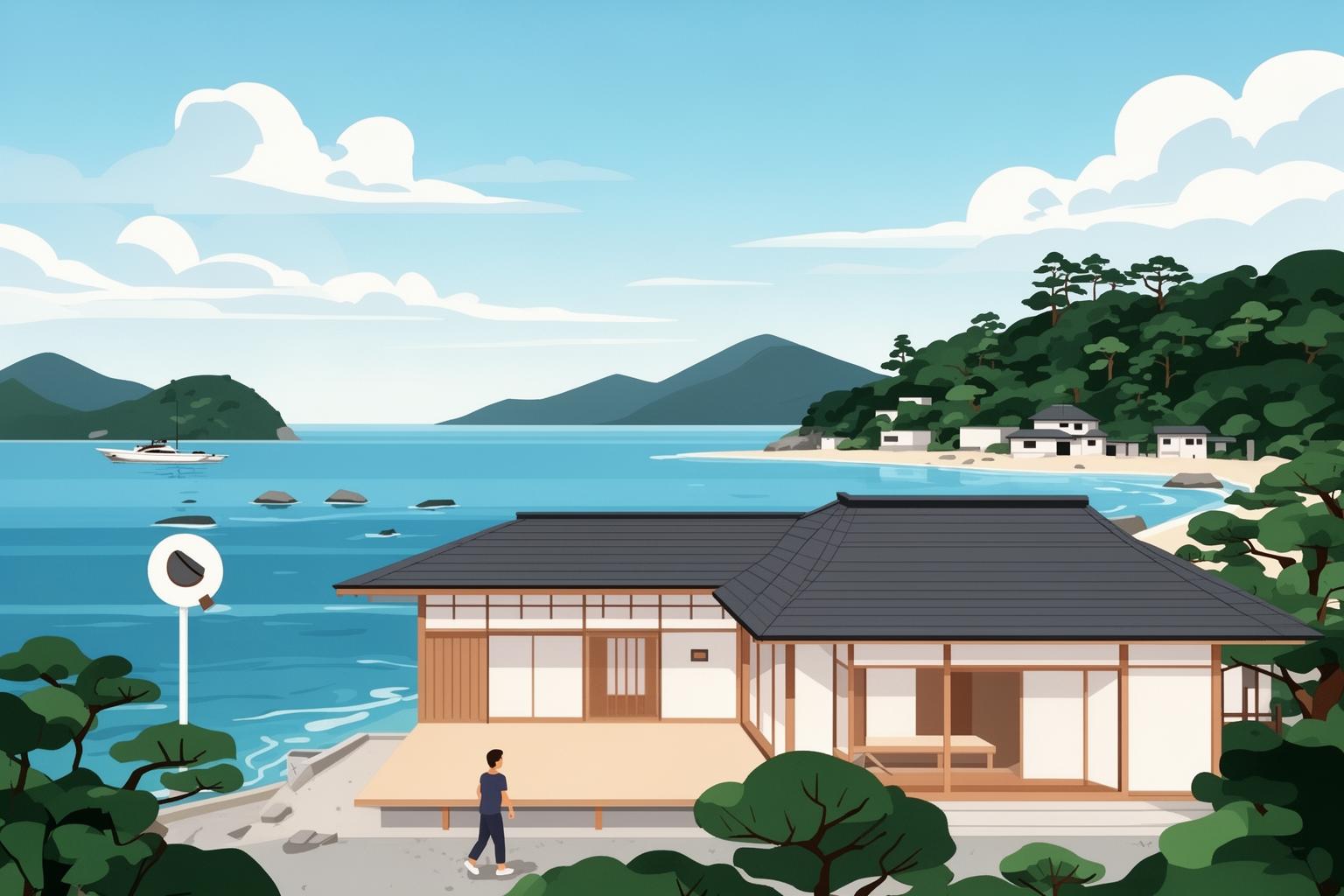
While museums display monumental works, the Art House Project in the old fishing village of Honmura presents a more intimate and immersive vision of art. Here, the town itself becomes the canvas. The project repurposes empty and abandoned traditional Japanese houses, entrusting artists with transforming them into permanent installations. The experience feels like a magical treasure hunt through the narrow, winding streets of a living community. You are more than just a visitor; you become a participant, stepping across the thresholds of these old homes to uncover hidden worlds within. It’s a powerful statement on preservation and revitalization, respecting the buildings’ history while breathing new, contemporary life into them. You sense the presence of the families who once lived there, their stories resonating alongside the modern artistic interventions.
Echoes of the Past in Kadoya and Minamidera
Each of the seven art houses offers a uniquely different experience. ‘Kadoya,’ the very first project, is a 200-year-old house restored by artist Tatsuo Miyajima. Within a darkened room, a shallow pool of water holds a mesmerizing display of 125 LED counters, each flashing numbers from 1 to 9 at different intervals determined by the town’s residents. The continuous, silent counting symbolizes the passage of time and the rhythm of life, creating a beautiful and poignant meditation. By contrast, ‘Minamidera’ is a new building designed by Tadao Ando on the site of a former temple, housing a work by James Turrell. Your experience begins in absolute, total darkness. Guided into a space where your eyes perceive nothing, you fumble, lose your sense of direction, and must rely on your other senses. Gradually, painfully slowly, as your pupils dilate to their fullest, a faint, deep blue rectangle of light begins to emerge from the void. It’s a powerful, almost primal experience about the nature of perception and the act of seeing, making you deeply aware of the gift of sight.
Navigating Honmura’s Lanes
Exploring Honmura is as much about the journey as the destinations. The village maintains its traditional charm, with weathered wooden walls, tiled roofs, and small, well-kept gardens. You’ll pass the local post office, a small shop selling snacks, and residents going about their daily routines. This blend of world-class contemporary art and quiet, everyday life is what makes the project so special. For first-time visitors, a helpful tip is to purchase a multi-site ticket granting access to six of the houses (Kinza requires a separate reservation). Be sure to book a timed entry slot for Minamidera in advance at the Honmura Lounge & Archive, as capacity is very limited. Allow yourself several hours to wander, get a little lost, and let the village’s unique atmosphere envelop you. It is in these in-between moments, walking from one art house to another, that you truly feel the pulse of Naoshima.
Practical Pilgrimage: Planning Your Naoshima Voyage
Setting off for Naoshima calls for some advance planning, but that preparation is part of the journey itself. The island is reachable, yet its secluded atmosphere contributes greatly to its appeal. Navigating the logistics smoothly will help you concentrate on the art and ambiance, rather than stressing over timetables. Think of the trip less as a commute and more as a shift from the bustling mainland to the relaxed rhythm of island life.
Getting There is Half the Adventure
Most travelers arrive at Naoshima by ferry, and the brief sea crossing serves as the perfect introduction to the Seto Inland Sea area. The two primary departure points are Uno Port in Okayama Prefecture on Honshu’s mainland and Takamatsu Port in Kagawa Prefecture on Shikoku Island. The ferry from Uno to Naoshima’s Miyanoura Port is the most frequent, taking about 20 minutes. The ferry ride from Takamatsu is longer—around 50 minutes—but rewards you with stunning views of nearby islands. Standing on deck, feeling the salty spray, and watching Naoshima gradually come into view creates a wonderful moment to unwind and ready yourself for the distinctive world ahead. Seeing the Red Pumpkin emerge as your ferry approaches the harbor is truly an iconic experience.
Island Rhythms: Getting Around
Though Naoshima is a small island, its terrain is quite hilly, especially around the southern museum district. While some areas can be explored on foot, walking everywhere can be exhausting and slow. The local bus offers a convenient way to travel, running between the main ports and museum zones. The bus schedule generally aligns with ferry arrivals and departures, though buses can become crowded during peak periods. For maximum freedom and flexibility, renting an electric bicycle is highly recommended. Rental shops near Miyanoura Port offer e-bikes, which make tackling the island’s hills effortless. This lets you explore at your own pace, pause whenever a stunning view appears, and discover hidden coves and quiet streets that buses don’t reach. Cycling along coastal roads, with the sea on one side and art installations on the other, is one of Naoshima’s signature experiences.
A Note on Timing and Tickets
This is perhaps the most important advice for any prospective visitor: book ahead. Naoshima’s popularity means that last-minute plans can often lead to disappointment. The Chichu Art Museum requires strict online reservations with timed entry, and tickets can sell out weeks or even months in advance, especially on weekends and holidays. The Benesse House Museum also strongly encourages purchasing tickets online in advance. For the Art House Project, timed tickets are needed for Minamidera and can be reserved on the day, but arriving early is recommended to secure a spot. Additionally, be aware that most museums and art sites on the island close on Mondays. If Monday is a national holiday, closures typically shift to the following Tuesday. To fully enjoy the island without rushing, consider staying overnight. An overnight visit allows you to see the museums during quieter hours and savor the island’s enchanting stillness in the early morning and evening.
Beyond the Main Trail: Finding Your Own Naoshima
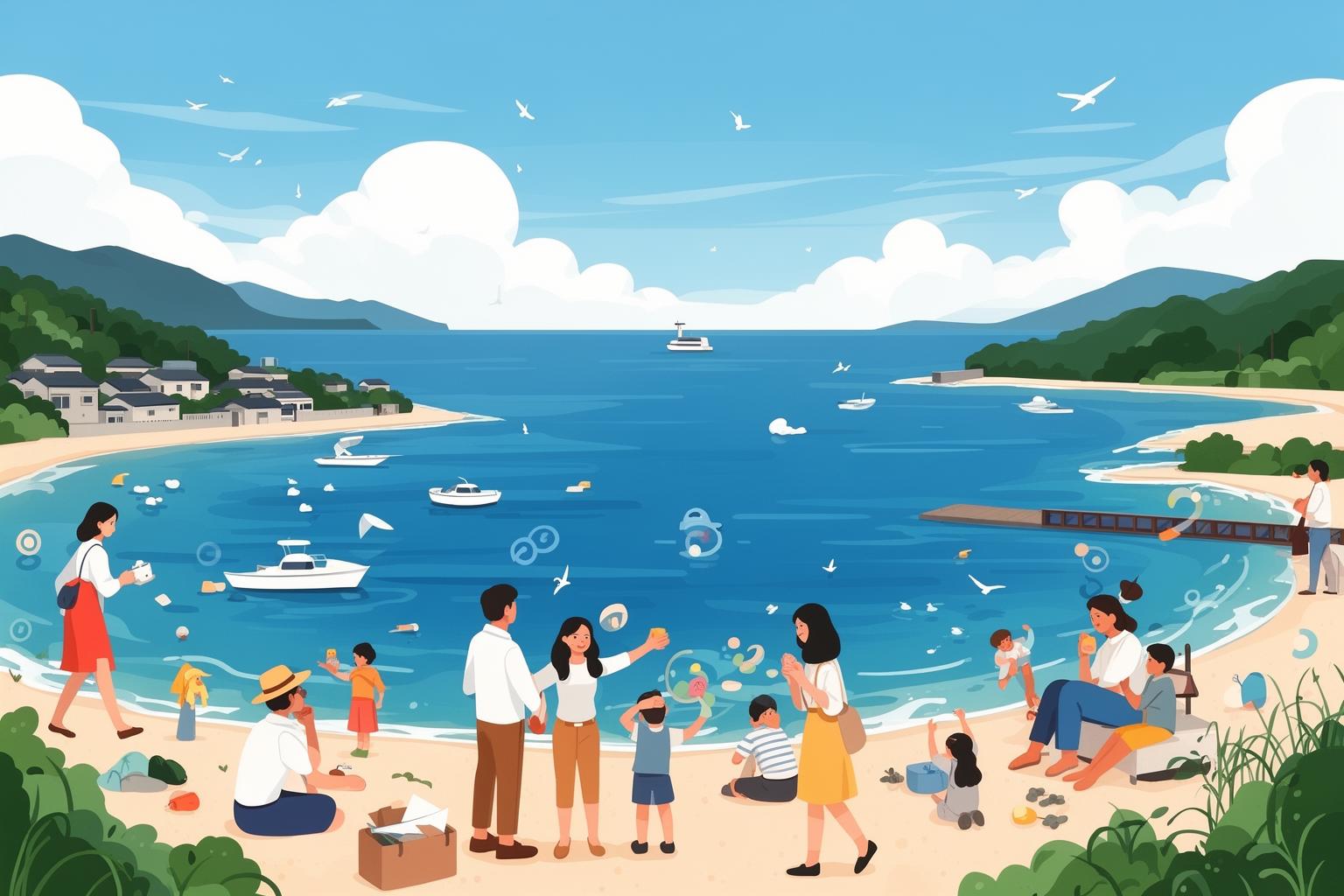
While the major museums and projects are justly renowned, much of Naoshima’s charm comes from its smaller, quieter discoveries. After visiting the iconic sites, take time to explore the outskirts, where art is intricately woven into the community in unexpected and delightful ways. These more intimate encounters often become the most treasured memories of a visit, revealing a more personal and playful facet of the island’s artistic spirit.
The Ando Museum and the I Love Yu Sento
Back in Honmura, hidden within a traditional wooden house, lies the Ando Museum. This small but captivating space merges Tadao Ando’s distinctive concrete interior with the building’s original wooden framework. The museum offers a glimpse into the architect’s life, philosophy, and vast contributions to Naoshima through sketches, models, and photographs. It’s an enriching experience for anyone fascinated by the island’s architecture. For a completely different artistic encounter, visit the I Love Yu public bathhouse, or sento, near Miyanoura Port. Created by artist Shinro Ohtake, this fully operational bathhouse doubles as a wildly eclectic art installation. Its exterior is a vibrant collage of neon signs and found objects, while inside, colorful tile murals and a large elephant statue overlook the baths. Soaking in the hot water alongside locals offers a uniquely Japanese way to connect with the community and enjoy art in a fun, unpretentious, and deeply immersive manner. Don’t forget to bring a small towel!
The Taste of the Island
An art pilgrimage also satisfies the appetite, and Naoshima provides a variety of charming dining options. Large chain restaurants are nowhere to be found here. Instead, the island is dotted with small, independently owned cafes and eateries, many set in beautifully restored old buildings. Around the port areas of Miyanoura and Honmura, you’ll discover everything from trendy cafes serving curry and coffee to traditional restaurants offering set meals featuring fresh seafood from the Seto Inland Sea. Enjoying a simple udon noodle lunch or a meal sourced locally while gazing out at the water provides a perfect moment to pause and reflect between museum visits. Some of the best spots hide down narrow alleys, adding an element of adventure to your exploration. It’s yet another reminder that on Naoshima, beauty and creativity permeate every aspect of life.
The Spirit of Naoshima
Visiting Naoshima means experiencing a compelling story of renewal. It stands as proof that art is more than a decorative object; it is a transformative force capable of healing landscapes, revitalizing communities, and altering how we see the world. The island serves as a grand experiment, blending stark modern architecture with the gentle, timeless beauty of the Japanese countryside. It invites you to be an active participant rather than a passive observer. It encourages you to feel the texture of the concrete walls, notice how light filters through a bamboo forest, and listen to the waves crashing just beyond a sculpture.
This is a place not to be hurried. The true spirit of Naoshima unfolds in quiet moments: waiting for the ferry, cycling up a steep hill to be rewarded with a breathtaking panoramic view, or sitting in silence as your eyes adjust to the darkness of a James Turrell installation. It offers a lesson in patience and mindfulness. It reminds us that the space surrounding an artwork is as significant as the artwork itself. So when you arrive, leave your checklist behind. Embrace detours. Wander through the narrow lanes of Honmura. Sit on a beach and simply watch the clouds drift by. Let the island subtly work its magic on you. You will depart not only with photos of a famed pumpkin but with a renewed sense of wonder and a deeper appreciation for the profound and beautiful dialogue that occurs when art, nature, and humanity choose to listen to one another.