There exists a place where the rhythmic pulse of a great metropolis softens to the whisper of wind through ancient cedars, where the gleam of glass towers gives way to the glint of sun on a restless ocean. This is Stanley Park, a sprawling, 1,000-acre masterpiece of nature nestled at the very edge of downtown Vancouver. It is not merely a park; it is a living sanctuary, a cultural vessel, and a testament to the enduring power of the wild. To explore it is to peel back the layers of a city’s history, from its primordial Indigenous roots to its maritime present. And there is no better way to feel its rhythm, to trace its contours, and to absorb its soul than from the saddle of a bicycle. The journey is a symphony of sensation—the cool ocean spray on your face, the earthy scent of the rainforest floor, the breathtaking reveal of a mountain vista around a sudden bend. It is a pilgrimage, not to a stone cathedral, but to one built of Douglas fir and granite, a place that demands you slow down and listen to the stories it has to tell. As a historian accustomed to deciphering narratives from ancient ruins and yellowed manuscripts, I found Stanley Park to be a different kind of archive, one written in the language of tides, trees, and traditions. It’s an immersive text, and our bicycle is the perfect stylus with which to read it.
This journey through Stanley Park’s living archive echoes the immersive experience of a pilgrim’s journey through Van Gogh’s Europe.
Gearing Up: The Gateway on Denman Street
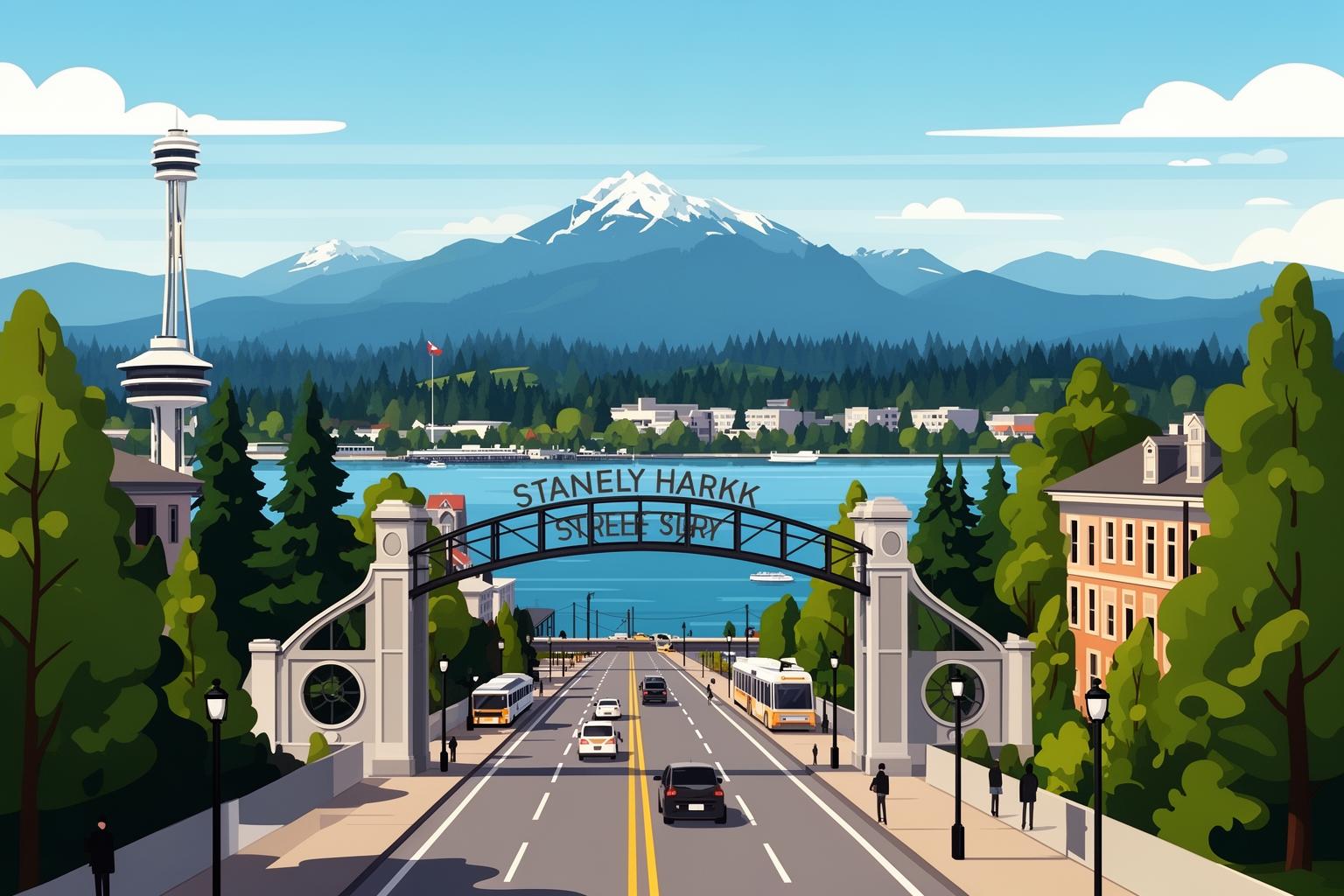
The adventure begins even before you step into the park’s embrace. The streets surrounding Stanley Park, especially Denman and West Georgia, buzz with a distinctive, anticipatory energy. This is Vancouver’s unofficial cycling hub, a lively corridor dotted with numerous bicycle rental shops, each serving as a gateway to the journey ahead. The air is alive with the cheerful clicking of gears and the soft hum of wheels. Selecting your ride is the first rite of passage. You’ll find everything from classic, wide-handled beach cruisers, ideal for a relaxed pace, to efficient hybrid bikes built for a bit more speed, and increasingly, the quiet power of e-bikes that make the park’s occasional hills feel effortless. My advice is to prioritize comfort and perspective over speed. The park does not reward rushing. Take a moment to gauge the weight of the bike, adjust the seat, and ensure the brakes respond well. The staff at these shops are experienced guides, wells of practical knowledge, ready to equip you not just with a bicycle and helmet, but with a map and invaluable tips about the trail ahead. They’ll remind you of the Seawall’s cardinal rule: the path is one-way, requiring a counter-clockwise flow to ensure a smooth and safe journey for the thousands who follow its course daily. This straightforward regulation turns the ride from chaotic scrambling into a shared, communal dance. Once ready, the final stretch to the park entrance at the foot of West Georgia Street fills you with a strong sense of anticipation. You glide past the manicured lawns of the Vancouver Rowing Club, a historic establishment whose members have been slicing through the waters of Coal Harbour since 1886. The view across the harbour presents a stunning contrast of gleaming modern architecture and the peaceful, bobbing yachts of the marina. The North Shore mountains, often snow-capped well into late spring, provide a majestic backdrop. This is the threshold, where the city’s grid fades into the park’s flowing, organic curves. The shift is profound. One moment you’re navigating traffic and stoplights; the next, you find yourself on a dedicated path, with the salty sea air clearing your mind and the vast green expanse of the park inviting you forward. The city’s noise fades away, replaced by the cries of gulls and the gentle lapping of waves against the shore. You are no longer a mere observer of Vancouver; you have become an active participant in its most treasured ritual.
Brockton Point: Where Histories Converge
Your first significant stop along the Seawall is Brockton Point, a gentle peninsula that extends into Burrard Inlet. But long before you reach the iconic lighthouse, you come across one of the most important cultural sites in all of British Columbia: the totem pole collection at Hallelujah Point. This is more than just an outdoor art gallery; it stands as a profound testament to the region’s First Nations heritage. As a historian, having dedicated my life to studying European monuments—statues of kings, religious iconography, and grand triumphal arches—I recognize a different, arguably more organic monumentality here. These towering cedar poles vividly embody living histories, carved with the crests and stories of the Squamish, Haida, Kwakwaka’wakw, and Nisga’a peoples. It is crucial to understand that Stanley Park itself is not untouched wilderness; it is the ancestral, unceded territory of the Musqueam, Squamish, and Tsleil-Waututh Nations. For thousands of years, this land housed villages, resource-gathering sites, and places of profound spiritual significance. The village of X̱wáýx̱way was located near what is now Lumberman’s Arch. Approaching the totem poles by bicycle offers a slow, respectful arrival. The first sight of their vivid colors—bold reds, blues, and blacks—set against the deep green forest is striking. Dismounting and walking among them is essential. Each pole narrates a complex story. You’ll spot the Thunderbird, a powerful mythological being often positioned atop poles with its wings outstretched to dominate the sky. The Raven, central to many creation stories, appears as the trickster, transformer, and bringer of light. Bears, wolves, and whales also feature, each symbolizing a particular family lineage or foundational myth. One of the most notable is the pole carved by the late Kwakwaka’wakw chief Mungo Martin, a master artist pivotal to the mid-20th-century revival of traditional carving arts. His work forms a bridge between the ancestral past and the living present. The craftsmanship is stunning—you can trace the deep grooves left by the carver’s tools, feel the cedar’s texture, and admire the extraordinary symmetry and balance of the designs. Standing here, you can hear the chug of container ships in the inlet and the buzz of seaplanes overhead—a modern soundscape layered over the ancient silence these poles command. It’s a powerful reminder of the multiple layers of history coexisting in this place. These are not relics frozen in time; they are declarations of cultural endurance and resilience. They offer a welcome, an expression of identity, and a history lesson carved in wood.
The Light and The Lady
Continuing your ride around Brockton Point, the forest thickens on your left while the harbor expands on your right. Soon you arrive at the Brockton Point Lighthouse, a stout white-and-red tower that has guided mariners since 1914. Its automated light continues to sweep across the inlet, an essential beacon for ships navigating the often-treacherous First Narrows. The lighthouse is picturesque, an ideal subject for photos against the North Shore mountains. Yet its presence also speaks to the park’s strategic and commercial significance. Vancouver’s prosperity was built on its port, and this lighthouse stands as a symbol of that maritime heritage—a vigilant guardian at the entrance. A little farther along the path, you will find a curious bronze statue perched on a rock in the water. This is the “Girl in a Wetsuit.” At first glance, many mistake her for a mermaid, and she is often compared to Copenhagen’s famous Little Mermaid. However, this statue, created by Elek Imredy in 1972, is distinctly modern. She represents a scuba diver, symbolizing Vancouver’s ongoing connection to the sea in today’s age of recreation and exploration. She gazes out serenely over the harbor with a contemplative expression. Her presence adds a gentle artistic touch, humanizing the rugged coastline—a quiet moment of art amid the grand interplay of nature and industry. This entire stretch of the Seawall, from the totem poles to the lighthouse and the statue, offers a perfect introduction to the park’s multifaceted character. It is a place rich with indigenous history, a vital maritime corridor, and a platform for public art, all seamlessly intertwined. The easy, flat terrain here allows you to pedal leisurely, soaking in the stunning views and reflecting on the stories embedded in the landscape.
The Emerald Cathedral: Venturing into the Forest Interior
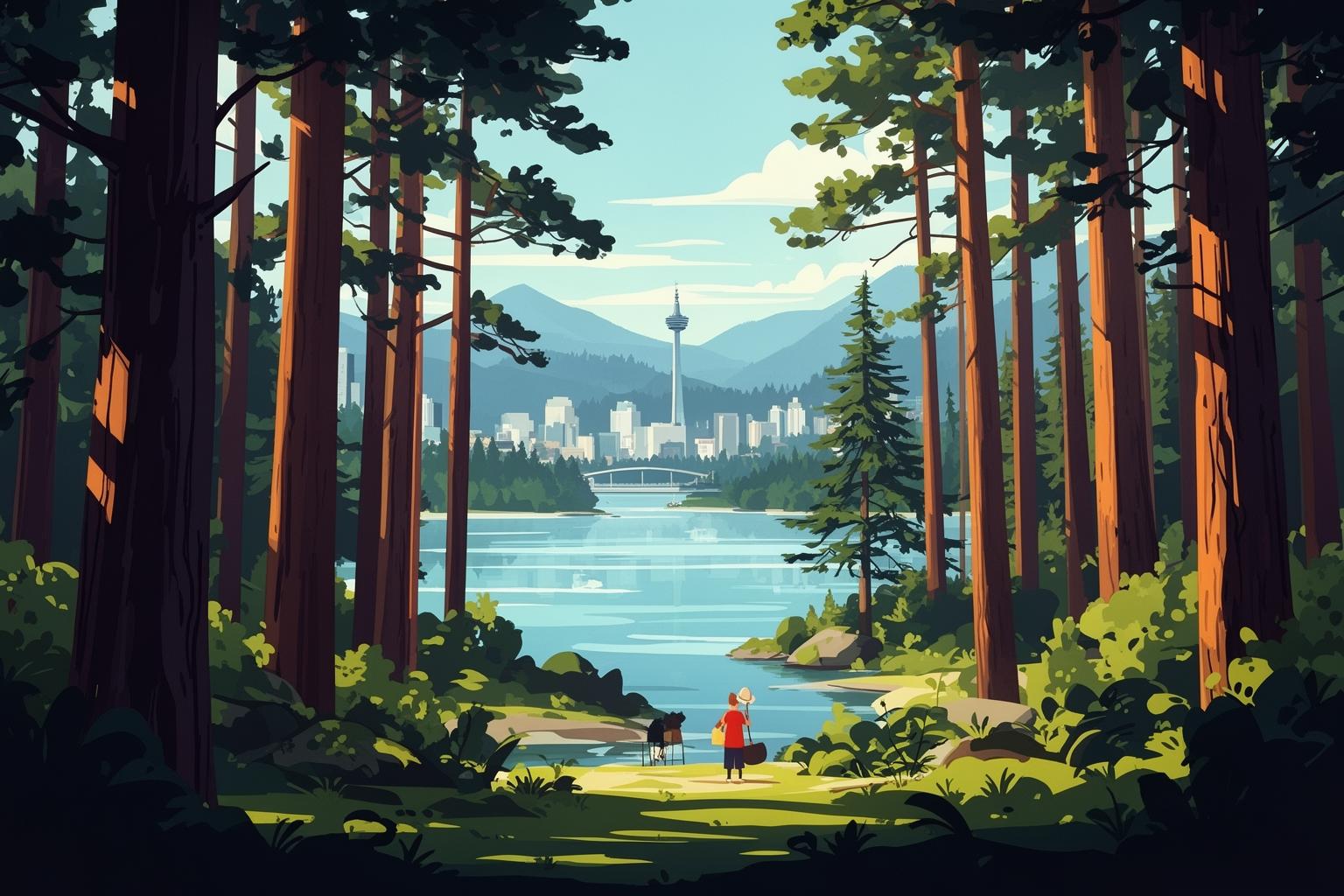
While the Seawall provides a stunning frame, the true heart of Stanley Park lies within its dense, forested interior. To fully grasp its essence, you must leave the sunlit coastal path and explore the network of trails winding through its core. It is here that the vastness of the park becomes unmistakably clear. The change is immediate and striking. The air cools noticeably. The wide, open sky gives way to a thick canopy through which only scattered sunlight filters down to the forest floor. The noise of the city and sea fades, replaced by a profound silence interrupted only by the chirping of unseen birds and the rustling of small creatures in the underbrush. This is a temperate rainforest, a cathedral of towering trees. You are surrounded by giants: Western red cedars with their stringy, fibrous bark; Douglas firs reaching incredible heights; and broadleaf maples that form a lush green ceiling. Many of these trees are centuries old, survivors of logging and storms, standing as silent witnesses to centuries of change. Cycling along these shaded trails offers an experience far different from riding the Seawall. The paths are often unpaved, exuding the scent of damp earth and pine needles. The terrain gently rises and falls, demanding more focus but providing a deeper sense of immersion. It feels as though you’ve been transported miles from the city, yet downtown’s skyscrapers lie only a few kilometers away. One of the most rewarding spots within the forest is Beaver Lake. Following the signs, you’ll discover a peaceful body of water nearly covered by a carpet of water lilies. The lake is a sanctuary for wildlife. Observers patient enough may catch sight of a beaver hard at work in its lodge, a great blue heron stalking fish in the shallows, or a family of wood ducks gliding silently among the lily pads. Beaver Lake exemplifies the park’s ecological richness, a reminder that this is more than just a recreation area—it is a thriving ecosystem. Another well-known landmark deep in the woods is the Hollow Tree. This massive, centuries-old Western red cedar stump is a cherished icon. Its hollowed core is large enough to hold several people standing inside, and for decades it was a popular spot for family photos, with early pictures showing entire horse-drawn carriages posed within it. Though now reinforced with cables and braces to prevent collapse, it remains a powerful symbol of the forest’s age and majesty. It is a tangible link to the past—a natural monument inspiring awe. Exploring the interior trails allows one to appreciate the vision of the city’s founders. When the park was established in 1888, considerable pressure came from logging interests eager to harvest its valuable timber. The decision to preserve the park was remarkably foresighted. Lord Stanley, the Governor General of Canada, after whom the park is named, dedicated it in 1889 “to the use and enjoyment of people of all colours, creeds, and customs, for all time.” Riding through this magnificent forest, it is easy to feel profound gratitude for that act of preservation. It is a gift that continues to enrich millions of lives—a quiet, green heart that sustains the soul of the city.
Prospect Point: The View from the Top
After the peaceful immersion within the forest interior, the journey pulls you back toward the Seawall and its most dramatic viewpoint. The stretch of the path leading to Prospect Point features the most challenging climb of the entire ride. It is a steady, winding ascent that will get your heart racing, but the effort is richly rewarded. For those on an e-bike, the climb feels like a gentle hum; for those on a traditional bicycle, it presents a gratifying challenge that makes the destination even more spectacular. Prospect Point marks the northernmost tip of the park and, at 64 meters (210 feet) above sea level, it stands as the highest vantage point. The view from the lookout is nothing less than breathtaking—one of the quintessential panoramas of the Pacific Northwest. Directly below lies the iconic Lions Gate Bridge, a majestic suspension bridge opened in 1938 and often called Vancouver’s answer to the Golden Gate. Its elegant green spans connect the downtown peninsula to the North and West Vancouver communities. From Prospect Point, you have a bird’s-eye view of the continuous flow of traffic along its deck and the massive container ships and cruise liners passing silently underneath, navigating the turbulent waters of the First Narrows. The bridge itself is a piece of history, funded by the Guinness family to encourage development in West Vancouver. Its name comes from The Lions, two distinctive mountain peaks on the North Shore clearly visible from here, resembling crouching lions guarding the harbor entrance. The panorama extends far beyond the bridge, revealing the full sweep of the North Shore mountains, their rugged, forested slopes rising steeply from the water’s edge. To the west, the view opens to the Strait of Georgia and, on a clear day, the distant outline of Vancouver Island graces the horizon. Prospect Point’s lookout is well-equipped with viewing platforms and interpretive signs that help identify landmarks. There is also a café and gift shop, making it a perfect spot to rest, rehydrate, and simply absorb the magnificent scenery. It offers a moment to pause and appreciate the dramatic geography of Vancouver—a city uniquely situated where towering mountains meet the vast Pacific Ocean. The history of this site is one of vigilance. Its strategic height made it a critical signal station for centuries—first for the First Nations, then for the military, who used it to monitor marine traffic entering this vital port. Standing here, feeling the wind whip up from the narrows below, you sense that watchfulness—a feeling of acting as a sentinel at the gateway to the city.
Siwash Rock and the Setting Sun: The Western Shore
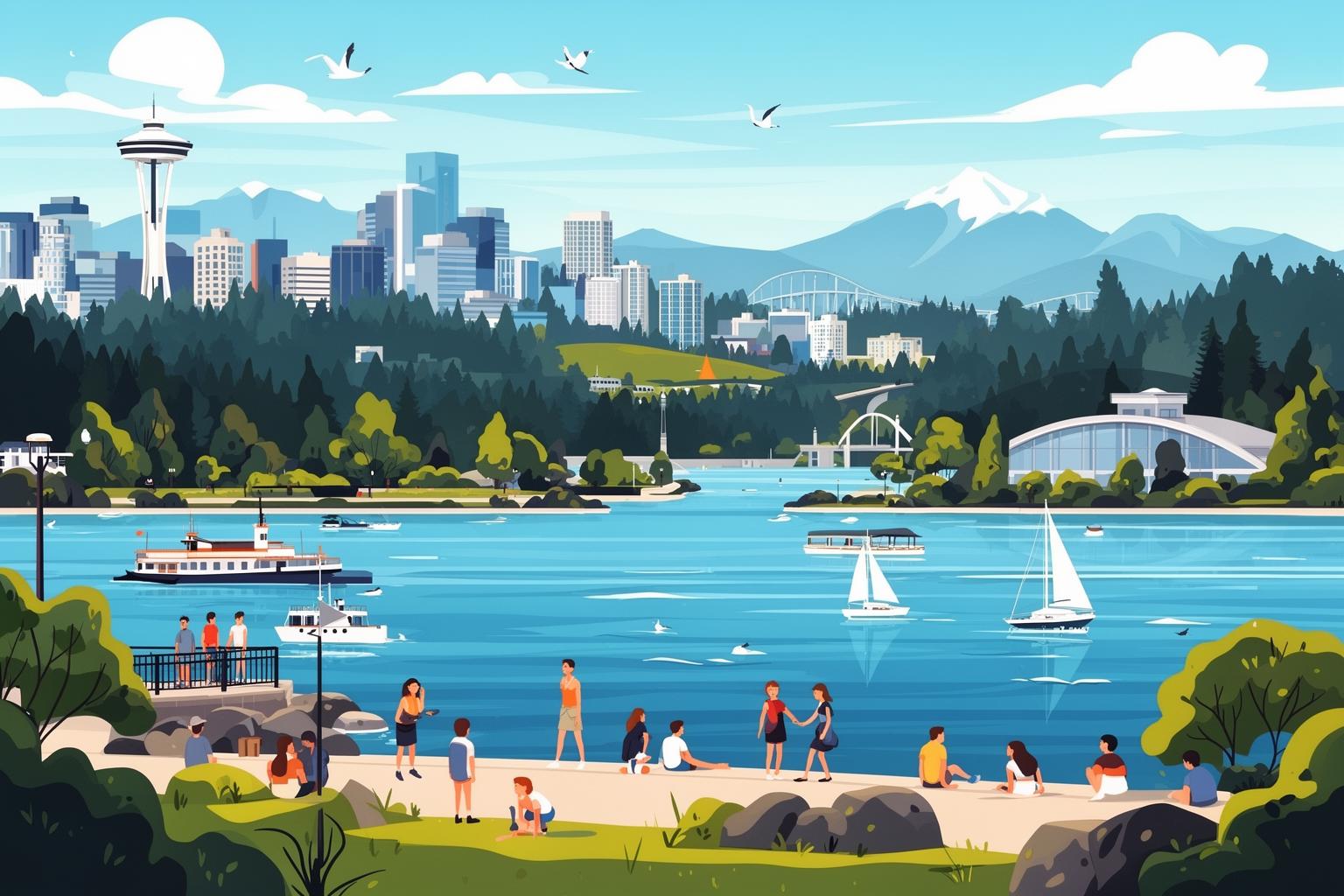
Descending from the heights of Prospect Point, the Seawall path flattens and begins to follow the park’s western shoreline. The nature of the ride shifts once more. You now face the vast expanse of the Pacific Ocean. The air carries a stronger saltiness, the wind becomes more persistent, and the sound of waves crashing against the rocky shore dominates the scene. This side of the park feels wilder, more exposed, and deeply elemental. Here, you’ll encounter one of Stanley Park’s most powerful and iconic landmarks: Siwash Rock. This striking geological formation is a sea stack, a solitary basalt pillar standing just offshore, shaped by millennia of wind and waves. A lone, wind-swept tree clings precariously to its peak, a testament to nature’s resilience. Yet Siwash Rock is more than a mere geological feature. It is a sacred site, rich with a profound origin story from the Squamish people. The legend recounts a man transformed into the rock by the Sky-God as an eternal reward for his selflessness and purity of spirit—his devotion as a clean father. While swimming in the ocean to cleanse himself in preparation for the birth of his child, he was urged to leave by four giants but refused until he was fully purified. For his unselfish dedication, he was granted immortality. Knowing this tale elevates the rock from a scenic sight to a monument of character and integrity, reminding us that every aspect of this landscape is woven into a rich, living oral tradition. Passing by it, especially as the afternoon sun begins to warm the scene, is a deeply moving experience. The path continues to trace the cliffs, offering spectacular, uninterrupted ocean views. This stretch is beloved by photographers and romantics alike, and with good reason. As you round the last bend before Third Beach, the rugged cliffs soften into a stunning, sandy cove lined with massive driftwood logs, bleached silver by sun and sea. This is Third Beach, a cherished local spot known for its quieter, more natural atmosphere compared to the beaches nearer the city. It’s an ideal place to pause, secure your bike, and stroll down to the water’s edge. The sand is soft, and the enormous logs make perfect rustic benches for sitting and watching the world drift by. Facing west, Third Beach is one of Vancouver’s prime sunset locations. On clear evenings, the sky bursts into a symphony of orange, pink, and purple as the sun sets behind the distant mountains of Vancouver Island. The mood is magical, with families, couples, and friends gathered to witness the daily spectacle. Nearby, the historic Teahouse Restaurant, nestled among the trees above the beach, offers a more formal setting to enjoy the view. But for many, nothing compares to sitting on a driftwood log, feeling the last warmth of the sun, and listening to the soothing rhythm of the waves. It is a moment of pure, unfiltered coastal bliss—the perfect finale to the day’s journey.
The Final Circuit: Second Beach and the Return
Leaving the peaceful shores of Third Beach, the Seawall path leads you along the final stretch of your circuit. The surroundings begin to shift again, moving from the wildness of the western shore back toward a more developed, recreational setting. Soon, you arrive at Second Beach, a broad, sandy area bustling with summer activity. Here, you’ll find the large Second Beach Pool, an outdoor, heated saltwater pool that draws families during the warmer months. The area is sprinkled with playgrounds, picnic spots, and concession stands. The atmosphere is lively and communal, a cheerful contrast to the solitude of the forest trails or the quiet romance of Third Beach. The ride from Second Beach takes you past Ceperley Meadow, a wide grassy field often filled with people playing frisbee, soccer, or simply relaxing in the sun. This is the park as a community backyard—a place for play and rest. The path then skirts the edge of Lost Lagoon, a tranquil freshwater lake near the park’s entrance by Georgia Street. Once a tidal mudflat, it was enclosed when the causeway was built in 1916. Today, it serves as a bird sanctuary, home to mute swans, Canada geese, and many duck species. The fountain in the center, illuminated at night, was gifted to the city for its golden jubilee in 1936. As you complete the loop, passing the lagoon and returning toward your starting point near Coal Harbour, a deep sense of satisfaction sets in. You’ve not only circled a park; you’ve traveled through a remarkably diverse tapestry of landscapes and histories. You’ve pedaled through ancient forests, along rugged coastlines, and past sites of profound cultural significance. You’ve witnessed the interaction of nature and city, of past and present. The last few hundred meters of the ride invite reflection. The familiar skyline of downtown Vancouver reappears, now not just a distant backdrop but a reached destination. Returning your bike to the shop on Denman Street feels like the conclusion of a grand adventure. Your legs may be tired, but your spirit is refreshed, your mind filled with the sights, sounds, and scents of Vancouver’s greatest treasure.
An Echo in the Soul
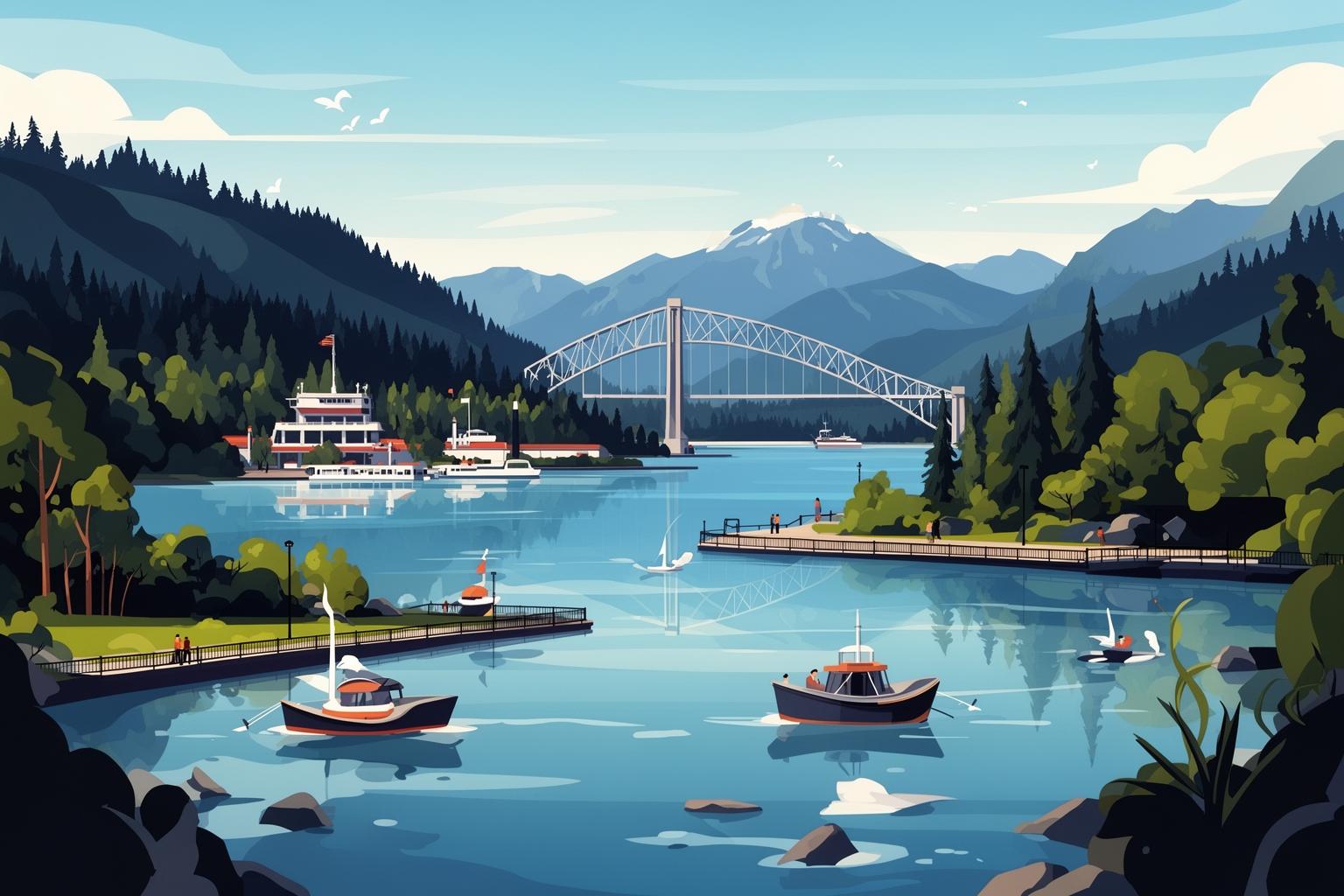
Cycling through Stanley Park is like having a conversation with Vancouver itself. It means feeling the city’s heartbeat—not through its traffic or commerce, but in the steady pedal strokes along a path, beneath the shade of ancient cedars, and amidst the stunning views where mountains meet the sea. The 10-kilometer Seawall loop is more than a simple bike ride; it is a story that reveals itself with every turn of the wheel. It tells of the deep history of the First Nations, the hardworking spirit of a port city, and the profound wisdom in preserving a wild sanctuary within an urban environment. First-time visitors should allow plenty of time—at least three to four hours—to fully appreciate the journey. Pause frequently. Dismount your bike. Stroll among the totem poles, feel the mist at Prospect Point, and dig your toes into the sand at Third Beach. The magic of the park lies not in completing the loop, but in the moments of connection found along the way. Stanley Park is a place that lingers in your memory. Long after you leave, you’ll remember the sensation of gliding under the forest canopy, the awe of Siwash Rock standing firm against the waves, and the stunning beauty of the sun setting over the Pacific. It is a masterpiece, and exploring it by bike is undoubtedly the most intimate and unforgettable way to experience its artistry.