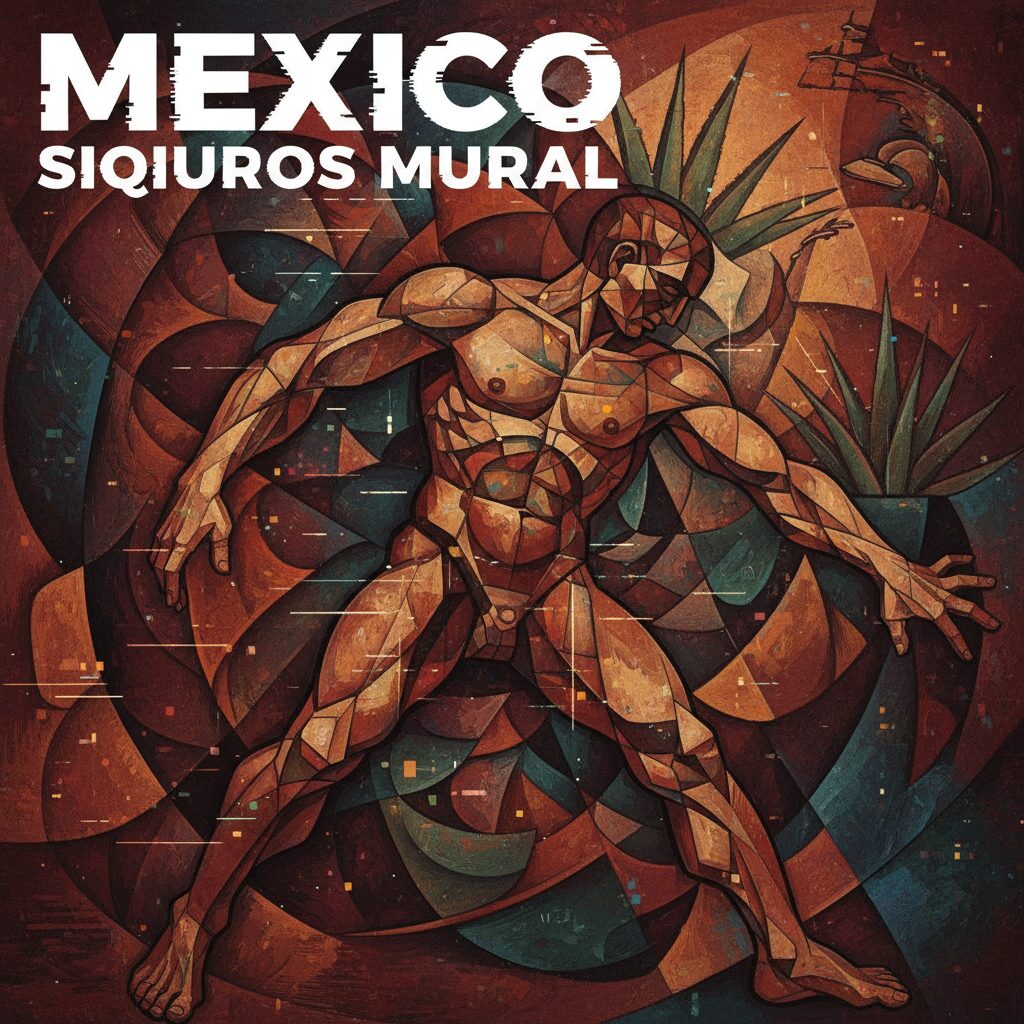
There are artists who paint, and then there are artists who detonate. David Alfaro Siqueiros was the latter. A man forged in the crucible of the Mexican Revolution, his life was a relentless cascade of political fervor, exile, imprisonment, and explosive creativity. He wasn’t just a painter; he was a cultural warrior, a titan of 20th-century art, and one of the holy trinity of Mexican Muralism, “Los Tres Grandes,” alongside Diego Rivera and José Clemente Orozco. To follow the path of Siqueiros is to trace a line of gunpowder across the map of a turbulent century, from the dusty plains of northern Mexico to the sun-scorched streets of Los Angeles and the hallowed halls of Mexico City. His canvases were not linen and wood, but entire buildings, public squares, and the very consciousness of a nation forging its identity. He saw art not as a decoration for the wealthy but as a hammer, a rifle, a tool for education and revolution, meant for the eyes of the people, out in the open, under the sun. This is not a journey to quiet galleries. This is an pilgrimage to the heart of a visual storm, a dive into the monumental, muscular, and profoundly human world of a man who painted with fire. It is a story written in concrete, acrylic, and mosaic, a tale of defiance that still echoes from the walls he claimed as his own.
For a different kind of artistic pilgrimage, one that explores the subtle and enigmatic world of a Japanese master, consider tracing the footsteps of Tawaraya Sotatsu.
Chihuahua: Cradle of a Revolutionary

Every storm has an eye, a point of origin. For Siqueiros, that origin lay in the vast, rugged expanse of Chihuahua during the closing years of the 19th century. Born into a world poised on the edge of violent upheaval, the landscape of his youth was not composed of gentle hills and quiet streams, but of harsh deserts, stark mountains, and a simmering revolutionary spirit. This was the land of Pancho Villa, where the very air seemed charged with dissent and the promise of radical change. It is impossible to stand in the high desert of Chihuahua, to sense the immense breadth of the sky and the raw force of the earth, and not grasp the source of the monumental scale found in Siqueiros’s later work. His art was never intended for confined spaces because he came from a place of infinite horizons.
The Atmosphere of Revolution
Although he moved to Mexico City for formal education, the lessons of Chihuahua were deeply embedded in his soul. He was a boy when the Mexican Revolution erupted in 1910, and as a teenager, he was drawn into the cause, joining Venustiano Carranza’s Constitutionalist Army. He was not merely a witness to history but an active participant. He experienced conflict, sacrifice, and the raw, unfiltered struggle of a people fighting for their future. This firsthand involvement lent his art a visceral authenticity that no classroom could teach. His portrayals of workers, soldiers, and the oppressed were not idealized fantasies; they were born from memory, from the faces he encountered and the battles he witnessed. The dramatic chiaroscuro in his work resembles the harsh sunlight and deep shadows of the northern desert, while the dynamic, clashing forms reflect the chaos and energy of armed conflict.
A Traveler’s Note
Visiting Chihuahua today, one can still feel the echoes of that era. The city’s historic center, with its grand cathedral and government palace, stands as a reminder of its colonial heritage, yet the spirit of revolution remains a tangible presence. Walking these streets, it’s possible to imagine a young Siqueiros absorbing the tension, the stories, and the fervent political debates that would shape his unwavering commitment to art as a means for social justice. It was here that the seeds of the muralist were sown, in the rocky soil of a land defined by struggle and resilience.
Mexico City: The Epicenter of Muralism
If Chihuahua ignited the spark, Mexico City was the blazing inferno. It was in this vast, chaotic, and intellectually vibrant capital of the nation that Siqueiros discovered his voice and his purpose. Upon arriving to study at the prestigious San Carlos Academy, he entered a world teeming with fresh ideas. The revolution had not only overthrown a dictator but had also sparked a cultural renaissance. Under the leadership of the visionary Secretary of Public Education José Vasconcelos, the government aimed to unify and educate a largely illiterate population through public art. This marked the birth of the Mexican Muralist movement, and Siqueiros, with his passionate temperament and revolutionary background, was destined to lead it.
The National Preparatory School: Birth of a Movement
Every pilgrimage to Siqueiros’s Mexico City beginnings must include the Antiguo Colegio de San Ildefonso. This magnificent colonial-era building, formerly a Jesuit college, became the birthplace of the muralist movement. In the early 1920s, Vasconcelos commissioned the nation’s most promising young artists—Siqueiros, Rivera, and Orozco—to cover its expansive walls with murals portraying Mexico’s history, culture, and social struggles. To stroll through the courtyards of San Ildefonso is to step into the heart of creation. The atmosphere is saturated with history; you can almost hear the fervent debates, the sound of brushes scraping wet plaster, and witness the emergence of a new artistic language.
Siqueiros’s First Murals
Here, Siqueiros began pushing the limits of traditional fresco. His murals at San Ildefonso, such as “The Elements” and “The Burial of a Sacrificed Worker,” are intense, raw, and monumental. One sees him wrestling with scale and perspective, crafting figures that seem to carry an almost sculptural mass. “The Burial of a Sacrificed Worker” stands out for its somber tones and massive, grieving figures, which express a deep solidarity with the working class. Standing before it, you’re not merely viewing a painting but witnessing an artist learning to channel his political beliefs into a visual epic. Take your time here, absorb the masters’ works, feel the conversation unfolding on the walls, and recognize that this was far more than an art project—it was the foundation of a national identity.
Palacio de Bellas Artes: A National Stage
The Palace of Fine Arts reigns as the grand dame of Mexico City’s cultural scene, an opulent blend of Art Nouveau and Art Deco architecture. Within its marble halls, amidst masterpieces by Rivera and Orozco, Siqueiros reveals one of his most dynamic creations: “New Democracy.” This mural demands active engagement. It seems to leap from the wall. A massive, powerful female figure symbolizing a new, liberated humanity bursts free, breaking her chains. Her form is both human and mechanical, embodying a future fueled by industry and social progress. Siqueiros’s skill with perspective is fully evident; the figure appears to move and shift as you walk by—a technique he named “polyangular perspective.”
The Power of “New Democracy”
To fully grasp its impact, stand at the hall’s center and slowly walk from one end to the other. Notice how the figure’s gaze appears to follow you, while chains and flames writhe with energy. The mural is a triptych, flanked by panels portraying victims of war and fascism, which heightens the central figure’s triumph. Painted after World War II, this work is a defiant shout of optimism—a belief in humanity’s capacity to overcome tyranny. It is a sensory explosion in the best sense: an electrifying surge of artistic power that leaves you breathless.
UNAM: Art for the People
Travel south to Ciudad Universitaria, the main campus of the National Autonomous University of Mexico (UNAM), a UNESCO World Heritage site. Here, Siqueiros brought his art out from enclosed spaces onto the very surfaces of buildings. His creation adorns the Rectorate Tower façade: a massive outdoor mural-sculpture titled “The People to the University, the University to the People.” This represents the ultimate expression of his public art philosophy. Using industrial materials—concrete and glass mosaics—he crafted a work resilient to the elements, visible to thousands of students daily. The artwork is integral to the architecture itself. Figures rendered in three-dimensional relief symbolize students returning knowledge to the nation. The eagle-headed fist stands for united strength. To fully appreciate it, you must see it in person. As sunlight plays over millions of colored glass pieces throughout the day, the mural becomes a living, breathing entity—a potent declaration of education’s societal role, a lesson in stone and glass for all to behold.
Polyforum Cultural Siqueiros: The Magnum Opus
Prepare for arguably Siqueiros’s most ambitious and immersive work: the Polyforum Cultural Siqueiros. This twelve-sided structure, created in collaboration with architect Manuel Suárez y Suárez, is itself a sculptural masterpiece. Its exterior is cloaked in massive sculpto-murals illustrating themes of peace, art, and struggle. Yet the true marvel lies inside. The interior houses the world’s largest mural, “The March of Humanity on Earth and Towards the Cosmos.” Entering it is like stepping into the artist’s very mind. The entire surface—walls and ceiling—is one continuous painting. The floor is a rotating platform, designed so viewers can experience the mural as Siqueiros intended: as a dynamic, cinematic narrative. As the platform slowly turns and a symphonic score fills the air, you are swept up in a swirling vortex of history and myth. The mural portrays humanity’s endless fight against oppression, its suffering, its victories, and its relentless march toward a brighter future. Figures are distorted, elongated, and bursting with movement. The effect is overwhelming, disorienting, and deeply moving. You are not merely an observer; you become a participant in the march. A visit to the Polyforum is more than an artistic experience—it is a spiritual journey, the culmination of a lifetime’s work and a thunderous final statement from a man who never ceased believing in art’s power to change the world.
Beyond Mexico: A Global Revolutionary’s Footprints
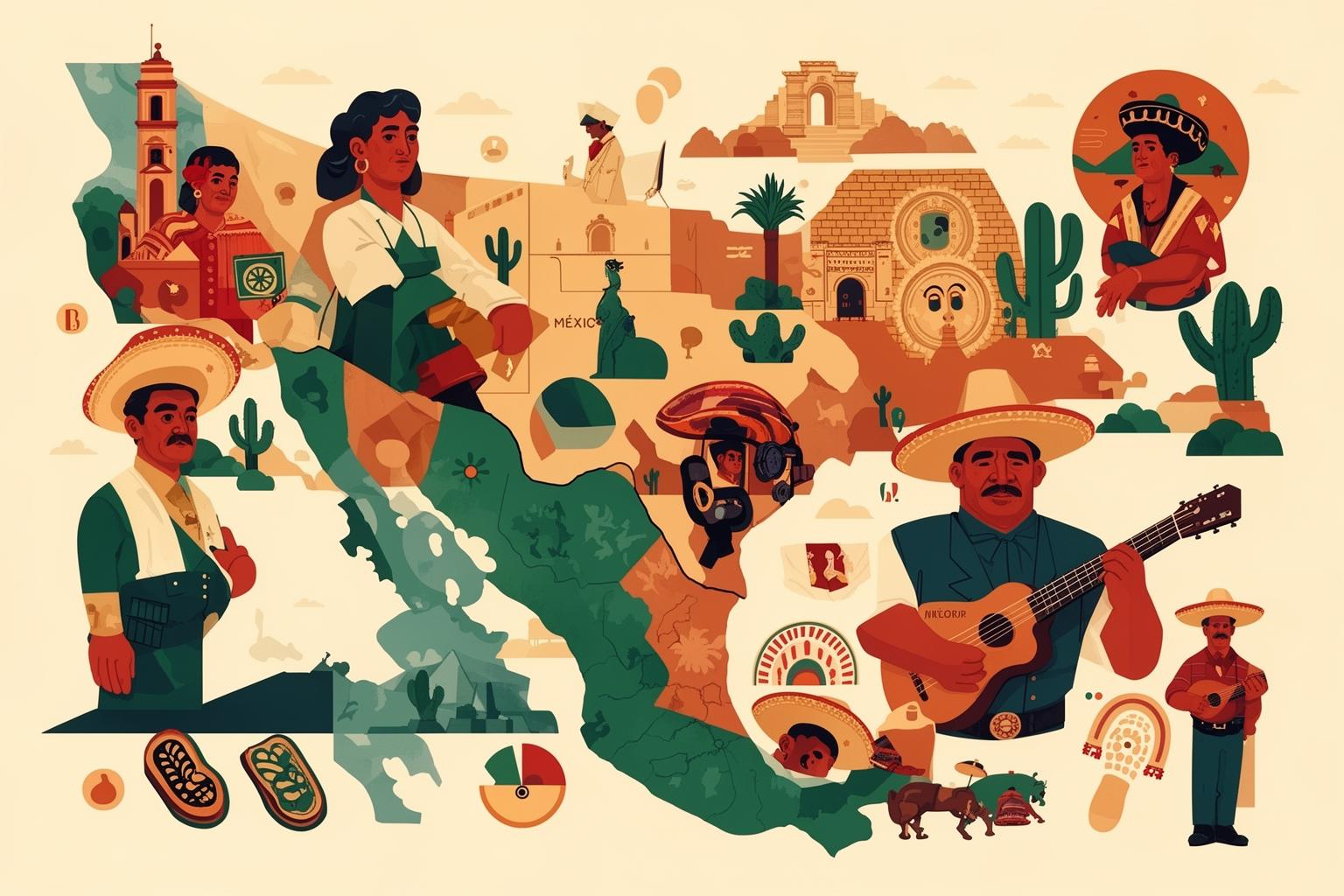
Siqueiros’s influence and activities extended far beyond Mexico. His life as a political activist and artist frequently led to exile, during which he left behind a legacy of powerful murals throughout the Americas. These works, often produced under challenging conditions, stand as a testament to his unwavering dedication to his ideals.
Los Angeles: An Exile’s Expression
In the early 1930s, political pressures forced Siqueiros to leave Mexico, landing him in Los Angeles. There, he was commissioned to paint a mural on the exterior wall of the Italian Hall on Olvera Street, the city’s historic core. While the patrons anticipated a picturesque, folkloric depiction of a tropical paradise, Siqueiros delivered something entirely different.
“América Tropical”: The Censored Masterpiece
He created “América Tropical: Oprimida y Destrozada por los Imperialismos” (Tropical America: Oppressed and Destroyed by Imperialism), which portrayed an indigenous peasant crucified on a double cross beneath an American eagle. This mural was a powerful denunciation of U.S. imperialism in Latin America. The local establishment was appalled, and within a few years, the mural was whitewashed, silencing its radical message. For decades, it remained hidden beneath layers of paint, a ghostly lost masterpiece. However, its legend endured, and in the late 20th century, a significant restoration effort revealed the mural once more. Today, visitors to the Olvera Street viewing platform can witness the haunting, potent remnants of “América Tropical.” It serves as a profound example of art’s ability to confront authority and the lengths to which that authority will go to suppress it. Standing there, one can feel the weight of its history—its creation, its censorship, and its ultimate revival.
Argentina and Chile: Spreading the Muralist Gospel
Siqueiros’s travels took him through South America, where his work continued to evolve. In Argentina, he produced one of his most unusual and captivating pieces, “Plastic Exercise.” Created in the basement of a private home in collaboration with other artists, the entire room—walls, ceiling, and floor—was covered in surreal, flowing nudes that seem to drift in a submerged, aquatic realm. This radical experiment aimed to create a complete, immersive environment, foreshadowing his later Polyforum work. In Chillán, Chile, a city devastated by an earthquake, Siqueiros painted “Death to the Invader” in a school library as a gift from Mexico. The mural powerfully intertwines the histories of Mexican and Chilean independence heroes, weaving a sweeping narrative of resistance against colonial domination. Each of these works illustrates Siqueiros’s ability to adapt his style and message to new settings, remaining ever the artistic innovator and political provocateur.
Lecumberri Palace: The Prison Cell as a Studio
To fully grasp Siqueiros, one must recognize that for him, art and political activism were inseparable. His outspoken communist convictions and radical actions resulted in multiple imprisonments. His longest incarceration was at the notorious Lecumberri Palace, a daunting panopticon-style prison in Mexico City known as the “Black Palace.” Yet, even in such bleak circumstances, his creative energy remained undiminished.
Creativity Unleashed
Rather than a time of inactivity, his prison years were among his most productive. Without walls to paint on, he turned to smaller surfaces, producing hundreds of sketches and paintings on wood panels. These were far from casual doodles; they were detailed studies, compositional experiments, and the groundwork for the large murals he intended to create. Indeed, the entire conceptual framework for his masterpiece, “The March of Humanity,” was conceived within his prison cell. He transformed his confinement into a creative incubator for his finest work. Visiting the site today is a surreal experience. The former prison has been repurposed as the National General Archive, housing the nation’s history. Walking through the same corridors where Siqueiros was once held as a political prisoner, knowing these walls nurtured some of Mexico’s most significant art, serves as a powerful testament to his unbreakable spirit. It underscores the idea that creativity can thrive even under the harshest restrictions, embodying a spirit that could never truly be confined.
Cuernavaca: The Final Workshop
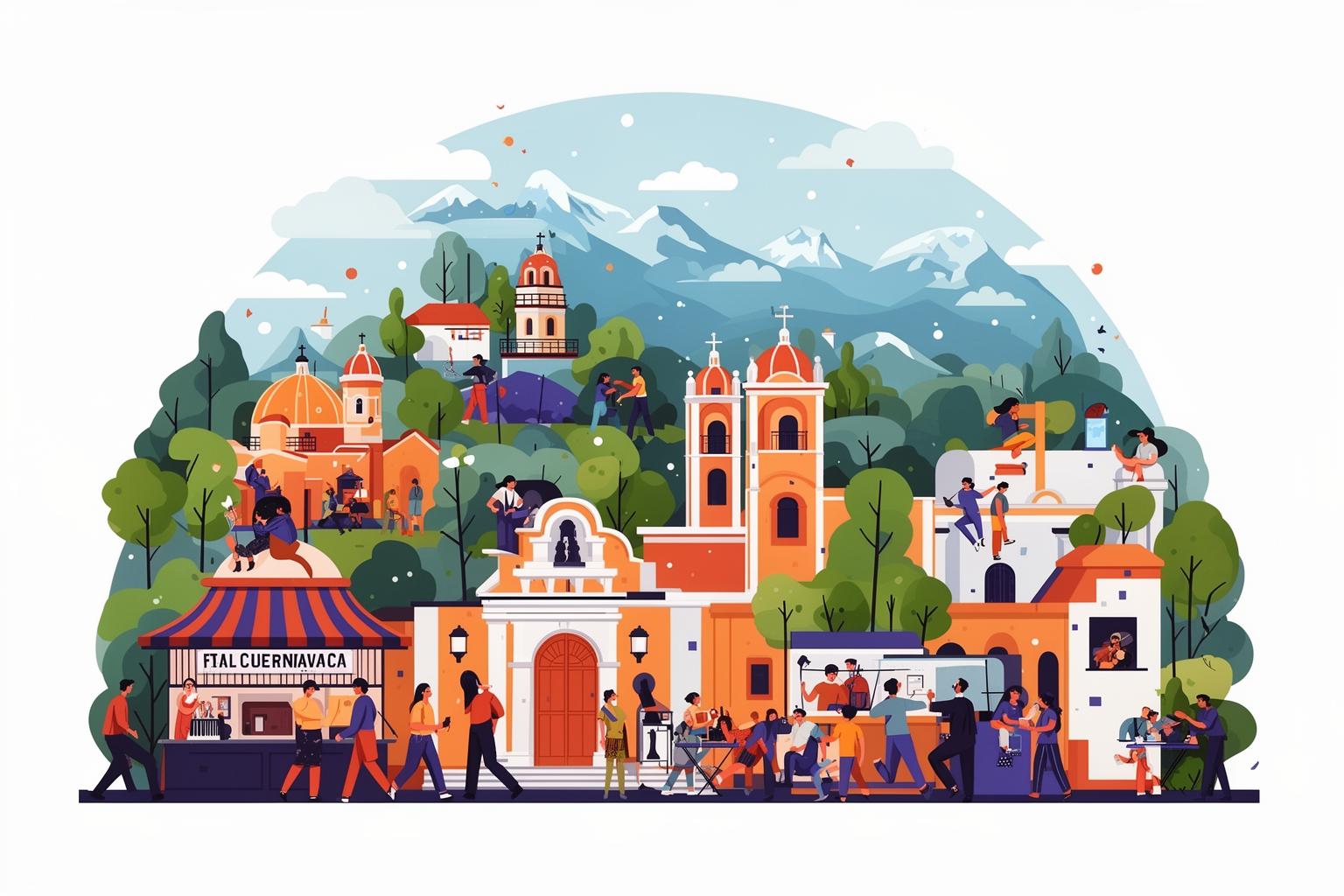
In his later years, Siqueiros made his final home and workshop in the temperate, flower-filled city of Cuernavaca, often called the “City of Eternal Spring.” However, this was far from a quiet retirement. He founded “La Tallera,” roughly meaning “The Big Workshop,” envisioned as a public institution and a muralism school where he and future generations of artists could explore new techniques, industrial materials, and the ideals of public art he had championed throughout his life.
The Atmosphere of Creation
La Tallera embodies his artistic principles. The building itself is a masterpiece, with two immense murals appearing to flow from the interior courtyard onto the exterior facade, blurring the line between interior and exterior space. He designed the studio with high ceilings and movable walls, creating a practical space for producing monumental art. Walking through La Tallera, you can almost feel the master at work—the energy, innovation, and collaborative spirit he nurtured. It is not a sterile museum but a living laboratory of art, where ideas were forged in paint and concrete.
Visiting La Tallera Today
After his passing, La Tallera fell into neglect, but it has been beautifully restored and reopened as a museum and cultural center. The original workshop, along with its murals and distinctive architecture, has been preserved, and new galleries have been added to showcase contemporary art. Visiting here offers a fitting conclusion to a journey through Siqueiros’s life, providing deep insight into his process, his theories on “dynamic perspective,” and his steadfast belief that art must continually evolve. Standing in the courtyard beneath his striking murals, one understands that for Siqueiros, work was never done. Humanity’s progress, and the art depicting it, is an ongoing, dynamic journey forever moving forward.
Following the path of David Alfaro Siqueiros is more than an art history tour; it is an exploration of the 20th century’s core—a story of revolution, struggle, and a relentless belief in a better future. His legacy extends beyond museums; it is inscribed on the public walls of his homeland and beyond, a lasting, powerful testament to a life lived with fierce passion and unwavering purpose. To stand before one of his murals is to face history, to be provoked, and to be inspired. It invites you to see the world not just as it is, but as it could be, through the eyes of a true giant. His murals are not silent—they shout, sing, argue, and continue to march forward.